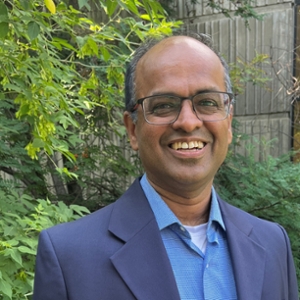
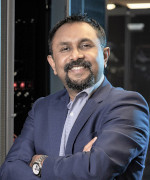
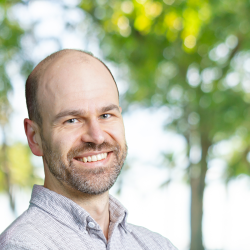
Dr. Hassan Qudrat-Ullah is a Professor at the School of Administrative Studies, York University, and Coordinator of the Certificate in Logistics Management. He holds a PhD in Decision Sciences from NUS Business School and completed a post-doctoral fellowship at Carnegie Mellon University. His research focuses on dynamic decision making, system dynamics modeling, energy planning, and interactive learning environments. He teaches courses on quantitative methods, logistics, and decision analysis, informed by global industry experience across 20+ countries. Research interests include sustainability, climate change, systems thinking, and educational applications of decision sciences. He serves as Editor-in-Chief of the International Journal of Complexity in Applied Science and Technology and is a member of IEEE, DSI, and the International System Dynamics Society. His work has been published in Energy , Decision Support Systems , and others. Key projects include studies on 'structured-debriefing in dynamic decision making' and renewable energy policies in Africa. His recent articles (2023–2025) address AI integration in energy governance, system dynamics for supply chain resilience, and education for sustainability. Hassan advocates for systems thinking in K-12 education and enjoys traveling (visited 129 countries) and bird-watching.
Ameil Joseph is an Associate Professor at McMaster University's School of Social Work, where they contribute to critical scholarship at the intersection of mental health, race, and social justice. Their work examines how ideas about difference, normalcy, sexuality, eugenics, race, ability and mental 'illness' cohere and perform within policy, law and practice, with over a decade of professional experience in mental health settings including supportive housing, settlement services, crisis respite, and forensic community treatment. Education: Ph.D in Social Work, York University (2009-2014) MSW, Wilfrid Laurier University (2005-2007) BA in Psychology, University of Waterloo (1998-2003) Dr. Joseph's research engages with critical mental health, postcolonial theory, critical race theory, and critical disability studies to examine the historical production of ideas about difference. Their scholarship particularly focuses on how these ideas manifest in mental health systems, immigration policy, and criminal justice, with attention to issues of social justice, violence, ethics, and confluence. Their work bridges theoretical frameworks with practical implications, addressing the complex interplay of colonialism, racism, sanism, and eugenics in contemporary social systems. Analysis of Dr. Joseph's recent publications reveals a sustained focus on colonial and eugenic violence within mental health, immigration, and criminal justice systems. Their scholarship consistently examines how racism, sanism, and ableism intersect to produce particular forms of state violence, particularly against racialized immigrants with mental health conditions. Recent work has expanded to address temporal dimensions of oppression, data colonialism, and community responses to grief and loss during the pandemic, demonstrating both theoretical sophistication and practical relevance to current social issues. Scientific Awards: University Scholar 2025 - Recognized for research leadership and impact among eight McMaster professors honored as University Scholars Dr. Joseph has secured significant research funding, including nearly $75,000 from the Social Sciences and Humanities Research Council (SSHRC) for community-engaged projects addressing social justice issues. Their teaching portfolio includes advanced courses on critical mental health perspectives, race and colonialism in Canadian society, and social justice theory. While specific graduate students aren't listed in available materials, their extensive co-author network suggests active mentorship and collaboration. Dr. Joseph contributes to community-based initiatives in Hamilton addressing racism in healthcare and mental health systems, connecting academic scholarship with practical community responses to systemic issues. Dr. Joseph maintains an active presence in community responses to contemporary challenges, particularly through initiatives addressing grief during the pandemic and systemic racism in healthcare. Their work exemplifies the integration of scholarly rigor with community engagement, demonstrating how academic research can inform and be informed by real-world social justice efforts.
Prof. Ramakrishna Gokaraju is a Professor and Graduate Chair in the Department of Electrical and Computer Engineering at the University of Saskatchewan. His academic journey includes roles as Assistant Professor (2003), Associate Professor (2009), and full Professor (2015). He holds a B.E. from NIT Trichy (1992), M.Sc. and Ph.D. from the University of Calgary (1996, 2000). His research focuses on power system protection, smart grids, and sustainable energy systems, including small modular reactors (SMRs) and renewable integration. He has advised 8 PhD and 25+ Master’s students, with over 80 publications in top journals/conferences. Dr. Gokaraju’s honors include the Izaak Walton Killam Memorial Scholarship (1998–2000) and the Professor of the Year Award (2008). He has held visiting roles at the University of Manitoba (2009–2010), IIT Kanpur (2018), and institutions in Australia and India. His work emphasizes high-speed digital relaying, PMU-based solutions, and transient stability protection. Current research includes wind generator modeling, SMR integration, and energy storage systems for remote communities. His technical contributions span fault location algorithms, grid resilience enhancement, and GPU-based optimization for transport systems. Ongoing projects explore hybrid energy systems combining SMRs with renewables. Lab affiliations include the Power Systems Research Group at the University of Saskatchewan, focusing on smart grid innovation and sustainable energy solutions.
Dr. Anwar Haque is an Associate Professor in the Department of Computer Science at Western University, Canada, and a Faculty of Science Distinguished Research Professor. He holds a Ph.D. in Electrical and Computer Engineering and an M.Sc. in Computer Science from the University of Waterloo. Prior to academia, he was Associate Director at Bell Canada. His research focuses on 5G networks, IoT, cybersecurity, AI, and autonomous systems, with over 100 peer-reviewed publications and $15M in collaborative grants. Dr. Haque leads the Western Information & Networking Group (WING) Lab and is the founder/CEO of Bamboo Innovations Inc., a tech startup developing socially responsible smart technologies. Leadership roles include industry expert-in-residence in the Faculty of Science, Undergraduate Chair of the Computer Science Department, and member of Western’s Senate. He has delivered over 30 keynote talks and media features include BBC Earth and The Globe and Mail. Awards include the IEEE CCECE Leadership Award and multiple grants from NSERC, MITACS, and Bell Canada. His work spans network reliability, smart grids, and cybersecurity, with industry partnerships like the Bell-Western 5G Research Centre.
Dr. Khurram Aziz is a Senior Instructor in the Faculty of Computer Science at Dalhousie University , Halifax, Canada. He is actively engaged in teaching and research, with a focus on optical networks, data center interconnects, and network performance modeling. Education: PhD in Electrical Engineering, Vienna University of Technology, Austria (2008) MSc in Electrical Engineering, National University of Singapore (2003) BSc (Hons) in Electrical Engineering, University of Engineering and Technology, Lahore, Pakistan (1998) His research interests include optical packet and burst switched networks , optical interconnects for data centers , analytical modeling and simulation , and network routing and switching . He has contributed extensively to the design and performance evaluation of scalable optical switches and hybrid switching systems. The recent publications reflect a strong trend in data center optical networks , focusing on performance, blocking probability, signal degradation, and architectural classification. His work bridges theoretical modeling with practical simulation frameworks, such as CloudNetSim++ in OMNeT++, contributing to cloud and high-capacity network research. Dr. Aziz has no listed scientific awards in the provided text. He teaches several core computer science courses including CSCI 2141: Intro to Database Systems , CSCI 3171: Network Computing , CSCI 3132: Object Orientation and Generic Programming , and CSCI 3120: Operating Systems . There is no mention of graduate student supervision or external research grants. He has co-authored book chapters in major handbooks on data centers and switched systems. Dr. Aziz has not listed any formal lab or research team affiliations in the provided content.
Tim G. J. Rudner is an Assistant Professor in the Department of Statistical Sciences at the University of Toronto, a Faculty Member at the Vector Institute, and a Title A Fellow at Trinity College, University of Cambridge. He was previously an Assistant Professor and Faculty Fellow at New York University. University: University of Toronto School: Faculty of Arts and Science Department: Department of Statistical Sciences Affiliation: Vector Institute, Trinity College (Cambridge) He holds a PhD in Computer Science and an MSc in Statistics from the University of Oxford, where he was advised by Yee Whye Teh and Yarin Gal, and a BS in Applied Mathematics and Economics from Yale University. PhD: Computer Science, University of Oxford MSc: Statistics, University of Oxford BS: Applied Mathematics and Economics, Yale University His research focuses on building robust, transparent, and trustworthy machine learning systems, particularly for high-stakes applications. He develops probabilistic models that improve generalization under distribution shifts, provide reliable uncertainty estimates, and enable fair and interpretable predictions. His work spans generative models, large language models, healthcare, and biomedical discovery. The recent publications highlight a strong trend toward function-space modeling, Bayesian regularization, and AI safety. Tim's work emphasizes principled uncertainty quantification, robustness to subpopulation and semantic shifts, and the development of frameworks for AI governance and specification. His research bridges theoretical advances with real-world applications, especially in safety-critical domains like medicine and defense. Tim has received numerous accolades including being named a Rhodes Scholar, Qualcomm Innovation Fellow, and 2024 Rising Star in Generative AI. He was awarded a $700,000 Foundational Research Grant and a $30,000 Apple Seed Grant for improving LLM trustworthiness. Rhodes Scholar Qualcomm Innovation Fellow AISTATS Notable Paper Award (2024) Outstanding Paper Award, ICLR GenAI4DM Workshop (2024) Apple Seed Grant ($30,000) Foundational Research Grant ($700,000) NeurIPS Spotlight Talk 2024 Rising Star in Generative AI He actively mentors students, particularly first-generation and low-income scholars, and has contributed to major policy frameworks including the OECD AI Classification Framework and a series of CSET issue briefs on AI safety. His work demonstrates a strong commitment to responsible AI development, combining technical rigor with societal impact. Tim leads research efforts at the intersection of machine learning theory and practical deployment, with ongoing projects in generative modeling, reliable LLMs, and AI governance. His lab produces high-impact work regularly published at top-tier conferences such as NeurIPS, ICML, and AISTATS.
Alexandre Bouchard-Côté is a Professor of Statistics at the University of British Columbia (UBC), affiliated with the Department of Statistics within the Faculty of Science. His research focuses on computational statistics, Bayesian methods, and Monte Carlo techniques, with applications in evolutionary biology, cancer genomics, and computational linguistics. Education : PhD in Computer Science (with Designated Emphasis in Statistics) from UC Berkeley (2010), BSc in Mathematics and Computer Science from McGill University (2005). Affiliations : Director of the Blang probabilistic programming project and leader of the Bouncy Particle Sampler research group. Research Interests : Bouchard-Côté develops scalable Bayesian computational methods, including non-reversible Monte Carlo algorithms like the Bouncy Particle Sampler, and applies these to problems in cancer phylogenetics, evolutionary dynamics, and historical linguistics. His work emphasizes bridging theoretical foundations with practical tools for data science. Publications Trends : Recent work spans distributed sampling frameworks (e.g., Pigeons.jl), variational phylogenetic inference, and cancer clonal evolution modeling. His articles often address algorithmic scalability and interdisciplinary applications in biology and astronomy. Awards : CRM-SSC Prize in Statistics (2024) PIMS-UBC Mathematical Sciences Young Faculty Award (2018) Tweedie New Researcher Award (2016) Advising & Grants : Supervises graduate students (e.g., Son Luu, Nikola Surjanovic) and leads funded projects on distributed MCMC and cancer genomics. Collaborates with institutions like the Simons Foundation and the Canadian Statistical Sciences Institute (CANSSI). Labs/Teams : Core member of the UBC Statistical Machine Learning group, contributing to open-source tools like Blang and the Bouncy Particle Sampler implementation.
Tim Conley is Professor and Chair at the Department of Economics, University of Western Ontario. He holds a Ph.D. from the University of Chicago (1996). His research focuses on applied econometrics with emphasis on spatial dependence, cross-sectional analysis, and empirical industrial organization. His primary research interests include methodological development in econometrics, particularly around dependence modeling in cross-sectional data and spatial analysis techniques. He has made significant contributions to understanding technology adoption in developing economies and detection of collusion in market mechanisms. Professor Conley's publications demonstrate consistent focus on developing robust statistical methods for economic applications, with recent work emphasizing practical applications in policy evaluation and market analysis. His methodological innovations have been implemented in statistical software packages used by researchers worldwide.
Mark Crowley is an Associate Professor in the Department of Electrical and Computer Engineering at the University of Waterloo, with a cross-appointment in the Cheriton School of Computer Science. He is a member of the Waterloo Artificial Intelligence Institute (WAII) and the Waterloo Institute for Complexity and Innovation (WICI), and serves as National Secretary of the Canadian Artificial Intelligence Association (CAIAC). His educational background includes a Ph.D. and M.Sc. in Computer Science from the University of British Columbia, where he worked in the Laboratory for Computational Intelligence, and a B.A. in Computer Science from York University. He completed a postdoctoral fellowship at Oregon State University working with Tom Dietterich's machine learning group. Crowley's research focuses on developing dependable and transparent algorithms to augment human decision-making in complex domains with multiple agents, spatial structure, or uncertainty. His work spans Reinforcement Learning , Deep Learning , Ensemble Methods , and Manifold Learning . He frequently collaborates with researchers in applied fields including Computational Sustainability, Sustainable Forest Management, Autonomous Driving, Medical Imaging, and Material Design. His research is motivated by both theoretical opportunities and real-world challenges such as forest fire management, automotive applications, and medical imaging. His recent publications demonstrate a strong focus on addressing challenges in reinforcement learning, particularly around observation costs, multi-agent systems, and causal representation learning. His work on ChemGymRL provides a significant contribution to digital chemistry and material design through reinforcement learning frameworks. The textbook Elements of Dimensionality Reduction and Manifold Learning represents a major contribution to the theoretical foundations of machine learning. Crowley actively supervises graduate students, with recent thesis completions including Shayan Shirahmadi Gale Bagi (PhD, Feb 2025) and Oleksandra Nahorna (MASc, Dec 2024). His lab, UWECEML (Waterloo ECE Machine Learning Lab), focuses on developing new algorithms at the intersection of Machine Learning, Optimization, and Probabilistic Modeling. He teaches courses including ECE 457C (Reinforcement Learning), ECE 657A (Data & Knowledge Modelling & Analysis), and ECE 457B (Fundamentals of Computational Intelligence). His blog Computationally Thinking explores AI, machine learning, and the societal impact of these technologies.
Kimon Fountoulakis is an Associate Professor at the University of Waterloo. His research focuses on Machine Learning on Graphs and Numerical Optimization, with a strong emphasis on algorithmic methods for graph-structured data. He holds a Ph.D. from The University of Edinburgh (2015), an M.Sc. from The University of Edinburgh (2010), and a B.Sc. from Athens University of Economics and Business (2009). His work spans theoretical foundations and practical applications in graph algorithms, optimization, and machine learning. Research interests include graph neural networks, local graph clustering algorithms, and algorithmic reasoning. His contributions address challenges in graph representation learning, message-passing architectures, and scalable optimization methods. Notable themes in his publications include improving counting abilities of vision-language models, analyzing graph convolutions, and developing flow-based clustering techniques with statistical guarantees. His work often bridges theory and practice, with applications in network analysis, pandemic containment strategies, and high-performance computing. While no specific grants or awards are listed, his research demonstrates significant contributions to graph-based machine learning and optimization. He maintains a research group at the University of Waterloo, with a focus on developing open-source tools and frameworks for graph algorithms. His lab’s work emphasizes local graph clustering methods and their scalability in real-world networks.
Dr. Tarek Sayed is a Professor at the University of British Columbia's Department of Civil Engineering within the Faculty of Applied Science. He specializes in Transportation Engineering, focusing on road safety analysis, traffic operations, and Intelligent Transportation Systems (ITS). He serves as the Director of the Bureau of Intelligent Transportation Systems and Freight Security (BITSAFS-Engineering) and Editor of the Canadian Journal of Civil Engineering . His research addresses three core areas: improving road safety evaluation techniques, enhancing safety through traffic operations and highway design analysis, and advancing ITS technologies. Notable contributions include frameworks for safety-audits of infrastructure projects like the Sea to Sky Highway and methodologies for evaluating transit signal priority systems in Vancouver. He has authored/co-authored over 250 publications and supervised 60 graduate students. Key Roles: Professor, BITSAFS Director, Journal Editor Awards: Tier 1 Canada Research Chair, Wilbur Smith Award, Sandford Fleming Award, Prince Michael International Road Safety Award Consulting: Global projects in traffic safety and ITS for agencies like ICBC, FHWA, and Ashghal His research integrates Bayesian statistical methods, extreme value theory, and machine learning to model traffic conflicts, pedestrian behavior, and safety interventions. Current projects include real-time safety optimization using autonomous vehicle data and analyzing shared space interactions between cyclists and pedestrians. Dr. Sayed chairs national/international committees, including the U.S. Transportation Research Board’s safety data committee. His work bridges academia and practice, influencing policy and infrastructure investment decisions worldwide.
Hugo de Lasa is a Full Professor at the Department of Chemical and Biochemical Engineering, Faculty of Engineering, University of Western Ontario. He holds a Bachelor in Chemical Engineering (1968) from Universidad Nacional del Sur, Argentina, and a Doctoral degree (1971) from Université de Nancy, France. Research Focus: Catalysis, Photocatalysis, Chemical Reactor Engineering, Fluidization, Biomass Gasification Awards: Research Excellence Prize (1998), Fellow of the Chemical Institute of Canada (2000), Medal of Research and Development (2000), Doctor Honoris Causa (2004, 2018) His work spans chemical reactor design , photocatalytic hydrogen production , and fluidized bed technologies . Recent publications highlight machine learning applications in chemical equilibrium modeling and CO2 capture using microalgae. He founded the Chemical Reactor Engineering Centre (CREC) and Recat Technologies Inc. , a university spin-off commercializing reactor innovations. Awards include the Vanguard Award (2019) and Commemorative Issue in Catalysts Journal (2020). His research has generated 389 peer-reviewed publications , 14 patents , and over 10,000 citations .
Dr. Mi Jung Park is an Assistant Professor in the Department of Computer Science at the University of British Columbia (UBC), part of the Faculty of Science. She is also a Canada CIFAR AI Chair at the Amii. Her research focuses on privacy-preserving machine learning, particularly differential privacy, synthetic data generation, and their applications in healthcare. She holds a PhD in Electrical and Computer Engineering from the University of Texas at Austin, supervised by Dr. Jonathan Pillow, and has held postdoctoral positions at the University of Amsterdam and University College London. Education : PhD, Electrical and Computer Engineering, University of Texas at Austin (2016) Master's, Electrical and Computer Engineering, University of Texas at Austin (2012) Bachelor's, Electrical and Computer Engineering, Hanyang University, Seoul, South Korea (2009) Research Interests : Her lab develops methods to balance privacy and accuracy in data analysis, emphasizing differential privacy's role in healthcare. Key areas include: Generating synthetic data with privacy guarantees Integrating fairness, interpretability, and causality into privacy-preserving models Bayesian techniques for model compression and uncertainty estimation Recent Work Trends : Her publications explore differential privacy in generative models (e.g., diffusion models, kernel methods) and neural network pruning. Recent work highlights privacy-preserving techniques for image classification, latent diffusion, and perceptual feature integration. Awards : Canada CIFAR AI Chair (2021). Advising & Grants : Supervises postdocs (e.g., Mingyu Kim), master's students (e.g., Amman Yusuf), and PhD candidates (e.g., Margarita Vinaroz). Her research is supported by the CIFAR AI Chair program and collaborations with institutions like the Max Planck Institute for Intelligent Systems. Labs & Teams : Leads the Privacy-Preserving Machine Learning Lab at UBC, advancing technologies to protect sensitive healthcare data while enabling clinical and research use.
David Duvenaud is an Associate Professor at the University of Toronto , holding a Canada Research Chair in Generative Models and a Schwartz Reisman Chair in Technology and Society . He is cross-appointed to the Department of Computer Science and Department of Statistical Sciences . A Sloan Research Fellow and founding member of the Vector Institute , his work bridges deep probabilistic models , AI safety , and scientific computing . PhD in Machine Learning (University of Cambridge, 2014) Postdoc in Hyperparameter Optimization (Harvard University, 2016) Co-founded Invenia (energy forecasting company) His research spans foundational Neural Ordinary Differential Equations (NeurIPS 2018 Best Paper) and Automatic Chemical Design (ACS Central Science 2018) to recent work on AGI governance (2025) and AI safety (2024). Key contributions include stochastic variational inference , implicit differentiation frameworks , and antisymmetrization layers for quantum Monte Carlo. Recent publications (2024-2025) focus on systemic existential risks from AI , many-shot jailbreaking attacks , and epistemic uncertainty quantification . His group trains energy-based models with scalable MCMC samplers and develops invertible neural architectures (e.g., Residual Flows NeurIPS 2019). He also explores human-AI alignment through LLM Processes (NeurIPS 2024) and Sycophancy in Language Models (ICLR 2024). Canada Research Chair (2025) NSERC Grant (2025) Sloan Research Fellow (2021) Schwartz Reisman Chair (2021) Best Paper Award (NeurIPS 2018) Distinguished Paper Award (ICFP 2021) His students include James Requeima , Jesse Bettencourt , and Raymond Douglas . He teaches courses on Statistical Methods for Machine Learning and Differentiable Inference . Current work (2025) investigates systemic human disempowerment through incremental AI capabilities and sabotage risk mitigation via hyperparameter-aware evaluations.
Peter Selinger is a Professor in the Department of Mathematics and Statistics at Dalhousie University , with a cross-appointment in Computer Science. He specializes in mathematical methods in computer science, particularly quantum computing and combinatorial game theory . His work on quantum programming languages like Quipper and foundational research in category theory has garnered international recognition. Education : Ph.D. in Mathematics (University of Pennsylvania, 1997), undergraduate studies in Mathematics (Technische Universität Darmstadt). Research Interests span quantum computing, category theory, and combinatorial game theory. He has pioneered formalisms for quantum programming languages, developed categorical models for quantum mechanics, and analyzed game-theoretic structures in games like Hex. His recent work includes linear dependent type theory , quantum circuit synthesis , and combinatorial game classification . Publications demonstrate expertise in quantum programming languages, categorical semantics, and game theory. Key trends include Hamiltonian simulation , Clifford+T circuits , and monotone game realization . Scientific Honors include the Killam Professorship (2017–2022), Faculty of Science Award for Excellence in Teaching (2023), and fellowships from the Alfred P. Sloan Foundation and German National Scholarship Foundation . Students he has supervised include PhD graduates Xiaoning Bian , Francisco Rios , and Neil J. Ross , along with MSc students like Fahimeh Bayeh and Seth Greylyn . He has advised 16 postdoctoral researchers.