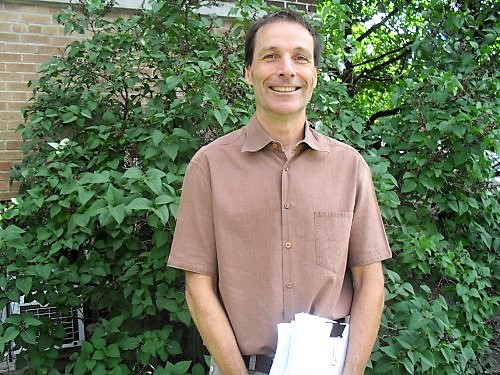
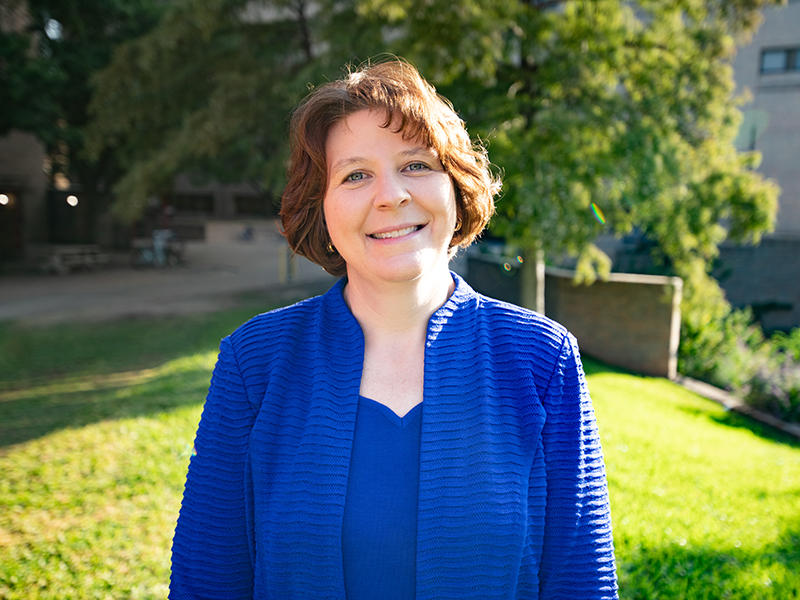
Yves Bourgault is a Full Professor in the Department of Mathematics and Statistics at the University of Ottawa. He holds a MSc and PhD from Laval University. His research focuses on computational fluid dynamics, numerical methods, finite element techniques, and continuum mechanics modeling, with applications in cardiac electrophysiology and ecological systems. Dr. Bourgault has supervised several graduate students, including Edward Boey (co-supervised), Sana Keita, Saint-Cyr Koyagurebo-Ime, and Kak Choon Loy. His work integrates advanced numerical techniques to address complex problems in biomedical engineering, environmental science, and mathematical physics. Key methodologies include finite element methods, deferred correction schemes, and anisotropic mesh adaptation. His research group is part of the Applied Mathematics division at the University of Ottawa, emphasizing interdisciplinary applications. Recent work explores climate change impacts on ecological systems, cardiac tissue modeling using high-resolution MRI data, and robust numerical methods for reaction-diffusion equations. Publications span topics such as bidomain models for cardiac electrophysiology, fluid-structure interaction in heart mechanics, and mathematical modeling of fuel cells. His contributions bridge theoretical numerical analysis with real-world biomedical and environmental challenges.
Maria Papathoma-Köhle is an Associate Professor at the Institute of Alpine Natural Hazards , University of Natural Resources and Life Sciences, Vienna. She holds a PhD in Tsunami Vulnerability Assessment from Coventry University (UK) and has held roles as Academic Coordinator of the MSc 'Risk Prevention and Disaster Management' at University of Vienna. Her research focuses on natural hazard vulnerability , particularly wildfire and flood risks in alpine regions, with methodological expertise in indicator-based vulnerability assessment and physical vulnerability indices . Education: PhD in Natural Hazards (Coventry University, UK) MSc in Environmental Management (University of Durham, UK) Geology Degree (University of Athens, Greece) Research: Specializes in wildfire vulnerability indices, flood risk modeling, and climate change adaptation frameworks. Developed the Physical Vulnerability Index (PVI) for buildings and contributed to EU-funded projects like FLOODLABEL and EXTEND. Awards: Elise Richter Scholarship (2016) Back to Research Grant (2012) Young European Scientist Award (2002) Projects: Led FWF-funded research on physical vulnerability indicators and collaborated on EU programs for wildfire preparedness. Current work includes climate change adaptation tools for Austrian infrastructure. Advising: Supervised 6 Master's/PhD students on wildfire and flood vulnerability topics. Publications: Over 106 peer-reviewed works; recent articles focus on wildfire indices, IPCC risk diagrams, and dynamic flooding assessment.
Jean-François Godbout is a Professor in the Department of Political Science at the Université de Montréal and an Associate Academic Member of Mila - the Quebec AI Institute. He directs the undergraduate program in Big Data Analytics in Social Sciences and Humanities at UdeM and conducts interdisciplinary research through the Complex Data Lab. Affiliated with IVADO (AI Consortium) Member of CÉRIUM (International Research Centre) and CECD (Democratic Citizenship Centre) His research focuses on: Data Science applications in political institutions AI Safety and generative AI's impact on political attitudes Misinformation Mitigation through large language models Comparative Political Development in Canadian and Lower Canada contexts Legislative Institutions and voting records analysis Political Polarization in online societies Recent publications analyze social media disinformation, AI persuasion on harmful topics, and education-focused text simplification. His articles frequently combine graph mining , machine learning , and political science methodologies. Scientific collaborations include: Mila researchers (Andreea Musulan, Maximilian Puelma Touzel) IVADO data science initiatives McGill University interdisciplinary projects He supervises students in: Political science (Julien Robin, Matthew Taylor) Artificial Intelligence (Kellin Pelrine, Camille Thibault) Computational social science applications
Daniel A Levinthal is the Reginald H. Jones Professor of Corporate Strategy and Professor of Management at the Wharton School, University of Pennsylvania. With extensive publications on organizational adaptation and industry evolution in technological contexts, he serves as Editor-in-Chief for Strategy Science and Organization Science. Research Interests Industry evolution Organizational learning Technological competition His 2024 research examines organizational search strategies, showing how cautious exploitation combines slow belief updating with strong explicit exploitation for effective adaptation. Recent work explores how political coalitions drive organizational change, with hierarchical belief influence structures proving more effective than flat designs in certain environments. Earlier studies developed the "Mendelian executive" framework and advanced Carnegie School decision-making theory. Scientific Awards Fellow of Strategic Management Society Fellow of Academy of Management Distinguished Scholar Awards (3 divisions) Irwin Award as Distinguished Educator 4 Honorary Doctorates Levinthal teaches advanced strategy courses (MGMT9000, MGMT9150) and graduate enterprise management (MGMT6110). His research has established foundational insights about organizational capabilities, knowledge aggregation, and strategic inertia.
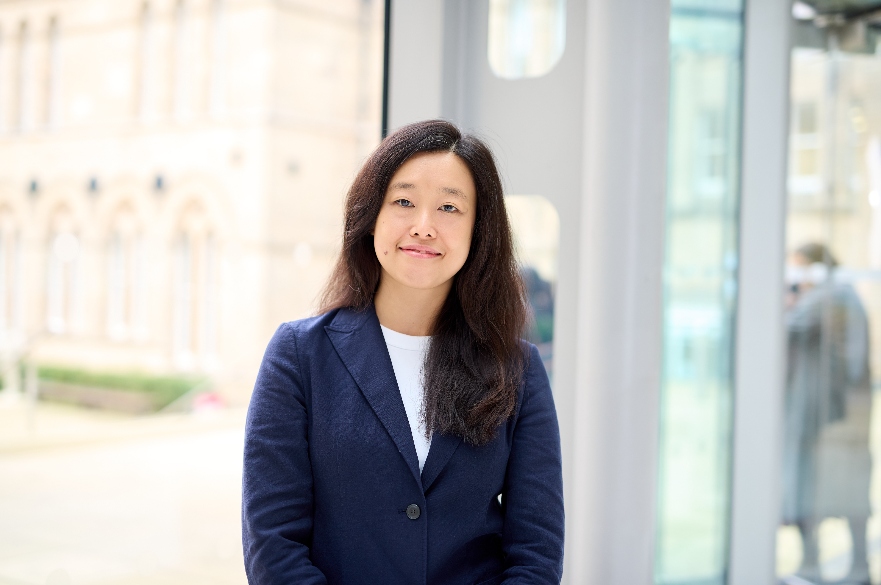
Dr. Elaine Chen serves as Senior Lecturer in Business Analytics and Course Leader for the MSc Business Analytics and Artificial Intelligence at Nottingham Business School, Nottingham Trent University. Her teaching emphasizes practical applications of data and AI technologies for business decision-making, with dedicated focus on accessibility for diverse student backgrounds across technical and strategic domains. Her academic credentials include: PhD in Computing Science MSc in Business Information Technology Postgraduate Certificate in Academic Practice BTech (Hons) in Business Information Systems Chen's research bridges educational and business contexts through data-AI integration: Generative AI adoption in higher education, particularly for neurodivergent/disabled students Human-AI collaboration frameworks in organizational settings SME applications for AI-driven efficiency and competitiveness Workforce analytics and talent management systems Her work consistently connects technical AI capabilities with real-world implementation challenges. Publication analysis (2023-2025) reveals accelerating focus on generative AI's educational impact and business strategy integration, evolving from her foundational work in social recommender systems (2014-2020) which established methodologies now applied to contemporary AI challenges in business contexts. Her professional recognition includes: Senior Fellow of the Higher Education Academy (HEA) Chen actively supervises PhD candidates in AI education, human-AI collaboration, and workforce analytics domains. Her pedagogy leadership includes designing accredited business analytics curricula and securing teaching innovation projects with documented outcomes in student engagement metrics. Prior industry experience as an automation engineer at Intel informs her practical approach to AI implementation. Current initiatives focus on generative AI ethics frameworks and longitudinal SME adoption studies, extending her established research trajectory into emerging business technology challenges.
Giorgio Fagiolo is a Full Professor of Economics at Sant'Anna School of Advanced Studies. His work spans agent-based computational economics, economic networks, and macroeconomic policy analysis. University: Sant'Anna School of Advanced Studies (Scuola Superiore Sant'Anna) Department: Economics Email: giorgio.fagiolo@sssup.it Research interests focus on agent-based modeling , macroeconomic instability , and climate-economy interactions . He develops computational models to study industrial dynamics, financial integration, and policy design in complex systems. Key themes: Endogenous growth cycles, R&D network stability, and green transition policies. Methodological emphasis: Empirical validation of agent-based models and nonlinear economic dynamics. Scientific awards include collaboration with leading institutions like ETH Zurich, Columbia University, and OFCE Sciences Po. His publications appear in journals such as Journal of Economic Dynamics and Control and Ecological Economics .
Christian Erik Kampmann is an Associate Professor at the Department of Strategy and Innovation, Copenhagen Business School. He holds a Ph.D. in Management from MIT and an engineering background from DTU, bridging technical rigor with socio-economic research. Education: MIT (Ph.D. in Management), DTU (Engineering) Research Interests focus on system dynamics as applied to sustainable energy transitions, electric mobility, and green urban mobility. His methodological work enhances structural dominance analysis and eigenvalue techniques for complex system modeling. Recent publications address feedback loop gains, market misperceptions of feedback, and comprehensive analytical approaches for policy modeling, reflecting his interdisciplinary focus on sustainability challenges. Teaching includes courses on system dynamics, sustainable business strategy, and quantitative business research, with supervision of theses on electric mobility and product-service sustainability. External engagements involve board membership (Magasin du Nord, 2018-2020) and computer modeling consultancy (Zerolytics, Whitebox).
Prof. Dr. Ulrich Kleinekathöfer is a Full Professor of Theoretical Physics at Constructor University (formerly Jacobs University Bremen) in the School of Science. His research focuses on computational physics and biophysics, particularly on light-harvesting complexes, membrane transport, and quantum dynamics in biological systems. He leads the Computational Physics and Biophysics research group and coordinates the MSCA Doctoral Training Network "PhotoCaM". His educational background includes: PhD from Max-Planck-Institut für Strömungsforschung, Göttingen (1996) Diploma in Physics from Universität Göttingen (1993) Habilitation in Physics from Technische Universität Chemnitz (2002) Prof. Kleinekathöfer's research spans multiple areas of computational biophysics and theoretical physics. His primary interests include excitation energy transfer in light-harvesting complexes , molecular transport through membrane channels and nanopores , and quantum dynamics in open systems . His group develops and applies advanced computational methods including molecular dynamics simulations, quantum chemistry calculations, and machine learning approaches to study these phenomena. A significant portion of his work focuses on photosynthetic systems, particularly how energy is transferred and converted in natural light-harvesting complexes, with implications for renewable energy technologies. His recent publications demonstrate a strong trend toward integrating machine learning with traditional computational methods, particularly in the fields of quantum chemistry and molecular dynamics. There's a clear focus on multifidelity approaches that balance computational efficiency with accuracy. His work spans from fundamental quantum dynamics to applied research on antibiotic transport mechanisms, showing remarkable breadth while maintaining depth in computational methodology development. His notable recognition includes: Tan Chin Tuan Exchange Fellowship, NTU Singapore (2019) Prof. Kleinekathöfer has supervised numerous PhD students and postdoctoral researchers, with a current group comprising several PhD candidates and research associates. His research is supported by multiple funding sources including the Deutsche Forschungsgemeinschaft (DFG), European Union through MSCA Doctoral Network PhotoCaM, and previously through the Innovative Medicines Initiative "Translocation" and Marie Curie Training Program "Translocation". His collaborative network spans internationally, with partnerships at institutions in Germany, USA, Greece, and Switzerland. The Computational Physics and Biophysics Group operates within Constructor University's research infrastructure, utilizing high-performance computing resources for their simulations. The group maintains active collaborations with experimental groups to validate and inform their computational models, creating a strong interdisciplinary research environment focused on understanding fundamental biophysical processes at the molecular level.
Prof. Dr. Mehmet Reşit Tolun is a full-time Professor in the Department of Software Engineering at Çankaya University (Turkey) since 2022. Previously held full-time professor positions at Konya Food and Agriculture University (2020-2022), Aksaray University (2013-2017), and TED University (2011-2013), along with a part-time professorship at Başkent University (2017-2020). Specializes in Artificial Intelligence , Machine Learning , and Data Mining , with a focus on deep learning applications in aerospace, biomedical data analysis, and software process improvement. PhD in Computer Science (University of Kent, 1985) MSc in Computer Science (University of Kent, 1982) BSc in Physics and Computer Science (University of Kent, 1981) Research Interests span deep learning frameworks, hybrid expert systems, software engineering methodologies, and biomedical signal processing. Publications emphasize practical implementations in medical diagnostics, robotics, and agricultural pest detection. Scientific Awards include the IEEE Third Millenium Medal (2000). Supervised over 55 graduate students, including Burak Çetin, Uğur Özotuk, and Mahinur Doğan. Collaborated with researchers from Orta Doğu Teknik Üniversitesi , Çankaya University , and Aksaray University .
Wayne A Fuller is a Research Professor at Iowa State University , specializing in survey methodology and sampling statistics. His work focuses on advanced techniques for handling missing data, small area estimation, and measurement error models, with applications to agricultural surveys and public health research. Education: PhD in Statistics from Iowa State University Research Interests: Fuller's work bridges theoretical and applied statistics through: Development of fractional hot deck imputation methods Bootstrap techniques for variance estimation Small area prediction under constrained models Measurement error correction in health and agricultural data Time series analysis with autoregressive components Integration of administrative data with survey samples Publication Trends: His recent work emphasizes computational approaches to small area estimation (2016-2025), including bootstrap prediction intervals and benchmarking techniques, alongside methodological advancements in imputation and measurement error correction (2004-2015). Contact: Email: waf@iastate.edu Phone: 515-294-5830 Location: Ames, Iowa
Changyang Li serves as a University teacher in the Department of Mechanical Engineering at LUT University's School of Energy Systems in Lappeenranta, Finland. His institutional contact includes email Li.Changyang@lut.fi and phone +358 50 301 7482. Dr. Li's research specializes in robotics for nuclear fusion infrastructure, with emphasis on remote maintenance systems for tokamak reactors. His work addresses critical engineering challenges in vacuum vessel assembly, port-based maintenance, and heavy-duty manipulator design for next-generation reactors like DEMO and CFETR. Key methodologies include multi-objective optimization, kinematic mechanism analysis, and data-driven modeling of robotic systems operating in high-radiation environments. Analysis of his 15 publications (2019-2025) reveals concentrated expertise in DEMO reactor maintenance robotics, particularly mobile parallel mechanisms and cable-driven systems. His research demonstrates consistent focus on enhancing remote maintainability through innovations in elephant trunk robots, port closure tools, and in-situ machining solutions, directly supporting international fusion energy initiatives. No scientific awards are documented in available sources. No information is available regarding student supervision or research grant acquisitions. Specific laboratory affiliations or research team structures are not disclosed in the source materials.
Miroslaw Staron is a Professor of Interaction Design and Software Engineering at Chalmers University of Technology. He maintains a unique 50/50 work arrangement, spending half his time on field research at Ericsson while holding his academic position. His research bridges academic theory with industrial practice through collaborations with major companies including Volvo Car Corporation and Volvo Information Technology. His research spans several key areas in software engineering: Software metrics and measurement systems in industry Model driven software development and empirical studies Defect prediction in software projects Requirements engineering in model-based development Applications of AI and machine learning in software engineering Automotive software development and security Staron's recent work demonstrates a strategic shift toward integrating AI technologies into software engineering processes, with particular focus on automotive applications. His publications from 2024-2025 reveal expertise in generative AI applications for code review automation, testing methodologies, and requirements engineering, showing how these technologies can transform traditional software development practices while addressing domain-specific challenges in automotive systems. Current research projects include: Kvantdatorer för framtidens mobilitetslösningar (2025-2027) Automatiserad och designoptimerad programvarukonstruktion/kodgenerering (2025-2029) Förvandla fordonsarkitektur med hjälp från AI (2021-2023) Arkitektonisk design och verifiering/validering av system med maskininlärning komponenter (2020-2024) With 78 publications documented in Chalmers' research database, Staron has established himself as a significant contributor to evidence-based software engineering research with strong industrial relevance.
Ebru Turanoglu Bekar is a Senior Lecturer at the Department of Industrial and Materials Science, Chalmers University of Technology, specializing in Smart Maintenance and Production Systems. She contributes to the Production Service Systems & Maintenance research group. Research Interests: Total Productive Maintenance (TPM), Artificial Intelligence applications in manufacturing, Multi-Criteria Decision Making, Performance Measurement systems Recent Focus: Development of data-driven algorithms for predictive maintenance, integration of digital twins in industrial contexts Key Projects: Factory SensAI (2025–2028) - Data integration for AI in manufacturing Trustworthy Predictive Maintenance TPdM (2022–2025)
Derek Beach is a Professor at the Department of Political Science, Aarhus University. His expertise lies in advancing process tracing methodology for academic research and policy evaluation, with a focus on European integration processes, voter behavior, and case study methods. He is currently leading a four-year project on Mechanisms and Mechanistic Evidence in the Social Sciences. Research Interests: Beach specializes in methodological development of process tracing, applying it to both academic and policy contexts. His substantive research explores EU crisis negotiations, the role of analogical reasoning in policy analysis, and evidential pluralism in social science research. He has co-authored a textbook on foreign policy analysis and process tracing in Danish. Collaborations & Consultancy: Beach collaborates with the Wellbeing Investments in Schools and Enterprises (WISE) project at the University of Birmingham and has worked with the World Bank's Independent Evaluation Group and the Joint Data Center (World Bank/UNHCR) on policy evaluations. His consultancy work spans UN agencies and global institutions. Teaching: He teaches across all levels (BA to PhD), including courses on Methods, US Presidential Election Simulation Models, and Case-Based Methods. His pedagogical focus aligns with his methodological research, emphasizing process tracing and evaluation techniques. Publications & Contributions: His scholarly work includes foundational texts on process tracing and empirical studies on EU integration. He has contributed to journals like European Journal of Political Research , Synthese , and Sociological Methods & Research , though specific publication years are not listed in the provided data.
Carolyn Conner Seepersad serves as the J. Mike Walker Professor of Mechanical Engineering at the University of Texas at Austin and directs the Center for Additive Manufacturing and Design Innovation. She holds membership in the U.T. System Academy of Distinguished Teachers and maintains active leadership in the additive manufacturing community through roles such as co-organizer of the Solid Freeform Fabrication Symposium and ASME Design Engineering Division Executive Committee membership. Her academic credentials include: PhD in Mechanical Engineering from Georgia Tech (2004) MA/BA in Philosophy, Politics and Economics from Oxford University (1998, Rhodes Scholar) BS in Mechanical Engineering from West Virginia University (1996) Dr. Seepersad's research centers on computational design methodologies and additive manufacturing innovation , with particular expertise in simulation-based design of complex systems, environmentally conscious product development, and materials engineering. Her work bridges theoretical design frameworks with practical manufacturing applications, emphasizing sustainability and performance optimization across aerospace, automotive, and energy systems. Current projects explore reactive extrusion additive manufacturing, negative stiffness materials, and machine learning integration for process-aware design. Analysis of her 15 most recent publications reveals a dominant focus on process innovation in additive manufacturing (70%), particularly stereolithography and selective laser sintering, with growing emphasis on data-driven design approaches (20%) and sustainable engineering applications (10%). Her work demonstrates consistent progression from fundamental material design toward integrated system optimization and industrial scalability. Her scientific recognition includes: International Outstanding Young Researcher Award in Freeform and Additive Manufacturing (2009) UT System Regents’ Teaching Award (2010) ASME Design Automation Committee Outstanding Young Investigator Award (2010) ASEE Outstanding New Mechanical Engineering Educator Award (2013) Multiple ASME and ASEE best paper awards U.T. System Academy of Distinguished Teachers membership Dr. Seepersad maintains an extensive advising portfolio with 48 graduate students (16 PhD, 24 MS, and 8 current) plus 2 postdoctoral researchers, reflecting sustained research productivity and educational impact. Her Product, Process, and Materials Design Lab fosters interdisciplinary collaboration between mechanical engineering, materials science, and computational design teams.