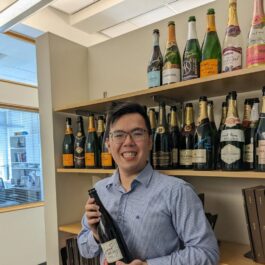
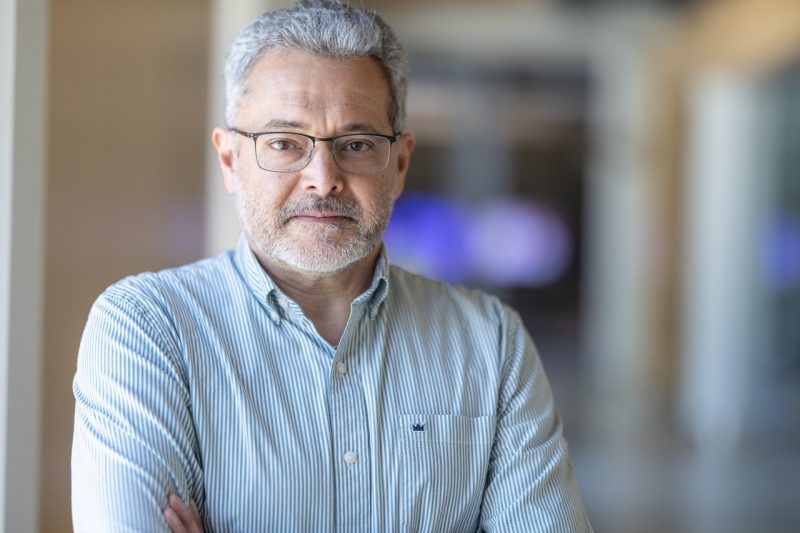
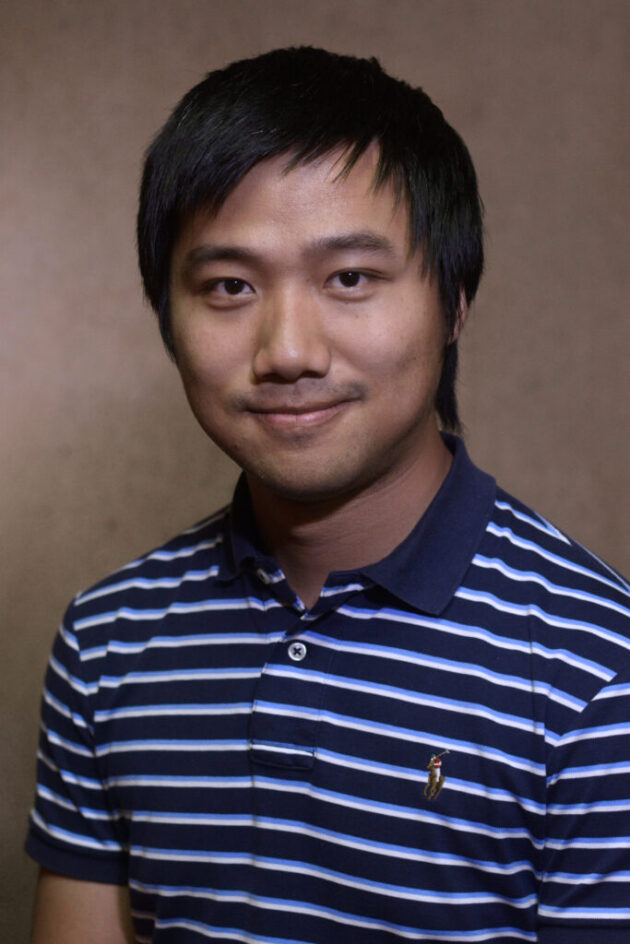
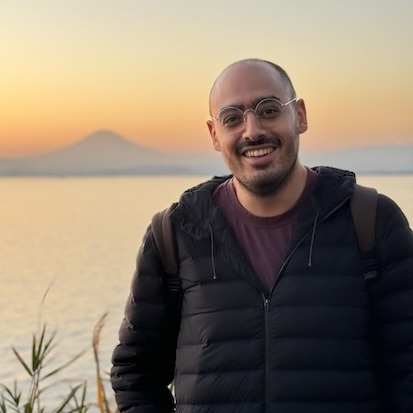
Tri Nguyen is a Postdoctoral Fellow at CIERA, Northwestern University , focusing on Dark Matter's role in galaxy formation and advanced machine learning applications in astrophysics. His work bridges computational cosmology with data science. Education: Ph.D. in Physics (Astrophysics Division), Massachusetts Institute of Technology (2024) Research Interests center on Dark Matter density profiles, galaxy assembly histories, and generative models for cosmological simulations. He specializes in graph neural networks and simulation-based inference frameworks. Scientific Trends from his publications show deep integration of machine learning (diffusion models, graph networks) with cosmological data analysis (Gaia DR3, FIRE simulations). Articles emphasize generative modeling for halo merger trees and kinematic studies of dwarf galaxies.
Prof. Dr. Gerald Kroisandt is a faculty member at the Saarland University of Applied Sciences , affiliated with the School of Engineering and the Department of Mathematics . His academic rank is Professor, and he actively teaches courses including Engineering Mathematics, Numerics, Statistics, and Advanced Mathematics for engineering disciplines. His research focuses on mathematics education , statistics pedagogy , and e-learning methodologies . He has pioneered innovative approaches in virtual learning environments, such as game-based learning, flipped classrooms, and cooperative learning models tailored for engineering and computer science students. Recent publications highlight his work in online education and cross-cultural educational research , with conference contributions analyzing student motivation, active learning in virtual labs, and statistics module design. His book Monte Carlo Methods and Models in Finance and Insurance (2010) remains a key reference in computational finance. Contact details: Email gerald.kroisandt@htwsaar.de , Phone +49 (0)681 5867 - 269, Room 5305, Goebenstraße 40, Saarbrücken.
Enrica Valeria Zola is a Professor Agregat at the Polytechnic University of Catalonia (UPC), affiliated with the Department of Telecommunications Engineering within the School of Telecommunications and Aerospace Engineering of Castelldefels (EETAC). She is an active member of two research groups: GRXCA (Group for Research in Cellular and Ad-hoc Communication Networks) and ISG-MAK (Information Security Group - Mathematics Applied to Cryptography). Her research focuses on wireless networking technologies, with particular expertise in Wi-Fi positioning systems (especially IEEE 802.11mc/RTT), 5G, ad-hoc networks, and mobile networking. With over 100 publications spanning from 2001 to 2025, her work demonstrates consistent contributions to the field. Recent publications (2021-2025) show a strong focus on Wi-Fi positioning technologies, particularly addressing challenges in accuracy, scalability, security, and implementation of the IEEE 802.11mc standard and RTT (Round Trip Time) positioning. Analysis of her 15 most recent publications reveals a cohesive research trajectory centered on improving wireless positioning systems. Her work spans theoretical analysis, practical implementation, security considerations, and performance optimization of Wi-Fi-based positioning technologies. She frequently addresses real-world challenges including NLOS (Non-Line-of-Sight) environments, hardware limitations, scalability issues in dense networks, and the integration of multiple positioning techniques for improved accuracy. Best Short Paper Award - International ACM Conference on Modeling, Analysis and Simulation of Wireless and Mobile Systems 2023 Best paper award - ICNS 2012 Professor Zola has served on scientific committees for numerous international conferences including the International ACM Conference on Modeling, Analysis and Simulation of Wireless and Mobile Systems, IEEE PE-WASUN, and IEEE International Conference on Wireless and Mobile Computing. Her extensive collaboration network includes researchers such as Israel Martin-Escalona, Francisco Barcelo, and Andreas Kassler, reflecting her integration within the international wireless communications research community.
Christoffer Olling Back is a Postdoctoral Researcher at the Department of Computer Science (Faculty of Science, University of Copenhagen) specializing in Human-Centred Computing . His work bridges applied and theoretical machine learning, focusing on probabilistic inference, stochastic processes, and computability theory. Education PhD in Computer Science (2017-2020) - University of Copenhagen MSc in Artificial Intelligence (2010-2011) - University of Edinburgh BA in Psychology (w/ Computer Science) (2004-2008) - Lewis and Clark College Current research explores predictive workflow models using location data through the iAware project (collaboration with Systematic, PowerNet, and Bispebjerg Hospital). Previous work investigated ERP system datasets in the DIREC consortium. His publications span topics in process mining, probabilistic modeling, and healthcare informatics. Recent achievements include 15 research outputs (2024-2016) covering process discovery, workflow simulation, and entropy-based log analysis. Collaborations with institutions like Roskilde University and industry partners demonstrate interdisciplinary impact. Scientific Awards Dean's List (2007) Nordea Fonden Scholarship (2010) As an educator, he serves as guest lecturer, assistant teacher, and tutor in computer science, machine learning, and software engineering. His professional background includes industry roles at ServiceNow Denmark ApS (2021-2024) and Gekkobrain (2020-2021).
Patrick Forré is an Assistant Professor and Lab Manager of the AI4Science Lab at the Informatics Institute, Faculty of Science, University of Amsterdam. His work bridges theoretical machine learning and scientific applications, fostering interdisciplinary collaboration across informatics, mathematics, ecology, chemistry, physics, biology, and astrophysics. His research centers on mathematical foundations of machine learning including causal inference, graphical models, information theory, conditional independence structures, and geometric deep learning. He specializes in applying these techniques to scientific data problems, particularly in electro-catalysis and nitrogen fixation, where machine learning enhances molecular simulations and quantum chemical modeling. His theoretical work addresses non-linear structural causal models with cycles and latent confounders. The AI4Science Lab under his management focuses on detecting hidden patterns in scientific data through projects like electrode-electrolyte interface modeling, nitrogen-fixing coordination complexes analysis, and classical DFT neural approximations. Located in LAB42 Building at Amsterdam Science Park, the lab connects diverse scientific disciplines through machine learning innovation while organizing colloquia, workshops, and PhD defenses.
Dr. Katerina Kaouri is a Reader (Associate Professor) in Applied Mathematics at Cardiff University's School of Mathematics, serving as the departmental Director for Impact and Engagement. She specializes in mathematical and computational biology, with a focus on calcium signaling in embryogenesis, epidemic modeling for airborne transmission, and industrial mathematics applications. Developed pandemic response models for Welsh Government (2020-2021) Lead GW4's inFer academia-clinic network for IVF improvement Co-founded Mediterranean Science Festival and SciCo Cyprus Research Interests: Her work bridges deterministic/stochastic modeling with real-world challenges across biology, engineering, and public health. Key projects include: Epidemic simulator development with Oxford University Mechanochemical modeling of calcium dynamics in IVF Non-Newtonian blood flow drug delivery simulations Environmental physics models for pandemic mitigation Recent Article Trends: Her 2022-2025 publications demonstrate convergence of: Computational epidemiology (airborne transmission modeling) Reproductive medicine (AI applications in ART labs) Biomechanics (apical constriction, viscoelastic coupling) Environmental engineering (windcatcher ventilation systems) Scientific Awards: Cardiff University Outstanding Contribution Awards (2022, 2019) 2023 Cardiff Excellence Awards Finalist (Innovation & Enterprise) 2021 Cyprus Madame Figaro Woman of the Year nominee Supervision: Currently mentoring 3 PhD students and multiple MMath/MSc researchers with international collaborators including Oxford, Nottingham, Barcelona, and Pittsburgh universities.
Angelo Melino is a Professor of Economics at the University of Toronto, holding a Ph.D. from Harvard University (1983) and a B.A. from the University of Toronto (1977). He has been affiliated with the University of Toronto since 1981, becoming a full professor in 1991. His research focuses on Econometrics , Macroeconomics , and Financial Economics , with notable contributions to asset pricing, monetary policy, and labor economics. He has held leadership roles, including Associate Chair of the Department of Economics and Director of the MFE program. Research Contributions: Melino’s work spans theoretical and empirical analyses of economic policy, including inflation targeting, business cycle costs, and electricity market dynamics. His methodologies in duration analysis and term structure modeling are widely cited. Notable publications include influential papers on foreign currency options pricing and the equity premium puzzle. Awards: He is a Fellow of the C.D. Howe Institute, a Senior Fellow at the Rimini Centre for Economic Analysis, and recipient of the University of St. Michael’s College Medal in Economics (1977). Professional Activities: Melino has served as a Visiting Professor at Harvard University and the University of California, San Diego. He contributed to policy advisory roles, including Special Adviser to the Bank of Canada, and authored widely adopted textbooks on macroeconomics tailored to Canadian contexts.
Hongxiao Zhu is an Associate Professor in the Department of Statistics at Virginia Tech. She holds a Ph.D. in Statistics from Rice University (2009), an M.S. in Mathematics from the University of Arkansas at Little Rock (2004), and a B.S. in Finance from Wuhan University (2002). Her research focuses on Bayesian methods, functional data analysis, and statistical machine learning, with applications in medicine, bioinspired sensing, neuroimaging, finance, and genomics. She has developed methods for analyzing high-dimensional data, including biosonar signals, genomic loci, and medical imaging data. Zhu has been recognized with awards such as the Travel Award from the Sixth International Workshop on Statistical Analysis of Neuronal Data (2012) and the SBSS Student Paper Competition (2008). Her teaching includes advanced courses on regression, statistical inference, Bayesian statistics, and statistical computing. She is affiliated with the Institute of Mathematical Statistics and the American Statistical Association. Zhu collaborates with researchers in engineering, biology, and computer science, notably in bioinspired sonar sensing frameworks and UAV applications. Her work bridges statistical theory and interdisciplinary applications, emphasizing robust modeling and computational innovation. Zhu's lab explores sonar terrain analysis, functional mixed models, and sensor-based environmental sensing. Recent projects include simulating bat-inspired sonar systems and analyzing DNA methylation patterns in brain development. Her research trends emphasize integrating Bayesian methods with real-world data challenges in healthcare and robotics. Her awards highlight contributions to statistical methodologies and interdisciplinary research. Grants and collaborations are evident through her work with institutions like SAMSI and Duke University. She advises on advanced statistical techniques for diverse datasets, though no specific advisee list is provided here.
Virgilio A. Centeno is a Professor in the Bradley Department of Electrical and Computer Engineering at Virginia Tech. His research focuses on power systems, phasor measurement units (PMUs), grid cybersecurity, and smart grid technologies. He holds a Ph.D. from Virginia Tech (1995) and has contributed extensively to advancing power system resilience, wide-area monitoring, and renewable energy integration. His work emphasizes practical applications such as GPS-spoofing detection, cascading failure prevention, and adaptive control strategies for modern grids. Research interests include synchronized sampling, power systems as critical infrastructure, microcontroller applications, and power systems education. His recent publications highlight innovative methods for PMU data recovery, event classification, and adaptive voltage security in renewable-rich grids. Collaborations involve developing testbeds for cyber-physical systems and creating realistic synthetic power networks to model interdependencies. No awards or honors are explicitly listed in the provided text. His teaching interests align with his research areas, and he remains affiliated with Virginia Tech’s research groups. Ongoing work includes proactive islanding strategies, Gaussian process-based dynamic inference, and optimal distribution network partitioning for resilience enhancement.
Eva Vivalt is an Assistant Professor (on leave) in the Department of Economics at the University of Toronto. She holds a Ph.D. from UC Berkeley (2011), an M.A. from Berkeley (2010), an M.Phil from Oxford (2007), and an A.B. from Dartmouth College (2005). Her research focuses on applied microeconomics, particularly cash transfer programs and improving evidence-based decision-making in policy contexts. Her work includes groundbreaking studies on guaranteed income programs in the U.S., analyzing impacts on employment, health, political attitudes, and household finances. She also explores how policymakers weigh evidence and local expertise, emphasizing the importance of context in policy design. Vivalt has contributed to initiatives like AidGrade and the IDEAL consortium, promoting global repositories for impact evaluation data. She is currently Director of the Global Priorities Institute at Oxford, expanding interdisciplinary research on decision-making under uncertainty, empirical methods, and global priorities. Her leadership includes mentoring early-career researchers and fostering collaborations across economics, philosophy, and psychology. She maintains affiliations with institutions like the World Bank and the Inter-American Development Bank through her policy-focused research.
Salvatore Ingrassia is a Professor of Statistics at the Department of Economics and Business, University of Catania, Italy. His research focuses on model-based clustering, mixture models, computational statistics, neural networks, and stochastic algorithms. He has held significant editorial roles, including Associate Editor for Statistical Methods and Applications , Advances in Data Analysis and Classification , and Computational Statistics and Data Analysis . He has also served in institutional leadership roles, such as Quality Assurance Chief Officer at the University of Catania and President of the Classification and Data Analysis Group (CLADAG) of the Italian Statistical Society. Education includes a Ph.D. in Applied Mathematics and Computer Science from the University of Naples (1991), a Research Fellowship at Ecole Normale Supérieure de Cachan (1993-1994), and a Degree in Electrical Engineering from the University of Catania (1986). His work spans editorial contributions, guest editorships, and institutional responsibilities, reflecting his leadership in statistical methodology and education. His research emphasizes robust statistical modeling, with applications in healthcare, finance, and astrophysics. Notable contributions include advancements in cluster-weighted models, mixture models, and computational algorithms for high-dimensional data. He has collaborated internationally, including visiting positions and editorial roles in leading journals.
Márton Karsai is an Associate Professor and Head of the Department of Network and Data Science at Central European University (CEU). He also serves as a Research Professor at the Rényi Institute of Mathematics (Hungary) and Editor-in-Chief of Advances in Complex Systems . His work focuses on computational social science, human dynamics, and data-driven modeling of socioeconomic systems. Karsai holds advanced degrees including a DSc from the Hungarian Academy of Sciences and an HDR (Habilitation) in Computer Science from École Normale Supérieure de Lyon. His research integrates temporal networks, human mobility, and social contagion phenomena, often using large-scale datasets from digital platforms and wearable sensors. Notable projects include studies on evacuation behavior during disasters, vaccination hesitancy, and urban socioeconomic stratification. Karsai leads interdisciplinary initiatives like the DyLNet project, which examines social interactions and language development in preschool environments through sensor technology. Recent publications highlight innovations in network clustering algorithms (PASCO), epidemic modeling with generalized contact matrices, and the application of machine learning to infer socioeconomic status from satellite imagery. His work bridges computational methods with real-world challenges in public health, urban planning, and humanitarian development.
Shuang Zhao is an Associate Professor of Computer Science at UC Irvine, co-directing the Interactive Graphics & Visualization Lab (iGravi). He holds a PhD from Cornell University (2014) and a postdoc at MIT. His research focuses on physics-based computer graphics, scientific computing, and inverse rendering, with applications in material science, biomedicine, and robotics. Zhao's NSF CAREER Award (2023) supports his work on Physics-Based Differentiable and Inverse Rendering, enabling automated 3D reconstruction and medical imaging advancements. Education: Ph.D., Computer Science, Cornell University (2014); Postdoc at MIT. Research areas: Inverse rendering, differentiable rendering, Monte Carlo methods, and light transport modeling. Notable projects include Meta's digital twin creation for the Metaverse, non-line-of-sight imaging, and medical imaging applications. His lab develops algorithms for efficient inverse solutions and collaborates with industry (Meta, Nvidia, Adobe). Teaching includes advanced graphics courses like CS 114 and ICS 162. Awards include ACM programming contest championships and Best Paper recognitions. Students supervised include Cheng Zhang (Facebook Fellow), Kai Yan, and Zahra Montazeri. Hobbies include photography and Japanese anime/video games.
Stephanie Denison is an Associate Professor and Associate Chair of Undergraduate Affairs at the University of Waterloo. Her research focuses on developmental psychology, particularly how children develop reasoning abilities related to probability, counterfactual thinking, and social cognition. Her work explores topics such as causal attribution, sunk cost fallacy, social network inference, and decision-making strategies in children. She has published extensively on probabilistic reasoning in infants and preschoolers, demonstrating how young children use statistical information to form beliefs about the world. Her recent studies investigate children's understanding of counterfactual scenarios (e.g., 'What if I had done something differently?'), their ability to infer emotions based on probabilistic outcomes, and their reasoning about social relationships through mutual connections. Denison also examines how children integrate physical constraints and emotional factors into their decision-making processes. Her contributions span cognitive development, philosophy of mind, and educational psychology, with a strong emphasis on bridging theoretical models with empirical findings from developmental research.
Andrew Boutros is an Assistant Professor in the Department of Electrical and Computer Engineering at the University of Waterloo. His research focuses on reconfigurable computing architectures, FPGA design, and domain-specific acceleration for deep learning and datacenter workloads. He holds a PhD from the University of Toronto (2024) and has worked at Intel Labs and MangoBoost. Education: PhD, Electrical and Computer Engineering, University of Toronto, Canada (2024) MASc, Electrical and Computer Engineering, University of Toronto, Canada (2018) BSc, Electronics Engineering, German University in Cairo, Egypt (2016) Research Interests: Developing efficient FPGA architectures and CAD tools for reconfigurable hardware, domain-specific acceleration, and application/hardware co-design. Specific areas include 3D-stacked acceleration devices, graph neural network acceleration, and FPGA-based smart NICs for AI training. Publications: Over 30 papers in top venues like IEEE FPL, FCCM, and FPGA conferences, with 4 best paper awards. Recent work includes 3D-stacked architectures, graph neural network inference, and FPGA optimization for deep learning. Awards: Best Paper Award (FPT 2023) Best Paper Award (ICM 2021) Stamatis Vassiliadis Best Paper Award (FPL 2018) Advising/Grants: Currently accepting graduate students. Collaborations include 84 co-authors and industry partnerships with Intel and MangoBoost.