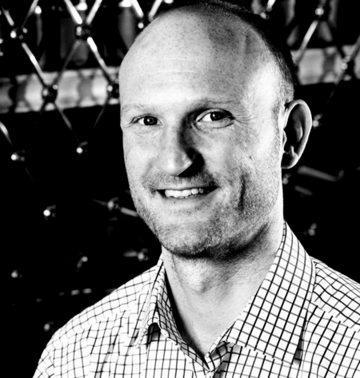
Massimo Mischi is a Full Professor at the Faculty of Electrical Engineering of the Eindhoven University of Technology (TU/e) and chairs the Signal Processing Systems (SPS) Division , the largest division at TU/e with over 250 researchers. He founded the Biomedical Diagnostics (BM/d) Lab in 2012, which now includes 180 researchers and clinical/industrial advisors, focusing on biomedical signal processing for diagnostics and monitoring.
Hyowon Gweon is an Associate Professor in the Department of Psychology at Stanford University. As the leader of the Social Learning Lab, her research focuses on how humans learn from others and help others learn, employing interdisciplinary methods including developmental, computational, and neuroimaging approaches. She holds a PhD in Cognitive Science from MIT (2012) and joined Stanford in 2014 after a postdoc at MIT. Her research interests span computational approaches to social learning, developmental psychology, neuroimaging, and education. She has received notable awards such as the APS Janet Spence Award (2020), James S. McDonnell Scholar Award (2018), and Marr Prize (2010). Her work explores topics like counterfactual reasoning, social cognition in infants, and embodied AI benchmarks. Labs/Teams: Social Learning Lab Key Themes: Prosocial behavior, theory of mind, cognitive development, and human-AI interaction. Her recent articles investigate infant gaze behavior, temporal reasoning in children, and strategic communication in preschoolers. Grants and advising details are not explicitly listed in the provided text.
Assoc Prof Ng Teng Yong is an Associate Professor at the School of Mechanical & Aerospace Engineering (NTU), specializing in numerical modeling and simulation. With a background as Research Manager at A*STAR Institute of High Performance Computing, his work spans materials science, nanotechnology, and aerospace engineering. Current focus on graphene-based desalination membranes Expertise in molecular dynamics simulations Investigates nanoscale fluid mechanics and structural dynamics Recent publications highlight advancements in energy-efficient electrodialysis, smart robotics, and nonlinear vibration analysis. His interdisciplinary approach integrates computational methods with experimental validation in additive manufacturing and soft material mechanics.
Michael U. Gutmann is a Senior Lecturer in Machine Learning at the School of Informatics, University of Edinburgh, and a member of the Institute for Adaptive and Neural Computation. His research lies at the intersection of machine learning, statistics, and scientific applications, with a focus on developing inference methods for complex and implicit models. Education: PhD in Computational Neuroscience, University of Tokyo MSc in Engineering and Applied Mathematics, Swiss Federal Institute of Technology (ETH) Zurich MSc, Ecole Centrale Paris His primary research interests include Bayesian inference, likelihood-free inference, optimal experimental design, unsupervised learning, and applications in computational biology and neuroscience. He is best known for introducing Noise-Contrastive Estimation (NCE), a foundational technique for training unnormalized statistical models. His recent work spans variational inference, density ratio estimation, flow models for missing data, and AI-driven experimental design in behavioral and biological sciences. His publications, including in NeurIPS , ICML , JMLR , and eLife , demonstrate a strong emphasis on methodological innovation for scientific discovery. He has contributed to open-source tools such as ELFI (Engine for Likelihood-Free Inference) and developed practical implementations of robust inference algorithms. Scientific Awards: No specific awards listed in the provided texts. Michael Gutmann actively supervises students and collaborates with leading researchers in machine learning and computational biology. He has secured research funding from EPSRC and BBSRC for projects in generative modeling and infectious disease epidemiology. He teaches advanced courses such as Probabilistic Modelling and Reasoning and Data Mining, reflecting his deep engagement with both theoretical and applied aspects of machine learning. Labs and Research Groups: Institute for Adaptive and Neural Computation (ANC), University of Edinburgh Former affiliations with Department of Mathematics and Statistics and Department of Computer Science at the University of Helsinki and Aalto University
Professor Wayne Luk is a Professor of Computer Engineering at the Department of Computing, Faculty of Engineering, Imperial College London. He leads the Programming Languages and Systems Section and the Custom Computing Research Group, and directs the EPSRC Centre for Doctoral Training in High-performance Embedded and Distributed Systems and the Centre for Advanced Financial Engineering. He previously served as a Visiting Professor at Stanford University from 2006 to 2009. His research spans FPGA acceleration, quantum computing, deep learning optimization, and algorithm-hardware co-design, with affiliations to the CRUK Convergence Science Centre and the Engineering Secure Software Systems group. His research interests include computational modeling for particle physics, causal discovery in agent-based systems, and high-throughput digital electronics. Notable contributions include FPGA-accelerated algorithms for neural networks, quantum circuit simulation, and Bayesian optimization frameworks. His work emphasizes practical applications of reconfigurable hardware in fields like medical imaging, high-energy physics, and financial systems. Professor Luk is a Fellow of the Royal Academy of Engineering, IEEE, and BCS. His publications focus on advancing hardware-aware machine learning, FPGA-based acceleration techniques, and scalable design methodologies. His research bridges theoretical computer science with applied engineering, addressing challenges in real-time systems, embedded computing, and next-generation computing architectures. His academic leadership includes directing interdisciplinary centers and training programs, fostering collaboration across computing, engineering, and physics. Current projects explore quantum computing tools, causal inference systems, and high-performance graph neural networks for particle physics applications.
Mingyu Ding is a tenure-track Assistant Professor at the Department of Computer Science, University of North Carolina at Chapel Hill. His research bridges robotics, embodied AI, and computer vision, focusing on building agents that interact effectively with physical environments. PhD in Robotics, University of Hong Kong (2022), advised by Ping Luo Postdoctoral Fellow, BAIR@UC Berkeley (with Masayoshi Tomizuka) Visiting Scholar, CSAIL@MIT (with Joshua Tenenbaum) B.S. in Computer Science, Renmin University of China (under Zhiwu Lu) His work emphasizes robot learning through physical simulation, multimodal foundation models, and self-supervised methods. Key contributions include Embodied Concept Learner (ECL) and Sparse Diffusion Policy frameworks. Recent publications highlight trends in 3D vision, diffusion-based planning, and language-driven robotic behavior synthesis. Awards include ICRA Best Paper (2024), ME Rising Star (2023), and CVPR Doctoral Consortium (2023). Session Chair for ICRA 2025 Associate Editor for IROS 2025 Guest Editor for Robotics Special Issue: Embodied Intelligence
Rex Ying is an Assistant Professor in the Department of Computer Science at Yale University's School of Engineering & Applied Science. He leads research in graph neural networks, geometric representation learning, and explainable AI, with applications spanning physical simulations, biology, knowledge graphs, and recommender systems. His lab actively recruits PhD students interested in geometric deep learning, graph neural networks, and trustworthy AI. Dr. Ying received his PhD in Computer Science from Stanford University under Jure Leskovec, with a thesis titled "Towards Expressive and Scalable Deep Representation Learning for Graphs." Prior to that, he graduated from Duke University in 2016 with highest distinction, majoring in Computer Science and Mathematics. His research focuses on three interconnected areas: advancing graph neural network architectures for improved expressiveness, scalability, and interpretability; innovating in geometric representation learning for data with diverse characteristics; and developing real-world applications across scientific domains. He has pioneered influential algorithms including GraphSAGE, PinSAGE, and GNNExplainer, and developed the first billion-scale graph embedding services at Pinterest as well as graph-based anomaly detection algorithms at Amazon. His recent publication trends show a strong focus on hyperbolic geometry for foundation models, non-Euclidean representation learning, and multimodal applications in computational biology. The research demonstrates increasing integration of geometric deep learning with large language models and foundation model architectures. KDD 2022 Dissertation Award 2019 Baidu Scholarship in Artificial Intelligence Dr. Ying actively serves the research community as a committee member for major conferences including AAAI, ICML, NeurIPS, ICLR, KDD, and WebConf for over seven years, and as area chair for LoG 2022. He co-leads the open-source PyTorch Geometric project and has organized numerous workshops on graph learning. His industry collaborations include Pinterest, Amazon, Facebook AI Research, DeepMind, Siemens, SLAC National Accelerator Laboratory, and Saudi Aramco. He teaches "Deep Learning for Graph-Structured Data" at Yale and mentors students in developing cutting-edge graph learning algorithms. His research lab collaborates with both academic institutions and industry partners to advance the state-of-the-art in graph representation learning, with particular emphasis on geometric deep learning and its applications to scientific discovery and real-world systems.
Professor Nick Chater is a leading figure in the field of Behavioural Science, affiliated with the University of Warwick at Warwick Business School since 2010. He has held previous chairs in psychology at Warwick and UCL. His research spans cognitive and social foundations of rationality, with applications to business and public policy, and he has authored over 200 papers and six books. He is a fellow of the British Academy, Cognitive Science Society, and Association for Psychological Science. His research interests include cognitive science, behavioral economics, decision making, and computational psychology, with a focus on reasoning, language, and mathematical modeling of mental processes. He has been recognized with prestigious awards such as the Spearman Medal, Experimental Psychology Society Prize, and the David E Rumelhart Prize for lifetime achievement in cognitive science. His work extends to practical applications through co-founding Decision Technology and advising the UK government's Climate Change Committee and the Behavioural Insight Team. Recent publications highlight his interdisciplinary approach, bridging economics, cognitive science, computational modeling, and behavioral public policy. Topics include thermal macroeconomic theory, Bayesian sampling, paradoxes in cognition, and language emergence via social interaction. These works emphasize probability judgments, moral cognition, and computational limitations in human inference. British Psychological Society's Spearman Medal (1996) Experimental Psychology Society Prize (1997) David E Rumelhart Prize (2023) PROSE Award (2019) Chater's academic contributions include collaborations with researchers like Adam N. Sanborn, Hossam Zeitoun, and Morten H. Christiansen, focusing on Bayesian inference, behavioral public policy, and cognitive modeling. He has also been a resident scientist on BBC Radio 4's The Human Zoo.
Professor Paul Fearnhead is a leading academic in Statistics at Lancaster University 's School of Mathematical Sciences . His research focuses on Bayesian and Computational Statistics , with applications in Anomaly Detection , Continuous-time Markov Processes , and Changepoint Analysis . Department: Mathematics and Statistics Academic Rank: Professor Email: p.fearnhead@lancaster.ac.uk His work bridges theoretical statistics and computational efficiency, notably through pruning techniques for change detection and novel Monte Carlo methods. Current projects include AI Hub initiatives, probabilistic AI foundations, and real-time anomaly detection in streaming data. Research outputs span Bayesian Analysis , Time Series Modeling , and Scalable Statistical Algorithms , with applications in fields like astronomy and epidemiology. Recent publications emphasize simulation-based composite likelihoods and efficient distributed changepoint detection. Scientific contributions include leadership roles in the STOR-i Centre for Doctoral Training and Data Science Institute (DSI) projects such as CoSInES and Statscale. He supervises PhD students including Dylan Bahia, Yuntang Fan, and Ziyang Yang.
Daniel Wolpert is a Professor of Neuroscience at Columbia University , where he is also Vice-Chair of the Department of Neuroscience and a key member of the Zuckerman Mind Brain and Behavior Institute . Additionally, he holds a part-time position as Director of Research at the Department of Engineering, University of Cambridge, and is a Fellow of the Royal Society and the Academy of Medical Sciences . Education: Medical Doctor (1989), D.Phil. in Physiology from the University of Oxford (1992) Previous Positions: Lecturer at Sobell Department of Motor Neuroscience (Institute of Neurology), Professor of Engineering at University of Cambridge (2005–2018) Wolpert is a world leader in sensorimotor control , combining computational neuroscience , Bayesian inference , and robotic/virtual reality technologies to reverse-engineer how the brain generates movements. His work emphasizes the brain's role in reducing sensorimotor uncertainty through predictive modeling and has implications for understanding disorders like autism and Parkinson’s disease. His awards include: Royal Society Ferrier Medal (2020) Minerva Foundation Golden Brain Award (2010) Royal Society Francis Crick Prize Lecture (2005) Daniel Wolpert actively contributes to public science communication, including a 2011 TED Talk on the computational role of the brain in movement, and leads the Wolpert Lab at Columbia, which investigates the neural basis of decision-making , motor learning , and reinforcement learning in both healthy and clinical populations.
Paola Cascante-Bonilla is an Assistant Professor in the Department of Computer Science at Stony Brook University, with expertise in computer vision, natural language processing, and embodied AI. Her research focuses on developing systems for compositional reasoning, common-sense inference, and trustworthy AI using vision-language models, while addressing cultural bias and explainability challenges.
Scientia Professor Robert Kohn is a distinguished academic at the University of New South Wales, holding a position in the School of Economics within the UNSW Business School. With a career spanning several decades, Professor Kohn has established himself as a leading expert in statistical methodology and econometric modeling. His research has significantly contributed to Bayesian statistics and computational methods for complex data analysis. Professor Kohn's research focuses on advanced statistical methodologies including Bayesian methodology, variable selection and model averaging, nonparametric regression models, time series modeling, multivariate Gaussian and non-Gaussian regression, and Markov chain Monte Carlo simulation algorithms. His work bridges theoretical statistics with practical applications across economics, finance, and cognitive science. His research demonstrates a consistent trajectory toward developing more efficient computational methods for complex statistical models, with recent work emphasizing variational Bayesian methods, particle filtering techniques, and applications to time series analysis. Analysis of his recent publications (2022-2025) reveals a strong focus on advancing computational statistical methods, particularly in Bayesian inference for complex models. His work shows increasing integration of machine learning techniques with traditional statistical methods, especially in handling high-dimensional data and complex time series structures. Professor Kohn has made significant contributions to variational inference methods, particle-based computational techniques, and applications to financial time series and cognitive modeling. Professor Kohn has maintained an exceptionally productive research career with continuous publication output since the 1970s, demonstrating remarkable longevity and adaptability in his research focus as statistical methodologies have evolved. His work shows strong international collaboration, particularly with researchers in Australia, the United States, and Europe, reflecting his standing in the global statistical community.
Julian Jara-Ettinger is an Associate Professor of Psychology and Computer Science at Yale University. He holds a Ph.D. from MIT (2016). His research focuses on understanding the cognitive and computational mechanisms underlying human social behavior, including fairness, linguistic communication, gesture, moral reasoning, and pedagogy. He employs interdisciplinary methods such as computational modeling, eye-tracking, cross-cultural studies, and developmental research to bridge psychology and artificial intelligence. Key research areas include the development of social cognition in children, the integration of theory of mind with communication, and the application of cognitive science principles to build socially intelligent machines. His work emphasizes how humans infer others' knowledge, intentions, and desires, with implications for AI safety and ethical systems design. Publications span topics like epistemic inference, moral judgments, and the computational foundations of social interaction. His lab's research often intersects with evolutionary simulations, neural modeling, and cultural psychology. No scientific awards are explicitly mentioned in the provided text. Collaborations involve cross-disciplinary teams addressing challenges in developmental science, AI ethics, and cognitive robotics. His work has practical applications in educational strategies, social policy, and human-AI collaboration frameworks.
Chuang Gan is an Assistant Professor at the University of Massachusetts Amherst, affiliated with the College of Information and Computer Sciences and the Department of Computer Science. His work focuses on advancing artificial intelligence, robotics, computer vision, and embodied agents through interdisciplinary research combining neural networks, physical simulations, and multimodal learning. Research interests include generative models, reinforcement learning, vision-language integration, and scalable autonomous systems. He explores topics like world modeling for robots, adaptive policy learning, and physics-driven AI. His projects often involve creating systems that learn from visual, auditory, and tactile inputs to perform complex tasks such as object manipulation, navigation, and decision-making in dynamic environments. Recent research trends emphasize embodied AI systems capable of long-horizon planning, compositional reasoning, and efficient learning from limited data. His work bridges theory and practice, with applications in robotics, simulation platforms, and multimodal generation. Key contributions include frameworks for 3D scene understanding, adaptive world models, and novel training paradigms for large language models. His research has been applied to robotics platforms like RoboDreamer and UBSoft, focusing on unbounded soft environments. Collaborations involve designing benchmarks for physical scene understanding (e.g., Physion++), and creating tools like DiffTactile for tactile simulation. His work often integrates principles from differential geometry, PDE dynamics, and game theory. Chuang Gan’s research group develops open-source tools and benchmarks, such as the SoftZoo robot co-design platform and the SOK-Bench situated reasoning benchmark. His team emphasizes scalable alignment methods beyond human supervision and explores ethical AI through principles like symmetry-enhanced training.
Ruth Keogh is a Professor of Biostatistics and Epidemiology at the London School of Hygiene & Tropical Medicine (LSHTM), affiliated with the Medical Statistics Department within the Faculty of Epidemiology and Population Health. She is Co-Director of the Centre for Data and Statistical Science for Health (DASH) and serves as Departmental Research Degrees Coordinator. Her academic career has spanned roles from Lecturer (2012–2015) to Associate Professor (2015–2019) before attaining her current rank in 2019. Keogh holds advanced degrees including a DPhil in Medical Statistics/Epidemiology (University of Oxford, 2007), MSc in Applied Statistics (Oxford, 2003), and BSc in Mathematics and Statistics (University of Edinburgh, 2002). Her research focuses on causal inference, clinical trial emulation using real-world data, and applications in cystic fibrosis, infectious diseases, and public health. She leads projects on lung function trajectories, vaccine efficacy, and healthcare policy analysis. Her work integrates biostatistical methods with epidemiological studies, emphasizing rigorous analysis of observational data to inform clinical decisions. Notable areas include evaluating antibiotic treatments for cystic fibrosis patients, assessing diagnostic test accuracy for dengue and leptospirosis, and modeling vaccine effectiveness during the COVID-19 pandemic. She teaches courses in survival analysis, electronic health records, and health data science at LSHTM. Keogh has held leadership roles in the International Biometric Society and the STRATOS Initiative, and she has delivered keynote addresses at international conferences on trial emulation and biostatistical methods. Her contributions bridge methodological innovation and practical health challenges, with over 190 publications and active engagement in global health research networks.