Meta Berghauser Pont is a Professor of Urban Morphology and Urban Planning at Chalmers University of Technology. She leads the Spatial Morphology Group (SMoG), focusing on quantitative analysis of urban form, space syntax, and design theory. Key research themes: urban density, sustainable cities, social-ecological systems, pedestrian movement modeling Authored the 2023 book Spacematrix: Space, Density and Urban Form , redefining density metrics Her work bridges analytical urban morphology with practical urban planning applications, particularly in noise/air quality management, transport infrastructure, and digital twin city modeling. She manages pedagogical development for architecture programs at Chalmers. Active projects include: Digital Twin Cities Centre (EU/VINNOVA) Sustainable Urban Form (Formas) Green Infrastructure Integration (Mistra Urban Futures) Multi-scale Climate Proofing (VINNOVA) Urban Design Calculator (Naturvårdsverket) Her lab develops open-source tools like the Place Syntax Tool (PST) for morphological analysis of cities.
Dr. Marie Alminger is a Senior Researcher at Chalmers University of Technology , specializing in Food and Nutrition Science . Her work focuses on bioactive compounds in foods, sustainable processing techniques, and valorization of agricultural and marine by-products. Circular utilization of banana pulp, fish co-products, and berry residues Innovative pH-shift processing with antioxidant-rich materials International projects targeting food safety in East Africa Research trends emphasize in vitro digestion models , lipid oxidation control , and cross-processing methods integrating marine and agricultural streams. Publications span Food Chemistry , Molecular Nutrition & Food Research , and Journal of Agricultural and Food Chemistry , reflecting multidisciplinary approaches to food functionality and sustainability.
Lars Hammarstrand is an Associate Professor at Chalmers University of Technology specializing in the Signal Processing research group. His work integrates model-based Bayesian statistics with deep machine learning for applications in visual localization, sensor fusion, and autonomous systems, with emphasis on robustness in real-world environments. His research focuses on bridging Bayesian inference and deep learning to solve challenges in autonomous vehicle perception. Key areas include visual localization under appearance changes, radar-camera sensor fusion, and out-of-distribution detection for safety-critical systems. Recent work explores neural radiance fields for radar, semi-supervised learning for mapping, and probabilistic hierarchical classification to address real-world uncertainties in autonomous driving. Analysis of his 2020-2025 publications reveals a trajectory toward unifying geometric and semantic understanding in autonomous systems. His work demonstrates increasing integration of neural radiance fields with traditional filtering techniques, while advancing open-set recognition capabilities. Notable contributions include road geometry estimation frameworks, extended object tracking with PHD filters, and methods to mitigate data leakage in localization benchmarks. No scientific awards were mentioned in the provided materials. Hammarstrand has contributed to academic supervision methodology through his publication on improving master's thesis supervision efficiency, though specific student names are not listed. The provided information contains no details about research grants or funding sources. He operates within Chalmers University's Signal Processing research group, which develops advanced algorithms for automotive perception systems, focusing on sensor fusion techniques that combine radar, camera, and motion data for robust environmental understanding in autonomous vehicles.
Krister Larsson is a Professor of Practice and Docent at the Department of Technical Acoustics, Chalmers University of Technology. He also serves as a senior consultant at Efterklang (AFRY) and has held previous roles at SP and RISE, where he managed acoustics labs and conducted senior research. His expertise spans building acoustics , community noise , and machine noise , with significant contributions to noise reduction in urban environments and lightweight structures. Research Interests : Larsson focuses on acoustic modeling , vibroacoustic systems , thermoacoustic devices , and noise control in transportation infrastructure . His work bridges theoretical acoustics and practical applications, including sound classification standards, noise barriers, and sustainable urban planning. Scientific Awards : While no awards are explicitly listed, his extensive publication record and leadership roles in acoustics research groups underscore his professional impact. Teaching & Affiliations : He teaches foundational and advanced courses in the ACE program and Master's program in Sound and Vibration . His career includes collaborations with research institutions (SP, RISE) and industry (AFRY).
Jelena Andric is an Associate Professor in the Vehicle Engineering and Autonomous Systems department at Chalmers University of Technology, working within the Mechanics and Maritime Sciences school. Her research spans multiple aspects of vehicle engineering with a particular focus on electric and autonomous vehicle technologies. Her research interests primarily center around electric vehicle engineering, battery system design, autonomous vehicle optimization, thermal management systems, computational fluid dynamics, reinforcement learning applications, and hardware-in-the-loop simulation. She has developed expertise in applying advanced computational methods to solve complex vehicle engineering problems, particularly in the areas of battery management and energy optimization. Analysis of her recent publications reveals a strong trend toward optimizing electric vehicle performance, particularly focusing on battery degradation mitigation, thermal management, and energy efficiency. Her work increasingly incorporates artificial intelligence techniques, especially reinforcement learning, to develop sophisticated optimization approaches for electric trucks and autonomous vehicles. The research spans from fundamental fluid dynamics studies to applied engineering solutions for real-world transportation challenges. Dr. Andric has been actively involved in numerous research projects funded by organizations including VINNOVA, the Swedish Energy Agency, CHAIR, and ÅForsk. These projects cover diverse areas such as battery aging prediction, vehicle management strategies for electrified vehicles, electric public transit systems, and virtual engine calibration. Her current research portfolio includes leadership in projects related to simulation-based evaluation of connected vehicles, battery aging prediction for electric autonomous vehicles, AI-cloud-based vehicle management strategies, and transition to electric public transit systems. These projects demonstrate her commitment to addressing critical challenges in sustainable transportation through advanced engineering solutions.
Patric Jensfelt is a full-time Professor at the Robotics, Perception and Learning (RPL) division within the School of Electrical Engineering and Computer Science (EECS) at KTH Royal Institute of Technology . He contributes to robotics and autonomous systems through research, teaching, and industry collaboration. Academic Rank: Professor Department: Robotics, Perception and Learning (RPL) School: School of Electrical Engineering and Computer Science (EECS) University: KTH Royal Institute of Technology His research focuses on robotics and autonomous systems , particularly spatial cognition for enabling robots to understand and model their environments. He integrates sensor data with high-level symbolic reasoning to advance navigation, mapping, and system integration. Recent work includes applications in service robotics, 3D foot scanning (via the company Volumental ), and drone-based perception. The 15 most recent articles highlight advancements in scene flow estimation, autonomous driving, LiDAR processing, and domain adaptation. They emphasize self-supervised learning , dynamic environment modeling , and robust spatial representations for autonomous systems. Patric supervises Master’s and PhD students, particularly in project courses like DD2410 Introduction to Robotics , DD2419 Project Course in Robotics and Autonomous Systems , and the doctoral course FDD3356 System Integration for Robotics . He is actively involved in the WASP Graduate School , teaching Autonomous Systems annually. He leads the Robotics, Perception and Learning (RPL) division, which fosters innovation in robotics through experimental projects and industry partnerships like Intelligent Machines . The division supports internships (unpaid) and encourages applicants to demonstrate prior engagement with his research.
Ramin Karim is a Professor and Head of Subject in the Department of Civil, Environmental and Natural Resources Engineering at Luleå University of Technology. His research focuses on operation and maintenance technology, with expertise in railway systems, industrial cybersecurity, structural health monitoring, and the application of advanced analytics in asset management. He leads the Operation, Maintenance and Acoustics division, emphasizing interdisciplinary approaches to solving complex engineering challenges. Key research areas include predictive maintenance strategies for railway infrastructure, cybersecurity frameworks for Industry 5.0, and the integration of metaverse technologies in industrial contexts. His work often involves data-driven methodologies such as point-cloud processing, game theory for cyber threat modeling, and digital twin concepts. Recent publications highlight his contributions to railway maintenance policy optimization, health monitoring of ground support systems in mining, and cybersecurity challenges in industrial systems. He has co-authored over 50 peer-reviewed articles, many appearing in high-impact journals like International Journal of Systems Assurance Engineering and Management and Frontiers in Virtual Reality . Ramin Karim’s research also explores emerging technologies like federated learning for digital twins, blockchain applications in railways, and human-centric predictive health management systems. His work aligns with initiatives such as the Reality Lab Digital Railway, aimed at advancing sustainable and digitally enabled transportation solutions.
Jonas Westin is an Associate Professor at the Department of Mathematics and Mathematical Statistics and a Research Fellow at the Centre for Regional Science (CERUM) at Umeå University. His research focuses on applying mathematical methods and models to address social science challenges, particularly in transportation, regional development, and environmental policy. He teaches courses in mathematical modeling and project courses for civil engineering students, and is recognized as a university teacher. His research interests include transportation economics, input-output analysis, and operations research, with a focus on optimizing freight networks, evaluating infrastructure policies, and modeling regional accessibility. He has contributed to projects analyzing sustainable aviation, maritime safety, and cross-border infrastructure planning in Northern Europe. Westin collaborates with institutions like Trafikverket (Swedish Transport Administration) and the Nordic countries’ transport networks. His work bridges theoretical mathematical modeling with practical policy analysis, emphasizing the implications of transport policies on regional competitiveness and environmental sustainability. Notable projects include the Botnia-Atlantica corridor analysis and studies on fossil-free regional aviation. Affiliations: Associate Professor, Department of Mathematics and Mathematical Statistics Research Fellow, CERUM (Centre for Regional Science) Key Research Themes: Transportation Network Optimization Regional Economic Impact Analysis Environmental Policy Modeling His recent publications highlight innovative approaches to freight modeling, maritime safety metrics, and cross-border infrastructure coordination. Westin’s interdisciplinary work reflects a commitment to addressing complex societal challenges through rigorous quantitative methods.
Martin Karp is a Research Fellow and postdoctoral researcher at KTH Royal Institute of Technology's Department of Engineering Mechanics, working under Dan Henningson. His research focuses on high-fidelity numerical simulations of turbulence and transition, with a specialization in high-performance computing (HPC) and supercomputing architectures. He holds a PhD in computer science from KTH and an MSc in Engineering Physics from Lund University, complemented by studies at ETH Zürich's computer science department. His research interests explore computational limits in nonlinear chaotic systems and future computational advancements. He leads the development of the Neko framework, a scalable simulation tool for extreme-scale CFD with extensive accelerator support. Karp's work emphasizes GPU and FPGA acceleration, parallel computing, and optimizing algorithms for heterogeneous architectures. Key contributions include large-scale turbulence simulations using GPUs, reducing communication in conjugate gradient methods, and evaluating FPGA-based flow solvers. His publications span journals like Concurrency and Computation and Scientific Reports , with conference presentations at IEEE Cluster, PASC, and HPCAsia. Karp's research bridges theoretical computational limits and practical HPC implementation, addressing challenges in precision, scalability, and hardware utilization. His educational background combines engineering physics with computer science, enabling interdisciplinary approaches to fluid dynamics and high-performance simulation. Current projects aim to push the boundaries of computational fluid dynamics through novel algorithm design and leveraging emerging hardware capabilities.
Sandhya Choubey is a Professor at KTH Royal Institute of Technology in Stockholm, Sweden, affiliated with the School of Particle and Astrophysics and Medical Imaging. Her research focuses on theoretical particle physics, particularly neutrino physics and dark matter, with specialization in neutrino oscillations, dark matter signatures, and experimental collaborations like Hyper-Kamiokande, ESSnuSB, and DUNE. She contributes to major international projects such as the India-based Neutrino Observatory (INO) and the Deep Underground Neutrino Experiment (DUNE). Choubey teaches advanced physics courses including Quantum Field Theory, Theoretical Particle Physics, and Symmetries in Physics. Her work explores neutrino properties, including mass hierarchy, CP violation, and non-standard interactions, alongside implications for dark matter and cosmology. She has been instrumental in designing detector technologies and analyzing experimental data from leading neutrino observatories. Her research also addresses fundamental questions in physics, such as the connection between neutrino masses, baryogenesis, and dark matter candidates. She frequently collaborates with global teams to advance neutrino physics and astroparticle studies, contributing to both theoretical frameworks and experimental implementations.
Farzin Golzar is an Assistant Professor at KTH Royal Institute of Technology, affiliated with the Heat and Power Technology Division under the Digital Futures Faculty. His research focuses on sustainable energy systems, AI-driven environmental solutions, and circular economy strategies. He is part of a cross-disciplinary initiative at Digital Futures, addressing societal challenges through digital technology innovation. Key research interests include energy transition pathways for oil-dependent economies, optimization of renewable energy systems (e.g., solar-battery hybrids), and AI applications for CO₂ emission prediction. He also explores urban circularity through waste stream management and landfill site identification using GIS-AHP frameworks. His work spans technical-economic analyses of energy systems, battery degradation modeling, and symbiotic food-energy systems (e.g., biogas from manure for greenhouses). Recent studies emphasize climate policy implications and long-term sustainability in urban environments like Stockholm and Curitiba, Brazil. Advising and grants details are not explicitly provided in the text. He collaborates with institutions like RISE Research Institutes of Sweden and Stockholm University through Digital Futures. His lab/center, Digital Futures, is based at Osquars Backe 5, Stockholm.
Jayanth Raghothama is an Associate Professor at KTH Royal Institute of Technology, affiliated with the School of Computer Science and Communication (CBH) and the Digital Futures Faculty. He is part of the Division of Health Informatics and Logistics, focusing on healthcare systems, complex systems modeling, and simulation-based decision-making. His academic role includes co-leading the Digitalization Platform and serving as a Vice-Director. Education: PhD in Complex Systems from KTH (2017). Prior experience includes software industry roles and work with a think tank in Bangalore. Research Interests: Healthcare logistics, complex systems analysis, participatory simulations, AI/ML ethics, and the philosophy of games and simulations. His work bridges computational models with real-world applications in healthcare, urban planning, and disaster management. Recent Projects: Co-Principal Investigator of the 'Data-driven Improvement of Work-Flows at the Karolinska University Hospital' project. Active in AI-based colorectal cancer detection in primary care (AIDCCIP project). Teaching: Courses on Applied Machine Learning, Simulation Methods, and Healthcare Logistics at Bachelor, Master, and PhD levels. Modules include AI/ML ethics and Agent-Based Modeling. Publications: Over 20 peer-reviewed articles focusing on healthcare simulation models, real-world data analysis in oncology, and hybrid modeling techniques. Notable works include patient flow optimization algorithms and frameworks for risk stratification in lung cancer studies.
Ricardo Vinuesa is an Associate Professor at KTH Royal Institute of Technology, affiliated with the Department of Mechanics within the School of Engineering Sciences. He serves as the Principal Investigator (PI) for projects such as 'An AI-based framework for harmonizing climate policies and projects with the SDGs' and co-leads the 'Faster-than-real-time and high-resolution simulation of fluid flow in engineering applications' initiative. His work integrates artificial intelligence with fluid mechanics, sustainability, and climate policy. Education and Academic Roles: Vinuesa teaches courses including Data-driven methods in engineering mechanics, Mechanics I, and Turbulence, holding roles as examiner, course manager, and teacher. He is part of the Digital Futures Faculty and actively contributes to academic programs at KTH. Research Interests: His research focuses on AI-driven solutions for fluid mechanics challenges, turbulence modeling, sustainable development goals (SDGs), and climate policy alignment. He develops machine learning frameworks for flow control, sensor optimization, and climate risk assessment, emphasizing interdisciplinary applications. Projects and Applications: Key projects include AI-based frameworks for SDG harmonization, high-resolution fluid simulations for indoor climate, and turbulence control via reinforcement learning. His work bridges computational fluid dynamics with real-world sustainability challenges, leveraging deep learning and data-driven methodologies. Labs and Collaborations: Vinuesa leads the Artificial Intelligence Group, with a lab website at vinuesalab.com . His research is supported by collaborations with industry and academic partners, focusing on advancing fluid mechanics and environmental engineering through AI innovation.
Anders Lansner is a Professor of Computer Science at Stockholm University and holds an affiliated professorship at KTH Royal Institute of Technology. He leads the Lansner Lab (Computational Biology and Neurocomputing) at the Department of Computational Science and Technology (CST) within the School of Computer Science and Communication (CSC) at KTH. His research focuses on computational neuroscience and brain-like computing, emphasizing mathematical and computational models of neuronal networks in the neocortex and basal ganglia. Key projects include developing neuromorphic algorithms for supercomputers and FPGA-based hardware implementations. Lansner manages the computational neuroscience platform for the Stockholm Brain Institute (SBI) and the neuroinformatics platform for StratNeuro (Karolinska Institutet). His lab contributes to EU projects such as FACETS and NEUROChem, and collaborates with KTH’s Electronics Department on modular brain-inspired FPGA designs. Research interests span synaptic plasticity mechanisms, memory systems (episodic, semantic, and working memory), and applications in neuromorphic computing. He supervises graduate students and teaches courses in computational neuroscience. Lansner’s work bridges theoretical neuroscience with engineering, aiming to advance brain-inspired AI and hardware systems. His lab’s StreamBrain framework supports heterogeneous computing architectures for brain-like neural networks. Notable collaborations include cross-disciplinary efforts in neuromorphic hardware development (e.g., memristor-based learning engines) and olfactory system modeling. Lansner’s research addresses both fundamental brain mechanisms and technical applications in data analysis and neurorobotics.
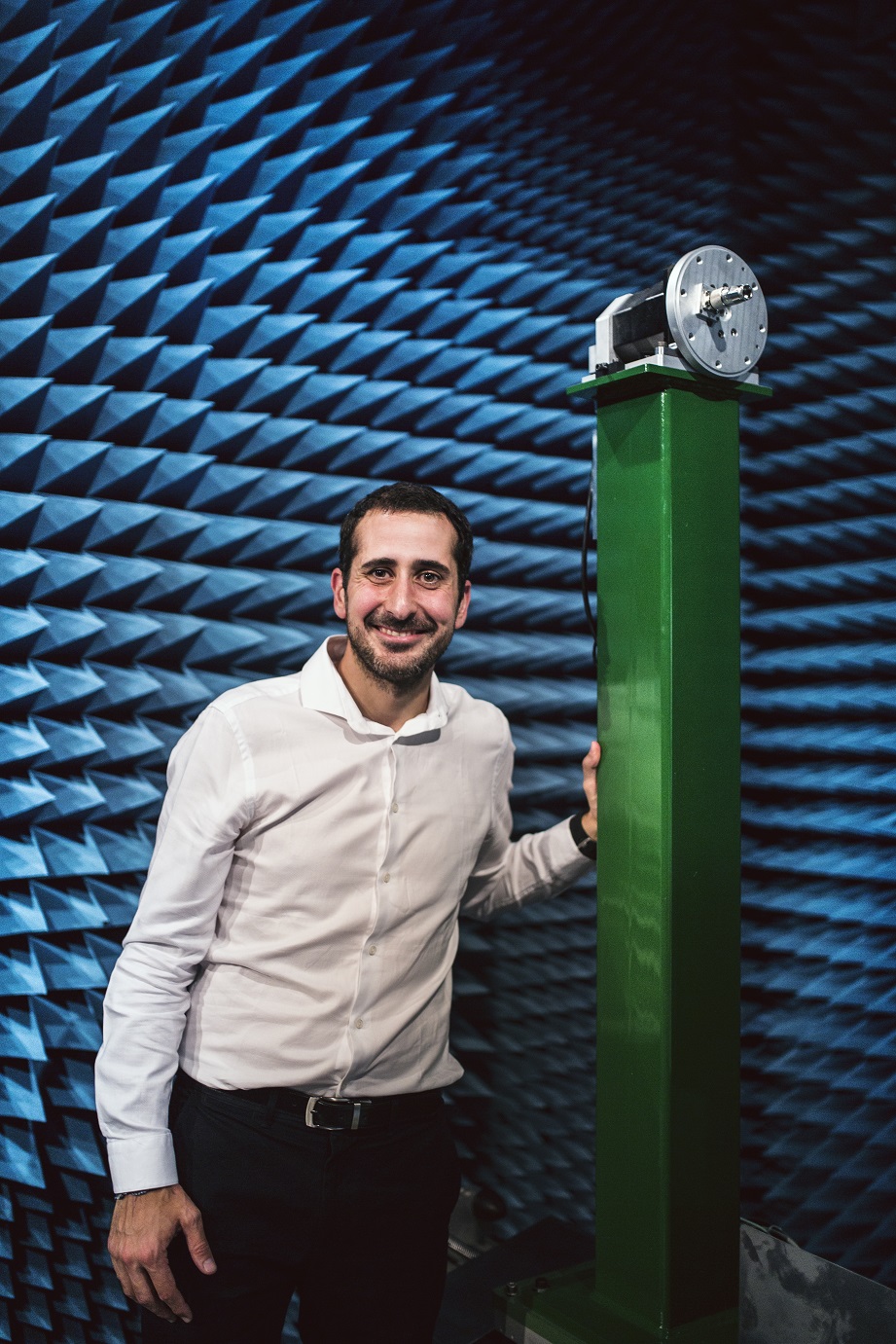
Oscar Quevedo Teruel is a Full Professor in the School of Electrical Engineering and Computer Science (EECS) at KTH Royal Institute of Technology, where he is affiliated with the Division of Electromagnetic Engineering and Fusion Science. He leads the Antenna Laboratory and serves as Director of the Master’s Programme in Electromagnetics, Fusion and Space Engineering. He is also an Associate Editor of IEEE Transactions on Antennas and Propagation and founder and Editor-in-Chief of Reviews of Electromagnetics. Research Interests: His research spans advanced electromagnetic structures, including glide symmetries, transformation optics, metasurfaces, lens antennas, and geodesic lenses. These are applied to 5G/6G communications, satellite systems, and millimeter-wave technologies. He investigates low-dispersive leaky-wave antennas, high-impedance surfaces, and periodic electromagnetic structures for enhanced performance in modern wireless systems. The recent publications highlight a strong trend in leveraging glide symmetry and metasurfaces to design compact, efficient, and broadband antennas—particularly for Ka-band and 60 GHz applications. His work integrates ray tracing, physical optics, and transformation optics to model and optimize geodesic and graded-index lenses. The research emphasizes industrial applications in telecommunications, satellite systems, and radar, often in collaboration with Ericsson, ESA, and other leading institutions. Scientific Awards and Leadership: Distinguished Lecturer, IEEE Antennas and Propagation Society (2019–2021) Chair, IEEE APS Educational Initiatives Programme (since 2020) Member and Vice-Chair, EurAAP Board of Directors (since 2021, Vice-Chair since 2022) EurAAP Delegate for Sweden, Norway, and Iceland (2018–2020) Advising and Grants: He supervises multiple PhD and Master’s students and leads numerous research projects funded by SSF, Vinnova, VR, ESA, STINT, ONR, and industry partners including Ericsson, SAAB, and Thales. These projects focus on innovative antenna systems for 5G/6G, satellite communications, and space instrumentation. He is also the KTH leader in several international collaborations, including MSCA Doctoral Networks and COST Actions. Laboratories and Teams: He is responsible for the Antenna Laboratory within the Sustainable Power Lab at KTH and leads the 'Radio electronics and antennas' area in SweWIN, the Swedish Wireless Innovation Network. His team actively collaborates with industrial and academic partners across Europe and the US.