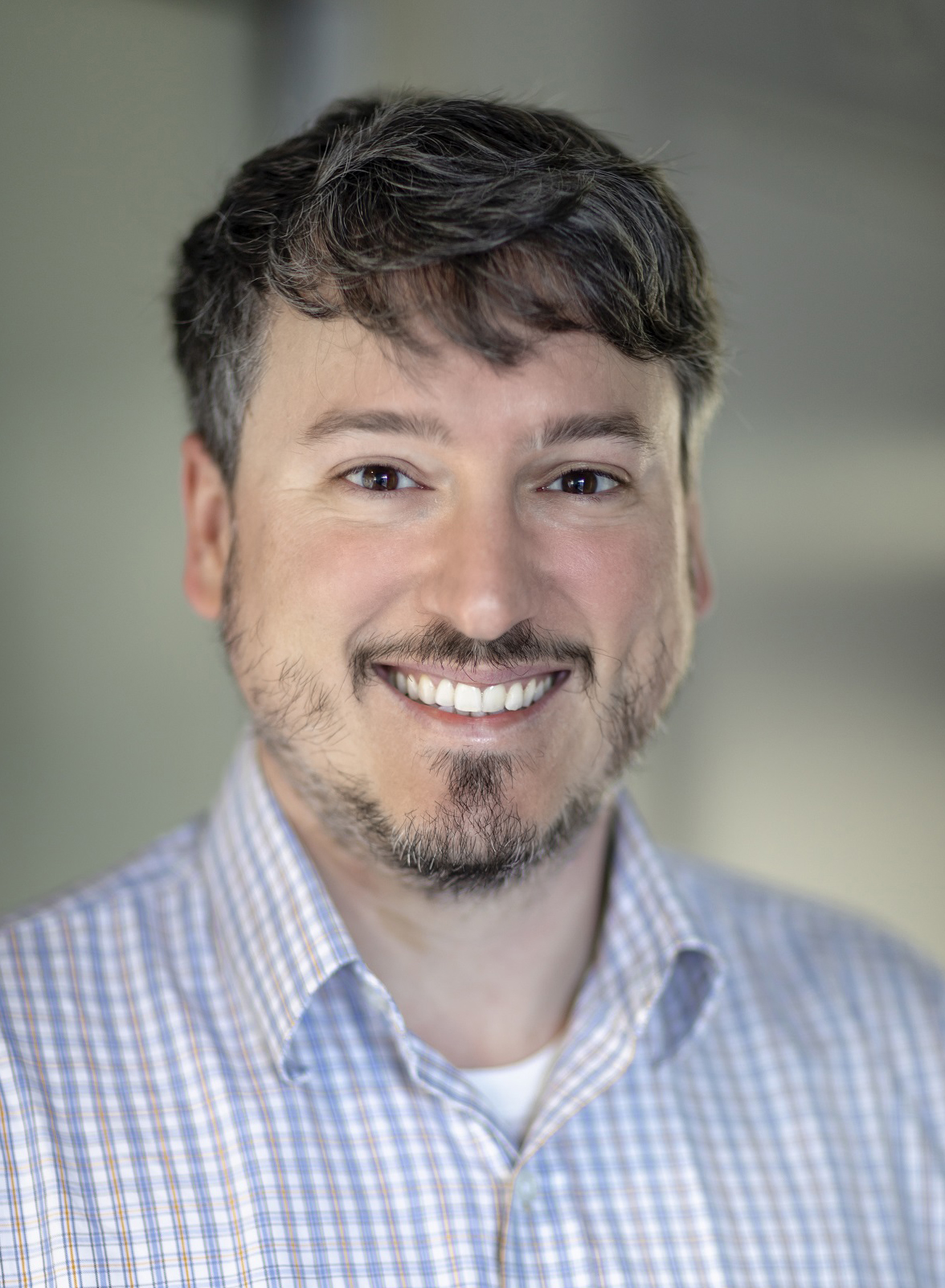
Christian Wolf is an Assistant Professor at the Massachusetts Institute of Technology (MIT) Department of Economics and a Faculty Research Fellow at the National Bureau of Economic Research (NBER). His work bridges macroeconomics, monetary economics, and econometric methodology. Research Interests: Wolf specializes in macroeconomics and monetary policy , with a focus on econometric techniques like structural vector autoregressions (VARs) and local projections . His research explores policy counterfactuals, heterogeneous-agent models, and fiscal-monetary interactions. Recent Publications: His work spans topics such as equivalence between fiscal and monetary tools in HANK models, robust identification in VARs, and the interplay between inequality and macroeconomic dynamics. Articles appear in journals like Econometrica , Journal of Political Economy , and American Economic Review . Awards: Faculty Research Fellow, NBER Contact: ckwolf@mit.edu | Office: E52-554, MIT
Paolo Gardoni is the Alfredo H. Ang Family Professor and an Excellence Faculty Scholar in the Department of Civil and Environmental Engineering at the University of Illinois Urbana-Champaign, with additional professorial appointments in Industrial & Enterprise Systems Engineering and Biomedical & Translational Sciences. He also serves as Director of the MAE Center and Editor-in-Chief of Reliability Engineering & System Safety. Education Ph.D. in Civil Engineering, University of California, Berkeley (2002) M.A. in Statistics, University of California, Berkeley (2001) M.Eng. in Structural Engineering, University of Tokyo (1997) Laurea (BS+MS equivalent) in Structural Engineering, Politecnico di Milano (1997) Research Interests Gardoni’s scholarship integrates probabilistic methods with large-scale infrastructure systems to advance reliability, risk, and life-cycle analysis. His work quantifies the performance of deteriorating systems under natural and anthropogenic hazards, models societal impacts of disasters, and develops decision frameworks for sustainable and resilient infrastructure. He also examines ethical, social, and legal dimensions of risk, and investigates optimal strategies for hazard mitigation, disaster recovery, and climate adaptation. Across more than 250 refereed journal papers, he has advanced sub-fields ranging from probabilistic mechanics and earthquake engineering to catastrophe bond pricing and engineering ethics, leveraging tools such as stochastic differential equations, Bayesian networks, and physics-informed machine learning. Awards & Honors Alfredo Ang Award on Risk Analysis and Management of Civil Infrastructure (ASCE, 2021) Best Paper Awards in ASCE Journal of Sustainable Water in the Built Environment (2019) and Geotechnical Research (2018 Telford Premium Prize) Fellowships and named professorships: Alfredo H. Ang Family Professor, Excellence Faculty Scholar, and courtesy or honorary professorships at Tsinghua, IIT Guwahati, Tongji, Jianghan, and Loughborough universities. Research Leadership & Funding Gardoni has secured over $58 million in research funding from NSF, DHS, NIST, USAID, Qatar National Research Fund, and other agencies. He directs the MAE Center—formerly an NSF Engineering Research Center—focused on multi-hazard engineering approaches, and is Editor-in-Chief of Reliability Engineering & System Safety (Elsevier, IF 9.4). He founded and formerly led the journal Sustainable and Resilient Infrastructure (Taylor & Francis) and serves on editorial boards of nine additional journals. Advising & Mentorship He has graduated 27 PhD and 35 Master’s students, many of whom now hold faculty positions worldwide. His group maintains an active pipeline of doctoral and post-doctoral researchers working on resilience analytics, infrastructure monitoring, and risk-informed decision-making. Laboratories & Collaborations He leads the MAE Center and is affiliated with the Critical Infrastructure Resilience Institute (CIRI) and the Biomedical and Translational Sciences group. International collaborations span the UK (Loughborough), India (IIT Guwahati), and China (Tsinghua, Tongji, Jianghan), fostering cross-disciplinary research in reliability and resilience engineering.
Roles & Affiliations: Daniel J. Jacob is the Vasco McCoy Family Professor of Atmospheric Chemistry and Environmental Engineering at Harvard University. He leads the Atmospheric Chemistry Modeling Group at the Harvard John A. Paulson School of Engineering and Applied Sciences, part of the Department of Earth and Planetary Sciences. He has held academic ranks including Gordon McKay Professor (1994-2004) and Associate/Assistant Professor (1991-1994), and was a postdoc at Harvard (1985-1987). Education: Ph.D. in Environmental Engineering Science from Caltech (1985), Ingenieur Chimiste from École Supérieure de Physique et Chimie Industrielles (1981), and earlier studies at Lycee du Parc (Lyon). Research Interests: Jacob's work focuses on atmospheric chemistry, climate modeling, and air quality. Key areas include methane emissions, tropospheric ozone, satellite remote sensing, and global biogeochemical cycles. His research integrates field campaigns (e.g., SEAC4RS, ARCTAS) and chemical transport models (GEOS-Chem) to address environmental challenges like pollution and climate change. Publications & Awards: Jacob has authored over 550 peer-reviewed publications, with an H-index of 145 (ISI) and 184 (Google Scholar). Notable awards include the Haagen-Smit Prize (2010), Macelwane Medal (1994), and recognition for teaching and climate science leadership. His work on methane emissions and air quality has been featured in Nature , Science , and AGU journals. Grants & Advising: Jacob advises numerous PhD students and postdocs, many of whom hold academic or research roles globally. He leads international initiatives like the Carbon Mapper project and chairs committees for NASA and the National Academies. His grants support studies on methane detection, aerosol chemistry, and climate policy. Labs & Collaborations: The Atmospheric Chemistry Modeling Group collaborates with NASA, NOAA, and institutions worldwide. Key projects include the GEOS-Chem model, TROPOMI satellite inversion analyses, and the Integrated Methane Inversion (IMI) tool for emissions monitoring.
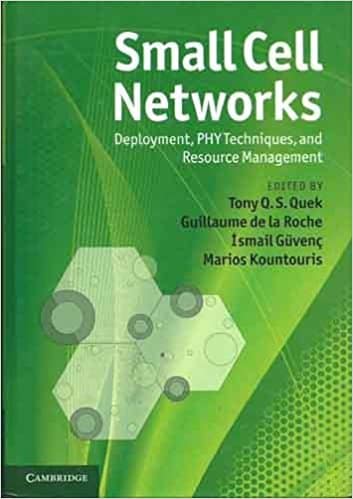
Dr. Ismail Guvenc is a Full Professor in the Department of Electrical and Computer Engineering at North Carolina State University. He holds an IEEE Fellowship and is a Senior Member of the U.S. National Academy of Inventors. His research focuses on 5G/6G wireless systems, UAV communications, heterogeneous networks, and spectrum management. He leads the NSF AERPAW project and serves as the NC State Site Director for the NSF BWAC I/UCRC center. Dr. Guvenc has authored/co-edited four books and holds over 30 U.S. patents. Education: Ph.D. in Electrical Engineering, University of South Florida (2006) Master's in Electrical and Computer Engineering, University of New Mexico (2003) Bachelor's in Electrical Engineering, Bilkent University, Turkey (2001) Research Interests: Dr. Guvenc’s work spans UAV communication systems, 5G/6G networks, spectrum sensing, and machine learning for network optimization. He emphasizes experimental validation through platforms like AERPAW, focusing on drone-based networks, radio dynamic zones, and testbed-driven innovation. His contributions address challenges in UAV localization, interference management, and energy-efficient networks. Grants & Leadership: PI and Director of NSF AERPAW (2019–Present) NC State Site Director for NSF BWAC I/UCRC (2019–Present) Recipient of NSF CAREER Award (2015) and NC State Faculty Scholar Award (2021) Publications & Awards: He has authored over 130 peer-reviewed papers and contributed to standardization efforts. His awards include the R. Ray Bennett Faculty Fellow Award (2019) and the USF Outstanding Dissertation Award (2006). Labs & Teams: Dr. Guvenc directs research in the ECE’s wireless communications group, leveraging AERPAW’s experimental capabilities to advance UAV networks and 6G technologies. His team collaborates with industry and government on spectrum policy and autonomous systems.
Peter K. Kitanidis is a Professor in the Department of Civil and Environmental Engineering and the Institute for Computational and Mathematical Engineering at Stanford University . His research focuses on groundwater flow , hydrologic forecasting , and stochastic inverse modeling , with applications to pollutant remediation and CO₂ storage monitoring . Education : Diploma, National Technical University of Athens (1974) M.S., MIT (1976) Ph.D., MIT (1978) Research Interests : Groundwater modeling and contaminant transport Hydraulic tomography and aquifer characterization Stochastic methods for uncertainty quantification Bioremediation and enhanced in-situ pollutant decay Dilution and mixing processes in heterogeneous media Real-time river flow forecasting Scientific Awards : L.G. Straub Award (1979) W.L. Huber Research Prize (1994) ISI Highly Cited Researcher (2001) AGU Hydrologic Sciences Award (2011) ASCE Pioneers in Groundwater Lecturer (2011) Advising and Grants : Advised 20+ PhD and MS students (1978–2018) Principal investigator on NSF, EPA, and DOE-funded projects Developed software for groundwater data analysis and CO₂ monitoring Contributed to bioremediation protocols and hydraulic tomography algorithms Labs and Teams : Kitanidis Laboratory for groundwater crisis solutions Collaborated with Oak Ridge National Laboratory and Stanford Hydrogeology Group Mentored postdocs (2000–2017) in reactive transport and inverse modeling
Xiaojing (Ruby) Fu is an Assistant Professor of Mechanical and Civil Engineering at the California Institute of Technology and a William H. Hurt Scholar (2024-present). Her research focuses on multiphase fluid mechanics in porous media, integrating theory, computation, experiments, and field observations to address geoscience and engineering challenges. Her educational background includes: B.S. in Engineering from Clarkson University (2011) M.S. from Massachusetts Institute of Technology (2015) Ph.D. from Massachusetts Institute of Technology (2017) Professor Fu's research centers on cryosphere hydrology, subsurface engineering, and phase transitions in porous media. She investigates multiphase flow dynamics in contexts like permafrost thaw, snow metamorphism, and carbon sequestration using phase-field modeling and experimental techniques. Her work bridges fundamental physics with applications in environmental resilience and energy systems, emphasizing predictive capabilities for large-scale phenomena through simplified multiscale theories. Analysis of her 15 most recent publications reveals intense focus on cryosphere processes (snow, permafrost) using advanced phase-field modeling and fiber-optic sensing. Key trends include freezing infiltration patterns, meltwater transport in layered snow, and seismic monitoring of soil moisture. Her work increasingly integrates field validation with computational models for environmental applications like drought monitoring and carbon sequestration. Her scientific recognition includes: William H. Hurt Scholar (2024) Professor Fu actively mentors graduate students, as evidenced by qualified students in her research group. She teaches core courses including Thermal Science (ME 11 abc) and Computational Methods for Flow in Porous Media (ME/CE/Ge/ESE 146), training students in both theoretical foundations and applied techniques for subsurface flow problems. She leads the Fu Research Group on Mechanics and Physics of Porous Media Flow, which develops multiscale theories to predict large-scale environmental and energy system behaviors. The group combines mathematical modeling, laboratory experiments, and field observations to address problems in geologic carbon storage, cryosphere dynamics, and subsurface resource management, with recent emphasis on climate change impacts and monitoring technologies.
Francesca De Benetti is a Researcher at the Chair of Computer Aided Medical Procedures (Prof. Navab) at the Technical University of Munich (TUM), affiliated with the Interdisciplinary Research Laboratory (IFL) and NARVIS Lab at the Garching Campus. Her research focuses on Nuclear Medicine and Machine Learning for medical image processing, particularly in internal radiation therapy simulations and AI-driven segmentation. Education : M.Sc. in Biomedical Computing (TUM, 2018-2020), B.Sc. in Information Engineering (Università di Padova, 2015-2018) Francesca's recent publications highlight her work in Monte Carlo dosimetry , dynamic PET tracer modeling , and deep learning-based anomaly detection in medical imaging. Her projects emphasize personalized radiation therapy and cross-modality image translation , often involving collaborations with nuclear medicine experts and radiologists. She contributes to teaching at TUM, leading lectures and practical courses on topics including Medical Augmented Reality , Computer Aided Medical Procedures , and Deep Learning for Medical Applications . Francesca is actively involved in labs such as the IFL Lab and NARVIS Lab , focusing on interdisciplinary applications of computer vision and generative AI in medicine.
Elliott Ash is an Associate Professor of Law, Economics, and Data Science at ETH Zurich's Center for Law & Economics. He holds a Ph.D. in Economics and J.D. from Columbia University, a B.A. in Economics, Government, and Philosophy from the University of Texas at Austin, and an LL.M. in International Criminal Law from the University of Amsterdam. His research focuses on empirical legal studies using econometrics, NLP, and ML, examining topics like judicial behavior, legislative impact, and AI-driven governance. He has been funded by the ERC, Swiss NSF, and others. Research Interests: Elliott explores automation of legal decisions, text-as-data analysis in law, and the intersection of AI with legal systems. He develops tools like BallotBot and LePaRD to enhance legal transparency and public understanding. His work bridges law, economics, and computer science, with publications in top journals like the American Economic Journal and Review of Economics and Statistics . Teaching: Courses include Building a Robot Judge , Natural Language Processing for Law , and Big Data for Public Policy . He co-organizes the Zurich Workshop in AI+Economics and Monash-Warwick-Zurich Text-as-Data Workshops. Awards: European Research Council Starting Grant, Swiss National Science Foundation Grant, and multiple grants from U.S. and Swiss institutions. His work has been featured in NPR , VoxEU , and Georgetown Law Journal . Labs/Teams: Leads the Swiss AI Initiative's Human-AI Alignment team, collaborates with the CEPR on Political Economy research, and serves as an Economic Journal Associate Editor.
Prof. Dr. Steffen Marburg is a Full Professor at the Chair of Acoustics of Mobile Systems within the TUM School of Engineering and Design at the Technical University of Munich. His research focuses on numerical methods in vibroacoustics, structural optimization, and acoustic modeling for applications in automotive, maritime, and musical instrument domains. Education: PhD from Technical University of Dresden (1998). Academic Career: Junior Professor at TU Dresden (2004), Chair of Technical Dynamics at University of the Federal Armed Forces Munich (2010), Full Professor at TUM (2015–present). Editorial Roles: Co-Editor-in-Chief of Journal of Theoretical and Computational Acoustics, Associate Editor of Journal of the Acoustical Society of America, Editor of Acoustics Australia and Mechanical Systems and Signal Processing. His research integrates computational acoustics, boundary element methods, and machine learning to address noise control and structural optimization challenges. Recent work explores acoustic metamaterials, viscothermal losses, and data-driven modeling. He has co-authored over 150 publications and led advancements in multifrequency solution methods and noise-insulating structures. Scientific awards include the Innovation Award of the Industrieclub Sachsen e.V. (1999). His editorial contributions and leadership in journals highlight his influence in computational acoustics and structural dynamics.
Amy R. Wu serves as Associate Professor in Mechanical and Materials Engineering at Queen's University and holds the Mitchell Professorship in Bio-inspired Robotics. She leads the Biomechanics x Robotics Laboratory (BxRL) and contributes to the Ingenuity Labs Research Institute. Her academic credentials include: Ph.D. in Mechanical Engineering, University of Michigan Postdoctoral Research, Biorobotics Laboratory, EPFL, Switzerland Dr. Wu's research bridges biomechanics and robotics to enhance legged mobility through innovations in human-robot interaction , exoskeleton design , and gait assistance . Her work focuses on developing robotic systems that adapt to human movement patterns, particularly for spinal cord injury rehabilitation and stability augmentation during walking. Analysis of her 2019-2023 publications reveals consistent advancement in exoskeleton control algorithms, gait stability metrics, and human adaptation studies. Key trends include modular exoskeleton systems (Symbitron), neuromuscular controllers for ankle assistance, and haptic feedback integration for motor learning enhancement. No scientific awards are documented in the provided materials. Dr. Wu mentors graduate students through BxRL, where her team conducts human subject testing and robotic development. Research is supported by institutional resources at Ingenuity Labs, though specific grant details remain unspecified. The Biomechanics x Robotics Laboratory operates within Queen's Ingenuity Labs Research Institute, facilitating interdisciplinary collaboration on projects like outdoor stability assessment, winter walking adaptations, and teleoperation interfaces for drone control.
Dr. Jean-Christophe Nave is an Associate Professor in the Department of Mathematics and Statistics at McGill University, specializing in applied mathematics, numerical analysis, and computational methods. His research focuses on numerical methods for partial differential equations, fluid mechanics, interface problems, and computer graphics. He holds a PhD from UCSB (2004) and has held academic positions at MIT and McGill since 2005. Currently, he serves on committees such as the Steering Committee of the Institut des Sciences Mathematiques and the CRM Applied Mathematics Lab. His educational background includes a PhD under Professors Xu-Dong Liu and Sanjoy Banerjee. Key research areas include level set methods, fluid-structure interaction, and invariant numerical methods. Notable works include the Correction Function Method for interface problems and the Characteristic Mapping Method for advection problems. Nave’s publications span topics like Poisson equations with discontinuous coefficients, fluid dynamics simulations, and high-order numerical schemes. He has advised numerous graduate and undergraduate students, contributing to their research in applied mathematics and computational science. His work bridges theoretical rigor and practical applications in engineering and physics. He teaches advanced courses such as Numerical Analysis I/II and Computational Methods in Applied Mathematics. His research group collaborates on projects involving fluid dynamics, elasticity, and geometric algorithms, with a focus on developing robust numerical tools for complex systems.
Rosa I. Arriaga is an Associate Professor in the School of Interactive Computing at Georgia Institute of Technology, where she directs the Ubicomp Health and Wellness Lab. Her research focuses on Human-Computer Interaction (HCI), Ubiquitous Computing, and mHealth, with applications in mental health, chronic disease management (e.g., diabetes), and pediatric asthma care. She designs technology systems to improve patient engagement, continuity of care, and clinician-patient communication. Research Areas: Chronic Care Management PTSD Therapy Support (PECSS project) Diabetes Management (DUCSS project) mHealth System Design AI in Healthcare Key Projects: PECSS: Leverages ubiquitous computing and machine learning to address clinical challenges in PTSD therapy. DUCSS: A diabetes management system to streamline patient education and self-monitoring, particularly for underserved populations. ZenVR: A virtual reality system for meditation education, validated through longitudinal studies. Teaching: Teaches undergraduate courses in HCI and graduate courses in Human-Centered Computing (HCC). Her Coursera course Intro to User Experience Design has over 50K learners. Grants & Partnerships: Funded by GT-Emory AI Humanity, American Diabetes Association, and Georgia Center for Diabetes Translation Research. Collaborations with Emory University, University of Rochester, and medical professionals. Labs & Teams: Leads the Ubicomp Health and Wellness Lab, fostering interdisciplinary research with graduate and undergraduate students focusing on health technology innovation.
Professor Eugene O'Brien serves as Professor of Civil Engineering within the School of Civil Engineering at University College Dublin's College of Engineering and Architecture. His research focuses on critical structural assessment methodologies for long-span bridges, with particular expertise in traffic load modeling and bridge safety evaluation. His research interests center on structural engineering challenges related to bridge infrastructure, specifically traffic load assessment for long-span bridges , structural health monitoring systems , and sustainable infrastructure management . Professor O'Brien pioneered camera-based monitoring techniques to overcome limitations of traditional Weigh-in-Motion sensors during congested traffic conditions, enabling more accurate safety assessments of aging bridge infrastructure. His work addresses the critical gap in quantifying traffic loading on bridges with spans up to 2 kilometers, where conventional methods fail during stop-and-go traffic scenarios. Analysis of his 15 most recent publications reveals a consistent research trajectory focused on probabilistic modeling of traffic loads, with increasing sophistication in handling extreme events and long-term infrastructure performance. His work spans fundamental statistical methods for load effect prediction, practical applications in real-world bridge assessments, and environmental considerations regarding infrastructure carbon footprints. The research demonstrates strong methodological evolution from basic traffic modeling to comprehensive lifetime assessment frameworks incorporating sustainability metrics. As co-founder and director of Roughan O'Donovan's subsidiary Innovative Solutions (ROD-IS), Professor O'Brien has translated research into practice through significant projects including the Malahide Railway Viaduct assessment (2009), EU-funded bridge lifespan simulation tools (2011), vibration reduction systems for bridge cables, and structural assessments for major international projects including the Ting Kau Bridge in Hong Kong, the Forth Road Bridge in Scotland, and the Chacao Channel Bridge in Chile. His consultancy work demonstrates direct application of academic research to critical infrastructure challenges worldwide. Professor O'Brien's research group operates at the intersection of structural engineering and sustainable infrastructure management, with particular emphasis on extending bridge service life through accurate safety assessment. Their work on the Chacao Channel Bridge demonstrates practical implementation of traffic monitoring systems using toll data to manage truck loads, while their environmental impact analysis shows how accurate safety assessments reduce unnecessary bridge replacements, thereby lowering the carbon footprint of transportation infrastructure through extended service life of carbon-intensive materials like concrete and steel.
Dr. Katerina Marcoulides is an Associate Professor in the Quantitative and Psychometric Methods Program at the University of Minnesota's Department of Psychology. She is affiliated with the Minnesota Population Center and serves as Co-Chair of the Structural Equation Modeling Special Interest Group (SEM SIG) for the American Educational Research Association. Her research focuses on advanced data mining and modeling techniques for complex longitudinal data, particularly applied to developmental processes in economically disadvantaged immigrant children. She holds a PhD in Quantitative Psychology from Arizona State University, an MA from UC Davis, and a BA from UC Santa Barbara. Education: PhD: Quantitative Psychology, Arizona State University MA: Quantitative Psychology, University of California, Davis BA: Psychology (minor in Education), University of California, Santa Barbara Research Interests: Dr. Marcoulides develops and applies statistical methods such as structural equation modeling (SEM), Bayesian synthesis, and data fusion to study developmental and educational processes. Her work emphasizes longitudinal data analysis, item response theory, and multilevel modeling. Recent projects include NIH-funded research on parenting, marginalization, and well-being during the pandemic. Awards: APS Rising Star Award (2021) NIH Grant Award Teaching & Collaboration: She teaches courses on SEM, multilevel modeling, and data analysis at the University of Minnesota. Previously at the University of Florida, she contributed to workshops on educational data mining and served as an APA Advanced Training Institute presenter. Her interdisciplinary collaborations span population studies, health inequities, and workforce research. Labs & Groups: She leads the Data Analytics and Visualization Lab and actively participates in the Minnesota Population Center, integrating computational and statistical innovations with real-world applications.
Raquel Fernández is Full Professor of Computational Linguistics and Dialogue Systems at the University of Amsterdam, where she leads the Dialogue Modelling Group at the Institute for Logic, Language & Computation (ILLC). As Vice-Director for Research at ILLC and a Fellow of the ELLIS Society, she bridges computational linguistics, cognitive science, and artificial intelligence through her research on language use in multimodal and conversational contexts. PhD in Computational Linguistics from King's College London Prior research positions at University of Potsdam and Stanford University's CSLI Her work explores how cognitive constraints, social interaction, and perception shape language use, with a focus on: Visually-grounded language processing Multimodal dialogue modeling Model uncertainty and calibration Language grounding in multimodal data Language learning and semantic change Dialogue reference resolution Recent publications analyze multimodal reasoning limitations, cross-lingual knowledge consistency, and uncertainty modeling in dialogue systems. She has received multiple accolades including an ERC Consolidator Grant , NWO VENI/VIDI/Aspasia fellowships , and EMNLP/GenBench awards . Outstanding Paper Award (EMNLP 2023) Best Data Award (GenBench Workshop 2023) ELLIS Society Fellow ERC Consolidator Grant #819455 recipient NWO VENI/VIDI/Aspasia awardee As a leader in academic service, she serves on the SIGDAT Executive Committee and chairs multiple conference committees. Her lab develops models for multimodal dialogue, visual storytelling, and grounded language understanding.