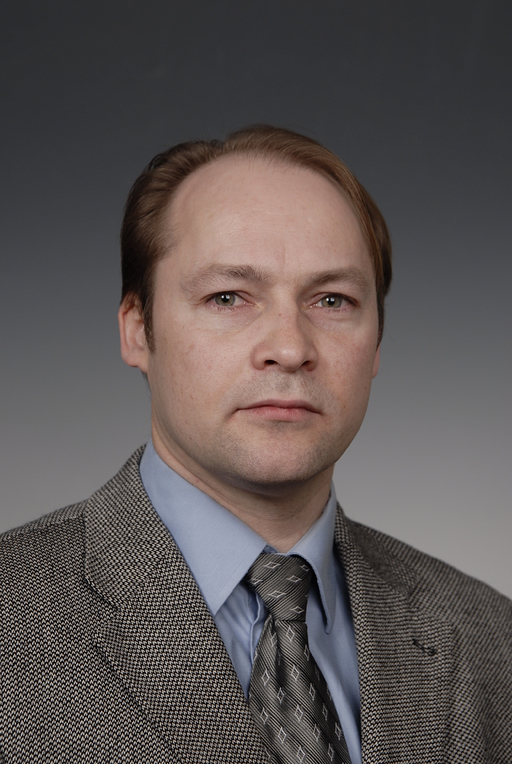
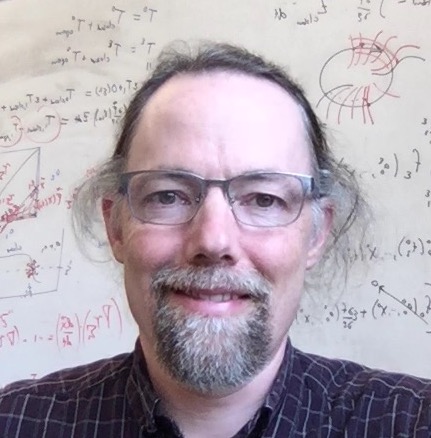
Prof. Dr. Hüseyin Yapıcı is a faculty member in the Department of Mechanical Engineering at Başkent University . His research focuses on Nuclear Energy Systems , Accelerator Technology , and Thermodynamics . Nuclear Reactor Design Energy Systems Optimization Heat Transfer Analysis His work involves numerical simulations , neutronic analysis , and nuclear waste transmutation . Recent publications highlight three-dimensional power density modeling in accelerator-driven systems and tritium production studies. Prof. Yapıcı has supervised numerous students, including Gizem Bakır , Alper Buğra Arslan , and Büşra Durmaz , across diverse projects from fusion-fission hybrids to renewable energy systems .
Ian C. Bourg is an Associate Professor at Princeton University with dual appointments in the Department of Civil and Environmental Engineering and High Meadows Environmental Institute . He directs undergraduate studies in CEE and leads the Interfacial Water Group , focusing on atomistic-level simulations and macroscopic modeling of environmental systems. His concurrent affiliations include the Princeton Institute for the Science and Technology of Materials and Chemical and Biological Engineering department. Education Ph.D. in Civil and Environmental Engineering, University of California-Berkeley (2004) MSc in Chemical Engineering, INSA Toulouse (1999) B.Eng. in Chemical Engineering, INSA Toulouse (1999) Research Interests span clay mineral surface geochemistry, geologic CO 2 sequestration, kinetic isotope effects, water behavior at interfaces, and coupling geochemistry with geomechanics in porous media. His work integrates molecular simulations with experimental validation to study environmental phenomena like contaminant transport, soil carbon storage, and water dynamics in clays. Publications from 2023-2025 reveal expertise in molecular dynamics of clay-water systems, organic contaminant partitioning, cement hydration, and isotope fractionation. Key themes include Environmental Nanoscience , Geochemical Modeling , and Soft Matter Physics applications to environmental systems. Scientific Recognition NSF CAREER Awardee (2018) Advising includes mentoring 12 current and former PhD/postdoc researchers, with notable alumni at institutions like Cornell, University of Poitiers, and Oak Ridge National Laboratory. His group has produced 20+ undergraduate advisees now in academia and industry. Laboratory develops multiscale simulation tools like HybridBiotInterFoam and HybridPorousInterFoam, with active collaborations in nuclear waste management, soil remediation, and sustainable construction materials.
Dr. Lucie Kruse is a researcher at the Department of Informatics, University of Hamburg, specializing in Human-Computer Interaction (HCI) and Virtual Reality (VR). Her work focuses on immersive user interfaces for cognitive and physical training, particularly for older adults and those with dementia. She has been an active member of the University of Hamburg's HCI group since 2018 and served on the Ethics Commission since 2023. Her research interests include: Virtual Reality Exergames Serious Games Assistive Technologies Accessibility in VR Mental Health Applications Her publications from 2021-2025 demonstrate expertise in designing VR systems for healthcare, analyzing age-related interaction patterns, and developing inclusive interfaces. She has received multiple awards including the 2024 Honorable Mention for Best Poster at ACM SUI and the 2023 Honorable Mention at ACM CHI. Scientific Awards: Honorable Mention for Best Poster Award at ACM SUI (2024) Runner-Up Prize at Metaverse for the Good (2024) Honorable Mention at ACM CHI'23 Interactive Demo (2023) Honorable Mention at ACM VRST (2021) She has supervised multiple theses on topics like AI agents for mental health, accessibility of chatbots for seniors, and VR exergame design. Her work spans collaborations with institutions like HITLab NZ and Western Sydney University's MARCS Institute.
Maarten Sap is an Assistant Professor at Carnegie Mellon University's Language Technologies Institute with a courtesy appointment in the Human-Computer Interaction Institute. He also holds a part-time research scientist position at the Allen Institute for AI (AI2) as an AI safety lead. Current affiliations: CMU (2022–present), AI2 (2022–present) Prior: Postdoctoral Researcher at AI2 (2021–2022), Research Intern at AI2 (2018–2019) and Microsoft (2019) His research focuses on enhancing AI systems with social intelligence and addressing social biases in language technology. Key themes include: Ethical AI and Human-Centric Design Narrative Dynamics and Social Context Analysis AI Agents and Social Intelligence Toxic Language Detection and Cultural Bias Mitigation Recent publications examine: AI safety frameworks like HAICOSYSTEM Clinical reasoning alignment (ALFA) Multilingual moderation (PolyGuard) Cultural sensitivity in non-verbal AI (Mind the Gesture) Personality shaping in LLMs (BIG5-CHAT) Scientific Recognition: 2025 Okawa Research Grant Best Paper Runner Up - NAACL 2025 Outstanding Paper - EMNLP 2023 Best Paper - FAccT 2023 Best Paper - WeCNLP 2020 He advises a diverse group of PhD students across CMU and MIT, and has served on multiple program committees including ACL, EMNLP, and FAccT. His work appears in top venues like Nature Machine Intelligence, PNAS, and ACL.
Dr. Raimon Tolosana Delgado is a Research Fellow at the Helmholtz-Zentrum Dresden-Rossendorf (HZDR), affiliated with the Helmholtz Institute Freiberg for Resource Technology. He leads research in predictive geometallurgy and statistical analysis of mineral resources, focusing on translating geological data into processing insights. His research integrates geostatistics , compositional data analysis (CoDa) , and machine learning to model ore behavior and resource potential. Key areas include: Predictive geometallurgy for forecasting ore/waste behavior Bayesian statistics for parameter estimation and uncertainty analysis Development of R-based tools (e.g., compositions and gmGeostats packages) for mineral data analysis Particle-based process modelling for mineral separation optimization Recent publications emphasize machine learning integration (e.g., neural networks for geophysical tensor fields), tailings reprocessing (3D geostatistical assessment of resource potential), and advanced statistical methods for compositional data. A consistent trend involves enhancing predictive accuracy in mineral processing through multi-source data fusion. Dr. Tolosana Delgado coordinates the development of technology platforms for geometallurgical data analysis, including databases and interfaces for industrial applications. His work bridges ore geology, mineral processing, and metallurgy to optimize resource efficiency.
Christopher Rycroft is a Professor and Associate Chair in the Department of Mathematics at the University of Wisconsin–Madison. He leads the Rycroft Group, which focuses on mathematical modeling and scientific computation for interdisciplinary applications in science and engineering. Prior to joining UW-Madison in summer 2022, he was a professor at Harvard University's School of Engineering and Applied Sciences from 2014-2022, and before that a Morrey Assistant Professor at UC Berkeley from 2010-2013. Professor Rycroft's research spans three main areas: numerical methods for material mechanics, data-driven discovery, and computational geometry. His group develops new computational methods while working directly with domain scientists. Key achievements include the development of the reference map technique for fluid-structure interaction, Voro++ software library for Voronoi tessellation, and novel approaches to understanding crumpling physics. His work combines traditional analysis and modeling with machine learning methods to extract scientific insights from complex data. The Rycroft Group's publication record demonstrates a strong trajectory of interdisciplinary research bridging mathematics, physics, materials science, and biology. Recent work has focused on fluid-structure interaction, computational geometry applications, mechanical metamaterials, and biological fluid dynamics. The group develops both theoretical frameworks and practical software tools that have found applications across diverse scientific domains from materials science to virology. Everett Mendelsohn Award for Excellence in Mentorship (2021) Professor Rycroft has advised numerous PhD and master's students who have gone on to postdoctoral positions at institutions including MIT, EPFL, and Cornell. His teaching includes advanced scientific computing courses that have quadrupled in enrollment during his tenure. He has secured research funding supporting his group's work on computational methods and interdisciplinary applications. The Rycroft Group consists of graduate students, postdocs, and collaborators with diverse backgrounds in applied mathematics, physics, engineering, and computer science. The group maintains active collaborations with researchers across multiple institutions and participates in centers such as the Harvard Quantitative Biology Initiative.
Peter Matthias Stoffer is an SNSF Eccellenza Professor at the University of Zurich and a Tenure-track scientist at the Paul Scherrer Institute (PSI). His research is currently funded by a SNSF project grant at PSI and an SNSF professorial fellowship, jointly hosted by the University of Zurich and PSI. Previously, he held positions as a University assistant at the University of Vienna (2020-2021), Postdoctoral researcher at UC San Diego (2019-2020), SNSF postdoctoral research fellow at UC San Diego (2017-2018), and Postdoctoral researcher at the University of Bonn (2014-2016). Stoffer's research focuses on effective field theories for physics beyond the Standard Model (SMEFT, LEFT), non-perturbative methods for low-energy hadron physics including dispersion relations and chiral perturbation theory, matching to lattice-QCD schemes, and applications to precision observables such as dipole moments, CP violation, and lepton-flavor violation. His work is particularly relevant to understanding the muon anomalous magnetic moment (g-2) and other precision tests of the Standard Model. The analysis of his recent publications reveals a strong emphasis on renormalization group equations for effective field theories, hadronic light-by-light scattering, and precision calculations related to the muon g-2 anomaly. His work spans both theoretical developments in effective field theory and practical applications to current experimental puzzles in particle physics. Stoffer has received the prestigious SNSF Eccellenza Professorship, which supports outstanding early-career researchers in establishing their own independent research groups. His research group maintains close connections between the University of Zurich and PSI, leveraging the complementary strengths of both institutions.
Lea Hannola is a researcher at the LUT School of Engineering Sciences (Lappeenranta–Lahti University of Technology LUT) focusing on digital twins, sustainable manufacturing, and Industry 5.0. Her work bridges technological innovation with eco-conscious business practices. Academic Rank: Researcher Contact: Lea.Hannola@lut.fi Hannola's research emphasizes digital twin applications for sustainability, including circular manufacturing, smart energy systems, and human-centric industrial design. She explores competencies required for Industry 5.0 adoption, workforce empowerment through digital tools, and integration of environmental and data-driven strategies in manufacturing. Her publications span topics like smart building management , quantum computing challenges , and supply chain sustainability , with a recurring focus on simulation, interoperability, and lifecycle value creation. Key trends include AI-driven sustainability, green HRM, and digital ecosystems. As a scholar, Hannola contributes to advancing digitally extended product-service systems and addressing sociotechnical challenges in industrial digitalization. Her work impacts manufacturing competitiveness, energy efficiency, and organizational transformation.
Johanna Naukkarinen is a Researcher at the School of Energy Systems at Lappeenranta University of Technology. Her work focuses on engineering education, gender dynamics in STEM, and lifelong learning competencies. Researcher, School of Energy Systems, Lappeenranta University of Technology Email: Johanna.Naukkarinen@lut.fi Her research explores: Gender disparities in engineering education and careers Pedagogical strategies for lifelong learning Mathematical skill development in first-year engineering students Technology education reform and sustainability integration Use of digital tools for competency enhancement Professional identity formation in early-career engineers Recent publications highlight trends in: Comparative studies across Belgium, Ireland, and Finland Co-creation methods in educational design Assessment of online learning environments Gendered perspectives on engineering recruitment Interdisciplinary approaches to sustainability education Workplace dynamics in technology sectors
Andrew Riseman serves as an Associate Professor in the Department of Applied Biology within the Faculty of Land and Food Systems at the University of British Columbia. His academic work bridges sustainable agricultural systems, plant breeding, and educational innovation, with particular emphasis on integrated crop-livestock models and urban farming applications. His educational background includes: PhD from Pennsylvania State University (1997) MSc from Pennsylvania State University (1990) BSc from Pennsylvania State University (1984) Riseman's research program investigates plant genetics for sustainable production systems, focusing on intercrop interactions, nutrient use efficiency, root physiology, and biotic/abiotic stress resistance. He develops germplasm specifically for multi-trophic production environments and urban agriculture contexts. Complementing his biological research, he actively engages in the Scholarship of Teaching and Learning and Community Based Action Research, with interests in critical thinking pedagogy and technology-enhanced educational environments. Analysis of his 2011-2015 publications reveals consistent investigation into intercropping dynamics (wheat-bean, barley-pea), nutrient cycling, and water management across diverse cropping systems. Key contributions include evaluations of organic production methods, root architecture variation, and sustainable rice intensification techniques, demonstrating a systems-oriented approach to agroecological challenges. No scientific awards or honors were documented in the provided source material. As a graduate supervisor, Riseman mentors students in UBC's Integrated Studies in Land and Food Systems and Plant Science programs. His research portfolio includes funded projects on bioactive agricultural formulations, plant genetics in intercropping systems, and nitrogen source evaluations in organic production. Educational grants have supported his development of computer simulations for plant breeding education and scaffolded experiential learning initiatives within Land and Food Systems curriculum. Riseman maintains active affiliation with the Centre for Sustainable Food Systems at UBC Farm and the Diversified Agroecosystem Cluster. He champions the UBC Farm as a vital academic resource for sustainable food system research, teaching, and community outreach, viewing its continued evolution as essential to advancing land and food systems scholarship.
Tsun-Ming Tseng is a Professor and principal investigator at the Chair of Electronic Design Automation at the Technical University of Munich (TUM). He leads the Emerging Technology Group and oversees multiple DFG/BMBF-funded research projects in the areas of microfluidic large-scale integration, optical network-on-chip design, and novel microfabrication techniques. Dr. Tseng's research focuses on design automation for emerging technologies, with particular expertise in three main areas: microfluidic large-scale integration, optical network-on-chip systems, and novel microfabrication processes. His work bridges the gap between electronic design automation and cutting-edge applications in bioengineering, photonics, and advanced manufacturing. His research group develops sophisticated algorithms and tools for optimizing design, reliability, and performance in these emerging domains. Analysis of Dr. Tseng's recent publications reveals a strong focus on practical implementation challenges in emerging technologies. His work spans both theoretical algorithm development and practical system implementation, with particular emphasis on reliability, performance optimization, and manufacturing considerations. The research shows increasing integration between different technology domains, particularly the convergence of microfluidics, optical networking, and electronic design automation. Dr. Tseng has been awarded multiple significant research grants including: "DE-TW-CloudWRONoC" (BMBF-NSTC project, PI, 2025-2028, EUR 797.7K) "DE-TW-PI3D" (BMBF-NSTC project, PI, 2024-2027, EUR 391.6K) "Physical Design for Microfluidic Large-Scale Integration" (DFG research grant, PI, 2024-2026, EUR 331.9K) Multiple other DFG and industrial projects totaling over EUR 3 million in funding He has successfully supervised numerous doctoral researchers and postdoctoral fellows, with current group members including Jiahui Peng, Debraj Kundu, Liaoyuan Cheng, and several others. Dr. Tseng leads the Emerging Technology Group at TUM, which focuses on developing design automation methodologies for next-generation technologies. The group maintains strong collaborations with international institutions, including partnerships with researchers in Taiwan and Hong Kong. The team operates state-of-the-art facilities for research in microfluidics, optical networking, and advanced microfabrication techniques.
Heikki Remes serves as Associate Professor in the Department of Energy and Mechanical Engineering at Aalto University's School of Engineering, where he investigates high-performance steel structures for marine environments with emphasis on lightweight ship designs using advanced materials and manufacturing techniques. His research integrates fundamental fatigue and fracture mechanics with practical structural challenges, spanning from crystal-level material behavior to continuum-scale modeling. Key focus areas include welded joint integrity, additive manufacturing defects, and computational analysis of marine structures under extreme conditions. Recent publications reveal strong trends in fatigue assessment methodologies for complex welded geometries, experimental validation of distortion effects, and AI-enhanced damage prediction systems, reflecting his commitment to bridging theoretical mechanics with shipbuilding applications. Scientific Awards: Aalto Education Impact Award (2018) for establishing Marine Technology study programs SNAME Honorable Mention for 2018 Vice Admiral E. L. Cochrane Award Teaching Award of Aalto School of Engineering (2012) for educational tools No specific student advising or grant information appears in available sources, though his active publication record indicates ongoing research leadership. He contributes significantly to the Marine and Arctic Technology research group, driving projects on structural integrity assessment and advanced manufacturing solutions for next-generation marine vessels.
Siew, Shu Qin Cynthia is an Assistant Professor at the National University of Singapore, specializing in psycholinguistics and cognitive science. She holds a Ph.D. and M.A. from Kansas University (KU) and a B.Soc.Sci. (Hons.) from NUS. Her research focuses on applying network analysis to study cognitive structures like the mental lexicon and semantic memory. Education: Ph.D. in Psychology, KU M.A. in Psychology, KU B.Soc.Sci. (Hons.) in Linguistics, NUS Her work integrates cognitive psychology experiments, computational modeling, and linguistic corpora to explore two core themes: (1) How lexicon structure influences processing (e.g., phonological/orthographic similarity affecting word recognition), and (2) How lexicon structure evolves over time (e.g., language acquisition across monolinguals and bilinguals). Recent publications highlight her innovative use of network science to model phonological and semantic networks and software tools like spreadr for simulating spreading activation. This work bridges computational methods with empirical studies on lexical retrieval and memory organization.
Peter J. Thomas is a Professor in the Department of Mathematics, Applied Mathematics, and Statistics at Case Western Reserve University's College of Arts and Sciences, with secondary appointments in Electrical Engineering and Computer Science, Cognitive Science, and Biology. He serves as Co-Editor-in-Chief of Biological Cybernetics and leads the Computational Biomathematics Laboratory. Primary Affiliation: Department of Mathematics, Applied Mathematics, and Statistics Secondary Affiliations: Department of Electrical Engineering and Computer Science, Department of Cognitive Science, Department of Biology Leadership: Co-Editor-in-Chief of Biological Cybernetics Thomas earned his B.A. in Physics and Philosophy from Yale University (1990), M.S. in Mathematics from the University of Chicago (1994), and both M.A. in Conceptual Foundations of Science and Ph.D. in Mathematics from the University of Chicago (2000). His research spans mathematical neuroscience, theoretical biophysics, and information theory applications to biological systems. Thomas specializes in understanding how noise and stochasticity affect neural coding, developing mathematical frameworks for gradient sensing in cells, and applying graph theory to biological networks. His work on stochastic shielding has provided novel approaches to simplifying complex stochastic models while preserving essential dynamics. His research bridges theoretical mathematics with experimental neuroscience through collaborations with the Chiel laboratory and others. Thomas's recent publications demonstrate a strong focus on stochastic oscillators, sensory feedback mechanisms, and information theory applications to biological systems. His work consistently develops novel mathematical frameworks to address specific biological questions, with significant contributions to understanding phase dynamics in neural oscillators and information processing in biochemical signaling. Core Fulbright Scholar Program (2013) Simons Fellow in Mathematics Program (2014) Multiple NSF grants as Principal Investigator Co-Editor-in-Chief of Biological Cybernetics Thomas has mentored numerous students at all levels, from undergraduates to postdoctoral researchers. His laboratory has produced successful scholars who have gone on to faculty positions at institutions like New Jersey Institute of Technology and the University of Nevada, Reno. He has actively organized workshops at the Banff International Research Station and served on editorial boards for leading journals in computational neuroscience. The Computational Biomathematics Laboratory focuses on developing mathematical frameworks to understand neural dynamics, cellular signaling, and pattern formation. The lab maintains strong collaborations with experimental neuroscience groups and has made significant contributions to understanding rhythmic neural systems, respiratory control mechanisms, and information processing in biological systems.
Thad Starner is a Professor in the College of Computing at Georgia Institute of Technology and Technical Lead/Manager on Google's Glass. He directs the Contextual Computing Group (CCG), co-founded the Animal Computer Interaction Lab, and contributes to Georgia Tech's Ubicomp Group and Brainlab. A wearable computing pioneer since 1993, he has over 500 publications and 80 issued U.S. patents. Coined 'augmented reality' in 1990 Developed CopyCat for ASL learning in deaf children Invented Passive Haptic Learning for skill acquisition His research spans wearable interfaces for Deaf-hearing communication, dolphin interaction systems (CHAT), dog-handler communication (FIDO), and brain-computer interfaces for ALS patients. Current projects focus on optical aging simulation, XR input methods, and animal behavior telemetry. Recent publications (2023-2025) explore AR display ergonomics, AI-augmented reasoning, sign language recognition, and animal-computer interaction. His work has been featured in 60 Minutes, BBC, National Geographic, and Time Magazine. CHI Academy (2017) Lemelson-MIT Prize finalist White House Champions of Change finalist He advises graduate students in wearable systems and teaches AI and prototyping courses. His lab developed the Perceptive Workbench for gesture tracking and created early Eigenfaces research for face recognition.