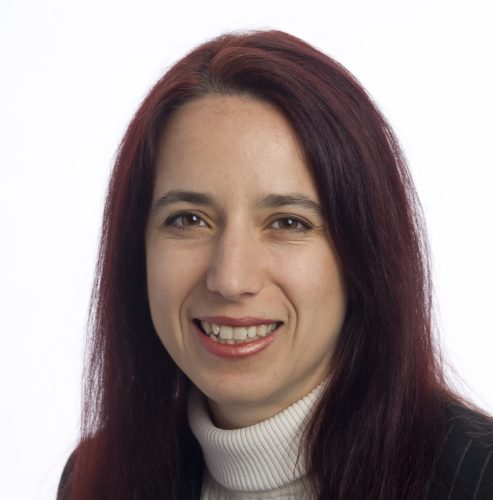
Freja Stær Hincheli serves as a Lecturer at the Department of Computer Science , University of Copenhagen. Her work intersects multiple domains within machine learning, with a particular emphasis on quantum-inspired algorithms, medical imaging, and sustainable AI development. Keywords : Machine Learning, Quantum Computing, Medical Imaging, Natural Language Processing, Computational Biology Key Collaborations : SCIENCE AI Centre Her research spans quantum-enhanced neural networks, explainable AI for medical diagnostics, and energy-aware model design. Recent publications highlight applications in cross-cultural recipe adaptation, emotion-aware dialogue systems, and climate-conscious AI strategies. The Machine Learning Section at DIKU focuses on theoretical foundations and applications including medical image analysis , biological data modeling , and quantum computing , aligning with her contributions.
Anders N. Andersen is a Part-time Lecturer in the Department of Sustainability and Planning at Aalborg University's The Technical Faculty of IT and Design . His research focuses on sustainable energy systems, district heating optimization, and renewable energy integration. He holds a Cand. Scient. in Mathematics and Physics from Aarhus University (year unspecified). Key projects include 'Etablering af nordjysk netværk for elregulering' (2008-2012) and 'Mosaik - Model af samspillet mellem integrerede kraftproducenter' (2001-2004). His recent work emphasizes energy storage in district systems, heat pump flexibility, and market zone impacts on power-to-heat technologies. Publications highlight technical innovations like energyPRO modelling tools and policy frameworks for heat pump adoption. He has presented at international conferences, including a 2024 lecture on German electricity market impacts. Media engagements include commentary on local aviation incidents.
Filipe Rodrigues is an Associate Professor in the Department of Technology, Management and Economics at the Technical University of Denmark (DTU), where he conducts research in intelligent transportation systems and transportation science. His work integrates machine learning, artificial intelligence, and behavioral modeling to improve urban mobility and public transport systems. His research interests lie at the intersection of machine learning , transportation science , and behavioral modeling . He specializes in discrete choice modeling , reinforcement learning , graph neural networks , and smart card data analytics . His work contributes to sustainable urban mobility, leveraging big data and AI for proactive traffic control and public transport optimization. The recent publications highlight a strong trend toward integrating AI and behavioral science in transportation. Key themes include ride-sourcing driver behavior , public transport trip validation , autonomous fleet control , and causal machine learning . These works predominantly employ deep learning , Bayesian modeling , and offline reinforcement learning techniques, often applied to real-world datasets from Denmark and beyond. Scientific Contributions: Active contributor to journals like Transportation Research Part C and Journal of Choice Modelling . Supervises multiple PhD projects on AI in transportation and causal modeling. Regular presenter at major transportation and AI conferences. Advising and Grants: Filipe Rodrigues is the main or co-supervisor of several PhD students including O. B. Lassen, F. M. F. Santos, A. Nguyen, and X. Wu. He leads and participates in funded research projects such as 'Proactive traffic control through AI and Big Data' and 'Causal Graph Neural Networks for machine learning meta-modelling', indicating sustained grant support. His collaborative network spans institutions in Europe and beyond. Labs and Teams: He is part of the Intelligent Transportation Systems research group at DTU, collaborating closely with researchers like F. C. Pereira and C. M. L. Azevedo. The team focuses on data-driven mobility solutions, combining simulation, machine learning, and behavioral insights.
Stefan Kragh Nielsen is a Professor and Section Leader in the Department of Physics at the Technical University of Denmark (DTU), specializing in Plasma Physics and Fusion Energy. He is actively involved in experimental and theoretical research related to fusion plasma diagnostics, particularly collective Thomson scattering and microwave-based measurements in tokamak devices such as ASDEX Upgrade and Wendelstein 7-X. His research interests include: Plasma Physics and Fusion Energy Collective Thomson Scattering Fast Ion Dynamics Electron Cyclotron Resonance Heating Parametric Instabilities Microwave Diagnostics The recent publications highlight a strong focus on advanced diagnostics, nonlinear wave interactions, and fast ion behavior in fusion plasmas. His work spans theoretical modeling, experimental validation, and instrumentation development, particularly in high-frequency microwave systems for continuous plasma monitoring. Trends show increasing emphasis on reduced modeling techniques and real-time diagnostic capabilities for next-generation fusion reactors. Scientific contributions include: Development of ultrafast digitizers for microwave diagnostics Commissioning of 174 GHz CTS systems at W7-X Modeling of metaplectic geometrical optics for plasma waves Investigation of parametric decay in gyrotron beams He actively supervises multiple PhD students on topics such as non-linear processes in electron Bernstein wave heating, ion dynamics via CTS, and parametric decay instabilities in spherical tokamaks. His projects are well-funded and aligned with international fusion research goals. He has collaborated extensively with major fusion facilities including ASDEX Upgrade, Wendelstein 7-X, and JET. No formal awards are listed in the provided text. He leads a research team focused on advancing plasma diagnostic capabilities for future fusion reactors.
Gerald Englmair is an Associate Professor in the Section of Energy and Services within the Department of Civil and Mechanical Engineering at the Technical University of Denmark (DTU). He leads research and teaching initiatives in thermal energy storage, flexible heating and cooling systems, and solar energy integration at DTU campuses in Lyngby and Sisimiut. He actively contributes to international energy research collaborations, including EU-funded projects and IEA tasks. His research focuses on the experimental development, testing, and demonstration of thermal energy storage technologies, particularly those based on phase change materials (PCM) and supercooled sodium acetate trihydrate. His work enables compact, decentralized, and efficient energy storage solutions that support energy flexibility and sustainability. The recent publications highlight a strong trend in advancing the stability, performance, and real-world integration of thermal storage systems. Key areas include discharging dynamics, material degradation, and application in buildings and data centers. His research bridges engineering science with practical implementation in energy systems. Kalundborg Refinery Prize (2024) PhD Paper of the Year 2018 Innovation Award by FH Upper Austria (2015) Gerald Englmair has led multiple research projects, including EU-CETP “La-Flex”, EU "TREASURE", and IEA SHC Task 67/ES Task 40, where he serves as subtask lead and national coordinator for Denmark. He is also vice chair of the thermal energy storage working group at DaCES. His advisory roles include consultancy for public sector and international projects like STES4D in Spain. He mentors students and collaborates widely across Europe and China. He is actively involved in research networks, public outreach, and educational initiatives, including guest lectures, media appearances, and scientific advisory roles. His laboratory work focuses on experimental validation of thermal storage units and their integration into real-world energy systems.
Klaus Ingemann Pedersen is a Professor in the Department of Electronic Systems at the Technical Faculty of IT and Design, Aalborg University, Denmark. His research focuses on wireless communication networks and dependable wireless communications with substantial contributions to 5G-Advanced and 6G technologies. His research interests include: Wireless Communication Networks Dependable Wireless Communications 5G-Advanced Technology 6G Networks Radio System-Level Simulations Ultra-Reliable Low Latency Communication Heterogeneous Networks Professor Pedersen's recent work demonstrates cutting-edge research in next-generation wireless systems, with particular emphasis on deep reinforcement learning applications, link adaptation techniques, and system-level simulations. His publications show consistent high-impact output with 152 total publications spanning from 2012 to 2025, reflecting ongoing productivity and relevance in the rapidly evolving field of wireless communications. His notable achievements include: 5G-prisen (The 5G Award) received on October 23, 2019, shared with E. Mogensen and I.R. Larrad Professor Pedersen has supervised 8 PhD students according to institutional records. His research has practical applications in wireless communication, as evidenced by his involvement in patented technology 'Method and apparatus for wireless communication' which delivers social impact and quality of life improvements. His work shows strong international collaboration across multiple countries as indicated by the research network visualization.
Professor Eigil Kaas is affiliated with the Niels Bohr Institute at the University of Copenhagen . His work spans climate dynamics , numerical weather prediction (NWP) , and atmospheric modeling . As former Section Head of Climate and Computational Geophysics , he leads research on climate-chemistry coupling and sea ice impacts. Education : MSc (1987) and PhD (1993) in Meteorology from University of Copenhagen Research Focus : Climate dynamics and physics Numerical methods in atmospheric models Machine learning for weather prediction Arctic sea ice-climate interactions Thunderstorm electricity and radiation Coupled atmosphere-ocean modeling Article Trends : Recent work combines neural networks with radiative transfer optimization Focus on storm dynamics and gamma-ray flashes Extreme precipitation modeling under climate change Pioneering tidal flow studies in Faroe Island fjords Teaching Legacy : Instructor of Atmospheric Physics and Dynamical Meteorology courses Developed zonally averaged climate model for educational use Mentored 12 PhD/MSc students with DMI/ECMWF collaborations Professional Roles : Chairman of BFI Group 28 (Geosciences & Climate) Scientific Advisory Committee member at ECMWF Project lead in EU ENSEMBLES and PEGASOS initiatives
Hariklia N. Gavala is a Professor in the Department of Chemical and Biochemical Engineering at the Technical University of Denmark (DTU). She leads research activities at the PROSYS - Process and Systems Engineering Centre and CERE – Center for Energy Resources Engineering, contributing to the DTU Microbes Initiative. Her work focuses on sustainable biorefinery concepts, leveraging mixed microbial consortia for bioconversion of biomasses and industrial effluents into chemicals, biofuels, and materials. Key areas include anaerobic digestion, fermentation process optimization, PHA production, and membrane-based downstream processing. Research expertise includes bioconversion kinetics modeling, pretreatment methods for biomass exploitation, and innovative reactor designs like trickle bed reactors for high-rate gas fermentation. Her work aligns with UN Sustainable Development Goals, particularly addressing clean energy and sustainable production. Current projects involve supervision of PhD students in areas such as CO bioconversion in trickle bed reactors, syngas fermentation, and membrane-integrated bioprocesses. She collaborates internationally on scaling gas fermentation technologies and advancing microbial electrosynthesis. Her contributions are evident in over 140 publications, with recent work emphasizing thermophilic fermentation scalability, CO conversion optimization, and electrochemical systems for chemical production.
Jesper Møller is a Professor in the Department of Mathematical Sciences at Aalborg University's Faculty of Engineering and Science, specializing in Statistics and Mathematical Economics. His research focuses on advanced statistical methodologies with applications across various scientific domains. His educational background includes extensive training in mathematical sciences, though specific degree details aren't provided in the current materials. His research interests span: Applied probability theory Markov chain Monte Carlo methods (MCMC) Spatial statistics Stochastic geometry Stochastic simulation Point process modeling Professor Møller's recent publication record shows consistent productivity with 239 research outputs including journal articles, reports, and book chapters. His work demonstrates strong focus on spatial point processes, Bayesian inference methods, and applications of stochastic geometry. The research trends indicate increasing sophistication in modeling complex spatial patterns and developing computational methods for statistical inference. His scientific contributions have been supported by numerous research projects, with 28 projects documented including the current "Peculiar Distribution Functions and Interesting Stochastic Processes" (2022-2026). His work has generated significant scholarly impact with citations across multiple disciplines. Professor Møller has supervised 8 PhD students and maintains active collaborations across international research networks. His current projects suggest continued research activity in developing novel statistical methodologies for complex spatial data analysis with applications in materials science, neuroscience, and environmental statistics.
Irena Vodenska is Professor of Finance and Director of Finance Programs at Boston University’s Metropolitan College, Department of Administrative Sciences. She holds a PhD in statistical finance and an MA in economics from Boston University, an MBA from Vanderbilt University, and a BS in computer information systems from the University of Belgrade. She is also a Chartered Financial Analyst (CFA) charter holder. Her research is at the intersection of finance, complexity science, and artificial intelligence, focusing on systemic risk modeling, ESG investments, and financial network dynamics. She has led major interdisciplinary research projects funded by the National Science Foundation, the European Commission, and the U.S. Army Research Office. PhD, Statistical Finance – Boston University MA, Economics – Boston University MBA – Owen Graduate School of Management, Vanderbilt University BS, Computer Information Systems – University of Belgrade Dr. Vodenska’s research interests include network theory in finance, systemic risk propagation, AI-powered ESG analysis, cryptocurrency price forecasting, and financial regulation. She employs big data, machine learning, and natural language processing to analyze financial news, market dynamics, and corporate sustainability. Her work investigates how climate disinformation spreads via social networks and influences public policy and governance. The recent articles highlight a consistent focus on modeling financial and economic systems using network science and AI. Trends include systemic stress testing, sentiment analysis in financial markets, cascading failures, and the interplay between macroeconomic indicators and financial networks. Her work spans econophysics, behavioral finance, public health economics, and ethical AI in fintech. National Science Foundation (NSF) research grant (2023) NSF EAGER Award (2014–2015) European Commission FET Open Grant (2012–2014) U.S. Army Research Office (ARO) Grant (2020–2021) MEXT Post-K Computer Grant, Japan (2016–2019) Alexander Hamilton Fulbright Fellowship (1994) Owen Graduate School Fellowship (1995–1996) Dr. Vodenska teaches core finance courses such as Investment Analysis and Portfolio Management, Derivatives Securities, and Financial Regulation and Ethics. She co-developed the MET AD 678 course with Professor Tamar Frankel from BU Law, emphasizing real-world case studies and ethical decision-making. Her research grants have supported innovative work in systemic risk modeling, AI for ESG, and financial network stability. She is actively involved in mentoring, conference organization, and editorial roles in leading journals. She is a key organizer of the International School and Conference on Network Science (NetSci) and the Big Data in Economics, Science, and Technology (BEST) Conference. Her lab and research team focus on complexity in financial systems, bringing together economists, physicists, computer scientists, and data analysts to study global financial stability and sustainability.
Ole Madsen is a Professor at the Department of Materials and Production within The Faculty of Engineering and Science at Aalborg University . His research focuses on Robotics and Automation , particularly in 5G Smart Production , AI for Manufacturing , and Industry 4.0 applications. He also holds a part-time position at Adding Robotics , applying his expertise in robot integration for industrial and healthcare settings. Research Interests : Robotics, Automation, AI, Sensor Systems, Modular Manufacturing, Welding Technology, Digital Twins, Human-Centered Robotics, Industry 4.0 His work spans 35+ years with over 205 publications , emphasizing smart production systems and robot-assisted processes . Key contributions include Swarm Production Architectures , 5G-Enabled Robotics , and Human-Robot Collaboration frameworks. He has supervised 10 PhD students and led major projects like RAU (Robot-Assisted Ultrasound) and GINP: Robotics & AI Innovation Network . Scientific Awards : SCAP2020 Best Presentation Award (2020) Ole's 31 projects include AP2030: Aseptic Factory 2030 (pharma production), AddSmart (robotics R&D), and 5G-Enabled Autonomous Systems . His 127 press/media mentions highlight advancements in robotic welding , industrial metaverse , and swarm production . He maintains an ORCID: 0000-0003-2133-2541 with extensive publication records across Swarm Robotics , Modular Manufacturing , and AI-Driven Production .
Ingemar Johansson Cox serves as a Professor within the Machine Learning section at the Department of Computer Science, University of Copenhagen. His research bridges theoretical machine learning foundations with practical applications across medical data analysis, information retrieval, remote sensing, and sustainability initiatives. His research portfolio emphasizes machine learning applications in high-impact domains, particularly medical data analysis (e.g., early detection of gynecological malignancy using online search activity) and sustainability (e.g., reducing AI's carbon footprint). The Machine Learning section actively contributes to the university's SCIENCE AI Centre, focusing on both algorithmic innovation and real-world problem-solving in biological modeling and environmental monitoring. Recent publication trends reveal expanding work in quantum computing applications for biomolecular modeling, sustainable AI frameworks, and cross-cultural NLP systems. His 2024-2025 output demonstrates strong interdisciplinary collaboration, especially in medical informatics and climate-related AI research. Professor Cox operates within the Department of Computer Science's robust research ecosystem, which includes dedicated compute clusters and specialized initiatives like TreeSense for global tree resource monitoring through remote sensing and deep learning. The department's infrastructure supports large-scale machine learning projects requiring significant computational resources.
Henrik Madsen is a Professor at the Department of Applied Mathematics and Computer Science, Technical University of Denmark (DTU). His work focuses on energy systems, stochastic processes, and mathematical modeling. He leads research in areas such as demand response in district heating, probabilistic forecasting, and integration of renewable energy sources. Madsen has supervised multiple PhD students and contributes to projects like the IEA DHC Annex TS9 and SEEDS initiative. His expertise includes statistical analysis, time series modeling, and data-driven approaches for energy systems. He actively engages in collaborative research on smart grids, thermal energy storage, and sustainable energy solutions. Education: Academic qualifications from DTU, though specific details are not provided in the text. Research Interests: Mathematical modeling of energy systems Probabilistic forecasting methodologies Integration of wind and solar power Dynamic modeling for district heating Data assimilation in hydrological systems Optimization of energy flexibility Publications & Trends: Recent works emphasize demand response strategies, district heating optimization, and machine learning tools like the nabqr Python package and evalprob4cast R package. His research bridges theoretical stochastic methods with practical applications in energy infrastructure. Grants & Projects: IEA DHC Annex TS9: Digitalization of district heating SEEDS: RES-integrated electrified heating systems Data-Driven Methods for Demand-Side Flexibility Labs/Teams: Collaborates with DTU's Dynamical Systems group and participates in interdisciplinary initiatives like the Frigg 2.0 energy system analysis framework.
Amelie Stein is an Associate Professor at the Department of Biology, University of Copenhagen, specializing in Bioinformatics and RNA Biology. Her research focuses on protein stability, molecular mechanisms of disease variants, and computational methods for protein design. She is affiliated with the UCPH Quantum Hub, reflecting interdisciplinary interests in biological systems. Her work integrates bioinformatics tools, mutational scanning, and structural biology to understand protein degradation pathways and their relevance to human diseases such as Lynch syndrome and metabolic disorders. Key research areas include analyzing protein variants using deep learning models (e.g., SSEmb), developing web-based tools like MutationExplorer for 3D visualization, and characterizing disease-linked mutations in proteins such as Parkin and MLH1. Her publications highlight breakthroughs in rapid protein stability predictions, degon mapping, and the interplay between protein toxicity and degradation. No scientific awards are explicitly mentioned in the provided texts. Stein’s research also explores the application of computational approaches to biotechnology and therapeutic development, emphasizing translational applications of her findings. Her lab, linked to the SCARB research group (https://www1.bio.ku.dk/english/research/scarb/), focuses on structural and computational biology, with ongoing projects involving protein quality control networks and enzyme variant analysis. Collaborations span molecular biology, bioinformatics, and interdisciplinary quantum-related research through her UCPH Quantum Hub membership.
Pedram Ramin is a Senior Researcher in the Department of Chemical and Biochemical Engineering at the Technical University of Denmark (DTU), affiliated with the PROSYS - Process and Systems Engineering Centre. His work contributes to UN Sustainable Development Goals related to clean water and sustainable cities. His research focuses on process systems engineering, particularly in wastewater treatment, bioprocess modeling, and digital twin development. Key areas include fault detection using machine learning, anaerobic digestion, industrial fermentation, and sewer system modeling. He applies data-driven techniques like Random Forest and Long Short-Term Memory networks to address challenges in imbalanced big data from wastewater systems. His recent publications highlight trends in integrating artificial intelligence with process engineering for environmental applications, especially in monitoring and optimizing wastewater and biomanufacturing systems. These works span fault diagnosis, life cycle assessment, and hybrid modeling for industrial-scale processes. Senior Researcher, DTU Chemical and Biochemical Engineering Supervisor, Mathematical modelling for digital twins of fermentation processes (2023–2026) PhD Graduate, DTU (2013–2017) He has contributed to multiple research projects and has presented at international conferences on topics such as wastewater-based epidemiology and biogas reactor optimization. While no formal scientific awards are listed, his work is widely published and cited in the field of process engineering and environmental technology. He supervises PhD students, including M. Lemperle, and collaborates extensively within DTU and with external partners. His lab environment is centered around the PROSYS research group, focusing on advanced modeling and simulation for sustainable industrial processes. Future work appears directed toward enhancing digital twins and improving wastewater monitoring through AI-driven analytics.