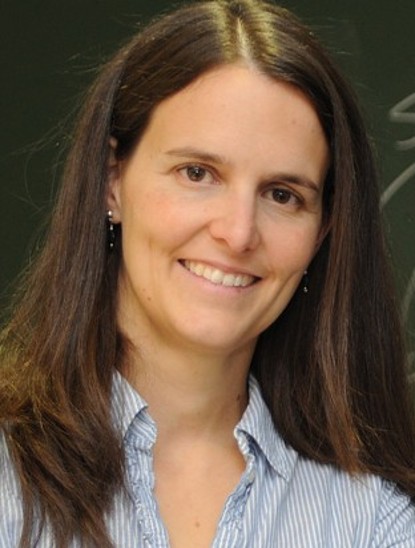
Dr.-Ing. Sabine Lösel is a researcher at the Helmholtz Institute Erlangen-Nürnberg for Renewable Energy (HI ERN) , affiliated with Friedrich-Alexander University Erlangen-Nürnberg. Her work focuses on electrochemical processes, particularly in energy conversion and storage. Contact: +49 9131-12538166 Address: Research Center Jülich GmbH, Wilhelm-Johnen-Straße, 52428 Jülich, Building HIERN-Cauerstr / Room 4011 Her research spans: Electrocatalysis and interfacial process engineering Hydrogen storage technologies (LOHC, active coatings) High-throughput methods for catalyst and photovoltaic material development Nanoanalysis of electrochemical processes Simulation of complex fluid dynamics and membrane systems
Dr. Tatiana Nizkaia is a researcher at the Helmholtz Institute Erlangen-Nürnberg (HI ERN), affiliated with Jülich Research Centre. Her work focuses on electrocatalysis, fluid dynamics, and interface engineering. Research areas: Fluid dynamics in superhydrophobic channels, particle migration, and electrocatalytic processes. Expertise in theoretical and computational modeling of microfluidic systems. Her publications emphasize stochastic particle dynamics , nonlinear hydrodynamic modeling , and superhydrophobic surface interactions . Notable studies include inertial migration patterns of particles and catalytic microswimmer propulsion mechanisms.
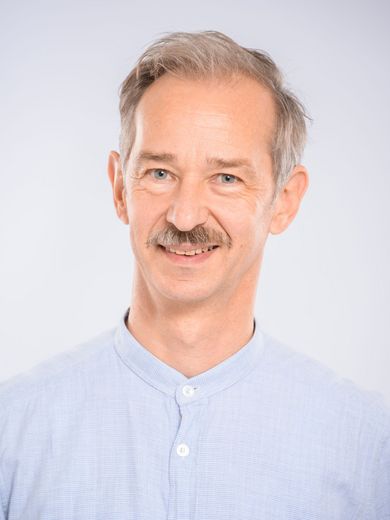
Thomas Amend is a researcher in the Didactics of Geography department at the University of Würzburg's Faculty of Philosophy. His work focuses on innovative teaching methods and curriculum development for geography education in grades 5–9, with a particular emphasis on cooperative learning and heterogeneous learning groups. His research includes the development and testing of geographical teaching concepts, integration of cross-subject elements in geography, and implementation of self-directed learning frameworks. He has contributed to methodological advancements through publications in 'Schulmagazin 5-10' covering problem-solving techniques, simulation games, and environmental education. Amend is actively involved in teacher training, serves as a second examiner for the First State Examination in pedagogy, and contributes to the editorial board of the educational journal 'Schulmagazin 5-10'. His team operates in Building 86 at the Hubland North campus in Würzburg.
Prof. Dr. Bianca Schrul leads the Group for Medical Biochemistry & Molecular Biology at Saarland University's Center for Molecular Signaling (PZMS) in Homburg, Germany. Her research focuses on lipid droplet biogenesis, protein targeting to lipid droplets, and cross-organelle communication in lipid metabolism. Principal Investigator at Saarland University PhD/MSc/MD students under her supervision Lipid droplet research via biochemical and cell biological methods Research Interests: • Molecular mechanisms of lipid droplet protein targeting • Physicochemical membrane properties in organelle biogenesis • ER-to-lipid droplet communication • Pathological lipid metabolism in metabolic diseases Methodologies: • In vitro reconstitution experiments • CRISPR/Cas9 and RNAi • Quantitative proteomics/lipidomics • Advanced fluorescence microscopy Publications Trends: Her 15 most recent articles (2010–2024) cover lipid droplet biogenesis, peroxisome-lipid droplet crosstalk, protein targeting dynamics, and implications in Alzheimer's disease and metabolic disorders like obesity/diabetes. Collaborations: Integrates with molecular dynamics simulations, microfluidics, and EPR spectroscopy experts for interdisciplinary research.
Peter Virnau is a researcher in the Department of Physics at Johannes Gutenberg University Mainz, with a habilitation in Theoretical Physics (2016) and a PhD in Physics (2003). He has held positions such as Akademischer Direktor (2022-present) and Akademischer Oberrat (2013-2022). Education: Habilitation (2016), PhD (2003), Master of Science (1999) Research Focus: Theoretical studies on skyrmions, polymers, and topological phenomena in soft and biological matter. His work spans computational physics, including molecular dynamics simulations of polymer knotting and skyrmion lattice behavior. He has developed coarse-grained models for DNA and studied phase transitions in active systems. Recent publications highlight applications of skyrmion dynamics in computing, topological effects in polymer melts, and DNA knotting under confinement. His research combines computational methods with experimental data analysis. Scientific Awards: Walter Kalkhof-Rose Memorial Award (2007) DFG Postdoctoral Fellowship (2004-2006) Overseas Scholarship, Rupert Karls University Heidelberg (1998-1999)
Prof. Almudena Arcones is a Professor in Theoretical Astrophysics at the Technical University of Darmstadt, Germany. She leads an active research group focused on understanding the cosmic origin of heavy elements. Her work bridges nuclear physics and astrophysics, investigating extreme environments like neutron star mergers and supernovae as cosmic laboratories for element formation. Prof. Arcones' research centers on the r-process (rapid neutron capture process) that creates approximately half of all elements heavier than iron. Her group investigates where and when heavy elements are synthesized in the universe and how these elements are produced. This work connects nuclear physics challenges in describing exotic nuclei with astrophysical challenges in identifying high-neutron-density environments in cosmic explosions. Her recent publications reveal a strong focus on r-process nucleosynthesis in neutron star mergers and core-collapse supernovae. The research integrates multimessenger astronomy (gravitational waves and electromagnetic counterparts), advanced simulations of astrophysical environments, nuclear experiments with exotic nuclei, and observations of elemental abundances in ancient stars. Key themes include nuclear physics uncertainties, neutrino-driven winds, and chemical evolution of r-process elements. Prof. Arcones has secured substantial research funding from prestigious sources including: European Research Council (ERC) Helmholtz Association of German Research Centres GSI Helmholtz Center for Heavy-Ion Research Collaborative Research Center 1245 Research Cluster ELEMENTS Federal Ministry for Education and Research Her research group develops computational tools like the WinNet nuclear reaction network to model nucleosynthesis in extreme astrophysical environments. They combine long-time supernova simulations with detailed microphysics, nucleosynthesis calculations, and observational data to determine the cosmic contributions to heavy element synthesis.
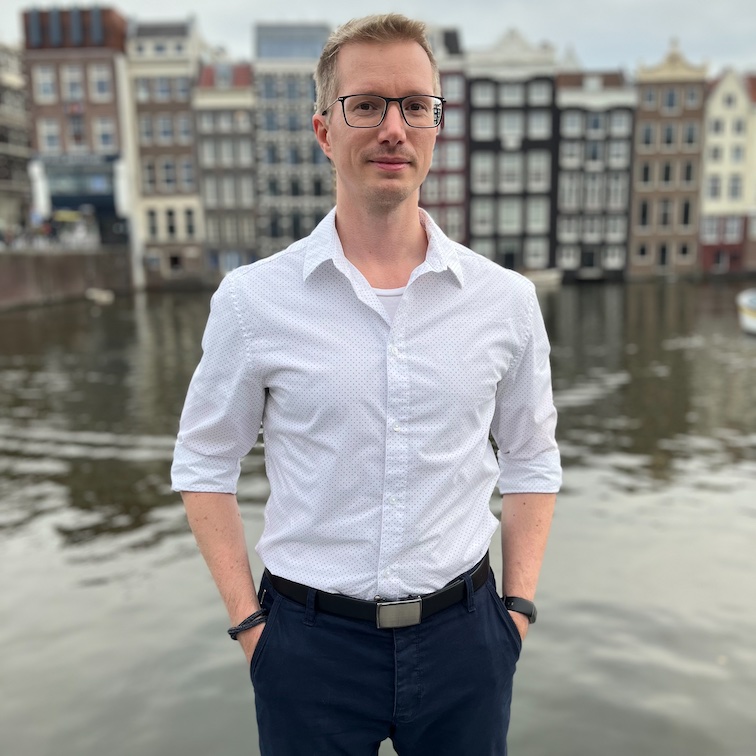
Gábor Závodszky is an Assistant Professor at the Computational Science Lab of the University of Amsterdam. His research focuses on interdisciplinary applications of high-performance computing (HPC) in biomedical contexts, particularly through Digital Twins in Healthcare , Energy Efficient HPC Simulations , and Multi-Scale Modeling . Keywords: Digital Twins in Healthcare, High-Performance Computing, Energy Efficient HPC Simulations His work integrates HPC techniques with fundamental biomedicine and clinical applications to address complex problems in platelet aggregation, hemodynamics, and vascular physiology. Recent projects include ThromboRisk (EU MSCA, 2025), Vascular Immunology (Co-PI, 2025), and GEMINI (EU Horizon, Co-PI, 2024). The majority of his publications focus on platelet mechanics , hemodynamic simulations , and HPC optimization in biomedical contexts. Key subfields include computational fluid dynamics , cellular modeling , medical implant simulations , and vascular pathology . Dr. Závodszky's lab has recently expanded with funded projects totaling over 7.4M EUR, including a Marie Skłodowska-Curie doctoral network and a Vascular Immunology consortium. His team includes PhD candidates Vera Zut and Giulia Pederzani, and he has supervised the successful defense of Dr. Yue Hao's thesis. Recent Grants: EU MSCA (2025), MMD Impulse Grant (2024), EU Horizon (2024)
Jean-François Moulin is a physico-chemist at Helmholtz-Zentrum Hereon , currently serving as Head of the Department of Neutron Scattering. He specializes in materials characterization using neutron reflectometry, GISAS, and advanced data analysis techniques. 2010–present: Head of Department, Neutron Scattering (shared with Sebastian Busch since 2020) 2007–present: First Instrument Responsible for TOF reflectometer REFSANS 2006–2007: Postdoctoral Researcher at TU Munich 2001–2006: Postdoctoral Researcher at ISMN Bologna 2000–2001: Postdoctoral Researcher at CNRS Institut-Charles Sadron His research focuses on soft-matter and interface structures through neutron scattering methods. He has developed advanced instrumentation for neutron reflectometry and pioneered the integration of molecular dynamics simulations with experimental scattering data. Key contributions include: Bayesian analysis frameworks for scattering experiments Studies on nanoparticle-lipid film interactions Design of multiresponsive nanoswitch thin films Development of neutron detection coatings His work bridges experimental physics , computational modeling , and materials engineering , with applications spanning polymer science, biointerfaces, and neutron instrumentation.
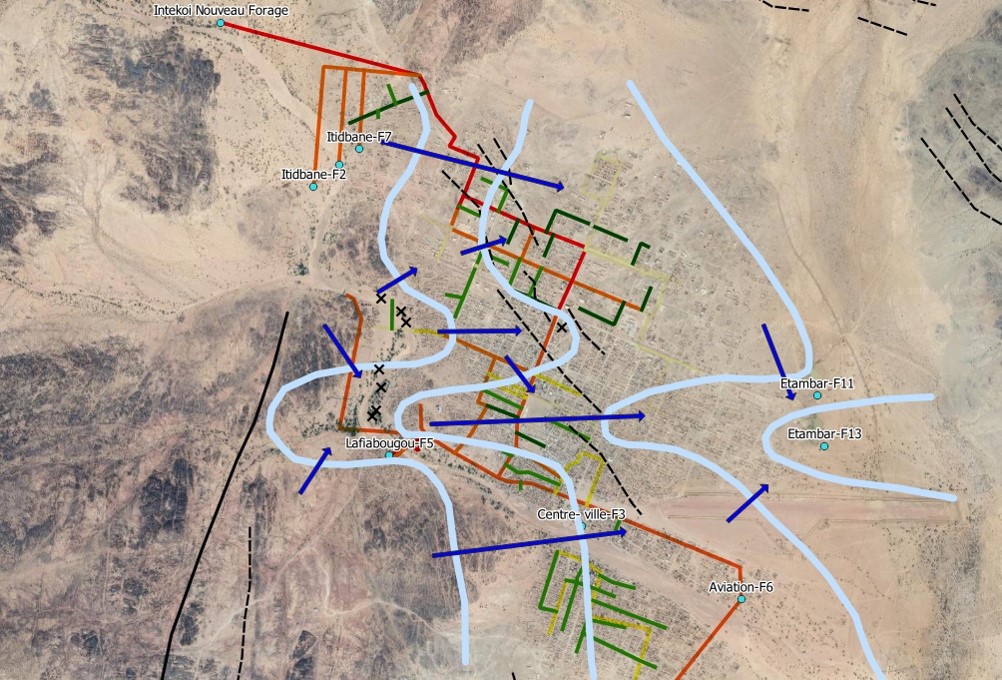
Andreas Braun is a Senior Lecturer at the Department of Geography, University of Tübingen, Germany. He leads lectures and courses on physical geography, geospatial methods, and remote sensing applications. Currently serving since January 2022, his academic responsibilities include teaching, thesis supervision, and research in geoinformatics with a focus on humanitarian response applications. PhD in Geography (2014-2019), University of Tübingen Baden-Württemberg Certificate in University Didactics (2015-2017) Professional experience at Stuttgart's Land Surveying Office (2013) His research bridges geospatial technologies with humanitarian applications, emphasizing remote sensing for environmental monitoring in refugee camps, urban structure analysis, and climate change adaptation. Key areas include SAR data utilization, geosimulation for landscape dynamics, and machine learning applications in geospatial projects. Scientific publications span topics like urban heat island effects in Vietnam, refugee camp monitoring using satellite imagery, and landscape change modeling. His work appears in journals such as IEEE Journal of Selected Topics in Applied Earth Observations , Remote Sensing , and Journal of Flood Risk Management . Teaching activities cover physical geography methods, GIS, remote sensing, and applied geoinformatics for both B.Sc. and M.Sc. programs. He supervises interdisciplinary projects connecting geography with social sciences, focusing on urban planning, climate adaptation, and environmental justice.
Prof. Dr. Ing. Friedrich Fleischmann serves as a Professor at the Faculty of Production Engineering, University of Bremen, with his office located at Neustadtswall 30, 28199 Bremen (Building E, Room 208). His institutional affiliation spans multiple research initiatives focused on optical metrology and precision engineering within Germany's academic framework. His research program centers on advanced metrology techniques for freeform optical surfaces, with particular emphasis on experimental ray tracing methodologies, gradient sensor development, and characterization of both reflective and transmissive optics. Key research thrusts include the measurement of mid-spatial-frequency errors in progressive lenses, LED beam shaping optics, and high-precision verification of complex optical components. His work bridges theoretical optical design with industrial manufacturing applications, addressing critical challenges in optical quality control. Analysis of his 15 most recent publications (2019-2025) reveals a cohesive research trajectory focused on experimental ray tracing as a unifying methodology. His work demonstrates consistent innovation in surface reconstruction algorithms (particularly radial basis functions), sensor integration for gradient measurement, and cross-validation of optical metrology techniques across diverse applications from ophthalmic lenses to industrial lighting systems. The publications show strong methodological continuity between simulation frameworks and physical measurement validation. Prof. Fleischmann has led significant research projects including: Development and application of a digital twin for progressive lens verification (09/2024 - 10/2025) Further development of inventions for measuring shape and waviness of reflecting surfaces (03/2020 - 08/2021) Integrated gradient sensor for freeform surfaces using multiple light sources (09/2019 - 08/2021) Young Engineers 2015: Enhancement of Beamshaping Optical Elements for LED Lighting (eboLED) (05/2015 - 11/2019) EXIST Research Transfer: EasyPrecision measurement platform development (03/2012 - 10/2013)
David Senor is a Lab Fellow at Pacific Northwest National Laboratory (PNNL) and an Adjunct Professor of Nuclear Engineering at Texas A&M University. With over 30 years of experience since joining PNNL in 1992, he specializes in nuclear materials science with a focus on irradiation effects, material behavior under radiation, and development of nuclear fuels and structural materials. Dr. Senor holds a PhD in Nuclear Engineering from Texas A&M University (1992), along with MS (1989) and BS (1988) degrees from the same institution. His educational background has provided a strong foundation for his extensive research career in nuclear materials. His research focuses on neutron irradiation effects on reactor structural materials, burnable absorbers, and fuels, as well as proton and ion irradiation effects on accelerator beam-intercepting devices. He has pioneered work in fabrication of materials and fuels for nuclear service, particularly in silicon carbides for fission and fusion reactor applications, tritium-producing burnable absorber rods, and uranium-molybdenum fuels for research reactors. His recent publications demonstrate continued leadership in understanding radiation damage mechanisms, lithium ceramics for fusion applications, and advanced characterization techniques for nuclear materials. Dr. Senor has received numerous professional recognitions including the Secretary's Achievement Award from the Department of Energy (2019) and the Nuclear Engineering Distinguished Former Student Award from Texas A&M University (2018). He also earned early career recognition as a Young Leader from The Minerals, Metals and Materials Society (1996). As the national technical lead for the National Nuclear Security Administration Tritium Modernization program, principal investigator for fusion solid breeder research, and PI for post-irradiation examination in the RaDIATE Collaboration, Dr. Senor continues to play a critical role in advancing nuclear materials science. He has organized numerous international workshops and symposia, served on the Science Review Board for Nuclear Science User Facilities, and contributed to professional societies including The Minerals, Metals and Materials Society and the American Nuclear Society.
Kevin Rosso is a Laboratory Fellow and the associate director of the Physical Sciences Division for Geochemistry at Pacific Northwest National Laboratory (PNNL). He received his BS degree in geological sciences from Cal Poly at Pomona, California, in 1992, and his MS and PhD degrees in geochemistry from Virginia Tech in 1994 and 1998. With over 340 publications and an H-index of 63, Dr. Rosso is a leading figure in molecular geochemistry and surface science. Dr. Rosso's educational background includes: Ph.D., Geochemistry, Virginia Polytechnic Institute and State University M.S., Geochemistry, Virginia Polytechnic Institute and State University B.S. Geological Sciences, California State Polytechnic University, Pomona Dr. Rosso is best known for his pioneering research on electron transfer reactions between aqueous ions, mineral surfaces, and bacterial enzymes. His research spans from fundamental topics such as metal sulfide oxidation, bacterial reduction of metal oxides, contaminant interactions with clay minerals, and mechanisms of crystal growth and dissolution, to applied areas including geologic carbon sequestration, stress corrosion cracking in alloys, performance optimization of lithium battery materials, and the design of semiconductor materials for solar photocatalysis. His work has been instrumental in establishing the field of molecular geochemistry through the application of advanced tools like scanning probe microscopy, quantum mechanical molecular simulations, and massively parallel supercomputers. Analysis of Dr. Rosso's recent publications (2022-2023) reveals a continued focus on mineral-water interfaces, electron transfer processes, and materials for energy applications. His research spans multiple disciplines including geochemistry, materials science, surface chemistry, and computational chemistry. Key themes include aluminum speciation in alkaline solutions, mineral dissolution and precipitation mechanisms, electron transport in metal oxides, and the development of advanced characterization methods for understanding complex geochemical systems. Dr. Rosso has received numerous prestigious awards recognizing his contributions to geochemistry: Science Innovation Award (Stumm Medal), European Association of Geochemistry, 2020 Geochemistry Fellow, 2020 Member, Washington State Academy of Sciences, 2019 Visiting Distinguished Scholar, Durham University, 2019-2020 Life Fellow of the Mineralogical Society of America Life Fellow of The Geochemical Society Life Fellow of The European Association of Geochemistry Mineralogical Society's Hallimond Lectureship, 2016 Mineralogical Society of America Award, 2004 Dr. Rosso leads the U.S. Department of Energy's major fundamental geochemistry program at PNNL and is the founding director of the Center for Understanding Subsurface Signals and Permeability (CUSSP), a multi-institutional DOE Energy Earthshot Research Center launched in 2023. He has mentored a research group of approximately 35 PhD students, postdoctoral fellows, and staff scientists. His laboratory work is supported by significant DOE funding for research on geochemical processes relevant to energy production, environmental remediation, and nuclear waste management. Dr. Rosso directs the Center for Understanding Subsurface Signals and Permeability (CUSSP), which focuses on understanding subsurface processes critical for carbon sequestration, nuclear waste disposal, and geothermal energy. His team combines experimental and computational approaches to study mineral-fluid interactions at multiple scales, from molecular to field levels. The laboratory maintains state-of-the-art facilities for surface characterization, spectroscopy, and high-performance computing simulations.
Thomas Dunning serves as a Battelle Fellow with a joint appointment in the Advanced Computing, Mathematics & Data division at Pacific Northwest National Laboratory (PNNL), a U.S. Department of Energy national laboratory. His research spans computational chemistry, quantum mechanics, and high-performance computing infrastructure development. His primary research interests focus on computational chemistry methodologies , particularly in quantum chemistry software development, electronic structure theory, and molecular modeling. Dunning has pioneered advancements in correlated molecular wave function calculations, basis set development, and high-accuracy simulations for chemical systems ranging from noble gas dimers to environmental contaminants. His work bridges theoretical chemistry with practical high-performance computing applications. Dunning's publication record demonstrates consistent contributions to quantum chemistry software frameworks and benchmark methodologies, with emphasis on NWChem development, accurate potential energy surfaces, and molecular interaction modeling. His research trends show evolution from fundamental molecular physics in the 1990s toward integrated environmental and materials applications in later work. Battelle Fellow (prestigious internal PNNL recognition for exceptional scientific contributions) As a Battelle Fellow, Dunning leads critical research initiatives in computational chemistry infrastructure without documented student advisement or external grant mentions in the provided materials. His work maintains strong connections to PNNL's Environmental Molecular Sciences Laboratory and advanced computing facilities.
Prof. Dr. Stefanie Walch-Gassner is a Professor of Theoretical Astrophysics at the University of Cologne, where she leads the Theoretical Astrophysics group Cologne (TAC) within the Department of Physics. She serves as head of the SILCC project (SImulating the life cycle of molecular clouds), a European collaboration focused on modeling molecular cloud formation, evolution, and dispersal with emphasis on astro-chemical modeling and feedback processes. Her research spans multiple spatial scales, from interstellar medium physics on kiloparsec scales down to protostellar disks and jets on astronomical unit scales. She employs computational tools including FLASH, GADGET, GANDALF, KROME, and radiative transfer codes like RADMC-3D and POLARIS. Walch-Gassner's work connects theoretical models with observational data, as evidenced by recent research on [CII] emission in high-redshift galaxies comparing simulation results with ALPINE survey observations. Her research group collaborates with: Prof. Dr. Arshia M. Jacob Prof. Dr. Lucas Labadie Prof. Dr. Dominik A. Riechers Prof. Dr. Peter Schilke Prof. Dr. Stephan Schlemmer Dr. Netty Honingh Dr. Urs Graf She has supervised numerous PhD students to completion since 2016 and regularly teaches courses including Hydrodynamics, Theoretical & Computational Star Formation, and Advanced Seminar on Topical Subjects of Astrophysics. She also organizes intensive workshops on numerical methods in astrophysics for graduate students.
Dr. Guoqiang Li is an Associate Professor in the School of Computer Science at Shanghai Jiao Tong University, where he conducts research at the intersection of formal methods, programming languages, and security. His academic journey includes prior positions as Assistant Professor (2009-2013) and subsequent promotion to Associate Professor (2014-present) at the same institution. He has held international appointments including a postdoctoral fellowship at Nagoya University (2008-2009), an academic visit at the University of Oxford (2015-2016), and a Guest Associate Professorship at Kyushu University's Research and Development Center for Smart Mobility (2016-2020). Dr. Li earned his B.S. from Taiyuan University of Technology (2001), M.S. from Shanghai Jiao Tong University (2005), and Ph.D. from Japan Advanced Institute of Science and Technology (2008). His educational background reflects a strong foundation in both Chinese and Japanese academic traditions. His research focuses on formal verification, programming language theory, zero-knowledge proofs, knowledge reasoning, and intelligent system verification and security. Over the past decade, his work has evolved from traditional formal methods applied to timed automata and process calculi to contemporary topics including neural network verification, zero-knowledge proof systems, and the application of large language models to program analysis. His publication record demonstrates a clear progression toward addressing verification challenges in increasingly complex modern systems. Dr. Li's recent publications reveal a strategic research trajectory: early work centered on timed automata and formal verification of concurrent systems, while current research addresses the verification of AI systems, zero-knowledge cryptographic protocols, and LLM-enhanced program analysis. This evolution reflects his commitment to applying rigorous formal methods to emerging computational challenges. Distinguished Paper Award at ICSE 2020 for 'Unblind Your Apps: Predicting Natural-Language Labels for Mobile GUI Components by Deep Learning' Consistent publication in top-tier venues including ASE, ICSE, FSE, and OOPSLA Recognition through multiple National Natural Science Foundation of China (NSFC) grants as Principal Investigator Dr. Li actively contributes to the academic community as a Senior Member of the China Computer Federation, Deputy Director of Theoretical Computer Science for the Shanghai Computer Society, and committee member for multiple technical organizations. He serves as Organization Chair for SEKM'20-22 and FMAC'17, Publicity Chair for TASE'21-23, and has participated in program committees for numerous international conferences. His teaching portfolio includes undergraduate and graduate courses in algorithm design, mathematical foundations, and scientific writing, demonstrating his commitment to both theoretical computer science education and practical application.