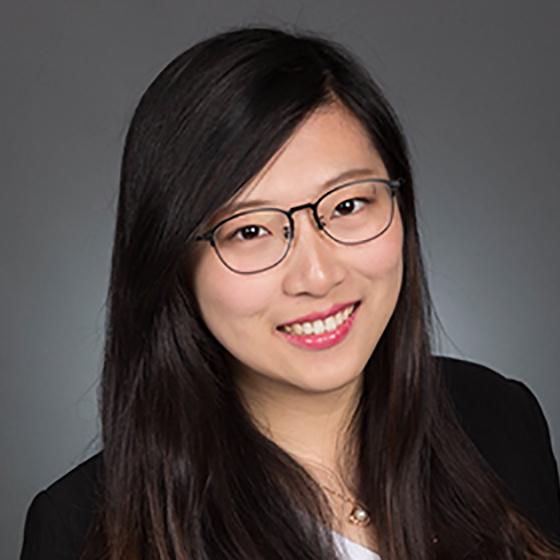
Dr. Mina Najafi is an academic researcher specializing in sustainable construction, digital transformation in built environments, and place attachment theory. Her work bridges engineering, urban planning, and social sciences. She actively supervises PhD students and contributes to interdisciplinary research initiatives. Research Focus: Sustainable Construction, BIM Technology, Digital Twins, Aging in Place Strategies, and Climate Resilience. Key Projects: Exploration of digital frontiers in construction, policy analysis for energy efficiency, and community-centric design for low-density regions. Her research interests span innovative construction practices, the integration of emerging technologies, and the socio-cultural dimensions of built environments. Recent work emphasizes leveraging digital tools for supply chain optimization and climate adaptation.
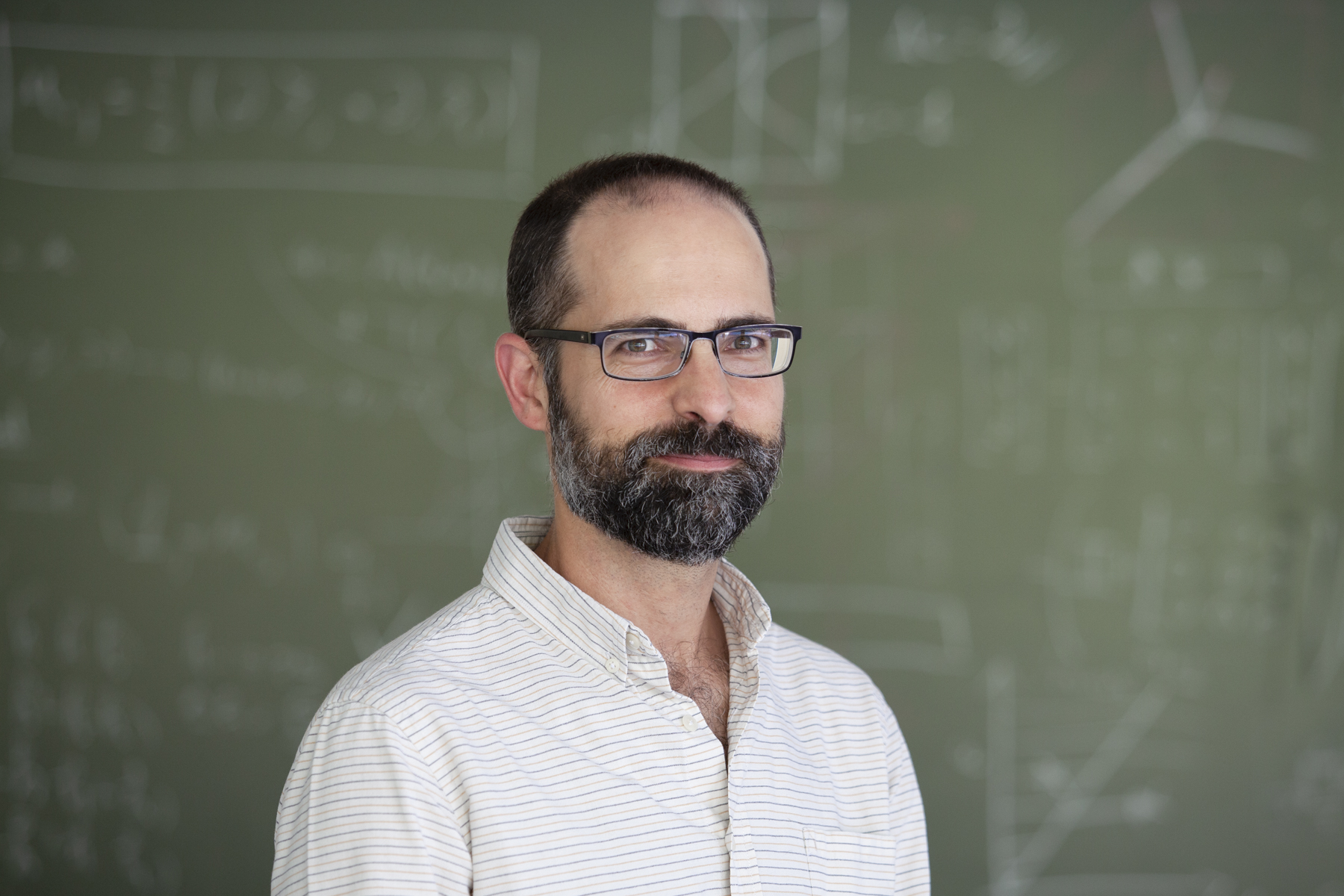
Manxi Wu is an Assistant Professor in Cornell University's School of Operations Research and Information Engineering, specializing in societal networks and game-theoretic approaches to system design. Her research develops computational models for strategic learning and incentive mechanisms in socio-technical systems, with applications to transportation networks and digital platforms. Education: B.S. Applied Mathematics, Peking University (2015) M.S. Transportation, Massachusetts Institute of Technology (2017) Ph.D. Social and Engineering Systems, Massachusetts Institute of Technology (2021) Her research integrates game theory, optimization, and machine learning to address challenges in autonomous services, traffic management, and decentralized decision-making. Current investigations focus on adaptive incentive structures, spatial resource allocation, and equilibrium analysis in complex networked environments. Publication analysis reveals consistent emphasis on game-theoretic frameworks applied to urban mobility systems, with recent work exploring multi-agent reinforcement learning, congestion pricing equity, and electric fleet management. Methodological innovations include novel convergence proofs for decentralized algorithms and computational approaches to fairness constraints. Awards and Honors: Hammer Fellowship UTC Milton Pikarsky Memorial Award Siebel Scholarship EECS Rising Star recognition No information is currently available regarding student advising, research grants, or laboratory affiliations.
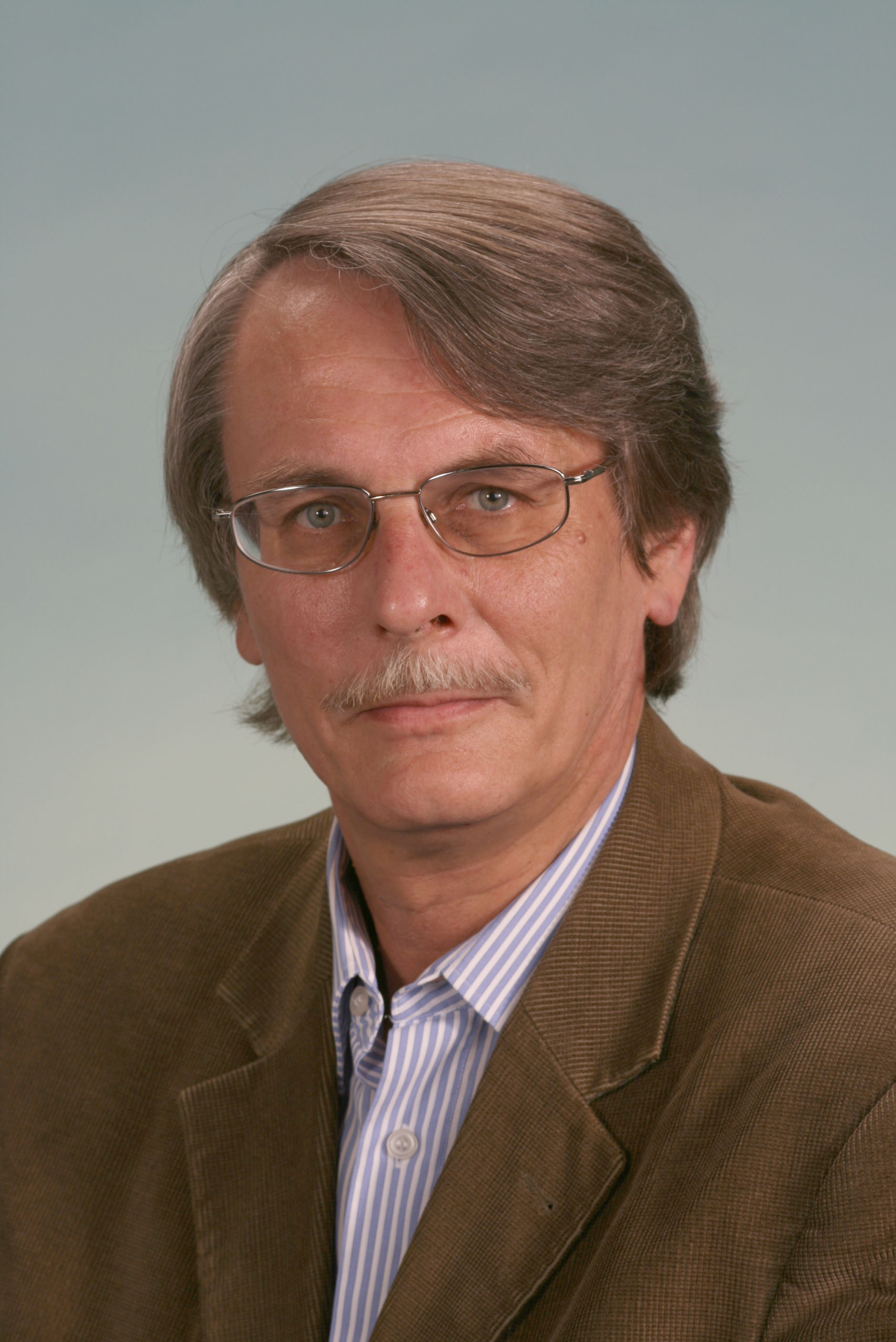
Christopher Bailey is a Professor of Advanced Semiconductor Packaging and Director of the Centre for Advanced Semiconductor Packaging at Arizona State University (ASU). He previously served as Professor of Computational Mechanics & Reliability and Associate Dean for Research at the University of Greenwich, UK. At ASU, he leads research on advanced semiconductor packaging, including roles as Principal Investigator (PI) and Co-Investigator (Co-I) on major projects such as the SRC-funded Thermo-Mechanical Modelling and US Chips Act initiatives (e.g., SWAP-Hub, SHIELD, ITSI). His research focuses on semiconductor packaging reliability, thermal management, co-design methodologies, and multiphysics modeling. Education: MBA (Technology Management), Open University, UK PhD, Thames Polytechnic, UK Research Interests: Advanced Semiconductor Packaging Thermal Management Solutions Co-Design and Multiphysics Modeling Reliability of Electronic Components His work integrates computational mechanics, materials science, and engineering to address challenges in high-reliability electronics. Recent projects emphasize predictive modeling for semiconductor packaging failures under thermal-mechanical stress. Awards: IEEE Region 8 Europe Award (2024) IEEE David Feldman Award (2022) Visiting Professorships at IIT Kharagpur (2018/2022) and Hong Kong (2018) Service & Leadership: Former President of IEEE Electronics Packaging Society (2020–2021) Associate Editor for IEEE Transactions on Components, Packaging, and Manufacturing Technology Conference Leadership (e.g., Program Chair for IEEE PAINE 2024) He has secured over $40M in research funding and authored 400+ archival papers, with expertise spanning industry collaborations (e.g., BAe Systems, Rolls Royce) and government advisory roles (EPSRC Peer Review College, UK Research Excellence Framework).
Mariapia Musumeci is a Professor and head of the Chair for Materials Simulation at the Department of Materials Science and Engineering, Friedrich-Alexander-Universität Erlangen-Nürnberg (FAU). Her research focuses on computational materials science and simulation techniques, with affiliations rooted in advanced materials engineering. Contact: mpia.musumeci@fau.de, Room 2.021, Dr.-Mack-Straße 77, 90762 Fürth. Office hours are held weekly on Mondays, Tuesdays, and Wednesdays from 11:00 to 16:00 in Room 2.021. Her work likely involves theoretical and applied aspects of materials science, leveraging simulation methodologies for material design and analysis.
Le Khanh Ngan Nguyen is a Chancellor’s Fellow and Lecturer in the Department of Management Science at the University of Strathclyde. Her research focuses on hybrid simulation models (system dynamics, agent-based, and discrete-event) to evaluate health and social care policies. Previously, she conducted systems thinking research at University College London. She holds a PhD from the University of Strathclyde (2022), a Master of Public Health from the University of Sydney, and a Bachelor of Pharmacy. Research Interests: Combining simulation techniques like system dynamics and agent-based modeling to enhance decision-making in healthcare systems. Specializes in hybrid models for evaluating interventions against healthcare-associated infections and pandemic responses (e.g., COVID-19). Key Focus Areas: Healthcare Policy, Sustainability, Pandemic Modeling, Infection Control UN SDG Contributions: Aligns with goals related to Good Health & Well-being and Sustainable Cities Recent work highlights include analyzing kidney replacement therapy policy in Thailand using causal loop diagrams and exploring unsustainable pressures in UK health systems via qualitative system dynamics. Her research bridges operational research with real-world policy implementation challenges. Recent Awards: Finalist for 2022 EURO Prize for OR in Common Good, SBS Knowledge Exchange Award (2023) Collaborations involve projects on data value chains for evidence-based policymaking and collaborative research cultures in academia. Active in conferences like the Royal Statistical Society Conference (2025) and workshops on occupational health innovations.
Robert S. Laramee is a Professor at the University of Nottingham (previously at Swansea University), specializing in visualization research. His work focuses on data visualization, scientific visualization, and computational fluid dynamics. He has authored over 170 publications in top journals like IEEE Transactions on Visualization and Computer Graphics, Computer Graphics Forum, and IEEE Computer Graphics and Applications. Research Interests: His research spans information visualization, flow visualization, visual literacy, and educational aspects of visualization. He emphasizes practical applications in fields like healthcare, digital humanities, and computational science. Recent Trends: Recent work includes studies on treemap literacy, educational frameworks for visualization, and interactive systems for clinical data. He has also contributed to visualization resources and surveys, aiming to bridge academic and industry needs. Grants & Collaborations: Collaborations include projects on visualization for smart cities, protein-lipid interactions, and quantum chromodynamics data analysis. No specific grant details are provided in the text. Labs & Teams: Affiliated with visualization research groups at Nottingham and Swansea, though specific lab names are not mentioned.
Patrick T. Brandt is a Professor of Political Science, Public Policy, and Political Economy at the University of Texas at Dallas , affiliated with the School of Economic, Political and Policy Sciences . His work integrates advanced statistical methods with political science, focusing on time series analysis, machine learning, and Bayesian modeling to study political dynamics. His research spans international relations , political economy , terrorist targeting , and conflict forecasting . He specializes in developing novel models for event count time series, including the Bayesian Poisson Vector Autoregression and MS-BVAR packages for R. His NSF-funded projects focus on event data generation and real-time conflict forecasting. Recent publications emphasize domain-specific language models (ConfliBERT variants), graph neural networks for conflict prediction, and machine translation challenges in political text analysis. He maintains the OpenEvent Data Repository and develops software like MSBVAR and PESTS for academic use. Scientific Awards : Robert H. Durr Award for Best Methodology Paper, Midwest Political Science Association (2006)
Prof. Wolfhard Janke is a Professor at the Institute of Theoretical Physics, University of Leipzig. His research focuses on computational statistical physics, particularly Monte Carlo simulations of polymers, phase transitions, and complex systems. He co-organizes the annual NTZ Workshop CompPhys series and leads projects like the SFB/TRR 102 Summer School on synthetic/biological macromolecules. Janke has developed advanced simulation techniques and authored influential review articles on topics like generalized ensemble methods and polymer collapse dynamics. His work bridges theoretical physics with computational methodologies, emphasizing first-order phase transitions and aging phenomena in non-equilibrium systems. Active in education, he teaches courses on computer simulations and supervises graduate research in computational physics.
Zohreh Davoudi is an Associate Professor in the Department of Physics at the University of Maryland, College Park. She holds additional roles as a Fellow of the Joint Center for Quantum Information and Computer Science (QuICS) and Associate Director for Education at the NSF Institute for Robust Quantum Simulation. Her research focuses on simulating strongly interacting systems using lattice quantum chromodynamics (LQCD), quantum simulation, and quantum computing. She earned her B.Sc. and M.Sc. from Sharif University of Technology in Iran, followed by a Ph.D. in Theoretical Physics from the University of Washington (2014), and served as a postdoctoral researcher at MIT's Center for Theoretical Physics before joining UMD in 2017. Her research interests include developing computational frameworks to study nuclear and particle physics phenomena, such as neutrino interactions, dark matter scattering, and neutron star dynamics. She has pioneered efforts to leverage quantum computing to address the 'sign problem' in fermionic systems and simulate real-time dynamics of early universe matter. Notable awards include the 2025 Presidential Early Career Award, 2024 Simons Emmy Noether Fellowship, and 2019 Alfred P. Sloan Fellowship. Her educational contributions include leading training programs in quantum information science and fostering collaborations across institutes like RIKEN (2017–2021) and the NSF Quantum Simulation Institute. She supervises a dynamic research group focused on lattice gauge theory, quantum algorithms, and interdisciplinary applications such as neutrinoless double-beta decay calculations.
Prof. Walter Schwaiger is a Full Professor at TU Wien’s Faculty of Mechanical and Industrial Engineering, leading the Institute of Management Science. His academic roles include serving as Head of the Faculty Council since 2010 and holding various curriculum committee positions. He teaches critical courses such as Financial Management, Enterprise Risk Management, and IT-based Management across bachelor’s and master’s programs. His research focuses on three core areas: Financial Enterprise Management (stochastic NPV modeling for renewable energy investments), Enterprise Risk Management (risk maturity assessments via ERMMA studies), and IT-based Management (ontology-driven accounting frameworks like OntoREA). Recent work includes predictive analytics applications in credit risk scoring and pandemic-driven default prediction studies. Prof. Schwaiger has authored influential textbooks like IFRS-Finanzmanagement series and pioneered the REA-based ERP-Control system. He actively contributes to management control research, publishing in venues like Controlling and WingBusiness , and collaborates with institutions like Funk Stiftung on large-scale ERM maturity studies. His professional service includes leading faculty strategy groups and quality management initiatives at TU Wien, reflecting his commitment to institutional governance and academic excellence.
David de Sancho Sánchez is a Ramón y Cajal Research Fellow at the University of the Basque Country (UPV/EHU) and the Donostia International Physics Center (DIPC) in Spain. His research employs computational methods to study protein dynamics, folding mechanisms, and biomolecular interactions, with a focus on quantitative comparisons between theory, simulation, and experimental data. Education & Training: Biophysical Chemistry training at San Pablo CEU and Complutense Universities PhD under Antonio Rey at Complutense University Postdoctoral work with Victor Muñoz (Spanish Research Council) and Robert Best (University of Cambridge) Research Focus: David's work spans protein folding landscapes, metal-binding proteins, mechanical unfolding, and phase separation. Recent investigations include amyloid-beta aggregation, titin mechanics in cardiac disease, and computational drug design for cancer and neurodegeneration. His methodologies integrate molecular dynamics, Markov state models, and force spectroscopy simulations. Scientific Awards: Ramón y Cajal Fellowship (UPV/EHU) Ikerbasque Research Fellowship (CIC nanoGUNE) Affiliations: He leads computational research at UPV/EHU's Theoretical Chemistry Unit and collaborates extensively with experimental groups at DIPC, focusing on protein engineering and disease mechanisms.
Rainer Böckmann is a Professor of Computational Biology in the Department of Biology at Friedrich-Alexander-University Erlangen-Nürnberg (FAU), Germany, where he leads the Group for Theoretical and Computational Membrane Biophysics. His research integrates molecular dynamics simulations with biophysical analysis to study membrane structure, dynamics, and function. Research Interests: His work focuses on computational biophysics, particularly lipid bilayers, membrane proteins, molecular dynamics, and structural bioinformatics. He investigates how lipid composition, cholesterol, and embedded peptides influence membrane organization, curvature, and permeability, with applications in antimicrobial strategies and mRNA vaccine delivery systems. Recent Research Trends: His recent publications reflect a strong emphasis on lipid nanoparticles (LNPs), particularly their phase behavior, pH-dependent protonation, and structural transitions relevant to mRNA vaccines. He also explores antimicrobial peptides, membrane domain formation, and the role of cholesterol in modulating membrane properties. His group develops and applies advanced simulation techniques, including constant-pH MD and coarse-grained modeling. Member of Editorial Board, Biophysical Journal (2024–present) Elected Member, DFG Review Board for Biophysics (2020–present) Chairman, Molecular Biophysics Section, German Biophysical Society (2011–2012) Leadership and Service: Böckmann is actively involved in academic governance, serving on editorial boards, DFG committees, and as a guest editor for special issues in Frontiers journals. He contributes to graduate education and high-performance computing initiatives at FAU, including the NHR@FAU and Life@FAU Graduate School. He has organized major conferences and workshops in biophysics and membrane modeling. Laboratory and Collaboration: He leads a research group focused on biomembrane physics, collaborating with experimentalists and theorists. His lab develops and applies simulation tools to study membrane systems, bridging computational insights with biological function.
Andrea Jamardo Lorenzo is an Assistant Professor at the University of León , affiliated with the School of Law and working within the Department of Public Law . Her research focuses on Procedural Law , with particular emphasis on Chain of Custody mechanisms, Technology in Law , and Legal Education innovations. Education : PhD in Law from the University of León (2023), thesis titled La cadena de custodia: análisis sistemático , supervised by Dr. Piedad González Granda. Her research explores the legal configuration and technological evolution of chain of custody systems in both national and European contexts. She investigates how digital evidence handling , AI applications , and cybersecurity protocols impact judicial integrity and procedural guarantees. Recent work also addresses pedagogical methods like flipped classrooms and role-playing in legal education. Analysis of her publications reveals trends in criminal procedure reforms , comparative chain of custody models (Spain vs. US), and ethical implications of legal technology . While no scientific awards are documented, her work contributes to debates on judicial efficiency , fundamental rights , and data protection in criminal contexts.
Dr. Marion Schrumpf is a Group Leader in the Soil Biogeochemistry research group at the Max Planck Institute for Biogeochemistry, affiliated with the Department of Biogeochemical Processes. Her work focuses on soil carbon dynamics, mineral-organic matter interactions, and climate change impacts on soil systems. Research areas: Soil biogeochemistry, carbon cycling, mineral-soil interactions, nutrient stoichiometry, microbial ecology, and climate modeling. Email: mschrumpf@... Phone: +49 3641 57-6182 Office: B2.015 Her recent publications address themes like mineral control over soil carbon stabilization, drought effects on soil processes, microbial stoichiometric adaptation, and the Jena Soil Model's role in simulating carbon-nutrient interactions. She leads efforts to disentangle the complex relationships between land use, mineralogy, and soil organic matter turnover across diverse ecosystems.
Adrien Depeursinge is a Professor at HES-SO Valais-Wallis - Haute Ecole de Gestion, affiliated with the School of Economics and Services and the Management Information Systems department. His research focuses on radiomics, personalized medicine via image-based analysis, and clinical workflow optimization. He leads the development of the QuantImage platform, a physician-centered web-based tool for radiomics research, and contributes to radiomics standardization efforts through initiatives like the Image Biomarker Standardization Initiative (IBSI). His work emphasizes machine learning applications in healthcare, including tumor segmentation, biomarker extraction, and improving diagnostic accuracy through computational models. Key research themes include: 1) Radiomics – developing quantitative imaging features for cancer diagnosis/prognosis; 2) Medical Imaging Analysis – advancing texture-based models, multi-modal fusion, and automated lesion detection; 3) Physician-AI Collaboration – designing user-centric tools for clinical integration. His contributions span neuro-oncology (brain metastases), head-and-neck cancer, and multiple sclerosis imaging. Publications emphasize methodological advancements (e.g., kernel optimization in CNNs, steerable detectors) and clinical validation (e.g., reproducibility of radiomics features across imaging protocols). He collaborates with institutions like the University Hospital of Lausanne (CHUV) and international teams on projects like the HECKTOR challenge for PET/CT tumor segmentation. His work bridges technical innovation with clinical impact, aiming to translate radiomics into actionable clinical tools. QuantImage v2, his flagship tool, enables no-code development of machine learning models using clinical imaging data. Research also includes phantom-based validation of radiomics features and addressing challenges in feature stability across imaging modalities. Current projects explore improving contour quality for radiomics studies and optimizing AI explainability in medical decision-making.