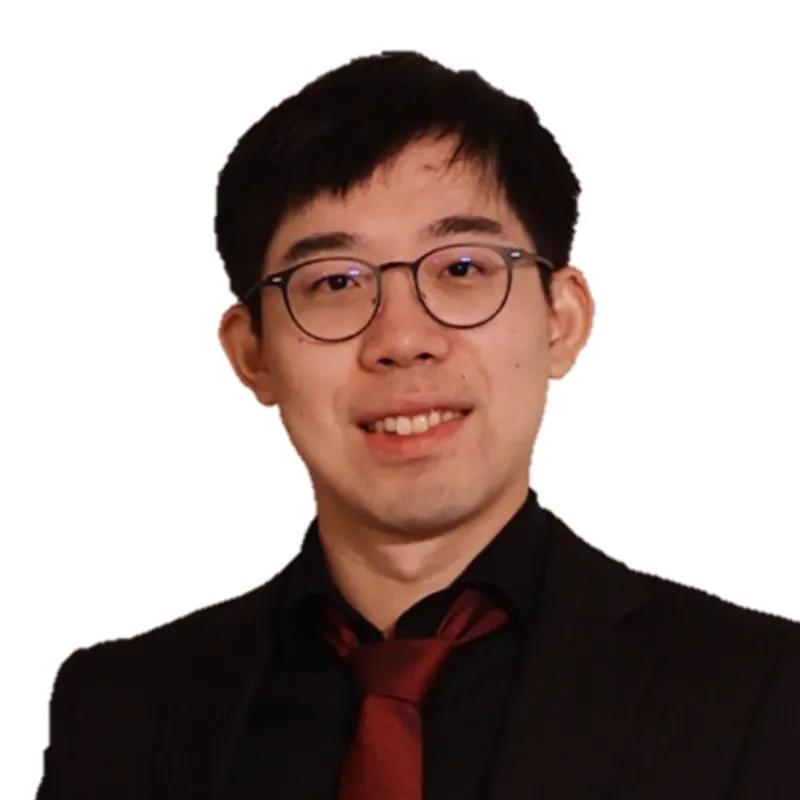
Jean-François Godbout is a Professor in the Department of Political Science at the Université de Montréal and an Associate Academic Member of Mila - the Quebec AI Institute. He directs the undergraduate program in Big Data Analytics in Social Sciences and Humanities at UdeM and conducts interdisciplinary research through the Complex Data Lab. Affiliated with IVADO (AI Consortium) Member of CÉRIUM (International Research Centre) and CECD (Democratic Citizenship Centre) His research focuses on: Data Science applications in political institutions AI Safety and generative AI's impact on political attitudes Misinformation Mitigation through large language models Comparative Political Development in Canadian and Lower Canada contexts Legislative Institutions and voting records analysis Political Polarization in online societies Recent publications analyze social media disinformation, AI persuasion on harmful topics, and education-focused text simplification. His articles frequently combine graph mining , machine learning , and political science methodologies. Scientific collaborations include: Mila researchers (Andreea Musulan, Maximilian Puelma Touzel) IVADO data science initiatives McGill University interdisciplinary projects He supervises students in: Political science (Julien Robin, Matthew Taylor) Artificial Intelligence (Kellin Pelrine, Camille Thibault) Computational social science applications
Daniel A Levinthal is the Reginald H. Jones Professor of Corporate Strategy and Professor of Management at the Wharton School, University of Pennsylvania. With extensive publications on organizational adaptation and industry evolution in technological contexts, he serves as Editor-in-Chief for Strategy Science and Organization Science. Research Interests Industry evolution Organizational learning Technological competition His 2024 research examines organizational search strategies, showing how cautious exploitation combines slow belief updating with strong explicit exploitation for effective adaptation. Recent work explores how political coalitions drive organizational change, with hierarchical belief influence structures proving more effective than flat designs in certain environments. Earlier studies developed the "Mendelian executive" framework and advanced Carnegie School decision-making theory. Scientific Awards Fellow of Strategic Management Society Fellow of Academy of Management Distinguished Scholar Awards (3 divisions) Irwin Award as Distinguished Educator 4 Honorary Doctorates Levinthal teaches advanced strategy courses (MGMT9000, MGMT9150) and graduate enterprise management (MGMT6110). His research has established foundational insights about organizational capabilities, knowledge aggregation, and strategic inertia.
Hernan Eduardo Morales Villegas is an Associate Professor at the Section for Hologenomics within the Globe Institute of the University of Copenhagen, holding dual affiliations with the Faculty of Science and Faculty of Health and Medical Sciences. His research bridges evolutionary biology and conservation science through genomic approaches to biodiversity crises. Dr. Morales specializes in genomic erosion—the loss of genetic diversity during population collapse—and its implications for extinction risk and species recovery. Leading the Evolutionary and Conservation Genomics Group, he integrates paleogenomics, evolutionary modeling, and quantitative analyses to study endangered species, museum specimens, and simulated evolutionary dynamics. His work spans adaptation mechanisms, speciation processes, and conservation genetics, with emphasis on how anthropogenic pressures alter genomic landscapes across taxa. Recent publications (2019-2025) reveal a cohesive research trajectory applying genomic tools to urgent conservation challenges. Studies on the kākāpō, woolly mammoth, and Iberian wolf demonstrate how genetic load, adaptive introgression, and habitat fragmentation influence species resilience. His work increasingly focuses on predictive modeling of genomic erosion dynamics, with methodologies evolving from single-species analyses toward cross-taxon comparative frameworks that inform conservation prioritization. As director of the Evolutionary and Conservation Genomics Group, Morales fosters international collaborations evidenced by multi-institutional publications in high-impact journals. His research attracts significant scientific attention, with studies covered by hundreds of news outlets and cited extensively in policy discussions, highlighting the translational impact of genomic insights for biodiversity conservation in the Anthropocene.
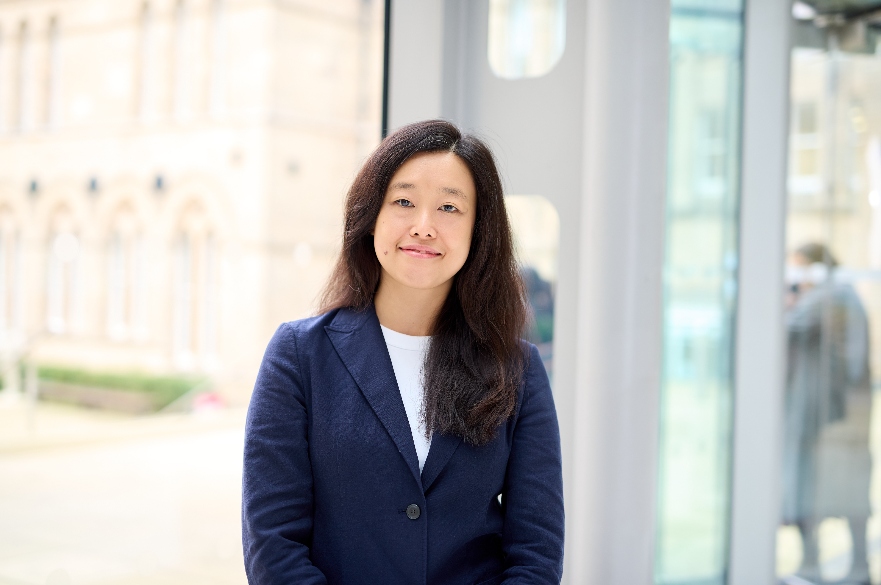
Dr. Elaine Chen serves as Senior Lecturer in Business Analytics and Course Leader for the MSc Business Analytics and Artificial Intelligence at Nottingham Business School, Nottingham Trent University. Her teaching emphasizes practical applications of data and AI technologies for business decision-making, with dedicated focus on accessibility for diverse student backgrounds across technical and strategic domains. Her academic credentials include: PhD in Computing Science MSc in Business Information Technology Postgraduate Certificate in Academic Practice BTech (Hons) in Business Information Systems Chen's research bridges educational and business contexts through data-AI integration: Generative AI adoption in higher education, particularly for neurodivergent/disabled students Human-AI collaboration frameworks in organizational settings SME applications for AI-driven efficiency and competitiveness Workforce analytics and talent management systems Her work consistently connects technical AI capabilities with real-world implementation challenges. Publication analysis (2023-2025) reveals accelerating focus on generative AI's educational impact and business strategy integration, evolving from her foundational work in social recommender systems (2014-2020) which established methodologies now applied to contemporary AI challenges in business contexts. Her professional recognition includes: Senior Fellow of the Higher Education Academy (HEA) Chen actively supervises PhD candidates in AI education, human-AI collaboration, and workforce analytics domains. Her pedagogy leadership includes designing accredited business analytics curricula and securing teaching innovation projects with documented outcomes in student engagement metrics. Prior industry experience as an automation engineer at Intel informs her practical approach to AI implementation. Current initiatives focus on generative AI ethics frameworks and longitudinal SME adoption studies, extending her established research trajectory into emerging business technology challenges.
Darrell Ross is a Professor in Entomology at the School of Natural Resource Sciences , North Dakota State University . Previously, he held professorial roles at Oregon State University in the Department of Forest Ecosystems and Society and served as Director of the Richardson Hall Quarantine Facility from 2006–2019. His academic journey began with a PhD in Entomology from the University of Georgia (1990), an MS in Forest Ecology from Oregon State University (1985), and a BS in Forest Science from Pennsylvania State University (1981). PhD , Entomology, University of Georgia, 1990 MS , Forest Ecology, Oregon State University, 1985 BS , Forest Science, Pennsylvania State University, 1981 Dr. Ross specializes in forest entomology, focusing on bark beetle ecology, pheromone-based management strategies, and biological control of invasive species like the hemlock woolly adelgid. His work integrates chemical ecology with forest health assessment and ecological restoration. His research emphasizes pheromone applications (e.g., MCH) for bark beetle control, predator-prey dynamics in biological control of adelgids, and habitat manipulation for pest management. Recent studies address biodegradable pheromone formulations, predator phenology for invasive species control, and post-outbreak ecological impacts on pollinators. At Oregon State University, he directed the Richardson Hall Quarantine Facility, contributing to large-scale forest protection strategies. Current work at NDSU continues his legacy in integrating chemical signaling with forest ecosystem management.
Giorgio Fagiolo is a Full Professor of Economics at Sant'Anna School of Advanced Studies. His work spans agent-based computational economics, economic networks, and macroeconomic policy analysis. University: Sant'Anna School of Advanced Studies (Scuola Superiore Sant'Anna) Department: Economics Email: giorgio.fagiolo@sssup.it Research interests focus on agent-based modeling , macroeconomic instability , and climate-economy interactions . He develops computational models to study industrial dynamics, financial integration, and policy design in complex systems. Key themes: Endogenous growth cycles, R&D network stability, and green transition policies. Methodological emphasis: Empirical validation of agent-based models and nonlinear economic dynamics. Scientific awards include collaboration with leading institutions like ETH Zurich, Columbia University, and OFCE Sciences Po. His publications appear in journals such as Journal of Economic Dynamics and Control and Ecological Economics .
Christian Erik Kampmann is an Associate Professor at the Department of Strategy and Innovation, Copenhagen Business School. He holds a Ph.D. in Management from MIT and an engineering background from DTU, bridging technical rigor with socio-economic research. Education: MIT (Ph.D. in Management), DTU (Engineering) Research Interests focus on system dynamics as applied to sustainable energy transitions, electric mobility, and green urban mobility. His methodological work enhances structural dominance analysis and eigenvalue techniques for complex system modeling. Recent publications address feedback loop gains, market misperceptions of feedback, and comprehensive analytical approaches for policy modeling, reflecting his interdisciplinary focus on sustainability challenges. Teaching includes courses on system dynamics, sustainable business strategy, and quantitative business research, with supervision of theses on electric mobility and product-service sustainability. External engagements involve board membership (Magasin du Nord, 2018-2020) and computer modeling consultancy (Zerolytics, Whitebox).
Fernando Corinto is a Research Fellow at the Department of Electronics and Telecommunications (DET) , Polytechnic University of Turin , and a member of the SmartData@PoliTO Big Data and Data Science Laboratory. He holds a European Doctorate in Electronics and Communications Engineering (2005) and was a Marie Curie Fellow (2004) at University College Dublin, focusing on cardiac fibrillation modeling and chaotic systems. Education : Laurea (2001) and Ph.D. (2005) in Electronics and Communications Engineering from Politecnico di Torino His research spans nonlinear dynamical systems , memristor devices , and complex network modeling , with over 50 publications. Key projects include RECOMMEND (2024–2027) and COSMO (2020–2024), where he served as Scientific Director . His recent work involves memristor-based neuromorphic systems and nonlinear circuit applications in biomedical and industrial contexts. He supervises PhD students Rosanna Cavazzana and Davide Rossetti and teaches Nonlinear Systems for Engineering (Mathematical Engineering) and Memristor-based Neuromorphic Systems (Electrical Engineering). His scientific contributions include the Flux-Charge Analysis Method and Bifurcations without Parameters in memristor circuits. He holds a national/international patent for skin ulcer classification algorithms and has led commercial research projects in biomedical and packaging systems.
Prof. Dr. Ulrich Kleinekathöfer is a Full Professor of Theoretical Physics at Constructor University (formerly Jacobs University Bremen) in the School of Science. His research focuses on computational physics and biophysics, particularly on light-harvesting complexes, membrane transport, and quantum dynamics in biological systems. He leads the Computational Physics and Biophysics research group and coordinates the MSCA Doctoral Training Network "PhotoCaM". His educational background includes: PhD from Max-Planck-Institut für Strömungsforschung, Göttingen (1996) Diploma in Physics from Universität Göttingen (1993) Habilitation in Physics from Technische Universität Chemnitz (2002) Prof. Kleinekathöfer's research spans multiple areas of computational biophysics and theoretical physics. His primary interests include excitation energy transfer in light-harvesting complexes , molecular transport through membrane channels and nanopores , and quantum dynamics in open systems . His group develops and applies advanced computational methods including molecular dynamics simulations, quantum chemistry calculations, and machine learning approaches to study these phenomena. A significant portion of his work focuses on photosynthetic systems, particularly how energy is transferred and converted in natural light-harvesting complexes, with implications for renewable energy technologies. His recent publications demonstrate a strong trend toward integrating machine learning with traditional computational methods, particularly in the fields of quantum chemistry and molecular dynamics. There's a clear focus on multifidelity approaches that balance computational efficiency with accuracy. His work spans from fundamental quantum dynamics to applied research on antibiotic transport mechanisms, showing remarkable breadth while maintaining depth in computational methodology development. His notable recognition includes: Tan Chin Tuan Exchange Fellowship, NTU Singapore (2019) Prof. Kleinekathöfer has supervised numerous PhD students and postdoctoral researchers, with a current group comprising several PhD candidates and research associates. His research is supported by multiple funding sources including the Deutsche Forschungsgemeinschaft (DFG), European Union through MSCA Doctoral Network PhotoCaM, and previously through the Innovative Medicines Initiative "Translocation" and Marie Curie Training Program "Translocation". His collaborative network spans internationally, with partnerships at institutions in Germany, USA, Greece, and Switzerland. The Computational Physics and Biophysics Group operates within Constructor University's research infrastructure, utilizing high-performance computing resources for their simulations. The group maintains active collaborations with experimental groups to validate and inform their computational models, creating a strong interdisciplinary research environment focused on understanding fundamental biophysical processes at the molecular level.
Prof. Dr. Mehmet Reşit Tolun is a full-time Professor in the Department of Software Engineering at Çankaya University (Turkey) since 2022. Previously held full-time professor positions at Konya Food and Agriculture University (2020-2022), Aksaray University (2013-2017), and TED University (2011-2013), along with a part-time professorship at Başkent University (2017-2020). Specializes in Artificial Intelligence , Machine Learning , and Data Mining , with a focus on deep learning applications in aerospace, biomedical data analysis, and software process improvement. PhD in Computer Science (University of Kent, 1985) MSc in Computer Science (University of Kent, 1982) BSc in Physics and Computer Science (University of Kent, 1981) Research Interests span deep learning frameworks, hybrid expert systems, software engineering methodologies, and biomedical signal processing. Publications emphasize practical implementations in medical diagnostics, robotics, and agricultural pest detection. Scientific Awards include the IEEE Third Millenium Medal (2000). Supervised over 55 graduate students, including Burak Çetin, Uğur Özotuk, and Mahinur Doğan. Collaborated with researchers from Orta Doğu Teknik Üniversitesi , Çankaya University , and Aksaray University .
Wayne A Fuller is a Research Professor at Iowa State University , specializing in survey methodology and sampling statistics. His work focuses on advanced techniques for handling missing data, small area estimation, and measurement error models, with applications to agricultural surveys and public health research. Education: PhD in Statistics from Iowa State University Research Interests: Fuller's work bridges theoretical and applied statistics through: Development of fractional hot deck imputation methods Bootstrap techniques for variance estimation Small area prediction under constrained models Measurement error correction in health and agricultural data Time series analysis with autoregressive components Integration of administrative data with survey samples Publication Trends: His recent work emphasizes computational approaches to small area estimation (2016-2025), including bootstrap prediction intervals and benchmarking techniques, alongside methodological advancements in imputation and measurement error correction (2004-2015). Contact: Email: waf@iastate.edu Phone: 515-294-5830 Location: Ames, Iowa
Changyang Li serves as a University teacher in the Department of Mechanical Engineering at LUT University's School of Energy Systems in Lappeenranta, Finland. His institutional contact includes email Li.Changyang@lut.fi and phone +358 50 301 7482. Dr. Li's research specializes in robotics for nuclear fusion infrastructure, with emphasis on remote maintenance systems for tokamak reactors. His work addresses critical engineering challenges in vacuum vessel assembly, port-based maintenance, and heavy-duty manipulator design for next-generation reactors like DEMO and CFETR. Key methodologies include multi-objective optimization, kinematic mechanism analysis, and data-driven modeling of robotic systems operating in high-radiation environments. Analysis of his 15 publications (2019-2025) reveals concentrated expertise in DEMO reactor maintenance robotics, particularly mobile parallel mechanisms and cable-driven systems. His research demonstrates consistent focus on enhancing remote maintainability through innovations in elephant trunk robots, port closure tools, and in-situ machining solutions, directly supporting international fusion energy initiatives. No scientific awards are documented in available sources. No information is available regarding student supervision or research grant acquisitions. Specific laboratory affiliations or research team structures are not disclosed in the source materials.
Lyndia Wu is an Assistant Professor in the Department of Mechanical Engineering at the University of British Columbia's Faculty of Applied Science, where she holds the prestigious Canada Research Chair in Wearable Brain Injury Sensing. She leads the SimPL (Sensing in Biomechanical Processes Lab) and maintains an active research program focused on biomechanics and medical device development. Her educational background includes: B.A.Sc. from the University of Toronto M.S. from Stanford University Ph.D. from Stanford University Postdoctoral Fellowship from Stanford University Dr. Wu's research program centers on developing novel sensing and data analytics technologies to study human biomechanics in health and disease states. Her primary research areas encompass brain injury or concussion biomechanics using advanced sensing, modeling, and machine learning approaches, as well as the development of innovative sensors and algorithms for studying sleep disorders like obstructive sleep apnea. She specializes in wearable sensors for brain health monitoring, traumatic brain injury mechanisms, and AI applications in healthcare settings. Analysis of her recent publications reveals a strong focus on sports-related head impacts (particularly in soccer), EEG monitoring following impacts, and sleep monitoring after concussions. Her work demonstrates interdisciplinary collaboration across biomechanical engineering, neuroscience, and clinical medicine, with publications spanning biomechanics, neurotrauma, biomedical instrumentation, and signal processing domains. Dr. Wu has received significant recognition for her work, including: Scholar Award from the Michael Smith Foundation for Health Research (2019) Junior Faculty Teaching Award from UBC Mechanical Engineering (2022) She actively supervises graduate students in Mechanical Engineering programs (MASc and PhD) and collaborates extensively across disciplines. Dr. Wu is affiliated with multiple research centers including the Institute for Computing, Information and Cognitive Systems (ICICS), Origins of Balance Deficits and Falls, and SmarT Innovations for Technology Connected Health (STITCH), reflecting her interdisciplinary approach to solving complex biomedical challenges. As director of the SimPL lab, she leads a research team developing cutting-edge sensing solutions for biomechanical processes with particular emphasis on brain injury prevention, monitoring, and recovery assessment through innovative engineering approaches.
Bern Klein is a Professor at the University of British Columbia's Faculty of Applied Science, specifically within the Norman B. Keevil Institute of Mining Engineering. His career spans over three decades, beginning with extensive industry experience from 1990 to 1998, followed by his academic role at UBC since 1997. He has held leadership positions including Graduate Advisor (1999-2008) and Department Head (2008-2014), and has been instrumental in establishing research centers like the Centre for Industrial Minerals Innovations and the Canadian International Resources and Development Institute. Education: PhD in Mineral Process Engineering, University of British Columbia (1992) BASc in Mining and Mineral Process Engineering, University of British Columbia (1985) Research Interests: Professor Klein's research is centered on mineral processing technologies , with a strong emphasis on energy efficiency and environmental sustainability in mining operations. His work encompasses: Comminution processes and energy optimization Rheology of mineral suspensions Sensor-based ore sorting technologies Water and energy conservation in mining Development of innovative mineral processing flowsheets His research has led to the creation of Mine Sense Technologies Ltd , a startup company that has developed novel sensor-based sorting systems for the mining industry. Scientific Awards: Institute of Mining and Metallurgy Transactions Best Paper Award (2008) Canadian Institute of Mining Distinguished Lecturer Award (2011) CEEC Medal for Best Paper (2013, 2016) CEEC Honorable Mention for Best Paper (2022) Mitacs Award for Exceptional Leadership for a Professor (2023) Teaching and Supervision: Professor Klein teaches courses including MINE 201 Mineral Resources Engineering II , MINE 434/524 Processing of Precious Metal Ores , MINE 508 Integrated Mining and Processing Systems , and MINE 579 Rheology of Mineral Suspensions . He has supervised numerous graduate students, with Uuganbadrakh Oyunkhishig being one of his Master's students. Research Teams and Labs: His research involves interdisciplinary collaboration, particularly through the Quantum Matter Institute and the Centre for Industrial Minerals Innovations. He is open to collaborations with undergraduate students and other researchers, fostering a collaborative research environment.
Miroslaw Staron is a Professor of Interaction Design and Software Engineering at Chalmers University of Technology. He maintains a unique 50/50 work arrangement, spending half his time on field research at Ericsson while holding his academic position. His research bridges academic theory with industrial practice through collaborations with major companies including Volvo Car Corporation and Volvo Information Technology. His research spans several key areas in software engineering: Software metrics and measurement systems in industry Model driven software development and empirical studies Defect prediction in software projects Requirements engineering in model-based development Applications of AI and machine learning in software engineering Automotive software development and security Staron's recent work demonstrates a strategic shift toward integrating AI technologies into software engineering processes, with particular focus on automotive applications. His publications from 2024-2025 reveal expertise in generative AI applications for code review automation, testing methodologies, and requirements engineering, showing how these technologies can transform traditional software development practices while addressing domain-specific challenges in automotive systems. Current research projects include: Kvantdatorer för framtidens mobilitetslösningar (2025-2027) Automatiserad och designoptimerad programvarukonstruktion/kodgenerering (2025-2029) Förvandla fordonsarkitektur med hjälp från AI (2021-2023) Arkitektonisk design och verifiering/validering av system med maskininlärning komponenter (2020-2024) With 78 publications documented in Chalmers' research database, Staron has established himself as a significant contributor to evidence-based software engineering research with strong industrial relevance.