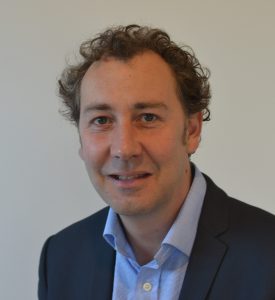
Eamonn O'Neill is a Professor and Head of the Department of Computer Science at the University of Bath. His research focuses on innovative human-technology interaction, including mixed/augmented/virtual reality, and interaction with intelligent systems. His work emphasizes applied science, deriving design principles grounded in theory and empirical testing. He leads the UKRI CDT in Accountable, Responsible and Transparent AI and is affiliated with multiple centers, including the Centre for the Analysis of Motion, Entertainment Research & Applications (CAMERA) and the REal and Virtual Environments Augmentation Labs (REVEAL). His projects span EU-funded initiatives such as EMIL and UNREST, addressing topics like embodied interaction, AI regulation, and social cohesion. Recent research explores emotion recognition in VR exergaming, EEG-based brain-computer interfaces, and regulatory frameworks for AI. His work contributes to UN Sustainable Development Goals related to innovation and infrastructure. Collaborations include academic institutions and industry partners across Europe.
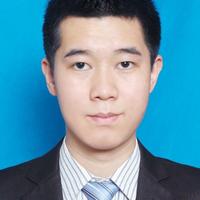
Dr. Matthieu Gresil is a Senior Lecturer in both the Department of Materials Science and Engineering and the Department of Mechanical and Aerospace Engineering at Monash University. He joined Monash in 2020 and leads the Circular Plastic Research Node within the Faculty of Engineering, focusing on advancing sustainable materials and recycling technologies. His expertise spans multifunctional composites, vitrimers, bio-based materials, and structural health monitoring. Gresil holds a PhD from École Normale Supérieure of Cachan (2009), with postdoctoral experience at the University of South Carolina and the University of Manchester. Education: BSc in Physics, University of Nantes (2004) MSc in Physics (Matter and Materials), University of Nantes (2006) PhD in Physics/Materials, École Normale Supérieure of Cachan (2009) Research Interests: Multifunctional composites (health monitoring, self-healing) Vitrimers and bio-based polymers Nanocomposites and recycling technologies Bio-inspired morphing materials via 3D printing and nanotechnology Grants and Projects: "Vitrimer composites - a new material for Defence applications" (2025–2026) "Developing vitrimers: next generation reusable plastics" (2024–2027) "Recycled Materials for Tram Stop Platforms" (2021–2024) Labs and Roles: Leads the Circular Plastic Research Node, fostering collaboration on sustainable materials and circular economy initiatives.
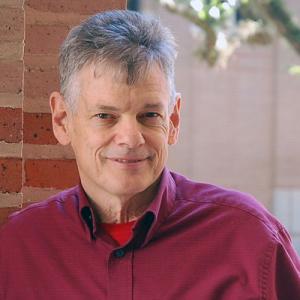
Zhou Zhou is an Assistant Professor (tenure track) in Neuronic Engineering at KTH Royal Institute of Technology's Department of Biomedical Engineering and Health Systems. He is affiliated with the Digital Futures Faculty, a cross-disciplinary research center focusing on digital technologies for societal challenges. His research focuses on neurotrauma prevention, prediction, and protection through computational modeling, machine learning, and biomechanical validation. Dr. Zhou holds a PhD from KTH (2019) and completed postdoctoral training at Stanford University, specializing in sports safety and concussion prevention. His work is supported by VINNOVA, Swedish Research Council, and others. He received the 2025 Göran Gustafsson Prize for young researchers. Research interests include in silico modeling, fluid mechanics, and safety standardization for helmets. Zhou teaches courses such as Biomechanics and Neuronics (HL2035/CH213V) and leads labs in human and animal neurotrauma modeling. He seeks postdoctoral candidates for rat neurotrauma research. Education: PhD in Biomedical Engineering, KTH (2019); Postdoc at Stanford University (Sports Safety) Key Projects: InSilicoHealth ITN, helmet evaluation via virtual testing Labs/Teams: Neuronic Engineering Division, Digital Futures Collaboratory
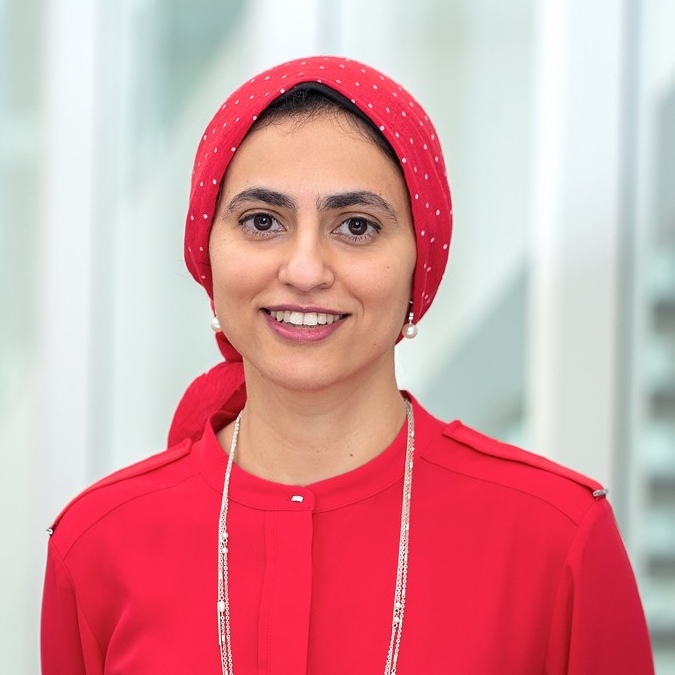
Igo J.M. Besselink is an Associate Professor and Chair of Vehicle Dynamics in the Department of Mechanical Engineering at Eindhoven University of Technology (TU/e). His research focuses on vehicle dynamics analysis, tire behavior modeling, battery electric vehicles, and vehicle control systems. He leads the Automotive Technology lab, emphasizing experimental validation of simulation models to enhance transport safety and efficiency. Academically, he holds an MSc from Delft University of Technology (TU Delft, 1990) and a PhD from TU Delft (2000). He worked at Fokker Aircraft (landing gear dynamics) and TNO Automotive before joining TU/e in 2002 as a part-time lecturer, transitioning to full-time roles as Assistant Professor (2008) and Associate Professor (2016). Research interests include dynamics of commercial vehicles, autonomous operation in confined areas, and sustainable transportation. He has supervised 6 PhD and over 80 Master students, authored/co-authored over 50 publications, and serves on the Editorial Board of Vehicle System Dynamics . Recent work emphasizes neural network-based vehicle behavior estimation, cooperative platoon control, and criticality measures for automated vehicle testing. His lab develops test rigs and prototypes to bridge simulation and real-world performance.
Pedro U. Lima is a Full Professor at Instituto Superior Técnico (IST), University of Lisbon, and President of the Institute for Systems and Robotics (ISR/IST), coordinating the Intelligent Robots and Systems group (IRSg). He holds a Ph.D. in Electrical Engineering from Rensselaer Polytechnic Institute (1994). His research focuses on intelligent control systems, multi-robot coordination, and human-robot interaction, with contributions to robotics competitions like RoboCup and initiatives like the European Robotics League (E.R.L.). Lima has served as Vice President of the RoboCup Federation, Trustee of IEEE Portugal RAS Chapter, and Portuguese National Delegate to the European Space Agency’s Human Spaceflight Program Board. He led the Cátedra de Excelencia sabbatical at UC3M (2010), contributing decision-theoretic approaches to human-robot interaction. His work integrates robotics with societal impact, including outreach through the Pavilhão do Conhecimento and media appearances. He coordinates large projects like euROBIN (EU Horizon Europe) and CRAI (Portugal’s PRR), advancing robotics in domains like autonomous delivery and social robotics.
Linda Katehi is a Professor of Electrical & Computer Engineering and Materials Science & Engineering at Texas A&M University, holding the O'Donnell Foundation Chair II. She is a Member of the National Academy of Engineering and American Academy of Arts and Sciences. Her research focuses on advanced electromagnetic systems, MEMS devices, and embedded intelligent sensors. Katehi earned her Ph.D. in Electrical Engineering from UCLA (1984), with prior degrees from UCLA and the National Technical University of Athens. Education: Ph.D., Electrical Engineering, UCLA (1984) M.S., Electrical Engineering, UCLA (1981) B.S., Electrical and Mechanical Engineering, National Technical University of Athens (1977) Research Interests: Katehi pioneers innovations in microwave circuits, MEMS-based reconfigurable systems, terahertz technology, and neuromorphic sensors. Her work emphasizes integrating artificial intelligence into hardware for adaptive sensing platforms. Recent projects include flexible electronics, time-domain system analysis, and sustainability in urban infrastructure. Awards & Recognition: Ramo Simon Founder’s Award (2015) Charter Fellow, National Academy of Inventors (2013) Leading Women in STEM Award (2012) Rudy E. Henning Mentoring Award (IEEE, 2011) Lab & Teams: Directs the Intelligent Electromagnetic Sensors Lab (IEMSL), advancing embodied intelligence in electronics. Her team develops AI-embedded sensors and reconfigurable systems for applications in healthcare, communications, and environmental monitoring. Collaborates across disciplines to address global sustainability and equity challenges.
Robert 'Corky' Cartwright is a Professor of Computer Science at Rice University, specializing in programming languages and software engineering. His research focuses on parallel programming extensions for Java/Scala/Swift, smart programming environments for error-free code, pedagogic tools like DrJava, and intent-driven programming in the FAST language. He has contributed to cyber-physical systems modeling through frameworks like Acumen and DrHJ. Education: PhD (Computer Science, Stanford University, 1976), BA (Applied Mathematics, Harvard College, 1971). Awards include ACM Fellow (1998). Teaching emphasizes principles of programming languages and program design. His work bridges theoretical foundations (domain theory, formal semantics) with practical tools for education and industry.
Dr Lounis Chermak is a Lecturer in Computer Vision and Autonomous Systems at the Centre for Electronic Warfare, Information and Cyber, part of Cranfield Defence and Security at Cranfield University, UK. He leads the Joint Autonomy Lab and is actively involved in research and education in autonomous systems with applications in defence and space. Research Interests: His work focuses on situational awareness in autonomous platforms, with core expertise in computer vision, sensor fusion, artificial intelligence, robotics, and navigation. He investigates perception, decision-making, and mobility across aerial, ground, maritime, and space systems, developing robust solutions for challenging environments including low visibility and extreme illumination. The recent publications reflect a strong trend in autonomous navigation, particularly for space and defence applications, using advanced computer vision techniques such as thermal stereo odometry, HDR imaging, stixel-based scene understanding, and lightweight 3D descriptors. Research also extends to cybersecurity of autonomous systems, including impersonation attack detection and optical countermeasures. Scientific Awards: No scientific awards mentioned in the provided text. Advising and Grants: Dr Chermak leads research activities supported by postdoctoral researchers, PhD, and MSc students. His work is funded and applied in collaboration with major clients including aerospace organizations (ESA, UK Space Agency, Thales Alenia Space), defence agencies (MoD, DSTL, BAE Systems, MBDA), and technology companies (Samsung, Astroscale). He supervises research students in robotics and autonomous systems across civilian and defence domains. Labs and Teams: He leads the Joint Autonomy Laboratory, a 200 m² indoor facility equipped with drone netting, motion capture systems, virtual reality test benches, UAV and ground robot fleets, electric vehicles, and multiple sensors for vision, ranging, and motion. This lab supports both educational and cutting-edge research in autonomous systems.
Jeppe Revall Frisvad is an Associate Professor in the Department of Applied Mathematics and Computer Science at the Technical University of Denmark (DTU), within the Visual Computing group. His work bridges computer graphics, material science, and applied optics, focusing on realistic rendering and material appearance modeling. Ph.D. in Computer Graphics, DTU Informatics (2008) M.Sc. in Engineering (Applied Mathematics), DTU (2004) Education in University Teaching, LearningLab DTU (2008–2009) His research centers on computing material appearance from physical and chemical properties, developing faster and more accurate physically based rendering methods. Key areas include light scattering, bidirectional reflectance distribution functions (BRDF), anisotropy, and translucency modeling. Applications span computer games, movies, digital prototyping, architectural visualization, and training simulators. His recent publications (2024–2025) reflect a strong trend in digitizing material appearance, especially for 3D printing and food science, using spectrophotometry and optical validation. The work combines computer graphics with interdisciplinary applications in food structure and biological imaging, emphasizing measurement, modeling, and simulation. Scientific Awards: Research travel prize from AEG Elektronfonden (2006) IGDA scholarship for GDCE 2005 DTU Ph.D. scholarship (2004) He actively supervises Ph.D. students and leads multiple research projects, including those on organ-on-chip imaging, cheese quality analysis, and optical modeling of teeth. He collaborates across disciplines and institutions, with external research stays at UC San Diego and the University of Otago. He is involved in projects integrating AI with 3D imaging and material digitization. Jeppe is a key member of the Visual Computing research environment at DTU, contributing to both fundamental rendering algorithms and practical applications in industry and science.
Simon McCallum is an Associate Professor at NTNU’s Faculty of Information Technology and Electrical Engineering. Born in New Zealand, he transitioned from commercial game development in Norway to academia in 2009. His research focuses on Serious Games, particularly in healthcare contexts, gamification, and virtual reality applications. He holds a PhD from the University of Otago (2007), where he studied Computer Science, Mathematics, Psychology, and Philosophy. McCallum has contributed to over 30 publications, including works on cognitive health gaming, software engineering education, and AR applications. He teaches courses such as IMT4307 (Serious Games Research) and IMT3603 (Game Programming). His key projects include the Smartkuber AR game for cognitive screening and the Traction Trebuchet historical engineering study. McCallum has collaborated with institutions like the University of Otago and has engaged in outreach through conferences and media appearances, promoting game technology in healthcare and education.
Dr. Jessica V. Rich is an Adjunct Assistant Professor at Queen’s University’s Faculty of Education and a member of the Assessment and Evaluation Group (AEG). She holds a PhD in Measurement, Assessment, Policy, Leadership and Evaluation, complemented by extensive teaching qualifications in Biology, Chemistry, and Education. Her work focuses on competency-based education (CBE), programmatic assessment frameworks, and inclusive evaluation practices across postsecondary and professional education contexts. She actively contributes to the Scholarship of Teaching and Learning (SoTL) through research on feedback mechanisms and performance improvement strategies. Dr. Rich teaches courses such as PME 896 (Capstone), PME 894 (Educational Fieldwork), and GDE 828 (Program Evaluation), emphasizing practical application of assessment methodologies. She has pioneered educational development initiatives in simulated learning environments and workplace-based assessments. Her research examines the intersection between competency frameworks and real-world application, with particular attention to healthcare and engineering education reform. Current projects include evaluating transformative change models in medical education and exploring growth-oriented assessment strategies. She has collaborated with institutions to design competency frameworks for healthcare professions and contributed to knowledge translation tools for programmatic assessment implementation. Her publications span journals like Academic Medicine , Canadian Journal of Educational Administration , and Frontiers in Medicine , reflecting interdisciplinary engagement with assessment challenges in higher education. She maintains active Twitter and LinkedIn profiles to share insights on educational development and assessment innovation.
Azza Abouzied is Associate Professor of Computer Science at New York University Abu Dhabi and Global Network Associate Professor at the Tandon School of Engineering. She serves as Vice Provost for Faculty Advancement and Engagement at NYUAD starting September 2024. Her research bridges database systems and human-computer interaction, focusing on intuitive tools for data querying and decision-making in uncertain, collaborative environments. PhD, Yale University (2013) MPhil, Yale University MSc, Dalhousie University BSc, Dalhousie University Her research centers on human-data interaction, designing systems that make data accessible to non-experts. She combines techniques from UI design, machine learning, and databases to build tools that simplify complex data tasks. Her earlier work focused on example-driven querying and synthetic data generation, while her recent work explores in-database prescriptive analytics and decision support in domains like disinformation mitigation and epidemic planning. Her publications span database and HCI venues, with a recurring theme of enhancing usability without sacrificing scalability. She co-founded Hadapt, a Big Data analytics platform, and has led interdisciplinary research through the Human-Data Interaction Lab and the Center for Interacting Urban Networks. Her teaching includes foundational courses such as Database Systems, Operating Systems, and Data, as well as the critical thinking course Techruption. VLDB Test of Time Award (2019) Best Paper Award in Database Systems Honorable Mention in HCI Publications Azza mentors undergraduate capstone students and advises prospective PhDs, research assistants, and postdocs. She is actively involved in academic leadership, having chaired NYUAD’s faculty council in 2024 and co-chaired the SIGMOD 2025 program. Her work emphasizes empowering users to critically engage with data and AI, both in research and education.
Jonathan Poggie is a Professor in the School of Aeronautics and Astronautics at Purdue University's College of Engineering, where he has been a faculty member since 2015. He previously spent over two decades at the Air Force Research Laboratory. His research group conducts high-fidelity simulations in hypersonic aerodynamics, turbulence, and plasma-based flow control, supported by major grants from DoD, DoE, AFOSR, and ONR. Ph.D., Mechanical and Aerospace Engineering, Princeton University, 1995 M.S.E., Mechanical and Aerospace Engineering, Princeton University, 1991 B.S., Mechanical Engineering, University of Rhode Island, 1988 Prof. Poggie's research focuses on high-speed fluid dynamics , particularly hypersonic flows , compressible turbulence , laminar-turbulent transition , and shock-wave/boundary-layer interactions . His group also investigates plasma-based flow control using electrical discharges. His work combines computational, experimental, and theoretical approaches to address challenges in aerospace vehicle design, especially for defense and space applications. The articles reflect a strong focus on computational fluid dynamics of high-speed flows, with particular emphasis on shock unsteadiness , boundary layer transition , and plasma actuation . The research spans from fundamental fluid mechanics to applied aerospace engineering, with increasing recent interest in military conflict modeling using fluid dynamics analogies. C. T. Sun Excellence in Research Award, 2023 University Faculty Scholar, 2023-2028 Outstanding Graduate Faculty Mentor Award, 2021 Elmer F. Bruhn Teaching Award, 2019 W. A. Gustafson Teaching Award, 2018 ASME Fellow, 2007 AIAA Associate Fellow, 2004 Prof. Poggie has advised 6 PhD students and 18 MS students at Purdue as of 2025. His research has been supported by multiple large-scale grants, including three DoD Frontier Projects and a DoE INCITE Award , providing supercomputing resources for high-fidelity simulations. He collaborates with researchers at The Ohio State University, Notre Dame, and various national laboratories. His group has developed novel approaches to operational mapping for military conflict analysis, creating continuous flow models of battlefield dynamics. The team has also secured two patents in hypersonic technology, one for inlet design and another for a hypersonic test facility. His research group investigates geometric imperfections in hypersonic vehicles (steps, gaps, roughness), laminar-turbulent transition prediction, and separation unsteadiness in shock-wave interactions. They use advanced computational methods like DDES and DNS, supported by massive computing allocations. The group has produced significant work on sidewall confinement effects , wall roughness , and gap flows in hypersonic configurations.
Federico Smeacetto is a Full Professor of Materials Science and Technology at the Polytechnic University of Turin, Italy, where he is affiliated with the Department of Applied Science and Technology (DISAT) within the School of Engineering. He serves as the principal investigator for multiple EU-funded research projects focused on hydrogen technologies, solid oxide cells, and sustainable energy solutions. Professor Smeacetto's research focuses on advanced materials for energy applications, particularly glass and ceramics as joining and coating materials. His work spans several critical areas for the energy transition: Glass and glass-ceramics for solid oxide fuel cells and electrolysis cells Joining technologies for high-temperature energy devices Materials for hydrogen production and storage Recycling of end-of-life energy conversion devices 3D printing of advanced ceramic materials His recent publications demonstrate a strong focus on developing sustainable solutions for the energy transition, with particular emphasis on proton ceramic electrolysis cells, solid oxide fuel cells, and recycling technologies. The research combines materials development, manufacturing innovation (particularly 3D printing), and comprehensive performance assessment to address critical challenges in clean energy technologies. Professor Smeacetto has received notable recognition including the Abilitazione Scientifica Nazionale as Full Professor of Materials Science and Technology and The Acers Global Ambassador award. Abilitazione Scientifica Nazionale - Professore di Seconda Fascia - Settore 09/D1 (2013) National Scientific Habilitation – Full Professor of Materials Science and Technology (2019) The Acers Global Ambassador (2020) He actively supervises PhD students and leads multiple research projects, including EU-funded initiatives like H2START, H2SHIFT, ECOLEFINS, Pressuriz3D, 24_7 ZEN, HyP3D, and SOLSTICE. Professor Smeacetto also chairs advanced courses on glass and ceramics for PhD students and teaches undergraduate and graduate courses on materials for energy applications. As a member of the GLANCE research group at Politecnico di Torino, Professor Smeacetto contributes to the development of custom glasses, glass-ceramics, and composites for various applications including energy conversion and storage, joining technologies, and sustainable materials solutions.
Kirill Djebko is a researcher at the Chair of Computer Science VI - Artificial Intelligence and Knowledge Systems within the Institute of Computer Science, Faculty of Mathematics and Computer Science at the University of Würzburg . His work spans AI-based optimization systems , autonomous spacecraft operations , and deep reinforcement learning applications. Doctorate completed in 2020 Active in research since 2015 Key projects: KINERGY (heating system optimization), VeriKI (AI verification for space), LeLaR (AI attitude control for nanosatellites) Research focuses on metaheuristics , genetic algorithms , regression algorithms , and deep reinforcement learning for practical applications. His work integrates digital twin modeling , decision support systems , and AI robustness in industrial and space contexts. Recent publications (2024-2016) analyze heating system optimization , spacecraft fault detection , and autonomous nanosatellite operations . These studies emphasize sim-to-real-world transfer , data-driven calibration , and AI quality assurance in complex environments. Current affiliations include the Center for Artificial Intelligence and Data Science (CAIDAS) . Contact details: Email - kirill.djebko@uni-wuerzburg.de | Phone +49 931 31-86405 | Room 03.010, Emil-Fischer-Straße 50, Würzburg.