Julian Adamek is a computational cosmologist and lead developer of gevolution , a general-relativistic N-body code for cosmological simulations. His work focuses on modeling relativistic effects in cosmic structure formation to better understand gravity’s role on large scales and dark energy. Research Interests: Computational Cosmology, Theoretical Cosmology, Large-scale structure of the Universe, Relativistic N-body simulations. Technical Leadership: Lead developer of gevolution , a public cosmological simulation code available via GitHub. Recent publications span diverse applications of deep learning in geospatial analytics, environmental monitoring, and computer vision, including phenology modeling, biomass mapping, conflict assessment, and 3D reconstruction from point clouds. Key Trends: Integration of AI/ML for environmental tasks, cross-domain applications (cosmology, ecology, forestry), and satellite data processing. Technical Focus: Transformer networks, diffusion models, super-resolution imaging, and ensemble learning for uncertainty quantification. Julian collaborates with researchers in cosmology and geospatial science, though specific students or awards are not mentioned in the provided texts.
Tomasz Majka serves as a Lecturer at the Department of Polymer Chemistry and Technology within the Faculty of Chemical Engineering and Technology at Tadeusz Kościuszko Cracow University of Technology. His academic career spans over a decade with continuous research and teaching activities focused on polymer engineering and materials science. His educational background includes a Licentiate in Applied Chemistry (2008) and Pedagogical Preparation (2008) from State Higher Vocational School in Tarnów, followed by MSc in Plastics Technology (2010) and Dr. Eng. in Technical Sciences (2015) from Tadeusz Kościuszko Cracow University of Technology. Majka's research primarily centers on polymer processing technologies , with special emphasis on thermal analysis and flammability of polymer materials , nanocomposite development , and terminal ballistics . His work bridges fundamental polymer science with practical industrial applications, particularly in developing sustainable flame retardant systems using biobased materials like lignosulfonamides. Recent publications reveal a strong focus on circular economy approaches through polymer recycling and biodegradable material development. His scientific contributions demonstrate consistent output in high-impact journals, with a notable shift toward sustainable polymer solutions since 2020, particularly in biodegradable composites and recycling technologies. The 15 most recent publications show expertise spanning flame retardancy mechanisms, nanocomposite engineering, and sustainable polymer processing. III place at International Session of WIiTCh Krakow University of Technology Science Clubs (2010) Award in 'Sustainable Development - Scientific Debut 2010' competition (2010) Award in 'Poster about famous scientist - Norio Taniguchi' competition (2011) II Prize in B-Innovative 'Be Entrepreneurial' business plan competition (2013) Majka actively supervises the Ballistic and Flammability Research Section within WIiTCH PK Chemistry Research Club and maintains strong industry connections through numerous industrial research projects. His professional engagements include international research stays at University of Bolton (UK) and Academy of Sciences of the Czech Republic, focusing on fire testing and polymer materials innovation. He serves as a scientific advisor for several industrial projects related to polymer processing and material safety. His laboratory work spans multiple specialized facilities including thermal analysis equipment, scanning electron microscopy, and polymer processing machinery. Current research directions include developing halogen-free flame retardants from lignin derivatives, optimizing biodegradable polymer composites, and advancing recycling technologies for post-consumer plastics.
Professor Quanmin Zhu is a Professor in Control Systems at the School of Engineering, University of the West of England (UWE), Bristol, UK, holding this position since 2004. His academic career spans over four decades, including roles as Lecturer at Qiqihar University (China, 1983-1986), Post-doctoral Researcher at University of Sheffield (UK, 1989-1994), Lecturer at University of Brighton (UK, 1994-1997), and Lecturer/Reader at Aston University (UK, 1997-2004). His educational background includes: MSc in Engineering from Harbin Institute of Technology, China (1980-1983) PhD from University of Warwick, UK (1986-1989) Professor Zhu's research centers on dynamic system modeling, identification, control, and simulation, with pioneering contributions to nonlinear control systems, robust control methodologies, and U-model based control frameworks. His work bridges theoretical advances with practical applications in robotics, renewable energy systems, and industrial automation, emphasizing model-free and adaptive control solutions for complex nonlinear dynamics. Analysis of his 2021-2025 publications reveals a dominant focus on robust control for uncertain nonlinear systems, with significant contributions to sliding mode control, multi-agent coordination, and cyber-physical security. His research increasingly integrates machine learning techniques (e.g., actor-critic reinforcement learning) while maintaining core expertise in optimization-based control algorithms applied to UAVs, robotic manipulators, and wind energy systems. His professional honors include: Chartered Engineer (CEng) Fellow of the Institution of Engineering and Technology (FIET) Fellow of the Higher Education Academy (FHEA) As an academic leader, Professor Zhu serves as President/Founder of the International Conference on Modelling, Identification and Control (ICMIC), Editor/Founder of Elsevier's Book Series on Emerging Methodologies in Modelling and Control, and University Ambassador for UK-China educational collaboration. His research group secures substantial grants in control theory applications, with ongoing projects in U-model control platforms and international partnerships. He leads the Control Systems research group at UWE, driving innovation in the U-control platform and its industrial applications. His team maintains strong international collaborations, particularly with Chinese institutions, and actively develops the Elsevier Book Series as a key publication channel for emerging control methodologies.
Alan Briones Delgado is a researcher at the La Salle School of Engineering , Universitat Ramon Llull , with a focus on Internet of Things , Cybersecurity , and Transport Protocols . His work spans projects funded by the European Commission and national grants, including EXCEL4HOUSING4.0 , WeB-Nimbus , and NG-SOC , addressing challenges in cloud computing education, ecological monitoring, and security operations. His research integrates Artificial Intelligence and Wireless Sensor Networks for sustainable solutions. Key research areas include Quality of Service in heterogeneous networks, Environmental Conservation via IoT, and Teaching and Learning strategies for Big Data. Projects like EcoSentinel and BTL-COP highlight his commitment to Environmental Monitoring and Community Policing applications. His collaborations extend to institutions in the UK , Albania , and Western Balkans . Contact: alan.briones@salle.url.edu
Dr. Kevin G. Jamieson is a faculty member at the University of Washington , School of Computer Science , with prior affiliations at the University of California, Berkeley (Department of Electrical Engineering and Computer Sciences) and the University of Wisconsin-Madison (Department of Electrical and Computer Engineering). His work spans machine learning, reinforcement learning, bandit algorithms, and robotics. Current university: University of Washington Academic rank: Professor His research focuses on: Bandit algorithms and sequential decision-making Optimization in non-stationary environments Reinforcement learning with real-world applications Multi-agent systems and game theory Efficient data selection for multimodal learning Human-in-the-loop AI systems Recent publications highlight his expertise in pure exploration strategies, robotic manipulation, and bridging simulation-to-reality gaps in RL. He has mentored numerous collaborators, though formal student advising details are not explicitly listed here. No scientific awards are mentioned in the provided data.
Christian Messier is a Professor at the University of Quebec in Outaouais (UQO) in the Department of Natural Sciences and at the University of Quebec in Montreal (UQAM) in the Department of Biological Sciences. He serves as Scientific Director of the Institute of Temperate Forest Sciences (ISFORT) and holds two prestigious research chairs: the Canada Research Chair on Tree Resilience to Global Changes and the NSERC/Hydro-Québec Chair on Tree Growth Control. His academic career spans over three decades since completing his Ph.D. in forest sciences from the University of British Columbia in 1991. Dr. Messier's research focuses on two primary areas: the complex functioning of managed natural forest systems to develop management approaches that promote resilience in the face of global changes, and the study of trees and urban forests to reconcile the needs of minimizing negative impacts of trees on human infrastructure while maximizing ecosystem services. His work integrates field studies, simulation modeling, and network theory to address pressing challenges in forest ecology and management. His recent publications demonstrate a strong emphasis on urban forest resilience, functional diversity in forest ecosystems, and nature-based solutions for climate adaptation. The research shows a clear trajectory toward more applied, solution-oriented approaches that bridge fundamental ecological understanding with practical forest management applications across diverse spatial scales from individual trees to entire landscapes. Francqui Foundation Chair (Belgium) - 2020 Member of The Royal Society of Canada - 2019 Personality of the Year 'Radio-Canada/Le Droit' - 2017 Humboldt Research Award - 2016 Prix Acfas – Michel-Jurdant - 2010 Canadian Forestry Scientific Achievement Award - 2006 Dr. Messier has supervised over 40 graduate students throughout his career and currently leads multiple major research projects including the Canada Research Chair on Forest Resilience, the NSERC/Hydro-Québec Chair on Tree Growth Control, and the SylvCIT project for urban forest immunization against global change. His research has been supported by significant grants from NSERC, Canada Research Chairs program, Hydro-Québec, and other major funding agencies. He directs the Messier lab with research assistants Kim Bannon and Fanny Maure, and collaborates with numerous researchers across Canada and internationally. His team studies diverse aspects of forest ecology including soil dynamics, functional composition of tree communities, nature-based solutions for climate adaptation, and ecophysiology of maple water flow. The lab maintains strong connections with the International Diversity Experiment Network with Trees (IDENT) and other major forest research initiatives.
Kamal Al Haddad is a Lecturer in the Department of Electrical Engineering at École de technologie supérieure (ÉTS). He holds a Doctorate from INTP, Toulouse, and advanced degrees from UQTR. His research focuses on power electronics, renewable energy integration, and smart grid technologies. He leads the GREPCI research group, specializing in Power Electronics and Industrial Control. Education: B.Eng., M.Sc.A. (UQTR), Doctorate (INTP, Toulouse). Research interests span energy conversion, industrial electronics, power quality, and electromagnetic interference. He emphasizes sustainable energy solutions, electric traction systems, and high-efficiency power sources. His work includes developing advanced power electronic converters and grid stability solutions. Recent articles highlight advancements in modular converters for STATCOM, AI-driven fault detection in hydrogenerators, and renewable energy policy frameworks. He has received notable awards, including the 2014 IEEE Eugene Mittelmann Prize and Fellowships from IEEE and other institutions. Supervised over 60 students, including doctoral theses on topics like hydrogenerator diagnostics, EV charging systems, and renewable energy integration. His research also involves real-time simulation of power systems and FPGA-based implementations. Labs/Teams: GREPCI – Power Electronics and Industrial Control Research Group, leading projects on smart grids and energy efficiency.
Hamed Jalali is a Full Professor in Supply Chain Management at NEOMA Business School since September 2024, having joined the institution in September 2017. He holds a Master's degree in Statistics and a PhD in Business Economics from KU Leuven, Belgium. His research emphasizes simulation-based optimization, particularly Kriging-based algorithms, and explores intersections between marketing and operations management, as well as sustainable supply chain practices using game-theoretic models. His work has been published in journals like IIE Transactions , European Journal of Operational Research , and International Journal of Production Economics . Dr. Jalali has received numerous teaching awards at NEOMA Business School and collaborates with industries such as IMEC and EuroGijbels on projects like inventory management and rationing strategies. His research spans inventory dynamics, product portfolio management, blockchain applications in supply chains, and coopetition models in closed-loop systems. Education: PhD in Business Economics, KU Leuven, Belgium Master's degree in Statistics, KU Leuven, Belgium His recent articles highlight contributions to sustainable supply chain traceability, bullwhip effect mitigation through product portfolio adjustments, and multiobjective optimization algorithms. He actively reviews for top-tier journals and presents at international conferences. Key Awards: Multiple teaching excellence awards at NEOMA Business School. Industrial Projects: Collaboration with IMEC and EuroGijbels on inventory management and supply chain sustainability initiatives. His research integrates technical simulation methods with real-world supply chain challenges, emphasizing both operational efficiency and environmental sustainability.
Trevor E. Carlson is an Assistant Professor at the School of Computing, National University of Singapore (NUS), focusing on high-efficiency microarchitectures, hardware/software co-design, and secure chip design for IoT and server applications. He earned his Ph.D. in Computer Science from Ghent University (2014) and B.Sc./M.Sc. in Electrical & Computer Engineering from Carnegie Mellon University (2002/2003). Research Interests include energy-efficient processors, secure computing platforms, neuromorphic accelerators, and fast simulation methodologies. He co-developed the Sniper Multi-Core Simulator used globally for performance/power evaluation. Scientific Awards : Best Paper Award, International Conference on Embedded Computer Systems (2016) Best Paper Award, International Symposium on Performance Analysis of Systems and Software (2013) Heidelberg Laureate Forum participation (2015) HiPEAC Technology Transfer Award for Sniper Simulator (2013) Current Research involves secure Systems-on-Chip (SOCure project), hardware security for IoT, and simulation methodologies. He leads a lab with researchers working on topics like Capstone for trustless secure memory access and LABS for laser fault injection benchmarks.
Amalia Miliou is a Professor in the Department of Informatics at Aristotle University of Thessaloniki, where she has served since 1993, progressing through the academic ranks from Lecturer to her current position as Professor since 2022. She holds a PhD in Electrical and Computer Engineering from the University of Florida (1991) with specialization in Optoelectronics, following an MSc in the same field (1988) and a Physics degree from Aristotle University (1985). Her research focuses on optical communications systems, with specific expertise in optoelectronic circuits simulation, optical switching, optical RAM development, converged fiber-wireless technology, 5G networks, and secure optical communications using chaos theory. Over her career, she has supervised numerous graduate students across these research areas, with thesis topics spanning optical memory systems, fiber-wireless integration, chaos-based secure communications, and advanced optical network architectures. Her recent publications (2021-2024) demonstrate a strong focus on next-generation optical networking solutions for 5G/6G applications, including fiber-wireless convergence, optical memory systems for high-speed networks, and innovative approaches to optical signal processing. Her work bridges fundamental photonics research with practical telecommunications applications, particularly in addressing the bandwidth and latency challenges of modern mobile networks. Professor Miliou has served as the Coordinator of the LLP-ERASMUS student exchange program at the Department of Informatics since 1997 and has held various administrative positions including membership in the University Senate and General Assembly. She has led and participated in numerous research projects, most recently focusing on technological improvements for 5G systems through optical-wireless network development (2019-2021), next-generation healthcare applications leveraging 6G networks (2023-2027), and photonic integrated circuits for random access memory (2012-2015).
Charles Rizzo is a Research Assistant Professor in the TENNLab neuromorphic computing group at the University of Tennessee, Knoxville, within the Department of Electrical Engineering and Computer Science. He earned his PhD in Computer Science (2024), MS (2021), and BS (2019) from the same institution. PhD in Computer Science, University of Tennessee, Knoxville (2024) MS in Computer Science, University of Tennessee, Knoxville (2021) BS in Computer Science, University of Tennessee, Knoxville (2019) His research focuses on neuromorphic computing, particularly for embedded applications involving event-based vision processing and machine learning with spiking neural networks. He has contributed to neuromorphic control systems, event camera data processing, and spiking network architectures. Recent publications emphasize neuromorphic hardware design (e.g., memristor-based synapses, RISP neuroprocessor), algorithm adaptation (DBSCAN clustering), and real-time applications in vision processing and control. Key subfields include event-based sensors, recurrent spiking networks, and low-power embedded systems. Charles is affiliated with the TENNLab neuromorphic computing group and supports course website development for EECS programs. His work bridges neuromorphic theory with practical implementations in embedded environments.
Albert H. Titus is a Professor in the Department of Biomedical Engineering and an Adjunct Professor in the Department of Electrical Engineering at the University at Buffalo, State University of New York. He serves as Associate Vice President for Regulatory Support in the Office of the Vice President for Research and Economic Development. His research focuses on analog VLSI design for neuromorphic visual processing, biosensors, wearable devices, optoelectronic systems, and neural networks. Education: PhD in Electrical and Computer Engineering, Georgia Institute of Technology (1997) MS in Electrical Engineering, University at Buffalo (1991) BS in Electrical Engineering, University at Buffalo (1989) Research Interests: His work spans wearable and implantable sensors, bioinstrumentation, neural network-based visual processing, analog VLSI implementations, optoelectronics, and electronic packaging. He pioneered CMOS-based neuromorphic systems and developed patented technologies for glare sensing and RF power calorimetry. Publication Trends: His recent articles emphasize CMOS-integrated sensors, machine learning for bioimpedance analysis, implantable medical devices, and xerogel-based optical biosensors. These works bridge biomedical engineering and microelectronics. Scientific Recognition: He is a Fellow of the National Academy of Inventors and has received the SUNY Chancellor’s Award for Excellence in Service (2017), NSF CAREER award, and Western New York Inventor of the Year (2010). His inventions include a patented low-power glare sensor (U.S. Patent 7,586,079) featured in Popular Science’s 2011 Top Ten Inventions. Academic Leadership: As a faculty member, he has supervised nearly 20 PhD and over 40 MS students, while teaching courses in circuits, IC design, sensors, and signal processing across electrical and biomedical engineering disciplines.
Andrea Fumagalli is a Professor in the Department of Electrical Engineering at the Erik Jonsson School of Engineering and Computer Science , The University of Texas at Dallas. He earned his Ph.D. (1992) and Laurea (1987) in Electrical Engineering from Politecnico di Torino, Italy. Research Interests: All-Optical Network Architectures, Photonic Slot Routing, Wavelength Routing and Protection, Sensor Networks, Cooperative Wireless Networks, Network Optimization, Next Generation Internet (NGI), and Multi-hop Optical Networks. Education: Ph.D., Electrical Engineering, Politecnico di Torino (1992) Laurea, Electrical Engineering, Politecnico di Torino (1987) Key Research Trends: His recent publications focus on 5G networking, optical network automation, elastic optical networks, network reliability, and cross-layer optimization. He explores FPGA acceleration in 5G Low-PHY functions, live migration of containerized network components, and spectral fragmentation mitigation in EONs. Scientific Awards: Best Teaching Award, Electrical Engineering, UTD (2002) Best Thesis Award for Ph.D. Advisee Isabella Cerutti (2002) IEEE ComSoc Distinguished Lecturer Tour (2000) Best Paper Award (1999): 'An Optimal Design Algorithm for Photonic Slot Routing Networks Migrating to Optical Packet Switching' Advising and Grants: He advised Ph.D. student Isabella Cerutti. In 2001, he secured a $300,000 grant from FUNDACAO CPqD for optical network reliability research. He leads the Optical Networking Advanced Research (OpNeAR) Lab at UTD, collaborating on international projects like the Italian government-funded grid computing initiative (2002) and the OMEGA Test-bed for differentiated reliability. Laboratories and Teams: He directs the OpNeAR Lab , which develops tools for optical network emulation and reliability testing. His projects involve partnerships with institutions in Brazil (Unicamp), Sweden (KTH), Italy (Politecnico di Torino, Scuola Superiore Sant'Anna), and CNR/CNIT.
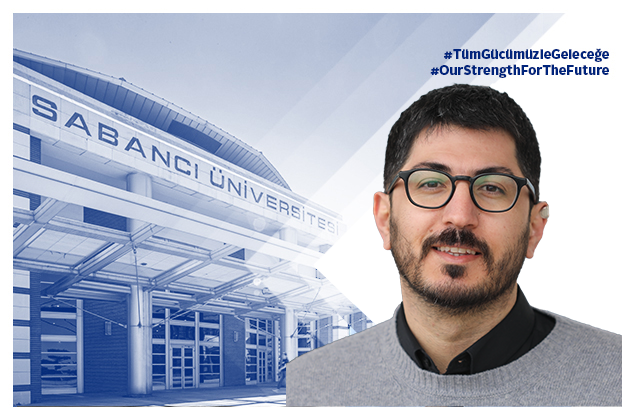
Dr. Morteza Ghorbani is a researcher and faculty member at Sabancı University's Faculty of Engineering and Natural Sciences (FENS), specializing in fluid mechanics and environmental engineering. He leads the AquaCav project, a collaborative effort with Oxford Brookes University, focused on developing sustainable water treatment solutions using hydrodynamic and acoustic cavitation. His research addresses global challenges such as PFAS pollution and wastewater management, with applications in biomedical devices and energy-efficient technologies. Key collaborations include projects funded by the International Science Partnership Fund (ISPF), leveraging his expertise in microfluidic systems and cavitation dynamics. Dr. Ghorbani's work combines experimental and numerical methods to optimize cavitation-based processes for environmental and biomedical applications. His contributions span from fundamental fluid dynamics studies to applied technologies like flexible cystoscopes and clot-on-a-chip platforms. Scientific achievements include the ISPF Research Collaboration Grant (2024) and advancements in PFAS removal, graphene exfoliation, and microalgae cultivation. His research group at Sabancı University explores interdisciplinary solutions at the intersection of engineering, nanotechnology, and sustainability.
Anupam Joshi is the Acting Dean of the College of Information Technology and Engineering and Oros Family Professor of Computer Science and Electrical Engineering at the University of Maryland, Baltimore County (UMBC). He also directs UMBC’s Center for Cybersecurity and leads the National Cybersecurity FFRDC for the University System of Maryland. His research focuses on networked computing, AI-driven cybersecurity, privacy-preserving technologies, and policy-driven security frameworks. He holds a Ph.D. in Computer Science from Purdue University (1993), an M.S. (1991), and a B.Tech in Electrical Engineering from the Indian Institute of Technology, Delhi (1989). Dr. Joshi’s work spans over 400 publications with 32,650+ citations (h-index 92) and nine patents. His grants include funding from NSF, DARPA, NASA, NIST, and industry partners like IBM and Northrop Grumman. Key contributions include developing CAPD frameworks for IoT security, FABULA for automated threat intelligence, and KiNETGAN for intrusion detection through synthetic data. He is an IEEE Fellow and pioneer in applying AI to secure critical infrastructure, smart grids, and healthcare systems. His research trends emphasize AI-empowered cybersecurity, privacy compliance in data sharing (e.g., agriculture, healthcare), and mitigating attacks on smart systems. Notable projects include combating fake cybersecurity reports using provenance analysis, securing EV charging infrastructure, and enhancing smart farming resilience through policy-driven access control. Awards: IEEE Fellow Grants: Over $30M from NSF, DoD, NASA, and industry collaborations Labs/Teams: Director of UMBC Center for Cybersecurity, Cybersecurity Knowledge Graph initiatives Future work includes advancing neurosymbolic AI for cybersecurity, semantic data extraction from scientific literature, and AI ethics in healthcare applications.