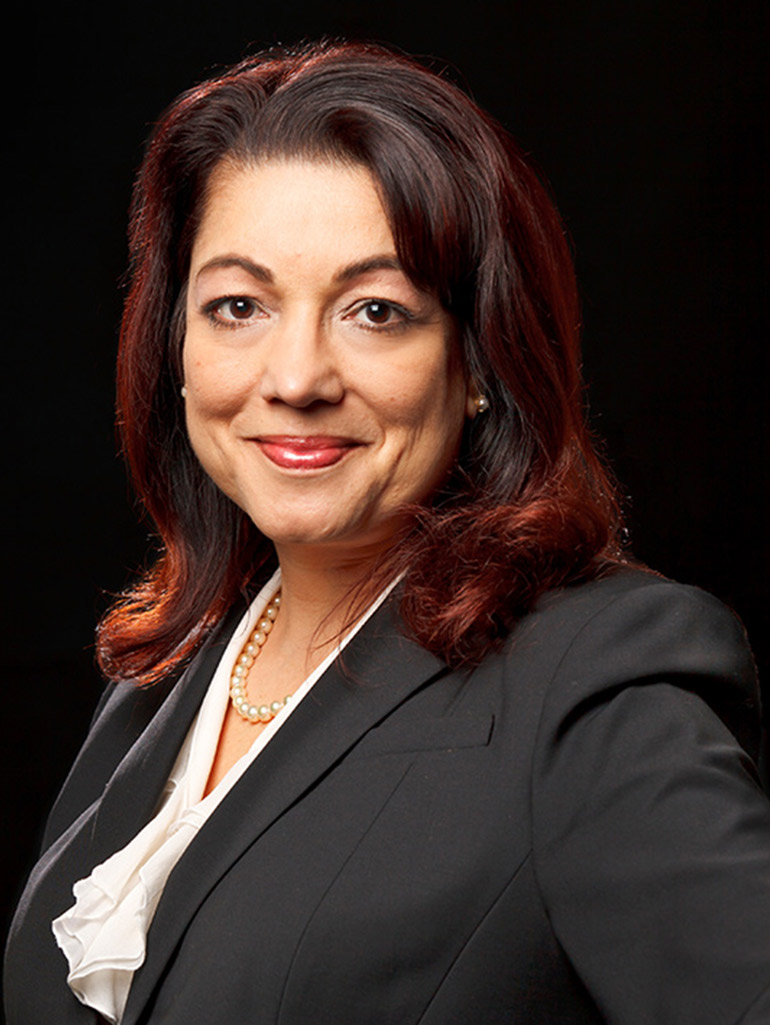
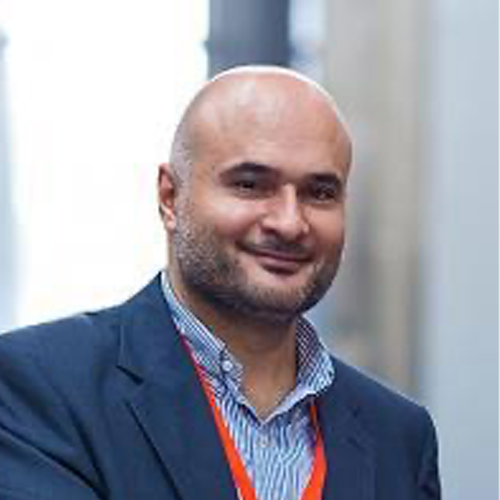
Sylvie Delacroix is the Inaugural Jeff Price Chair in Digital Law and Director of the Centre for Data Futures at King's College London. She is also a Visiting Professor at Tohoku University, focusing on bridging theory and practice in ethics and public policy initiatives. Her research spans Data & machine ethics Ethical agency and habit Social sustainability of data ecosystems Participatory infrastructure for AI systems Uncertainty communication in LLMs Legal theory and digital law Recent publications address LLM interfaces as transitional spaces for democratic revival and sustainable data rivers in generative AI. Her work has attracted significant grant funding from the Patrick J. McGovern Foundation, Wellcome Trust, and Omidyar Network. Scientific awards include the Leverhulme Prize Peter Birks 2d Prize for Outstanding Legal Scholarship Montgomery Fellowship at Dartmouth College She supervises PhD research on large language models and uncertainty communication, as well as habit in ethical lives. Her policy contributions include advising the Law Society of England and Wales on algorithmic justice systems.
Festo Kayima is an Associate Professor in Chemistry Didactics at the Department of Teacher Education, Faculty of Social and Educational Sciences, Norwegian University of Science and Technology (NTNU). His research focuses on science teacher education, classroom knowledge, and pedagogical strategies in chemistry. Doctorate in Chemistry Education (2018, University of Bergen) Master’s in Science Education (2020, NTNU) Kayima’s research projects include developing science teacher trainees’ professional knowledge through reflective practice, enhancing scientific literacy, and integrating sustainability into chemistry education. He leads the Erasmus+ project STEMkey (2020–2023), emphasizing graduate attributes and key skills for educators. His recent publications (2025) with Springer explore pedagogical themes like chemical knowledge, outdoor teaching, and technology integration. These works align with broad keywords such as Science Education, Curriculum Development, and Experiential Learning, with subfields spanning digital tools, sustainability, and misconceptions in chemistry. Co-supervised Kristine Fjelldal Sunde’s thesis on teacher questioning in labs He contributes to research groups Naturfaglig Literacy i Skole og Lærerutdanning and ScienceHumanities , bridging interdisciplinary approaches in education. His teaching includes courses like Science as a School Subject (MGLU4211) and Teacher Education: Teaching Chemistry (PPU4626).
Daniel A Levinthal is the Reginald H. Jones Professor of Corporate Strategy and Professor of Management at the Wharton School, University of Pennsylvania. With extensive publications on organizational adaptation and industry evolution in technological contexts, he serves as Editor-in-Chief for Strategy Science and Organization Science. Research Interests Industry evolution Organizational learning Technological competition His 2024 research examines organizational search strategies, showing how cautious exploitation combines slow belief updating with strong explicit exploitation for effective adaptation. Recent work explores how political coalitions drive organizational change, with hierarchical belief influence structures proving more effective than flat designs in certain environments. Earlier studies developed the "Mendelian executive" framework and advanced Carnegie School decision-making theory. Scientific Awards Fellow of Strategic Management Society Fellow of Academy of Management Distinguished Scholar Awards (3 divisions) Irwin Award as Distinguished Educator 4 Honorary Doctorates Levinthal teaches advanced strategy courses (MGMT9000, MGMT9150) and graduate enterprise management (MGMT6110). His research has established foundational insights about organizational capabilities, knowledge aggregation, and strategic inertia.
Thomas Yeh is an Assistant Professor of Teaching in the Department of Computer Science at the University of California, Irvine. His academic background includes a Ph.D. in Computer Science from UCLA and a BS in Electrical Engineering and Computer Science from UC Berkeley. Prior to academia, he gained industry experience across research, architecture, design, verification, marketing, and management roles. His educational credentials: Ph.D. in Computer Science, UCLA BS in Electrical Engineering and Computer Science, UC Berkeley Dr. Yeh's research spans computer architecture, accelerated machine learning, and computer science education. In architecture, he pioneers error-tolerant physics simulation and heterogeneous computing. His ML work focuses on adaptive precision techniques for energy-efficient acceleration. In education, he develops interactive tools for novice programmers and experiential learning frameworks for computer architecture. His cross-disciplinary approach bridges hardware-software co-design with pedagogical innovation. Publication trends reveal consistent focus on computational efficiency across physics simulation, ML acceleration, and educational technology. His work connects real-time systems optimization with emerging AI applications, particularly in interactive environments and physics-based animation. No scientific awards are documented in the provided materials. While advising details and grant funding specifics are absent from available information, his industry-academia transition informs practical research directions. Teaching responsibilities include core courses like Introduction to CS, Data Structures, and Efficient ML Computing. Research infrastructure details remain unspecified, though his publications suggest collaborations in physics simulation and heterogeneous computing environments.
Associate Professor Christine Preston at the University of Sydney's Faculty of Education and Social Work specializes in primary science education with a focus on early childhood development. She maintains active classroom experience through her kindergarten science teaching and leads research on science diagrams, toy-based learning, and teacher professional development. Her work integrates embodied learning and representational pedagogies to enhance conceptual understanding in STEM subjects. Dr. Preston's research examines innovative approaches including citizen science integration, digital technologies, and adaptive curriculum design. She currently lectures in primary science and technology education, while supervising doctoral candidates exploring computational thinking and marine biology education. Her scholarly contributions emphasize practical classroom applications and teacher support resources. Award recognition includes multiple Excellence in Teaching awards (2007, 2016) and the 2001 NSW Quality Teaching Award. She maintains active membership in international science education associations including ASTA, ESERA, and NSTA, serving on editorial boards for science education journals.
Dr. Rama Hart is an Associate Professor in the Department of Management at the Opus College of Business, University of St. Thomas. Previously served as Director of the Master of Arts in Organization Development program in the College of Education, Leadership and Counseling before joining Opus in 2018. Specializes in global/virtual team communication, organizational change leadership, and workplace inclusion issues. Teaches Managing Organizational Behavior in Full-time MBA program Offers courses in Organization & Employee Development (MGMT 360) and Inclusive Leadership (MGMT 385) Active participant in equity, diversity, and intercultural competence initiatives Research Focus: Combines virtual communication studies with organizational change management, emphasizing inclusive leadership practices across domestic and global contexts. Her work examines relationship formation in distributed teams through communication patterns and technological mediation. Teaching Philosophy: Integrates experiential learning through virtual worlds and appreciative inquiry methodology, focusing on practical skill development for navigating modern workplace complexities. Institutional Roles: Involved with multiple academic units including the Schulze School of Entrepreneurship and various research centers like the Behavioral Research Center and Institute for Social Innovation.
Rafiuddin Ahmed is a Professor at James Cook University , specializing in Accounting . With over two decades of academic contributions, his work focuses on management accounting, financial governance, and educational pedagogy, particularly in the Australian service sector and South Asian contexts. Key research areas: Accounting Education, Management Accounting, Sustainability, Educational Technology His publications span topics like cost allocation systems, capital structure dynamics, and innovative teaching methods such as LEGO® Serious Play. Recent work explores intersections between eco-control systems, sustainable development goals (SDGs), and digital entrepreneurship in Bangladesh. Google Scholar highlights 35+ works, including 2024 studies on Halal cloud kitchens and eco-control systems, showing evolving interests in digital transformation and climate-responsive accounting practices. Earlier works (2003-2015) analyze public sector accounting reforms, group learning, and cost shifting strategies. Collaborations include scholars in accounting, finance, and management across Australia, Bangladesh, and Singapore. No explicit awards or student advisement information is documented in available sources.
Dr. Pascal Reuss is a Researcher at the Intelligent Information Systems (IIS) Division within the Institute of Computer Science , University of Hildesheim . His work focuses on Case-Based Reasoning (CBR) systems, Multi-Agent Systems , and Knowledge Management applications. Active in CBR framework development and game-based AI research Teaching Computer Science III (Databases) for winter 2025/26 Participating in university sustainability initiatives like Stadtradeln 2024/25 Reuss contributes to AI education through practical implementations in gaming environments and has developed visualization tools for CBR agent behavior. His research spans multi-agent collaboration , dynamic case bases , and domain-specific language implementations for knowledge maintenance. Notable contributions include: Co-developing the FEATURE-TAK framework for knowledge extraction Designing case factories for distributed CBR systems Implementing finite state machines for tactical game agents Creating CBR-based fitness planning systems His work appears in various CBR and Game Development publications from 2011-2024. The research demonstrates practical applications of CBR in aircraft maintenance diagnostics , training plan generation , and educational technology contexts.
Ken B. Johnson, MD, MS is a Professor in the Department of Anesthesiology at the University of Utah School of Medicine, where he has served on faculty since completing residency in 1999. His clinical expertise spans regional anesthesia, acute pain management, processed electroencephalogram monitoring, and neuromuscular blockade monitoring. His research program focuses on: Genetics and epigenetics of pain pathways Clinical pharmacology of anesthetic agents Medical device development for monitoring and simulation Simulation-based experiential learning for all medical trainees Analysis of his 15 most recent publications reveals dominant themes in pharmacokinetic-pharmacodynamic modeling (40% of works), opioid-related pain management (30%), and innovative monitoring techniques (20%). His work consistently bridges basic science with clinical applications, particularly in trauma scenarios and perioperative optimization. Professional recognition includes: Editorial board membership for Anesthesia and Analgesia Leadership in American Society of Anesthesiologists Simulation Education Role as standardized oral board examiner for American Board of Anesthesiology Dr. Johnson's educational leadership extends to curriculum development for medical students through faculty, with emphasis on simulation-based training for airway management and crisis response. His collaborative research spans multiple departments including Orthopedics and Pharmacology, with recent focus on genetic determinants of pain response in joint replacement patients.
Claas Wegner is a Professor at Bielefeld University, Germany, where he serves as the Lead Professor of the Osthushenrich Center for Giftedness Research (OZHB) at the Faculty of Biology. He also holds positions at the FHM in Bielefeld (teaching Psychology) and at the University of Koblenz (Biology Didactics). His academic journey includes a doctorate in Biology Didactics and Psychology from Bielefeld University (2009), followed by progressive academic appointments leading to his current professorship since 2015. Wegner's educational background includes comprehensive teacher training for secondary schools with a focus on biology, education, and sports (2000-2006), followed by his trainee teacher period (2007-2008). His academic qualifications were solidified with his doctoral degree in Biology Didactics and Psychology from Bielefeld University in 2009. Professor Wegner's research primarily focuses on biology education and giftedness research, with particular emphasis on: Development and validation of diagnostic instruments for identifying scientifically gifted students Implementation of interdisciplinary teaching approaches, especially connecting biology with physical education Use of technology in science education, including 3D modeling, augmented reality, and simulations Gender-specific approaches in STEM education, particularly for girls Health education, with a focus on basic life support and cardiovascular health Design-Based Research methodology in educational contexts His recent publications demonstrate a strong trend toward integrating emerging technologies like AI and AR into science education while maintaining a focus on giftedness identification and interdisciplinary approaches. Wegner's work increasingly explores how digital tools can enhance traditional biology education and make complex concepts more accessible to students of varying abilities. Professor Wegner leads the Osthushenrich Center for Giftedness Research and directs multiple educational projects including Kolumbus-Kids, ELVIS (Erklärvideos inklusionssensibel gestalten), and various initiatives focused on science education and giftedness. His research team works extensively with school laboratories (teutolab-biology, teutolab-medicine, teutolab-sport) to develop innovative teaching approaches and materials. As an educator, Wegner supervises numerous BA and MA theses, leads project modules, and organizes excursions and workshops. His teaching portfolio includes courses on biology didactics, practical teaching studies, and specialized topics in gifted education. He also serves in various administrative capacities including as Deputy member of the BiSEd Conference and member of the Faculty Conference and Quality Improvement Commission.
Dr. Eman El-Sheikh is a Professor and Associate Vice President at the University of West Florida (UWF), affiliated with the Hal Marcus College of Science and Engineering, the Department of Computer Science, and the Center for Cybersecurity. She is a globally recognized leader in artificial intelligence, machine learning, and cybersecurity, with over 30 years of experience and more than $26 million in competitive research funding. Ph.D. in Computer Science and AI, Michigan State University (2002) M.Sc. in Computer Science, Michigan State University (1995) B.Sc. in Computer Science, American University in Cairo (1992) Her research centers on the integration of Artificial Intelligence and Machine Learning in cybersecurity, with a strong emphasis on education, workforce development, and ethical AI. She leads the development of AI-Cyber curricula for national adoption and is a pioneer in experiential learning models such as the Cybersecurity for All® and CyberSkills2Work® programs. The trends in her recent publications reflect a consistent focus on AI-driven cybersecurity solutions, secure AI systems, national workforce development, experiential education, and inclusive cyber training. Her work bridges technical innovation with policy, leadership, and pedagogy, demonstrating a holistic approach to strengthening the cybersecurity ecosystem. Dr. El-Sheikh has received numerous prestigious honors, including: 2024 GISEC Global Educator of the Year 2024 and 2025 Cybersecurity Woman of the Year (World Finalist) UWF Million Dollar Research Hall of Fame ($25M and $1M levels) 2020 Women Leaders in Cybersecurity, Security Magazine Achievement Award for Advancing Cybersecurity Education (SAM 2016) NSF/NSA AI-Cyber Task Force Member (2024–2025) Founder, Women in Cybersecurity (WiCyS) Florida Affiliate She has led major grant-funded initiatives such as the National Cybersecurity Workforce Development Program and CyberSkills2Work®, securing over $26 million to advance cybersecurity education and training. She mentors students and emerging professionals, particularly through diversity and inclusion efforts. Dr. El-Sheikh also serves as Chief Strategic Alliance Officer and USA Ambassador for the Global Council for Responsible AI, influencing national and global AI policy and education standards. She founded and leads the Artificial Intelligence Research Group at UWF and is actively involved in national task forces and advisory boards, including the Florida Cybersecurity Task Force and the WiCyS Florida Affiliate Advisory Board. Her leadership extends to shaping the future of AI and cybersecurity through collaborative research, innovation in higher education, and strategic partnerships.
Nathan Pettit is a Professor of Management and Organizations and Vice Dean for MBA and Graduate Programs at the Leonard N. Stern School of Business, New York University. He is also the George and Edythe Heyman Faculty Fellow and has been at Stern since 2011. He teaches leadership courses in the full-time MBA, NYC Executive MBA, and DC Executive MBA programs. His academic credentials include: Ph.D. in Management, Cornell University, 2011 M.A. in Social-Organizational Psychology, Columbia University, 2006 M.P.S. in Statistics, Cornell University, 2003 B.S. in Statistics, Cornell University, 2002 Nathan's research focuses on social hierarchy, underdogs and favorites, and cross-cultural issues in organizations. He investigates how status influences perception, motivation, and behavior in competitive and organizational settings. His work bridges management, psychology, and behavioral science, often exploring the cognitive and emotional dynamics of power and competition. The 15 most recent articles reflect a consistent focus on hierarchical dynamics, status perception, and competitive mindsets. They span disciplines including organizational behavior, psychology, and general science, with publications in top journals such as Academy of Management Journal , Organization Science , PNAS , and Psychological Science . The research reveals how high-status individuals perceive the world more positively, how underdogs and favorites adopt different motivational strategies, and how these dynamics shape organizational and societal outcomes. His scientific awards include: Named one of Poets & Quants '40 most outstanding MBA professors under 40' Stern’s Distinguished Teaching Award 'Professor of the Year' by MBA students (twice) 'Great Professor' by EMBA graduates (four times) Nathan actively contributes to academic leadership and student development. He serves on the editorial boards of Academy of Management Discoveries and Organizational Behavior and Human Decision Processes . He is the founding director of the NYU Stern Leadership Accelerator, pioneering experiential learning through live case models. He also mentors students as the faculty representative for the Stern Chats podcast. While specific advisees are not listed, his role as a PhD-trained professor and program leader implies significant advising and mentorship responsibilities. He has likely secured research grants supporting his work on status and competition, though specific grants are not detailed in the text. He is central to the Leadership Accelerator initiative, which integrates faculty, students, and coaches to develop leadership skills through real-world challenges. This team-based approach emphasizes experiential learning and behavioral development, positioning Stern at the forefront of innovative business education.
Dr. Nathanial Wiggins is a Senior Lecturer at the University of Houston in the Department of Industrial and Systems Engineering, with additional roles as Distinguished Professor of Engineering and Mathematics at San Jacinto College and Adjunct Professor of Mathematics at University of Houston - Clear Lake. He is affiliated with the Institute of Electrical and Electronics Engineers (IEEE) and the American Society for Engineering Education (ASEE). Ph.D. in Systems and Engineering Management, Texas Tech University M.S. in Mathematical Science, University of Houston – Clear Lake B.S. in Mathematics and Russian Studies, University of Colorado, Boulder Dr. Wiggins' research focuses on artificial intelligence, mixed reality, and complex dynamical systems. He develops systems that scaffold knowledge from repetition to utilization, particularly in neural networks and intelligent infrastructure. His work intersects with aerospace, oil and gas, and defense industries, emphasizing student-driven projects and collaborative learning frameworks. His publications span mixed reality applications in education, swarm robotics for Mars exploration, neural network methodologies, and aerospace systems like microgravity flame suppression and battery cooling. Keywords include AI, computer science, and engineering education, with sub-fields like neural networks and systems integration. SJC Gold Level Honoraria, Institutional Impact Award, 2019 IEEE CCWC Best Speaker Award, Las Vegas, 2019 Roueche Excellence Award, League for Innovations, 2013 NISOD Award, Community College Organization, 2013 Edu-STEM Award, Texas Space Grant Consortium, 2012 NASA Microgravity University recognition, 2012 Dr. Wiggins leads grants including NSF Bridges to STEM Careers and NASA collaborations (Swarmathon, Microgravity University). He founded the Artificial Intelligence Technology Labs, integrating peer mentoring and hands-on research to enhance STEM education.
Mesut Akdere is a Professor of Human Resource Development at Purdue University's Polytechnic Institute and founding faculty member of its Human Resource Development undergraduate program. He directs multiple research labs including the Purdue HRD Virtual Lab, Purdue HR Analytics Interactive Learning Lab, and the Cyber Resilience Adaptive Virtual Reality Experiences (CRAVRE) project sponsored by FEMA. Ph.D., University of Minnesota His research bridges technology with human resource development, focusing on virtual reality leadership training, STEM workforce development , intercultural competence through immersive simulations, and human resource analytics in the big data era. He has pioneered frameworks for human-robot teamwork and virtual reality safety training in agriculture. Dr. Akdere has received five major awards (2020-2021) including the Richard A. Swanson Research Excellence Award and Purdue Polytechnic Institute's Outstanding Faculty in Discovery Award. Current grants exceeding $16M include projects from the U.S. Department of Homeland Security, Department of Labor, and National Science Foundation. Cyber Resilience Adaptive Virtual Reality Experiences (CRAVRE) - $1.5M (2019-2024) Purdue Cyber Apprenticeship Program - $12M (2020-2023) NSF Collaborative Research - $580K (2021-2023)
Dr. Allen Clark is an Associate Professor of Modern Languages at the University of Mississippi , where he serves as Co-Director of the Arabic Language Flagship Program. With over two decades of experience in Arabic language education, he specializes in Modern Standard Arabic pedagogy and dialect instruction (Syrian, Egyptian). His teaching spans foundational to advanced levels, including courses in media, translation, and conflict studies. Education : Ph.D. in Education (Foreign/Second Language Education) from The Ohio State University (2009) Research Focus : Arabic language acquisition, textbook development, intercultural communication, and translation theory Key Grants : $1.3M Flagship Program renewal (2024-2028), $1,940 International Collaboration Grant (2024), and multiple Summer Research Grants His publications include the widely used Ahlan wa Sahlan textbook series, focusing on phonetics, grammar, and dialect acquisition. Clark has received prestigious awards including the Elsie M. Hood Outstanding Teacher Award (2025) and Humanities Teacher of the Year (2022-2023) . He has established immersive study-abroad programs in Jordan, Morocco, and Egypt while mentoring students in advanced language skills and translation. Recent articles and chapters explore experiential learning simulations, pedagogical reforms, and ontological challenges in cross-cultural translation. His work emphasizes eliminating artificial barriers in language instruction and fostering global competence through collaborative frameworks. Scientific Awards : Elsie M. Hood Outstanding Teacher of the Year (2025) Humanities Teacher of the Year (2022-2023) Phi Kappa Phi Outstanding Graduate Student Award (2006-2007) Ohio State Graduate Associate Teaching Award (2006-2007)