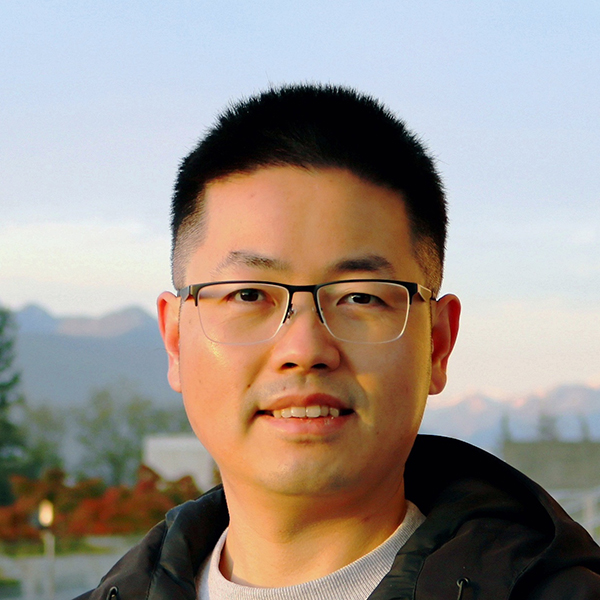
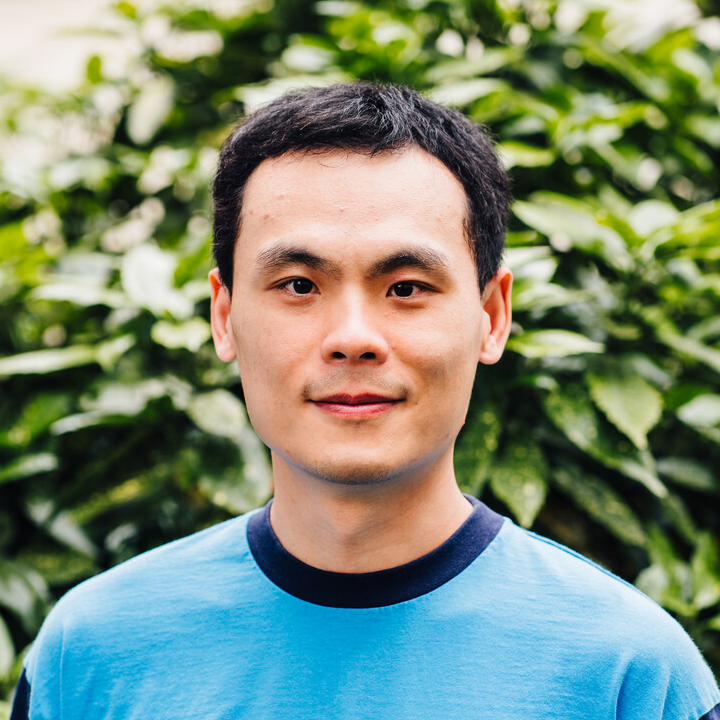
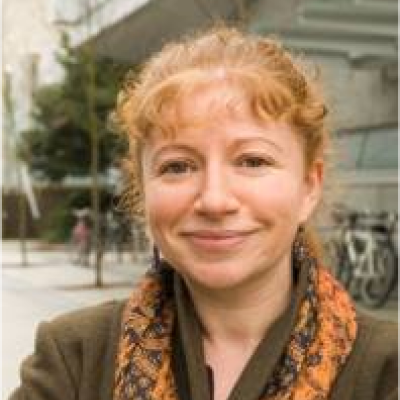
Lingyang Chu is an Assistant Professor at McMaster University's Department of Computing and Software, previously serving as a postdoc fellow at Simon Fraser University under Jian Pei. He earned his Ph.D. in Computer Science from the University of Chinese Academy of Sciences. Research interests span data mining , machine learning , and statistics , with focus on trustworthy AI (privacy, interpretability, security, robustness, fairness), federated learning , and graph-based machine learning . His work includes scalable data mining on large graphs and deploying systems like personalized federated learning on Huawei Cloud's Harmony OS devices. Publications emphasize adversarial attacks, medical AI, graph robustness, and federated learning frameworks. His advising record includes 28 mentees across Ph.D., M.Sc., and internship levels. Scientific achievements include Best paper candidate at ICME'13 Best demo award at ICMR'13 Academic service roles include: Program Committee: NeurIPS, SIGKDD, CVPR, ICML, and 12+ other top-tier conferences Journal Reviewer: IEEE TKDE, ACM Transactions on KDD, and 8+ journals Editorial Board: ACM Transactions on KDD (Associate Editor) Grant Reviewer: Hong Kong RGC Labs/teams: Maintained open-source ALID algorithm (VLDB'15) for dominant cluster detection, demonstrating technical leadership in scalable graph mining
Dr. Ben Swift is a Senior Lecturer at the School of Cybernetics, ANU, specializing in AI, computational art, and cybernetics. He leads the Cybernetic Studio, an interdisciplinary collective exploring cybernetic systems through hardware/software/people collaborations. As a livecoding artist, he performs globally and co-founded the ANU Laptop Ensemble. His research spans generative AI, open-source tools like Extempore, and UX design. Education: PhD in Computer Science (ANU) Projects: Australia's Digital Economy (2022), The Augmented Web (2019) Research focuses on AI creativity, biofeedback interfaces, and computational music. His work bridges technical innovation with artistic expression, evident in projects like TSPNet and adversarial camera systems. Key contributions include Extempore’s development and studies in live coding disruption. Awards unspecified but recognized internationally for interdisciplinary impact.
Dr. Lijun Chang is an Associate Professor in the School of Computer Science at the University of Sydney. He holds an ARC Future Fellowship (2019–2022) and an ARC DECRA Fellowship (2015–2017). Previously, he was at the University of New South Wales. His research focuses on graph analytics, mining, algorithms, and network science. He teaches courses like INFO5011 (Competitive Programming), COMP5313 (Large Scale Networks), and COMP9120 (Database Management Systems), and coaches the USYD Programming Competition Teams. Education: B.Eng. in Computer Science & Technology from Renmin University of China; PhD from the Chinese University of Hong Kong. Research highlights include scalable graph processing systems (e.g., ScaleG), densest subgraph detection, and graph similarity search. He leads projects funded by ARC grants such as 'Advanced Search of Cohesive Subgraphs in Big Graphs' (2018) and 'Directionality-Aware Cohesive Subgraph Search' (2022). His work emphasizes efficient algorithms for large-scale networks and graph databases. Awards : ARC Future Fellow, ARC DECRA Fellow Students : Yu KONG, Rashmika MATHTHAKA GAMAGE, Mouyi XU Labs/Teams : Focuses on graph algorithms and systems research, contributing to open-source tools and large-scale network analysis.
Yusheng Wei is an Assistant Professor in Electrical Engineering at the University of North Texas. His research specializes in control systems, multi-agent coordination, and reinforcement learning with emphasis on time-delay compensation. Recent publications focus on delay-tolerant control architectures, distributed optimization, and neural network-based synchronization. Key research trends include: 1) Event-triggered control for networked systems, 2) Reinforcement learning for delayed system stabilization, 3) Geometric/algebraic methods for signed network analysis. His work consistently addresses robustness challenges in delayed and distributed environments.
Dr. Chenhao Ma is an Assistant Professor at the School of Data Science , The Chinese University of Hong Kong, Shenzhen , where he works on large-scale data management and data mining. Previously, he was a Postdoctoral Fellow at the University of Hong Kong (2021–2022) and earned his PhD in Computer Science from the University of Hong Kong (2021) and B.Eng. from Shandong University (2017). Current research focuses on graph computing (dense subgraph discovery, motif analysis, graph learning), AI+DB (Text-to-SQL, vector search), and traffic data mining (trajectory analysis, outlier detection). He has published over 40 papers in top venues including SIGMOD, PVLDB, KDD and received the ACM SIGMOD Research Highlight Award 2021 and Best of SIGMOD 2020 (4/458). Scientific Awards : ACM SIGMOD Research Highlight Award 2021 Best of SIGMOD 2020 (4/458) Presidential Young Fellow at CUHK-Shenzhen (2023) Hong Kong and China Gas Scholarship (2019-2020) Reaching Out Award (2019) HKU Postgraduate Scholarship (2017-2021) ACM-ICPC Gold Medal (2015) National Scholarship (2014, 2015) Advising and Research Team : He leads a team including Postdoc Dr. Yuanyuan Zeng, PhD students Lujie Ban, Yuwei Xu, and MPhil students Yi Yang, Yuyang Liang. Former mentees like Yichen Xu (PhD at Berkeley) and Jiayang Pang (Master at UC San Diego) have achieved academic placements. Professional Service : He has served as PC member/reviewer for VLDB, KDD, ICDE, WWW, NeurIPS, TKDE , and guest editor for Applied Sciences and Frontiers in Big Data . He chairs sessions at ICDE and VLDB.
Dr. Helena Verrill is an Assistant Professor at the Department of Mathematics, University of Warwick, focusing on teaching and outreach. Her research interests span Number Theory, Algebraic Geometry, Combinatorial Game Theory, and the Mathematics of Origami, with applications in generative art. She actively mentors students through third-year essays, research projects, and outreach initiatives like the Royal Institute Masterclasses. Her research explores modular forms, computational algebra, and arithmetic geometry, with notable contributions to ℓ-adic representations and noncongruence cuspforms. She bridges pure mathematics with artistic expression through origami tessellations and fractal patterns. Notable works include studies on Fano plane automorphisms and Harter-Heighway dragon curves. Her publications span journals like the *Proceedings of the American Mathematical Society* and *Journal of Number Theory*, alongside creative outputs in *Generative Art* and *Bridges Conferences*. She maintains a personal homepage with resources for mathematical art and education.
Panagiotis Papapetrou is a Professor of Data Science and Deputy Head of Department at the Department of Computer and Systems Science , Stockholm University (since 2017). He also serves as Head of the Data Science Research Group and holds an Adjunct Professor position at Aalto University (Finland). As a Board Member of the Swedish Association for Artificial Intelligence (SAIS) , he contributes to shaping AI research directions in Sweden. Research Pillars: Algorithmic data mining, interpretable machine learning, time series classification, and health informatics Key Projects: AI for societal fairness, digital twins for smart buildings, EXTREMUM for explainable medical AI, and e-learning personalization Teaching Legacy: Developed courses in Data Mining (HT2013-2022), Machine Learning (VT2022-2024), and Health Informatics (VT2018-2021) His work focuses on interpretable AI for healthcare applications, particularly through counterfactual explanations for time series classification and forecasting. This includes developing methods like Glacier for constrained counterfactuals and Ijuice for k-justified explanations. His research also explores multimodal clustering of sepsis patient records and federated learning approaches for ICU mortality prediction. Recent scientific contributions include: CounterFair (2024): Group fairness analysis via counterfactual burden metrics M-ClustEHR (2024): Multimodal clustering for electronic health records COMET (2024): Constraint-based glucose forecasting explanations Temporal pattern mining (2024-2025): Enhanced forecasting models through decomposition Z-Time (2024): Interpretable multivariate time series classification His editorial leadership includes: Action Editor at Machine Learning Journal (since 2024) Action Editor at Data Mining and Knowledge Discovery (since 2018) Guest Editorial Board for ECML/PKDD Journal Track (2014-2019)
Hongkai Wen is a Professor (Chair in Machine Learning Systems) in the Department of Computer Science at the University of Warwick, UK. He holds dual appointments as a Fellow of the Alan Turing Institute (serving as Independent Scientific Advisor for BridgeAI and member of Turing Research Ethics team) and previously worked as Senior Research Scientist at Samsung AI Centre Cambridge and postdoctoral researcher at Oxford University. Education: Computer Science, Keble College, University of Oxford Research Focus: Develops intelligent multi-modal perception systems for real-world deployment with extreme computational efficiency. Core expertise spans ML systems optimization, neural architecture search, and cross-disciplinary applications in robotics, urban mobility, and wearable/IoT security. Pioneered event-based vision techniques and training-free NAS frameworks. Publication Trends: Recent work (2023-2025) demonstrates accelerating innovation in diffusion model efficiency, on-device AI deployment, and sensor fusion techniques. Dominant themes include computational resource optimization for edge devices, multi-modal temporal modeling, and privacy-preserving spatial analytics, with significant contributions to NeurIPS, ICML, and CVPR venues. Scientific Recognition: Best Paper Award, AutoML Conf 2023 (T-CET) Best Paper Runner-up, SenSys 2024 (AdaFlow) Best Paper Awards: IPSN 2014 & EWSN 2013 1st/2nd Place, Zero Cost NAS Competition (AutoML'22) Mentorship & Funding: Actively supervises PhD candidates through thesis committees at Warwick, Ulster, and Queensland universities. Secured National AI Strategy Fund for Macro Neural Architecture Search research. Recruits annually for PhD positions with scholarships from UKRI, Turing Institute, and industry partnerships. Research Leadership: Heads the AI/ML Systems (AMS) Division at Warwick, directing a 15+ member team developing deployable ML frameworks for mobile/robotic platforms. Maintains active collaborations with Samsung AI Centre and Turing Institute's BridgeAI programme on ethical AI deployment.
Zheng (Tracy) Ke is an Associate Professor of Statistics at Harvard University. She holds a Ph.D. from Princeton University (2014) and a B.S. from Tsinghua University (2009). Her research focuses on high-dimensional statistics, machine learning, social network analysis, text mining, and bioinformatics. Notable contributions include advancements in network data analysis (e.g., SCORE normalization), text analysis methodologies, and statistical genetics pipelines. Dr. Ke has received prestigious awards such as the COPSS Emerging Leader Award (2024) and the Sloan Research Fellowship (2023). She has organized major conferences like the Workshop on Statistical Network Analysis and Beyond (2024) and contributed to the MADStat dataset analyzing statisticians' co-authorship networks. Her research interests span theoretical and applied domains, with a focus on developing scalable algorithms and rigorous statistical frameworks for complex data. Recent work emphasizes challenges like severe degree heterogeneity in networks and rare/weak signal detection in high-dimensional settings. Dr. Ke is an Associate Editor for the Journal of the American Statistical Association and actively collaborates on interdisciplinary projects.
Alla Sheffer is a Professor and Associate Head of Faculty Affairs in the Department of Computer Science at the University of British Columbia, Faculty of Science. She is affiliated with multiple research centers including CAIDA (Centre for Artificial Intelligence Decision-making and Action), the Institute of Applied Mathematics, and ICICS (Institute for Computing, Information and Cognitive Systems). B.Sc., Hebrew University, Jerusalem (1991) M.Sc., Hebrew University, Jerusalem (1995) Ph.D., Hebrew University, Jerusalem (1999) Postdoctoral Research Associate, University of Illinois, Urbana-Champaign (1999-2001) Assistant Professor, Technion, Israel (2001-2003) Assistant Professor, University of British Columbia (2003-2008) Associate Professor, University of British Columbia (2008-present) Professor Sheffer's research focuses on geometry processing, addressing algorithmic challenges in digital shape modeling and manipulation. Her work primarily deals with discrete geometry representations, specifically meshes (polygonal model representations), with applications in computer graphics and computer-aided engineering. She utilizes tools from computational and differential geometry, discrete mathematics, and graph theory to generate, manipulate, and edit discrete geometric models. Her research spans virtual and augmented reality, visual computing, and 3D modeling, with significant contributions to sketch-based modeling, mesh processing, and cloth simulation. The 15 most recent publications reveal a consistent research trajectory in geometry processing, with recent work focusing on vector sketch processing, VR drawing tools, and advanced mesh manipulation techniques. Her work demonstrates a strong connection between human perception and computational methods, particularly in the interpretation of freehand sketches and the generation of perceptually-accurate geometric representations. The recurring themes across her publications include flowlines, curve networks, mesh parameterization, and the application of perceptual studies to improve algorithmic outputs. Eurographics Fellow ACM Fellow IEEE Fellow Royal Society of Canada Fellow SIGGRAPH Academy Member UBC Killam Research Prize NSERC Discovery Accelerator Supplement IBM Faculty Award Professor Sheffer has supervised numerous doctoral and master's students, with recent theses focusing on geometric mesh processing, vector sketch interpretation, VR drawing tools, and garment modeling. Her research group maintains strong connections with industry through various partnerships and has received substantial grant funding to support their innovative work in geometry processing and computer graphics. She teaches courses in computer graphics, geometric modeling, and video game programming, contributing significantly to both undergraduate and graduate education in computer science.
Jingbang Chen is a Research Assistant Professor at the School of Data Science, The Chinese University of Hong Kong, Shenzhen (CUHK-Shenzhen) and holds a joint faculty position at Shenzhen Loop Area Institute (SLAI) starting September 2025. His academic journey includes a Ph.D. from the University of Waterloo, an M.S. from Georgia Institute of Technology, and a B.Eng (Honors) from Zhejiang University under the supervision of Can Wang. Education: Ph.D., Computer Science, University of Waterloo (2023-2025) M.S., Computer Science, Georgia Institute of Technology (2020-2022) B.Eng. (Honors), Pursuit Science Class, Chu Kochen Honors College (Joint Program with College of Computer Science and Technology), Zhejiang University (2016-2020) High School, Guangzhou No.2 High School (2010-2016) Dr. Chen's research focuses on the design, analysis, and implementation of provably efficient algorithms and data structures, with a particular emphasis on graph theory. He is also exploring intersections between traditional algorithm design and artificial intelligence. His work bridges theoretical computer science with practical applications in network analysis, temporal data processing, and optimization. The publication record shows a strong trajectory with papers in top venues including ICML, VLDB, KDD, and theoretical computer science conferences. Scientific Contributions: Published in premier venues including ICML 2025, VLDB 2025, KDD 2024, and multiple theoretical conferences Research spans graph algorithms, optimization techniques, network analysis, and the emerging field of learning-augmented algorithms Active contributor to the competitive programming community as both researcher and practitioner Dr. Chen is deeply involved in Competitive Programming activities, having competed in ICPC World Finals 2018 (Beijing) and 2022 (Egypt), winning regional champion titles and several gold medals. He serves as chief judge for multiple ICPC Asia regionals and coaches training camps including the North American Programming Camp (NAPC). He is also the founder and co-president of the Universal Cup, an international competitive programming contest platform. Currently, he is recruiting highly motivated PhD students with strong backgrounds in competitive programming and interest in research, collaborating with Prof. Chenhao Ma on algorithm design projects.
Maria José Serna Iglesias is a Full Professor at the Departament de Ciències de la Computació of the Universitat Politècnica de Catalunya (UPC), Barcelona Tech . She leads the research group ALBCOM (Algorithmics, Bioinformatics, Complexity and Formal Methods) and coordinates doctoral programs in Computing. Her research focuses on algorithmics, computational complexity, social network analysis, and game theory. She actively participates in conferences such as SEA 2023-2025 , CIAC , and Algorithmic Decision Theory . Teaching includes advanced algorithmics courses for undergraduate and master’s programs. Current projects include the MOTION initiative (PID2020-112581GB-C21) on large-scale data processing. Past projects involve EU initiatives like WISEBED and DELIS . Her work bridges theoretical computer science with applications in networks and social systems, emphasizing algorithmic solutions for complex problems.
Oscar Mendez Maldonado is a Lecturer in Robotics and Artificial Intelligence at the University of Surrey's School of Computer Science and Electronic Engineering, affiliated with the Robotics Department and CVSSP Centre. He holds a PhD (2018) and BEng (2013) from the University of Surrey. His research focuses on Machine Learning, Computer Vision, and Robotics, with emphasis on autonomous systems, localisation, and SLAM applications. Key projects include the Autonomous Valet Parking (AVP) system for indoor navigation and the SMILE project for sign language assessment using AI. He has supervised students like James Ross (Autonomous Vehicles), Xihan Bian (Reinforcement Learning), and Nimet Kaygusuz (Visual Odometry). Notable achievements include the Sullivan Thesis Prize (2018) and impactful publications in IEEE conferences (e.g., ICRA, CVPR, IROS). Research spans topics like 3D hand pose estimation via diffusion models, graph-based visual odometry fusion, and Raman spectroscopy for localisation. He contributes to open-source tools (e.g., RaSpectLoc GitHub) and collaborates with industry partners like Parkopedia. His work bridges theoretical advances with real-world applications in autonomous systems and healthcare.
A. Stephen Morse is the Dudley Professor of Electrical & Computer Engineering at Yale University. He has been affiliated with Yale since 1970 and holds memberships in prestigious organizations such as the National Academy of Engineering and the Connecticut Academy of Science and Engineering. His research focuses on control systems, including hybrid systems, network science, multi-agent coordination, and sensor networks. He has received numerous awards, including the Bellman Control Heritage Award (2013) and the IEEE Technical Field Award (1999). Morse earned his BSEE from Cornell University, MS from the University of Arizona, and PhD from Purdue University. His work emphasizes logic-based switching, vision-based control, and distributed algorithms for autonomous systems. He has contributed to foundational papers on multi-agent consensus and formation control, as well as sensor network localization. Current projects include swarming dynamics and reactive control strategies for autonomous vehicles. His scientific contributions span over 200 publications, with recent work addressing distributed control algorithms, climate impact modeling, and game-theoretic network analysis. Morse advises graduate students like Ming Cao and Jia Fang, and his research group explores cutting-edge topics in systems theory and robotics.
Diego Patiño is an Assistant Professor in the Department of Computer Science and Engineering at the University of Texas at Arlington (UTA), a position he began in September 2024. He earned his Ph.D. in Computer Engineering from the National University of Colombia in 2020, following M.S. and B.S. degrees from the same institution. Prior to joining UTA, he served as a Postdoctoral Fellow at Drexel University and a Postdoctoral Researcher at the GRASP Laboratory, University of Pennsylvania. B.S. in Computer Engineering, National University of Colombia, 2010 M.S. in Computer Engineering, National University of Colombia, 2012 Ph.D. in Computer Engineering, National University of Colombia, 2020 Dr. Patiño's research centers on geometric computer vision and machine learning, with applications in robotics and 3D vision. His primary interests include 3D reconstruction, graph neural networks, symmetry detection, physics-informed machine learning, and reinforcement learning. He develops algorithms that integrate geometric priors and physical constraints into deep learning models to improve robustness and generalization in real-world robotic systems. His recent publications demonstrate a strong trend in leveraging implicit neural representations for 3D shape reconstruction, applying graph neural networks to swarm robotics, and enhancing computer vision tasks with self-supervised and physics-informed learning. Work spans high-impact venues such as IEEE RA-L, ICRA, ICPR, and MICCAI, showing a consistent focus on geometric reasoning, robotic perception, and medical imaging applications. His scientific contributions have been recognized with awards from the UTA Division of Student Affairs for exceptional dedication and positive impact (2024 and 2025). He is actively involved in securing research funding, with multiple grants under review from NSF, Air Force SBIR, and industry partners like Sony. Exceptional dedication and positive impact recognition, UTA Division of Student Affairs (December 9, 2024) Exceptional dedication and positive impact recognition, UTA Division of Student Affairs (April 30, 2025) Dr. Patiño advises and serves on committees for multiple graduate students in computer science and engineering, including doctoral and master’s candidates. He is also leading or co-leading several research grants under review, covering topics such as aerial swarm navigation, neuromorphic sensing, and industrial computer vision. He teaches graduate courses in computer vision and is involved in service roles including PhD admissions and faculty appointments committees. He is affiliated with research initiatives at UTA, including the UTARI Research Institute, where he has presented on geometric modeling and physics-informed learning. His lab focuses on developing next-generation computer vision algorithms for robotics, industrial inspection, and safety-critical systems.