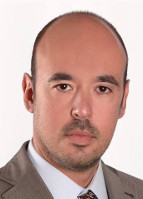
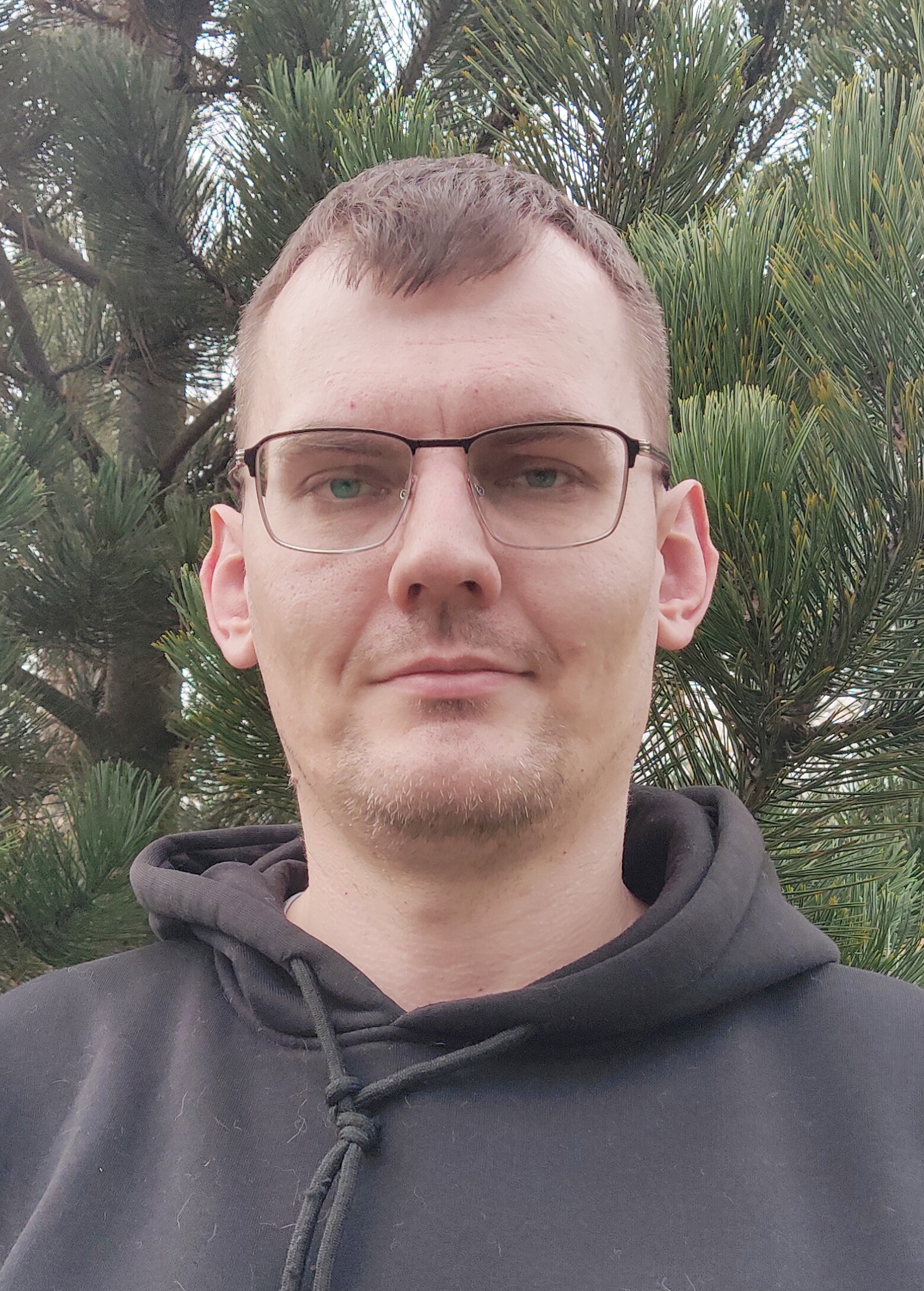
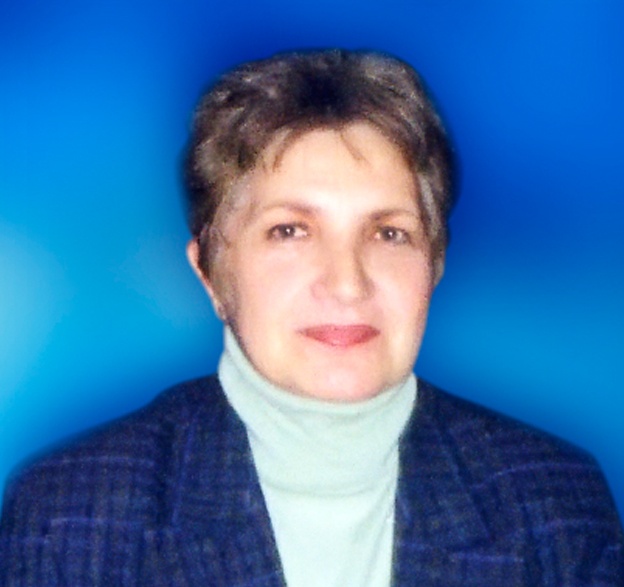
Elena Niculina Dragoi is a Lecturer at the Faculty of Chemical Engineering and Environmental Protection 'Cristofor Simionescu' at Gheorghe Asachi Technical University in Iasi, Romania. Her academic work integrates Artificial Intelligence and Machine Learning tools for solving complex problems in Chemical Engineering and Environmental Protection . With over 30 published papers and six active research projects, her contributions span process optimization, nanomaterials, and sustainable technologies. Teaches Applied Informatics (Years 1 & 4) and Artificial Intelligence at the Faculty of Chemical Engineering Contributes to Programming Engineering at the Faculty of Computer Science, University 'Alexandru Ioan Cuza' Engaged in interdisciplinary courses at the Faculty of Automatic Control and Computer Engineering Research Interests : Elena's work focuses on modelling and optimization (90% emphasis) of chemical processes using AI methodologies, with cross-disciplinary applications in environmental engineering (70%) and chemical engineering (95%). Her recent publications highlight innovations in: 3D-printed nanocomposite adsorbents for pollutant removal Metaheuristic optimization algorithms for industrial processes Hydrogen generation via nanocatalysts Electrochemical biosensors for environmental and health monitoring AI-driven wastewater treatment systems Green chemistry applications in pharmaceutical and dye removal
Sergiu Nisioi is an Associate Professor at the Faculty of Mathematics and Computer Science, University of Bucharest, with expertise in computational linguistics, machine translation, and text simplification. He bridges cognitive science with NLP through eye-tracking and EEG research, while also exploring sound art and digital autonomy via initiatives like HYPHA.ro. Current projects include PN-IV-P2-2.1-TE-2023-2007 (text complexity/readability), Legal Document Processing , and Europarl Dialectal Corpora Research spans computational psycholinguistics , LSTM-based translation models , and algorithmic composition for sound art His work integrates interdisciplinary methodologies, combining EEG signal processing for architecture data with the University of Architecture, and DSP for ecological projects at chlorophylla.live.
Stavros Vologiannidis serves as an Assistant Professor in the Department of Informatics, Computer and Telecommunications Engineering at the International University of Greece. His academic career spans both teaching and research in control theory, robotics, and machine learning applications. Previously, he was associated with the Mathematics Department at Aristotle University of Thessaloniki where he completed his education and conducted postdoctoral research. Education: B.Sc. in Mathematics from Aristotle University of Thessaloniki (1997) Ph.D. in Control Theory from Aristotle University of Thessaloniki (2005) with dissertation titled 'ALGEBRAIC-POLYONYMICAL COMPUTING METHODS IN CONTROL THEORY' Dr. Vologiannidis' research focuses on Classical and Intelligent Control Theory, Robotics, and Machine Learning, with particular expertise in polynomial matrices and automatic control systems. His work bridges theoretical mathematics with practical engineering applications, especially in educational robotics and industrial control systems. He has developed several educational platforms including EUROPA, a ROS-based educational robot for teaching sensor integration and data acquisition. His publication record shows a clear evolution from theoretical control systems research toward applied machine learning and educational technology. Recent work demonstrates increasing focus on practical applications of AI in education, urban feature recognition, industrial monitoring, and robotics education across multiple educational levels from middle school through university. His research combines mathematical rigor with real-world implementation. Scientific Recognition: Excellence Scholarship in the 'Excellence Scholarships 2010' program of the Research Committee Total citations exceeding 250 with Scopus H-index of 9 Dr. Vologiannidis has secured numerous research grants and led multiple projects including 'Rapid Earthquake Damage Assessment Consortium – REDACt', 'Predictive Maintenance 4.0', and 'Development of computational methods for optimization of eigenvalue assignment problems'. He has collaborated extensively with institutions across Europe including UTIA Foundation in Prague and has participated in EU-funded projects like GALENOS and GN4-1 GÉANT Research and Education Networking. His laboratory work centers around the EUROPA educational robotics platform and the StreetScouting urban feature detection system, both of which integrate hardware, software, and educational applications. These projects demonstrate his commitment to translating theoretical research into practical educational and industrial tools.
Lect. dr. Alina Cristiana Gavriluţ is a faculty member at the Faculty of Mathematics, Al. I. Cuza University of Iaşi, Romania. Her research focuses on advanced topics in mathematical analysis, including set multifunctions, non-additive measures, fuzzy integrals, and their applications in physics and complex systems. She has authored/co-authored multiple books and over 30 peer-reviewed papers in journals like Fuzzy Sets and Systems , Entropy , and Reports on Mathematical Physics . Her work explores regularity properties of set multifunctions, integrability in non-additive settings, and interdisciplinary applications in areas like fractal information, quantum mechanics, and neurosciences. She has also contributed to theoretical frameworks connecting mathematical physics with complex systems, including studies on non-differentiable entropy and spacetime manifolds. Dr. Gavriluţ collaborates extensively with researchers in mathematics and physics, notably Maricel Agop and Anca Croitoru. Her research has implications for diverse fields, from image processing to neuronal network modeling. She actively participates in international conferences, presenting findings on set-valued integration, fractal systems, and transdisciplinary approaches to complex phenomena. Education: PhD in Mathematics from Al. I. Cuza University (year not specified). Key Areas: Mathematical analysis, measure theory, fuzzy set theory, complex systems, non-differentiable dynamics. Grants/Awards: Not explicitly listed in the provided texts, but her prolific publication record indicates sustained academic engagement. Labs/Teams: Affiliated with the Mathematics department at Al. I. Cuza University, contributing to research groups in functional analysis and mathematical physics.
Prof. Victor Grigoras is a faculty member at the Technical University of Iași, holding the rank of Professor. He specializes in electrical engineering and computer science, focusing on signal processing, parallel architectures, and nonlinear dynamics in power systems. His research interests include smart grid technologies, renewable energy integration, and data-driven methodologies for grid optimization. He teaches courses such as 'Semnale, Circuite și Sisteme' and 'Algoritmi și Structuri Paralele de Calcul.' His research spans over 15 recent articles (2021–2025), emphasizing advancements in smart grid automation, machine learning applications in voltage quality analysis, and optimal power flow solutions for renewable integration. Notable trends include SCADA system improvements, energy storage strategies for prosumer grids, and IoT-based energy management. His work addresses challenges in grid reliability, power quality, and future urban grid resilience under high EV adoption scenarios. Prof. Grigoras has contributed to frameworks for electric vehicle charging station placement, hydropower plant optimization via data mining, and demand response mechanisms using smart metering. His methodologies often combine clustering techniques with fuzzy logic or metaheuristic algorithms to solve complex grid problems.
Claudia Steluta Martis is an Associate Professor at the Department of Electrical Machines, Marketing & Management , Technical University of Cluj-Napoca, Romania. Her expertise spans electrical machine design, electromagnetic compatibility, and motor control systems. Date of birth: 19 August 1967, Măcin, Tulcea, Romania Education Industrial High School, Măcin (1981-1985) Technical University of Cluj-Napoca, Electrical Engineering (1985-1990) Research interests focus on design and modeling of electrical machines , particularly doubly-salient permanent magnet motors and electric traction drives. She has contributed to electronically commutated small motor development and electromagnetic compatibility in electromechanical systems. Research projects include National Science Foundation collaborations on doubly-salient motor design, bilateral programs with Italy (University of Cassino), and grants from Romania's National Education Ministry for energy-efficient drives and real-time control systems. Professional experience includes engineering roles at SINTEROM SA and Dania Comprod SRL (1990-1996), followed by academic positions. International mobility includes Erasmus-Socrates stays at Helsinki University of Technology (1999) and University of Cassino (2000).
Ana-Sabina Uban is an Associate Professor at the Faculty of Mathematics and Computer Science, University of Bucharest . She earned her Ph.D. in Computer Science in 2020 under the supervision of Professor Liviu Dinu with a thesis on distributional and stylistic aspects of natural language. She teaches and coordinates courses in natural language processing, AI, and machine learning for both computer science and digital humanities students. Education: Ph.D. in Computer Science, University of Bucharest (2020) – Thesis: "Distributional aspects of natural language. Semantic and stylistic dimensions of text" Research Interests: Dr. Uban’s research is strongly interdisciplinary, bridging natural language processing , computational linguistics , psychology , and cognitive science . She explores historical computational linguistics , distributional semantics , and multilingualism , while also investigating explainability in AI models and mental health disorder detection using social media data. Research Trends & Publication Focus: Her recent publications span clinical NLP , mental health detection , historical linguistics , and multilingual cognate identification . A recurring theme is the application of advanced NLP techniques—such as transformer models, contrastive learning, and ensemble classification—to real-world problems in health, literature, and historical language study. Teaching & Student Supervision: Dr. Uban currently teaches and coordinates the following courses: Bio-medical NLP – Master’s level (English) Artificial Intelligence – Bachelor’s level for Mathematics students Practical Introduction to Machine Learning – Master’s level for Digital Humanities students Natural Language Processing 1 & 2 – Master’s labs and projects Contact: auban@fmi.unibuc.ro
Oana AMĂRICĂI-BONCALO is a Professor at the Computer and Information Technology Department of University Politehnica Timisoara. She holds a Dr. Habil. Eng. degree and has served as Assistant Professor, Lecturer, and Associate Professor since 2009. Her research focuses on reconfigurable systems, system reliability, embedded systems, and forward error correction with FPGA applications. Education: Engineering Degree (2006) and PhD in Computer Engineering (2009), both from University Politehnica Timisoara. She was an invited researcher at University College Cork (2012) and University of Cergy-Pontoise (2016). Since 2017, she has been an Editor for Microprocessor and Microsystems (Elsevier). Research projects include GEMSCLAIM (green energy management in mobile systems). She supervises PhD student Andrei-Bogdan MIHĂILESCU. Recent publications emphasize LDPC decoding architectures, FPGA-based solutions, and reliability assessment in quantum circuits. Notable contributions include innovations in layered decoding algorithms, memory optimization for LDPC decoders, and one-hot data representation techniques. Her work intersects VLSI design, digital signal processing, and embedded systems reliability. Event organization includes a 2024 workshop on audio-video technical solutions and participation in IEEE symposiums. She contributes to academic events like the Mobile Applications Student Contest (SCMUPT).
Catalina Gabriela MIHALCEA serves as an Assistant Researcher at the Laboratory of Atomic Structures and Defects in Advanced Materials (LASDAM) within the National Institute of Materials Physics. Her work focuses on advanced nanomaterials for gas sensing and photocatalytic applications, with particular expertise in metal oxide semiconductors including TiO 2 , SnO 2 , NiO, and WO 3 . Her research interests span gas sensing mechanisms (particularly for CO 2 , methane, acetone, and hydrogen), defect engineering in nanomaterials , and photocatalytic performance optimization . Key methodologies include hydrothermal synthesis, co-precipitation, and advanced characterization techniques such as EPR spectroscopy, TEM, and XRD. She investigates how morpho-structural properties, synthesis parameters, and environmental conditions (humidity, temperature) affect material performance. Analysis of her 15 most recent publications reveals a strong emphasis on in-field condition testing using computer-controlled Gas Mixing Systems, with significant contributions to understanding charge carrier trapping in phase-transforming TiO 2 , electrode geometry effects in SnO 2 sensors, and humidity-resistant sensing platforms. Her work demonstrates consistent innovation in sensor design and fundamental material behavior under operational conditions. She actively collaborates with researchers across multiple institutions, evidenced by co-authorship on publications spanning materials synthesis, characterization, and application testing. Her technical contributions include developing synthesis protocols for black TiO 2 with enhanced visible-light photocatalysis and optimizing WO 3 sensors for low-concentration acetone detection in high-humidity environments.
Marius MARCU is an Associate Professor at the Computer and Software Engineering Department , Faculty of Automation and Computers , Politehnica University of Timisoara , Romania. His career spans over two decades, combining academic rigor with industry collaboration, particularly in mobile systems and energy-efficient computing. PhD in Computer Science (2005) Master's in Advanced Computer Engineering (1996) BSc in Computer Systems Engineering (1995) His research focuses on Mobile Systems and Applications , Dynamic Power and Thermal Management , and Power-Aware Applications , with over 60 publications and leadership in 11 R&D projects. His work bridges theoretical advancements with practical implementations in wireless sensor networks and embedded systems. Recent publications emphasize energy characterization , thermal profiling , and wireless positioning accuracy across 2010–2011. He actively contributes to academic governance as Studies Program Manager for the Master of Information Technology and peer reviewer for IEEE and ACM. Merit Diplomas 2021 Project Director, FP7-eMuCo (2008–2010) Advisory roles for Alcatel-Lucent R&D contracts
Roman Fedorovych Sukhonos is a Senior Lecturer at the Department of Automobiles, Heat Engines and Hybrid Power Plants within the Faculty of Transport at National University "Zaporizhzhia Polytechnic". He has been affiliated with the university since 2011, contributing to both teaching and research activities in the field of internal combustion engines and automotive systems. His educational background includes: Bachelor's degree in Engineering Mechanics from Zaporizhzhia National Technical University (2010) Master's degree in Internal Combustion Engines from Zaporizhzhia National Technical University (2011), with qualifications as "Master in Internal Combustion Engines, Researcher (Engineering Mechanics), Lecturer at Universities and Higher Educational Institutions" Roman Sukhonos specializes in thermal and gas-dynamic processes in internal combustion engines. His research focuses on improving engine performance, efficiency, and emissions characteristics through innovative design approaches and diagnostic methods. He has particular expertise in two-stroke engine technology, resonant supercharging systems, and the analysis of engine misfires and their effects on performance. His recent publications demonstrate a strong focus on practical applications of engine technology, ranging from chainsaw engines to high-performance automotive systems like Ferrari V12 engines. There's a clear trend toward integrating modern diagnostic techniques, including acoustic monitoring and neural networks, with traditional engine design principles. His work spans both theoretical analysis and experimental validation of engine performance characteristics. Dr. Sukhonos has received numerous awards and recognitions for his contributions: Letter of appreciation from Zaporizhzhia Regional State Administration (June 2023) Honorary certificate from Zaporizhzhia Regional Council (June 2022) Letter of appreciation from Rector of National University "Zaporizhzhia Polytechnic" (May 2022) Honorary certificate from Executive Committee of Zaporizhzhia City Council (November 2021) Certificate from Rector of National University "Zaporizhzhia Polytechnic" (December 2019) Certificate from Oleksandrivka District Administration (December 2018) Third degree diploma from Ministry of Education and Science, Youth and Sports of Ukraine (July 2012) Certificate from Executive Committee of Zaporizhzhia City Council (December 2005) While specific details about his advising activities are not explicitly mentioned, his extensive publication record with multiple co-authors suggests active involvement in research mentoring. His participation in numerous conferences and publication of textbooks indicates significant contributions to curriculum development and student education. His research appears to be supported through university affiliations and collaborations with colleagues. Dr. Sukhonos is part of a research team at the Department of Automobiles, Heat Engines and Hybrid Power Plants that focuses on engine diagnostics, performance optimization, and alternative engine designs. His collaborations with colleagues like Georgy Slynko indicate a strong research group working on advancing internal combustion engine technology despite the industry's shift toward electric propulsion.
Iryna Mykhailivna Kilymnyk is an Associate Professor at the Department of Mathematics, Faculty of Mechanical Engineering, Zaporizhzhia Polytechnic National University. With a distinguished career spanning nearly five decades since joining the university in 1976, she has established herself as a respected academic in both mathematical education and applied mechanics, maintaining active research and teaching activities through 2024. Education: Diploma with honors from Dnipropetrovsk State University, Faculty of Mechanics and Mathematics (1976), specialty: Applied Mathematics Candidate of Technical Sciences (equivalent to PhD) with thesis 'Object-oriented modeling of the thermal stress-strain state of the "casting - metal mold" system' (1997) Research Interests: Dr. Kilymnyk specializes in the mechanics of deformable solid bodies and the methodology of teaching mathematics in higher education. Her work bridges theoretical mathematics with practical engineering applications, particularly in electromagnetic processes simulation and power transformer modeling. She has developed innovative approaches to mathematical modeling of complex physical systems, with a focus on industrial applications. Her research has contributed significantly to understanding thermal stress-strain states in casting processes and electromagnetic field behavior in industrial equipment, with publications spanning mathematical theory, engineering applications, and interdisciplinary medical research. Publication Trends: Over her extensive career, Dr. Kilymnyk has published more than 50 scientific papers, with 9 indexed in Scopus. Her recent work (2023-2024) shows continued productivity with publications spanning mathematical education textbooks, electromagnetic modeling, and interdisciplinary medical applications. Her research demonstrates a consistent focus on applying mathematical principles to solve practical engineering problems while maintaining strong contributions to mathematics education methodology. The breadth of her work reflects both deep expertise in core mathematical disciplines and the ability to apply these principles across diverse fields including electrical engineering, materials science, and medical applications. Awards and Honors: Honorary Diploma of the Ministry of Education and Science of Ukraine (2000, 2004) Zaporizhzhia Polytechnic National University Badge 'For Impeccable Work' (3rd degree, 2008) Zaporizhzhia Polytechnic National University Badge 'For Impeccable Work' (2nd degree, 2015) Badge of the Ministry of Education and Science of Ukraine 'Distinguished Educator of Ukraine' (2020) Zaporizhzhia Polytechnic National University Badge 'For Impeccable Work' (1st degree, 2024) Academic Service: Dr. Kilymnyk serves as responsible for the educational and methodological direction of the Department of Mathematics and is a member of the university staff conference. She has maintained an active research profile while contributing significantly to curriculum development and mathematical education at the university. Her scientific contributions include 1 patent, 3 textbooks, and over 50 scientific papers, with consistent publication activity well into her later career years, demonstrating remarkable scholarly dedication and productivity.
Lyudmila Mykhailivna Logachova is a Senior Lecturer at Zaporizhzhia Polytechnic National University, affiliated with the Faculty of Information Security and Electronic Communications and the Department of Radio Engineering and Telecommunications. With over four decades of academic experience since joining the university in 1980, she has established herself as a dedicated educator and researcher in the field of microwave engineering and electromagnetic theory. Dr. Logachova specializes in the following research areas: Waveguide theory and analysis Microwave filter design and optimization Electromagnetic field propagation Antenna systems design Radio wave propagation in terrestrial environments Millimeter wave applications Her scholarly work demonstrates a consistent focus on waveguide theory and microwave engineering, with particular emphasis on harmonic filters, wave diffraction phenomena, and impedance analysis. Over her career, she has published 18 scientific papers including 2 patents, with recent work extending into applications of millimeter waves in medicine and advanced mobile communication systems. Her research shows a progression from fundamental waveguide theory to more applied technologies in telecommunications. Dr. Logachova has been actively involved in academic conferences, particularly the annual "Science Week" at Zaporizhzhia Polytechnic, where she has presented numerous papers on waveguide filters, antenna systems, and radio wave propagation. Her contributions to the field include both theoretical analyses and practical engineering solutions for high-power microwave systems. As an educator, she teaches several advanced courses including Technical Electrodynamics, Satellite Information Systems, and Microwave Electronic and Quantum Devices. Her pedagogical approach combines theoretical foundations with practical applications, preparing students for careers in radio engineering and telecommunications.
Vitaliy Igorovich Reva serves as an Associate Professor in the Department of Information Security and Nano-electronics at Zaporizhia Polytechnic National University's Faculty of Information Security and Electronic Communications. With a Candidate of Physical and Mathematical Sciences degree, his academic career at the university began in 2014 following his 2012 graduation with honors from Zaporizhia National Technical University where he earned a Master's degree in Micro- and nanoelectronic devices and devices. Dr. Reva's research spans multiple domains within nanotechnology and solid-state physics, with particular expertise in plasmonics, cluster physics, and positron behavior in solids. His work demonstrates a strong theoretical foundation combined with practical applications in nanoelectronics and materials science. His publications reveal a consistent research trajectory focusing on nanoscale phenomena, particularly the energy characteristics of metal clusters and plasmonic effects in nanostructures. Analysis of his 15 most recent publications shows a clear progression from fundamental studies of metal clusters and vacancies toward more applied research in plasmonics and nanoelectronics. His work bridges theoretical physics with practical applications in solar cell technology, catalysis, and biomedical applications. The research demonstrates strong international collaboration, with publications appearing in journals covering physics, materials science, and nanotechnology. Dr. Reva teaches courses including Process management in quality assurance, Metrological quality assurance of products, Computer Engineering and Programming, Microprocessor technology, and Programming technologies, reflecting his expertise in both theoretical and applied aspects of micro- and nanoelectronics.
Prof. Dr. Ing. Alexandru Isar is a Full Professor at the Department of Communications, Faculty of Electronics and Telecommunications, Politehnica University of Timișoara. He holds academic ranks since 1990 (Adjunct Professor), 1995 (Associate Professor), and 1999 (Full Professor). His research focuses on signal processing, wavelet analysis, and medical imaging. He has advised 5 Ph.D. students and currently supervises 2 doctoral candidates. Isar has published extensively in IEEE journals and authored books on time-frequency representations and network security. **Education**: Ph.D. in Engineering (1993), supervised by Prof. Eugen Pop. Completed postdoctoral research at Telecom Bretagne, France (2003). **Grants**: European Space Agency-funded projects (2013-2017) and national grants (IDEI 2009-2011). **Research Directions**: Introduced time-frequency representations and wavelet theory applications. **Notable Contributions**: Inventions in ultrasonic control systems (1987), development of the Hyperanalytic Wavelet Transform (2008), and SAR/SONAR image denoising algorithms. **Administrative Roles**: Deputy Dean (2001-2004), Department Director (2012-2020). **Collaborations**: European Space Agency projects, international conferences (Brest, Bordeaux), and peer reviews for IEEE journals. His work bridges theoretical signal processing with practical applications in healthcare and telecommunications.