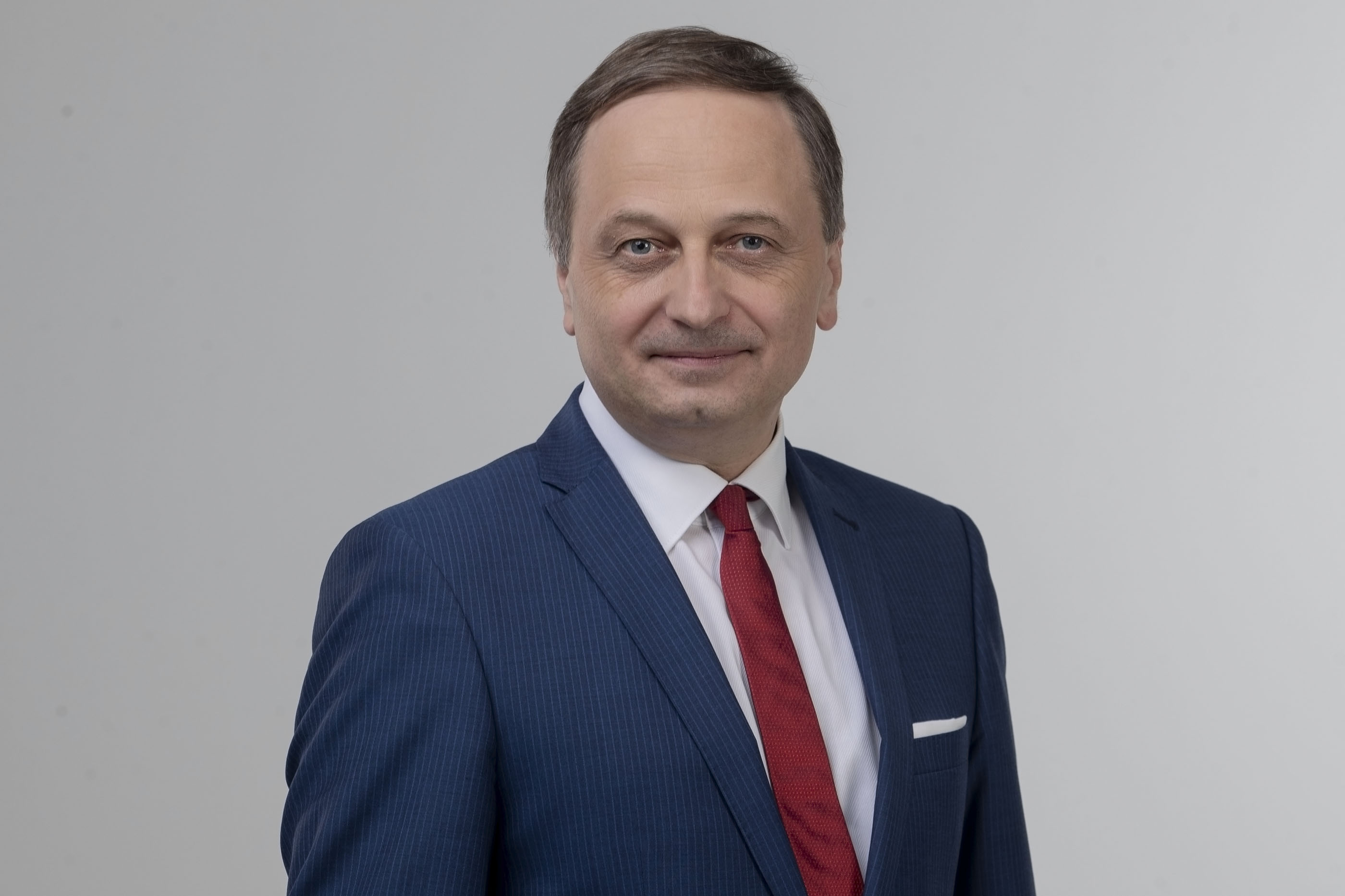
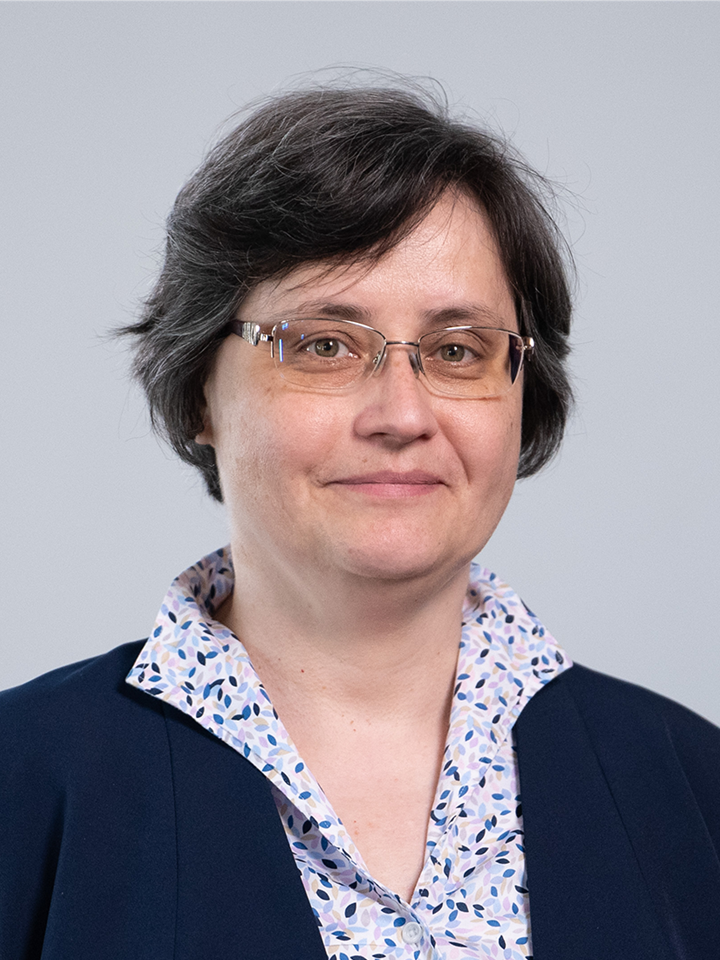
Budapest University of Technology and EconomicsHungary
László Lengyel is a Professor at the Budapest University of Technology and Economics (BME), affiliated with the Department of Automation and Applied Informatics . His work bridges theoretical and applied computer science, focusing on industrial automation, IoT systems, and model-driven engineering. Research interests include Model transformations and domain-specific languages IoT device management and multi-domain integration Software obfuscation and cybersecurity Graph algorithms and distributed computing (MapReduce) Real-time data analysis in manufacturing Automotive sensor networks His recent publications reflect expertise in model-driven IoT architectures , granule manufacturing automation , and MapReduce-based graph analysis , with a focus on industrial and automotive applications. He contributes to open-source frameworks like SensorHUB and explores gamification in driver behavior systems.
Budapest University of Technology and EconomicsHungary
Zoltán Sütő is an Associate Professor at the Budapest University of Technology and Economics, affiliated with the Department of Automation and Applied Informatics. His research focuses on advanced power electronics and control systems, with expertise in real-time implementation using FPGA technology. He maintains an active presence through institutional contacts at Budapest 1117, Magyar tudósok krt. 2., Q.B114, and can be reached via phone (+36 1 463-2337) or email (Suto.Zoltan@aut.bme.hu). Dr. Sütő's research encompasses: Design and optimization of power converters (dual active bridge, multilevel inverters) Real-time control algorithms for grid-connected systems and microgrids FPGA-based hardware-in-the-loop simulation methodologies Nonlinear dynamics in power electronic systems Artificial intelligence applications for fault diagnosis in drive systems His work bridges theoretical control models with practical implementations in renewable energy integration and power quality management. Recent publications demonstrate a strong focus on predictive control techniques, adaptive compensation methods, and optimization of power converter topologies. Research trends emphasize real-time validation, FPGA implementation, and AI-enhanced diagnostics across applications ranging from energy storage systems to industrial drives. Articles consistently address efficiency improvements, stability challenges, and novel modulation strategies in power conversion.
Budapest University of Technology and EconomicsHungary
Dr. Balázs Varga is a Research Fellow at the Department of Control for Transportation and Vehicle Systems, Budapest University of Technology and Economics (BME). He holds a PhD in Transportation and Vehicle Sciences (2021) and an MSc in Vehicle Engineering (2015) from BME. His industry experience includes roles at AVL Hungary as a Software and Function Developer (2016–2018) and academic positions at Chalmers University of Technology (2015) and SZTAKI (2012–2014). Current Role: Research Fellow (2021–present) Teaching: Programming, Control Theory, Traffic Modeling (English language course) Research Interests: Varga specializes in road traffic modeling and control, focusing on AI-based traffic estimation and dynamic traffic management. His work integrates machine learning with mesoscopic and microscopic traffic simulation tools like SUMO to optimize urban mobility and reduce emissions. Projects: He leads the 2020–2024 national development project 'Dynamic, adaptive traffic control services and evaluation tools based on digitally connected data sources' (2019-1.1.1-PIACI KFI). This initiative leverages connected data sources for real-time traffic control and policy evaluation. Key Publications Trends: His recent articles explore topics such as graph neural networks for sensor placement, multiobjective control of emissions, and mixed-reality V2X testing. These works emphasize data-driven approaches, emission reduction, and simulation frameworks for autonomous vehicles.
József Garay is a Senior Research Fellow at the ELTE-MTA Theoretical Biology and Evolutionary Ecology Research Group, part of the Department of Plant Systematics, Ecology and Theoretical Biology at Eötvös Loránd University in Budapest, Hungary. His research spans evolutionary biology, mathematical ecology, and game theory, with a particular focus on evolutionary stable strategies and their applications to biological systems. Dr. Garay received his M.Sc. in Biology from Eötvös University (1981-1986), followed by postgraduate studies in Mathematics (1985-1989). He completed his PhD at the Hungarian Academy of Science in 2004, after doctoral studies in the Department of Plant Taxonomy and Ecology (1990-1994) and a summer school on Evolutionary Models of Cooperation in Seewiesen, Germany (1994). Garay's research interests center on evolutionary game theory and its applications to biological systems. He has made significant contributions to understanding evolutionarily stable strategies (ESS) in sexual populations, the evolutionary roots of morality, and the mathematical foundations of population dynamics. His work bridges theoretical mathematics with practical ecological applications, particularly in areas like optimal foraging, habitat selection, and the evolution of cooperation. A key aspect of his research involves extending classical game theory concepts to more complex biological scenarios, including multi-species systems and time-constrained evolutionary processes. His work on the evolutionary stability of self-sacrificing behavior and the relationship between individual fitness and group survival has provided important insights into the evolution of altruism and social behavior. Analysis of Garay's recent publications reveals a consistent focus on evolutionary game theory applied to biological systems, with increasing sophistication in modeling approaches. His work has evolved from foundational studies on evolutionarily stable allele distributions (ESAD) to more complex applications in areas like cannibalism dynamics, predator-prey interactions, and kin selection. There's a clear trajectory toward more integrative models that combine mathematical rigor with biological realism, often addressing questions at the intersection of evolutionary theory, ecology, and behavior. Notably, his research increasingly incorporates mathematical modeling techniques to analyze complex ecological phenomena, demonstrating the power of theoretical approaches to address empirical biological questions. Dr. Garay has received several prestigious awards and fellowships throughout his career: Juhász-Nagy Pál junior fellowship at Collegium Budapest Institute for Advanced Study (1999-2000) NATO research fellowship at Wilfrid Laurier University, Waterloo, Canada (2002) Research fellowship at Konrad Lorenz Institute, Austria (2005) Bolyai János fellowship of the Hungarian Academy of Sciences (2006-2008) While specific information about his advising activities is limited in the provided materials, Garay's extensive publication record spanning over three decades suggests he has likely mentored numerous graduate students and early-career researchers. His collaborations with colleagues like Zoltán Varga, Manuel Gámez, and Tomás Cabello indicate a strong network of research partnerships. Garay has secured multiple research grants supporting his work, including the Bolyai fellowship and international research opportunities that have enabled him to extend his theoretical models to practical ecological applications. His work on ecological monitoring systems demonstrates how theoretical frameworks can be applied to real-world environmental challenges. Garay is a core member of the HAS Theoretical Biology Group at Eötvös Loránd University, where he contributes to a vibrant research environment focused on mathematical approaches to biological problems. His work intersects with several research teams studying evolutionary ecology, population dynamics, and mathematical biology, creating opportunities for interdisciplinary collaboration on complex biological questions that require both theoretical insight and empirical validation. The group's research has significant implications for understanding fundamental biological processes and developing more effective conservation and management strategies.
Dr. Balázs Nagy serves as an Associate Professor and Head of the Department of Medieval History within the Faculty of Humanities at Eötvös Loránd University (ELTE) in Budapest, Hungary. His academic profile uniquely bridges historical scholarship and advanced engineering disciplines, maintaining an active research agenda across both domains from his office at 1088 Budapest, Múzeum körút 6–8. His primary research interests span Robotics , Artificial Intelligence , Machine Learning , and Ethorobotics , alongside History and Medieval Studies . This interdisciplinary focus manifests in work on deep learning for telerobotic control, evolutionary algorithms for robot navigation, and ethologically inspired behavior systems, often integrating sensor technologies like MARG for movement analysis. Analysis of his 2016-2025 publications reveals a consistent trajectory in computational intelligence applied to robotics, with increasing emphasis on deep learning (2022-2025) and ethorobotics. His work demonstrates strong methodological continuity in sensor fusion and behavior modeling, while showing evolving applications from mobile navigation to biological behavior analysis.
Budapest University of Technology and EconomicsHungary
Vajk István is a Professor at the Department of Automation and Applied Informatics within the Budapest University of Technology and Economics (BME) . His work focuses on control theory, autonomous vehicles, robotics, and optimization algorithms. Position: Professor University: Budapest University of Technology and Economics Department: Automation and Applied Informatics Research Interests : Vajk’s research spans robust control systems for autonomous vehicles, trajectory optimization, and multi-actuator control strategies. His recent work emphasizes parameter-free and minimal-tuning control frameworks, leveraging internal model control and predictive algorithms. Publications : He has contributed extensively to journals and conferences on robotics, control theory, and optimization. Key themes include autonomous vehicle dynamics, nonconvex trajectory planning, and harmonics compensation in power systems. Contact : Vajk.Istvan@aut.bme.hu
Budapest University of Technology and EconomicsHungary
Szabolcs Iváncsy is an Honorary Associate Professor at the Department of Automation and Applied Informatics, Budapest University of Technology and Economics. His research focuses on audio signal processing and computational musicology, particularly in the domain of sound source separation for polyphonic music. Department: Automation and Applied Informatics University: Budapest University of Technology and Economics His work employs techniques such as instrument prints, energy splitting, and frequency estimation to isolate individual sound sources from complex musical recordings. These methods intersect with machine learning and signal processing to address challenges in polyphonic music analysis. Available publications highlight advancements in sound source separation, instrument modeling, and computational approaches to audio engineering. While no formal awards or students are listed, his contributions are documented in the BME Publication Registry and platforms like Google Scholar. Email: Ivancsy.Szabolcs@aut.bme.hu Office: Q.B215, Budapest 1117 Phone: +36 (1) 463-2885 Fax: +36 (1) 463-2871 Homepage: https://avalon.aut.bme.hu/~ivancsy
Budapest University of Technology and EconomicsHungary
Tamás Benedek is an Associate Professor at the Department of Fluid Mechanics, Budapest University of Technology and Economics (Faculty of Mechanical Engineering). His research focuses on aeroacoustics, computational fluid dynamics (CFD), and turbomachinery design optimization. He has published extensively on axial and radial flow fans, noise reduction techniques, and vortex dynamics. Education: Ph.D. in Fluid Mechanics (2018, BME) M.Sc. in Fluid Mechanics (2012, BME) Research Interests include: Tip leakage vortex quantification in axial fans Phased array microphone techniques for noise source localization CFD simulation of aeroacoustic phenomena Industrial fan design optimization for contaminated gas flows Acoustic duct design and flow-induced noise control Beamforming methods for rotating machinery diagnostics Publications highlight his work on: URANS simulations for vortex dynamics Hybrid CFD-experimental noise modeling Statistical analysis of turbulent flow effects on noise Blade geometry influence on aerodynamic loss coefficients Flow separation mechanisms in ducted systems Acoustic-transparent duct design Contact: benedek.tamas@gpk.bme.hu
Dr. Gergely Vakulya is an Associate Professor and Research Fellow at Óbuda University. He specializes in interdisciplinary research spanning cybersecurity, agricultural technology, sensor networks, and image processing. His work integrates hardware design, algorithm development, and real-world applications. Dr. Vakulya’s recent focus includes developing rumen bolus sensors for dairy cattle health monitoring, gamification of cybersecurity training, and innovative methods in camera exposure time measurement. He is affiliated with Óbuda University’s Budai Road and Pirosalma Street campuses, with an office at building F room 316. His research frequently addresses challenges in data collection, sensor fusion, and embedded systems. Research Interests: Dr. Vakulya’s expertise includes cybersecurity frameworks (e.g., CTF challenges), agricultural IoT systems (e.g., rumen bolus sensors for livestock monitoring), and image processing techniques (e.g., genetic algorithms for shape approximation). His work on visible light communication (VLC) and wireless sensor networks highlights his contributions to communication protocols and energy-efficient systems. Recent trends in his publications emphasize cross-disciplinary approaches, such as applying AI methods to agricultural sensor data and optimizing sensor networks for real-time applications. Advising & Grants: No specific advising relationships or grants are listed in available materials. His research infrastructure is likely supported through institutional and collaborative projects. Labs/Teams: While not explicitly stated, his research likely involves collaborations within Óbuda University’s engineering and computer science departments. His work on rumen sensors and VLC systems suggests potential affiliations with robotics, biomedical engineering, or smart agriculture research groups.
Dr. Koloman Brenner (Associate Professor) is affiliated with the Institute of Germanic Studies at Eötvös Loránd University (ELTE), Budapest, Hungary, within the Department of German Linguistics. His work focuses on German dialectology, phonetics, minority languages, and sociolinguistics in Central and Eastern Europe. Research Interests: German dialects in Western Hungary and historical sound analysis Phonetic-algorithmic methods (e.g., Vocal Hunter software) Language use in minority communities and multimedia translation Comparative language policy in Hungary and South Tyrol Lexicography and bilingual education for German minorities Language atlases and sociocultural language variation Recent Publications Trends: His recent work includes bilingual dictionaries, dialect revitalization strategies, and algorithmic phonetic analysis. Earlier studies explore acoustic parameters of dialect consonants, media representation of dialects, and generational language shifts since 1989.
Budapest University of Technology and EconomicsHungary
Dr. Balázs Rakos is an Associate Professor at the Budapest University of Technology and Economics (BME), affiliated with the Department of Automation and Applied Informatics . His research bridges nanotechnology, biophysics, and optical computing. His work focuses on: Integrating photoswitchable proteins with photonic devices for optical computing Developing infrared energy harvesting systems using nanoantennas and MIM diodes Modeling dipole-dipole and Coulomb-coupled protein arrays for molecular electronics Designing self-adapting pixel antenna systems for dynamic signal processing His publications from 2025–2015 reveal a trajectory from infrared sensor technologies to biophotonics and renewable energy applications , with a recurring emphasis on nanoscale biomolecular systems .
Budapest University of Technology and EconomicsHungary
Péter Stumpf is an Associate Professor at the Budapest University of Technology and Economics (BME), affiliated with the Department of Automation and Applied Informatics. His research focuses on advanced control systems, power electronics, and machine learning applications in electrical drives. Contact Information: • Office: Building Q.B114, 1117 Budapest, Magyar tudósok krt. 2. Hungary • Phone: +36 (1) 463-2870 • Email: Stumpf.Peter@aut.bme.hu His recent work explores predictive control methods, including Model Predictive Control (MPC) and Reinforcement Learning (RL), applied to permanent magnet synchronous motors, grid-side converters, and high-speed drives. He has developed novel algorithms for optimal current computation, weighting factor assignment, and harmonics compensation. Key research trends include: Integration of machine learning in control systems Optimization of power electronics for renewable energy Advanced modulation techniques in motor drives Compensation of nonlinear effects in high-speed systems
Budapest University of Technology and EconomicsHungary
Krisztián Pomázi is a Lecturer at the Budapest University of Technology and Economics , affiliated with the Faculty of Electrical Engineering and Informatics and the Department of Automation and Applied Informatics . His work bridges educational technology and cognitive science , utilizing machine learning and bioinformatics to enhance learning experiences. Department: Automation and Applied Informatics Email: Pomazi.Krisztian@aut.bme.hu Research interests include: Adaptive learning systems integrating biofeedback Machine learning applications in cognitive workload assessment Psychological profiling using computational models Usability evaluation via biomedical signal processing Intelligent exercise generation for cognitive assessment Educational game mechanics with physiological feedback Recent publication trends show a focus on blending machine learning with human-computer interaction to create personalized educational tools. His work incorporates cognitive science principles to dynamically adjust learning environments using biofeedback data, while also exploring psychometric and usability dimensions in digital education. Contact: Pomazi.Krisztian@aut.bme.hu
Budapest University of Technology and EconomicsHungary
Soumelidis Alexandros is an Associate Professor at Budapest University of Technology and Economics (honorary) and Szent István University, as well as a Senior Researcher and Research Group Leader at the Computer and Automation Research Institute of the Hungarian Academy of Sciences (SZTAKI). His academic background includes a Diploma in Electrical Engineering (1979), Specialization in Measurement and Instrumentation (1981), and a PhD (2002). His professional journey began at the Computer and Automation Research Institute in 1984 as a researcher, advancing to senior researcher in 2003. Dr. Soumelidis specializes in the Theory of signals and systems , Signal processing , and Realizations of measurement and control systems . His research spans multiple transportation domains including vehicle mechatronics , road transportation , air transportation , and railway transportation . He has led significant research projects such as: Cooperative vehicle control (2005-2008) Advanced cornea topography (2004-2007) Antiskid braking control system (2004-2007) Reactor Protection System Refurbishment Project at Paks Nuclear Power Plant (1998-2004) His teaching includes: Automatic Flight Control and Guidance Systems in Civil Aviation (BSc) Measurement techniques and signal processing in vehicles (MSc) Dr. Soumelidis has been recognized with multiple SZTAKI Institute Awards in 1997, 1999, 2002, 2003, and 2007.
Veronika Harmat is a Lecturer at the Institute of Chemistry , Eötvös Loránd University, affiliated with the Department of Inorganic Chemistry. Her research bridges biochemistry, structural biology, and enzymology, with a focus on protease inhibition mechanisms, amyloid peptide dynamics, and carbohydrate chemistry. Institution : Eötvös Loránd University Role : Lecturer Department : Department of Inorganic Chemistry Contact : veronika.harmat@ttk.elte.hu Research interests include structural analysis of protein complexes, enzyme-substrate interactions, and molecular mechanisms in the complement system. Recent work explores: Conformer dynamics in carbohydrates via ion mobility mass spectrometry Mechanisms of protease inhibition (MASP enzymes, ecotin) Amyloid peptide interface packing and aggregation Metal coordination in enzyme activity (e.g., dUTPase, calmodulin) Substrate specificity in serine proteases and oligopeptidases Publications highlight interdisciplinary approaches combining X-ray crystallography, cryo-EM, and computational modeling to study: Thermodynamic and structural factors in redox reactions Role of dimerization in enzyme regulation Calcium signaling through calmodulin interactions Antibiotic targeting of mammalian proteases Self-compartmentalization in hyperthermophilic enzymes Current affiliations involve structural studies of proteins relevant to immunology, neurodegeneration, and inorganic chemistry applications.