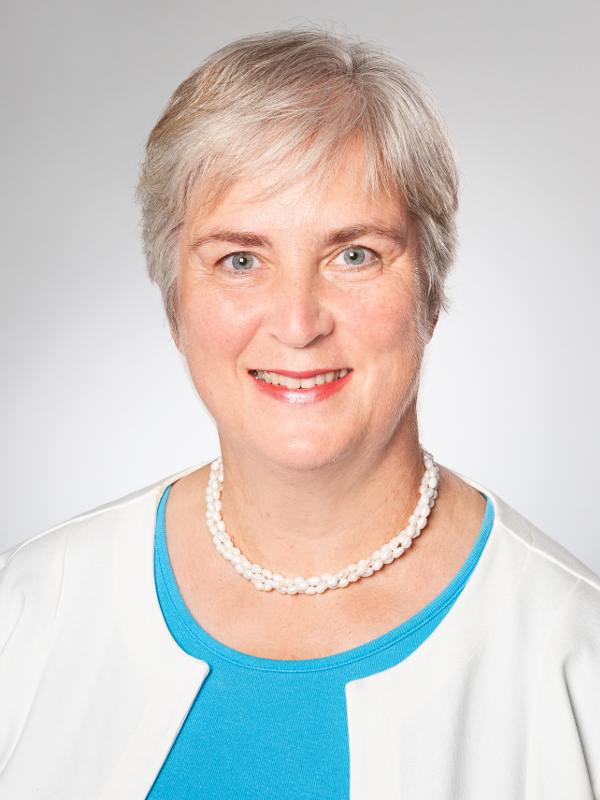
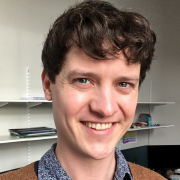
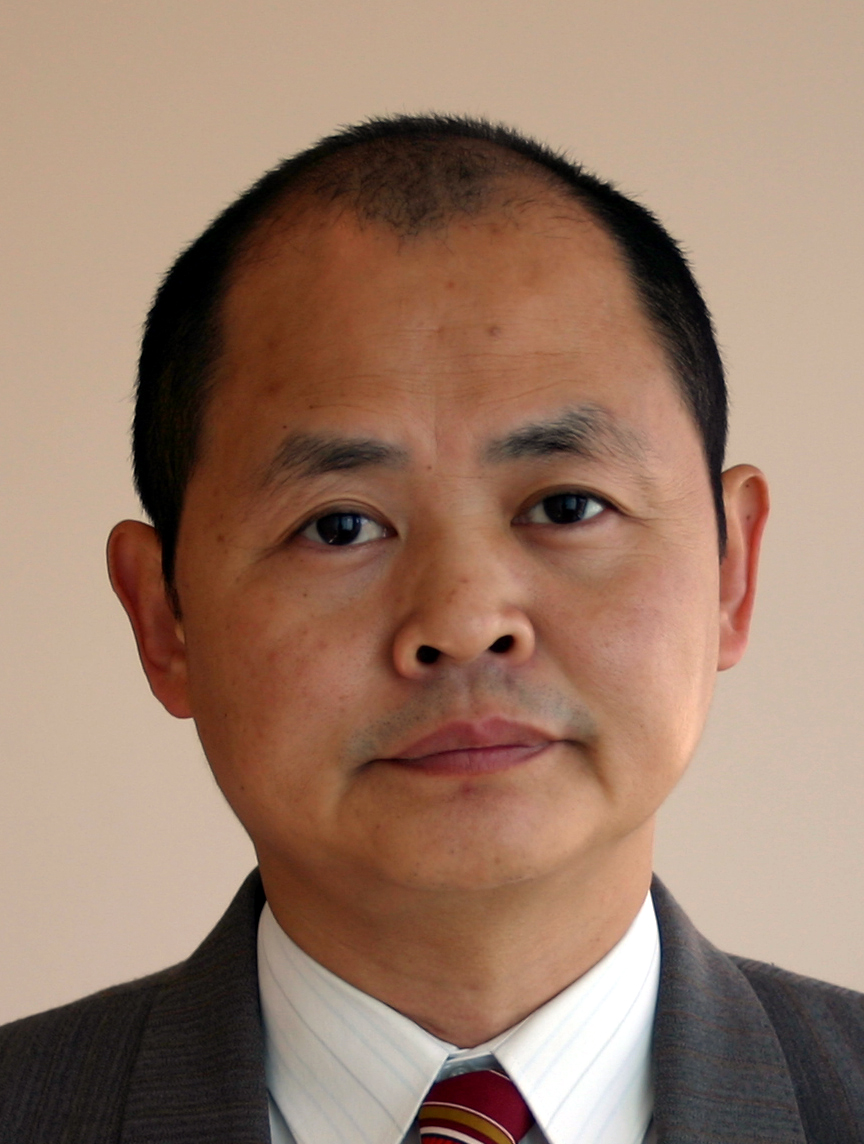
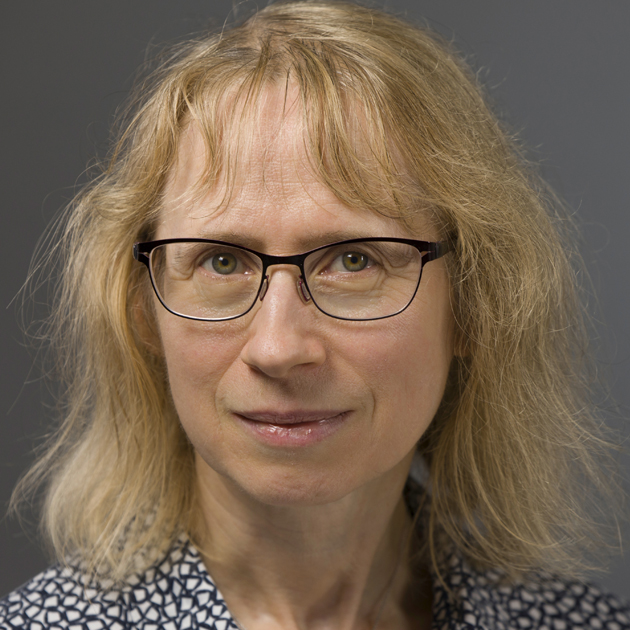
Cristina Borda Fortuny is an Assistant Professor at the La Salle Digital Engineering School under the Engineering Department at Universitat Ramon Llull. She actively contributes to the Research Group on Smart Society and collaborates with the GRITS (Grup de Recerca en Internet Technologies & Storage) project. Research Focus: Antenna Engineering, Reconfigurable RF Systems, Sensor Networks Collaborative Projects: 2017–2021 AGAUR-funded GRITS; 2022–2025 Smart Society Group Key Research Contributions: Development of low-cost, frequency-agile fluidic antennas, novel liquid switch mechanisms for Vivaldi antennas, and distributed acoustic sensor networks for urban monitoring. Her work intersects antenna design , cognitive radio , and smart infrastructure , with significant citations in Open Access publications. Technical Expertise: Fluidic antenna systems, reconfigurable operating frequencies, microwave propagation, and real-time sensor network deployment. Collaborations include researchers like K. Tong , K. Chetty , and K. Wong .
Dr. Balázs Varga is a Research Fellow at the Department of Control for Transportation and Vehicle Systems, Budapest University of Technology and Economics (BME). He holds a PhD in Transportation and Vehicle Sciences (2021) and an MSc in Vehicle Engineering (2015) from BME. His industry experience includes roles at AVL Hungary as a Software and Function Developer (2016–2018) and academic positions at Chalmers University of Technology (2015) and SZTAKI (2012–2014). Current Role: Research Fellow (2021–present) Teaching: Programming, Control Theory, Traffic Modeling (English language course) Research Interests: Varga specializes in road traffic modeling and control, focusing on AI-based traffic estimation and dynamic traffic management. His work integrates machine learning with mesoscopic and microscopic traffic simulation tools like SUMO to optimize urban mobility and reduce emissions. Projects: He leads the 2020–2024 national development project 'Dynamic, adaptive traffic control services and evaluation tools based on digitally connected data sources' (2019-1.1.1-PIACI KFI). This initiative leverages connected data sources for real-time traffic control and policy evaluation. Key Publications Trends: His recent articles explore topics such as graph neural networks for sensor placement, multiobjective control of emissions, and mixed-reality V2X testing. These works emphasize data-driven approaches, emission reduction, and simulation frameworks for autonomous vehicles.
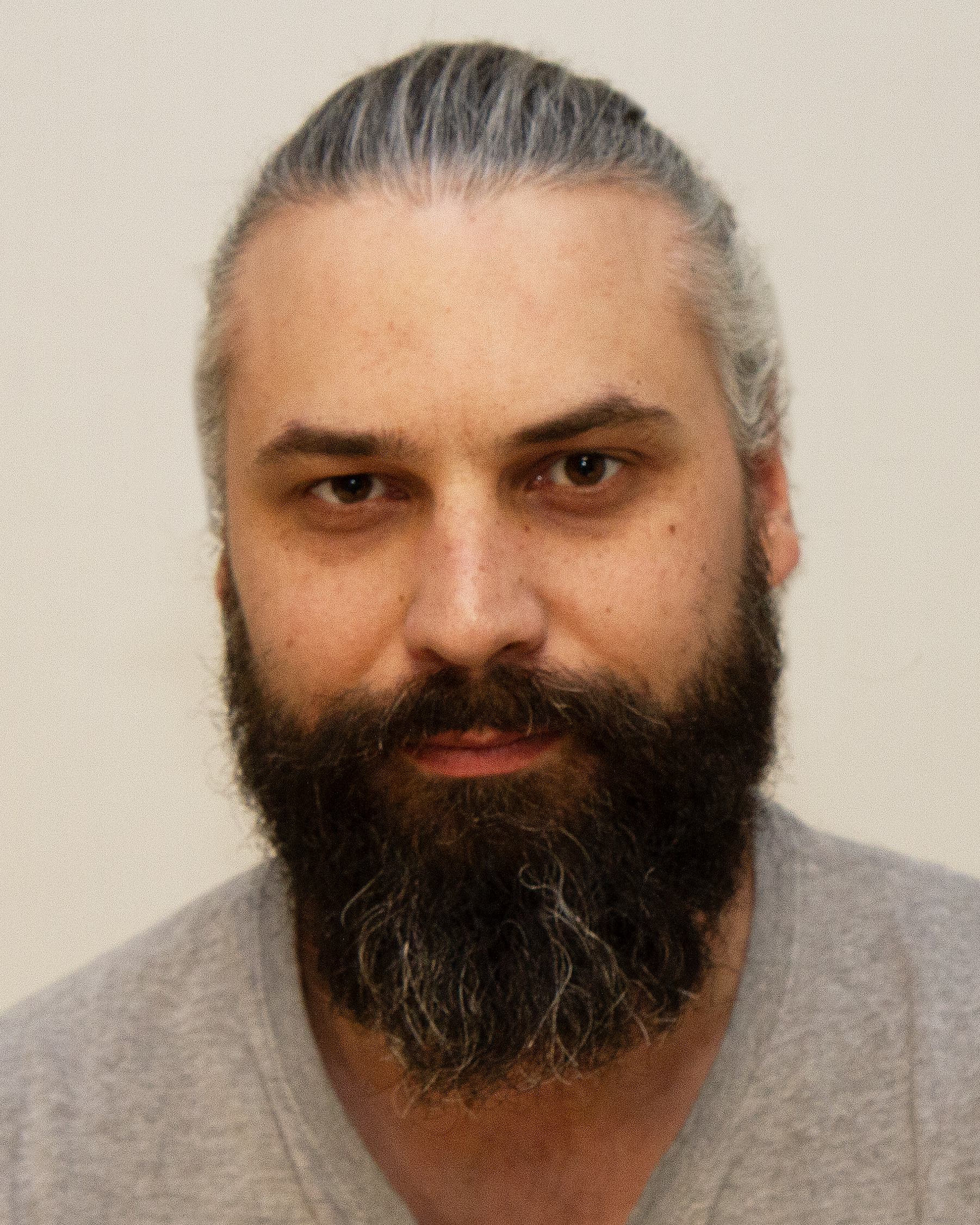
Igor Bisio is a Full Professor at the Department of Naval, Electrical, Electronics, and Telecommunications Engineering (DITEN) at Università di Genova. His research focuses on IoT-driven structural health monitoring, microwave imaging for biomedical applications, and wireless surveillance systems. Teaches courses on telecommunications, IoT, and machine learning Pioneers low-cost IoT solutions for SHM and post-stroke rehabilitation Develops microwave tomography techniques for pediatric stroke diagnostics Advances privacy-preserving Wi-Fi-based crowd monitoring Recent research trends include edge AI integration, compressive sensing for vibration analysis, and multi-class object tracking in aerial scenes. He also explores UAV-based monitoring systems, WiFi fingerprinting for localization, and Banach space inversion models for electromagnetic imaging. His work spans interdisciplinary domains combining electrical engineering, biomedical applications, and wireless network security.
Dr. Ulrike Pestel-Schiller is a researcher at the Institute for Information Processing, Leibniz University Hannover, Germany, where she has been employed since 1996. Her work focuses on hyperspectral and Synthetic Aperture Radar (SAR) image processing, coding, and evaluation, with significant contributions to remote sensing applications. She actively supervises bachelor's and master's theses in these fields. Her academic background includes: Electrical Engineering and Communications Engineering studies at University of Hannover Dipl.-Ing. (Master's equivalent) awarded in 1989 Dr.-Ing. (Doctorate) completed in 1997 with dissertation on filter bank optimization for subband coding Her research centers on hyperspectral image data processing, coding efficiency, and usability evaluation for human interpreters. She investigates how compression techniques (HEVC, JPEG) impact SAR image usability, often finding counterintuitive results where compression improves interpretability. Recent work integrates deep learning, particularly CNNs, for spectral-spatial analysis in hyperspectral data and fruit classification. Her early career focused on HDTV video coding standards development. Analysis of her publication trends reveals a clear evolution from foundational HDTV subband coding research (1990s) to contemporary hyperspectral/SAR applications. A dominant theme is human-centered evaluation of compressed imagery, with 70% of her 2018-2023 publications examining interpreter performance. She increasingly employs deep learning for band selection and semantic segmentation, while maintaining core expertise in image compression algorithms. No scientific awards were documented in the source material. Dr. Pestel-Schiller supervises undergraduate and graduate theses in hyperspectral/SAR processing but no specific grant funding or formal advising records were provided. Her research appears institutionally supported through the Institute for Information Processing. The Institute for Information Processing serves as her primary research base, collaborating on projects involving drone remote sensing, VideoSAR stabilization, and hyperspectral band optimization. Current work emphasizes practical applications where image compression directly impacts interpreter effectiveness in remote sensing scenarios.
Sandro Bartolini serves as Associate Professor in the Department of Information Engineering and Mathematical Sciences at the University of Siena, Italy, where he teaches advanced courses in computer architecture and parallel programming while leading cutting-edge research in high-performance computing systems. His academic journey began with a cum laude Laurea in Computer Engineering followed by a PhD in Computer Science and Engineering from Università di Pisa. Education: PhD in Computer Science and Engineering, Università di Pisa Laurea in Computer Engineering (cum laude), Università di Pisa Research Focus: His work centers on photonic interconnects for chip multiprocessors , energy-efficient software optimization for multi-core/GPU architectures, and performance-portable parallel programming models . Current investigations span cryptographic acceleration, blockchain algorithms, and hardware/software co-design for emerging computing paradigms, with strong emphasis on practical implementations bridging theoretical advances and real-world applications. Publication Trends: Recent publications (2019-2023) reveal three dominant threads: (1) Photonic network innovations addressing energy bottlenecks in chip multiprocessors, (2) The PHAST library ecosystem enabling seamless CPU/GPU programming across domains from autonomous vehicles to UAV navigation, and (3) Hardware accelerator designs for convolutional networks and cryptographic workloads. These works consistently target performance-portability challenges in heterogeneous computing environments. Grants and Collaborations: As principal investigator for the Italian Ministry-funded PHOTONICA project, he established international research partnerships with Murcia University, Columbia University, and Hong Kong University of Science and Technology, while securing industry collaborations with STMicroelectronics, Intel Munich, IBM, and IMEC. He has also managed complex IT system deployments for Siemens Italy, RAI (Italian public broadcasting), and SpaceDys. Academic Leadership: Bartolini serves as Associate Editor for the Eurasip Journal of Embedded Computing and actively contributes to the European HiPEAC network. His research group at Siena maintains strong industry ties for technology transfer, particularly in photonic interconnect validation and parallel programming frameworks for next-generation computing systems.
Dr. Xiaoyan Hong is an Associate Professor in the Department of Computer Science at The University of Alabama's College of Engineering. Her research focuses on mobile/wireless networks, vehicular networks, and delay-tolerant systems. Ph.D., Computer Science, University of California-Los Angeles (2003) M.S., Computer Science, Zhejiang University (2000) Research spans Internet of Things (IoT) , Connected Vehicles , and Underwater Wireless Networks . Key projects include NSF-funded underwater robot communication infrastructure and smart traffic light systems. Recent work explores Named Data Networking (NDN) in vehicular environments, Task Synchronization for autonomous vehicles, and V2I Communication for traffic optimization. NSF Research Experience for Undergraduates (REU) grant recipient $1.5M NSF grant for underwater robotics networking Her research integrates with multiple engineering centers, including the Center for Advanced Vehicle Technologies and Center for Transportation Operations .
Stefan Albert Wirler serves as a Researcher in the Department of Information and Communications Engineering at Aalto University, actively contributing to the Communication Acoustics research group specializing in Spatial Sound and Psychoacoustics. His work bridges theoretical audio signal processing with practical applications in spatial audio systems. Primary research areas include Spatial Audio, Psychoacoustics, and Speech Enhancement, with specific focus on microphone array processing, spatial post-filtering techniques, and machine learning applications for auralization. His investigations address critical challenges in virtual reality audio reproduction and headphone acoustics through innovative signal processing approaches. Analysis of his 2020-2024 publications reveals consistent advancements in spatial post-filter design, particularly through non-linear combinations and coherence-based methods for speech enhancement. His work demonstrates growing integration of machine learning with traditional signal processing, notably in rigid sphere scattering modeling and DIY headphone modifications for improved acoustic transparency. Wirler operates within Aalto University's Communication Acoustics research ecosystem, collaborating extensively with senior researchers like Ville Pulkki on projects spanning spatial audio rendering, psychoacoustic validation, and real-time audio processing systems.
Jan Bergmans is a Full Professor in the Department of Electrical Engineering at Eindhoven University of Technology (TU/e). He leads the Signal Processing Systems group and holds professorships at multiple research centers including the Eindhoven MedTech Innovation Center (e/MTIC), Center for Care & Cure Technology Eindhoven, NeuroPlatform, EAISI Health, and EAISI Foundational. With approximately 35 years of experience in signal processing theory and applications, Bergmans focuses on developing computationally efficient signal analysis techniques for healthcare, wireless communication, surveillance, and intelligent lighting applications. Bergmans' educational background includes: MSc in Electrical Engineering from Eindhoven University of Technology (1981) PhD in Electrical Engineering from Eindhoven University of Technology (1987) His research interests center around signal processing and data analytics theories, algorithms, architectures, and systems. Bergmans develops mathematical models that incorporate domain-specific knowledge, such as propagation models for radio communication channels or pathophysiological models for clinical decision support systems. His work emphasizes creating powerful yet computationally efficient signal analysis techniques, with significant applications in healthcare technology and medical diagnostics. The integration of engineering principles with clinical needs is a hallmark of his research approach, enabling practical solutions that address real-world medical challenges. Analysis of Bergmans' recent publications reveals a strong focus on medical signal processing, particularly in ECG and fetal monitoring applications. His work combines advanced signal processing techniques like adaptive Kalman filtering with practical healthcare applications. There's also significant research in visible light communications and sensor network technologies, showing the breadth of his expertise across different application domains of signal processing. The consistent theme across his work is developing computationally efficient algorithms that incorporate domain-specific knowledge to solve practical engineering problems. Scientific recognition includes: Senior Member of the IEEE Author of numerous papers and 2 books Holder of approximately 40 US patents Bergmans has established smooth collaborations with strategic industrial and clinical partners, including Philips Research and multiple hospitals in the Eindhoven region. He co-manages BrainBridge, the strategic collaboration between TU/e, Philips Research, and Zhejiang University (China). His research group has secured numerous projects, including recent third-tier projects like MEDEIA, PISANO SPS, and RAISE projects focusing on medical engineering innovations and robust AI for radar signal processing. As a key figure in the Signal Processing Systems group and one of the founders of the Eindhoven MedTech Innovation Center (e/MTIC), Bergmans plays a central role in bridging academic research with industrial and clinical applications. His leadership extends to managing multiple research teams working on healthcare technology, wireless communications, and sensor systems, fostering an environment where theoretical signal processing advances translate into practical medical and technological solutions.
Dr. Tiantai Deng is a Lecturer in Electronics and Digital Systems at the School of Electrical and Electronic Engineering , University of Sheffield (since 2021). His industrial background includes a senior research engineer role at HiSilicon/Huawei , where he focused on hardware architecture design for CNN, GEMM, and image/video processing on FPGAs/ASICs. Education: BEng, MSc, PhD Research interests span FPGA-based hardware acceleration , sparse processing architecture for CNN/GEMM, number system design , approximation computing , and high-level design environments . His work integrates algorithm-hardware co-optimization for efficiency in AI and mathematical computing. Recent publications emphasize neurodynamic systems for opinion modeling, parallel processing elements for ODE/AI acceleration, and low-power FPGA implementations for clustering/modulation classification. Earlier work addressed combustion dynamics and image processing pipelines. Contact: t.deng@sheffield.ac.uk | Office: G108, Sir Frederick Mappin Building, Sheffield S1 3JD | ORCID 0000-0003-4507-5746
Dr. Stephen Henthorn is a Lecturer in Wireless Communications at the University of Sheffield , affiliated with the School of Electrical and Electronic Engineering and the Department of Electronic and Electrical Engineering. His research focuses on energy-efficient wireless systems, leveraging metamaterials and reconfigurable intelligent surfaces for next-generation communication networks.
Professor İsmail Serdar Özoğuz is a distinguished academic at Istanbul Technical University , affiliated with the Department of Electronics and Communication Engineering . Holding the title of Professor since 2009, he has contributed extensively to analog circuit design, neural network applications, and wireless communication systems. Ph.D. in Electronics and Communications Engineering (1995) Department Head (2020-present) Vice Dean (2017-2020) Research Interests: His work spans Electronics , Analog Design , Circuits and Systems Theory , with recent focus on: Neural network-based filter optimization Memristor emulator circuits Spintronic devices for wireless and memory applications Intelligent optimization in RF designs Article Trends: Recent publications highlight AI integration in engineering challenges, power efficiency in wireless systems, and hardware-software co-optimization . His work bridges theoretical models (e.g., fractional-order neural networks) with practical implementations (e.g., GaN amplifiers). Scientific Awards: GEBIP Award (TUBA), 2002 Mustafa Parlar Foundation Research Incentive, 2003 TUBITAK Incentive Award, 2004 Grants & Projects: As Principal Investigator, he has led initiatives on: Spintronic devices for wireless/memory/analog uses Passive combiners in HF transmitters High-power GaN amplifier development Fractional-order neural network models
Professor Gang-Ding Peng is a leading academic in photonics and optical communications at the School of Electrical Engineering and Telecommunications , University of New South Wales (UNSW). With over three decades of experience, his research focuses on silica and polymer optical fibers, fiber lasers, sensors, and photonic signal processing. Education: B.Sc. in Physics (1982, Fudan University), M.Sc. in Applied Physics (1984), Ph.D. in Electronic Engineering (1987, both Shanghai Jiao Tong University) Career: Lecturer at Shanghai Jiao Tong (1987-1988), Postdoctoral Fellow at Australian National University (1988-1991), UNSW Faculty since 1991, Queen Elizabeth II Fellow (1992-1996) Research Interests: Specialized in specialty optical fibers, nonlinear optics, and photonic devices. His work spans: Silica and polymer fiber amplifiers/lasers Electro-optic and liquid-crystal-doped fibers Multi-core fiber Bragg grating systems Photonic crystal fiber sensing 3D-printed optical components Quantum and neuromorphic photonic applications Scientific Awards: Queen Elizabeth II Fellowship (1992-1996) Fellow and Life Member of OSA & SPIE Supervision: Active mentor in Bi/Er co-doped fibers, 3D-printed optical fibers, and fiber sensing technologies.
Pengcheng Xu is a Researcher at the Technical University of Munich's Chair of Circuit Design under Prof. Ralf Brederlow, specializing in analog and mixed-signal circuit design. His work spans energy harvesting systems, neuromorphic hardware, and wireless sensor technologies, with strong industry connections including prior roles at Huawei and Fraunhofer EMFT. Education: Bachelor of Physics, Shanghai Normal University (2013) Master of Integrated Circuit Engineering, Tongji University (2016) Ph.D. in Electrical Engineering, Université catholique de Louvain (2021) Exchange Student, University of Erlangen-Nuremberg (2015) Xu's research focuses on practical applications of circuit design including RF energy harvesting for battery-less IoT sensors, neuromorphic accelerators for edge computing, and precision analog systems for electrochemical/ mechanical stress sensing. His work bridges theoretical circuit innovation with real-world implementation in semiconductor processes from 28nm FDSOI to emerging memory technologies. His publications demonstrate consistent high-impact contributions to IEEE journals and conferences including JSSC, ISSCC, and ESSCIRC, with particular expertise in impedance-aware rectifier design and low-power circuit architectures. Xu holds a pending European/US patent for RF energy harvesting systems. Awards and Recognition: Shanghai Outstanding Graduate Award (2013, 2016) Chinese Government Award for Outstanding Self-Funded Students Abroad (2020) Chinese National Scholarship (2012, 2014, 2015) Meritorious Winner, Mathematical Contest in Modeling (2013) Xu actively contributes to the academic community as IEEE Young Professionals Germany Chair (2023-2024), IEEE Design Automation Conference TPC member (2022-2024), and reviewer for multiple IEEE journals. He supervises student theses in analog circuit design and neuromorphic hardware through TUM's Chair of Circuit Design, which maintains strong industry partnerships with semiconductor companies.
Laurence Likforman-Sulem is an Associate Professor at Institut Polytechnique de Paris , affiliated with the Signal, Statistics and Learning (S2A) team in the Image, Data, Signal (IDS) department . She has been at Télécom Paris since 1991, where she teaches Pattern Recognition , Signal Processing , and Document Analysis . PhD from ENST-Paris (1989) HDR from Sorbonne University (2008) Her research integrates Markovian methods (HMMs, Bayesian Networks) and deep learning (BLSTMs, CNNs) for: Handwriting recognition in historical documents Character analysis in Byzantine seals Parkinson’s disease detection through multimodal signals Biometric authentication using hand shape Recent work focuses on Byzantine seal character recognition (BHAi project) and multimodal group cohesion analysis (IEEE ICMI 2021 Best Paper). She has supervised 10 PhD students and numerous Master internships. Scientific Awards Winning system at ICDAR 05 Arabic Hand-Written Word Recognition Competition Fondation Telecom Thesis Award 2014 (2nd prize for Olivier Morillot) Best Paper Award, ICMI 2021 Active in conference leadership, she chaired ICDAR 2015 and ICPR 2022 document analysis tracks. Her 15 most recent publications span Byzantine document analysis, Parkinson’s detection, and low-energy neural architectures.
Ioannis Andreadis is a Professor in the Department of Electrical and Computer Engineering at the School of Engineering, Democritus University of Thrace. He has been a faculty member since 1993, following his appointment as a Visiting Professor at the School of Technological Applications of TEI Kavala (1991-1992). His academic journey began with a Diploma in Electrical Engineering from Democritus University of Thrace (1983), followed by an M.Sc. in Electrical Engineering & Electronics (1985) and a Ph.D. in Instrumentation & Analytical Science (1989), both from the University of Manchester. Professor Andreadis's research spans the Design and Implementation of Electronic Systems with particular emphasis on Intelligent Systems and Machine Vision . His work has resulted in over 230 publications in international journals, book chapters, and conference proceedings. He has made significant contributions to image processing, particularly in mathematical morphology, color image processing, and real-time implementation of image processing algorithms. His research has practical applications in seismic signal processing, crowd management systems, and 3D reconstruction technologies. The analysis of his recent publications reveals a strong focus on advanced image processing techniques, with increasing integration of deep learning approaches. His work spans both theoretical foundations (such as entropy estimation and moment calculations) and practical applications (including image stabilization, multi-focus image fusion, and crowd management systems). The interdisciplinary nature of his research connects electrical engineering, computer vision, and signal processing with applications in safety engineering, structural analysis, and robotics. Among his notable achievements are the IET Image Processing Premium Award (2009) , Best Paper Award at PSVIT 2007 , and Best Paper Award at EUREKA 2009 . He was elected Fellow of the Institute of Engineering & Technology (IET) in 2006 and Fellow of the Institute of Measurement & Control (InstMC) in 2021. He has also served as Subject Editor of the IET Electronics Letters and as Guest Editor for special issues of Pattern Recognition journal. Professor Andreadis has supervised 14 PhD theses , 21 Master's theses , and 88 Diploma works , demonstrating his commitment to academic mentoring. His research has been supported by significant grants including the EDUnet project (€280,000), wireless network implementation (€37,000), laboratory infrastructure development (€120,000), school information systems support (€478,000), the RESCUER project (€350,000 as Deputy P.I.), and the EDUSAFE project (Marie Curie Actions). He leads the Electronics Laboratory at Democritus University of Thrace, which has undergone significant infrastructure development through multiple funding sources. His work on the RESCUER project demonstrates collaboration with European partners on emergency risk management systems, while his EDUSAFE involvement shows commitment to advanced AR/VR safety systems development. His research group applies computational intelligence techniques to diverse challenges from seismic analysis to pedestrian evacuation modeling.