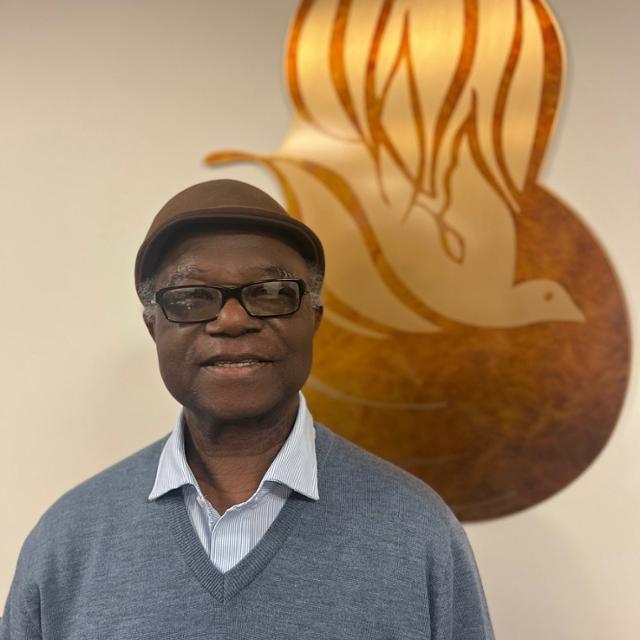
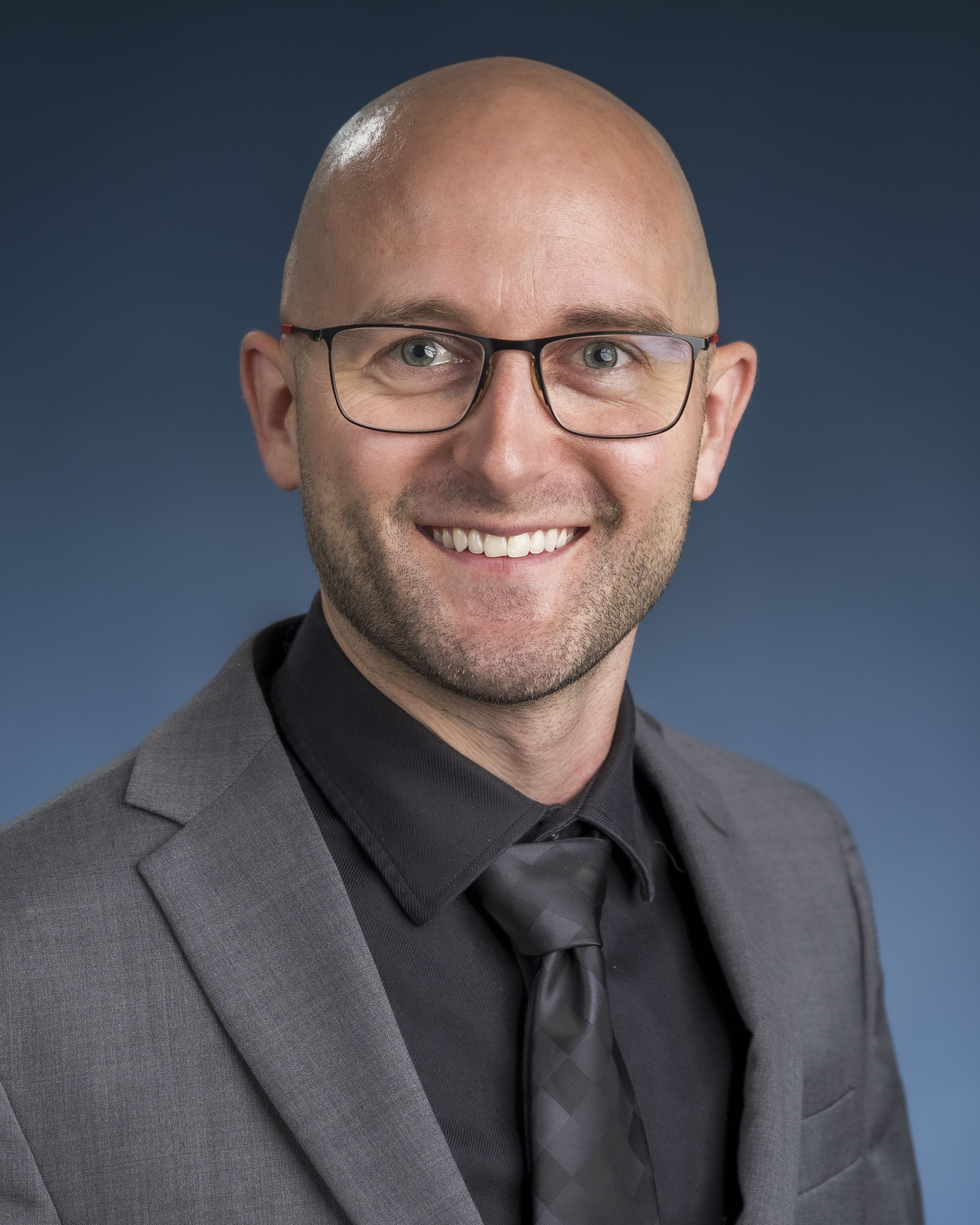
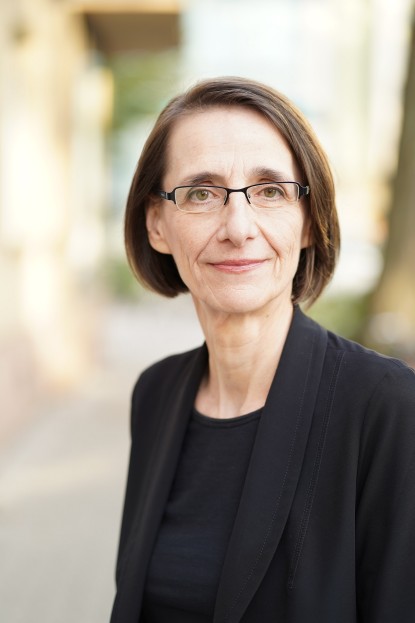
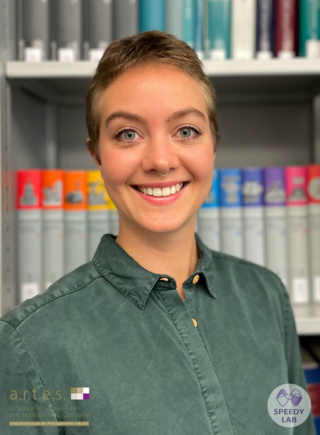
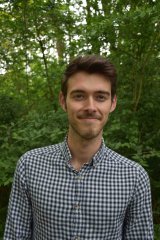
Francesc Sidera Caballero is a Senior Professor in the Department of Psychology at the University of Girona (UdG), where they have worked since 2008-2009. They coordinate the Psychology Degree program and teach in both the Psychology and Teacher Training degrees. PhD in Psychology (2009) BSc in Psychology (2002) Their research focuses on the development of social understanding in children, particularly emotional expression, theory of mind, and language acquisition. Key areas include: Emotion comprehension in hearing-impaired children Role of syntax in cognitive development Bullying and cyberbullying dynamics in schools Executive functions and academic achievement Emotional intelligence in educational contexts Virtual reality applications in psychology education Scientific contributions include studies on: Language effects on pretend emotion understanding Training programs for false belief comprehension Assessment tools for autonomous learning Emotion recognition in developmental disorders
Fatih Emrah Demir serves as Assistant Professor in the Department of Special Education at Gaziantep University's Faculty of Education since 2020, following prior research assistant roles at Gaziantep and Gazi Universities. His academic trajectory reflects deep specialization in visual impairment education, intellectual disabilities, and autism spectrum disorders within Turkey's special education framework. His educational qualifications include: Ph.D. in Special Education (2019), Gazi University M.A. in Education of the Visually Impaired (2014), Gazi University B.A. in Special Education - Visually Impaired Teaching (2012), Gazi University Demir's research investigates critical intersections between disability education and contemporary societal challenges, particularly focusing on refugee inclusion and evidence-based pedagogical approaches. His work systematically compares developmental outcomes between disabled and typically developing populations while addressing systemic barriers in educational access. Current scholarship emphasizes culturally responsive practices for Syrian refugee children with special needs under temporary protection status. Analysis of his 2016-2024 publications reveals three dominant research streams: (1) rigorous comparative studies of reading performance and social behaviors among visually impaired students, (2) comprehensive investigations into refugee inclusion challenges, and (3) foundational work on teacher preparedness for diverse special education contexts. His methodology consistently combines quantitative assessment with qualitative perspective-gathering from educators and families. Administratively, Demir serves as Department Head and Disability Unit Coordinator at Gaziantep University, demonstrating leadership in institutional accessibility. His teaching portfolio spans 20 undergraduate courses including Braille literacy, inclusive education strategies, and specialized instruction for intellectual disabilities. Professional experience extends to Ministry of National Education teaching positions and hospital-based sign language instruction.
Slavina Lozanova, PhD, is a faculty member at New Bulgarian University's Healthcare and Social Work department. With over 15 years of experience in cochlear implantation, speech therapy, and special education, she specializes in bilingual education strategies for hearing-impaired individuals and intergenerational learning frameworks. Her work spans clinical practice, educational policy development, and international research collaboration. 1992-1997: Master's in Special Education (Logopedics), Sofia University 2001-2004: Doctoral studies in Special Education, Sofia University 2013-2014: Doctoral research in semiotics of bilingualism, New Bulgarian University Her research focuses on sign language integration in educational contexts, cochlear implantation rehabilitation , and lifelong learning strategies for hearing-impaired individuals. She develops adaptive teaching methodologies combining verbal-gestural bilingualism and assistive technologies to enhance educational accessibility. Lozanova has led 10+ international projects including SignLanguage@School (2011-2013) and Intergenerational Learning Cities (2013). She has presented at conferences across Europe and USA, focusing on special education needs and sign language applications in medical contexts. As a certified ELTACS trainer and international consultant, she develops educational frameworks for SEN learners and deaf education professionals . Her work includes creating text accessibility standards for Bulgarian sign language users and designing intergenerational communication programs.
Krista Rahelich serves as an Adjunct Professor at Niagara University, where she has taught since 2003 while maintaining a full-time clinical career as a speech pathologist. She holds the Certificate of Clinical Competence from the American Speech and Hearing Association and New York State licensure in speech-language pathology, actively participating in campus ASL events. Her educational qualifications include: Bachelor's degree in Communicative Sciences from the University at Buffalo Master's degree in Speech and Language Pathology from University College at Buffalo Her research and professional work focuses on Speech-Language Pathology, American Sign Language pedagogy, and Special Education policy development. She has published significant research analyzing special education qualification requirements across U.S. states, demonstrating her expertise in educational standards and clinical practice integration within communication disorders.
Francisco de Paula Souza de Mendonça Júnior is a Professor at the Federal University of Santa Maria (UFSM) specializing in Medieval History, Renaissance History, and the History of Esotericism. He holds a doctorate in History and Political Cultures from the Federal University of Minas Gerais (2014), with a sandwich program at Université Paris-Est Créteil. He is actively involved in academic research and serves as co-director of the Center for Studies on Western Esotericism. His research focuses on the intersection of esoteric knowledge and political power during the medieval and Renaissance periods, particularly examining how secret communication methods developed by figures like Johannes Trithemius, Giambattista della Porta, and Cornelius Agrippa influenced the transition from medieval governance to the modern state. He explores how the concept of a world filled with hidden signs left by the Creator shaped both magical practices and political strategies. His publications reveal consistent engagement with themes of secret knowledge as social hierarchy, examining how access to esoteric information created distinctions between 'those who cannot know' and 'those who can know.' His work spans historical analysis of specific texts like the Secretum Secretorum and Polygraphia to broader theoretical examinations of how esotericism functioned within imperial and papal courts. Member of the Brazilian Association of Medieval Studies (ABREM) Member of the European Society for the Study of Western Esotericism (ESSWE) Co-director of the Center for Studies on Western Esotericism Professor Mendonça Júnior has supervised several students in historical research projects, including educational initiatives like the 'Trivium & Quadrivium' project that developed teaching materials for medieval and Renaissance history. His work bridges academic scholarship with practical educational applications, demonstrating commitment to both research excellence and pedagogical innovation.
Lone Marianne Percy-Smith serves as an External Lecturer in the Department of Nordic Studies and Linguistics within the Faculty of Humanities at the University of Copenhagen, where she contributes to teaching and research in linguistic sciences. Her research specializes in: Language development trajectories in pediatric populations Impact of hearing impairment on linguistic acquisition Nordic language structures and evolution Clinical interventions for speech disorders Her 2021 publication in the Journal of Clinical Medicine analyzes contemporary language development approaches for children with hearing loss, demonstrating interdisciplinary integration of linguistic theory and clinical audiology. This work reflects her focus on evidence-based therapeutic strategies within developmental linguistics. No scientific awards or major research grants are documented in the available materials. Information regarding graduate student supervision, research team leadership, or laboratory affiliations remains unspecified in the provided sources.
Elochukwu Uzukwu serves as Professor at Duquesne University's McAnulty College and Graduate School of Liberal Arts, specializing in theological studies with profound expertise in African contexts. He is Editor of the Bulletin of Ecumenical Theology , a 24-volume journal published by the Ecumenical Association of Nigerian Theologians addressing Church-society interfaces globally. His academic credentials include: Th.D. in Theology, St Michael's College, University of Toronto (1979) M.Th. in Theology, St Michael's College, University of Toronto (1976) B.D. in Theology, Urban University, Rome (1972) Uzukwu's research centers on liturgy-sacraments, ritual studies, ecclesiology, and contextual theology with specific focus on Africa and its diaspora. He pioneered 'ritology' to analyze ritual dimensions in African Christian contexts, examining how West African insights into God-Christ-Spirit challenge traditional Jewish-Christian frameworks and address contemporary issues like violence and child soldier initiation. His work consistently bridges theological theory with anthropological and cultural analysis. Spanning four decades, his publications reveal persistent themes of Christian inculturation in Africa: reinterpretation of God-concepts through African lenses, adaptation of sacramental practices using indigenous symbols, and ritual's dual role in community building and conflict resolution. Key contributions include analyzing Eucharistic symbolism through African food traditions, developing 'Church-Family-of-God' ecclesiology, and critiquing ritual technology in African warfare – demonstrating how theological scholarship directly engages with sociopolitical realities.
Mychal Hadrich serves as Assistant Professor of Sign Language Interpreting at Augustana University's Sharon Lust School of Education, holding national certification (NIC) from the Registry of Interpreters for the Deaf (RID) since 2012. He maintains active dual roles in academia and professional practice as a community interpreter and mentoring specialist. His academic credentials include: Master of Arts in Interpreting Studies — Teaching (2023, Western Oregon University) Bachelor of Arts in Sign Language Interpreting (2012, Augustana College) Hadrich's research confronts critical systemic challenges in sign language interpretation, with primary focus on psychological sustainability for Video Relay Service (VRS) interpreters through stress reduction frameworks, analysis of the post-graduation certification bottleneck, and evidence-based conflict resolution methodologies. His work bridges theoretical scholarship with frontline interpreting practice across K-12, postsecondary, performance, and remote service environments. Professional recognition includes national RID certification, with ongoing contributions to professional organizations. His academic mentorship extends to community-based interpreter training while maintaining active field practice. Current initiatives address interpreter retention through wellness interventions and professional development pathways.
Prof. Dr. Petra Gehring is a distinguished professor of philosophy at the Technical University of Darmstadt, where she has been teaching since 2002. She holds significant leadership roles including heading the Hessian Center for Responsible Digitalization (ZEVEDI) since 2020 and chairing the Council for Information Infrastructures of the Federal and State Governments. Her academic contributions span editorial positions with the Journal Phenomenology, Yearbook of Philosophy of Technology, and German Journal of Philosophy, as well as advisory roles with the Philosophical Yearbook. Dr. Gehring earned her MA in 1988, completed her doctorate in 1992, and achieved her habilitation in 2000 after studying philosophy, political science, and law at universities in Giessen, Marburg, and Bochum. Her academic trajectory demonstrates a consistent engagement with foundational philosophical questions while adapting to contemporary technological challenges. Her research spans multiple philosophical domains with particular focus on metaphysics and its criticism, especially in the 19th and 20th centuries. She has made significant contributions to classical and post-classical phenomenology, structuralism and post-structuralist theory formation. Her work on philosophical conceptual history and metaphorology bridges traditional philosophical inquiry with contemporary concerns about technology and power. Dr. Gehring is particularly known for her investigations into the philosophical implications of biotechnologies, digitality and digital infrastructures, as well as her work in applied ethics as a policy field and aesthetics, especially regarding the performance of signs, voice, text and sound. Dr. Gehring's recent publications demonstrate a growing emphasis on digital humanities methods applied to philosophical questions. Her work increasingly examines the ethical and political dimensions of digital technologies, with particular attention to data governance, AI ethics, and the infrastructure of digital knowledge production. The trajectory of her scholarship reveals a consistent engagement with power dynamics in technological contexts, evolving from traditional philosophical analysis toward more applied considerations of contemporary digital challenges. History of Bioethics in Germany (1970-2010) Modal Concepts of Power Digital Infrastructure Innovation (including data trust models) Digital Metaphor Analysis Throughout her career, Dr. Gehring has led numerous significant research initiatives including the DFG GK Technization and Society (until 2006), DFG GK Topology of Technology (until 2015), DFG GK E-Learning (until 2010), and the LOEWE priority The logic of cities. She currently serves as PI for the DFG GK Standards of governance and continues to contribute to the DFG GK European dream cultures as an associated member. Her leadership extends to her role as head of the Hessian Center for Responsible Digitalization (ZEVEDI), where she directs research on ethical technology development. Dr. Gehring co-hosts the ZEVEDI podcast 'Digital conversation' with physicist and technology philosopher Marlene Görger, demonstrating her commitment to public engagement with philosophical questions surrounding digitalization. Her work continues to shape contemporary philosophical discourse at the intersection of traditional philosophical inquiry and emerging technological challenges.
Dr. Frank Mols is a Senior Lecturer at the School of Political Science & International Studies at the University of Queensland, where he also serves as Director of Equity, Diversity, and Inclusion. His research spans political psychology, voter behavior, leadership studies, and public policy, with a particular focus on applying social identity theory to understand political phenomena. He has published extensively in top journals and co-authored the influential 2017 book "The Wealth Paradox." Dr. Mols holds a Doctor of Philosophy from the University of Exeter. His academic journey has led him to become a recognized expert in political psychology and behavior, with particular expertise in understanding voter attitudes toward populist parties and the psychological foundations of political leadership. Dr. Mols' research primarily focuses on political psychology and behavior, examining how social identity theory can explain voter attitudes, leadership preferences, and EU integration perspectives. His work explores the psychological mechanisms behind political polarization, the appeal of populist movements, and the impact of economic inequality on political attitudes. He has made significant contributions to understanding why economically prosperous individuals might support anti-immigrant policies and populist parties, challenging conventional wisdom about the "losers of globalization" thesis. His recent publications reveal a consistent focus on social identity theory applications in political contexts, with particular attention to leadership dynamics, economic inequality effects, and EU attitudes. The research shows an evolution from early work on EU integration toward broader examinations of political psychology, populism, and inequality. A notable trend is the increasing interdisciplinary nature of his work, bridging political science with social psychology to develop more nuanced understandings of political behavior. Dr. Mols has received significant research funding through Australian Research Council Discovery Projects, including grants for "Inequality: Consequences for societies' social and political vitality" (2017-2019) and "How economic prosperity hardens attitudes towards minorities" (2012-2014). His research has had substantial impact beyond academia, with regular media appearances and contributions to public discourse through blogs on platforms like Democratic Audit UK and LSE's impact of social science research. As an academic supervisor, Dr. Mols has guided multiple PhD students through completion and currently oversees additional doctoral research. His supervision portfolio reflects his diverse research interests, spanning topics from open data policy to Indonesia's political development and Estonia's European integration experience. His approach to supervision appears to emphasize the application of political psychology frameworks to diverse policy contexts. Dr. Mols is affiliated with the Social Identity and Groups Network (SIGN) Research Centre within the Faculty of Health, Medicine and Behavioural Sciences, demonstrating his commitment to interdisciplinary collaboration. His work with this network likely informs his application of social identity theory to political phenomena, creating synergies between psychological and political science approaches.
Lena Pagel is a researcher at the University of Cologne 's Department of Linguistics , specializing in phonetics and prosodic prominence. Her work bridges speech production , sign language kinematics , and multimodal communication . Research Focus: Prosodic marking strategies, articulatory adaptations in loud vs. habitual speech, coarticulation in sign language, and multimodal accommodation during dialogue Key Methodologies: Electromagnetic Articulography (EMA), kinematic analysis, multimodal data capture (audio/video/EMA) Notable Work: Co-development of the DiCE cooperative game for controlled data elicitation, systematic EMA studies in Persian and German focus types Scientific Recognition: 2023 IPA Student Award for kinematic analysis of visual prosody 2022-2026 a.r.t.e.s. Doctoral Scholarship with Mercator funding 2019 Best Poster Award at Young Female Researchers in Speech Workshop 2019 Faculty Price for Bachelor thesis on German prominence marking
Sebastien Vandenitte is a postdoctoral researcher at the University of Jyväskylä, Finland, specializing in the comparative analysis of sign and spoken languages. His work bridges linguistics and gesture studies, focusing on multimodal communication through the LSFB Corpus (French Belgian Sign Language) and FRAPé Corpus (Belgian French). He emphasizes constructed action techniques and referential strategies across modalities. Affiliation: Laboratoire de Langue des Signes de Belgique francophone Current Role: Postdoctoral Researcher Research interests include cross-modal differences in enactment, sociolinguistic aspects of sign language, and corpus-based methodologies. His projects explore how signers and speakers visualize referents, with applications to linguistic theory and multimodal data collection. Recent awards include the SofinaBoël Fellowship (2021) and recognition for public engagement in science communication. Collaborations span Belgium and Finland, with active participation in conferences and workshops on sign language studies.
Dr. Zeeshan Rana MSc, PhD, FHEA, MIET, MPEC is a Research Fellow at Cranfield University with expertise spanning Computational Fluid Dynamics , Autonomous Systems , and Artificial Intelligence Applications . His research focuses on high-speed aerodynamics , drone tracking systems , and renewable energy fluid dynamics . Education : MSc in Mechanical Engineering PhD in Computational Fluid Dynamics & Aerodynamics (Cranfield University) His work bridges hypersonic flow analysis with practical applications in Formula One aerodynamics , planetary rover navigation , and textile wastewater treatment . Recent research integrates machine learning with CFD simulations to solve complex engineering problems. Scientific trends in his publications (2025–2013) reveal consistent focus on: Computational Aerodynamics (ILES, WENO schemes, SU2 validation) Autonomous Systems (drone tracking, visual SLAM, sign language modeling) Renewable Energy (VAWT turbines, microbial fuel cells) Scientific Contributions: Fellow of the Higher Education Academy (FHEA) Member of the Institution of Engineering and Technology (MIET) Member of the Professional Engineering Community (MPEC) Current affiliations include the Digital Aviation Research and Technology Centre (DARTeC) , contributing to reinforcement learning-based surveillance and multi-sensor fusion systems for drone tracking.
Eli Raanes is a Professor at the Department of Language and Literature, Norwegian University of Science and Technology. Her work centers on special education with expertise in Norwegian Sign Language, communication accessibility for deafblind individuals, and alternative/supplementary communication methods. She holds a PhD in Applied Linguistics and is trained as an interpreter for the deaf and deafblind. Research Focus Dr. Raanes researches interaction analysis in tactile communication contexts, focusing on: Cross-signing systems and home-sign development Interpreter-mediated participation frameworks Haptic signal integration in tactile Norwegian Sign Language Historical development of Norwegian Sign Language She leads Nordic/European projects on deaf education models, interpreter training, and tactile communication methodologies for deafblind populations. Education Background PhD in Applied Linguistics Specialized pedagogical training in audiopedagogy Certification as deaf/deafblind interpreter and guide Rehabilitation sciences training
Mathias Müller is a postdoctoral researcher at the University of Zurich, where he works on sign language translation and natural language processing (NLP) with a focus on scientific integrity and accessibility. He collaborates with Sarah Ebling , Annette Rios , and others as part of the EU-funded project EASIER . His research interests span Sign language processing Scientific reproducibility Robustness of NMT systems Teaching neural machine translation (NMT) Markup technologies (XML, XSLT, etc.) Phonetics and acoustics His recent publications highlight trends in sign language translation, including multimodal approaches, gloss-based translation, and Signwriting integration. These works emphasize evaluation protocols and addressing bias in NLP systems. Scientific awards include Outstanding Paper Award at ACL 2023 Best Paper Award at AfricaNLP 2023 Best Poster Award at Swisstext 2023 He advises students like Shester and collaborates with teams on NMT system development. His work is supported by a 4-year Bridge Postdoc grant funded by the University of Zurich's Digital Society Initiative (DSI).