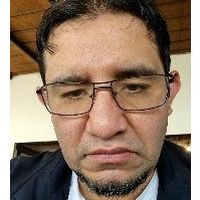
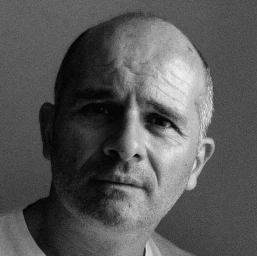
René Mathiasen serves as a Clinical Associate Professor in the Department of Clinical Medicine at the University of Copenhagen, specializing in Paediatrics with clinical affiliation to the Capital Region of Denmark (Region Hovedstaden). His work integrates pediatric oncology, neurology, and ophthalmology through hospital-based research at Blegdamsvej addresses in Copenhagen. His research focuses on critical diagnostic challenges in childhood cancers, particularly brain tumors and acute myeloid leukemia. Key interests include ophthalmological tumor signs, diagnostic intervals, pandemic impacts on referral systems, and neurocognitive outcomes post-tumor resection. He employs nationwide Danish cohort methodologies and cross-linguistic European collaborations to address misdiagnosis patterns and treatment complications. Mathiasen actively contributes to Nordic pediatric oncology initiatives including the CMS study group and Nordic Society of Paediatric Haematology and Oncology. His recent work demonstrates strong translational focus—from melatonin secretion studies to advanced PET imaging techniques—while leveraging Denmark's comprehensive health registries for population-level analysis.
Jorge Isaac Chairez-Oria is an Associate Professor in the Department of Biomedical Engineering at Tecnológico de Monterrey's School of Engineering, Campus Guadalajara. He maintains an active research program bridging biomedical engineering, neural networks, and robotic control systems with significant contributions to rehabilitation technology and sustainable manufacturing. His research focuses on neural network applications for system identification and control , particularly in constrained dynamical systems. His work spans medical rehabilitation robotics (including exoskeletons and orthotic devices), bioprinting and tissue engineering , and sustainable environmental technologies utilizing neural network approaches. Recent publications demonstrate strong interdisciplinary work connecting engineering principles with biological and medical applications. Analysis of his 2024-2025 publications reveals consistent focus on barrier Lyapunov functions, constrained state systems, and neural network identification methods applied across diverse domains from wastewater treatment to surgical robotics. His work shows particular strength in translating theoretical control concepts into practical biomedical applications. Scientific Recognition: Mexican Researcher Certification - Level 2 Dr. Chairez-Oria teaches courses in Biofluid Mechanics, Clinical Engineering, and Bioinstrumentation Systems design, integrating his research expertise into the classroom. His work aligns with multiple UN Sustainable Development Goals including Good Health and Well-being, Industry Innovation, and Clean Water and Sanitation.
Rita Quetziquel Fuentes Aguilar is a Researcher at the National School of Sciences and Engineering of Tecnológico de Monterrey, where she leads the Institute of Advanced Materials for Sustainable Manufacturing. She specializes in biomedical engineering applications, from the design of new medical devices to control implementation. Her work spans multiple disciplines including artificial intelligence, robotics, and biomedical engineering. Dr. Fuentes-Aguilar's educational background includes: Bio-medical engineer from Instituto Politécnico Nacional, Ciudad de México Master of Science from Centro De Investigación Y De Estudios Avanzados Del IPN PhD in Automatic Control from Centro De Investigación Y De Estudios Avanzados Del IPN Her research focuses on mathematical model identification and control of objects deformation, machine learning for prediagnosis, and the development of solutions in the medical area. She has made significant contributions to rehabilitation robotics, medical device design, and AI-assisted biomedical engineering. Her work often bridges theoretical control systems with practical medical applications, resulting in numerous patents and publications. Dr. Fuentes-Aguilar's recent publications demonstrate a clear interdisciplinary trend combining control theory, artificial intelligence, and biomedical applications. Many focus on rehabilitation technologies, medical imaging, and adaptive control systems for medical devices, with increasing emphasis on sustainable manufacturing approaches. Her notable scientific achievements include: Mejor Cartel award from Encuentro de Ingeniería Biomédica (2011) Premio a la Excelencia Académica from Instituto Politécnico Nacional (2007) Mexican Researcher Certification - Level 1 Dr. Fuentes-Aguilar has secured research funding through projects sponsored by the National Council of Science and Technology and is a member of the National System of Researchers. She has one granted patent, seven national patent applications, three PCT applications, and three public copyright registries, reflecting her commitment to translating research into practical applications. She leads the Institute of Advanced Materials for Sustainable Manufacturing and is part of the Strategic Research Group "Enabling technologies for the development of advanced materials" in Guadalajara. Her work contributes to UN Sustainable Development Goals including Good Health and Well-being, Industry Innovation and Infrastructure, and Life on Land.
Albano Aniballi serves as Professor of Artistic Anatomy at the Academy of Fine Arts of Bologna, teaching core courses including Anatomy of the Image (6 CFA, 2nd year) and Drawing for Painting 1 (6 CFA, 1st year). He has held teaching positions across multiple Italian Fine Arts Academies in Palermo, Catania, L'Aquila, Macerata, and Frosinone. His educational foundation includes: "Master of Art" graduation (1984) Maturita d'Arte Applicata in pictorial decoration from A. Apolloni State Art Institute of Fano (1987) Bachelor of Painting from Academy of Fine Arts in Urbino (1991) Restoration certification for modern/contemporary works (1994) Aniballi's pedagogical focus centers on developing independent visual expression through anatomical precision and gestural interpretation. His Anatomy of the Image course cultivates thematic research and artistic quality through student work analysis, while Drawing for Painting 1 emphasizes observational drawing, sign interpretation, and emotional translation into visual language using life models and portfolio development. Professional associations include "Liberi artisti di Fano" (1994-present) and "Regresso Arte" of Urbino (1996-present), reflecting ongoing engagement with Italy's contemporary art community beyond academic duties.