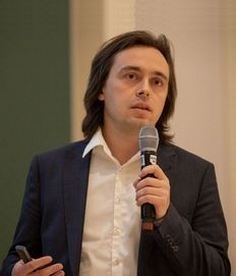
Aleš Jaklič is an Assistant Professor affiliated with the Computer Vision Laboratory . His work spans computer vision, 3D reconstruction, and educational technologies, with a focus on practical applications in archaeology, meteorology, and STEM-C education. Research interests include: 3D modeling from point clouds Superquadric parameter prediction from depth images IoT-based educational tools for computer science Historical artifact digitization Image processing algorithms His publications since 2000 demonstrate expertise in geometric modeling, computer vision, and educational technology. Highlights include work on superquadric recovery (2000, 2003), archaeological modeling (2015), and IoT education frameworks (2020). Recent research (2021) explores neural network approaches to depth image analysis. Active in research programs funded by the Slovenian Research Agency (ARRS) since 2009, including the ongoing P2-0214 - Computer Vision program (2019-2024). He has also contributed to the ŠIPK 5 project on IoT education (2020).
Diar Abdlkarim is a Research Fellow affiliated with the EPSRC AMRE program, specializing in Psychology and Virtual Reality research. His work spans human-computer interaction, sign language processing, and hand-tracking system validation. Key affiliations: EPSRC AMRE Research focus: XR technologies, behavioral methods, and accessibility solutions Notable publications include: 2025 - Text input techniques in extended reality (CHI Conference) 2024 - Meta Quest 2 hand-tracking validation (Behavior Research Methods) 2024 - Sign language processing angle sensitivity (Scientific Reports) Research trends reveal expertise in immersive technology , human motor control , and digital accessibility . While no formal awards are listed, his work has been cited 41 times and covered by 9 news outlets.
Shadi Rezapour is an Assistant Professor in the Department of Information Science at Drexel University's College of Computing & Informatics. She serves as Principal Investigator of the SocialNLP Lab and co-director of the DONUTS Lab at Drexel University, focusing on bridging computational methods with social science theories to analyze human language in social contexts. Dr. Rezapour received her educational training at the University of Illinois at Urbana-Champaign: PhD in Information Sciences, School of Information Sciences MSc in Information Management, School of Information Sciences Her research lies at the intersection of computational social science and natural language processing (NLP), with a focus on developing "socially-aware" NLP models that incorporate cultural and social contexts to better understand human behavior, attitudes, and cultures through language analysis. She investigates how language shapes public opinion and conveys complex social and cultural information, particularly in online communities and social media platforms. Her work addresses important societal issues including substance use disorder narratives, podcast analysis, controversial topics and polarized viewpoints, and the impact of information products on socio-cultural environments. Dr. Rezapour's recent publications demonstrate a strong focus on applying NLP techniques to social good, with particular emphasis on reducing stigma in substance use conversations, analyzing narratives in media coverage, and examining the societal impacts of AI technologies. Her research combines technical innovation with social relevance, often employing network analysis alongside linguistic approaches to gain deeper insights into human communication patterns. Among her professional recognitions: NCWIT/Bloomberg grant to attend the Grace Hopper Celebration (2020) Dr. Rezapour actively contributes to the academic community through service roles including ICWSM 2025 tutorial co-chair, IC2S2 2024 local co-chair, ACM FAccT proceeding co-chair, and CSCW area chair. She has successfully secured research funding for her work on computational social science and NLP applications, mentoring students and early-career researchers in her labs. As leader of the SocialNLP Lab and co-director of the DONUTS Lab, Dr. Rezapour fosters interdisciplinary research that brings together computer science, linguistics, and social sciences to address complex societal challenges through computational approaches.
Dr. Krista Overvliet is an Assistant Professor at the Faculty of Social and Behavioural Sciences, Utrecht University, specializing in Experimental Psychology. Her research focuses on haptic perception, spatial cognition, and human-centered artificial intelligence applications. She actively contributes to tactile information processing studies and interdisciplinary teaching initiatives in Utrecht's AI program. Utrecht University, Faculty of Social and Behavioural Sciences Experimental Psychology Department Research themes: Haptics, Tactile Perception, Spatial Perception, Human-centered AI Overvliet's work explores tactile exploration mechanisms, perceptual grouping strategies, and sensory navigation profiles for visually impaired individuals. Recent studies investigate motor adaptation in signers and pandemic-induced touch deprivation effects. Her research outputs show strong connections to neuroscience, cognitive psychology, and AI ethics. Publications span journals like Journal of Experimental Child Psychology, PLOS ONE, and Nature Scientific Reports, with presentations at EuroHaptics and IMEKO conferences. Key skills include scientific programming (MATLAB, R, Python) and data analysis. She engages in public outreach through media appearances and events like Science Weekend and Betweter Festival.
Hélène Giraudo is a CNRS researcher affiliated with the Cognition, Languages, Language, Ergonomics (CLLE) at University of Toulouse Jean Jaurès. She works in the Languages and Language team, focusing on psycholinguistics and cognitive psychology. Research Interests: Her work bridges cognitive psychology and psycholinguistics, with emphasis on morphological processing, mental lexicon modeling, and language acquisition. Key areas include affix processing, written production in children, and bilingualism. Morphological decomposition in French Phonotactic constraints in L1 acquisition Word perception in expert vs. apprentice readers Article Trends: Recent publications explore morphological salience in French words, cross-linguistic priming effects, and L2 processing mechanisms. She frequently uses experimental methods like letter-search tasks and masked priming. Teaching: She teaches psycholinguistics and linguistics at University of Toulouse Jean Jaurès, integrating her research into courses on cognitive psychology and language sciences.
Corey Blount is a Lecturer in American Sign Language Interpreting at the University of Mississippi's School of Applied Sciences, affiliated with the Department of Communication Sciences & Disorders. His office is located at NE 1403 South Oxford Center. Education: B.A. in Linguistics, University of Mississippi (2012) M.A. in Modern Languages, University of Mississippi (2015) Research Interests: Blount's academic focus spans American Sign Language pedagogy, interpreting methodologies, linguistic analysis, communication disorders, and modern language applications. His background in linguistics informs his interdisciplinary approach to sign language instruction and accessibility. Awards & Recognition: No scientific awards or honors are documented in the source material.
Tuğrul TAŞCI serves as an Assistant Professor in the Department of Information Systems Engineering at Sakarya University's Faculty of Computer and Information Sciences, where he has maintained continuous academic service since 2001. His career progression includes Research Assistant positions across multiple university units before advancing to his current faculty role in 2016. His academic credentials include: Doctorate in Computer and Information Engineering (2014) from Sakarya University Institute of Science, thesis: Real-Time Motion Tracking with Particle Filtering Based on Data Fusing Master's degree in Computer and Information Engineering (2004) with thesis: Design of an Integrated Web-Based Distance Education System Bachelor's degree in Computer Engineering (2001) with thesis: Course Scheduling with Genetic Algorithms Dr. TAŞCI's research centers on Artificial Intelligence applications, particularly Natural Language Processing for Arabic text and Computer Vision . His work integrates particle filtering , data fusion , and optimization algorithms (e.g., Artificial Bee Colony, Firefly) to solve problems in text summarization, motion tracking, and image processing. Recent publications demonstrate expansion into deep learning for industrial defect detection and time series analysis. Analysis of his 2019-2024 publications reveals three dominant research trajectories: (1) Arabic NLP with focus on extractive summarization using PageRank and word embeddings, (2) Computer vision systems for motion tracking and text detection leveraging particle filters and curvature features, and (3) Hybrid optimization techniques applied to diverse domains from emergency management to customer churn prediction. Current academic advising activities and research grant details are not publicly documented in available sources. Similarly, no institutional laboratories or research teams are explicitly associated with his profile in the provided materials.
Liz Hirshorn is a Professor in the Department of Psychology at the State University of New York at New Paltz, where she directs the Diversity in Language Lab (DiLL). Her research employs behavioral and EEG methodologies to investigate individual differences in skilled reading and cognitive interactions, with particular focus on alternative pathways to literacy that challenge conventional reading models. Her research program centers on psycholinguistics and cognitive neuroscience, specifically examining how skilled reading develops through variable cognitive routes. Key projects include comparing English and Chinese reading processes to identify shared cognitive mechanisms between distinct writing systems, and investigating relationships between reading and face processing to understand lifelong neuroplasticity. Her work has significant implications for understanding struggling readers and developing alternative literacy interventions. Dr. Hirshorn actively advises thesis students in psycholinguistics using behavioral or EEG methodologies, with recent projects exploring music-reading skill relationships and attentional differences in video game players. Her lab emphasizes experimental approaches to cognitive psychology with applications to educational contexts. She maintains an active publication record spanning cognitive neuroscience, psycholinguistics, and reading research, with recent work focusing on holistic word processing, bilingual reading, and neuroplasticity in deaf populations. Her research demonstrates consistent methodological rigor through combined behavioral and neuroimaging approaches.
Katrine Egede Zeuthen serves as Associate Professor in Clinical Child Psychology at the University of Copenhagen's Department of Psychology since 2015. Her academic trajectory includes Assistant Professor roles (2009-2012) and postdoctoral research (2007-2009), all centered on child sexual development and trauma. She directs the Center of Sexuality, Language and Gender and maintains clinical authorization through the Danish Psychologist Board. Her research spans child sexual abuse prevention , infantile sexuality theory , and trauma intervention , characterized by deep integration with clinical practice and policy. Notable contributions include the "Play Room" educational toolkit developed with Denmark's Social Agency, now used nationally for boundary education and abuse assessment. Her work consistently bridges psychoanalytic theory with practical applications across social, legal, and medical domains. Publication trends reveal sustained focus on abuse prevention (2022-2024), expanding into gender-based violence education and European student populations. Earlier work (2010-2015) established foundational theories on infantile sexuality, while her 2013 Journal of Child Sexual Abuse article remains influential in prevention frameworks. University Gold Medal for Master Thesis (2002) National Health Foundation Research Award (DKK 250,000, 2002) Major Grant DKK 7,800,000 from The Social Agency (2009-2012) Grant DKK 1,380,000 from The Research Council for Culture and Communication (2007-2009) Zeuthen actively supervises clinical student work and delivers nationwide training for municipalities, hospitals, and police academies. Her grant portfolio demonstrates successful translation of research into practice, particularly the "Play Room" initiative. She contributes to governmental working groups including the Ministry of Justice's Child Sexual Abuse prevention strategy and the National Police's education development. As Director of the Center of Sexuality, Language and Gender, she leads interdisciplinary teams integrating psychoanalytic, developmental, and clinical perspectives. Current projects focus on "Play Room" assessment validation, child sexuality theory development, and sexual behavior problem case studies.
Petros Maragos is a Professor at the National Technical University of Athens (NTUA) in the School of Electrical and Computer Engineering, where he directs the Division of Signals, Control and Robotics. He founded the Computer Vision, Speech Communication & Signal Processing Lab (1999) and the Hellenic Robotics Center of Excellence (2025). His research spans signal processing, computer vision, robotics, and machine learning, with 450+ publications and leadership in 50+ EU/Greek/US projects. Education includes a Dipl.Ing. from NTUA (1980), M.Sc./Ph.D. from Georgia Tech (1982/1985), and faculty positions at Harvard University (1985-1993) and Georgia Tech (1993-1998). Research Focus: Multimodal perception, nonlinear systems, assistive robotics, and deep learning. Recent work integrates tropical geometry with neural networks, robotic healthcare applications, and sign language technologies. Articles emphasize neural architectures, real-world robotics, and AI for social good. Awards: IEEE Fellow (1995), EURASIP Fellow (2010) IEEE W.R.G. Baker Prize (1995) NSF Presidential Young Investigator Award (1987-1992) CVPR/PETRA Best Paper Awards (2022-2025) Advising & Grants: Supervised 30+ PhDs and 130+ Master's students. Secured funding from EU Horizon 2020, NSF, and Greek national programs for projects like i-Walk (robotic mobility) and e-Prevention (mental health monitoring). Labs: Leads NTUA's Intelligent Robotics Lab and co-founded the Robotics Institute at Athena Research Center, focusing on human-robot interaction and perception systems.
Ljubiša Bojić is a Senior Research Fellow at the Digital Society Lab (DigiLab) within the Institute for Philosophy and Social Theory at the University of Belgrade and concurrently at the Institute for Artificial Intelligence of Serbia. He serves as External Faculty at the Complexity Science Hub Vienna, focusing on AI's societal implications, particularly AI alignment, recommender systems, and metaverse ethics. His work bridges communication science, futurology, and digital humanism to address critical challenges in technology governance. Education: Ph.D. in Communication Science, University of Lyon II, France (2014) Research Focus: Bojić investigates how AI systems can uphold human values through ethical design, with emphasis on recommender algorithms as the most powerful social force shaping contemporary society. His pioneering work on digital addictions examines how AI-driven platforms create echo chambers and social polarization. He advocates for declaring recommender systems a public good and digital identity a human right, exploring both the addictive risks and therapeutic potentials of immersive technologies like the metaverse. Publication Trends: His recent output (2022-2025) reveals a strategic evolution from analyzing digital addiction mechanisms toward developing concrete AI governance frameworks. Key themes include linguistic pragmatics in large language models, consciousness metrics in AI, and cross-platform social dynamics. His research increasingly informs global policy through rigorous computational social science methods applied to real-world challenges like vaccine hesitancy and political polarization. Scientific Recognition: Fellow, Institute for Human Sciences Vienna (IWM) (2023) Member, United Nations Environment Programme Foresight Expert Panel (2023) Policy Engagement: Bojić co-developed Serbia's AI ethics standards and advised Spain's AI strategy. His Horizon Europe project TWON generated Policy Handout No. 8, mandating algorithms to deliver emotionally balanced, diverse content. His 'CERN for AI' framework influenced G7 policy briefs and was featured by the World Economic Forum. He regularly testifies before international bodies on AI governance. Institutional Leadership: As founder of EMERGE: Forum on the Future of AI Driven Humanity and initiator of the Belgrade Digital Freedom Pledge (signed by OSCE officials), he drives global conversations on digital rights. At DigiLab, he leads research on social media dynamics using big data analytics, while coordinating international networks like COST Action CA21129 on opinion analysis.
Professor Matviychuk Andriy Viktorovych is a leading academic and practitioner at Vadym Hetman Kyiv National Economic University, where he serves as Professor at the Department of Mathematical Modeling and Statistics. He holds multiple concurrent roles including General Director of the KNEU Science Park and Director of the Institute of Modeling and Information Technologies in Economics. He has 24 years of scientific and pedagogical experience. His research focuses on artificial intelligence, complex system modeling, financial time series forecasting, and economic risk modeling using neuro-fuzzy technologies. His recent publications demonstrate expertise in environmental modeling, human capital analysis, and financial market dynamics. 2024 - Editor-in-Chief of "Neuro-fuzzy modeling technologies in economics" (Scopus-indexed) 2024 - Completed advanced training in Data Science at KNEU 2024 - International scientific and pedagogical internships Scientific awards include: Honorary sign 'For Scientific and Educational Achievements' (2018) Honorary sign 'Outstanding Educator of Ukraine' (2015) President of Ukraine grants for young scientists (2014, 2012) National Academy of Sciences of Ukraine Prize (2006) M.Fedorenko International Scientific Fund grants (2009, 2004) He serves as head of the Specialized Academic Council for doctoral dissertation defenses and participates in multiple editorial boards of Ukrainian academic journals. His language proficiency includes English, and his personal interests span history, philosophy of religion, and skiing.
Adnan Akhunzada is a prolific researcher with extensive contributions to computer science, particularly in artificial intelligence, cybersecurity, and internet of things. His work spans deep learning architectures, software defined networks, and security frameworks for emerging technologies. Research Interests include: Deep learning for micro-expression and image analysis Quantum control systems with reinforcement learning AI-based phishing and malware detection Federated learning for drone services Cryptographic protocols for UAV communications Publication Trends show expertise in: Hybrid neural network architectures Cybersecurity for industrial IoT Privacy-preserving crowdsourcing Sign language recognition datasets 5G-assisted cognitive communication
Professor Leena Raappana-Luiro is a distinguished faculty member at the University of Lapland's Faculty of Arts, specializing in Graphic Design. With a career spanning nearly a decade of documented research output (2016-2025), she has established herself as a significant contributor to visual arts and design scholarship. Her research interests focus on visual semiotics, multimodal design, artistic creation, and the relationship between practical and artistic images . Professor Raappana-Luiro examines how historical illustration styles filter into contemporary contexts, with nature serving as a central theme and source of inspiration in both her life and artistic work. Her publication record shows consistent scholarly output, with research activities intensifying in recent years. Key publications include her 2021 doctoral thesis on visual style in fictional images within multimodality frameworks, her 2023 scanography work 'The Ark,' and her research on Finland's 2018 Valentine's Day postage stamps design process. Professor Raappana-Luiro has received recognition for her work, most notably winning the 2016 Postage Stamp Design Competition. She currently leads the 'Lapland Brand 2.0' project (2024-2026), funded by the European Regional Development Fund, which addresses regional challenges through brand development. As an educator and researcher, Professor Raappana-Luiro works within the Graphics Studio environment at the University of Lapland, where she guides students through the intersection of theoretical frameworks and practical artistic creation. Her work demonstrates how visual communication principles can be applied to solve real-world design challenges while maintaining artistic integrity.
Jonathan Culler is a distinguished Professor of English in the College of Arts and Sciences at Cornell University, where he has been a leading figure in literary theory for several decades. Previously affiliated with Oxford University, Culler has established himself as one of the most influential literary theorists of the contemporary era, with significant contributions spanning structuralism, post-structuralism, and reader-response criticism. Culler's research primarily focuses on the intricate relationship between language, literature, and meaning, with particular emphasis on how interpretation functions in literary understanding. His work challenges conventional assumptions about literary texts, especially regarding the nature of the lyric and poetic address. Rather than viewing lyric poetry as the expression of an individual speaker's emotions, Culler's Theory of the Lyric (2015) reconceptualizes lyric as a genre constituted by conventional features and readerly practices. Analysis of Culler's recent publications reveals a sustained engagement with fundamental questions about literary theory's purpose and methodology. His work demonstrates consistent evolution from structuralist foundations through post-structuralist developments toward more recent investigations of lyric theory and the institutional frameworks of literary studies. The recurring themes across his scholarship include the nature of literary interpretation, the conventions that constitute literary genres, and the relationship between theoretical frameworks and literary practice. Notable Recognition: Recipient of the James Russell Lowell Prize for Structuralist Poetics Widely regarded as one of the most influential literary theorists of his generation Extensive international recognition through translations of his work Culler's approach to literary scholarship emphasizes the importance of theoretical frameworks while maintaining close attention to textual specifics. His work consistently bridges theoretical sophistication with practical reading strategies, demonstrating how theoretical insights can enhance rather than obscure our engagement with literary texts. He has been particularly influential in shifting scholarly attention from authorial intention to readerly practices and conventional recognition in literary interpretation. His current research continues to explore the theoretical foundations of literary studies, with recent work examining the nature of critical theory in contemporary academic contexts as seen in his 2022 publication La teoría crítica hoy . Culler remains actively engaged in scholarly discourse, as evidenced by his 2025 contribution to the volume Valéry au Collège de France titled 'Poetry between production and consumption.'