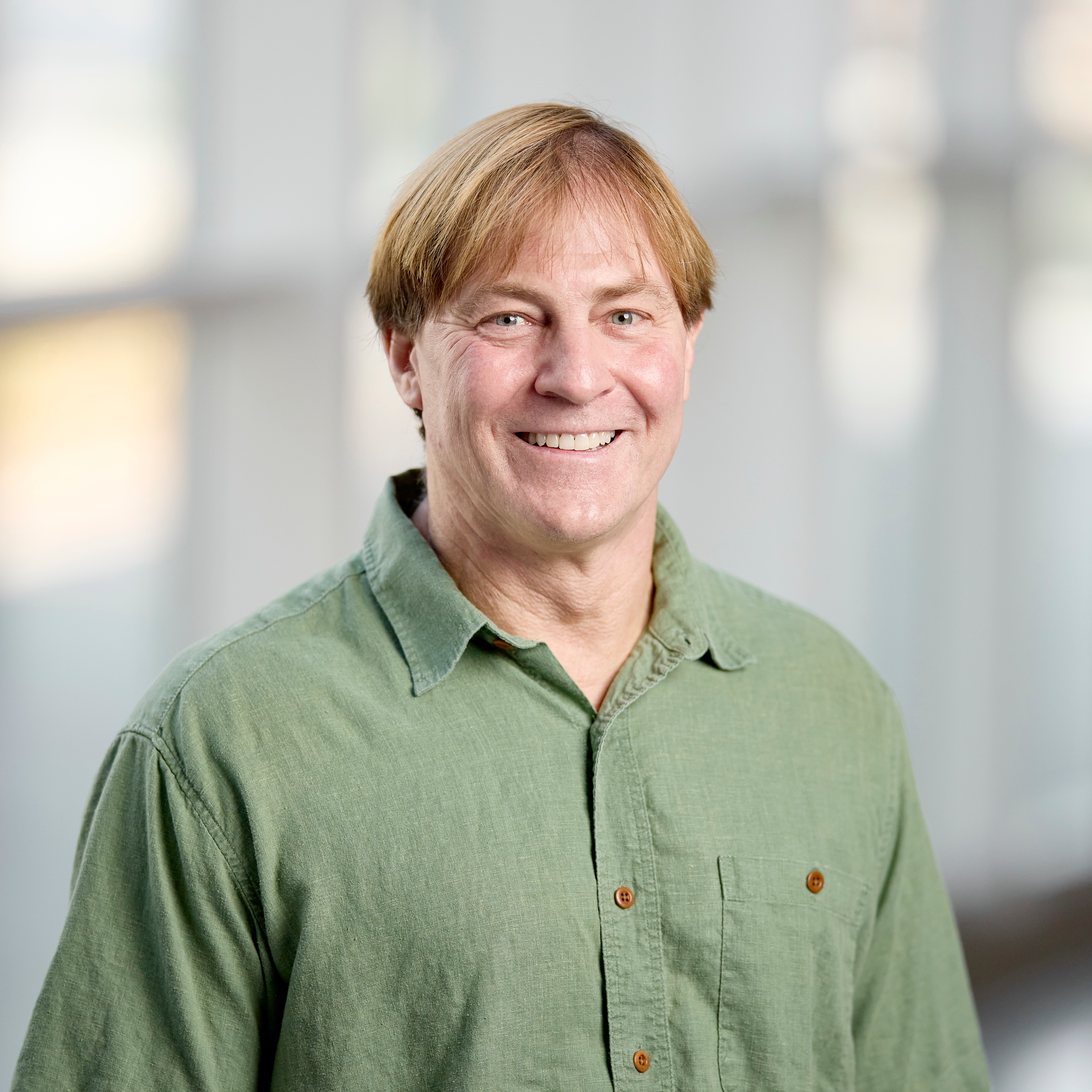
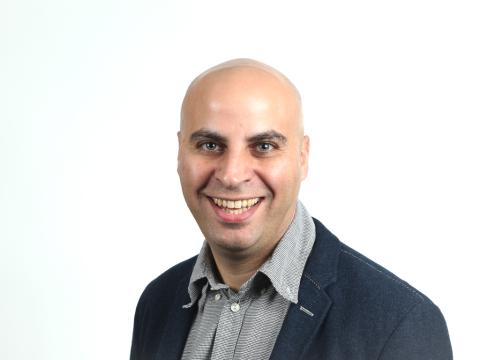
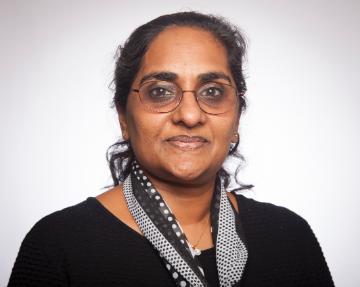
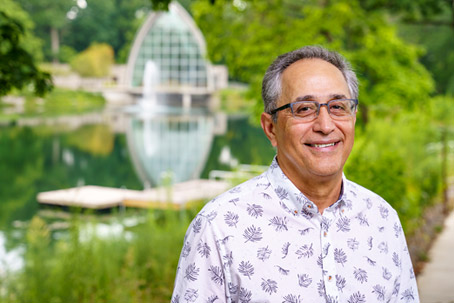
Peter Stubberud serves as a Professor and Chair in the Department of Electrical and Computer Engineering at the University of Nevada, Las Vegas. His research focuses on digital signal processing, adaptive signal processing, direct conversion receivers, mixed-signal electronics, data converters, and delta-sigma modulators. He contributes to advancements in communication systems and radar technology through his work on signal processing architectures and embedded systems.
Timothy Constandinou is a Professor of Bioelectronics at Imperial College London and Director of the Next Generation Neural Interfaces (NGNI) Lab. He holds roles as Head of the Circuits & Systems Research Group and Group Leader at the UK Dementia Research Institute (UK DRI) Care Research & Technology Centre. His expertise spans microelectronics, neural interfaces, and biomedical devices, with a focus on neurological conditions like Alzheimer’s and Parkinson’s. Education: BEng and PhD in Electronic Engineering from Imperial College London (2001, 2005). Research Interests: Implantable neural interfaces, radar-based health monitoring, and bioelectronic interventions. His lab develops unobtrusive technologies such as in-ear hearables and UWB radar for dementia care. Key Projects: ENGINI: Next-gen implantable neural interfaces Tiresias: Low-cost radar systems for patient monitoring Mint Neurotechnologies Ltd: Spinout for translating neural interface research Lab Collaborations: Works with Imperial's EPSRC, NIHR, and Innovate UK. Current initiatives include circadian-locked DBS for Parkinson’s and radar-based sleep monitoring.
Amine Bermak is a Professor at the Department of Electrical and Electronic Engineering, Hong Kong University of Science and Technology. His research focuses on biomedical circuits, machine learning applications, and hardware security. Key contributions in CMOS sensors for bioluminescence and bacterial monitoring Pioneering work in IoT security and physical unclonable functions (PUFs) Developed edge computing frameworks for healthcare and industrial applications Significant publications in IEEE Transactions on Biomedical Circuits and Systems His recent articles highlight advancements in deepfake detection, energy-efficient ADCs, and wearable strain sensors. Collaborations span institutions in Hong Kong, Qatar, and Japan.
Visvesh S. Sathe is an Associate Professor in the School of Electrical and Computer Engineering at Georgia Institute of Technology. Previously, he served as Associate Professor at the University of Washington (2013-2022) and held roles at AMD (2007-2013), where he contributed to energy-efficient microprocessor design. His research focuses on energy-efficient computing, implantable electronics, and closed-loop neural interfaces. He leads the Processing Systems Lab (PSyLab), exploring computational techniques for hardware optimization in digital and mixed-signal systems. Education: B.Tech from IIT Bombay; M.S. and Ph.D. from the University of Michigan, Ann Arbor. Research Interests: Energy-efficient IC design, power management architectures, bi-directional neural interfaces, adaptive baseband processing, and SoC optimization. His work emphasizes run-time control of clocking, voltage regulation, and thermal management. Key Awards: NSF CAREER Award (2019), Intel Outstanding Researcher Award (2021), and IEEE Distinguished Lecturer (2021-2022). Notable contributions include the first resonant-clocked production processor and adaptive clocking for supply droop mitigation. Advisees/Grants: While specific grant details aren't provided, his lab’s work is funded by NSF and industry partnerships. His research spans from circuit-level innovations to system-level integration, with applications in biomedical and high-performance computing. Labs/Teams: PSyLab at Georgia Tech drives interdisciplinary projects in energy-efficient systems and neural interfaces, collaborating with industry and academic partners globally.
Prof John Leis is a Professor of Electrical Engineering at the University of Southern Queensland (USQ), affiliated with the School of Engineering. He holds qualifications including a BEng (1987), MEngSc (1990), and PhD (1999) from DDIAE and Queensland University of Technology (QUT). His research focuses on signal processing, biomedical engineering, aerospace systems, and sensor technologies. Key areas include gas detection (e.g., methane, ethylene), biomedical imaging (CT-guided biopsies), and aerospace icing prevention. He has supervised doctoral research on dual-camera infrared guidance systems for medical procedures. Recent work involves noncontact ice accretion detection in turbofan engines and microwave-based liquid water sensing. Prof Leis has authored books on MATLAB-based signal processing and contributed to over 70 peer-reviewed publications since 2002. His collaborations span aerospace, biomedical, and environmental domains. Education: BEng in Electrical Engineering (DDIAE, 1987) MEngSc (QUT, 1990) PhD in Engineering (QUT, 1999) Research interests emphasize practical applications of signal processing in engineering systems, including: Photonics and laser-based sensing Embedded system optimization Medical device development Aircraft safety technologies Notable innovations include lock-in amplifier algorithms, photoacoustic gas detectors, and 3D biopsy guidance systems. Publications span aerospace, biomedical, and electrical engineering journals (e.g., IEEE Transactions, Journal of Spacecraft and Rockets). His work often addresses real-time measurement challenges in industrial and medical contexts. Collaborations with colleagues like Dr. Buttsworth and Dr. Saleh have produced advanced sensor solutions for aviation and environmental monitoring. Current projects likely continue in icing prevention, biomedical imaging, and signal processing algorithm development.
Associate Professor Torsten Lehmann is a faculty member in the School of Electrical Engineering and Telecommunications at the University of New South Wales (UNSW). He holds the position of Associate Professor in Microelectronics and maintains an active research program focused on advanced circuit design for biomedical applications and cryogenic systems. His work spans multiple disciplines at the intersection of electronics engineering, biomedical technology, and quantum computing interfaces. Dr. Lehmann's research interests encompass several cutting-edge areas of microelectronics: Solid-state circuits and systems CMOS circuits at cryogenic temperature Ultra low-power CMOS design Bio-medical microelectronics Cochlear implants and vision prostheses High-performance analogue circuits in deep sub-micron CMOS His recent publication record demonstrates a strong focus on neural interfaces and optrode technology, with significant contributions to the development of optical neural stimulation and recording systems. Over the past five years, his research has increasingly concentrated on optrode arrays, biopotential sensing, and charge-balanced stimulation techniques for neural applications. His work bridges the gap between traditional electronic circuit design and emerging biomedical applications, particularly in vision and hearing prostheses. A consistent theme throughout his publications is the development of specialized circuits for challenging environments, whether ultra-low temperatures for quantum computing or implantable medical devices requiring extreme power efficiency. Dr. Lehmann has made significant contributions to the field of microelectronics for biomedical applications, particularly in the development of circuits for vision prostheses and neural stimulation systems. His work on cryogenic circuits for quantum computing interfaces represents an important bridge between traditional electronics engineering and emerging quantum technologies. His research group appears to be actively involved in several collaborative projects related to neural engineering and biomedical implants, working with colleagues across UNSW and with clinical partners. The lab likely focuses on the design and testing of specialized integrated circuits for challenging applications where conventional electronics face significant limitations.
Dr. Peter Mather is a Senior Lecturer in the Department of Engineering at the School of Computing and Engineering, University of Huddersfield. He leads the Complex Pathway program and is affiliated with the Centre for Efficiency and Performance Engineering and the Secure Societies Institute. His research spans analogue/digital electronics, sensor networks, and sustainable technology. PhD in 'Performance optimisation of VLSI circuits' (University of Huddersfield, 1995) MEng/BEng Electronics Course Leader since 2003 Research focuses on non-linear ADC development , partial discharge sensor networks , weapon detection , renewable energy systems , and optical coding via FPGA . His work contributes to UN SDGs for sustainable energy and security technologies. Recent publications analyze WLAN architectures, chaotic ADCs, and radiometric localization techniques. Scientific contributions include: 15+ publications in 2021 (3) and 2020 (2) with Scopus citations Expertise in wireless sensor networks, pulse position modulation, and visible light communication KTP award for radiation detection innovation (2018) He supervises PhD students in signal measurement and FPGA-based optical coding schemes, leveraging expertise in VHDL implementation and Sigma-Delta ADCs.
Shoba Krishnan is a Professor in the Department of Electrical and Computer Engineering at Santa Clara University's School of Engineering. Her work spans analog and mixed-signal integrated circuit design, carbon nanotube interconnect modeling, and engineering education initiatives. Education: B. Tech., Jawaharlal Nehru Technological University (1987) M.S., Michigan State University (1990) Ph.D., Michigan State University (1993) Her research focuses on high-speed data communication ICs, particularly clock/data I/O circuits, and explores carbon nanotubes as interconnect materials. She's expanding into bio-engineering instrumentation and renewable energy power electronics. Publications highlight work on low-power high-speed drivers, carbon nanotube via resistance analysis, microwave frequency modeling, and BIST structures for transceivers. She advises IEEE and Engineers Without Borders chapters at SCU.
Ståle Andreas Skogstad is a Research Fellow at the University of Oslo , affiliated with the Department of Informatics under the Faculty of Mathematics and Natural Sciences . His research focuses on real-time digital filter design , motion capture technologies , and human-computer interaction in musical contexts.
Prof. Dr. Ertugrul Sönmez serves as Professor in the Faculty of Engineering at Reutlingen University, leading the Semiconductor Circuit Technology Lab. His research focuses on power electronics innovation through semiconductor circuit design, analog systems, and advanced converter topologies. Contact details include email ertugrul.soenmez@reutlingen-university.de and office location in Building 4, Room 213. His work centers on power conversion systems with emphasis on GaN-based technologies , wireless power transfer , and active damping techniques . Key interests include delta-sigma modulation for multilevel converters, dV/dt filter design for motor drives, and high-frequency operation using wide-bandgap semiconductors. Research addresses critical industry challenges in electric vehicle charging, renewable energy integration, and industrial motor control systems. Recent publications (2022-2024) reveal strong focus on modular converter architectures and stability enhancement techniques. His work bridges theoretical control concepts with practical implementation, frequently appearing in top industry conferences like PCIM Europe. Collaborative projects with colleagues such as Gernot Schullerus demonstrate cross-disciplinary approaches to power electronics challenges. Through the Semiconductor Circuit Technology Lab, Prof. Sönmez provides hands-on research opportunities in semiconductor characterization and circuit synthesis. The lab supports student projects including bachelor's/master's theses and industry-collaborative initiatives like ArduSmartPilot. His consistent publication output indicates active supervision of graduate research in power electronics design and implementation.
Dr. Azad Siahmakoun is Professor of Physics and Optical Engineering at Rose-Hulman Institute of Technology, serving as Founding Director of Micro-Nanoscale Devices & Systems Facilities, Associate Dean of Faculty, and Director of Graduate Studies. His $6.4 million in research funding from federal/state agencies and industry supports state-of-the-art facilities including the MiNDS Cleanroom and RF Photonics Laboratory. Educational Background: PhD in Physics, University of Arkansas (1987) MS in Physics, Texas A&I University (1981) BS in Physics, Joundi Shapoor University (1978) His research integrates photonics, MEMS, and nanotechnology with emphasis on silicon photonics, optical data conversion, and beamforming systems. Work spans plasmonic nanostructures, photorefractive materials, and chaotic systems, advancing both fundamental science and practical applications in optical engineering and signal processing. Publication analysis reveals sustained focus on photonic data converters (2015-2009), with earlier work on optical beamforming (2005-2003) and nanophotonic materials (2008-2002). The corpus demonstrates consistent innovation in microwave photonics, optical signal processing, and MEMS fabrication across four decades. Key recognitions include: Board of Trustees Outstanding Scholar Award (1999) SPIE Fellow (2009) ONR Senior Fellow (2007) OSA Senior Member Dr. Siahmakoun has mentored over 100 undergraduate researchers and dozens of master's students. His $6.4 million in grants enabled establishment of critical research infrastructure at Rose-Hulman, supporting both educational and industrial collaboration initiatives. He directs three core facilities: Micro-Nano Device and Systems (MiNDS) lab for nanofabrication, Nonlinear Optics lab for fundamental photonics research, and Center for Applied Optics Studies for industry-relevant optical engineering development.