Sabine Waschull is an Assistant Professor of Operations Management at the Faculty of Economics and Business, University of Groningen. She holds a MSc and PhD in Operations Management from the same institution. Her research focuses on human-centric design in Industry 4.0/5.0 contexts, including AI integration, digitalization, and work system evaluation. She is a member of the IFIP WG 5.7 working group on Production Management Systems. Her teaching includes courses such as Smart Industry Operations, Technology-Enabled Innovation, and Operations Strategy & Technology across bachelor and master programs. Her work emphasizes human-AI synergies and co-creation methodologies in manufacturing systems. Recent research trends highlight AI-driven enterprise interoperability, socio-technical evaluation of manufacturing systems, and human-centric design of augmented reality tools. Collaborations with co-authors like Christos Emmanouilidis and Joost Bokhorst explore AI ethics, digital twin integration, and assembly process optimization.
Angelo Corallo is an Associate Professor at the Department of Experimental Medicine, University of Salento, specializing in technologies and methodologies for collaborative processes in industrial systems. His research spans Digital Business Ecosystems , Cybersecurity , and Collaborative Product Design , focusing on the interplay between technology and organizational dynamics. He leads interdisciplinary research divisions in Open Networked Business Management , Learning and Innovation , and Collaborative Product Design . Research Interests : Corallo's work integrates Information and Communication Technologies (ICT) with Business Management, particularly in Digital Twins for healthcare and manufacturing Knowledge Modeling and Ontology Engineering Industry 4.0 and Smart Manufacturing Agri-Food Sustainability through digitalization Scientific Contributions : His recent articles explore trends in Cybersecurity for Industrial IoT Metaverse Applications in business models Traceability Systems in food supply chains Collagen-Based Biomaterials from aquaponics
Diana Rosemary Sharpe is a Senior Lecturer in International Business at the Department of Management, Sheffield Business School (University of Sheffield). Her career spans over two decades in comparative and international management, with a focus on multinational organizations and management practices across Asia, America, and Europe. She holds a PhD in International Comparative Management from the University of Manchester (1998) and has taught and conducted research in the UK, Greece, and the USA. Her research emphasizes critical realist ethnography, exploring themes like managerial practice transfer, workplace democracy, and postcolonial dynamics within multinationals. Key areas include cross-cultural management systems, resistance mechanisms in global organizations, and the sociological imagination in international business research. Sharpe has published widely in journals such as Journal of International Management and Journal of Management Studies , with recent work focusing on reflexivity in qualitative research and global management challenges. She has also supervised doctoral research on topics like knowledge management in SMEs and co-opetition in entrepreneurial ecosystems. Awards: Affiliated Fellow at Center for Women and Work (2005) Key Themes: Globalization, organizational control, cross-cultural management, and critical ethnography Her advisory work and grants include projects on global management practices, institutional voids, and transnational entrepreneurship. Sharpe collaborates with international institutions and is actively engaged in shaping research methodologies for understanding complex global business environments.
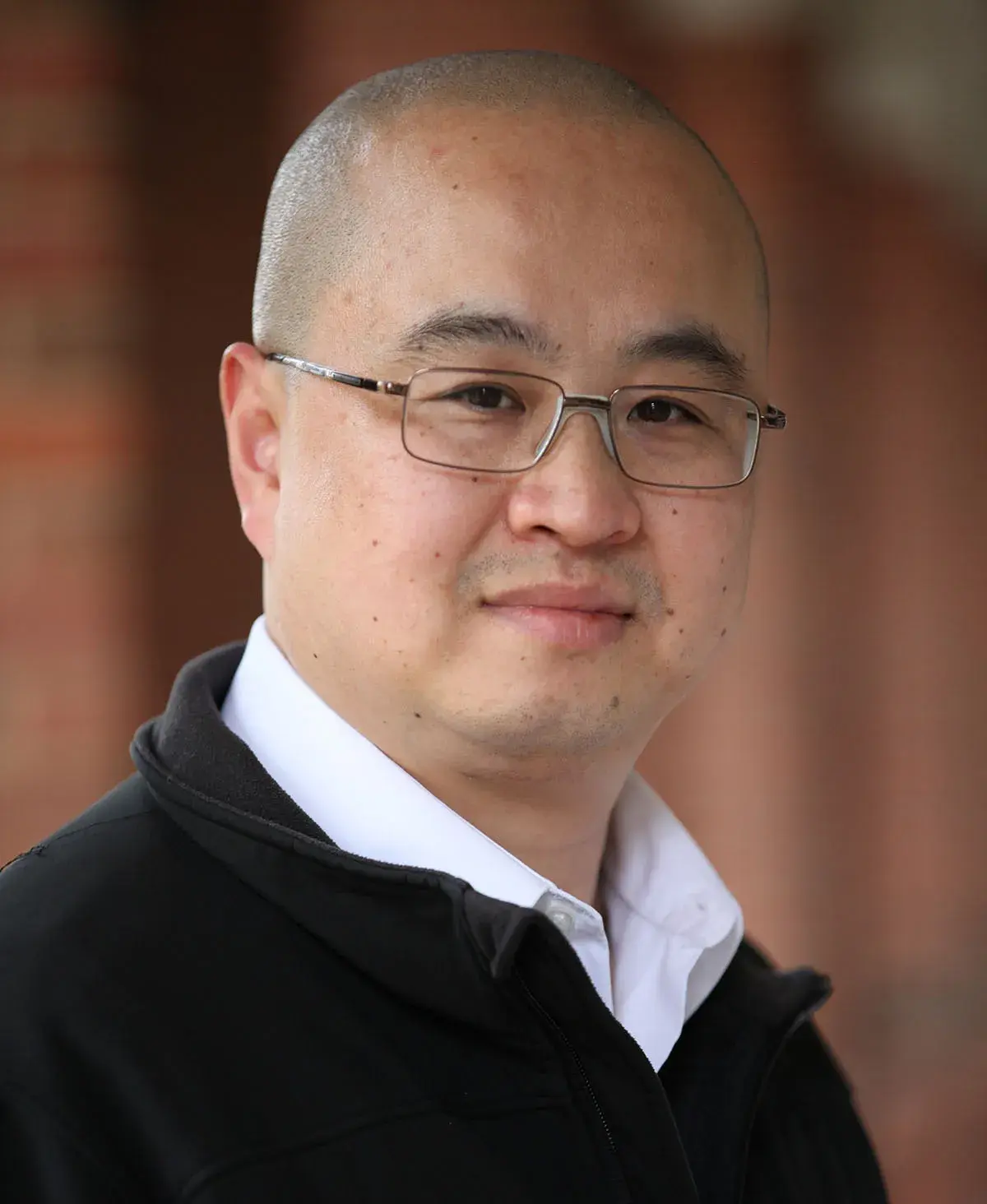
Wei Mike Li is an Assistant Professor in the Department of Mechanical Engineering at the University of Kentucky. His research focuses on Production Scheduling , Adaptive Production Control , and Operating Room Scheduling , applying optimization techniques to dynamic environments in manufacturing and healthcare systems. Education B.Eng. in Mechanical Engineering from Tsinghua University (1997) M.Sc. in Manufacturing Systems from the University of Calgary (2006) Ph.D. in Industrial Engineering from the University of Calgary (2011) Postdoctoral Fellowship in Information Systems at the Haskayne School of Business, University of Calgary (2013) Research Trends Dr. Li's work emphasizes heuristic algorithms for one-of-a-kind production , mass customization , and hybrid flow shops . His operating room scheduling research bridges industrial engineering with healthcare operations, while his e-business integration studies highlight interdisciplinary applications. Publications consistently address dynamic scheduling challenges and process optimization . Publications Key themes: State-space heuristics, adaptive scheduling, optimization in manufacturing and healthcare. Contributions to INFORMS, ISERC, CIE, NAMRC conferences and journals.
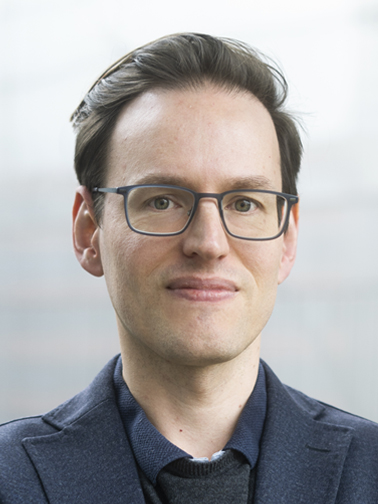
Dr. Martin J. Land is an Associate Professor at the Faculty of Economics and Business , University of Groningen , specializing in Operations Management . He has held academic roles since 1992, including Programme Director for multiple Master’s programs and leadership in large-scale research projects like the €500k European-funded initiative. Doctoraal (MSc) in Econometrics and Operations Research (1992) PhD in Management Sciences (2004) His research spans Production Management , Workload Control , Smart Manufacturing , and Sustainable Energy Supply . Recent work includes optimizing hydrogen storage for offshore wind parks and developing control frameworks for high-variety manufacturing. Publications focus on improving throughput times, dispatching rules, and lean methodologies in production environments. He teaches key courses like Logistics & Supply Chain Operations and Sustainable Energy Supply , engaging over 600 students annually. Current projects involve the Prestatieverbetering Noordelijke Maakindustrie initiative, providing practical tools to small manufacturers in Northern Netherlands. Collaborations include Newcastle University Business School and Dutch consultancies like Langhout & Cazemier.
M. Ural Uluer serves as an Assistant Professor at Middle East Technical University (METU) in Ankara, Turkey, with his academic base in the university's engineering programs. He maintains an active office in room A-209 and can be reached at uluer@metu.edu.tr. Dr. Uluer's entire academic formation occurred at METU: Bachelor of Science (B.Sc.) - 2003 Master of Science (M.Sc.) - 2007 Doctor of Philosophy (Ph.D.) - 2024 His research program targets critical sustainability challenges in industrial manufacturing through: Real-time energy monitoring of CNC machine tools Theoretical modeling of process energy consumption Carbon footprint assessment for production systems Life cycle analysis methodologies Decision frameworks for eco-efficient manufacturing This work consistently bridges theoretical innovation with industrial applications, particularly in Turkish manufacturing sectors. Analysis of his publication timeline (2007-2016) reveals an evolving research trajectory from virtual factory systems for SMEs toward sophisticated energy prediction models using STEP standards. His most impactful contributions focus on quantifiable energy reduction in manufacturing process chains, exemplified by the 2016 E-MPC framework applied in household appliance production. The research demonstrates strong methodological continuity in applying computational modeling to sustainable manufacturing challenges. No major scientific awards are documented in publicly available sources at this stage of his career. As a newly appointed Assistant Professor following his 2024 Ph.D., Dr. Uluer is establishing his academic mentorship profile. Current public records contain no listings of graduate students or externally funded research grants.
Oscar Danielsson is a researcher at the University of Skövde's School of Engineering Science, specializing in Augmented Reality Smart Glasses (ARSG) applications for industrial assembly operators. His work bridges manufacturing engineering and human-computer interaction, focusing on practical implementation frameworks for Industry 4.0 environments. He completed his doctoral dissertation in 2022 titled 'Augmented reality smart glasses as assembly operator support: A framework for enabling industrial integration' and previously earned his Licentiate degree in 2020 from the same institution. Danielsson's educational background includes doctoral and licentiate studies at University of Skövde, with his research focusing on the integration of AR technology into industrial manufacturing environments. His academic journey demonstrates a clear progression from initial exploration of AR applications to developing comprehensive frameworks for industrial implementation. His research interests center on Augmented Reality applications in industrial settings, particularly focusing on how AR Smart Glasses can support assembly operators in manufacturing environments. He investigates both the operator perspective (usability, acceptance, cognitive load) and the manufacturing engineering perspective (integration frameworks, cost-benefit analysis, implementation strategies). His work addresses critical challenges including digital instruction systems, weight distribution of AR devices, field of view limitations, and the development of evaluation frameworks to determine when ARSG implementation is justified. Danielsson's research contributes significantly to understanding how AR technology can be practically integrated into existing production systems to enhance efficiency while considering human factors. Analysis of Danielsson's publication trends reveals a clear evolution from foundational literature reviews and meta-analyses toward practical implementation frameworks and evaluation tools. His early work established the theoretical basis and identified key challenges, while his more recent publications focus on actionable frameworks that production engineers can use to evaluate and implement ARSG solutions. The research spans multiple dimensions including technological maturity assessment, operator acceptance studies, hardware evaluation, and development of decision support tools for industrial implementation. Danielsson has collaborated extensively with industry partners, particularly evident in his case studies and evaluation frameworks developed with input from manufacturing companies. His research methodology combines qualitative approaches like focus groups and interviews with operators alongside quantitative analysis of implementation scenarios. His work is conducted primarily through the Production and Automation Engineering research environment at University of Skövde, often in collaboration with the Virtual Systems Research Centre (which closed in 2017) and the Virtual Engineering Research Environment. These research groups focus on digital manufacturing solutions and human-centered production systems, providing the ideal context for his ARSG research.
Dr. Markus Tatzgern serves as Professor for Mixed Reality and Game Development and Head of Research at the Department for Creative Technologies, Salzburg University of Applied Sciences. He leads the Digital Realities Lab, a multi-disciplinary research group focused on human-centered solutions at the intersection of software, design, and creative engineering for technology interaction. His academic foundation includes a Master of Science and Doctorate with highest distinction from Graz University of Technology. He furthered his expertise through post-doctoral research at the Christian Doppler Laboratory for Handheld Augmented Reality, recognized as a world-leading facility in mobile AR. Tatzgern's research spans Augmented Reality, Virtual Reality, Mixed Reality, and Human-Computer Interaction with emphasis on practical applications. His work addresses critical challenges in view management, haptic feedback systems, industrial procedure visualization, medical imaging interfaces, and game development. Key contributions include novel techniques for eye-perspective rendering, breathing-based VR interaction, and latency compensation in medical robotics. His publication trajectory reveals evolving focus from foundational AR visualization (2010-2016) toward applied XR solutions in healthcare, industrial training, and user experience optimization (2017-2024). Recent work demonstrates increasing integration of physiological inputs, real-world safety applications, and enterprise-grade XR prototyping. Scientific recognition includes: Honorable Mention for Best Paper at CHI 2022 for 'AirRes Mask' breathing interface Honorable Mention for Best Paper at IEEE 3DUI 2017 for adaptive rendering techniques As Head of Research, Tatzgern actively shapes the field through program committee roles and peer review for top venues including ACM CHI and IEEE VR. His four patents in AR visualization demonstrate translational impact from academic research to practical applications. The Digital Realities Lab operates as an innovation hub where software engineers, designers, and creative technologists collaborate on next-generation interaction paradigms. Current projects emphasize medical XR applications, industrial training systems, and accessibility-focused AR solutions for vulnerable populations.
Omid Maghazei is a Lecturer (Assistant Professor) at the University of Bath's School of Management, with affiliations to the Centre for Future of Work, The Foundry: Centre for Digital, Manufacturing & Design, Smart Warehousing and Logistics Systems, and Information, Decisions & Operations. He holds a Doctor of Science in Management, Technology, and Economics from ETH Zürich (2016–2021). His research focuses on digital transformation, emerging technologies in manufacturing (e.g., drones, mixed reality), Industry 4.0, and servitization. He explores topics like technology piloting frameworks, human-technology cooperation, and supply chain innovation through case studies in sectors like healthcare and construction. His work contributes to UN Sustainable Development Goals related to industry, innovation, and infrastructure. He is actively advising doctoral students and contributes to academic communities via conference proceedings and peer-reviewed journals. Education: PhD in Management, Technology & Economics (ETH Zürich, 2021) Affiliations: Centre for Future of Work, The Foundry, Smart Warehousing Systems Research interests prioritize practical applications of cutting-edge technologies in manufacturing processes, emphasizing digital transformation strategies, human-centric factory design, and agile development methodologies. His work bridges theory and practice through collaborative projects with industry partners like IKEA and piping system manufacturers. Publications highlight themes like drone adoption in warehouses, mixed reality applications on shop floors, and frameworks for human-technology collaboration. He advocates for innovative pilot testing approaches to ensure scalable technology integration. Advising and grants: Accepting doctoral candidates focusing on emerging technologies and manufacturing systems. No specific grants listed but engaged in cross-disciplinary research initiatives. Labs/Teams: Part of interdisciplinary teams at The Foundry and Smart Warehousing, collaborating on digital manufacturing and logistics innovations.
Dr. Sepehr Alizadehsalehi is an adjunct lecturer and researcher at Northwestern University's Robert R. McCormick School of Engineering and Applied Science, where he teaches in the Master of Project Management program. Concurrently, he works as an industry professional in land development and real estate in California's Bay Area. His global experience spans major construction projects across the Middle East, Europe, and North America. His educational background includes: Ph.D. in Civil Engineering with a specialization in Construction Management M.S. in Project Management M.S. in Civil Engineering B.S. in Civil Engineering Dr. Alizadehsalehi's research centers on transformative construction technologies including Building Information Modeling (BIM), Extended Reality (XR), Artificial Intelligence (AI), the Metaverse, Cognitive Digital Twins, Reality Capture Technologies, and Lean Construction methodologies. His investigations focus on practical implementation challenges and innovative applications in industrial workflows. His scholarly contributions demonstrate consistent focus on digital transformation in construction, with recent works exploring the integration of AI with extended reality, metaverse applications in AEC, and cognitive digital twins. The publications reveal strong emphasis on practical implementation challenges, sustainability considerations, and human-centric approaches to technological adoption. Dr. Alizadehsalehi actively contributes to academic discourse as an editor and reviewer for leading journals including Automation in Construction (Elsevier), ASCE Journal of Construction Engineering and Management , and Advanced Engineering Informatics .
Prof. Dr. Henner Gärtner is a full Professor for Industrial Logistics in the Department of Mechanical Engineering and Production at Hamburg University of Applied Sciences (HAW Hamburg). He is also Program Coordinator of the cooperative Mechanical Engineering program with the University of Shanghai for Science and Technology, Chairman of the Study Reform Committee, and deputy member of the Department Council. Education & Academic Focus Doctorate (Dissertation on stock-out cost quantification, PZH-Verlag, 2011) Research stays and teaching activities in Germany and China Research Interests Prof. Gärtner’s work spans decentralized production control , Industry 4.0 testbeds , autonomous transport systems (AGVs) , and real-time ergonomic monitoring . A flagship project is the Shared Guide Dog 4.0 , an AI-equipped autonomous rollator that supports blind and visually impaired pedestrians through advanced navigation and puddle-detection algorithms. Scientific Awards Hamburger Lehrpreis 2022 – Excellence in Teaching Projects & Funding SafeWalker – safe navigation assistance for elderly pedestrians Shared Guide Dog 4.0 – AI-driven mobility aid (with DAAD & BMAS support) GehwegNavi – sidewalk navigation for the visually impaired Decentralized Manufacturing Control testbed – “swimming-pool” model for resource negotiation Collaborative projects with Lufthansa Technik Logistik Services, VTG AG, DESY, and Krüss GmbH Teaching & Supervision He teaches bachelor and master modules such as Industrial Logistics , Production Planning & Control , Operations Management , and Project Management & Communication . Prof. Gärtner has supervised more than 30 bachelor and master theses on topics ranging from decentralized AGV control to AI-based computer-vision apps for barrier-free mobility. Labs & Teams Prof. Gärtner leads activities within the Institute for Product and Production Management (IPP) at HAW Hamburg and coordinates interdisciplinary student teams working on robotics, lean production, and service engineering.
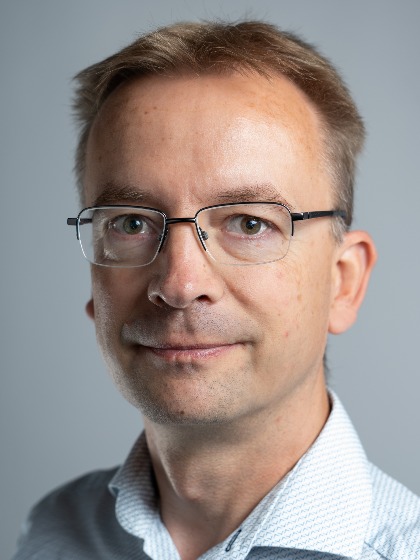
Dr. Jos Bokhorst is an Assistant Professor in the Department of Operations at the University of Groningen's Faculty of Economics and Business. He holds a PhD from the same institution (2005) and specializes in Operations Management, Production Planning, Lean Manufacturing, and Smart Manufacturing. Education: PhD in Operations Management, University of Groningen, 2005 Research Interests: Optimization of production systems, including shop floor control and dispatching rules Integration of lean and smart manufacturing principles Impact of digitalization on work design and human-machine collaboration Workforce agility and cross-training strategies Recent Research Trends: His work focuses on bridging traditional manufacturing practices with Industry 4.0 innovations, particularly through digital twin applications and AI integration. Recent studies address high-variety production challenges, personalized work instructions, and the transformation of blue/white-collar roles in digital environments. Advising & Grants: Supervises master’s theses in Technology and Operations Management Coordinates courses like Operations Modelling and Simulation Involved in projects like the RAAK project on flexible work instructions and organized digital factory initiatives Labs/Teams: Active in interdisciplinary teams exploring smart manufacturing, digital transformation, and human-centric production systems.
Ricardo del Olmo Martínez is a Professor at the Escuela Politécnica Superior of the University of Burgos. His research focuses on Modeling and Simulation of Complex Systems within the INSISOC Research Group, exploring applications in industrial organization, manufacturing systems, and archaeological contexts. Olmo's work employs multi-agent systems to model industrial processes, market dynamics, and social networks. His research interests include agent-based simulation of manufacturing control systems, evolutionary models of industrial innovation, and combinatorial auction mechanisms for resource allocation. Recent publications investigate networked industry dynamics, water conservation technology diffusion, and archaeological complexity modeling. He has directed several competitive research projects at national and regional levels, resulting in numerous scientific publications addressing organizational engineering, economic modeling, and complex system simulation across multiple domains.
Ville Toivonen is a Doctoral Researcher at Tampere University of Technology's Faculty of Engineering and Natural Sciences , focused on production engineering and engineering education. He holds a Master of Science (Technology) and Bachelor of Science (Technology) in Industrial Management, with research contributions spanning flexible manufacturing systems, digital twins, and SME network collaboration.
Angelika Peer is a Full Professor in the Faculty of Engineering at the Free University of Bozen-Bolzano, Italy, a position she has held since November 2017. Previously, she served as a Full Professor at the Bristol Robotics Laboratory, University of the West of England, UK (2014–2017), and as a senior researcher and lecturer at the Technical University of Munich, Germany, where she was also a TUM-IAS Junior Fellow. Her academic base is firmly within engineering, particularly in intelligent and human-centered systems. Diploma in Electrical Engineering and Information Technology, Technical University of Munich, 2004 Doctor of Engineering, Technical University of Munich, 2008 Her research interests are centered on intelligent systems that bridge humans and machines. Key areas include robotics, control systems, human-robot interaction (HRI), emotion recognition through physiological signals, shared control, and intelligent manufacturing. She investigates how dynamic models and machine learning can improve safety, adaptability, and efficiency in human-machine collaboration. Her work spans both theoretical control design and practical applications in Industry 5.0, sustainable production, and assistive technologies. Her recent publications (2023–2025) reflect a strong trend toward data-driven and model-based intelligent systems. Topics include energy-based safety control in HRI, neural-network-based trajectory adaptation in powder compaction, emotion intensity estimation using NARX models and appraisal theory, and task prediction in digitalized shop floors using support vector regression. These works demonstrate expertise in integrating dynamic modeling, machine learning, and real-time control with applications in manufacturing and human-centered computing. Angelika Peer has advised PhD students including Ehtisham Ul Hasan and Isabel Francisca Sota Machado Barradas. She is involved in research initiatives such as the Human-centered Intelligent Systems (HCIS) macro area at her university, promoting interdisciplinary work at the intersection of computer science, engineering, and human factors. Her research is supported by collaborations and publications in high-impact journals and conferences, with a strong emphasis on open access and peer-reviewed dissemination.