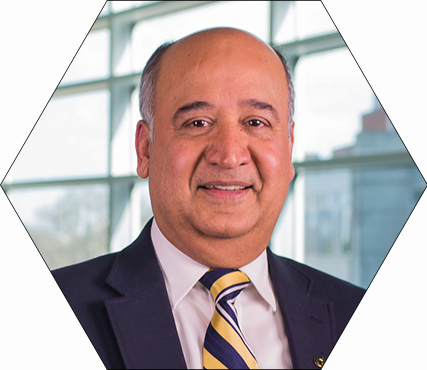
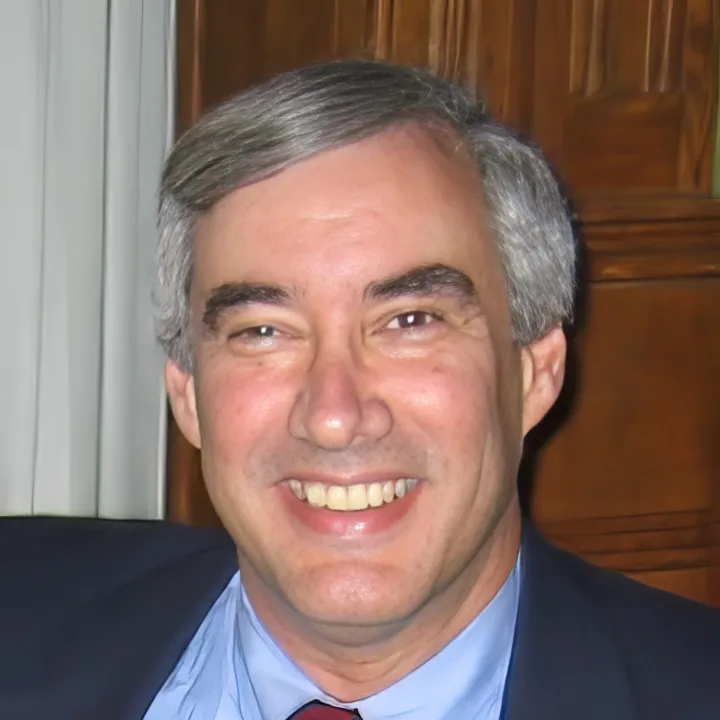
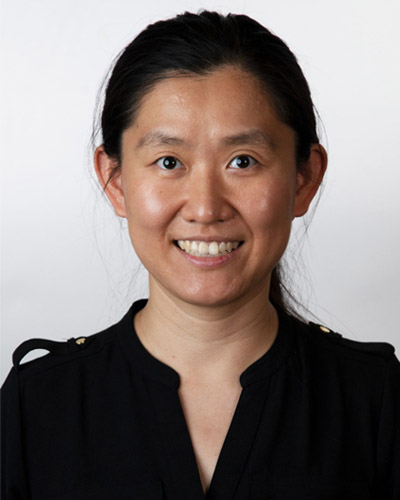
Naresh N. Thadhani is a Professor and Chair of Materials Science and Engineering at Georgia Tech, with an adjunct role in the Woodruff School of Mechanical Engineering. His research focuses on shock-induced material changes, high-strain-rate mechanics, and dynamic compaction of powders. He leads a lab equipped with advanced facilities like gas guns and laser-accelerated systems for studying impacts up to 1200 m/s. Education: Ph.D., New Mexico Institute of Mining and Technology (1984); M.S., South Dakota School of Mines and Technology (1981); B.E., University of Rajasthan, India (1980). Research interests include shock compression of metals/ceramics, phase transformations in metallic glasses, and structural energetic materials. His work combines experimental diagnostics (e.g., VISAR, photonic Doppler velocimetry) with computational modeling (CTH/ALE3D codes). Key awards: APS Fellow (2007), ASM International Fellow (2000). Editorial roles include Associate Editor of Shock Waves and Key Reader for Metallurgical and Materials Transactions . Lab & Group: A team of 1 postdoctoral fellow, 11 PhD students, and 3 undergraduates. Over 30 graduates to date. Active in advisory roles for national/international conferences and industrial consultancies. Future work emphasizes nanocomposite magnets and meso-scale modeling of heterogeneous materials under shock.
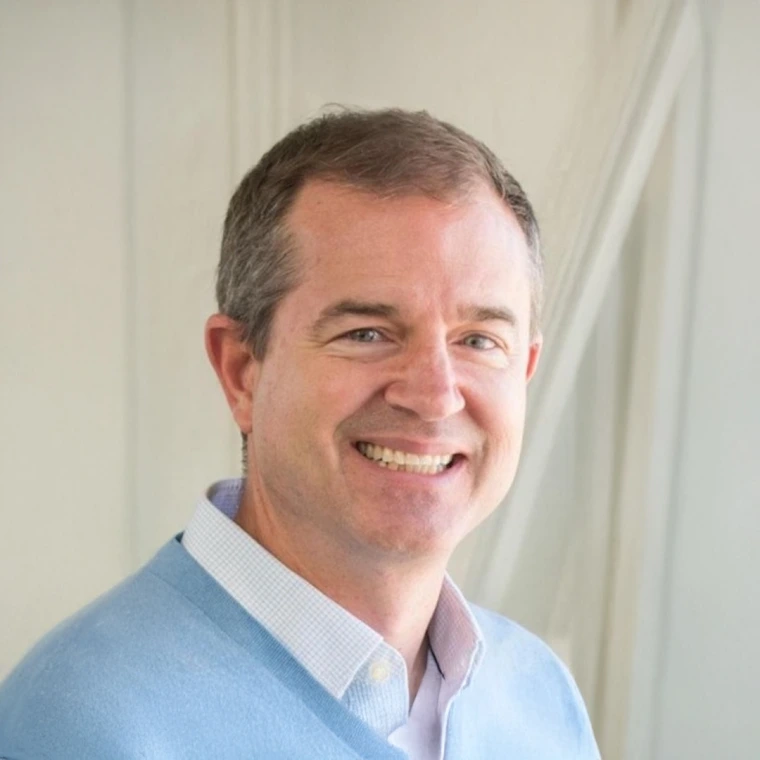
Franklin Goldsmith serves as Associate Professor of Engineering within Brown University's School of Engineering, where his research bridges fundamental chemical kinetics with practical combustion applications. His work directly impacts energy conversion technologies and emission reduction strategies through rigorous investigation of reaction mechanisms. His academic foundation includes: PhD in Chemical Engineering from Massachusetts Institute of Technology (2010) BS in Chemical Engineering from North Carolina State University (2003) BA in Chemistry from University of North Carolina at Chapel Hill (1998) Goldsmith's research program centers on radical reaction kinetics and low-temperature oxidation phenomena , employing both computational master equation modeling and experimental techniques like shock tube spectroscopy and synchrotron photoionization. His investigations into non-Boltzmann energy distributions and pressure-dependent rate coefficients have established new frameworks for understanding ignition chemistry. The Thermochemistry for Combustion Database project exemplifies his commitment to foundational data resources for the field. Analysis of his publication record reveals three dominant research thrusts: (1) detailed kinetic modeling of hydrocarbon oxidation, particularly propane systems; (2) development of computational methodologies for pressure-dependent rate estimation; and (3) fundamental studies of radical-molecule interactions. His work consistently integrates high-precision experimental validation with theoretical frameworks, as evidenced by collaborations with national laboratories. Goldsmith teaches Brown's core chemical engineering curriculum including ENGN 1120 (Reaction Kinetics and Reactor Design) and ENGN 1130 (Chemical Engineering Thermodynamics), alongside specialized graduate courses in heterogeneous catalysis (ENGN 2751) and chemically reacting flow (ENGN 2910Q). His educational approach emphasizes the connection between molecular-scale kinetics and reactor design principles. His research group maintains active collaborations with Argonne National Laboratory (Klippenstein), MIT (Green), and Sandia National Laboratories (Taatjes), focusing on multiscale informatics for complex reaction systems. Current projects investigate biomass-derived fuel combustion and catalytic partial oxidation mechanisms using spatially resolved experimental techniques.
Alison M. Ferris is an Assistant Professor in the Department of Mechanical and Aerospace Engineering at Princeton University conducting experimental research at the intersection of chemical kinetics, optical diagnostics, and sustainable fuel development using shock wave methodologies. Her educational background includes: Ph.D. in Mechanical Engineering from Stanford University (2021) M.S. in Mechanical Engineering from the University of Wisconsin-Madison (2014) B.S. in Mechanical Engineering from Columbia University (2012) Dr. Ferris's research focuses on high-temperature reaction chemistry for sustainable aviation fuels (SAFs), combining shock tube experiments with laser-based diagnostics to measure key reaction rates and develop predictive models. Current projects investigate the link between aviation particulates and contrail formation, low-carbon fuel kinetics, and data-driven approaches for accelerating SAF development through machine learning and optical sensing techniques. Analysis of her 15 most recent publications (2019-2024) reveals dominant themes in sustainable aviation fuels, ammonia combustion for zero-carbon propulsion, and advanced diagnostic development. Her work consistently employs shock tube platforms for high-temperature flame speed measurements while increasingly integrating machine learning for fuel property prediction, demonstrating evolution from fundamental kinetics toward applied sustainable fuel solutions. Scientific awards: No awards were documented in the provided information. Dr. Ferris leads the Ferris Lab where she advises graduate researchers in combustion science, though specific student names and grant details were not provided in the source material. The Ferris Lab (D324 Engineering Quadrangle) maintains three core research thrusts: Sustainable Fuels development using machine learning, Chemical Kinetics investigations of reaction pathways, and Flame Dynamics studies of alternative fuels at extreme conditions through shock wave methodologies.
Riccardo Bonazza is a Professor in the Department of Mechanical Engineering at the University of Wisconsin-Madison, affiliated with the College of Engineering and the Nuclear Engineering & Engineering Physics program. His research focuses on experimental investigations of impulsive fluid flows, shock-interface interactions, and shock-driven mixing phenomena with applications in inertial confinement fusion, combustion systems, and aerospace engineering. Bonazza holds a PhD (1992) and MS (1985) from Caltech, and a Laurea in Mechanical Engineering (1983 cum laude) from Università di Ancona. His experimental work uses advanced techniques like planar Mie scattering, laser-induced fluorescence (PLIF), and particle image velocimetry (PIV) in the Wisconsin Shock Tube Laboratory. Key research areas include Richtmyer-Meshkov instability dynamics, shock-accelerated vortex rings, and reactive shock flows. His studies explore both detrimental mixing effects in fusion applications and beneficial mixing enhancement in supersonic combustion systems. Recent experiments involve shock-bubble interactions, reshock phenomena, and turbulent mixing quantification. Notable awards include the 2016 Leaders in Engineering & Diversity Scholar Award and 2011 Outstanding Instructor Award. His 2023 work includes novel bovine thermodynamic models and advanced shock tube diagnostics. Bonazza teaches courses in aerodynamics, gas dynamics, rocket propulsion, and independent research supervision. Key facilities: Wisconsin Shock Tube Laboratory. Active collaborations include CFD validation, laser diagnostics development, and multi-phase flow studies.
University of Maryland, Baltimore CountyUnited States
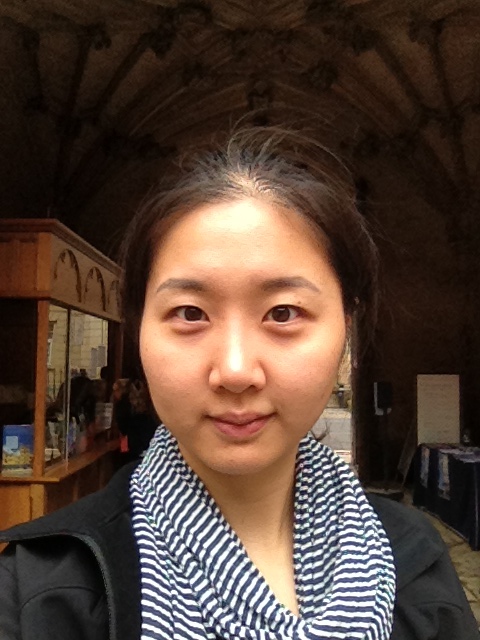
Hye-Won Kang is an Associate Professor in the Department of Mathematics and Statistics at the University of Maryland, Baltimore County (UMBC). Her research focuses on stochastic modeling of biochemical systems, particularly in understanding complex biological processes such as enzyme clustering, microRNA signaling pathways in lung cancer and COPD, and multiscale reaction-diffusion systems. She holds a Visiting Research Fellowship from Merton College, University of Oxford. Her work integrates mathematical analysis, simulation, and experimental data to address challenges in systems biology. Key research areas include: Multiscale approximations for stochastic chemical networks Stochastic analysis of reaction-diffusion processes Modeling enzyme kinetics in metabolic diseases Gene regulatory networks and pattern formation Recent contributions include studies on glucosome condensate formation (2024), chemical systems with limit cycles (2023), and the role of microRNAs in lung cancer (2013). Her research has been published in high-impact journals such as Physical Biology , Bulletin of Mathematical Biology , and SIAM Multiscale Modeling and Simulation . She has advised PhD student Luan Chip Nguyen and has taught advanced courses in mathematical biology, statistics, and differential equations at UMBC since 2013.
David W. Hahn serves as the Dean of the College of Engineering at the University of Florida. With a distinguished career in engineering and applied physics, he has established himself as a leading expert in laser spectroscopy and thermal energy conversion technologies. Dr. Hahn's research spans multiple disciplines within engineering and physical sciences, with a primary focus on Laser-Induced Breakdown Spectroscopy (LIBS) and related analytical techniques. His work encompasses: Development and application of LIBS for materials analysis Thermal energy conversion and solar fuel production Plasma physics and laser-matter interactions Chemical analysis of complex materials including aerosols and energy storage systems Advanced spectroscopic techniques for security and environmental applications Analysis of Dr. Hahn's recent publications (2019-2025) reveals a consistent research trajectory centered around laser-based analytical techniques, particularly LIBS. His work demonstrates increasing sophistication in applying these methods to challenging problems in energy storage safety, environmental monitoring, and materials characterization. Notably, there's a strong emphasis on practical applications of fundamental spectroscopic principles, with numerous publications addressing real-world challenges in battery safety, explosive detection, and renewable energy technologies. Dr. Hahn has made significant contributions to the development of laser-based analytical methods, particularly in: Advancing LIBS for aerosol and particle analysis Developing novel approaches for solar thermochemical energy conversion Creating improved methods for chemical characterization of energy storage systems Applying spectroscopic techniques to security and defense applications Contributing to fundamental understanding of laser-matter interactions
California Institute of Technology (Caltech)United States
Katherine Faber is the Simon Ramo Professor of Materials Science at the California Institute of Technology within the Division of Engineering and Applied Science . Her research focuses on fracture mechanics of brittle ceramics , porous material design , and cultural heritage science with collaborations at NU-ACCESS and NASA. Research Highlights: Developing freeze-cast zirconia systems for shape memory applications Studying environmental barrier coatings under extreme conditions Investigating ceramic interactions with lunar regolith simulants for space exploration Applying synchrotron X-ray techniques to visualize internal fracture Exploring gold nanoparticle synthesis in historical ceramics Scientific Recognition: 2024 W. David Kingery Award (American Ceramic Society) 2025 Alfred University Distinguished Service Award 2017 Richard E. Tressler Award 2015 John Jeppson Award 2014 American Academy of Arts and Sciences inductee Recent Article Trends show expertise in ceramic additive manufacturing , martensitic transformations , and multiscale porosity control with applications spanning space technology , medical filters , and art conservation . Education includes a PhD from UC Berkeley (1982) , MS from Penn State (1978) , and BS from Alfred University (1975) .
Karel Matouš is a Professor in the Department of Aerospace and Mechanical Engineering at the University of Notre Dame , where he also serves as the Director of the Center for Shock-Wave Processing of Advanced Reactive Materials (C-SWARM) . His research is centered on computational mechanics and engineering, with a focus on multiscale and multiphysics modeling of heterogeneous materials. Education: Ph.D. in Theoretical and Applied Mechanics, Czech Technical University in Prague (2000) M.S. in Theoretical and Applied Mechanics, Czech Technical University in Prague Research Interests: Matouš’s work spans computational science and engineering , data-driven modeling , high-performance computing , and statistical micromechanics . He develops advanced numerical methods for modeling complex systems such as solid propellants, reactive materials, and particulate composites, often integrating microtomography data for realistic material reconstruction. Publication Trends: His recent publications emphasize reduced-order modeling , image-based simulations , and uncertainty quantification in multiscale systems. Many studies combine experimental data with computational frameworks to predict macroscopic behavior from microstructural features, particularly in reactive and heterogeneous materials. Scientific Awards: Fellow of ASME (2013) Visiting Professor at Eindhoven University of Technology with 10,000 EUR research grant (2016) Rector's Award, Czech Technical University (1999) Academician Z. Bazant's Prize (1996, 1997) Multiple recognitions for high-impact publications (ScienceDirect Top 25 Hottest Articles) Student awards including the Robert J. Melosh Medal and USNCCM9 presentation prize Advising and Grants: He has advised numerous Ph.D. and M.S. students in computational mechanics and materials science. His research is supported by major grants from the Department of Energy (e.g., C-SWARM: $11.6M), NSF , DoD (STTR/SBIR programs), and industry partners like 3M and ATK . These projects focus on adaptive modeling, shock-wave processing, and microstructural characterization of advanced materials. Labs and Teams: He leads the Computational Physics Group and the C-SWARM center, which involves collaboration with institutions including Purdue University, Indiana University, and the University of Illinois. The group utilizes high-performance computing and experimental validation to advance predictive modeling of extreme material behaviors.
University of Illinois Urbana-ChampaignUnited States
Sean Kearney is a Professor in the Department of Aerospace Engineering at the University of Illinois at Urbana-Champaign (UIUC), effective October 2024. He holds a Ph.D. and M.S. in Mechanical Engineering from UIUC (1999 and 1995, respectively) and a B.S. in Mechanical Engineering from Clarkson University (1992). Prior to his academic role, he served as a Distinguished Member of Technical Staff at Sandia National Laboratories (1999–2024) and Technical Director at Spectral Energies, LLC (2017–2018). His research focuses on laser-based diagnostics, incompressible and compressible fluid mechanics, hypersonics, and reacting flows. Key projects include developing advanced CARS (Coherent Anti-Stokes Raman Scattering) techniques for temperature/pressure measurements in compressible flows, laser velocimetry for aerodynamics, and combustion diagnostics in high-enthalpy environments. Recent work includes studies on free-piston shock tunnels, nitrogen thermometry in plasma torches, and deflagration dynamics in multi-component fuels. He has contributed to over 12 peer-reviewed articles in journals like Annual Review of Fluid Mechanics, Optics Letters, and Shock Waves. His teaching includes AE 312 (Compressible Flow).
Dr. Enrique Martinez Saez is an Associate Professor at Clemson University, specializing in computational materials science with a focus on microstructural evolution under extreme conditions. He holds appointments in the College of Engineering, Computing and Applied Sciences (CECAS), where he conducts interdisciplinary research at the intersection of materials science, physics, and data analytics. Ph.D. (2008), Polytechnic University of Madrid M.S. (2003), Polytechnic University of Madrid B.S. (2000), Polytechnic University of Madrid His research explores: Defect kinetics in irradiated materials Thermodynamics of alloy systems Mechanical behavior of heterogeneous solids Machine learning applications in materials discovery Advanced manufacturing techniques Dislocation dynamics and plasticity mechanisms Recent publications demonstrate expertise in modeling radiation effects, phase transformations, and dislocation interactions using molecular dynamics and multiscale approaches. Notable simulations include studies on FeNiCrCoMn alloys, austenitic stainless steel crystallization, and machine learning-enhanced dislocation mobility. Scientific recognition includes: 2010: Outstanding Ph.D. Thesis at Polytechnic University of Madrid 2009: Juan de la Cierva Fellowship (Spain Ministry of Science) 2008: Cum Laude Ph.D. Thesis distinction
Mitchell Smooke is the Strathcona Professor of Mechanical Engineering and Materials Science at Yale University, where he has held this position since 1995. He previously served as Dean of Engineering (2000, 2018–2019) and Chair of the Mechanical Engineering Department (1994–2000, 2006–2012). His research focuses on computational combustion, chemical vapor deposition, and numerical methods for solving differential equations. Smooke has authored over 18,500 citations with an h-index of 70, and his work is supported by grants totaling over $25M. He is a Fellow of the Combustion Institute, SIAM, AIAA, and IOP, and has received prestigious awards like the Zeldovich Gold Medal (2012) and the Oppenheim Prize (2004). Smooke earned his M.B.A. from UC Berkeley and PhD/M.S. from Harvard University, followed by a B.S. from Rensselaer Polytechnic Institute. His research team collaborates on projects like oxygen-enhanced combustion and high-pressure nitromethane studies. He co-developed the CHEMKIN software package and contributed to algorithms for premixed flame codes (PREMIX), counterflow flames (OPPDIF), and sensitivity analysis. His recent work includes microgravity soot formation studies and constrained-temperature flame solutions. Smooke has led over 250 invited lectures globally and serves on editorial boards for Combustion Theory and Modelling and Theoretical and Computational Fluid Dynamics . He has advised numerous graduate students and chairs committees on computational infrastructure and combustion research. His lab focuses on advancing numerical methods to model complex reacting flows and validate experimental data through high-fidelity simulations.
Xuan Zhou is an Assistant Professor in the Department of Physics and Astronomy at The University of Texas at San Antonio (UTSA), with affiliations in the Department of Mechanical Engineering and the Center for Advanced Measurements in Extreme Environments (CAMEE). His research integrates optics, materials science, physical chemistry, and mechanical engineering to explore phenomena under extreme conditions. B.S. in Materials Physics, Xi'an Jiaotong University (2009) M.S. in Mechanics and Physics (Optics and Nanotechnology), Université de Technologie de Troyes (2010) Ph.D. in Optics and Nanotechnology, Université de Technologie de Troyes (2014) Postdoctoral Research, University of Illinois at Urbana-Champaign (2014–2016, Photoelectrochemistry; 2016–?, Shock Physics) Dr. Zhou's research focuses on nano-optics and photonics , materials under high pressure and shock compression , plasmon-assisted photopolymerization , and electrocatalysis . His lab develops ultra-high-resolution 3D printing techniques using surface plasmons, studies material transformations under GPa-level pressures via diamond anvil cells, and investigates shock-induced changes in semiconductors and energetic materials through optical spectroscopy. His interdisciplinary approach bridges nanofabrication, spectroscopy, and extreme environment physics. The recent publications highlight strong trends in shock wave physics , plasmon-enhanced nanofabrication , and mechanochemistry . His work frequently combines experimental optics with materials synthesis and characterization, often in collaboration with groups at Miami University and UIUC. Keywords across the articles include nano-optics, shock compression, semiconductors, MOFs, and photopolymerization, reflecting a cohesive research program in materials under extreme conditions and nanoscale light-matter interactions . Scientific recognitions include: Front Cover Feature, Accounts of Chemical Research , December 2020 issue Included in Journal of Optics Highlights of 2014 for plasmon-based photopolymerization work Dr. Zhou actively advises graduate and undergraduate researchers, currently mentoring Kade Johnson, Christian Verry, Eric Austin, and Kenneth Mikolaichik. He leads the Zhou Lab at UTSA, which is equipped for high-pressure and shock experiments and optical characterization. The lab has ongoing projects in nano-3D printing, high-pressure plasmonics, and shock spectroscopy, supported by external collaborations. He is actively recruiting PhD, Master’s, and undergraduate students for Fall 2025 and beyond. While specific grants are not listed, his research scope suggests support from agencies interested in materials under extreme environments, nanophotonics, and energy materials. The Zhou Lab operates in the Applied Engineering and Technology (AET) Building at UTSA, with lab space in AET 3.206 and office in AET 3.374. The team uses advanced optical setups for Raman, fluorescence, and dark-field imaging, and conducts experiments involving diamond anvil cells and shock platforms. The lab fosters interdisciplinary training in experimental physics, materials synthesis, and optical instrumentation.
Thomas Ward is a Professor in the Department of Mechanical and Aerospace Engineering at the University of Virginia School of Engineering and Applied Science. His work bridges theoretical and applied research in fluid dynamics, advanced manufacturing, and aerospace systems. 2003 Ph.D., University of California Santa Barbara, Mechanical Engineering 2001 M.S., Stanford University, Chemical Engineering 1998 B.S., Missouri University of Science & Technology, Chemical Engineering with Applied Mathematics minor Dr. Ward's research focuses on fluid mechanics, high-speed flow physics, and fluid-structure interactions. He explores metal oxidation, processing, and recovery while advancing hypersonic flow modeling and experimental validation. His work extends to microfluidics and multiphase flow dynamics in industrial and biological contexts. Recent publications analyze CO2 sequestration mechanisms, hypersonic boundary layer interactions, and fluid-driven metal processing. His studies span evaporation dynamics, liquid bridge instabilities, and electrohydrodynamic mixing, with applications in environmental engineering, aerospace, and biomedical devices. Scientific Awards Air Force Research Lab Summer Faculty Fellowship Program Award (2022) Dr. Ward has advised students in mechanical and aerospace engineering and secured funding from NSF, AFOSR, AFRL, and DARPA. He collaborates with UVA's hypersonic research team and contributes to advanced manufacturing innovations.
Professor Yogendra M. Gupta is a Professor of Physics and Director of the Institute for Shock Physics at Washington State University (WSU). He holds the Creighton Distinguished Professor title and leads research in shock wave and high-pressure condensed matter physics. His work focuses on real-time examination of microscopic processes in materials under extreme conditions. Education: Ph.D. (Physics), Washington State University, 1972 M.Sc. (Physics), Birla Institute of Technology and Science, 1968 B.Sc. (Physics, Mathematics, Chemistry), Birla Institute of Technology and Science, 1966 Research Interests: Experimental and theoretical studies of shock wave effects on crystalline solids, inelastic deformation, chemical reactions in energetic materials, and nonlinear wave propagation. He develops novel experimental techniques for real-time analysis using optical spectroscopy, X-ray diffraction, and continuum methods. Awards and Recognition: American Physical Society Shock Compression Science Award (2001) WSU Eminent Faculty Award (2005) Fellow, American Physical Society (1991) Fellow, American Association for the Advancement of Science (2002) Westinghouse Distinguished Professor (1996-97) Advising and Labs: Supervised over 100 graduate students and research associates. Directs the Institute for Shock Physics, advancing studies in dynamic compression and the Advanced Photon Source facility.
Andrew Abba Stolz, MD is a Professor of Medicine at the University of Southern California and serves as Associate Chair for Faculty Affairs for the Department of Medicine, as well as Chair of the Faculty Appointments and Promotion Tenure Committee (FAPTC Panel B). He has been a key member of the Division of Gastrointestinal and Liver Diseases since 1990, earning tenure shortly after joining the institution. Dr. Stolz's research focuses on liver disease mechanisms, particularly protein-mediated intracellular transport of bile acids in the liver, molecular characterization of Aldo-Keto Reductase supergene family members across species, dysregulation of hormone catabolism in human breast and prostate cancers, and drug-induced liver injury. His work spans molecular biology, clinical hepatology, and pharmacogenetics, with particular emphasis on understanding the mechanisms of liver injury from various pharmaceutical and dietary compounds. His recent publications demonstrate a strong focus on drug-induced liver injury, with particular attention to genetic and immunological factors that contribute to susceptibility. His research employs advanced methodologies including proteomics, transcriptomics, and machine learning approaches to identify biomarkers and improve diagnostic capabilities for various liver conditions. 17th International Symposium of the Journal of Steroid Biochemistry & Molecular Biology: Fabre Laboratories Best Poster, 2006 American Liver Foundation: Postdoctoral Fellowship, 1983-1985 Dr. Stolz earned his medical degree at Albert Einstein College of Medicine, completed his residency at Mt. Sinai Hospital, and performed a Gastroenterology Fellowship at UCLA. His extensive publication record spanning several decades demonstrates sustained contributions to the field of hepatology and drug safety research.