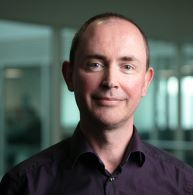
David Lindlbauer is an Assistant Professor at Carnegie Mellon University's Human-Computer Interaction Institute (HCII), where he leads the Augmented Perception Lab and co-directs the CMU Extended Reality Technology Center. His research focuses on advancing Mixed Reality (MR) and Extended Reality (XR) interfaces through computational interaction methods that optimize spatial, temporal, and multimodal feedback.
Kaiyang Liu is an Assistant Professor at the Department of Computer Science, Memorial University of Newfoundland. He holds a Ph.D. from Central South University (2019) and was a Postdoctoral Fellow at the University of Victoria, Canada. His research focuses on distributed cloud/edge computing, data center networks, and distributed machine learning, emphasizing optimization for data-intensive services. He is an IEEE Senior Member and has received prestigious awards, including the NSERC Discovery Grants and IEEE TCCLD Outstanding Ph.D. Thesis Award. Education: Ph.D. in Information Science and Technology, Central South University (2014–2019) M.Sc. in Information Science and Technology, Central South University (2012–2014) B.Eng. in Information Science and Technology, Central South University (2008–2012) Research Assistant at the University of Victoria (2016–2018) Research Interests: Kaiyang’s work bridges AI and cloud computing, exploring optimization strategies for next-generation systems. Key areas include learning-based congestion control, energy-efficient resource management, and scalable distributed storage solutions. His research has been published in top-tier journals like IEEE Transactions on Parallel and Distributed Systems and conferences such as IEEE ICDCS. Awards & Grants: NSERC Discovery Grants & Discovery Launch Supplement (2024) IEEE TCCLD Outstanding Ph.D. Thesis Award (2020) CSC-UVic Fellowship (2016–2018) Teaching: He teaches courses on Computer Networks, Advanced Computer Networks, and Operating Systems at Memorial University and previously at the University of Victoria. Labs & Teams: His research group focuses on Space Edge Computing, leveraging LEO satellites for resilient, low-latency networks. Ongoing projects include optimizing distributed systems for AI workloads and satellite-based data centers.
James Aspnes is the Harold W. Cheel Professor of Computer Science at Yale University, specializing in distributed algorithms and randomized methods. He holds a PhD from Carnegie Mellon University and degrees from MIT. His research focuses on distributed systems, peer-to-peer networks, and sensor networks, emphasizing tools for efficient data management and fault-tolerance. Education: PhD (CMU, 1992), SM & SB (MIT, 1987) Affiliations: Yale since 1993, IBM Almaden Research Center (1992–1993) Research interests include distributed algorithms, randomization, and applications in biology and economics. Notable contributions include skip graphs, population protocols, and consensus algorithms. He has received the ACM-EATCS Dijkstra Prize (2020) and Dylan Hixon Prize (2000). Publications span distributed computing, algorithms, and cryptography. Recent work explores consensus protocols and privacy in population models. Grants include NSF awards totaling over $2M. Active in editorial roles (Algorithmica, Distributed Computing) and conference organization (PODC 2005, DCOSS 2007).
Dr. Changyou Chen is an Associate Professor in the Department of Computer Science and Engineering at the University at Buffalo, State University of New York. His research focuses on Multi-Modal Learning Foundation Models Deep Generative Models Large-scale Bayesian Sampling with applications in document understanding, music-AI integration, and molecular representation learning. Research Trends revealed through his recent publications include Optimizing Multimodal Large Language Models Developing Novel Retrieval-Augmented Generation Frameworks Creating Benchmark Datasets for Visual Text Understanding Advancing Diffusion Models with Domain-Specific Constraints across domains from music sheets to biomedical documents. Scientific Contributions : UB Young Investigator Award (2020) Architect of LoCAL Framework for Long Document Understanding Co-developer of MusiXQA Benchmark Pioneering Work in Probability Contrastive Learning Academic Leadership includes mentoring 10+ graduate students and serving as Area Chair for major AI conferences (ICML, NeurIPS, AAAI, IJCAI). His Labs develop scalable solutions for multimodal reasoning, with recent work demonstrating practical GPU memory optimization through LoRA adapter sharing.
Cecilia Boschini is a Researcher affiliated with the Institute for Theoretische Informatik (Theoretical Computer Science) at ETH Zürich. Her work focuses on advanced cryptographic systems, particularly in post-quantum cryptography, lattice-based protocols, and privacy-preserving technologies. She contributes to developing secure digital signature schemes, threshold cryptography, and efficient cryptographic algorithms resistant to quantum computing threats. Her research bridges theoretical foundations with practical applications in cybersecurity and distributed systems. Key contributions include innovations in fail-stop signatures, two-round threshold signatures (Ringtail), and lattice-based multi-signature systems (MuSig-L). Boschini’s work emphasizes balancing security with efficiency, often addressing challenges in mobile device security and memory encryption. She has published extensively in top-tier venues, with a focus on cryptographic protocols that enhance privacy and data integrity without compromising usability.
Kwantae Kim is an Assistant Professor at the Department of Electronics and Nanoengineering within Aalto University's School of Electrical Engineering . He leads the Tiny Systems and Circuits (TSirc) Group , focusing on power-efficient analog/mixed-signal ICs for biomedical and neuromorphic sensor systems. IEEE Senior Member (2025) Collaborates with institutions across Europe, Asia, and America Specializes in ultra-low-power AI-embedded IoT platforms His research emphasizes Tiny, Sensory, Intelligent, and Wireless IoT systems through: Development of energy-efficient IC architectures Democratizing access to advanced chip design Hardware-software co-design for edge computing Recent publications highlight innovations in: Spoken-language-understanding SoCs Temporal-sparsity-aware keyword spotting Open-source silicon frameworks Awards include: 2025 IEEE Senior Member 2023 Best Poster Award (AICAS) 2019 Samsung HumanTech Silver Award Research partnerships span: Prof. Tobi Delbruck (UZH/ETH Zurich) Prof. Hoi-Jun Yoo (KAIST) Prof. Shih-Chii Liu (UZH) Prof. Sohmyung Ha (NYU Abu Dhabi)
Luca Carloni is a Professor of Computer Science and Department Chair at Columbia University's Columbia Engineering. He leads the System-Level Design Group, focusing on heterogeneous system-on-chip (SoC) architectures, networks-on-chip (NoC), and embedded systems. Carloni holds a Laurea Summa Cum Laude in Electronics Engineering from the University of Bologna and a PhD in Electrical Engineering and Computer Sciences from UC Berkeley. His work emphasizes specialized hardware design, energy-efficient computing, and FPGA-based prototyping. Research interests include system-level design methodologies for SoCs, embedded accelerators, and quantum computing hardware. He has pioneered frameworks like Embedded Scalable Platforms (ESP) and tools like MosaicSim for rapid SoC prototyping. Carloni has received numerous awards, including the NSF CAREER Award (2006), IEEE Fellow (2017), and multiple best paper awards at DATE and CloudCom conferences. He has served on editorial boards of IEEE Transactions on CAD and ACM Transactions on Embedded Computing , and chaired key conferences like EMSOFT and ESWeek. His research addresses challenges in heterogeneous architectures, power management, and the intersection of machine learning with embedded systems. Current projects explore quantum control systems, brain-computer interfaces, and energy-efficient datacenter computing.
Sebastian Risi is a Professor at the IT University of Copenhagen , where he directs the Creative AI Lab and co-directs the Robotics, Evolution and Art Lab (REAL) . His work bridges computational evolution, deep learning, and collective intelligence for applications in robotics, art, and video game design. His research focuses on self-organizing AI systems that grow or assemble through local interactions, inspired by biological development. Key areas include neuroevolution , neural cellular automata , and generative modeling , with applications in adaptive robotics, game content creation, and damage-resilient AI. Recent publications highlight trends in self-assembling neural architectures (NDPs) and 3D functional machine generation (Minecraft experiments). Awards include ERC Consolidator Grant (2022), Best Paper at FDG’21 , and Google Faculty Award (2019). Scientific Awards : ERC Consolidator Grant (GROW-AI), Best Paper FDG’21, Runner-Up IEEE Games’20, GECCO 2017 Competition Winner, Sapere Aude Grant, Amazon/Google Faculty Awards He advises on projects like GROW-AI (EU-funded), AI-TESTER (game testing), and C2SIM (military systems). Media coverage includes Science , Wired , and Popular Science .
Elette Boyle is an Associate Professor at the Efi Arazi School of Computer Science, Reichman University (IDC Herzliya), Israel. She serves as the Director of the FACT Research Center and is a Senior Scientist at NTT Research. Additionally, she heads the RRIS International Program. Her academic career spans prestigious institutions including MIT, Technion, and Cornell. Dr. Boyle received her Ph.D. in Mathematics from MIT under the guidance of Shafi Goldwasser and Yael Tauman Kalai. Following her doctorate, she completed postdoctoral research at the Technion Israel Institute of Technology (2013-2015) hosted by Yuval Ishai, and a short-term postdoc at Cornell University (Summer 2013) hosted by Rafael Pass. She completed her undergraduate studies in mathematics at Caltech. Her research focuses on the theoretical foundations of computer security and cryptography, with particular expertise in secure multiparty computation, function secret sharing, distributed point functions, and memory checking protocols. Her work bridges theoretical computer science with practical cryptographic applications, developing protocols that balance security guarantees with computational efficiency. Dr. Boyle's research has significantly advanced the field of cryptography, particularly in understanding the fundamental limits and possibilities of secure computation protocols. Analysis of her recent publications reveals a strong focus on the theoretical foundations of secure computation, with particular emphasis on understanding computational and communication complexity limits. Her work spans multiple dimensions of cryptography including foundational protocols, complexity analysis, and practical implementations. A recurring theme in her research is developing efficient cryptographic primitives that minimize communication overhead while maintaining strong security guarantees. Her contributions to function secret sharing, distributed point functions, and pseudorandom correlation generators have been particularly influential in the field. Dr. Boyle has advised several graduate students including Pierre Meyer (Ph.D., co-advised with Geoffroy Couteau), Matan Hamilis (Ph.D.), and D'or Banon (MSc., co-advised with Ran Cohen). Her research has been supported by various grants enabling her to lead significant projects in cryptography and secure computation. As Director of the FACT Research Center, she leads a team focused on foundational aspects of computer science and cryptography. Her center collaborates with researchers worldwide and serves as a hub for advancing cryptographic research in Israel and internationally.
Jelena Mirkovic serves as Principal Scientist at USC Information Sciences Institute (USC/ISI) and Research Associate Professor at the University of Southern California's Thomas Lord Department of Computer Science. She has held faculty positions at USC since 2010, progressing from Research Assistant Professor to her current role as Research Associate Professor since 2017, while also serving as Project Leader at USC/ISI. Her educational background includes: PhD in Computer Science from UCLA (2003) MS in Computer Science from UCLA (2000) B.Sc. in Computer Science from University of Belgrade, Serbia (1998) Mirkovic's research spans network security, human-centered attacks, and cybersecurity experimentation infrastructure. Her work focuses on critical security challenges including botnets, denial-of-service attacks, IP spoofing, vulnerability scanning, and user-centric privacy. She has pioneered methodologies for security experiments and led major infrastructure projects including the DETER testbed and SPHERE (Security and Privacy Heterogeneous Environment for Reproducible Experimentation). Analysis of her recent publications reveals consistent innovation across multiple security domains. Her work demonstrates strong technical depth in DDoS defense systems (particularly DNS protection), binary vulnerability analysis, privacy-preserving systems, and security experimentation infrastructure. A notable trend is her focus on bridging theoretical security concepts with practical implementation through large-scale testbeds and real-world data analysis. Her significant scientific achievements include: IEEE Senior Member distinction Best paper award at IEEE COMSNETS 2023 for DNS DDoS defense research Mirkovic has secured substantial research funding as Principal Investigator or Co-PI on numerous grants from NSF, DHS, and other agencies. Current major projects include SPHERE (Security and Privacy Heterogeneous Environment for Reproducible Experimentation), DISCERN (Datasets to Illuminate Suspicious Computations), and modernizing DeterLab education infrastructure. She has successfully led multiple REU sites focused on cybersecurity education and workforce development. She directs the STEEL (Security Research Lab) at USC/ISI, which develops innovative security solutions through interdisciplinary research in network security, human factors in security, and cybersecurity experimentation infrastructure. The lab emphasizes practical implementations that address real-world security challenges while advancing theoretical understanding of security systems.
David Wentzlaff is a Professor of Electrical and Computer Engineering at Princeton University, with associated faculty roles in Computer Science and the High Meadows Environmental Institute (HMEI). He leads research in computing architecture, green computing, and sustainable system design. As Director of Undergraduate Studies, he shapes educational programs in his field. Education: Ph.D., Electrical Engineering, MIT (2012) M.S., Electrical Engineering and Computer Science, MIT (2002) B.S., Electrical Engineering, University of Illinois at Urbana-Champaign (2000) Research Focus: Future Computing Systems: Designing manycore architectures, cloud computing infrastructure, and chiplet-based systems for exascale computing. Sustainability: Developing energy-efficient hardware, recyclable computing systems, and eco-friendly decommissioning strategies. Hardware-Software Co-Design: Exploring FPGA integration, in-memory computing, and parallel processing frameworks. Advising & Grants: Advises 8 current graduate students, focusing on topics like chiplet design, neural acceleration, and sustainable computing. Recipient of NSF grants for projects like OpenPiton (open-source manycore research platform) and CAREER awards for energy-efficient architectures. Labs & Collaborations: Leads the Wentzlaff Research Group at Princeton. Develops open-source frameworks like PRGA (FPGA prototyping) and OpenPiton (manycore processor).
Habeeb Olufowobi is an Assistant Professor in the Department of Computer Science and Engineering at the University of Texas at Arlington (UTA), where he leads the Cyber-Physical System Security Lab. He holds a PhD in Computer Science from Howard University (2019) and previously served as a Lecturer at Howard before joining UTA in 2020. His research is centered on the security and trustworthiness of embedded and distributed systems, particularly in the domains of autonomous vehicles, IoT, and healthcare AI. He investigates cybersecurity challenges at the hardware-software interface in real-time systems and develops AI/ML models that are transparent, explainable, and equitable. His interdisciplinary work integrates principles from cybersecurity, real-time systems, and machine learning. The recent publications reflect a strong trend in securing cyber-physical systems using advanced AI techniques, with emphasis on intrusion detection, secure communication (e.g., named data networking), and robustness of autonomous systems. His work frequently appears in top-tier venues such as IEEE Transactions, VehicleSec, and ICMLA. Project Management Professional (PMP), PMI (2012–Present) Member, Institute of Electrical and Electronics Engineers (IEEE) (2020–Present) Habeeb has secured significant research funding, including an NIH grant on ethical AI for Chagas disease prediction and an AIM-AHEAD grant focused on health equity. He mentors several graduate students, including Paul Agbaje and Afia Anjum, who have received awards and internships at prestigious institutions like Los Alamos National Laboratory. He teaches courses in cloud computing, embedded systems, and information security, and serves as a faculty advisor for the National Society of Black Engineers (NSBE) at UTA. His lab, the Cyber-Physical System Security Lab, focuses on developing scalable and reliable security solutions for critical infrastructure, with growing emphasis on healthcare applications and fairness in algorithmic decision-making.
Xiaowen Zhang is a Professor of Computer Science at the College of Staten Island (CSI), City University of New York (CUNY), and a Doctoral Faculty Member at the CUNY Graduate Center. His academic work bridges theoretical and applied research in cybersecurity, information systems, and network technologies. Dr. Zhang holds a Ph.D. in Computer Science from the CUNY Graduate Center (2007) and a Ph.D. in Electrical Engineering from Northern Jiaotong University (1999), along with an M.A. from CUNY Queens College, an M.S. from Northern Jiaotong University, and a B.S. from Shanxi University. His research focuses on Cryptography, Information Security, Cybersecurity, Secure Biometrics, RFID Security & Privacy, Information Retrieval, and Wireless Sensor Networks . He explores both foundational cryptographic methods—such as secret sharing schemes and hash functions—and their practical implementations in secure systems, including RFID authentication protocols and data visualization platforms for sensor networks. The analysis of his recent publications reveals a consistent focus on security mechanisms in distributed and wireless environments . His work frequently combines cryptographic theory with system-level implementations, particularly in RFID and sensor networks. There is a strong trend toward privacy-preserving protocols, efficient data retrieval, and secure information sharing , often leveraging mathematical structures like Latin squares and Bloom filters. Dr. Zhang has been actively involved in mentoring students, as evidenced by numerous co-authored publications with graduate and undergraduate researchers. His contributions span journals such as Security and Communication Networks , Journal of Applied Security Research , and International Journal of Security and Networks , as well as major conferences including IEEE LISAT, ACM CODASPY, and IEEE Sarnoff Symposium.
Virginia de Sa is a Professor in the Department of Cognitive Science at the University of California, San Diego. Her research integrates computational modeling, psychophysics, and machine learning to investigate visual and multi-sensory perception, with a focus on understanding how humans learn and perceive through neural mechanisms. Her work emphasizes the synergy between human learning and machine learning, applying insights from both fields to advance understanding of perception. Notable projects include developing brain-computer interface (BCI) systems and analyzing biases in facial expression recognition algorithms. She leads the de Sa Lab, which explores the neural basis of learning through interdisciplinary methods, including EEG analysis and biologically inspired algorithms. Key research directions include improving BCI usability through adaptive spatial filtering, investigating pain assessment via facial and electrophysiological data fusion, and enhancing AI fairness in facial expression analysis. Dr. de Sa has contributed to grants such as the NSF-funded CHS project to enhance BCI reliability and collaborates on initiatives like AI-READI to improve healthcare data practices. Her lab’s BCI division focuses on interpreting EEG data for assistive technologies, while her work on divisive normalization bridges biological insights with artificial neural network design. Ongoing efforts explore zero-shot learning and the generalization of neural models to unseen tasks. Dr. de Sa’s interdisciplinary approach spans neuroscience, computer science, and engineering, with a commitment to advancing both theoretical understanding and practical applications in human-computer interaction.
Timothy Harris is an Affiliated Lecturer at the University of Cambridge's Department of Computer Science and Technology, where he jointly teaches courses on multicore semantics and programming. Currently, he works at OpenAI, focusing on performance optimization for GPU inference of large language models, including the Azure OpenAI Service. Previously, he held roles at Microsoft, AWS, Oracle Labs, and was a faculty member at the University of Cambridge (2000–2004). His research spans distributed systems, runtime systems, operating systems, and high-performance computing, with an emphasis on scalability and performance. He contributed to projects like the Xen hypervisor and the Barrelfish research OS. Key research interests include distributed training of PyTorch models in the ONNX runtime, large-scale storage performance with Amazon S3, and runtime systems for in-memory graph analytics. His work often bridges 'big data' and high-performance computing techniques. Notable contributions include the book Transactional Memory (2010) and the Barrelfish OS, alongside numerous publications in top-tier conferences like SOSP, ASPLOS, and EuroSys. He has served as PC chair for ISMM 2025, VEE 2017, and EuroSys 2015, reflecting his leadership in the systems research community. His awards include a Best Paper Award at PACT 2010. Beyond academia, Harris is an avid hiker, aiming to complete the UK coastline, and maintains a photography portfolio at tlhphotography.uk .