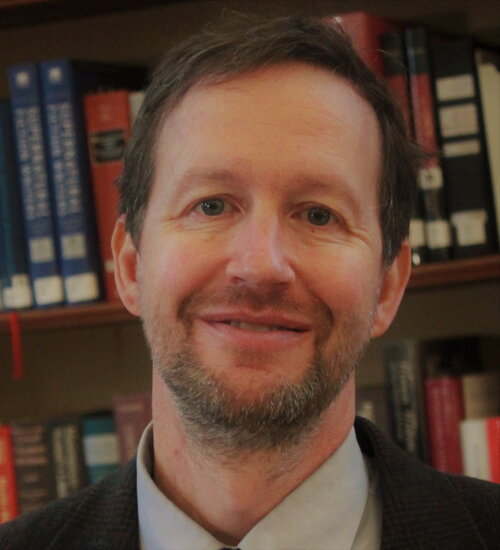
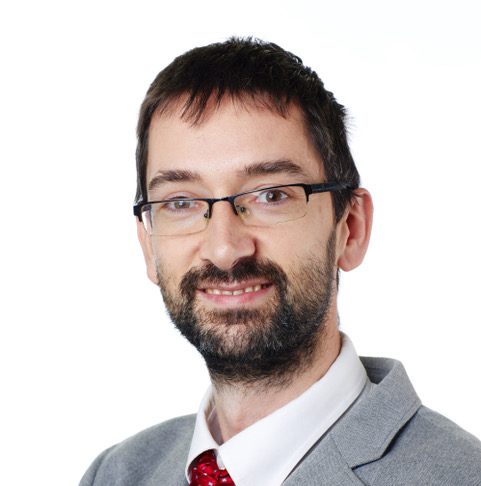
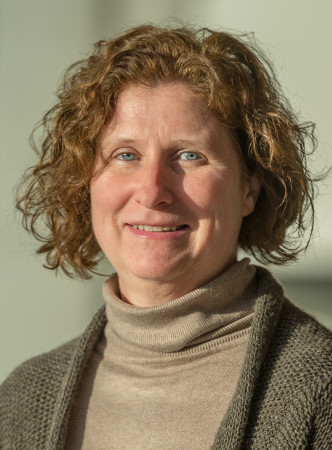
Dr. Steve Witt is a Professor and Head of the International and Area Studies Library at the University of Illinois at Urbana-Champaign, where he also serves as Director of the Center for Global Studies. As a subject specialist for Global Studies and Japanese, he bridges library science with international academic collaboration. University of Illinois at Urbana-Champaign International and Area Studies Library Center for Global Studies European Union Center Center for East Asian and Pacific Studies His research examines global information networks through historical lenses, focusing on the Carnegie Endowment for International Peace's role in shaping internationalist thought through library collections. Current projects include analyzing Imperial Japan's contributions to early 20th-century internationalism and developing digital humanities methodologies to study the CEIP's curated book corpus. Publications highlight his expertise in privacy evolution within library associations, resource sharing for area studies, and sustainable library practices. He serves as editor for IFLA Journal , promoting translational research between theory and practice.
Chun Wang is an Associate Professor in the Department of Biomedical Engineering at the University of Minnesota with significant contributions to cancer immunology and drug delivery research. They maintain affiliations with the Cancer Immunology Center and the Center for Immunology, focusing on translational research that bridges engineering principles with therapeutic applications. Dr. Wang's research interests encompass multiple cutting-edge areas at the intersection of biomedical engineering and immunology: Development of innovative polymer-based drug delivery systems for controlled release applications Design of nanoparticle platforms specifically engineered for cancer immunotherapy Creative approaches to vaccine development targeting melanoma and other cancers Advanced hydrogel technologies with applications in embolization and therapeutic delivery Integration of photothermal therapy with immunological approaches for enhanced treatment efficacy Analysis of Dr. Wang's publication record reveals a strong trajectory in translational research, with recent work demonstrating significant advances in polymer-protein nanovaccines, PEI-based nanoparticles for tumor immunotherapy, and novel hydrogel systems. Their research consistently bridges fundamental material science with clinical applications in cancer treatment, showing particular strength in applying engineering principles to solve immunological challenges. Dr. Wang has secured substantial external funding for their research, serving as Principal Investigator on multiple significant projects: A Novel Melanoma Vaccine Based on a Shared Neoantigen and a Liquid Polymer Platform (2023-2025, NIH and Trekka Therapeutics) Analysis of POE IV and Formulation of Granisetron (2021-2023, Evonik Corporation) Translational Development of a Melanoma Neoantigen Peptide Vaccine (2019-2020, Mayo Clinic Rochester) Selective and Efficacious Treatment of Cancer through Combination Approaches (2018-2019, Boston Scientific Corporation) With 108 documented research outputs spanning from 1994 to 2025, Dr. Wang maintains an active laboratory focused on translating polymer science into clinical cancer applications, working closely with industry partners and clinical collaborators to advance novel therapeutic approaches from bench to bedside.
Toufik AZIB is a Full Professor and scientific coordinator of the ECMS (Energy and Conception of Mechatronic Systems) research theme at ESTACA Engineering School in France. He leads a team of 6 teacher-researchers and 13 PhD students, focusing on optimal design of power electronics and energy management for hybrid power systems. His work bridges academic research and industrial applications in sustainable mobility, with strong collaborations across Europe and Algeria. Dr. AZIB received his Electrotechnical Engineering Diploma from the University of Setif, Algeria in 2006, followed by an M.Sc. in Electrical Engineering from ENSEM-INPL, France in 2007. He earned his Ph.D. in electrical engineering from the University of Paris South XI in 2010 and completed his HDR (Habilitation à Diriger des Recherches) from the University of Paris Saclay in 2021. His academic journey reflects a strong foundation in both theoretical and applied electrical engineering. His research focuses on the modeling, control, and optimal design of embedded energy systems under multi-physical constraints (electrical, thermal, electromagnetic compatibility, volume, reliability). He specializes in energy management strategies for hybrid systems combining fuel cells, batteries, and ultracapacitors, with applications in electric vehicles and the 'more electric aircraft.' His work integrates numerical and experimental approaches to develop methodologies for pre-dimensioning and real-time energy management, addressing challenges in sustainable transportation. Analysis of Dr. AZIB's recent publications reveals a strong trend toward multidisciplinary design optimization for automotive applications, particularly electronic throttle systems. His research increasingly incorporates knowledge management techniques and addresses reliability considerations in hybrid power source design. There's a clear progression from fundamental energy management strategies to sophisticated eco-driving solutions for electric vehicles, reflecting the evolving demands of sustainable mobility. Best Paper Award for 'Structure and Control Strategy for a Parallel Hybrid Fuel Cell/Supercapacitors Power Source' at IEEE VPPC'09 Dr. AZIB has supervised numerous PhD and Master's students across multiple institutions in France, Algeria, and Colombia. He leads significant research projects including MIMe (Module d'Intégration et de simulation Mécatronique), ECOS Nord (Eco-driving strategies for electric motorcycle), and AmCoAIR (improving air quality in vehicle cabins), securing funding from national and international sources. His work demonstrates strong industry collaboration with partners like Valeo, PSA, and Renault. As experimental platforms coordinator since 2012, Dr. AZIB oversees 10 specialized experimental facilities at ESTACA's S2ET-Paris Saclay research pole, including those for autonomous electric vehicles, drones, electric machines, and power modulators. His team regularly develops proof-of-concept demonstrators to validate research findings, such as the Formula Student electric vehicle and the 'Electric Appeal' streamliner project, demonstrating practical applications of their theoretical work.
Nikolaos Kourentzes is a Professor of Informatics at the University of Skövde , specializing in forecasting and operations research. His work bridges theoretical advancements in time series analysis with practical applications in supply chain management, tourism demand, and renewable energy forecasting. Academic Rank: Professor Department: Department of Information Technology Research Interests: His research focuses on hierarchical and temporal forecasting methodologies, integrating macroeconomic indicators into demand planning, inventory optimization, and machine learning applications. He explores forecast reconciliation, shrinkage estimators, and the role of expert judgment in predictive analytics. Recent Publications: Highlights include advances in hierarchical forecasting with leading indicators, probabilistic forecasts during crises like the pandemic, and complex smoothing techniques. His work spans journals such as Omega , International Journal of Forecasting , and European Journal of Operational Research . Collaborations: Kourentzes collaborates with researchers globally, including George Athanasopoulos, Rob Hyndman, and Robert Fildes, across domains like tourism analytics, tire industry forecasting, and public health modeling.
Jo Herstad is an Associate Professor in the Department of Information Systems Design at the University of Oslo , where she has worked since 2002. With a background in industry at Ericsson (1990-2003), Herstad bridges technical expertise with academic rigor. She teaches courses including: IN1030 - Introduction to Design, Use, Interaction (since 2017) IN2000 - Software Engineering with Project Work IN5480 - Interaction with AI and Autonomous Systems Research Focus: Her work explores Human-Computer Interaction through: Universal Design principles in digital environments Human-Robot Interaction for domestic applications Inclusive Technology across diverse populations Participatory Design methodologies Privacy Dynamics in smart homes Multimodal Systems for elderly care Key Publications (2017-2024) examine motion profiling in robotics, equitable digital feedback, and socio-technical systems. Her supervision includes 15+ master's theses on topics ranging from chatbot ethics to universal design in education. Current projects focus on: Artificial Intelligence and Sensor Technology Multimodal Elderly Care Systems (MECS) Podcast Accessibility (PUD) RHYME: Music Technology for All
Bradford G. Orr is the Arthur F. Thurnau Professor of Physics in the College of Literature, Science, and the Arts at the University of Michigan , where he also serves as Associate Vice President for Research (Science & Engineering) . His group uses scanning probe microscopies and molecular-beam epitaxy to explore surface-controlled phenomena in nanoscale semiconductors and, in parallel, engineers multifunctional dendrimer nanoparticles for targeted cancer therapy. Education Ph.D. Physics, University of Minnesota, 1985 B.S. Physics, University of Minnesota, 1980 Research Interests Professor Orr’s work sits at the intersection of condensed-matter physics , surface science , and nanomedicine . He investigates: Surface & Interface Physics: atomically-resolved structures of Si/SiO₂ interfaces, self-assembled monolayers on Au, and composition-modulated compound-semiconductor superlattices. Nanobiotechnology: functional poly(amidoamine) dendrimers as drug-delivery vehicles, lipid-membrane interactions, and real-time AFM imaging of cancer-cell apoptosis. Cross-disciplinary Collaboration: active partnerships with Chemistry, Materials Science, the Medical School, and the Center for Biologic Nanotechnology. Scientific Awards Arthur F. Thurnau Professorship (endowed chair) Grants & Advising While specific grant numbers are not listed, his sustained publication output from 1994 through 2021, coupled with leadership roles in university-wide research administration, indicates continuous federal and institutional funding. The group trains a steady stream of graduate students and postdoctoral researchers, though individual advisee names are not provided in the text. Labs & Facilities Research is conducted in the Randall Lab and Homer A. Neal Lab within the Department of Physics, 450 Church Street, Ann Arbor, MI, and leverages shared instrumentation across the University of Michigan nanofabrication and biological imaging cores.
Roberto Tron is an Assistant Professor in the Mechanical Engineering and Systems Engineering departments at the Boston University College of Engineering , with his office located at 110 Cummington Mall. His research integrates control theory, robotics, and computer vision to solve complex multi-agent coordination problems. His primary research interests focus on Riemannian geometry applications , distributed multi-agent systems , and safety-critical control . Key methodologies include Control Barrier Functions (CBFs), Riemannian optimization, and distributed consensus algorithms, with applications spanning autonomous aerial vehicles, robotic manipulation, and multi-robot security systems. Analysis of his recent publications reveals a strong emphasis on safety verification and real-time optimization for autonomous systems. His work consistently bridges theoretical foundations in nonlinear control with practical implementations in robotics, particularly addressing challenges in limited sensor fields of view, distributed task allocation, and noise-robust navigation. The research shows increasing integration of formal methods like Signal Temporal Logic with learning-based approaches. Tron received his Ph.D. from The John Hopkins University and previously conducted post-doctoral research at the GRASP Lab, University of Pennsylvania. His work demonstrates significant contributions to provably safe autonomous systems through frameworks like the Control Barrier Function Toolbox.
Kirsten Gram-Hanssen is a Professor at Aalborg University, specifically within the Department of Construction, Urban and Environmental Engineering at the Faculty of Engineering and Science. Her academic work is centered in the Section for City, Housing and Property, where she leads the Research Group for Sustainable Cities and Everyday Practice. She maintains an active research profile with numerous publications and projects focused on sustainable energy systems. Her educational background is not explicitly detailed in the provided text, but her PhD specialization in socio-technical analyses forms the foundation of her interdisciplinary approach connecting social sciences with engineering perspectives on sustainability. Gram-Hanssen's research interests focus on housing, everyday life, and consumption from a climate and energy perspective . She examines differences in household consumption practices through a practice-theoretical lens that emphasizes routines and technical infrastructures. Her work demonstrates that social organization of everyday life matters as much for home energy consumption as the technical efficiency of buildings and appliances. She also investigates how new technologies like private solar panels and smart home controls affect both energy consumption and daily life practices. Her research has significant implications for sustainable transitions and energy policy. Her recent publications show a clear trend toward addressing the energy crisis, sustainable consumption practices, and the intersection of technology with everyday life. The research spans domains including housing, food, and mobility, with a strong focus on practical solutions for energy transition and sustainability challenges. Her work increasingly addresses inequality, ethics, and policy implications of energy transitions. Active Principal Investigator on multiple major research projects including SGD: Shared Green Deal (2022-2027), FoMoHo: Food, Mobility and Housing in the Sustainable Transition of Everyday Life (2021-2025), and GECKO: Building greener societies (2021-2024) Frequent media commentator on energy and sustainability issues, with 197 media appearances documented Extensive research dataset creation including the eCAPE energy crisis interviews (2024) and smart home interviews (2022) Regular contributor to international conferences and workshops on sustainable consumption and energy practices Professor Gram-Hanssen has supervised numerous PhD students (9 documented) and actively participates in the academic community through peer review, conference organization, and editorial work. Her research group, the Research Group for Sustainable Cities and Everyday Practice, works at the intersection of social science and engineering to address sustainability challenges through understanding everyday practices and their relationship to energy systems.
Māris Jurušs is an Associate Professor and Director of Study Programs at the Faculty of Engineering Economics and Management (FEEM) of Riga Technical University . He oversees the study programs in "Customs and Tax Administration" and "Internal Security and Civil Protection." Additionally, he serves as a member of both the RTU FEEM Council and the FEEM Scientific Council. His research focuses on tax policy , customs administration , sustainability , and public administration . He has extensive experience in national and international projects, particularly in fiscal strategies for sustainable mobility and environmental taxation. Jurušs has worked in the Tax Policy Department of the Ministry of Finance and an international audit company . He is an expert of the Latvian Science Council and actively participates in academic conferences and Erasmus+ teaching exchanges. Selected projects include: "D2_DIGITAL2": State budget funding for RTU's digital governance development (2024). "LZP-2022/1-0306": Model development for sustainable last-mile delivery in Latvia (2023–present). ESF 01000-3.1.2.-e/118": Efficient university governance development (2018–2023). "CA21133 - GLITSS": COST Action on globalization, illicit trade, sustainability, and security (2023–). His publications address topics such as excise duty harmonization for tobacco products, environmental taxation in transport, digital transformation of tax systems, and sustainable fiscal strategies . These works often intersect with European Union policy , climate change mitigation , and economic regulation .
Professor Ai-Chun Pang is affiliated with the National Taiwan University , serving in both the Department of Computer Science and Information Engineering and the Graduate Institute of Networking and Multimedia . He held leadership roles including Associate Dean (2018-2022) and Director (2013-2016) within the College of Electrical Engineering and Computer Science. His research spans Fog/Edge Computing , Wireless Networking , Mobile Computing , and AIoT Systems , with recent advancements in federated learning security, energy-efficient network design, and 5G/6G optimization. Collaborative work includes applications in vehicular networks, industrial control systems, and non-terrestrial connectivity. Key publication themes: Edge Intelligence and Privacy (2024) Federated Learning for Heterogeneous Devices (2023-2024) 5G Backhaul Optimization (2017-2021) Wireless Energy Transfer (2022) Awarded IEEE Fellow 2021 for contributions to mobile edge networks, he has received multiple IEEE Vehicular Technology Society awards, the CES 2019 Innovation Award , and teaching accolades including National Taiwan University Distinguished Teaching Award (2010) . His lab has produced 16 PhD students now in academia and industry. As Editor-in-Chief of IEEE Wireless Communications Letters and active in conference organization, he shapes global research directions. Current projects focus on GenAI for Networking and Non-Terrestrial Networks , with recent 2024 admissions for new students.
Gernot Müller is a Professor of Economics at the School of Business and Economics, University of Tübingen. His research focuses on international macroeconomics, monetary policy, fiscal policy, and economic networks, with a particular emphasis on how news, expectations, and structural shocks propagate through economies. Current Affiliation: Professor, University of Tübingen Research Areas: Monetary policy, fiscal policy, climate economics, economic networks, conflict economics Recent publications explore topics such as the economic impact of war, tariff shocks in production networks, green transition policies, and the role of expectations in business cycles. His work appears in journals like the American Economic Review , Journal of Monetary Economics , and European Economic Review . Active collaborations with researchers across Europe and the U.S. highlight his interdisciplinary and global approach. Contact: gernot.mueller@uni-tuebingen.de
Dr. Zhengyu Lin is a Reader in Power Electronics at Loughborough University's Wolfson School of Mechanical, Electrical and Manufacturing Engineering, affiliated with the Centre for Renewable Energy Systems Technology (CREST). Previously, he held a Lecturer position at Aston University for over five years and worked in UK industry for six years, including roles at Sharp Laboratories of Europe and Nidec Control Techniques. His academic journey includes a Ph.D. from Heriot-Watt University (2004), an MSc from Zhejiang University (2001), and a BSc from Zhejiang University (1998). Lin's research focuses on advancing power electronics and renewable energy systems, particularly in DC microgrid control, grid resilience, and energy storage. His work addresses challenges in power sharing accuracy, fault detection, and infrastructure robustness under severe weather or disasters. He has contributed to policy analysis for EV adoption in South Asia and innovative solutions for wireless power/data transfer in EV charging. Key achievements include the EPSRC UKRI Innovation Fellowship (2018-2021) and over 80 peer-reviewed publications. His research bridges academic theory with industrial applications, emphasizing sustainable energy transitions and smart grid technologies. Education: Ph.D. (Heriot-Watt), MSc/BSc (Zhejiang University) Awards: EPSRC UKRI Innovation Fellowship Research Themes: DC Microgrids, Grid Resilience, Renewable Energy Integration Labs: Centre for Renewable Energy Systems Technology (CREST)
Valentina Breschi is an Assistant Professor in the Control Systems Group at the Department of Electrical Engineering, Eindhoven University of Technology (TU/e). She holds a Ph.D. from IMT School for Advanced Studies Lucca, with postdoctoral and junior faculty experience at Politecnico di Milano. Her research focuses on data-driven control, jump model learning, meta-learning for system identification, and human-centered policy design for mobility systems. She contributes to UN Sustainable Development Goals related to sustainable infrastructure and innovation. Education: B.Sc. in Electronic and Telecommunication Engineering (University of Florence, 2011) M.Sc. in Electrical and Automation Engineering (University of Florence, 2014) Ph.D. in Control Systems (IMT School for Advanced Studies Lucca, 2018) Research Interests: Her work spans data-driven control methodologies, including LPV control, predictive control, and ethical frameworks for policy design. She explores applications in sustainable mobility, energy systems, and healthcare, emphasizing fairness and social impact. Labs/Teams: She is part of the Control Systems Group, collaborating on projects like the CONSIDER study and the design of fair-MPC frameworks. Her work integrates theoretical control principles with real-world applications in smart systems and social networks.
Ingrid Moerman is a part-time Professor at Ghent University and a staff member at the Internet Technology and Data Science Lab (IDLab), a core research group of imec embedded within Ghent University and the University of Antwerp. She coordinates mobile and wireless networking research and leads a team of over 30 researchers at Ghent University, with extensive involvement in European and national funding initiatives. She received her Electrical Engineering degree (1987) and Ph.D. (1992) from Ghent University. Her research spans collaborative networks, cognitive radio, software-defined radio, IoT, LPWAN, and high-density wireless access, emphasizing experimentally-supported development of next-generation wireless systems with practical implementations in spectrum management and real-time control. Recent publications (2024-2025) reveal a strong pivot toward AI-integrated wireless networking, featuring OFDMA scheduling innovations, Wi-Fi 6/7 interference mitigation, and time-sensitive networking for industrial applications. Key trends include 5G/6G convergence, vehicular communication enhancements, and digital twin frameworks for network observability, reflecting her focus on mission-critical industrial use cases. Her accolades include: 9 Best Paper Awards 2 FWO Prizes (Research Foundation - Flanders) IMEC Prize of Excellence 2001 MSc Thesis Award (as promoter) Best Demo/Exhibit Award at ICT 2013 DARPA Spectrum Collaboration Challenge Prize ($750,000) She has coordinated major EU projects (FP7/H2020: CREW, WiSHFUL, eWINE, ORCA) with industry partners, securing substantial funding for experimental wireless research. Her grant portfolio emphasizes collaborative innovation in spectrum sharing and neutral-host architectures for multi-operator environments. At IDLab, she directs advanced wireless testbeds supporting real-world validation of technologies like openwifi and White Rabbit, with active experimentation in time-sensitive networking and spectrum collaboration for industrial IoT deployments.
Prof. Tanya Bondarouk is a distinguished academic affiliated with the Digital Society Institute and Faculty of Behavioural, Management and Social Sciences at the University of Twente. Her research focuses on Human Resource Management (HRM), electronic HRM systems, and the impact of disruptive technologies on work environments. She holds leadership roles including Board Member of the National Network of Female Professors (Landelijk Netwerk Vrouwelijke Hoogleraren). Her academic contributions span over 250 publications, including influential works on AI in HRM, open innovation, and gig economy challenges. Notable awards include the Best HRM Scientist in The Netherlands (2018) and the Inspiration Award (2019). Research interests: Technology-human interaction in workplaces, HRM strategies for innovation, and digital transformation in organizations. Recent articles analyze AI-driven recruitment, generational differences in tech engagement, and algorithmic management dilemmas. Prof. Bondarouk actively engages in academic networks, organizing conferences like the 38th EGOS Colloquium (2022), and provides expert commentary on digital labor platforms and employer branding strategies. Her work bridges theoretical HRM frameworks with real-world organizational challenges.