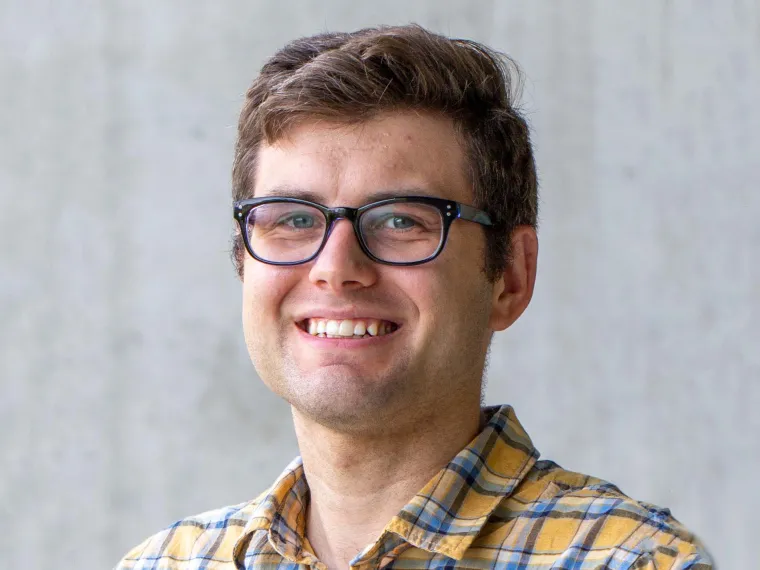
Pierre Bellec is an Associate Professor in the Department of Statistics at Rutgers University, where he has been a faculty member since 2016 and was promoted to Associate Professor with tenure in 2021. His office is located in Hill Center 406 at 110 Frelinghuysen Road, Piscataway, NJ 08854. Dr. Bellec received his PhD from ENSAE ParisTech, France in 2016 under the supervision of Alexandre Tsybakov. Prior to that, he completed a Part III (MASt) at the University of Cambridge, UK in 2012 and earned his Diplôme d'Ingénieur from Ecole Polytechnique, France in 2011. Dr. Bellec's research focuses on high-dimensional statistics, aggregation of estimators, shape constrained problems in statistics, and probability theory. His work has significant implications for machine learning and statistical inference in high-dimensional settings. He has made important contributions to regularization methods, M-estimators, and uncertainty quantification in complex statistical models. His recent publications show a strong focus on asymptotic theory, robust statistics, and high-dimensional inference, with novel methods for error estimation, adaptive tuning, and bias correction in regularized estimators. Dr. Bellec has received several prestigious awards and honors, including: IMS Fellow (2023) NSF CAREER award DMS 1945428: "Post-Differentiation Inference" (2020-2024, $400,000) NSF award DMS 2413679: "Uncertainty quantification for iterative algorithms" (2024-2027, $225,000) NSF award DMS 1811976: "Uncertainty Quantification in High-Dimensional Structured Regression Problems" (2018-2022, $180,000) Blaise Pascal PhD Award (2017) Dr. Bellec has advised several graduate students, including Takuya Koriyama (now at Chicago Booth), Yiwei Shen (now at Meta/Facebook), and Kai Tan (current PhD student). He has also mentored numerous undergraduate students through REU programs. He serves as an Associate Editor for the Annals of Statistics and has been involved in program committees for major conferences including the Conference on Learning Theory (COLT) and the Conference on Neural Information Processing Systems (NeurIPS).
Peter K. Allen is a Professor of Computer Science at Columbia University's School of Engineering and Applied Science, with a career spanning over three decades in robotics research. His work focuses on robotic grasping , 3D vision and modeling , and medical robotics , where he has made significant contributions to autonomous manipulation and sensor integration. Current affiliation: Columbia University Robotics Lab Academic rank: Professor Key research areas: Robotics, Computer Vision, Artificial Intelligence Education A.B. in Mathematics-Economics from Brown University M.S. in Computer Science from University of Oregon Ph.D. in Computer Science from University of Pennsylvania (recipient of CBS Foundation Fellowship, Army Research Office Fellowship) Research Interests Allen's research bridges fundamental robotics challenges with applied domains. His work on robotic grasping explores low-dimensional subspaces and semantic task suitability, while 3D vision contributions include illumination coherence and texture registration methods. In medical robotics , he develops surgical imaging tools and BCI-enabled grasping systems. Recent publications show trends in: Deep learning for robotic manipulation (2017-2022) Human-robot interaction through BCI and augmented reality Deformable object manipulation (garments, thin shells) Multi-modal sensing (vision-tactile fusion) Scientific Recognition NSF Presidential Young Investigator Award Best Student Paper Award (2007) for collaborative work Over 30 years of continuous funding from NSF, Army Research Office, and medical grants Teaching and Mentorship He has taught graduate courses in robotics (COMS 4733/6731) since 2010, emphasizing hands-on projects with advanced platforms like Baxter, PR2, and Fetch robots. His lab provides immersive training in: 3D photography Humanoid robotics Autonomous navigation Grasp planning
Surajit Chaudhuri is a Researcher at Microsoft , with a career spanning decades in database systems and data management . He has received the prestigious SIGMOD Edgar F. Codd Innovations Award (2011) for his contributions to query optimization , index tuning , and data lakes . Research Interests : His work focuses on database tuning , approximate query processing , fuzzy similarity joins , automated data transformations , and machine learning integration for scalable data systems. Recent Publications : In 2025, his research includes Auto-Test for unsupervised error detection in tables, Esc for budget-aware index tuning, and MMTU for multi-task table understanding benchmarks. Earlier works in 2024–2023 address spreadsheet formula recommendation , low-overhead index filtering , and time-series pattern recognition . Scientific Impact : He has co-authored influential papers in SIGMOD , VLDB , and IEEE Transactions , shaping practices in cloud databases , query optimization , and self-service BI . His collaborations span institutions like Microsoft, MIT, and ETH Zurich.
Katie L. Dennis, M.D. serves as an Associate Professor in the Department of Pathology and Laboratory Medicine at the University of Kansas School of Medicine. Board certified in Anatomic and Clinical Pathology and Cytopathology by the American Board of Pathology, she holds active medical licenses in Kansas and Missouri. Dr. Dennis leads the Autopsy division of the Abstract review board for the United States and Canadian Academy of Pathology (2019-Present), previously served as President of the Kansas City Society of Pathologists (2013-2014), and maintains membership in the American Society for Clinical Pathology (2009-Present). Her research program centers on genitourinary pathology, liver pathology, and cytopathology, with significant emphasis on resident education methodologies. Clinical investigations address diagnostic challenges across gastrointestinal/pancreatic pathology, breast pathology, and autopsy pathology, integrating molecular techniques to refine pathological assessments in diverse tissue specimens. Dr. Dennis's recent publications demonstrate a cohesive focus on diagnostic innovation in surgical pathology and cytology. Key trends include application of immunohistochemistry for pancreatic cancer subtyping, optimization of flow cytometry protocols for effusion specimens, standardization of respiratory tract cytology diagnostics, and exploration of hepatic oxidative injury mechanisms—collectively advancing precision in pathological diagnostics. She actively mentors medical students, pathology residents, and surgical/cytopathology fellows through structured curricula and hands-on clinical training. Dr. Dennis's educational leadership extends to her role on national pathology society review boards, where she shapes academic discourse and trainee development standards across the specialty.
Peter Mooney is a Lecturer in the Department of Computer Science, Faculty of Science & Engineering at Maynooth University. His research focuses on Volunteered Geographic Information (VGI), OpenStreetMap, spatial data analysis, and geospatial data integration in applications such as environmental monitoring and pervasive health systems. Institution: Maynooth University School: Faculty of Science & Engineering Department: Computer Science Role: Lecturer Mooney's research explores the use of crowdsourced geospatial data, particularly through OpenStreetMap, analyzing data quality, community roles, and integration into location-based services. His work bridges technical analysis with policy considerations in geospatial data management. Recent publications highlight his contributions to understanding spatial data dynamics, including attribute changes in OpenStreetMap, characteristics of edited objects, and applications of VGI in environmental systems. He also investigates the intersection of haptics and GIS for novel interaction methods. Contact: peter.mooney@mu.ie
Vince Castillo serves as an Assistant Professor in the Department of Marketing & Logistics at The Ohio State University's Max M. Fisher College of Business, where he bridges academic research with industry applications in supply chain innovation. His work addresses critical modern challenges including last mile delivery optimization, sustainable operations, and AI integration, with media features on NPR's Marketplace and The World from PRX highlighting his practical impact. His academic foundation includes: PhD in Supply Chain Management from the University of Tennessee (2018) MBA in Supply Chain Management and Finance from the University of San Diego (2014) BS in Civil Engineering from the Colorado School of Mines (2006) Dr. Castillo's research portfolio demonstrates exceptional focus on human-centered logistics and resilient supply chains . Key themes include: Technology Integration : Applying AI and simulation modeling to optimize delivery networks and educational frameworks Sustainability Transformation : Developing frameworks for ethical sourcing and carbon footprint reduction Geopolitical Adaptation : Analyzing supply chain vulnerabilities in conflict zones like Ukraine Behavioral Dynamics : Studying driver engagement and customer tipping effects in gig economy platforms His publication trajectory from 2018-2025 reveals accelerating innovation, particularly in generative AI applications for supply chain education and real-time adaptation to geopolitical disruptions. Recent work emphasizes the interdependence of technological solutions and human factors in achieving operational resilience. Professor Castillo actively shapes future supply chain leaders through courses including Logistics Analytics (BUSML 4382), Supply Chain Sustainability and Resilience (BUSOBA 7395), and Building a Sustainable Supply Chain (BUSML 4385). His industry-engaged teaching approach prepares students for complex challenges in e-commerce operations, risk management, and sustainable logistics strategy implementation.
Richard D. Wesel is an Associate Dean for Academic and Student Affairs at a College of Engineering, where he has held leadership roles such as Vice-Chair of the Electrical Engineering Department. With Ph.D. and M.S. degrees in Electrical Engineering from Stanford University and MIT respectively, his research focuses on communication theory and channel coding, particularly low-density parity-check (LDPC) codes and turbo codes for efficient data transmission over noisy channels. Education: MIT (B.S., M.S.), Stanford (Ph.D.) Leadership: Associate Dean, Former Vice-Chair of Electrical Engineering Wesel's research explores advanced techniques for broadcast and multiple-access communication systems, emphasizing applications in wireless LANs, satellite communications, and optical networks. His work integrates machine learning with traditional decoding algorithms, as seen in recent publications on neural-network-optimized LDPC decoding and parallel trellis-stage-combining methods for high-throughput systems. His articles demonstrate a focus on finite-blocklength coding, including CRC-aided list decoding for convolutional and polar codes, and voltage optimization strategies for flash memory reliability. Wesel has authored over 100 publications and led a research group that won the 2006 Design Automation Conference's top award for optical multiple access design. Scientific Awards: National Science Foundation CAREER Award Okawa Foundation Award As an educator, Wesel received the TRW Excellence in Teaching Award in 2000 and has contributed to academic governance through roles on the Faculty Executive Committee and Undergraduate Council. His work bridges theoretical communication systems with practical implementations, including FPGA-based decoders and adaptive coding for fading channels.
Dr. Xiong Yi is an Assistant Professor at the School of System Design and Intelligent Manufacturing (SDIM) at Southern University of Science and Technology (SUSTech) in Shenzhen, China. He leads the Computational Design and Fabrication (CoDeFab) research group, focusing on the integration of computational design methods with advanced manufacturing technologies, particularly in the field of additive manufacturing. Dr. Xiong has established himself as a leading researcher in computational design for additive manufacturing, with a strong international research background spanning Europe and Asia. Dr. Xiong's educational journey includes: Doctor of Science (DSc) in Engineering Design and Production from Aalto University, Finland (2012-2016) Master of Science (MSc) in Machine Automation from Tampere University of Technology, Finland (2010-2012) Bachelor of Engineering (BEng) in Mechanical Engineering from Hubei University of Technology, China (2006-2010) Dr. Xiong's research primarily focuses on computational design and fabrication methodologies, with particular emphasis on design for additive manufacturing (DfAM), intelligent manufacturing systems, and smart materials. His work bridges the gap between theoretical design principles and practical manufacturing constraints, developing novel approaches for the production of complex engineered products. He has pioneered research in continuous fiber-reinforced composite additive manufacturing, developing innovative process planning and optimization techniques that enable the production of high-performance structural components. His research in electrothermally controlled origami and 4D printing of smart materials represents cutting-edge work at the intersection of materials science, mechanical engineering, and computational design. Dr. Xiong's recent publications reveal a strong focus on continuous fiber-reinforced composites, with significant contributions to 4D printing, metamaterials, and intelligent process planning. His work integrates computational design with manufacturing constraints, creating novel approaches for topology optimization, toolpath planning, and structural design that consider both performance requirements and manufacturability limitations. The research demonstrates increasing sophistication in materials science applications, particularly in programmable materials and multi-functional structures. Dr. Xiong has received multiple prestigious awards for his research contributions, including: Best Presentation Award at the 24th Chinese Conference on Mechanisms and Machine Science (IFToMM CCMMS2024) Best Presentation Award at the International Conference on Frontiers of Additive Manufacturing Research (RAAM 2024) Best Paper Award at the International Conference on Design for 3D Printing (ICD3DP 2023) PhD Scholarship from Aalto University (2016) Research Travel Grant from the International Association for Vehicle System Dynamics (IAVSD) (2013) National Scholarship from the Ministry of Education (2008) As a dedicated educator and mentor, Dr. Xiong serves as a PhD supervisor at SUSTech and has successfully guided students who have gone on to pursue advanced studies and careers at prestigious institutions including Hong Kong Polytechnic University, Beihang University, DJI Innovations, and Singapore's A*STAR research institute. His research is supported by multiple competitive grants, including key projects from the National Key R&D Program of China, the National Natural Science Foundation of China, and provincial and municipal funding agencies. Dr. Xiong also serves on the editorial board of the Journal of Engineering Design and as a guest editor for Composites Communications, contributing to the advancement of his field through scholarly service. Dr. Xiong leads the CoDeFab research group, which maintains a strong collaborative culture focused on 'design leading manufacturing, manufacturing driving design, and digital-intelligent integration.' The group has developed several advanced manufacturing platforms, including multi-axis continuous fiber-reinforced composite additive manufacturing systems, smart composite additive manufacturing platforms, and multifunctional soft matter open manufacturing platforms. With a focus on practical applications and innovation, the CoDeFab group actively collaborates with industry partners and has established a joint laboratory to bridge academic research with industrial implementation.
Brandon Chalifoux serves as an Assistant Professor at The University of Arizona's Wyant College of Optical Sciences and Department of Aerospace and Mechanical Engineering. His research focuses on enabling next-generation space telescopes through precision fabrication, mounting, and alignment of lightweight optical mirrors, with applications spanning astronomy, Earth observation, and space infrastructure development. His educational background includes: Ph.D. in Optical Sciences, Massachusetts Institute of Technology, 2019 M.S. in Optical Sciences, Massachusetts Institute of Technology, 2014 B.S. in Physics, Rice University, 2008 Chalifoux's research centers on stress-based surface shaping, precision engineering, ultrafast laser optical material processing, and astronomical optics. Through the Lightweight Optics Lab, he develops experimental and analytical techniques for manufacturing and aligning thin mirrors, with current projects targeting X-ray mirror metrology, laser stress figuring, and optical assembly methods critical for future high-resolution space telescopes. His recent publications (2023-2025) demonstrate concentrated advancements in ultrafast laser stress figuring (ULSF) for optical surface correction across thin mirrors and X-ray telescope optics. Key themes include material behavior analysis in fused silica and glass, stress generation mechanisms, and novel metrology techniques like axial shift mapping, establishing foundational methodologies for space-based optical systems. Scientific Awards: No awards mentioned in source material Chalifoux has successfully advised graduate students including Dr. Hayden Wisniewski (PhD, 2023), now a metrology engineer at ASML, and Alex St. Peter (Masters, 2023). His lab secures research funding for optical engineering projects with emphasis on space telescope technology, featuring significant collaborations with MIT on stress tensor mesostructures and laser-based figuring techniques. The Lightweight Optics Lab operates at the forefront of space optics research, conducting projects from fundamental laser-material interactions to X-ray mirror segment assembly. Current team efforts focus on ultrafast laser stress figuring for mirror correction and advanced metrology for near-cylindrical surfaces, directly addressing challenges in next-generation astronomical instrumentation and space infrastructure.
Dana Carroll is a Distinguished Professor in the Department of Biochemistry at the University of Utah's Spencer Fox Eccles School of Medicine, renowned as the "father of the gene-editing revolution" for pioneering zinc-finger nucleases that enabled CRISPR technology. With a 48-year career at the institution, he has shaped genome editing across medicine, agriculture, and basic science. Education: Bachelor's degree from Swarthmore College, Pennsylvania PhD from the University of California, Berkeley Postdoctoral research at Beatson Institute for Cancer Research, Glasgow Postdoctoral research at Carnegie Institution Department of Embryology, Baltimore Research Focus: Carroll's work centers on targetable nucleases (zinc-finger, TALENs, CRISPR/Cas) for precise genome editing in over 200 organisms. His lab optimizes these tools for clinical trials targeting genetic diseases and agricultural improvements in crop nutrition and animal welfare, while actively addressing ethical implications through public discourse and international policy development. Scientific Recognition: National Academy of Sciences membership American Academy of Arts and Sciences Fellowship Novitski Prize (2012) and Sober Lectureship Award (2014) University of Utah Distinguished Innovation Award (2017) Utah Governor’s Medal (2018) and Rosenblatt Prize (2023) Mentorship & Leadership: Carroll supervised 31 graduate/postdoctoral students and served on 125 thesis committees. As Biochemistry Department co-chair (1980s) and sole chair (1998-2009), he recruited Nobel laureates and revitalized the department. His committee service spans 26 university-wide, 50 School of Medicine, and 20 NIH panels, alongside innovating graduate courses on recombinant DNA technology and gene therapy ethics. Current Initiatives: As a Huntsman Cancer Institute member in the Nuclear Control Program, Carroll advances clinical genome editing applications while co-authoring the 2020 international report on heritable human genome editing for the U.S. National Academies and UK Royal Society.
Mahmoud Karimi is a Senior Lecturer at the School of Mechanical and Mechatronic Engineering , University of Technology Sydney (UTS), leading the Vibroacoustics Research Group within the Centre for Audio, Acoustics and Vibration. He holds a PhD in Mechanical Engineering from UNSW with specialization in vibration and acoustics, and has conducted visiting research at University of Cambridge, Technical University of Munich, and INSA Lyon. His research focuses on computational hydroacoustics, vibroacoustics, and uncertainty quantification in noise/vibration problems. Academic Leadership : Editor-in-Chief of Acoustics Australia since 2025 Research Income : Attracted $6M in competitive grants ($2M as Chief Investigator) since 2017 Technical Expertise : Specializes in acoustic black hole structures, flow-induced vibration modeling, and leak detection in buried pipelines Scientific Awards : Recipient of ARC DECRA Fellowship (DE190101412) 2019-2022 Research Trends : His 91+ publications demonstrate expertise in hybrid acoustic modeling techniques, sustainable hempcrete development, and vibration energy harvesting solutions with applications in mining, rail systems, and water infrastructure. International Collaborations: University of Cambridge (UK), Technical University of Munich (Germany), INSA Lyon (France) Teaching Portfolio: Advanced numerical methods, dynamics & control, and computational modeling at UTS
Joakim Lindblad is a Professor at the Department of Information Technology, Uppsala University , and holds affiliated roles as Senior Research Associate at the Mathematical Institute of the Serbian Academy of Sciences and Arts, and Head of Research at Topgolf Sweden AB. With over two decades of expertise in image analysis and machine learning , his work bridges computational methods with biomedical applications. Key affiliations: Uppsala University, Serbian Academy of Sciences, Topgolf Sweden Specializations: Deep Learning, Multimodal Image Registration, Quantitative Microscopy His research focuses on reliable image processing frameworks that integrate intensity and spatial information , particularly for biomedical applications . Recent publications highlight innovations in autofluorescence-based cancer detection , self-supervised one-class learning for sparse instance identification, and rotation-equivariant CNNs for robust analysis of cytology images. Recent article trends demonstrate expertise in multimodal image analysis (2024: 3 papers), oral cancer detection (2025: 2 papers), and multiscale biomedical imaging . His 2025 work on the Uppsala Storytelling Dataset introduces novel frameworks for multimodal dataset creation in AI research. While no scientific awards are explicitly mentioned, his extensive publication record (2000-2025) across top venues like Pattern Recognition , PLOS ONE , and IEEE Transactions indicates significant academic impact. His methodological contributions span stochastic distance transforms , fuzzy set defuzzification , and multimodal image registration techniques. Collaborative work with researchers like Nataša Sladoje and interdisciplinary teams has produced innovations in automated cytology analysis , TEM image enhancement , and AI-driven medical diagnostics . His 2021-2022 projects introduced contrastive learning approaches for multimodal image registration and explainable AI frameworks for infant engagement analysis.
Takuya Taniguchi is an Associate Professor at the Center for Data Science, Waseda University, where he has been employed since 2019, first as an Assistant Professor (2019-2021) before promotion to his current non-tenure track position. His interdisciplinary research bridges organic chemistry, materials science, and data science, with a focus on developing and analyzing functional organic materials, particularly photo-responsive molecular crystals. He maintains active collaborations with research groups including Hideko Koshima and Toru Asahi, and serves on professional committees such as the Manufacturing Industry AI Promotion Association. Education Doctor of Engineering, Waseda University (2019) Graduate studies at Waseda University's Graduate School of Advanced Science and Engineering Undergraduate studies at Waseda University's School of Advanced Science and Engineering, Department of Life Science and Medical Bioscience Research Focus Professor Taniguchi's work centers on structural organic chemistry and physical organic chemistry , with particular emphasis on organic functional materials and the application of materials informatics to crystal engineering. His research investigates how molecular structure influences macroscopic mechanical properties, especially photo-mechanical behaviors in organic crystals. He has pioneered the use of machine learning techniques to predict crystal properties, optimize materials performance, and design novel functional materials with applications in soft robotics and energy conversion. His recent work demonstrates a clear progression from fundamental studies of photo-mechanical crystals toward increasingly sophisticated applications of machine learning in materials science. The 15 most recent publications reveal a strong focus on neural network potentials for crystal property prediction, optimization of photo-actuated materials, and exploration of phase transitions in molecular crystals. This research trajectory shows consistent innovation in combining experimental chemistry with advanced computational methods. Awards and Recognition Inoue Research Encouragement Prize (2019) Ono Azusa Memorial Award from Waseda University (2019) Student Presentation Award at Japan Chemical Society 99th Spring Annual Meeting (2019) Poster Presentation Award at Chirality 2017 Multiple poster and presentation awards at international crystallography conferences Research Leadership Dr. Taniguchi leads multiple research projects funded by JSPS, JST, and industry partners including ENEOS Corporation and Sumitomo Foundation. His current projects include 'Efficient crystal structure prediction for organic porous materials,' 'Machine learning simulation of HOF material stability,' and 'Machine learning application for organic solid-phase transition.' He has successfully secured competitive funding including JST ACT-X and JSPS Early-Career Scientist grants. His work has received significant media attention, with coverage in Nikkan Kogyo Shimbun and Kagaku Kogyo Nippo highlighting breakthroughs in light-driven organic crystals with 3.7x improved output force. Academic Contributions Beyond research, Professor Taniguchi teaches extensively in Waseda's Global Education Center, offering courses in data science, statistical analysis with R, and statistics literacy across multiple academic quarters. He has contributed chapters to technical publications on process informatics, Bayesian optimization, and crystallization process design. His scholarly impact is evidenced by an h-index of 11 (Google Scholar) with 581 total citations, demonstrating significant influence in the emerging field of materials informatics for organic crystals.
Adetola B. Adesida serves as a full Professor in the Department of Surgery within the Faculty of Medicine & Dentistry at the University of Alberta . His laboratory focuses on developing autologous cell-based tissue engineering strategies for cartilage and meniscus repair, leveraging interdisciplinary collaborations between chemists, biologists, clinicians, and material scientists. PhD in Pharmacy, Victoria University of Manchester (1999) Postdoctoral Research, Wellcome Trust Centre for Cell-Matrix Research Dual Fellowship, Harvard University/Massachusetts General Hospital (2006) Marie-Curie Fellowship, European Commission (2007) Dr. Adesida's research centers on stem cell biology and tissue engineering for musculoskeletal regeneration, with emphasis on: Meniscus and articular cartilage repair mechanisms Stem cell-chondrocyte interactions in 3D microenvironments Bioreactor conditioning (hypoxia, dynamic compression) Sex-specific responses in knee osteoarthritis models Space-related microgravity effects on joint tissues His work bridges fundamental mechanobiology with clinical translation through industry partnerships like CellCoTec. Recent publications demonstrate a strong trend toward 3D bioprinting of nasal and meniscal tissues, sex-dimorphic responses in osteoarthritis, and space medicine applications . Key themes include bioink development, molecular characterization of fibrochondrocytes, and prevention of post-traumatic joint degeneration through regenerative strategies. CIHR Research Award (2013) Harvard University/Massachusetts General Hospital Fellowship (2006) European Commission Marie-Curie Fellowship (2007) Dr. Adesida leads the Orthopaedic Tissue Engineering Laboratory , directing multiple CIHR-funded projects on meniscus regeneration using mesenchymal stem cells. His research integrates advanced bioreactor systems for mechano-hypoxia conditioning and collaborates with aerospace initiatives through Canadian Space Agency partnerships. Current work explores simulated microgravity effects on human meniscus models and develops clinically applicable matrices incorporating bioactive molecules for cartilage formation.
Evan Franklin is an Associate Professor in Energy and Power Systems within the School of Engineering at the University of Tasmania. He also serves as Associate Head of Research, reflecting his leadership in advancing engineering research at the institution. His academic work is centered on modern power systems with a strong emphasis on renewable integration, grid stability, and sustainable energy technologies. His primary research interests include energy and power systems, renewable energy integration, grid frequency control, harmonic analysis, distributed energy resources (DER), battery and compressed air energy storage, agrivoltaics, and hydrogen integration. His work bridges engineering fundamentals with real-world applications in sustainable energy systems, contributing to Australia's transition toward clean energy. The recent publications of Dr. Franklin span high-impact journals such as Energies , IEEE Transactions on Industry Applications , Renewable and Sustainable Energy Reviews , and Journal of Energy Storage . The research trends reflect a strong focus on power system stability, microgrid control, harmonic mitigation, and innovative energy storage solutions. His work increasingly integrates AI and machine learning techniques for power quality and system monitoring, while also exploring interdisciplinary applications like agrivoltaics and offshore energy systems. Dr. Franklin has successfully supervised both PhD and Master’s students, including Ahmadreza Eslami and Md Ruhul Amin, with research topics ranging from harmonic analysis to frequency control using battery storage. He has secured substantial research funding from major national and international bodies, including the Australian Research Council (ARC), Australian Renewable Energy Agency (ARENA), CSIRO, and the Blue Economy CRC. Notable projects include the ARC Training Centre in Energy Technologies for Future Grids, MoorPower wave energy projects, and studies on hydrogen integration and black-start capabilities. He leads and participates in research teams focused on renewable energy systems, including the Centre for Renewable Energy and Power Systems at UTAS. His collaborative network includes key researchers such as Professor Michael Negnevitsky, industry partners like Carnegie Clean Energy and TasNetworks, and government agencies including Hydro Tasmania and Aurora Energy. His work is instrumental in shaping resilient, sustainable, and intelligent power systems for the future.