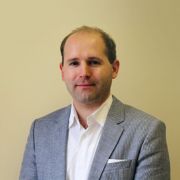
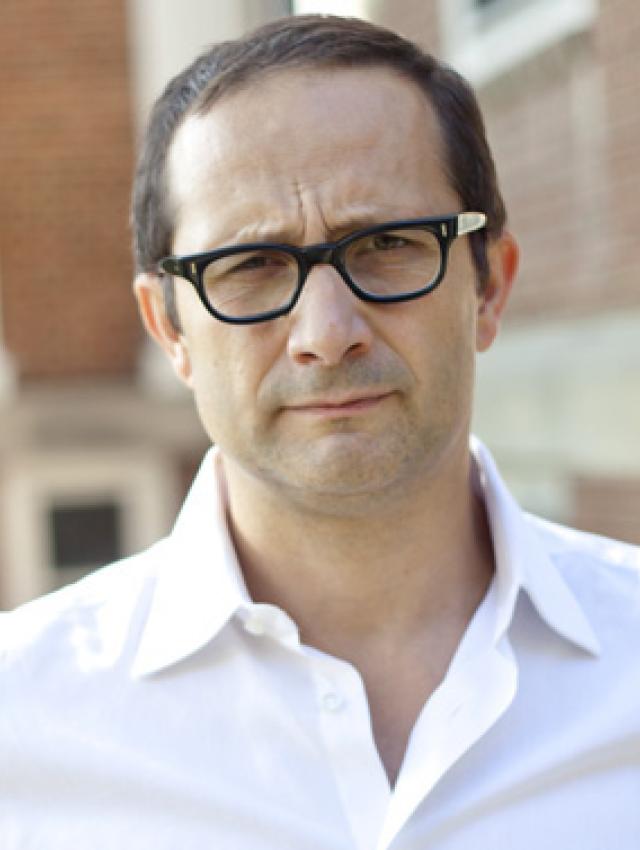
Theodore Papageorgiou is the Felter Family Professor of Economics at Boston College, focusing on Labor Economics , Macroeconomics , and Transportation Economics . His research explores the intersection of urban dynamics, trade costs, and labor market efficiency. Education: BA, University of Athens PhD, Yale University Research Interests: His work spans spatial economic models, infrastructure impacts on trade, and occupational reallocation in cities. He investigates how transportation frictions shape global supply chains and labor markets. Scientific Awards: Recipient of the Frisch Medal (2022) for his paper on trade costs with Giulia Brancaccio and Myrto Kalouptsidi. Affiliations: Co-Editor, Economic Theory Fellow, Society for the Advancement of Economic Theory Affiliated with Boston College's Markets Network Grants: Funded by NSF , NBER , and SSHRC .
Michael S.D. Agus, M.D. is the Constantine Anast, MD Professor of Pediatrics at Boston Children's Hospital, which is affiliated with Harvard Medical School. He serves in the Department of Pediatrics with a focus on critical care and endocrinology. Dr. Agus is a prominent researcher in pediatric critical care medicine, with particular expertise in glycemic control, diabetic ketoacidosis, and sepsis management in critically ill children. Dr. Agus's research interests center around optimizing care for critically ill children, with a strong focus on glucose management in pediatric intensive care settings. His work has significantly contributed to understanding the optimal blood glucose ranges for critically ill children, the management of diabetic ketoacidosis in pediatric patients, and the role of corticosteroids in pediatric septic shock. He has led several major NIH-funded clinical trials including the HALF-PINT (Heart and Lung Failure-Pediatric INsulin Titration) trial and the SHIPSS (Stress Hydrocortisone In Pediatric Septic Shock) study. Dr. Agus has been instrumental in developing clinical guidelines for glycemic control in critically ill children, as evidenced by his contributions to the Society of Critical Care Medicine Guidelines. His research employs advanced methodologies including transcriptomics to identify subclasses of pediatric septic shock, potentially enabling more personalized treatment approaches. His work bridges the gap between critical care medicine and endocrinology, focusing on how metabolic management affects outcomes in critically ill children. Dr. Agus has received significant recognition for his research, with numerous high-impact publications in leading medical journals including Critical Care Medicine , Pediatric Critical Care Medicine , and The Lancet Child & Adolescent Health . His work on glycemic control has been particularly influential in shaping clinical practice for critically ill children with diabetes or hyperglycemia. As a principal investigator on multiple NIH grants, Dr. Agus leads a robust research program focused on improving outcomes for critically ill children. His work extends beyond direct patient care to include healthcare systems research, examining optimal staffing models in pediatric intensive care units and building global collaborative research networks in pediatric critical care. He is actively involved in translating research findings into clinical practice through guideline development and educational initiatives.
Shaukat Ali serves as Research Professor and Head of the Department of Engineering Complex Software Systems at Simula Research Laboratory, concurrently holding the title of Chief Research Scientist. His academic leadership drives innovation at the critical nexus of quantum computing, artificial intelligence, and software engineering, with concentrated expertise in verification, validation, and testing methodologies for complex systems including cyber-physical infrastructures and autonomous robotics. His primary research domains encompass: Verification and Validation Search-Based Software Engineering Autonomous Driving Systems Cyber-Physical Systems Engineering Digital Twin Technologies Quantum Software Engineering Analysis of recent publications (2024-2025) reveals a decisive trend toward quantum-AI convergence in software engineering, particularly through quantum software testing frameworks and AI foundation models applied to cyber-physical systems. His work systematically addresses noise mitigation in quantum hardware, uncertainty quantification in adaptive robotics, and novel testing paradigms using vision-language models for industrial robotics—demonstrating both theoretical rigor and industrial applicability. As department head, Ali spearheads strategic research directions in complex software systems, fostering cross-disciplinary collaboration while actively shaping quantum software engineering through workshops like QAI2024 and Q-SANER 2024. His invited presentations at venues including JYU Quantum Electronics and EU-Korea Quantum Forums underscore his influence in defining emerging research landscapes.
Michelle Cameron is an Associate Professor in the Department of Anthropology at the University of Toronto's Faculty of Arts & Science. She joined the department in 2018 and specializes in skeletal biology and bioarchaeology, integrating skeletal analysis with archaeological and ecological evidence to study human adaptability across diverse environments. Her research explores how environmental and cultural contexts shape human biology through time, focusing on biocultural stressors and skeletal responses. She employs advanced methodologies including 3D modeling, biomechanical analyses, and spatial analysis frameworks to examine human adaptation to environmental challenges. Primary research regions: Africa (South Africa, Namibia, Lake Turkana), North America, Europe Key methodologies: Cross-sectional geometry, skeletal biomechanics, paleodiet reconstruction Dr. Cameron's publications demonstrate expertise in subsistence transitions (herding practices), human evolutionary morphology, and contemporary skeletal biology applications. She maintains active fieldwork programs in southern Africa while engaging in comparative studies across continents. Scientific Awards: SSHRC Insight Development Grant Connaught New Researcher Award Education: PhD, University of Cambridge (2017) As co-host of the YouTube series 'Humans in 5', she actively participates in science communication, distilling complex anthropological concepts into accessible five-minute segments.
George Evans is the John B. Hamacher Professor of Economics at the University of Oregon, affiliated with the Department of Economics in the College of Arts and Sciences. He holds a Ph.D. from the University of California, Berkeley (1980), with expertise in macroeconomics and econometrics. His research centers on adaptive learning in macroeconomic models, exploring how expectations influence monetary and fiscal policy, economic stability, and sunspot equilibria. His work integrates theoretical modeling with experimental and behavioral insights, contributing significantly to the understanding of bounded rationality and learning dynamics in economic systems. The recent articles highlight a consistent focus on expectations, learning, and macroeconomic policy . Themes include the stability of economic equilibria under learning, the role of bounded rationality in unemployment and market dynamics, and the nonlinear effects of fiscal policy. His research often employs advanced dynamic modeling and has been published in leading journals such as the American Economic Journal: Macroeconomics and Journal of Economic Theory . Evans has received research funding, including from the NSF (Grant No. SES-1559209), and is a co-author of the influential book Learning and Expectations in Macroeconomics . He has delivered numerous invited lectures at international conferences and institutions, solidifying his role as a leading scholar in behavioral and learning-based macroeconomics. He advises and collaborates extensively, particularly with Seppo Honkapohja, Bruce McGough, and William Branch. His work continues to shape the discourse on how agents form expectations and how such behavior affects macroeconomic outcomes.
Lukas Engelmann is a Senior Lecturer at the University of Edinburgh , specifically within the Science, Technology and Innovation Studies department under the School of Social and Political Science . His research focuses on the history and sociology of biomedicine , with particular interest in epidemiological reasoning , visual cultures of disease , digital epidemiology , and decolonial approaches to medical history . The Epidemy Lab , which he founded, explores the historical development of epidemiology and its contemporary influence on data-driven public health and pandemic policy-making . Engelmann's work has been funded by prestigious grants including an ERC Starting Grant (2021-2025) for his research on the history of epidemiological reasoning, and support from the Wellcome Trust for projects examining the social dimensions of digital health . His book 'Mapping AIDS' (2018) established him as a leading scholar in medical visualization , while 'Sulphuric Utopias' (2020) with Christos Lynteris explores the technological history of maritime sanitation and its political implications. Recent publications emphasize the visual and data practices that have shaped epidemiology, including works on epidemic modeling during the COVID-19 pandemic , the history of plague mapping , and the ethical implications of digital phenotyping . He has also contributed to interdisciplinary discussions on syndemics , co-infection epistemology , and the commercialization of bacteriology in the early 20th century. His scientific contributions have earned recognition through editorial roles in journals like Big Data and Society , and collaborative projects such as 'Working with Diagrams' (2022) which investigates the epistemological role of visual tools in medical knowledge production. Scientific Awards and Funding: ERC Starting Grant (2021-2025) Wellcome Trust Institutional Support Fund British Academy/Leverhulme Small Research Grant Chancellor's Fellowship (University of Edinburgh) 'Sulphuric Utopias' listed in The Guardian's 30 Books to Understand the World (2020)
Michelle Crow is a Senior Lecturer at Cornell University and Director of the English Language Support Office within the John S. Knight Institute for Writing in the Disciplines. She is affiliated with the College of Arts and Sciences and supports multilingual graduate and professional students across all ten colleges at Cornell. PhD in Composition-Rhetoric with specialty in ESL writing, University of New Hampshire, 2006 Former Associate Professor of English, Bridgewater State University Founding Director, English Language Support Office, Cornell Founding Chair, Association for Writing Across the Curriculum (AWAC) Co-Founder, Consortium on Graduate Communication Her research focuses on Writing Across the Curriculum (WAC), graduate writing support, and pedagogy for multilingual writers. She has pioneered sustainable models for WAC programs and developed frameworks for supporting non-native English speakers in academic writing. Her work bridges composition theory, program administration, and practical pedagogy in higher education contexts. Her publications include influential books such as Sustainable WAC , Supporting Graduate Writers , and WAC and Second Language Writers . These works highlight trends in interdisciplinary writing support, curriculum development, and inclusive pedagogy, particularly for multilingual graduate students. Her scholarship appears in leading journals like Across the Disciplines , The WAC Journal , and Composition Studies . Scientific Awards: Presidential Award for Excellence in Collaboration to Improve Teaching (2010, BSU) Presidential Award for Distinguished Teaching (2012, BSU) Distinguished Fellow of the Association for Writing Across the Curriculum (2021, AWAC) Best WAC Monograph Award (2021, WAC Clearinghouse) Michelle Crow has led major initiatives in writing program development, including founding the Association for Writing Across the Curriculum and co-developing national standards such as the INWAC Statement of WAC Principles. She has secured recognition through institutional and national awards, reflecting her impact on teaching and program leadership. Her work continues to shape graduate communication support and WAC infrastructure across institutions. She directs the English Language Support Office at Cornell, a central hub providing writing and speaking consultations for multilingual graduate students, postdocs, and professionals. The office operates under the Knight Institute and collaborates across disciplines to promote inclusive academic communication.
Madison Lore is an incoming Assistant Professor in the Department of City and Regional Planning at Cornell University's College of Architecture, Art, and Planning, beginning her tenure in January 2026. Her interdisciplinary research integrates urban planning, data science, and sustainability, focusing on how large-scale data and information environments shape public behaviors and perceptions around sustainable transitions in housing, transportation, and energy systems. She holds a Ph.D. from the School of Community and Regional Planning at the University of British Columbia, a Master's in Applied Mathematics, and a dual Bachelor's in Mathematics and Physics from Rensselaer Polytechnic Institute. Her academic journey reflects a strong technical foundation applied to pressing urban challenges. Madison’s research interests span urban data science, machine learning, infrastructure and land use planning, social policy, and sustainable transportation. She investigates how algorithmic and data-driven methods can be used responsibly to uncover social norms, institutional influences, and individual support for sustainable policies, particularly in contexts of information overload. Her recent publications demonstrate a strong trajectory in applying hybrid deep learning and natural language processing to urban text data, evaluating equity in public mobility, and modeling transportation preferences through digital footprints. These works reflect a consistent theme: leveraging data analytics to promote equitable and sustainable urban futures. Vanier Canada Graduate Scholarship (2023–2026) Bombardier Sustainable Transportation Fellowship (2022) The Bill and Nancy Siegmann Applied Mathematical Modeling Prize (2018) Leonhard Euler Award for Excellence in Mathematical Modeling (2016) Climate Social Science Network Grant on Big Oil’s Climate Disinformation (2024) Madison has presented her work at major conferences including the Association of Collegiate Schools of Planning, the International Conference on Travel Behavior Research, and the American Planning Association National Conference. While no formal advisees are listed, her role as an incoming assistant professor suggests future mentorship of graduate students in urban planning and data analytics. She is affiliated with the PLACE Lab and brings expertise from prior work in nuclear physics and applied mathematics into her current urban sustainability research.
Anssi Laurila is a Professor in the Department of Ecology and Genetics, specializing in Animal Ecology at Uppsala University, Sweden. His research integrates evolutionary biology and ecology to explore the mechanisms underlying phenotypic and genetic variation in natural populations, particularly amphibians. His primary research interests include phenotypic plasticity , local adaptation , maternal effects , life-history evolution , and genomic responses to environmental gradients such as latitude, temperature, acidity, and predation. He investigates how populations adapt to heterogeneous environments through both plastic and genetic mechanisms, often using comparative studies across latitudinal clines and contrasting habitats. His work frequently focuses on amphibians like Rana temporaria , Rana arvalis , and Bufo bufo , as well as other ectotherms including freshwater snails and fish. The trends in his recent publications (2020–2025) show a strong emphasis on genomic and transcriptomic analyses of adaptation, host-pathogen interactions (especially with Batrachochytrium dendrobatidis ), immunogenetics (MHC diversity), conservation genetics of edge populations, and acclimation physiology . His studies often combine field observations with controlled experiments and molecular techniques, contributing to understanding evolutionary responses to climate change and anthropogenic stressors. No scientific awards are explicitly mentioned in the provided text. Dr. Laurila actively collaborates with researchers across Europe and supervises or co-supervises numerous studies, as evidenced by his consistent presence as a senior or corresponding author. While specific grant details are not listed, his extensive publication record in high-impact journals suggests sustained funding for research in evolutionary ecology and conservation. His work has implications for biodiversity conservation, particularly in the context of climate change and emerging infectious diseases. He is involved in research on amphibian microbiomes, thermal adaptation in geothermal systems, and the genetic basis of adaptive traits. His team explores how environmental stressors shape phenotypic and genetic variation, with a focus on understanding the limits and costs of plasticity and adaptation.
Professor Steve Simpson is a leading marine biologist and fish ecologist at the University of Exeter's Biosciences department. He serves as Professor of Marine Biology & Global Change and leads a dynamic research group focused on understanding marine ecosystems, particularly in the context of climate change and human impacts. His work has been prominently featured in Blue Planet II and he actively engages with industry, policy makers, and the public through media appearances and outreach activities. Education PhD, University of York, UK (2000-2004) MRes Marine & Coastal Ecology & Environmental Management, University of York, UK (1998-1999) BSc Marine Biology (Hons), University of Liverpool, UK (1995-1998) Professor Simpson's research centers on the behavior of coral reef fishes, bioacoustics, and the effects of climate change on marine ecosystems. His approach uniquely combines fieldwork in remote environments with laboratory experiments, data-mining, and computer modeling. He has pioneered new methods for listening to ocean soundscapes and understanding fish communication, revealing how anthropogenic noise disrupts natural behaviors and ecological processes. His work on climate change impacts examines shifting fish distributions and their implications for fisheries management and conservation. Analysis of Simpson's recent publications reveals two dominant research themes: the impacts of anthropogenic noise on marine life and climate change effects on fisheries. His work demonstrates how underwater noise from boats and industrial activities impairs fish hearing, disrupts predator-prey relationships, and affects reproductive success. Simultaneously, his climate change research tracks how warming seas are altering fish distributions, creating 'mackerel wars' and requiring fisheries adaptation. These research strands converge in his innovative work on developing solutions like bubble curtains to mitigate noise impacts. Scientific Awards FSBI Medal (2016) NERC Knowledge Exchange Fellowship (2011-2014) NERC Postdoctoral Research Fellowship (2004-2007) Royal Society International Fellow (2007-2008) EPHE Postdoctoral Fellow (2007-2008) Professor Simpson leads a thriving research group of approximately 10 postdocs, PhD, and Masters students. His grant portfolio includes major NERC funding for projects on marine noise impacts and climate change effects on fisheries. He has developed strong industry partnerships through a Knowledge Exchange Fellowship, working with Cefas, the Met Office, Sustainable Marine Energy Ltd, and HR Wallingford Ltd. His research has directly informed policy through contributions to Marine Climate Change Impacts Partnership reports and presentations to European Parliament. Simpson has also created innovative knowledge exchange initiatives including the 'Vision of Sustainable Fisheries in 2050' thinktank. Simpson has developed specialized research infrastructure including a mobile lab with Ecocean in Montpellier for assessing marine noise impacts, and has conducted large-scale acoustic experiments in dry docks. His work on underwater acoustics was prominently featured in Blue Planet II, and he maintains active engagement with media through TEDx talks, BBC appearances, and public lectures to schools and community groups. He serves on the International Quiet Ocean Experiment Science Committee, helping shape global research on ocean noise.
Anatole Boute is Professor at The Chinese University of Hong Kong's Faculty of Law, specializing in energy, environmental, and investment law with focus on sustainable energy transitions in emerging economies and Belt and Road contexts. His academic credentials include: PhD in Law (2011, University of Groningen) Advanced Master (LLM) in Energy and Environmental Law (2005, University of Leuven) Law degree (2004, University of Leuven) Political Sciences degree (2003, University of Leuven) Professor Boute's research examines legal frameworks for renewable energy adoption, emissions trading systems, and investment protection in energy transitions. His work analyzes geopolitical dimensions of energy security, regulatory stability challenges, and adaptation of international law to regional contexts—particularly Central Asia and China—through interdisciplinary lenses combining law, economics, and political science. His publication trends reveal concentrated expertise in China's emissions trading mechanisms, Belt and Road energy investments, and regulatory stability for renewable projects. Recent work critically examines carbon pricing integration in electricity markets, geopolitical tensions in EU-Russia energy relations, and legal innovations for climate adaptation in resource-constrained regions. His scientific recognition includes: Willoughby Prize (2009) for Journal of Energy & Natural Resources Law publications Outstanding Fellow of the Faculty of Law at CUHK As founder and coordinator of CUHK's LLM program in Energy and Environmental Law, Professor Boute mentors graduate students while leading major research initiatives. He secured General Research Fund grants for projects on China's emissions trading (2016) and Eurasian energy market shaping (2018), and co-organized the 2017 conference on Belt and Road energy investments. His advisory work spans the World Bank's Russia Renewable Energy Program (2011-2016), International Energy Agency, and United Nations Conference on Trade and Development. Professor Boute directs research on energy transitions through collaborations with international organizations and government bodies, focusing on practical implementation of legal frameworks for decarbonization in Asian and Eurasian contexts.
Prof. Dr. Sarah Dégallier Rochat is Head of the strategic thematic field 'Humane Digital Transformation' at Bern University of Applied Sciences (BFH). She holds a joint appointment as Professor at the School of Engineering and Computer Science and serves as co-leader of the Computer Perception and Virtual Reality Lab (cpvrLab) within the Institute for Human-Centered Engineering. Her educational background includes: Ph.D. in Robotics from École Polytechnique Fédérale de Lausanne (EPFL) Master's in Mathematics from EPFL Teaching Diploma in Mathematics from Haute École Pédagogique de Lausanne Psychology studies at University of Lausanne Her research focuses on human-centered technological development with emphasis on: Designing inclusive human-machine interfaces through participatory approaches Developing upskilling strategies for industrial workforce adaptation Examining how techno-narratives shape societal perceptions of technology Creating collaborative robotic systems for agile manufacturing (Cobotics) Exploring mixed reality interfaces for worker augmentation Her publications demonstrate strong interdisciplinary focus on robotics and human-centered AI, with recent works exploring human augmentation in industry, ethical AI implementation, and participatory robot programming. The trajectory shows increasing emphasis on socio-technical systems and workforce empowerment. Significant awards include: Industry 4.0 Shapers Award (2019) CHIRA Best Paper Award (2023) She leads multiple research projects funded by Innosuisse, SNF, and EU programs, including: CODIMAN (Cobotics and workplace humanization) Agile Robotics for High-Mix Low-Volume Production Upskill at Work (digital literacy initiatives) Augmented workers with mixed reality interfaces As founder of Auto-Mate Robotics, she develops flexible robotic cells for industrial applications. She co-leads the Computer Perception and VR Lab and serves on advisory boards including the Swiss Cobotics Competence Center and EUA Task Force on AI.
Anna Shusterman is a Professor in the Psychology Department at Wesleyan University, where she has taught and directed research in the Cognitive Development Laboratories since 2007. She co-founded and serves as co-chair of Wesleyan's College of Education Studies, established in 2020. Her educational background includes: Bachelor's degree in Neuroscience from Brown University Graduate studies and post-doctoral fellowship at Harvard University's Laboratory for Developmental Studies under Elizabeth Spelke and Susan Carey Dr. Shusterman's research centers on conceptual development in children, with a focus on the interplay between language and cognition in spatial and numerical domains. She investigates how language shapes children's understanding of numbers and space, and develops methodological approaches for translating developmental science into practical preschool classroom applications. Her work explores how young children perceive and learn about the world through simple, engaging games. Analysis of her recent publications (2019-2025) reveals consistent emphasis on numerical cognition, language acquisition, and spatial reasoning. Key themes include language's role in math development, early numeracy in diverse populations (particularly deaf and hard of hearing children), and implementation of research-based math activities in preschool settings. Her work demonstrates how language exposure in any modality supports numerical concept development and how grammatical structures influence number word acquisition. Dr. Shusterman has secured significant research funding including NSF CAREER grants and collaborative research awards. She mentors undergraduate researchers in her laboratory and actively bridges academic research with practical educational applications through her work with the College of Education Studies. She directs the Blue Lab within Wesleyan's Cognitive Development Laboratories, located in Judd Hall. The NSF-funded lab conducts studies with children under 12 from central Connecticut preschools, schools, and daycare centers, using fun games to investigate how children think about numbers, space, language, and social concepts.
Roderich Gross is a Senior Lecturer in the Department of Automatic Control and Systems Engineering at the University of Sheffield. He is also a Visiting Scientist at CSAIL, MIT, and leads the Enabling Technologies theme at Sheffield Robotics. His academic journey includes a Ph.D. in engineering science from Université libre de Bruxelles (2007), followed by postdoctoral fellowships as a JSPS Fellow (Tokyo Institute of Technology), Research Associate (University of Bristol), and Marie Curie Fellow (EPFL & Unilever). Research Interests : Swarm robotics, self-reconfigurable robots, multi-robot coordination, robotics software/tools (human-robot interaction interfaces, formal design tools), machine learning for behavior inference (Turing Learning, GANs), autonomous systems, natural computing (swarm intelligence, evolutionary algorithms). Scientific Contributions : Inventor of Turing Learning, a machine learning method for behavior inference. Key work includes swarm coordination, self-assembly, fault-tolerant quadcopters, energy-efficient drone delivery, and infrared-based swarm communication. Scientific Recognition : Held prestigious fellowships including JSPS and Marie Curie, and served as Associate Editor for leading robotics journals (IEEE Robotics and Automation Letters, Swarm Intelligence) and conference roles (General Chair DARS 2016, Program Co-Chair GECCO 2018). Grants : Principal Investigator on Horizon Europe OpenSwarm (£463,699), EPSRC Core Capital (£104,196), DSTL Multi Robot Systems (£98,781), and industry-funded modular robotics projects. Labs : Affiliated with the Natural Robotics Lab at the University of Sheffield.
Giovanni Gavetti is the Doreen L. and David I. Chemerow ’73 T’75 Professor of Strategy at the Tuck School of Business, Dartmouth College, where he serves as Area Chair for Strategy. He previously held the position of Associate Professor at Harvard Business School before joining Tuck in 2012. Education : PhD (2000) and MA (1998) in Management from the University of Pennsylvania; BA (1993) in Economics from Bocconi University, Milan. His research focuses on the cognitive foundations of strategy, exploring how cognition, evolutionary theory, and organizational learning shape strategic decision-making. He emphasizes behavioral theory, analogical reasoning, and microfoundations of capabilities, with a particular interest in overcoming cognitive biases and inertia in strategic contexts. Gavetti’s recent articles span strategic leadership, organizational cognition, and evolutionary dynamics, often bridging behavioral science with traditional strategy frameworks. His work addresses topics like collective interpretation, strategic foresight, and the interplay between cognition and organizational performance. Scientific Awards : 2015 Strategic Management Society Best Paper Prize; 2014 Teaching Excellence Award at Tuck. Gavetti supervises numerous student-authored case studies at Tuck, including works on Patagonia, NPR, Uber in India, and The Minerva Project. His teaching philosophy centers on cultivating a strategic mindset through foundational principles and timeless case studies, often co-developing cases with former students.