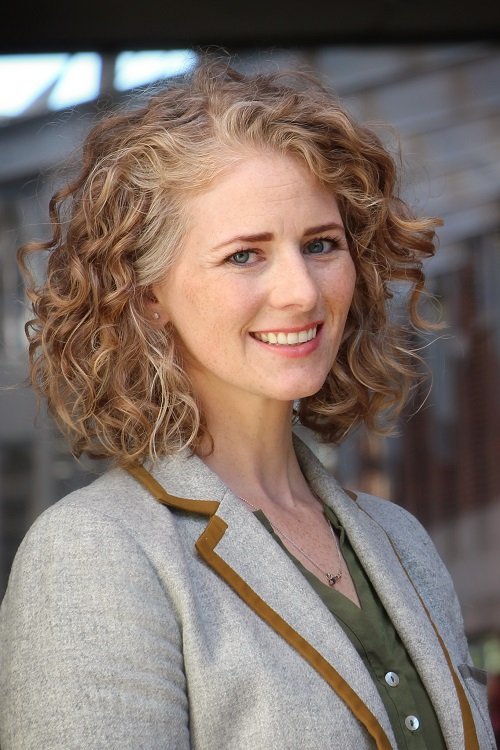
Julianna Abel is an Associate Professor in the Department of Mechanical Engineering at the University of Minnesota and serves as the Director of the Design of Active Materials and Structures Lab. Her research focuses on smart materials, wearable technology, and biomedical applications of shape memory alloys (SMAs). Research Interests : Smart materials, aerospace structures, medical devices, and consumer product design. Laboratory : Design of Active Materials and Structures Lab Her recent work explores multifunctional active yarns, dynamic compression garments, and SMA-based textiles for medical and aerospace applications. Articles highlight themes of thermomechanical actuation, textile engineering, and wearable systems. Scientific Awards : NSF CAREER Award (2020) She has contributed extensively to soft robotics, medical compression devices, and hierarchical active textile architectures.
Jeffery Wayne Baur is the Scott R. White Professor in Aerospace Engineering and holds affiliations with the Materials Research Lab and Beckman Institute for Advanced Science and Technology at the University of Illinois. His research focuses on advanced composite materials, additive manufacturing, and polymer chemistry. Key areas include frontal polymerization, carbon fiber reinforcement, and sustainable thermoset materials. Research interests span composite materials science, nanotechnology applications (e.g., carbon nanotubes), shape memory polymers, and energy-efficient manufacturing processes. His work emphasizes interdisciplinary collaboration, with recent studies addressing autonomous composite shaping, chemical recycling of thermosets, and warpage mitigation in additively manufactured composites. Publications from 2024-2025 highlight innovations in material synthesis, recycling strategies, and advanced manufacturing techniques. Collaborations include projects funded by NASA for space-based manufacturing initiatives, as evidenced by a 2024 media feature. Baur’s affiliations with the Beckman Institute and Materials Research Lab position him at the forefront of cutting-edge research in materials science and engineering applications. His work bridges fundamental material science with practical industrial challenges, particularly in aerospace and sustainable manufacturing sectors.
Dr. Sepideh Ghodrat is an Assistant Professor of Shape Morphing Design at TU Delft's Faculty of Industrial Design Engineering. She bridges materials science and design, focusing on stimuli-responsive materials for dynamic, interactive products. Her research emphasizes 4D printing, smart materials, and sustainable applications. Research Projects include 4D Printing Magnetically Activated Shape Morphing Objects and SereniSleeve (wearables for anxiety modulation). Courses taught: Materials and Manufacturing (2023-2024). Research Interests : Shape Morphing Design (SMD) Stimuli-Responsive Materials (e.g., shape memory alloys, polymers) 4D Printing and Magnetic Soft Materials Applications in healthcare, automotive, and sustainability Key Contributions : Developed modular self-folding hinges (Mimosa Kit). Explored haptic wearables for visually impaired users. Advocates for adaptive, environment-responsive products. Labs/Teams : Involved in multiple interdisciplinary research teams at TU Delft, focusing on smart materials and sustainable design engineering.
Dr Eral Bele serves as Associate Professor (Teaching) in the Department of Mechanical Engineering at University College London, with adjunct appointments at Vellore Institute of Technology (India) and external examiner duties at Coventry University. His research and teaching focus on mechanics of lightweight materials—composites, natural fibers, and cellular structures—aiming to develop lighter, stronger, energy-efficient solutions through experimental mechanics and finite element analysis. His research spans four core projects: (1) manufacturing mechanics of natural fiber composites and technical foams; (2) fracture toughness of metamaterials; (3) additive manufacturing of hierarchical microlattices; and (4) fatigue mechanics in natural structural materials. This work leverages UCL's Materials, Structures and Manufacturing Research group facilities, including mechanical testing labs, full-field strain mapping, and additive manufacturing equipment for metallic and fiber-reinforced components. Recent publications (2022–2025) reveal concentrated expertise in additive manufacturing applications, fracture behavior of novel materials, and sustainable material development—particularly in nacre-like composites, lunar regolith processing, and natural fiber foams. His work bridges experimental validation with computational modeling to advance sustainable materials engineering. Dr Bele holds the following recognition: Senior Fellow Advance HE (York, United Kingdom) His educational leadership includes serving as UCL's Departmental Tutor and Head of Undergraduate Education, designing the MSc in Future Manufacturing and Nanoscale Engineering (2023), and supervising MEng Capstone Design Projects. Internationally, he co-leads PhD training at CICY (Yucatan) on micro-CT characterization of composites and established VIT's Sustainable Manufacturing undergraduate program. His research group operates within UCL's Materials, Structures and Manufacturing Research ecosystem and maintains active collaborations with University of Toronto, CICY, VIT, and EU industrial partners—focusing on natural fiber composites, metamaterials, and sustainable manufacturing processes.
Horacio Dante Espinosa is the James N. and Nancy J. Farley Professor in Manufacturing and Entrepreneurship at Northwestern University's McCormick School of Engineering, holding the rank of Professor in Mechanical Engineering. He also directs the Theoretical and Applied Mechanics Program and the Micro and Nano Mechanics Lab. His research spans bioinspired materials, single-cell analysis, and multiscale experimentation, with a focus on nanoelectronics and energy harvesting. Espinosa earned his Ph.D. in Applied Mechanics from Brown University and has held academic roles at Purdue University and Harvard University. He leads interdisciplinary teams exploring metamaterials, cell engineering, and advanced fabrication techniques. His honors include the Prager Medal (2019) and multiple fellowships. Espinosa's lab combines experimental and computational methods, with capabilities in nanomechanical testing and biological assay development. Education: Ph.D. in Applied Mechanics (Brown University, 1992), M.Sc. in Structural Engineering (Polytechnic of Milan, 1987), Civil Engineering (Northeastern National University, Argentina, 1981) Key Roles: Director of iCET (2015–2018), Faculty Director of NUFAB (2013–2015), Visiting Professorships at Stanford and Harvard Labs: Micro and Nano Mechanics Lab focuses on biomaterials, metamaterials, and single-cell manipulation with advanced microscopy and electroporation systems Grants/Awards: NSF-CAREER Award, ONR Young Investigator Award, and leadership roles in professional societies His research bridges mechanics, materials science, and biology, with applications in healthcare technologies and advanced materials. Current projects include phononic crystal studies, Kirigami engineering, and high-throughput electroporation platforms for cell analysis.
Jacob Fish holds the Rosalind and John J. Redfern Jr. Chair in Engineering at Columbia University's Department of Civil Engineering and Engineering Mechanics within the Fu Foundation School of Engineering and Applied Science. His research program focuses on computational mechanics and multiscale modeling with applications across material science and structural engineering. His research interests center on developing advanced computational frameworks for multiscale analysis of heterogeneous materials. Key areas include computational continua, atomistic-to-continuum coupling, fracture mechanics of composites, and thermomechanical modeling of advanced materials. His work bridges theoretical developments with practical engineering applications through reduced-order modeling and data-physics integration. His recent publications demonstrate strong trends in multiscale computational engineering, particularly in homogenization techniques, phase-field fracture modeling, and data-driven approaches for material behavior prediction. The research spans from atomistic simulations to structural-scale analysis with emphasis on computational efficiency and physical fidelity. Fellow, U.S. Association for Computational Mechanics (USACM) Computational Structural Mechanics Award, 2005 Fellow, International Association for Computational Mechanics (IACM), 2002 National Science Foundation Presidential Young Investigator Award, 1992 Walter P. Murphy Fellowship, Northwestern University, 1986 Fish serves as Editor-in-Chief of the International Journal for Multiscale Computational Engineering and has secured numerous research grants focused on multiscale modeling of advanced materials. His collaborative network spans multiple institutions and disciplines, particularly in computational mechanics and material science. His laboratory develops computational frameworks for multiscale analysis with applications in structural engineering, material science, and biomechanics, focusing on efficient algorithms for complex material behavior prediction.
Shanming Hu is a Doctoral Researcher at the Department of Applied Physics , Aalto University, affiliated with the Molecular Materials research group. His work focuses on advanced polymer-based materials with responsive optical and mechanical properties. Research Interests: Development of smart hydrogels for optical and thermal applications Responsive polymer networks with dynamic functionalities Material design for light scattering and shape-memory effects Publications highlight trends in hydrogel engineering , photonic materials , and stimuli-responsive systems , emphasizing interdisciplinary approaches in materials science and polymer chemistry.
Dr. Muhammad M. Sherif is an Assistant Professor in the Department of Civil, Construction, and Environmental Engineering at the University of Alabama at Birmingham (UAB), part of the School of Engineering. He joined UAB in Fall 2019 after completing his Ph.D. at the University of Virginia and M.S. at Carnegie Mellon University, both in structural engineering. His research focuses on smart materials, structural systems, and machine learning applications in civil infrastructure. He is particularly interested in additive manufacturing for construction and the development of innovative materials like engineered cementitious composites. Education: B.S., United Arab Emirates University M.S., Carnegie Mellon University Ph.D., University of Virginia Research Interests: Dr. Sherif’s work spans material characterization, machine learning models for structural analysis, and the integration of advanced materials into infrastructure systems. He explores topics like crack detection using UAVs, superelastic shape memory alloys, and multi-objective optimization in welding processes. His Advanced Materials and Smart Infrastructure Systems (AMSIS) lab emphasizes interdisciplinary approaches to solving civil engineering challenges. Publications: His recent work includes studies on UAV-based pavement crack detection, machine learning for concrete strength prediction, and optimization of tube-to-tubesheet joints. These reflect trends toward AI-driven solutions and sustainable material innovations. Advising: He actively mentors students in multidisciplinary research projects, emphasizing self-motivation and innovation. His lab collaborates on topics like composite materials, structural health monitoring, and infrastructure resilience. Labs/Teams: His AMSIS lab at UAB focuses on advancing smart materials and infrastructure systems through cutting-edge research and collaboration.
Thao (Vicky) Nguyen is a Professor of Mechanical Engineering at Johns Hopkins University, with a secondary appointment in the Department of Materials Science and Engineering. She is co-Deputy Director of the Hopkins Extreme Materials Institute (HEMI). Her research focuses on biomechanics of soft engineering and biological materials, including adaptive polymers, fracture mechanics, and ocular biomechanics related to glaucoma. Key collaborators include the National Eye Institute and National Science Foundation. Nguyen holds a B.S. from MIT (1998), and M.S. and Ph.D. from Stanford (2000, 2004). She previously worked at Sandia National Laboratories. Awards include the James R. Rice Medal (2025), NSF CAREER Award, and multiple ASME honors. Her lab integrates experimental and computational approaches, with notable work on shape-memory polymers and scleral biomechanics. Research interests include collagen growth, liquid crystal elastomers, and architected materials. She leads studies on optic nerve head mechanics, funded by DOD, NEI, and BrightFocus. Nguyen serves on editorial boards for ASME journals and professional societies.
Steve Hostler, PhD, is an Assistant Professor in the Department of Mechanical and Aerospace Engineering at Case Western Reserve University's Case School of Engineering. His research focuses on thermal management, granular materials, and CO2 power/refrigeration cycles, with expertise in fluid mechanics, thermodynamics, and heat transfer. He teaches courses such as Design of Fluid and Thermal Elements (EMAE 355) and Advanced Heat Transfer (EMAE 459). Hostler holds a PhD in Mechanical Engineering from the California Institute of Technology (2005), an MS from the same institution (2001), and a BS from Case Western Reserve University (2000). His work bridges theoretical and applied engineering, addressing challenges in energy systems, material science, and biomedical thermal effects. His research spans combustion dynamics, thermal conductivity of nanomaterials, and energy conversion systems. Notable contributions include studies on polymer composites' thermal behavior and the development of CO2-based power cycles. He is a member of the American Society of Mechanical Engineers and the American Society for Engineering Education.
Eva Blasco is an Associated Group Leader at the Functional Polymeric Materials Research Unit under the Institute of Nanotechnology at Karlsruhe Institute of Technology (KIT), with affiliations to the University of Heidelberg. Her work bridges 3D printing , polymer chemistry , and nanophotonics , focusing on light-driven material design. Her research centers on photochemically activated 3D printing inks , light-stabilized dynamic materials , and multi-photon lithography . She explores how two-color light absorption , alkoxyamine chemistry , and visible light post-processing enable adaptable microstructures. Key trends include 4D printing , biodegradable inks , and temperature/light-responsive systems . Blasco's publications highlight collaborations with institutions like KIT, University of Heidelberg, and international teams. Her work spans photonic metamaterials , bio-inspired 3D scaffolds , and subtractive laser lithography , often involving interdisciplinary applications of light in material science.
Marcel Mayor is a Full Professor of Chemistry at the University of Basel and Research Unit Chair at the Karlsruhe Institute of Technology's Institute of Nanotechnology. He leads the Synthetic Chemistry research unit, focusing on designing functional molecules for nanotechnology applications. His interdisciplinary work bridges synthetic chemistry, molecular electronics, and nanomaterials science. Mayor studied at the University of Bern (Diploma 1991, PhD 1995) and conducted postdoctoral research with Jean-Marie Lehn at Université Louis Pasteur. He became Maître de Conférence at Collège de France (1997-1998) before joining Forschungszentrum Karlsruhe (now KIT) in 1998. His research explores: Molecular electronics and single-molecule devices Carbon-based nanostructures and functional molecules Supramolecular systems for nanotechnology applications Advanced materials for optoelectronics and sensing Recent publications demonstrate innovations in molecular heat engines, single-molecule junctions, bio-conjugation chemistry, and stimuli-responsive materials. Research consistently integrates synthesis, nanofabrication, and physical characterization. Awards: Erwin Schrödinger Award (2004) for Molecules for future Nanoelectronics He directs laboratories at both the University of Basel and KIT, leading interdisciplinary teams in synthetic chemistry, molecular device fabrication, and nanoscale characterization. Current work focuses on quantum interference in molecular wires and chiral nanomaterials.
Anna C. Balazs is the John A. Swanson Chair of Engineering and Distinguished Professor of Chemical Engineering at the University of Pittsburgh Swanson School of Engineering, with an adjunct appointment in the Department of Chemistry. She has held visiting professorships at the Scripps Research Institute, University of Texas at Austin, and Oxford University. Dr. Balazs serves on the Advisory Board of the Materials Council for Materials Sciences and Engineering Division of the Department of Energy, Basic Energy Sciences, and is a member of the Editorial Advisory Boards of Langmuir, Soft Matter, and Polymer Reviews. Education: A.B. in Physics from Bryn Mawr College (1975) Ph.D. in Materials Science from MIT (1981) Postdoctoral research at Brandeis University, MIT, and University of Massachusetts Dr. Balazs specializes in the statistical, mechanical, and computer modeling of complex chemical systems, with particular expertise in polymer blends and the behavior of polymers at surfaces and interfaces. Her research focuses on developing theoretical frameworks for understanding responsive materials, particularly self-oscillating polymer gels, active matter systems, and nanocomposites. She investigates how chemical reactions can drive mechanical motion and pattern formation in soft materials, creating biomimetic systems with lifelike functionality. Her work bridges fundamental theoretical modeling with practical applications in microfluidics, drug delivery, and smart materials design. Analysis of Dr. Balazs' recent publications reveals a strong focus on the integration of chemistry, fluid dynamics, and mechanics to create responsive materials systems. Her research demonstrates how chemical reactions can drive complex mechanical behaviors in polymer gels and microstructures, enabling the spontaneous formation of 3D patterns, self-propulsion, and lifelike functionality. The work spans from fundamental theoretical modeling to practical applications in microfluidics and soft robotics, with a particular emphasis on enzyme-powered systems, chemically responsive materials, and the autonomous assembly of hierarchical structures. Dr. Balazs has made significant contributions to the field through her extensive publication record in top journals including Proceedings of the National Academy of Sciences, Nature Nanotechnology, and Advanced Functional Materials. Her work has been widely cited and has influenced multiple disciplines including materials science, chemical engineering, and soft matter physics. As a leading researcher in computational materials science, Dr. Balazs has mentored numerous students and postdoctoral researchers throughout her career. Her research has been supported by various funding agencies including the National Science Foundation and Department of Energy. She has established herself as a leading authority in the theoretical modeling of complex soft matter systems. Dr. Balazs' research group at the University of Pittsburgh focuses on developing computational models to understand and predict the behavior of responsive materials. Her team employs a range of simulation techniques to study phenomena ranging from molecular-scale interactions to macroscale material behaviors, with particular emphasis on the coupling between chemical reactions and mechanical responses in polymer systems.
Professor Sławomir Borysiak is a distinguished academic at Poznań University of Technology, where he serves as Head of the Polymer Department within the Faculty of Chemical Technology. With a career spanning over two decades, he earned his Master of Science in Engineering in 1996, PhD in Chemical Sciences in 2000, completed his habilitation in 2013, and achieved the rank of university professor in 2020. His work bridges academic research and industry applications, serving as Faculty Coordinator for Cooperation with Industry and as a member of the University Team for Cooperation with the Economy. Current Position: Professor, Head of Polymer Department Institution: Poznań University of Technology, Faculty of Chemical Technology Scientific Disciplines: Chemical Sciences (75%), Materials Engineering (25%) ORCID: 0000-0003-3485-4787 Professor Borysiak's research focuses on the physicochemistry of polymers, plastics processing and recycling, and polymer composites containing renewable fillers of plant origin. His work extends to structural studies of low molecular weight compounds, minerals, polymers and nanomaterials, with particular emphasis on the functional properties of plastics and composite materials. His laboratory investigates innovative approaches to wood-polymer composites, nanocellulose applications, and sustainable material development. Analysis of Professor Borysiak's publication record reveals a strong focus on sustainable polymer composites, with particular emphasis on lignocellulosic materials, nanocellulose applications, and renewable fillers. His recent work shows increasing integration of nanotechnology with traditional polymer science, particularly in developing antimicrobial properties, enhanced mechanical characteristics, and improved sustainability profiles for polymer composites. The research spans fundamental material science to practical applications in construction, packaging, and biomedical fields. Professor Borysiak has received recognition through his appointment as Vice-Chairman of the University Disciplinary Committee for Doctoral Students and as a member of the Board of the Polish Chemical Society, Poznań Branch. He also serves on the Polish Society of Calorimetry and Thermal Analysis and the Awards Committee of the Polish Chemical Society. As an educator, Professor Borysiak has supervised multiple doctoral dissertations, including those of Majka Odalanowska (2023) and Aleksandra Grząbka-Zasadzińska (2017). His teaching portfolio includes courses on physicochemistry of polymers, composites, nanomaterials, polymer materials technology, and chemical technology. He maintains active scientific collaborations with institutions including University of Edinburgh, Institute of Molecular Physics of the Polish Academy of Sciences, Casimir the Great University in Bydgoszcz, and several other Polish universities. His laboratory focuses on polymer research with particular expertise in wood-plastic composites, nanocellulose applications, and sustainable material development. Current projects involve developing antimicrobial polymer composites, enhancing material properties through novel hybrid fillers, and investigating the effects of various treatments on lignocellulosic materials.
Tero-Petri Ruoko is an Assistant Professor at the University of Tampere , affiliated with the Faculty of Engineering and Natural Sciences and the Materials Science and Environmental Engineering department. He leads the Spectroscopy and Light-Active Materials (SLAM) research group, which is part of the Chemistry and Advanced Materials (CAM) cluster and the PREIN photonics flagship initiative. Research Interests: Ruoko specializes in photochemistry , electrochemistry , and organic electronics , with a focus on light-emitting materials , time-resolved spectroscopy , and electrochemical systems . His work includes organic electrochemical transistors , solar energy conversion , and smart materials for actuation and self-healing . He investigates charge transport mechanisms, defect engineering in semiconductors, and interfacial phenomena in conducting polymers. Recent Publications demonstrate expertise in halogen bonding for material control, oxygen reduction catalysis with doped polymers, and self-healing liquid crystal elastomers . His research spans organic semiconductors , perovskite solar cells , and supramolecular interactions in biohybrid systems. Grants: He has received funding from the EU Horizon 2020 MSCA-IF and the Academy of Finland Postdoc programs, supporting his work on sustainable energy and advanced materials.