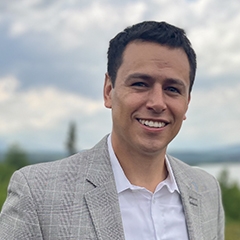
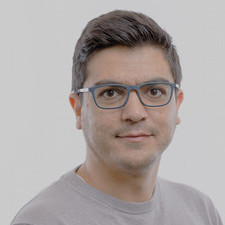
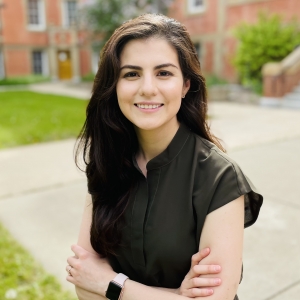
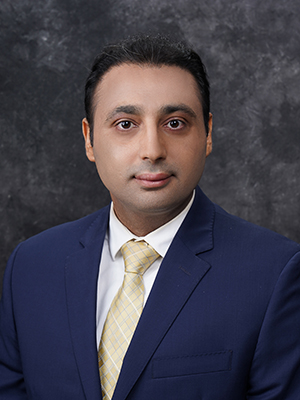
Mohammad F. Islam is a Professor in the Department of Materials Science and Engineering at Carnegie Mellon University (CMU), affiliated with the College of Engineering. His research focuses on soft materials, nanomaterials, and their applications in energy, healthcare, and manufacturing. He holds the National Science Foundation CAREER Award, Alfred P. Sloan Research Fellowship, Kavli Frontiers Fellowship, and the George Tallman Ladd Research Award. His work spans advanced materials processing, sustainable energy systems, and self-healing materials. Education: Ph.D. in Physics, Lehigh University (2000) Research Interests: Additive manufacturing and nanofabrication techniques Development of smart materials with self-healing and shape-memory properties Energy storage systems using carbon nanotube aerogels Applications in biomedicine and environmental sustainability Grants & Recognition: Recipient of multiple grants from the Wilton E. Scott Institute for Energy Innovation Co-founder of Watson Nano, commercializing carbon nanotube technologies Labs & Teams: Islam Group at CMU investigating soft matter, nanomaterials, and interdisciplinary applications
Kalaichelvi Saravanamuttu is an Associate Dean in the Faculty of Science and a Professor in the Department of Chemistry and Chemical Biology at McMaster University. Her research focuses on optochemical self-organization in soft materials, nonlinear optics, and photonics, with applications in light capture, waveguide architectures, and all-optical computing. She holds a PhD in Chemistry from McGill University (2001) and conducted postdoctoral research at the University of Oxford (2001-2003). Her work combines polymer chemistry, photochemistry, and optical physics to develop functional materials like photoresponsive hydrogels and waveguide-encoded lattices. Key research themes include light-induced structural changes in soft matter, dynamic optical systems, and bio-inspired optical devices. Teaching includes courses on equity in science (SCIENCE 2AR3/4AR6) and advanced materials (CHEM 4W03). She has received funding from NSERC, the Canadian Foundation for Innovation, and the US Army Research Office. Her research group collaborates widely, with recent studies exploring electroactive hydrogels and switchable self-trapped light beams.
Véronique Michaud is an Associate Professor at the École Polytechnique Fédérale de Lausanne (EPFL), affiliated with the Laboratory for Processing of Advanced Composites (LPAC) within the School of Engineering (STI). Her research focuses on polymer composite processing, adaptive composites (e.g., shape memory alloys, self-healing mechanisms), and material science. She also contributes to teaching in Materials Science and Engineering, including courses like 'Materials: From Chemistry to Properties' and 'Composite Materials Processing.' Her academic roles include Associate Professorships in SMX, EDMX, and EDAM teaching units, and she serves as a PhD program committee member for the Doctoral Program in Advanced Manufacturing. She has advised numerous PhD students, including Michele Bonacina, Pierre-Alexandre Boschert, and Jean-Baptiste Desbrest, among others. Research highlights include sustainable composite material development, defect mitigation in composites, and advanced manufacturing techniques. Her work often addresses challenges in aerospace and renewable energy applications, emphasizing sustainability and material innovation.
Dr. Daniel Oropeza is an Assistant Professor in the Materials Department at the University of California, Santa Barbara (UCSB), within the College of Engineering. His research focuses on advancing materials and manufacturing technologies for aerospace systems and extreme environments, emphasizing process-microstructure-property relationships. He leads the Materials and Manufacturing for Aerospace and Extremes (MMAX) Lab, which develops novel techniques for powder synthesis, additive manufacturing, and ceramic processing. Education: Ph.D. in Mechanical Engineering (MIT, 2021) M.S. in Aeronautics and Astronautics (Stanford, 2014) B.S. in Aerospace Engineering (UT Austin, 2012) Research Interests: His work spans powder synthesis (e.g., ultrasonic atomization of refractory alloys), additive manufacturing (porous materials, reactive binder jetting), and functional ceramics for applications in hypersonics, space propulsion, and robotics. The MMAX Lab integrates material science, mechanical engineering, and advanced manufacturing testbeds to enable responsive manufacturing solutions. Awards & Grants: LLNL Early Career UC Faculty Initiative Award (2024) Global Young Investigator Award (ACerS, 2025) ONR Grant for Ultrasonic Atomization Research (2024) CNSI Challenge Grant for UC M 2 ADE Consortium (2024) Advising & Labs: He mentors a team of graduate and undergraduate students in the MMAX Lab, focusing on projects like NASA-funded research on refractory metal alloys for space propulsion. The lab collaborates with national labs (e.g., LLNL) and industry partners to bridge fundamental research and applied technologies. Labs/Teams: MMAX Lab develops custom equipment for powder bed fusion, nanoparticle jetting, and reactive binder jetting systems. Current projects include ultra-high temperature ceramics (UHTCs) for extreme environments and multi-material manufacturing for defense and energy applications.
Yves Leterrier is a Senior Scientist and lecturer at École Polytechnique Fédérale de Lausanne (EPFL), where he has been a faculty member since 1993. He works in the Laboratory for Processing of Advanced Composites (LPAC) within the Institute of Materials at the School of Engineering. His academic career spans over three decades with significant contributions to sustainable materials science and polymer composite technologies. Senior Scientist, Laboratory for Processing of Advanced Composites (LPAC) Teaching roles in SMX and EDMX programs PhD program committee member for Materials Science and Engineering Author of over 300 technical articles including 145 peer-reviewed journal papers Leterrier's research focuses on sustainable materials and processes, particularly in polymer composites, multilayer and hybrid materials, photopolymerization and sol-gel processes, mechanics of thin films on polymers, and roll-to-roll process methods. His work bridges fundamental materials science with practical applications in flexible electronics, renewable energy, and sustainable packaging. He has pioneered techniques for creating bioinspired surfaces, diffusion-barrier coatings, and cost-effective manufacturing processes for advanced materials. His recent publications reveal a strong emphasis on water permeation monitoring in bioelectronic implants, fluorine-free superhydrophobic surfaces, and biobased composites using nanocellulose. His research shows a clear trajectory toward sustainable materials solutions with applications in medical devices, flexible electronics, and environmentally friendly packaging. The consistent theme across his work is the development of reliable, high-performance materials through innovative processing techniques and composite design. Leterrier actively contributes to the academic community through editorial roles, including serving on the editorial board of Applied Surface Science since 2012 and as Associate Editor for Frontiers in Materials since 2014. He coordinates EPFL's Minor on 'Engineering for Sustainability' and has been President of the EPFL Materials Science Library commission since 2000. His leadership extends to industry collaboration through multiple funded research projects. His current research portfolio includes significant projects such as BioPack (biobased packaging materials), FLEXCAN (flexible encapsulation of active implants), 3DP4PEACE (sustainable 3D printing), and DuPrintProtect (advanced manufacturing). Previously, he led projects including XinoCaps, UltraCeal, SUNLITE, and REFLEX, demonstrating consistent funding success across diverse materials science applications. He also serves on the board of the French Adhesion Society and has organized international symposia on materials and micro-technologies. Leterrier leads the Laboratory for Processing of Advanced Composites, where his team develops cutting-edge materials processing techniques. His work on photo-hyphenated methods, UV nanoimprint lithography, and electro-fragmentation analysis represents the laboratory's focus on innovative characterization and manufacturing approaches for advanced materials.
Mark MacLachlan is a distinguished Professor and currently serves as the Dean of the Faculty of Science at the University of British Columbia (UBC). He leads a vibrant research group in the Department of Chemistry focused on supramolecular materials, with expertise spanning organic, inorganic, and polymer chemistry. His work bridges fundamental molecular design with practical applications in energy, electronics, and sustainable materials. Dr. MacLachlan's research interests center on supramolecular chemistry and materials science, with emphasis on nanomaterials, porous structures, and cellulose-based systems. His group develops novel organic and inorganic molecules and materials with applications in electronics, photonics, catalysis, and environmental technologies. Key research areas include mesoporous materials for optics and catalysis, supramolecular chemistry with macrocycles, structurally interesting molecules, and self-assembled systems including gels. His work often addresses environmental challenges and alternative energy applications such as solar energy conversion and hydrogen fuel cells. Analysis of his recent publications reveals a strong focus on cellulose nanocrystals and their applications in photonic materials, energy storage, and responsive systems. His work integrates supramolecular chemistry with platinum-based systems for molecular machines and recognition. The research demonstrates interdisciplinary approaches combining chemistry, materials science, and nanotechnology to create functional materials with precisely controlled properties. Fellow of the Royal Society of Chemistry (UK) (2016) Tier 1 Canada Research Chair in Supramolecular Materials (2015-2029) Elected Fellow of the Royal Society of Canada (FRSC) (2014) Rutherford Memorial Medal (Royal Society of Canada) (2013) Killam Award for Excellence in Graduate Student Mentorship (UBC) (2013) NSERC Steacie Memorial Fellowship (2012-14) Dr. MacLachlan has mentored numerous graduate students and postdoctoral researchers, fostering a collaborative research environment that spans multiple disciplines. His group employs a wide range of characterization techniques including electron microscopy, spectroscopy, and X-ray crystallography. The MacLachlan research group maintains active collaborations with institutions worldwide, including the WPI Nano Life Science Institute at Kanazawa University where he serves as a Visiting Professor. The MacLachlan group operates state-of-the-art facilities for synthesizing and characterizing novel materials, with particular expertise in chiral nematic structures, mesoporous materials, and supramolecular assemblies. Their work on cellulose nanocrystals has led to innovative applications in photonic materials, energy storage devices, and responsive systems.
Dr. Zia Saadatnia is an Assistant Professor at Ontario Tech University's Department of Mechanical and Manufacturing Engineering, part of the Faculty of Engineering and Applied Science. He holds affiliations with the KITE Research Institute (University Health Network) as an Affiliate Scientist and the University of Toronto's Department of Mechanical and Industrial Engineering as an Assistant Professor (Status-only). His research focuses on advanced materials, energy harvesting, and biomedical devices, with notable contributions to aerogel composites, triboelectric nanogenerators, and functional electrical stimulation technologies. Education: Ph.D., Mechanical Engineering, University of Toronto (2019) M.Sc., Mechanical Engineering, Ontario Tech University (2015) B.Sc. (Hons), University of Science and Technology, Iran (2007) Research Interests: Smart structures and materials Nonlinear vibration dynamics Energy harvesting systems Sensors and actuators Biomedical devices Polymer composites and aerogel fabrication Awards and Honors: Mitacs Accelerate Fellowship (2021-2024) William Dunbar Memorial Scholarship (2019) Pierre Rivard Hydrogenics Graduate Fellowship (2018) Ranked First in Undergraduate Class (2011) Advising and Grants: Dr. Saadatnia has led research projects supported by grants from Mitacs and the Government of Canada. His work integrates interdisciplinary approaches to address challenges in energy systems, biomedical engineering, and material innovation. Labs and Teams: Collaborates with KITE Research Institute and University of Toronto teams on advanced materials and biomedical applications. His lab focuses on experimental and computational studies of energy harvesting and smart materials.
Arnaud Bertsch is a Lecturer at the École Polytechnique Fédérale de Lausanne (EPFL) within the School of Engineering (STI) and the Department of Microengineering (IEM). He is affiliated with the Microsystems Laboratory 1 (LMIS1) and has been actively involved in teaching advanced microfabrication techniques and MEMS sensor/actuator practicals. His research spans microfluidics, nanofluidics, biomedical devices, and 3D microfabrication, with a focus on neural probes, drug delivery systems, and cell manipulation technologies. Microfluidic hydrodynamic and dielectrophoretic systems Nanovolcano microelectrode arrays for electrophysiology Thermal control of ionic transport in nanochannels 3D lipid microrobots for drug delivery MEMS-based intraocular pressure sensors Arnaud Bertsch has supervised PhD students including Torres Vila Pol, Zhang Tao, and past advisees like Clémentine Lipp, Nicolas Maïno, and Joan Teixidor. His work bridges fundamental research in nanofluidics with applied biomedical solutions, contributing to fields such as neuroscience, cancer therapy, and implantable medical devices. The articles listed demonstrate expertise in microsystem design, electrochemical sensing, and biofabrication technologies.
Arri Priimägi is a Professor at Tampere University's Faculty of Engineering and Natural Sciences, leading the Smart Photonic Materials research group. He focuses on functional soft materials, particularly light-activated systems for applications in soft robotics, photonics, and biomaterials science. His interdisciplinary work bridges physics, chemistry, and engineering, emphasizing collaboration to advance materials for future technologies. Education: PhD in Applied Physics from Helsinki University of Technology (2009), MSc in Physics from Tampere University of Technology (2004). His career includes postdoctoral research in Japan (Tokyo Institute of Technology) and Italy (Politecnico di Milano). Research Interests: Design of stimuli-responsive materials, light-driven actuators, and bioinspired systems. Key projects include ERC Starting Grant-funded work on tunable photonic structures and an ERC Proof-of-Concept Grant for optical humidity sensing. He leads the Chemistry & Advanced Materials research cluster and contributes to the PREIN Flagship in photonics. Awards : Academy of Finland Award for Scientific Courage (2018) ERC Starting Grant (2016) Outstanding Doctoral Dissertation Award (2009) Grants & Projects : ERC Proof of Concept: Optical Sensing of Humidity (2018–2020) ERC Starting Grant: Tunable Photonic Structures (2016–2021) Academy of Finland Fellowship: Halogen-Bonded Materials (2014–2019) Labs/Teams: Active in the Smart Photonic Materials group and collaborates internationally on soft robotics and photonic materials.
Julie Legrand is an Assistant Professor in the Mechanical Engineering department at Eindhoven University of Technology , affiliated with the Group Van de Molengraft. Her work focuses on soft robotics , self-healing materials , and medical robotics applications . She designs actuators and sensors for adaptive robotic systems, emphasizing resilience through self-healing mechanisms and embodied intelligence. She teaches courses including Control of a Flexible Robot System , Haptics and Soft Robotics , and Robot-Arm , reflecting her expertise in both theoretical and applied robotics. Her research spans actuator design , material science integration , and minimally invasive surgical robotics , with notable contributions to self-healing actuator validation and continuum robot end-effectors for surgical applications. Legrand collaborates internationally on topics like shape memory alloys and anisotropic materials , and her work has been featured in media for breakthroughs in self-healing polymer limitations in soft robots. She actively contributes to the Medical Robotics research theme at TU/e, advancing interdisciplinary approaches to robotic systems in healthcare.
Matthew Libera is a Professor of Material Science and Engineering at Stevens Institute of Technology, affiliated with the Charles V. Schaefer, Jr. School of Engineering and Science. He leads the Laboratory for Multiscale Imaging (LMSI), a shared facility for advanced imaging and analysis. His work focuses on biomaterials, hydrogels, infection-resistant surfaces, and electron microscopy techniques. Libera has held roles including Associate Dean of Engineering and Science (2013–2018) and has been a visiting professor at institutions like the University of Rhode Island (2021–2022). He chairs the Stevens Conference on Bacteria-Material Interactions and has authored numerous publications on antimicrobial surfaces and material characterization. His research interests span biomaterials-associated infections, directed self-assembly of polymers, and cryo-electron microscopy applications. He pioneered microgel-based antimicrobial coatings and developed molecular beacon technologies for diagnostics. Libera’s awards include the Morton Professorship for Teaching Excellence (2010–2011) and the Jess N. Davis Award for Research (1998). His work integrates nanotechnology, material science, and biomedicine to address challenges in infection prevention and biomaterial design. Libera’s publications highlight advancements in microgel functionality, surface patterning via electron-beam lithography, and antimicrobial delivery systems. His lab’s capabilities in multiscale imaging enable detailed studies of biomaterial-bacteria interactions. Ongoing efforts aim to optimize self-defensive materials for medical implants and diagnostic tools.
Dr. Irina T. Garces is an Assistant Professor in the Department of Mechanical and Aerospace Engineering at Carleton University. She holds a Ph.D. from the University of Alberta and specializes in composite-smart materials, additive manufacturing, and polymer processing. Her research focuses on developing 'materials as machines'—adaptive material systems for applications in soft robotics, biomedical devices, and aerospace. Key areas include shape memory polymers, electro-active composites, and novel 3D printing technologies for biodegradable materials. Her publications demonstrate consistent focus on smart material innovation, with recent work exploring moisture effects in additive manufacturing and cellulose-based medical implants.
Amir Asadi is an Associate Professor in the Department of Engineering Technology and Industrial Distribution at Texas A&M University, holding the Corrie & Jim Furber '64 Faculty Fellow position. His research focuses on scalable manufacturing of multifunctional composites, structural energy systems, and advanced materials design. He leads the Polymer Composites Advanced Manufacturing (PCAM) Lab, which explores bottom-up fabrication techniques and additive manufacturing processes. Asadi holds a Ph.D. in Mechanical and Manufacturing Engineering from the University of Manitoba (2013), an M.S. in Mechanical Engineering from Iran University of Science & Technology (2006), and a B.S. in Mechanical Engineering from the same institution (2004). His work bridges molecular-level interactions with macroscale material performance, targeting applications in aerospace, e-mobility, and energy storage. Key research interests include structural battery/supercapacitor composites, additive manufacturing of polymer composites, and fast-rate manufacturing of thermoplastics. He has pioneered methods like supercritical CO₂-assisted atomization and cellulose nanocrystal-enabled interface tailoring to enhance composite performance. Asadi has received the NSF CAREER Award (2022) and has been an invited speaker at major conferences such as the Brazilian Conference on Composite Materials (2021) and Chalmers University’s “Materials for Tomorrow” event (2020). His lab’s innovations aim to revolutionize lightweight, multifunctional materials for industrial sectors. His research outputs include over 50 peer-reviewed articles, covering topics from nanocomposite interfaces to 3D-printed structural batteries. He collaborates with industry partners like the Air Force Research Lab and focuses on translating lab-scale innovations into scalable manufacturing solutions.
Francisco Castro is an Instructor in the CMU/CU Boulder Mechanical Engineering Partnership Program at Colorado Mesa University. He earned his PhD from the University of Colorado at Boulder in 2009. PhD: University of Colorado at Boulder (2009) MS: University of Colorado at Denver (2003) BS: Pontifical Catholic University of Peru (1997) His research focuses on the mechanical characterization of polymers, particularly the thermo-mechanical behavior and constitutive modeling of shape memory polymers (SMPs). He investigates temperature-dependent material recovery, thermal rate effects on amorphous SMPs, and develops computational models for viscoelastic behavior and stress relaxation. Francisco's recent publications highlight his expertise in thermomechanical testing, uniaxial compression experiments, and finite deformation analysis of SMPs. These works emphasize polymer science, materials engineering, and thermal-mechanical interactions. Mechanical Engineering Outstanding PhD Dissertation (2009) He collaborates on projects involving constitutive modeling, experimental design, and polymer mechanics, contributing to advancements in shape memory polymer applications.
Anna C. Balazs is Distinguished Professor and John A. Swanson Chair of Engineering in the Department of Chemical Engineering at the University of Pittsburgh, with an adjunct appointment in Chemistry and visiting professorships at Scripps Research Institute, UT-Austin and Oxford University. In 2025 she receives the €10,000 Gutenberg Research Award from Johannes Gutenberg University Mainz (JGU) for her pioneering theoretical work on smart soft materials. She earned an A.B. in Physics from Bryn Mawr College (1975) and a Ph.D. in Materials Science from MIT (1981), followed by post-doctoral research at Brandeis, MIT and UMass. Research interests span theoretical and computational soft-matter physics, focusing on: Statistical-mechanical modelling of polymer blends and composites Self-oscillating and chemo-responsive hydrogels Active matter, enzyme-powered swimmers and self-propelling sheets Self-healing, shape-morphing and bio-inspired materials Computer simulation of colloidal and interfacial phenomena Recent publications (2023-2025) demonstrate a clear trend toward integrating chemistry, fluid mechanics and elasticity to create life-like, autonomous soft machines. Key contributions include: Harnessing enzyme pumps to drive macroscopic sheet locomotion Designing chemically communicating micro-post arrays Creating dissipative materials with programmable, hierarchical 3-D architectures Scientific awards include: Gutenberg Research Award 2025 Polymer Physics Prize, American Physical Society SF Boys-A. Rahman Award, Royal Society of Chemistry Langmuir Lectureship Award, American Chemical Society Election to the U.S. National Academy of Sciences (2021) She serves on the Advisory Board of the DOE-BES Materials Council and on editorial boards for Langmuir , Soft Matter and Polymer Reviews . Her group collaborates closely with experimental teams world-wide, including the DFG-NSF “Confine” partnership with JGU and the CoM2Life Cluster of Excellence initiative.