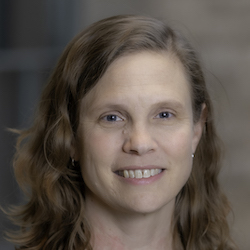
Jennifer Dunn is a Professor of Chemical and Biological Engineering at Northwestern University, with a courtesy appointment in Mechanical Engineering. She serves as Director of the Center for Engineering Sustainability and Resilience and Associate Director of the Northwestern-Argonne Institute of Science and Engineering. Her research focuses on sustainability, energy systems, and environmental impacts of emerging technologies such as hydrogen, biofuels, and nutrient recovery. Dunn leads the Systems Analysis Research Group, applying techno-economic, life-cycle, and materials flow analyses to evaluate low-carbon technologies and circular economy strategies. Education includes a Ph.D. in Chemical Engineering from the University of Michigan, an M.S.E. in Sustainable Chemical Engineering Systems from the University of Michigan, and a B.S. in Chemical Engineering from Purdue University. Her research interests span sustainable mineral supply chains, water treatment innovations, and decarbonization pathways. Recent work emphasizes methane reduction strategies, critical mineral policy, and circular nitrogen economies. Dunn has contributed to National Academies committees and serves as an Associate Editor for the SAE International Journal of Sustainable Transportation. Labs/Teams: Dunn Lab, Center for Engineering Sustainability and Resilience, and the Northwestern-Argonne Institute of Science and Engineering.
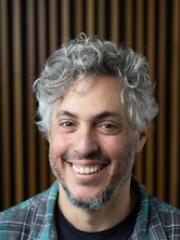
Massimiliano Delferro is a chemist and group leader of the Catalysis Science Program at Argonne National Laboratory, with a concurrent appointment as a Senior Scientist at the Pritzker School of Molecular Engineering (PME), University of Chicago. He leads the Argonne initiative on 'Science for a Circular Economy,' focusing on chemical recycling of plastics and sustainable catalyst development. Ph.D. in Organometallic Chemistry (University of Parma, 2008) Research Associate Professor (Northwestern University, 2010-2016) His research spans catalysis, chemical recycling of plastics, hydrogen production using earth-abundant catalysts, and valorization of shale gas. He is widely recognized for his work on polymer upcycling, organometallic surface chemistry, and metal-organic framework (MOF) catalysis. Recent publications highlight his leadership in converting plastic waste into high-value products (e.g., lubricants, functional polymers), supported by advanced spectroscopic and computational methods. Trends include C–C bond cleavage, MOF-supported catalysts, and redox-tunable systems. AAAS Fellow (2023) RSC ChemComm Pioneering Investigator (2023) R&D100 Award Finalist (2022) Argonne TCP Rising Star (2022) Delferro has published over 150 peer-reviewed articles, holds 30+ patents, and serves on the editorial board of ACS Applied Materials and Interfaces . He has been actively involved in professional societies, including the American Chemical Society and the Catalysis Society, where he served as President and Program Chair.
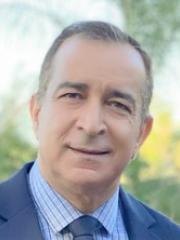
Fabio H. Ribeiro is the William Nicholas and Elizabeth Holstein Delgass Distinguished Professor of Chemical Engineering at Purdue University's Davidson School of Chemical Engineering. He serves as Director of the Center for Innovative and Strategic Transformation of Alkane Resources (CISTAR). His research focuses on heterogeneous catalysis, particularly in catalytic combustion, NOx traps, biomass-to-fuels conversion, and low-temperature water-gas shift reactions. He has advised over a dozen graduate students and collaborates with industry partners. Education: B.S. Chemical Engineering, Instituto Militar de Engenharia, Brazil (1982) M.S. Chemistry, Instituto Militar de Engenharia, Brazil (1984) M.S. & Ph.D. Chemical Engineering, Stanford University (1986–1989) Research Interests: His group combines experimental and computational methods to study catalyst kinetics and design. Key areas include catalyst stability under dynamic conditions, industrial process optimization, and sustainable energy solutions. Techniques involve surface science, microkinetic modeling, and operando spectroscopy. Publications: Recent work emphasizes catalytic dehydrogenation of light alkanes, NOx selective catalytic reduction, and shale gas upgrading. Themes include catalyst structure-reactivity relationships and reaction mechanisms. Awards: Herman Pines Award (2015) AIChE Fellow (2014) Purdue Research Excellence Award (2014) Lab & Teams: Leads CISTAR, a NSF Engineering Research Center, and collaborates with the Purdue Catalysis Center. Active in developing catalysts for renewable energy and pollution control.
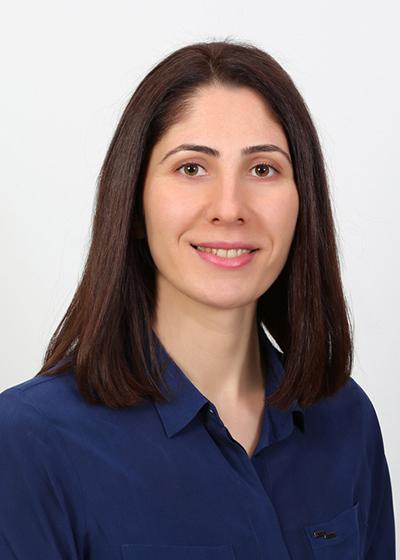
Dr. Hilal Ezgi Toraman is an Assistant Professor in Penn State's College of Earth and Mineral Sciences, with joint appointments in the John and Willie Leone Family Department of Energy and Mineral Engineering and the Department of Chemical Engineering. She leads an interdisciplinary research program focused on sustainable reaction engineering and catalysis for valorizing non-traditional carbon feedstocks like plastic waste, biomass, and shale gas. Her lab integrates advanced pyrolysis, GC×GC analytics, kinetic modeling, and data science to develop scalable chemical recycling technologies. Education includes: Ph.D. in Chemical Engineering, Ghent University (2016) M.Sc. in Chemical Engineering, Middle East Technical University (2012) B.Sc. in Chemical Engineering, Middle East Technical University (2010) Research focuses on: Developing intrinsic kinetic models for plastic pyrolysis Designing catalysts for mixed-feedstock upgrading Advancing GC×GC analytical methods for complex product characterization Building data infrastructure for process optimization Her work consistently addresses industrial challenges in plastic circularity and sustainable energy. Toraman's publications demonstrate strong emphasis on pyrolysis reaction engineering, catalytic mechanisms, and analytical innovation. Recent work explores metal-modified zeolites for polypropylene conversion, machine learning for co-pyrolysis optimization, and novel reactor designs for efficient thermochemical synthesis. Major awards: C&EN Talented 12 (2023) AIChE Pioneers in Catalysis & Reaction Engineering (2023) ACS Energy & Fuels Rising Star (2023) Wilson Faculty Fellowship (2023-2026) She leads the Toraman Lab, advising 8+ graduate students on projects funded by $5M+ grants from REMADE Institute, Dow Chemicals, and others. Current initiatives include catalytic pyrolysis of mixed plastics and development of open-source data platforms for recycling technologies.
Alberto Tiraferri is a Full Professor at the Department of Environment, Land and Infrastructure Engineering (DIATI) at Politecnico di Torino , Italy. His research focuses on membrane technology for water desalination , wastewater treatment , and resource recovery , with expertise in advanced oxidation processes and environmental chemistry . He leads the en.sur.e water lab , which bridges separation technology , materials science , and colloid/surface science . Member, Interdepartmental Center CWC - CleanWaterCenter@PoliTo Full Member, ANDIS (2019–present), GITISA (2015–present) Associate Editor, Frontiers in Environmental Science (2018–2025) His research projects include MEloDIZER (EU-funded, 2022–2026) for sustainable membrane distillation and FLOWING (2017–2019) for produced water reuse in oil & gas. He has received prestigious awards such as the ACS Environmental Chemistry Graduate Student Award (2010), Membrane X-Prize (2010), and Marie Curie Intra European Fellowship (2012). His work aligns with UN SDG 6 (Clean Water), SDG 9 (Innovation), and SDG 11 (Sustainable Cities). Professor Tiraferri supervises 10 PhD students and has authored 15+ recent publications on membrane processes , chemical water treatment , and microfiber pollution . He holds multiple international patents , including Biomimetic membranes with water channels and Living water filtration membranes .
Associate Professor Saiied Aminossadati is a faculty member at the University of Queensland's School of Mechanical and Mining Engineering, with affiliate positions at the Future Autonomous Systems and Technologies (FAST) and Centre for Multiscale Energy Systems. He holds a BEng (1989), MEng (1994), and PhD (1999) in Mechanical Engineering, along with a Graduate Certificate in Higher Education. His research focuses on thermofluids, mine ventilation systems, computational fluid dynamics applications in mining, fibre-optic sensing technologies, and gas management systems. Specific interests include porous media flow, underground mine ventilation optimization, energy systems modeling, and industrial fluid dynamics. With 180+ publications spanning mining ventilation, energy systems, and fluid mechanics, recent work demonstrates strong emphasis on computational modeling of industrial processes. Research trends show increasing focus on renewable energy applications (solar collectors, nanofluids), mining safety (methane dispersion, aerosol transmission), and sustainable resource recovery (plastic depolymerization, hydraulic fracturing). He has secured 16 research grants totaling $2.65M and serves as academic advisor for 26 research higher degree students (18 graduated, 8 current). Keynote speaker at international conferences including Mine Ventilation Symposium (2009) and Fibre Optic Sensing Conference (2015). Reviewer for 30+ international journals in mechanical and mining engineering disciplines.
Hsi-Wu Wong is a Professor and Associate Chair for Graduate Studies in the Department of Chemical Engineering at the Francis College of Engineering, University of Massachusetts Lowell. He also serves as Associate Director of the Center for Energy Innovation. His research focuses on utilizing both experimental and theoretical techniques to study modern energy and environmental problems through the Sustainability and Reaction Engineering Laboratory (SuREL). Education: B.S. in Chemical Engineering from National Taiwan University, Taipei, Taiwan Ph.D. in Chemical Engineering from Northwestern University, Evanston, IL Postdoctoral Researcher at MIT, Cambridge, MA Dr. Wong's research expertise includes high temperature pyrolysis, gasification, and oxidation experiments along with molecular and detailed kinetic modeling. His primary focus is to uncover the fundamental interplay between chemical kinetics and transport phenomena to manipulate reaction pathways for producing high-value products from low-value hydrocarbon feedstocks including flared shale gas, lignocellulosic biomass, plastic waste, and food waste. His work spans reaction engineering, chemical kinetics, catalysis, sustainability principles, waste utilization and upcycling, alternative fuels, and process intensification. Analysis of his recent publications (2022-2025) reveals a strong focus on sustainable chemical processes, particularly in plastic upcycling and waste conversion. His research demonstrates significant work on cellulose fast pyrolysis, noncovalent interactions during biomass processing, enzymatic depolymerization of polyesters, and safer solvent development across multiple disciplines including sustainable chemistry, reaction engineering, polymer science, and environmental engineering. Scientific Awards and Honors: National Science Foundation CAREER Award (2019) North American Symposium on Chemical Reaction Engineering (NASCRE) Travel Award (2019) B. J. Martin Dissertation Year Fellowship, Northwestern University (2002) International Symposia on Chemical Reaction Engineering (ISCRE) Travel Award (2002) Dr. Wong has successfully mentored numerous graduate students to completion, with many receiving departmental and university-wide awards. His lab has secured significant funding from the National Science Foundation, Department of Energy, and other agencies to support research in waste conversion technologies. Current projects include copyrolysis of waste mixtures, upcycling of single-use multi-layer plastic films, upcycling HDPE waste using hybrid approaches, bioconversion of polyester wastes, and safer solvents for pharmaceutical applications. The Sustainability and Reaction Engineering Laboratory (SuREL) is equipped with advanced analytical instruments including Shimadzu GCMS, GC, Agilent HPLC systems, and a bench-scale fluidized bed pyrolysis reactor. The lab maintains active collaborations with multiple research groups at UMass Lowell and external institutions on projects related to sustainable energy and environmental solutions.
Fabio Ribeiro is the William Nicholas and Elizabeth Holstein Delgass Distinguished Professor in Chemical Engineering at Purdue University's College of Engineering. His research focuses on catalysis, heterogeneous catalytic processes, and energy transition technologies. He is affiliated with the Engineering Leadership Team and serves on committees such as the Engineering Named Professorships Committee and Moveable Dream Hire Committee. His work spans catalytic reactivity in metals and alloys (e.g., Pt, PdZn, Au/TS-1), propane dehydrogenation, shale gas valorization, and biomass conversion. He emphasizes safety in chemical laboratories and develops sustainable energy solutions through catalyst design and systems-level analysis. Key research themes include surface chemistry, reaction kinetics modeling, and catalyst optimization for industrial applications. His recent studies address challenges in energy transition, such as upgrading natural gas liquids and mitigating emissions via catalytic processes. Notable awards include his endowed professorship, reflecting recognition for his contributions to chemical engineering and catalysis. His interdisciplinary approach bridges computational chemistry, experimental catalysis, and real-world application in energy and environmental systems.
Dr. Mojtaba Mirzaeian is a Senior Lecturer at the School of Computing, Engineering and Physical Sciences , University of the West of Scotland, with a visiting professorship at Al-Farabi Kazakh National University. His expertise spans nanoporous materials for energy/environmental applications, supercapacitor development, hydrogen storage, and industrial energy optimization. He has published over 132 peer-reviewed works and presented at 80+ international conferences across 34 countries. Editorial roles: Chief Editor for MDPI's energy storage topic, Lead Editor for special issues on supercapacitors and CCUS technology Key research grants: KTP No 10117 (Innovate UK) for hydrogen generation cells Research Interests : Focuses on four pillars : Porosity-controlled carbons for energy storage (supercapacitors, Li-ion batteries) and medical applications (blood purification) Nano-composite materials for hydrogen generation/storage Industrial energy benchmarking and cogeneration systems CO2 sequestration in coal seams and shale gas fracking impact assessment Article Trends : Recent publications emphasize N-doped carbons for supercapacitors, aqueous electrolyte systems, and advanced characterization techniques like CM-SANS. Collaborative works address heavy metal removal and catalytic processes in energy applications. Scientific Awards : 2016: Best research in 'Environmental Protection and Sustainable Development' (ICSAE) 2009: Best paper at Sustainable Energy and Environmental Protection conference 2003: SET for BRITAIN award (UK Parliament) 2004: Best research in 'Structure and Dynamics of Solids and Liquids' (Neutron and Muon conference) 2004: Best research presentation (RPD 2004) Teaching & Leadership : Programme Leader for Chemical Engineering, Year Leader for MEng/MSc programmes, and coordinator for postgraduate dissertations. Teaches advanced topics in heat transfer, separation processes, and fluid mechanics.
Wrocław University of Science and TechnologyPoland
Dr. Maciej Cholewiński is a researcher at the Faculty of Mechanical and Power Engineering, Wrocław University of Science and Technology, specializing in the Department of Cryogenics and Aerospace Engineering. His work focuses on energy conversion systems, hydrogen propulsion technologies, and cryogenic applications in aerospace contexts. Developing numerical models for photovoltaic energy generation and thermal behavior of superconducting components Investigating cold exergy utilization from LNG regasification Studying mercury emissions from solid fuel combustion Designing waste heat recovery systems for heavy-duty vehicles His recent publications demonstrate interdisciplinary expertise spanning thermal sciences, renewable energy integration, and environmental impact assessment. While no explicit awards or advisees are mentioned, his research contributes to sustainable energy solutions and pollution mitigation strategies.
Professor Chris Greenwell is an internationally leading researcher in geochemistry and mineral surface science at Durham University's Department of Earth Sciences. He holds the position of Professor of Geochemistry and is also an Associate Fellow in the Institute of Advanced Study. Additionally, he maintains an affiliation as an Honorary Lecturer at University College London's Centre for Computational Science. His research focuses on the surface chemistry, structure and properties of layered minerals, with applications spanning catalysis, oil and gas exploration, composite materials, and early Earth chemistry. Greenwell's work uniquely bridges computer simulation and experimental study of layered mineral systems, making significant contributions to understanding biomolecule-mineral interactions, fossil fuel formation, and nano-composite materials. Greenwell's recent publications reveal a diversification of research interests, with substantial work on water security issues in Kabul, Afghanistan, alongside continuing work on clay mineralogy and petroleum systems. His research group employs both computational and experimental approaches to investigate mineral-organic interactions at multiple scales. Mineralogical Society – Nominated for Max Heyes medal (2013) Evans-Morris Prize, Peboc Prize & Medal, John Morris Jones Prize (Bangor University) Member, Royal Society of Chemistry Corresponding Member, European Association of Geochemists Founding Member, UK Astrobiology Society Professor Greenwell has supervised numerous PhD students and has secured significant research funding from diverse sources including the Royal Society, Saudi Aramco, EPSRC, and the Leverhulme Trust. His work spans fundamental geochemistry to applied problems in energy and environmental security, demonstrating strong connections between academic research and industrial applications.
Dr. Guangqing Zhang is a Senior Lecturer at the School of Mechanical, Materials, Mechatronic and Biomedical Engineering, University of Wollongong. His research focuses on sustainable chemical and mineral processing, energy efficiency, and metallurgical processes. He holds a Ph.D. in Materials Science and Engineering from the University of New South Wales. Research Interests: Sustainable metal production, energy generation/storage, and extractive metallurgy. He explores novel processes to utilize inferior resources and enhance production efficiency while prioritizing sustainability. Recent work includes studies on shale fracture mechanics, nanolubricant applications in manufacturing, and CO2-brine-rock interactions. He has led over 20 funded projects, including ARC Training Centre for Innovative Composites and the Australian Steel Manufacturing Research Hub. His supervision involves graduate research on topics like micro deep drawing and steelmaking waste valorization. Key grants include the ARC Industrial Transformation Training Centre (2023–2028) and collaborations with industry partners. He is also part of the Steel Research Group Network and contributes to advancing Australian steel manufacturing technologies.
Dr. Michael Xiangyu Jie is a Senior Lecturer in Chemistry at Queen Mary University of London, affiliated with the School of Physical and Chemical Sciences and the Centres for Chemical Research and Experimental and Applied Physics. His research focuses on developing microwave-initiated heterogeneous catalysis for sustainable processes, including plastic waste upcycling, hydrogen production, and CO2 utilization. He holds a DPhil in Inorganic Chemistry from the University of Oxford and has held postdoctoral and fellowship positions there. Key research areas include designing microwave catalysts for waste plastic conversion, low-temperature CO2 activation, and functional materials synthesis from waste. He has secured grants totaling over £375k, including a Royal Society grant (2024-2025) and industry funding from HUNT Energy Enterprises (2024-2026). His work has led to global patents via the PCT, particularly in catalytic processes for clean energy. Education: DPhil in Inorganic Chemistry, University of Oxford Junior Research Fellow, Merton College, Oxford Dr. Jie's research group emphasizes interdisciplinary collaboration and welcomes students/postdocs interested in catalysis and clean technology. They focus on advancing sustainable chemical processes through innovative catalytic strategies and advanced characterization techniques.
Rosemary Capo is a Professor in the Department of Geology and Environmental Science at the University of Pittsburgh, serving concurrently as Assistant Dean for Recruiting and Belonging in Graduate Studies. She holds a B.S. and M.S. in Geology from the University of Texas and a Ph.D. in Geochemistry from UCLA. Her research focuses on integrating geochemical, isotopic, and micromorphological analyses to study terrestrial processes, including fluid-rock interactions in shale formations, acid mine drainage treatment, and CO2 sequestration. Dr. Capo leads studies on rare earth element recovery from mine drainage solids and isotopic tracing of environmental contaminants. She has over 25 years of experience in analyzing natural/produced waters and served as a postdoctoral researcher at Caltech/JPL. Education: B.S. and M.S. in Geology, University of Texas Ph.D. in Geochemistry, UCLA (focus: strontium isotope stratigraphy) Research Interests: Unconventional oil/gas fluids Isotope geochemistry (Sr, Ba, Li, Nd) Mine drainage evolution and treatment CO2 sequestration monitoring Hydraulic fracturing impacts Terrestrial weathering processes Key Contributions: Pioneering studies on barium isotope tracing in shale gas production Development of Sr isotope methods for CO2 leakage detection Advances in rare earth element recovery from AMD solids Long-term coal mine drainage evolution tracking Labs/Teams: Active in the University of Pittsburgh's Geology & Environmental Science laboratories, collaborating with energy/environmental agencies on shale gas and CO2 storage projects.
Dr. Luis Yerman is a Senior Research Fellow at the School of Civil Engineering , University of Queensland, specializing in timber durability and fire safety engineering. His multidisciplinary background bridges chemical engineering, materials science, and environmental technology. Current affiliations: National Centre for Timber Durability and Design Life (UQ leader) Key research themes: Smouldering combustion, fungal decay, moisture intrusion, and timber fire performance Yerman's research focuses on timber durability under environmental stressors and fire safety engineering innovations. His work integrates smouldering combustion for waste treatment and energy recovery, alongside assessing timber connection integrity in treated/untreated states. Recent publications (2023–2025) highlight advancements in CCA-treated timber behavior under accelerated weathering, moisture cycling impacts on fastener performance, and catalytic smouldering processes. Keywords span Civil Engineering , Environmental Technology , and Materials Science . Supervision: Currently advising 6 PhD students on topics like novel preservative-treated timbers , moisture effects on timber connections, and decay mitigation. Grants include funding from the National Centre for Timber Durability (2017–2026) and Flame Security International (2021–2022).