Rutgers, The State University of New JerseyUnited States
Ronald Levao is an Associate Professor of English at Rutgers University, specializing in Early Modern Literature, Literature and Intellectual History, and Shakespeare studies. He holds a PhD from the University of California, Berkeley, and has taught courses on Metaphysical Poetry, Milton, Renaissance Shakespeare, and graduate seminars on Doubled Selves in Shakespeare and Renaissance Sidney and Marvell. His research focuses on early modern literature’s intersections with philosophy, film, and myth, including studies on Shakespeare’s use of ghosts, Romanticism, and the cultural legacy of Frankenstein. His book Renaissance Minds and Their Fictions (1985) explores the intellectual legacies of Cusanus, Sidney, and Shakespeare, while his co-edited Henry IV, Parts I & II (2006) contextualizes Shakespeare’s plays within their cultural milieu. Levaeo has received notable awards, including the Guggenheim Fellowship (1988–89) and multiple teaching honors. His publications span journal articles, encyclopedia entries, and edited volumes, reflecting a commitment to interdisciplinary scholarship and literary pedagogy.
Rutgers, The State University of New JerseyUnited States
Thomas Fulton is a Professor of English at Rutgers University since 2003. He specializes in early modern English literature with emphases on John Milton, William Shakespeare, and intersections of politics, religion, and book history. His research examines how biblical interpretation shaped literary and political thought in the Renaissance. Key works include Historical Milton (2010), The Book of Books (2021), and co-edited volumes like The Bible on the Shakespearean Stage (2018). He has held prestigious fellowships from the Folger Library, NEH, and Beinecke Library. Teaching highlights include leading a travel course to London's Royal Shakespeare Company and courses on Renaissance drama and political theory. Awards include the Goheen Prize and MLA's Best Special Award. Education: PhD Yale University, BA University of Wisconsin-Madison. Research interests span early modern manuscript culture, Reformation print networks, and the performative dimensions of religious texts. Current projects explore adversarial reading practices and gendered interpretations in early modern literature.
Nabil Matar is a Professor at the University of Minnesota, holding the Presidential Professorship in the President’s Interdisciplinary Initiative on Arts and Humanities and the Samuel Russell Chair in the Humanities. He teaches in both the English and History departments and contributes to the Religious Studies Program. Educated at the American University of Beirut (B.A., M.A.) and Cambridge University (Ph.D., 1976) Former Department Head at Florida Institute of Technology (1997-2007) Recipient of postdoctoral grants from the British Council and Fulbright His research focuses on early modern Euro-Islamic interactions , particularly examining Arab-European travel literature, captivity narratives, and religious exchanges. He has authored a foundational trilogy on Islam in Britain and comparative studies on Mediterranean encounters. Key publication trends include Anglo-Ottoman relations , cross-cultural identity formation , and premodern globalization , with works spanning from 1998 to 2018. His scholarship bridges religious studies , literary analysis , and cultural history . Building Bridges award (University of Cambridge, 2012) Kuwait Foundation for the Advancement of Sciences Award (2017) Matar has secured major grants including a National Endowment for the Humanities Conference on 'Shared Cultural Spaces' and has contributed to curricular development in religious and interdisciplinary studies.
Sophie G. Gee is an Associate Professor of English at Princeton University, with a focus on 17th- and 18th-century British and global Anglophone literature. She is affiliated with the English Department and has held roles such as the inaugural Vice-Chancellor’s Fellow at the University of Sydney. Her research explores themes of literary history, colonial exchange, and cultural practices, with notable works like The Barbarous Feast (forthcoming) and Making Waste (2009). She is also a novelist, with The Scandal of the Season (2007) recognized internationally. Gee advocates for public humanities through writing, podcasts, and initiatives like Mindful Faculty at Princeton, emphasizing mindfulness in academia. Her education includes a PhD from Harvard (2002) and a Class I Honors from Sydney University (1995). Research interests span colonial literature, creative writing, and the intersection of literature with religion, food, and material culture. She has collaborated on projects like the Contemplative Leadership initiative at Sydney University and co-founded the podcast The Secret Life of Books . Awards include recognition from the Washington Post and Economist for her novel, and her scholarly contributions address topics such as Defoe’s Robinson Crusoe , satirical texts, and the role of humanities in contemporary society. Teaching and mentorship are central to her work, with a focus on early modern and 18th-century literature. She has published widely in peer-reviewed journals and platforms like the Times Literary Supplement , and her op-eds address education, parenting, and the value of the humanities. Current projects include a book on uncertainty in scholarship and a podcast exploring literary secrets.
Laura Knoppers is the George N. Shuster Professor of English Literature and Department Chair at the University of Notre Dame’s College of Arts and Letters. She specializes in seventeenth-century British literature, with a focus on John Milton, early modern women writers (e.g., Margaret Cavendish), and the intersections of gender, politics, and religion. Her research bridges literary criticism, cultural history, and book history. Education: PhD and M.A. in English Literature from Harvard University; B.A. in English Literature from Calvin College. Research Interests: Milton’s works and context, early modern women’s authorship, the English Revolution, luxury culture, and political iconography. Her notable works include Politicizing Domesticity (2011), Constructing Cromwell (2000), and the award-winning Complete Works of John Milton (2008 edition). Publications: Over 20 authored/edited books and 40+ journal articles/chapters. Recent work includes the Oxford History of Poetry in English (2024) and studies on Margaret Cavendish’s medical writings. Awards: Milton Society’s John T. Shawcross Award (2008), NEH grants, and the 2016 Honored Scholar distinction. She edited Milton Studies (2009–2018) and currently chairs the English Department at Notre Dame. Grants & Service: Secured $500K NEH Challenge Grant for Penn State’s Institute for the Arts and Humanities. Active in professional organizations like the Milton Society of America and Renaissance Society of America. Labs/Teams: Leads interdisciplinary projects on early modern literature and culture. Collaborates with institutions like the Folger Shakespeare Library and international scholars on luxury studies and Cromwellian representation.
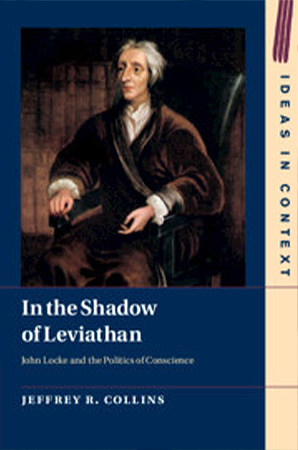
Jeffrey Collins is a Professor of Humanities and Director of Graduate Studies at the University of Florida. He holds a PhD in History from Harvard University (1999) and a BA in History from Middlebury College (1992). His research focuses on early modern political thought, particularly Thomas Hobbes and John Locke, with emphasis on religious conflict, toleration, and church-state relations. His notable works include The Allegiance of Thomas Hobbes (2005) and In the Shadow of Leviathan: John Locke and the Politics of Conscience (2020). Collins is currently researching the intellectual impact of Eikon Basilike , a controversial text attributed to King Charles I posthumously. He contributes regularly to Times Literary Supplement and Wall Street Journal . His teaching spans courses on political philosophy, Great Books, and the origins of the contemporary West. Collins’ articles explore topics like the Popish Plot’s role in political fear, early modern atheism, and Hobbes’s theological underpinnings. He has authored over 20 scholarly articles and book chapters, reflecting his deep engagement with the intersections of religion, power, and intellectual history in early modern Europe. Collins’ work bridges historical analysis and contemporary debates about liberalism, toleration, and the legacy of early modern thought. His research methodologies combine textual analysis with contextual historiography, offering fresh perspectives on canonical figures like Hobbes and Locke. He is actively involved in academic advising and curriculum development within the Philosophy, Politics, Economics, and Law (PPEL) program at the University of Florida.
Regina M. Schwartz is a Professor of English and Professor of Law (Courtesy) at Northwestern University’s Weinberg College of Arts and Sciences. She specializes in seventeenth-century literature, particularly Milton, Hebrew Bible, philosophy and literature, law and literature, and religion and literature. Education: PhD in English from the University of Virginia Her research explores intersections of justice, ethics, and theology in literary works. Key themes include Milton’s theodicy, violence in monotheistic traditions, sacramentalism in secularism, and Shakespeare’s legal-political narratives. She has edited influential volumes on the Bible and literary theory, transcendence, and Renaissance desire. Her publications span interdisciplinary studies of literature, religion, and philosophy, with recent work focusing on equity and mercy in Shakespearean drama. Awards include the James Holly Hanford Book Award for her seminal work on Milton. Current Roles: Director of the Milton Project, Co-Director of the Academy for the Advanced Study of the Renaissance, Director of the Northwestern University Justice Institute She has held visiting positions, including the Tipton Distinguished Chair of Religion at UCSB, and contributes to public discourse on religion, violence, and freedom of speech through lectures and media engagements.
Kevin Hart is the Jo Rae Wright University Distinguished Professor at Duke University's Divinity School, concurrently holding a Professorship in the Department of English at Trinity College of Arts & Sciences. He holds a Ph.D. from the University of Melbourne (1987). His research explores intersections between theology, philosophy, and literature, focusing on contemplative practices, mystical theology, and continental philosophy. Recent works include Contemplation: The Movements of the Soul (2024) and memoir Dark-Land (2024). Primary affiliations: Divinity School & Trinity College Teaches courses on Augustine, mystical theology, and continental philosophy Research interests integrate religious phenomenology, aesthetic philosophy, and existential inquiry. His writing bridges medieval mysticism with contemporary postsecular thought, often engaging figures like Jean-Luc Marion and Maurice Blanchot. Recent articles address revelation theology, saturated phenomena, and the ethics of literary imagery. Recipient: Jo Rae Wright University Distinguished Professor title (2024–present) Teaching includes independent studies in critical research (ENGLISH 497/498) and specialized seminars on Augustine's thought and mystical theology. External collaborations include Bloomsbury Publishing and Glasgow University.
William Miller is an Assistant Professor in the Department of English at the University of Rochester. He holds a PhD from Johns Hopkins University and specializes in 17th- and 18th-century literature, focusing on intersections with history, philosophy, and religion. His research examines how early modern prophetic culture influenced Enlightenment concepts of rationality and political legitimacy. He teaches courses such as 'Great Books: Welcome to a Strange New Place' and 'The Bible in English.' Office: 410 Morey Hall Email: william.miller@rochester.edu His current book project, Counter-Enthusiasms , explores the transformation of revelation and political authority in early English Enlightenment thought. His scholarship appears in New Literary History , Renaissance Drama , and Studies in Philology . Miller's publications analyze texts through interdisciplinary lenses, blending literary analysis with historical and philosophical inquiry. Recent work engages with metaphysical poetry, religious autobiography, and the rhetoric of Enlightenment thinkers. No grants or lab affiliations are explicitly noted in available materials.
Jeremy W. Webster is an Associate Professor in the Department of English at Ohio University's College of Arts and Sciences, where he also serves as Director of Graduate Studies. He is based in Ellis Hall, Athens Campus, and holds a Ph.D. in English from the University of Tennessee (1999). Education: Ph.D. in English, University of Tennessee, 1999 M.A. in English, Texas A&M University, 1994 B.A. in History, Summa Cum Laude, Texas A&M University, 1992 His research centers on Restoration and Eighteenth-Century British Literature , with deep engagement in literature and health , satire , gender and sexuality , and queer theory . His work explores how literary forms reflect and challenge social norms around identity, power, and desire in early modern Britain. He has published on topics ranging from anti-Semitism in Restoration drama to the queer potential of 17th-century texts and the adaptation of Star Wars into radio drama. His recent publications reveal a consistent focus on intersections between politics, sexuality, and literary form in British literature from 1660 to 1800. He frequently analyzes how satire functions as a vehicle for social critique, particularly regarding gender, religion, and power. His interest in transmedia storytelling shows a willingness to engage with both canonical and popular cultural forms. While no formal scientific awards are listed, his scholarly contributions are substantial and peer-recognized through publication in journals such as Journal of Early Modern Cultural Studies , Literature Compass , and Eighteenth-Century Fiction , as well as in edited collections from reputable academic presses. As Director of Graduate Studies, he plays a key role in advising and shaping graduate education in English. His graduate seminars—on topics like patriarchal anxiety, historicizing gender, and "Queer/ing Leadership"—suggest active mentorship in critical theory and interdisciplinary approaches. He has not listed specific students, but his leadership role implies ongoing advising responsibilities. His teaching portfolio includes undergraduate courses in writing, literature and medicine, LGBTQ+ literature, and 18th-century British literature. He is affiliated with interdisciplinary initiatives through courses co-listed with Women’s, Gender, and Sexuality Studies (WGSS), indicating collaboration across departments and engagement with feminist and queer academic communities.
Meg Lota Brown is Professor of early modern English literature and culture at the University of Arizona, affiliated with the Department of Modern Languages and the Department of Gender and Women’s Studies. She holds significant academic leadership roles as Associate Vice Provost for Academic Affairs, Associate Dean of the Graduate College, and Director of the UA Graduate Center. Her research focuses on early modern literature and culture, with particular emphasis on gender, power, science, medicine, and education. Key areas include Reformation politics, Renaissance literature, theology, and pedagogy. She has co-authored and edited influential works on women in the Renaissance and marginal figures in global medieval and early modern contexts. The 15 most recent publications reflect a consistent interdisciplinary trajectory, bridging literary studies with gender theory, art history, and digital pedagogy. Her work frequently examines marginalized voices, women’s intellectual contributions, and the intersection of literature with scientific and religious discourses of the period. Scientific Awards: Nearly every major UA teaching award Awards for research Awards for service Awards for leadership Dr. Brown serves as Co-PI on multiple grants supporting undergraduate and graduate education, demonstrating sustained commitment to academic innovation and mentorship. While specific advisees are not listed, her leadership in the Graduate College and Graduate Center underscores her role in shaping graduate education and student development. She is an affiliate faculty member in the Department of Gender and Women’s Studies and contributes to collaborative scholarly projects, particularly with Kari Boyd McBride. Though no formal lab or research team is mentioned, her editorial and collaborative projects suggest active engagement in scholarly communities and networks focused on early modern studies and gender.
William Cook Miller is an English Professor at Cornell University, renowned for his scholarly work The Enthusiast: Anatomy of the Fanatic in Seventeenth-Century British Culture . His research focuses on early modern British literary and intellectual history, particularly the transformation of religious dissent into literary tropes during the transition from the Reformation to the Enlightenment. He examines figures like Henry More, John Locke, and Jonathan Swift to explore themes of fanaticism, spirituality, and secular modernity. Miller’s writing blends historical analysis with literary critique, evident in his blog posts discussing topics such as aesthetic hypersensitivity and cultural artifacts like nursery rhymes and 17th-century imagery. These pieces highlight his interdisciplinary approach to understanding cultural and intellectual movements. His work has been praised for its meticulous research and narrative depth, positioning him as a leading voice in 17th-century literary studies. Though no specific grants or laboratories are mentioned, his contributions to scholarship emphasize textual analysis and historical context within early modern studies.
Ryan Netzley serves as Professor of English and Director of Graduate Studies at Southern Illinois University, Carbondale. He is the editor of Marvell Studies and has established himself as a prominent scholar in Renaissance literary studies through his three monographs and numerous journal publications. Professor of English Director of Graduate Studies Editor of Marvell Studies Netzley's research focuses on Renaissance lyric poetry, particularly seventeenth-century works by Jonson, Donne, Marvell, Herbert, and Milton, examining intersections between poetic form, economic value systems, and religious thought. His scholarship bridges literary criticism with poststructuralist theory and Reformation theology, exploring how early modern texts conceptualize value, desire, and apocalyptic change. His publications reveal consistent scholarly engagement with how poetic form models alternatives to market economies and interrogates the relationship between aesthetic production and social order. Netzley's work demonstrates particular expertise in analyzing negativity in Shakespeare's sonnets, rhyme structures in country house poetry, and economic metaphors in religious verse. As Director of Graduate Studies, Netzley oversees the English department's graduate program and advises students. He co-edits scholarly collections, including the forthcoming 'Lyric Temporalities' with Kimberly Johnson, and actively participates in academic conferences, serving on the organizing committee for the Conference on John Milton.
Amrita Dhar is an Assistant Professor in the Department of English at The Ohio State University, affiliated with the College of Arts and Sciences and the Center for the Study of Religion. She holds a Ph.D. in English Language and Literature from the University of Michigan. Her research focuses on seventeenth-century English devotional verse, John Milton's Paradise Lost , and intersections of religion with race, gender, nationality, sexuality, and disability in early modern contexts. Her work bridges literary analysis with interdisciplinary approaches, examining how religious themes interact with socio-political identities in early modern texts. She has published widely on topics ranging from blindness in John Milton's writings to the cultural significance of Himalayan mountaineering archives. Her scholarship emphasizes close textual analysis alongside broader historical and cultural frameworks.
Lee Morrissey is the Alumni Distinguished Professor in the Department of English at Clemson University's College of Arts and Humanities. He has served as Department Chair (2007-2010, 2013-2017), Interim Associate Dean of the College of Architecture, Arts, and Humanities (2018-2019), and Founding Director of the Clemson Humanities Hub (2016-2021). Affiliated with the Religious Studies program, his career spans teaching, administration, and transatlantic scholarly work. Ph.D., English and Comparative Literature, Columbia University (1995) M.Phil., English and Comparative Literature, Columbia University (1993) M.A., History, Columbia University (1990) M.A., English and Comparative Literature, Columbia University (1988) A.B., Philosophy and English Literature, Boston College (1986) Morrissey specializes in seventeenth- and eighteenth-century English-language literature, particularly John Milton, early modern religion and politics, and colonial Ireland. His research bridges archipelagic and transatlantic approaches to colonial plantations, re-examining canonical texts through postsecular and intersectional frameworks. He has also contributed to debates on literary criticism's historical development and its democratic implications. Recent publications analyze colonial architecture's role in material extraction across Ireland and Barbados, Milton's late poems as modernity critiques, and transatlantic literary networks. His work integrates cultural geography, political philosophy, and postcolonial theory, with a focus on British Atlantic world dynamics. Scientific Awards: NEH Creating Humanities Communities Challenge Grant (2017-2020) Muriel McCarthy Research Fellowship (2013) Fulbright Scholar (2010-2011) Allen G. Noble Prize (2016) NEH American Rescue Plan Grant (2021)