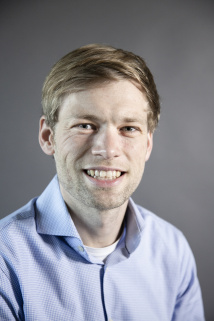
Karl-Philipp Maria Flösch is an academic staff member and doctoral candidate in the Department of Psychology at the University of Konstanz, affiliated with the Research Unit Schupp led by Prof. Harald T. Schupp. His research focuses on understanding cooperative behavior through EEG hyperscanning in collaborative gameplay settings, investigating neural mechanisms underlying social interaction. He holds a Master of Science (2019) and a Bachelor of Science (2018) in Psychology from the University of Konstanz, both with distinction. His educational background includes thesis work on emotional modulation of EEG responses and visual processing facilitation. He teaches courses such as ‘A hands-on beginner's guide to EEG’ , emphasizing theoretical foundations and practical applications of EEG technology, including hands-on experience with mobile systems. Flösch’s publications explore EEG-based studies of group dynamics, cooperative gameplay, and neural markers of emotion. His work bridges cognitive neuroscience and social neuroscience, with a focus on brain coupling during collaboration and affective processing. He has contributed to advancements in EEG methodology, including optimizing mobile EEG systems. His research and teaching reflect a commitment to understanding how neural processes underpin human social interaction and emotion, with applications in both academic and clinical contexts.
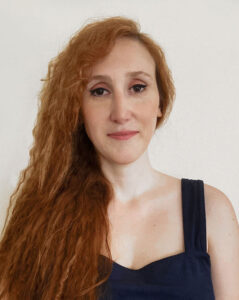
Tanja Blascheck is a PostDoc Researcher and Margarete von Wrangell Fellow at the Institute for Visualization and Interactive Systems (VIS) at the University of Stuttgart. Her work focuses on visual analytics , eye tracking , and microvisualizations for smartwatches and other wearable devices.
Jilles Vreeken is a Professor of Computer Science at Saarland University and tenured faculty at the CISPA Helmholtz Center for Information Security, where he leads the Exploratory Data Analysis research group. He is also an ELLIS Fellow and Faculty of the Saarbrücken Unit on AI and ML. His work bridges theoretical foundations with practical applications in causal inference, unsupervised learning, and exploratory data analysis. Dr. Vreeken's research focuses on developing theory and algorithms for answering fundamentally exploratory questions about data: "what is going on in my data?", "what causes what and how?", and "what can we learn from this model?" without making unnecessary or unjustified assumptions. He takes a principled approach based on information theory to identify what is worth knowing, then develops efficient algorithms for extracting useful interpretable results. His work spans causal inference under realistic conditions (including hidden confounding, selection bias, and non-i.i.d. data), summarizing complex data and models in understandable terms, and combining these threads to create more robust and useful models across diverse data types. His recent publications demonstrate a strong trend toward causal discovery in increasingly realistic settings, including non-stationary time series, event sequences, and scenarios with hidden confounders. He has made significant contributions to federated learning, interpretable machine learning, and pattern mining. His work consistently applies information-theoretic principles to develop methods that are both theoretically sound and practically useful for extracting insights from complex data. Dr. Vreeken has received numerous prestigious awards including: IEEE ICDM'18 Tao Li Award for Excellence in Research IEEE ICDM'18 Best Paper Award UdS-CS'15 Busy Beaver Teaching Award ACM SIGKDD'11 Best Student Paper Award ACM SIGKDD'10 Doctoral Dissertation Runner-Up Award ECML PKDD'09 Best Student Paper Award As an advisor, Dr. Vreeken has mentored numerous doctoral researchers to completion, including Dr. Osman Ali Mian, Dr. David Kaltenpoth, Dr. Boris Wiegand, Dr. Sebastian Dalleiger, Dr. Janis Kalofolias, Dr. Jonas Fischer, Dr. Alexander Marx, Dr. Panagiotis Mandros, Dr. Kailash Budhathoki, Dr. Roel Bertens, Dr. Koen Smets, and Dr. Michael Mampaey. He has secured significant research funding as PI for multiple projects including "AI for Prediction and Therapy Guidance in Acute Stroke" (HAICU, 2025-2028), "Neuro-Explicit Models of Language, Vision and Action" (RTG, DFG, 2023-2028), and "Crushing Antimicrobial Resistance using Explainable AI" (HAICU, 2021-2024). Dr. Vreeken leads the Exploratory Data Analysis (EDA) research group at CISPA, which focuses on developing theory and algorithms for discovering novel insights from data, learning inherently interpretable models, and drawing reliable causal conclusions. The group has produced numerous influential algorithms and frameworks in causal inference, pattern mining, and exploratory data analysis, with applications spanning healthcare, materials science, and cybersecurity.
Prof. Katharina Thoma is a renowned opera director currently serving as Head of the Opera School at the University of Music Würzburg . She also holds the positions of Deputy Chair of the Music Academy and Dean of Studies . With a career spanning major European opera houses including the Royal Opera House Covent Garden and Glyndebourne Festival, she specializes in blending historical accuracy with modern theatrical innovation. Studied piano at Lübeck University of Music Resident director at Dortmund Opera (2011-2014) Visiting professor at Graz University of Music (2018) Freelance director since 2008 Katharina Thoma's research and practice focus on opera stage direction , scenic training for singers , and historical opera interpretation . Her work spans from Baroque masterpieces to contemporary political operas, emphasizing: Contextual authenticity in period-specific productions Modern reinterpretation of classical works Interdisciplinary approaches to staging Integration of visual and musical elements Training of next-generation opera performers Exploration of war-related themes in opera Notable productions include: 2024: Johann Strauss' The Bat (University of Music Würzburg) 2023: De Falla's El retablo de Maese Pedro 2022: Britten's The Rape of Lucretia 2019: Schönberg's Pierrot lunaire 2007: European Opera Directing Competition Finalist Her artistic contributions have been recognized with: Second Prize at the European Opera Directing Competition 'Camerata Nuova' (2007) Katharina Thoma actively mentors young singers and develops innovative opera productions at the University of Music Würzburg's Opera School. Her recent work includes: Wagner operas debut (2019/20 season) Collaboration with composers like Richard Jones and Christof Loy Participation in renowned festivals (Munich Biennale, Glyndebourne) The Opera School under her leadership focuses on comprehensive training combining: Historical performance practices Contemporary staging techniques Technical vocal training Interdisciplinary collaboration
Prof. Dr. Bettina Glunde is a faculty member at the Frankfurt University of Applied Sciences , Department 4: Social Work & Health. She specializes in healthcare education, vocational pedagogy, and aging-related care innovations. Her work emphasizes interdisciplinary collaboration, qualitative research, and technology integration in nursing education. Current research focuses on interdisciplinary housing counseling (ProWoB project) and robot-assisted elder care (Pepper robot study). She leads international educational initiatives like the Erasmus Winterschool and Summerschool programs. Her publications span topics including project management in PhD research , interprofessional curricula , and media competency for migrants . She is affiliated with academic organizations such as the German Society for Nursing Science and the German Society for Pedagogy .
Leif Kobbelt serves as a University Professor at RWTH Aachen University, leading the Computer Graphics Group within the Department of Computer Science (Informatik 8). His research focuses on advancing geometry processing, interactive visualization, and computer graphics through innovative algorithmic solutions and interdisciplinary collaborations. Professor Kobbelt's research program centers on geometry acquisition and processing, with significant contributions to mesh generation, surface reconstruction, and neural rendering techniques. His work bridges theoretical geometry with practical applications in computer vision, photo-realistic image synthesis, and multimedia data transmission, often involving collaborations with industry partners and international research teams funded by DFG and EU sources. Recent publications (2023-2025) reveal a strategic integration of deep learning with traditional geometry processing, particularly in Gaussian splatting for real-time rendering, NeRF-based 4D content generation, and robust mesh Boolean operations. His group maintains leadership in quad mesh optimization and surface mapping while expanding into immersive visualization techniques for complex data analysis. The group has earned recognition through prestigious awards: Günter Enderle Best Paper Award at Eurographics 2023 Best Paper Award (1st place) at Symposium on Geometry Processing 2022 Honorable Mention for Best Paper at ACM Symposium on Virtual Reality Software and Technology Funding from Deutsche Forschungsgemeinschaft and European Union programs supports the group's research infrastructure and international collaborations. The team actively supervises graduate theses while developing open-source software tools that translate theoretical advances into practical industry applications, particularly in digital fabrication and immersive visualization systems. The Computer Graphics Group operates as a central hub for visual computing research at RWTH Aachen, maintaining strong ties with both academic institutions and technology companies. Their recent work on virtual reality educational tools and high-fidelity 3D reconstruction systems demonstrates commitment to knowledge transfer and real-world impact beyond traditional publication venues.
Prof. Gerhard Weber holds the Chair in Human-Computer Interaction at Technische Universität Dresden, Germany. Previously, he served as Chair for Human-Centered Interfaces at Christian-Albrechts-Universität zu Kiel (2000–2007) and Professor for Operating Systems and Graphical User Interfaces at Harz University of Applied Sciences (1996–2000). His research focuses on accessible computing, assistive technologies, haptics, and multimodal interaction. Key projects include development of tactile charts (SVGPlott), robotic guidance systems (HapticRein), and indoor navigation solutions for visually impaired users. Current work explores voice interfaces for social robots, autism-inclusive technologies, and accessibility maturity models for higher education institutions. Over 70 publications span conferences like CHI, IEEE, and ACM, emphasizing practical applications in assistive tech. Education & Professional Journey: 2007–Present: Chair in Human-Computer Interaction, TU Dresden 2000–2007: Chair for Human-Centered Interfaces, Kiel University 1996–2000: Professor of Operating Systems and GUIs, Harz University Research Interests: Prof. Weber's work bridges theory and practice in accessibility, emphasizing tactile interfaces, inclusive design, and assistive robotics. Recent projects include: Mosaik : Enabling blind users to create and share graphics via audio-tactile tools Cloud4All : Personalized web accessibility solutions Range-IT : Real-time object detection for navigation aids Advising & Grants: Managed €3.2M in EU and national grants (2011–2020) Supervised 12+ graduate projects on assistive tech Labs & Teams: Leads TU Dresden's Human-Computer Interaction Lab, collaborating with industry partners like Siemens and rehabilitation centers to deploy assistive systems in real-world settings.
Prof. Dr. Barbara Sophie Hänel-Faulhaber is a Professor at the University of Hamburg’s Faculty of Education , specializing in German Sign Language (DGS) and audiopedagogy . Her research focuses on language acquisition and processing in DGS , particularly among deaf children and inclusive educational settings . She leads the Deafness, Language and Learning Lab (D2L) and contributes to the faculty’s core research area Literacy in Diversity Settings . Education: Dr. phil. in Sign Languages (University of Hamburg, 1999–2003) Magister Artium in Sign Languages, Linguistics (University of Hamburg, 1996–1999) Double Degree in Deaf Education, Elementary Education (LMU Munich, 1992–1996) Her work examines bimodal-bilingual education , iconicity in early sign learning , and structural conditions in inclusive daycare centers . She develops diagnostic tools like the DGS-Version of MBK 0 for assessing numerical competencies in deaf children. Current projects include Coactivation of Difference (2023–2026) and Sign4Inclusion (Math) (2023–2024). Scientific Awards: Institutional Prize for German Language 2023 Heinrich Böll Stiftung Promotionsstipendium (1999–2003) Wilhelm-Stiftung Post Doc Fellowship (2005) She collaborates with institutions like the Institute of German Sign Language and Deaf Communication and the Graduate School Martha Muchow , with recent publications spanning sign language diagnostics , inclusive pedagogy , and cross-modal literacy studies .
Christian Tominski serves as an apl. Professor (non-tenured) at the University of Rostock, holding the außerplanmäßige Professur for Human-Data Interaction within the Institute for Visual and Analytic Computing. His academic work spans teaching in Visual Computing and Computer Science programs, with active research contributions in data visualization and visual analytics. His research focuses on multi-variate data visualization, time-series and geo-visualization, graph visualization, and coordinated multiple views. He investigates interaction techniques including interactive lenses, visual comparison, navigation, and guidance mechanisms, alongside computational aspects such as efficient algorithms and asynchronous processing for visualization systems. Recent work emphasizes task-driven approaches and analytic support for interactive exploration. Analysis of his publication trends reveals strong emphasis on visual analytics for complex data structures, particularly in process mining and multivariate graphs. His work consistently explores guidance frameworks, progressive computation models, and novel interaction paradigms for large high-resolution displays, bridging theoretical foundations with practical applications in visual data analysis. Tominski holds professional roles as a member of the Faculty Council of IEF and the System Technical Group of Computer Science Institutes at the University of Rostock. He actively participates in the Informatik-Forum Rostock (INFO.RO), contributing to the regional computer science community through collaborative initiatives and knowledge sharing.
Dr. Tim Schwartz is an Associated Member at the German Research Center for Artificial Intelligence (DFKI) located at the Saarland Informatics Campus in Saarbrücken, Germany. He is affiliated with the Ubiquitous Media Technology Lab (UMTL) where he conducts research at the intersection of human-robot interaction, multimodal interfaces, and industrial applications. His work spans over two decades with significant contributions to the fields of robotics, augmented reality, and Industry 4.0 implementations. Dr. Schwartz's research interests focus primarily on Human-Robot Interaction , Multi-modal Interaction , and Industry 4.0 applications. His work explores how humans and robots can effectively collaborate in industrial settings, with particular attention to communication modalities, task division, and intuitive interfaces. Recent projects include human-robot collaboration in assembly cells, social cognitive robots for warehouse environments, and augmented reality applications for aircraft manufacturing. Analysis of his publication history reveals a clear trajectory from foundational work in multimodal interfaces and context-aware computing (2005-2015) toward increasingly applied research in industrial robotics and human-robot collaboration (2016-2024). His most recent publications demonstrate a strong emphasis on practical implementations in manufacturing and warehouse environments, with a particular focus on optimizing work dynamics between humans and robots. Dr. Schwartz actively engages in academic supervision, offering thesis opportunities such as the user-study on optimal work dynamics in human-robot collaboration at the Power4Production Hall in Saarbrücken. His collaborations extend to institutions including ZeMA (Zentrum für Mechatronik und Automatisierungstechnik gGmbH), indicating strong industry-academia partnerships. At DFKI, he works within a vibrant research community that includes numerous colleagues in the Ubiquitous Media Technology Lab, contributing to a collaborative environment focused on cutting-edge research in human-robot interaction, multimodal systems, and industrial applications of artificial intelligence.
Dr. Daniel Laumann is a faculty member at the University of Münster, affiliated with the Department of Physics within the Faculty of Mathematics and Natural Sciences. His primary research focuses on physics education innovation, particularly the integration of digital tools and technologies into teaching. He has actively contributed to advancing methodologies such as augmented reality (AR) and mixed reality (MR) in laboratory settings, mobile learning strategies, and interdisciplinary approaches combining physics with art. His work emphasizes enhancing student engagement through interactive simulations, BYOD (Bring Your Own Device) initiatives, and conceptual understanding in magnetism and optics. Dr. Laumann has published extensively in journals like Physics Education , Journal of Science Education and Technology , and Frontiers in Education , reflecting his commitment to evidence-based pedagogy. He collaborates widely with colleagues in physics education, psychology, and engineering to design effective learning environments. Education: While specific academic degrees aren’t listed in the text, his title 'Dr.' indicates a PhD in Physics or a related field. Research Interests: His work spans educational technology (e.g., AR for polarization experiments), mobile device integration in STEM education, and cognitive aspects of learning (e.g., empathizing/systemizing traits in students). He also explores interdisciplinary projects linking physics principles with artistic light installations, aiming to broaden public engagement with science. Key Projects: Leading initiatives like the MiReQu project (Mixed Reality Learning Environments for Quantum Technologies) and studies on BYOD impacts in classrooms. He co-developed tools such as the Light Spectrum Analyzer app and smartphone-based magnification devices. Grants & Awards: No specific grants or awards are mentioned in the provided texts. Labs/Teams: Actively involved in the Physics Education Research Group at the University of Münster, collaborating with institutions like the Deutsche Physikalische Gesellschaft (DPG) on curriculum development and innovation.
Prof. Dr. Eva Specker is a faculty member at the Institute of Media and Communication, University of Tübingen, where she joined as a professor on April 1, 2025. She leads the Aesthetics and Learning Lab (ALL), focusing on how aesthetic experiences contribute to learning, especially in informal settings like museums. Her interdisciplinary work bridges psychology, art, and education. Education: Bachelor of Science in Psychology, University of Amsterdam (2014) Research Master in Psychology, University of Amsterdam (2016), with minors in museum studies, art history, and art studies PhD in Psychology, University of Vienna (2019), interdisciplinary project with art historians Habilitation, University of Vienna (2025) Her research explores the cognitive and emotional dimensions of aesthetic engagement, particularly sense-making, experience-based learning, epistemic emotions, and memory. Using methodologies such as eye-tracking and virtual reality, her lab bridges experimental and real-world contexts. Although no specific publications are listed in the provided text, her work is grounded in empirical aesthetics and psychological science, with a strong focus on translational impact in educational and cultural institutions. Scientific Awards and Recognitions: Leader of an FWF-funded research group (2022–2025) Board member, International Association of Empirical Aesthetics (IAEA) since 2022 Associate Editor, Psychology of Aesthetics, Creativity, and the Arts (since 2022); previously student editorial board member (2018–2022) Prof. Specker advises doctoral candidates and postdocs through the IWM’s young talent promotion programs. While specific grants beyond the FWF project are not detailed, her leadership of a competitively funded research group indicates a strong record of grant acquisition. She mentors emerging scholars in empirical aesthetics and interdisciplinary research. She leads the Aesthetics and Learning Lab (ALL) , which employs a multimodal, ecologically valid approach to studying how people learn through art and aesthetic experiences. The lab emphasizes transferring findings from controlled experiments to real-life museum and informal learning environments, using tools such as VR and eye-tracking to study perception, cognition, and emotion in context.
James F. Peters is a faculty member in the Department of Electrical and Computer Engineering at the University of Manitoba, Winnipeg, Canada. His research lies at the intersection of computational topology, proximity theory, rough sets, and digital image analysis, with applications in computer vision, pattern recognition, and biologically-inspired computing. He has made foundational contributions to the theory of near sets and computational proximity, publishing extensively in journals and book series by Springer. His research interests include computational proximity, near sets, rough sets, digital image analysis, pattern recognition, and topological models of perception. These are evident from his numerous publications in theoretical and applied computer science, often in collaboration with researchers such as Andrzej Skowron, Sheela Ramanna, and Arturo Tozzi. His work spans mathematical foundations, computational models, and real-world applications in biomedical imaging and rehabilitation systems. The recent articles (2017–2025) show a strong trend toward integrating topology, physics, and neuroscience in the analysis of digital images and brain activity. Topics include proximal nerves, optical vortices, thermodynamics of emotions, and entropy in cosmology, indicating a broad interdisciplinary approach. His publications frequently appear in journals such as Entropy , Information Sciences , and Transactions on Rough Sets , as well as in Springer’s Lecture Notes in Computer Science and Intelligent Systems Reference Library series. He has authored or co-authored several books and special issues, notably in the Transactions on Rough Sets series, and has contributed to encyclopedic works on rough sets and computational intelligence. His editorial and collaborative roles highlight his leadership in the rough and near sets research community. Dr. Peters has advised or collaborated with several researchers, though specific student names are not listed in the provided text. He has been involved in projects related to adaptive learning, telerehabilitation gaming systems, and image classification using tolerance near sets. His work often involves grants and interdisciplinary teams, especially in computational intelligence and biomedical applications. He is associated with research groups and labs focused on computational intelligence, rough sets, and digital image analysis, often in collaboration with the University of Warsaw and other international institutions. His ongoing work continues to explore the mathematical foundations of perception and proximity in both artificial and biological systems.
Dr. Sezen Kayhan is a researcher at the Institute for Film, Theatre, Media and Cultural Studies at Johannes Gutenberg University Mainz since April 2022. She earned her joint doctorate in Film Studies and Visual Culture from the University of Antwerp and Koç University in 2020, focusing on Istanbul's screen production and urban transformation. She supervises the IMACS International Master in Cinema Studies program and leads the research project Against Screen's Extractivism: Slow Production and Spectatorship . University of Antwerp (PhD in Film Studies, 2020) Koç University (PhD in Visual Culture, 2020) Her research explores Production Studies, Cinematic Spaces, Urban Media, Turkish Cinema, and Speculative Fiction. She analyzes how media production intersects with urban change, international co-productions, outdoor cinemas, and the political dimensions of television series and documentaries. Her 15 most recent articles span Ecocinema, Urban Media, Turkish Television, and Media Theory. Topics include Istanbul's screen spaces, cross-cultural film reception, ecological dystopias, and the political economy of media industries. These works reflect her expertise in Production Studies and Urban Cinematic Landscapes. Kayhan is affiliated with the European Network for Cinema and Media Studies (NECS), Society for Cinema and Media Studies (SCMS), and Women in Film. She teaches PrS. Film Practice: Urban Narratives and Media Imaginaries in the Summer 2025 semester. Contact: skayhanm@uni-mainz.de | Office: Media House, Wallstr. 11, Mainz | Office hours: Thursdays 12-1pm (Room 00-236) or by email appointment
Wolfgang Stammer is a PostDoc researcher in the Machine Learning Group at TU Darmstadt's Computer Science Department. His work focuses on making AI models more interpretable and interactive, particularly in explainable AI (XAI), neuro-symbolic architectures, and systematic compositionality challenges in neural networks. He completed his Ph.D. in Machine Learning at TU Darmstadt (2019–2025), an M.Sc. in Computer Science at Goethe University Frankfurt (2016–2018), and a B.Sc. in Cognitive Science at the University of Osnabrück (2011–2015). Research Interests : Stammer's research bridges gaps between human understanding and AI capabilities. Key areas include: Explainable AI (XAI) and interactive machine learning (XIL) Neuro-symbolic integration for logical reasoning and visual concepts Mitigating shortcut learning and confounding factors in datasets Concept discovery and program synthesis for interpretable models Publications : His work spans foundational contributions to AI benchmarks (e.g., V-LoL, SLR-Bench) and frameworks (Neural Concept Binder, Revision Transformers). Recent studies highlight AI's limitations in systematic generalization and propose solutions for aligning reinforcement learning agents with human values. Grants & Labs : He contributes to the Machine Learning Lab at TU Darmstadt and co-organized workshops like the Interactive Machine Learning Workshop @ AAAI 2022. His research bridges theoretical advances with practical applications in healthcare and ethical AI systems.