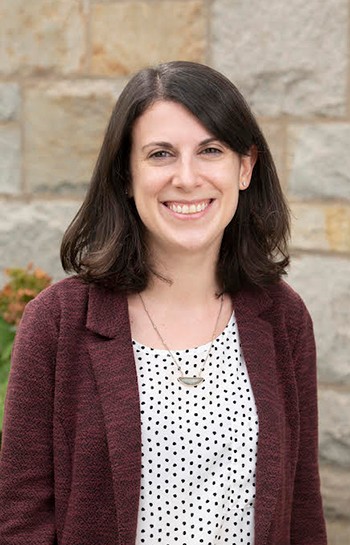
Samuel Levy is an Assistant Professor of Business Administration in the Marketing Area at the University of Virginia Darden School of Business. He teaches the marketing core course for the full-time MBA program and holds a B.S. in Economics from École Normale Supérieure Paris-Saclay, an M.S. in Marketing from Tilburg University, and a Ph.D. in Marketing from Carnegie Mellon University. His research focuses on customer analytics , data fusion , and privacy-preserving methodologies in marketing. He employs Bayesian econometrics , probabilistic machine learning , and deep generative models to address challenges in brand affinity, CRM optimization, and decision-making complexity. His work includes innovations like digital marketing twins for counterfactual analysis and privacy-preserving data fusion techniques for telecom industries. While no scientific awards or student advisement details are explicitly mentioned, his methodological contributions in Gaussian processes and Bayesian nonparametrics advance choice modeling and charitable giving research. He actively collaborates with scholars like Longxiu Tian and Alan Montgomery on high-impact projects.
Dr Bernd Ploderer is an Associate Professor in the School of Computer Science at Queensland University of Technology (QUT), where he conducts research in Human-Computer Interaction (HCI), focusing on health, wellbeing, and human-centred computing. He leads the Digital Wellbeing Lab and is actively involved in multiple Australian Competitive Grant-funded projects, including those on generative AI for self-care, tangible intergenerational interaction, and children's active play. Education: PhD in Human-Computer Interaction (University of Melbourne, 2011), MA in Communications (University of Salzburg, 2007), BSc (Hons) in Information Systems (FH Joanneum Graz, 2003) Previous Positions: Research Fellow and Lecturer at the University of Melbourne (2011–2015) Professional Recognition: Fellow of the Higher Education Academy, Graduate Certificate in Academic Practice (QUT, 2017) Dr Ploderer’s research centers on designing interactive technologies that support personal and social wellbeing, with a strong emphasis on user-centered and co-design methods. His work spans domains such as digital self-care , mobile health , generative AI , tangible and embodied interaction , and intergenerational and child play . He has developed innovative educational methods in HCI, notably the ‘working field theories for design’ approach, which received an Honorable Mention at CHI 2021. His recent publications (2023–2025) reflect a growing interest in AI-mediated self-care, nature-connected technologies, and inclusive design for diverse populations including teens, older adults, and individuals with disabilities. These works appear in top-tier venues such as CHI , DIS , and Personal and Ubiquitous Computing . Dr Ploderer has received several awards, including: QUT Vice Chancellor's Performance Award (2016) PCHF Innovation Grant (2018) Metro North Hospital and Health Service Link Grant (2017) Honorable Mention at CHI 2021 Associate Chair for Health Subcommittee at CHI 2022 He is actively involved in research supervision, currently mentoring PhD and Honours students on topics such as conversational agents for music education, mental wellbeing for international students, and relational technologies for dementia care. He has supervised numerous completed PhD and Masters theses, often in collaboration with Professor Margot Brereton and other QUT researchers. Dr Ploderer also contributes to research ethics and integrity within his school and serves on committees for CHI and CHISIG. His lab, the Digital Wellbeing Lab, fosters interdisciplinary collaboration focused on creating technology that enhances social, mental, and physical wellbeing.
Associate Professor Seojeong Lee is a faculty member at the University of New South Wales (UNSW) Business School, School of Economics, specializing in advanced econometric theory. She joined UNSW in 2012 after completing her PhD at the University of Wisconsin-Madison and has established herself as a leading researcher in robust inference methods under complex data conditions. Her educational background includes: Ph.D. in Economics, University of Wisconsin-Madison (2008-2012) M.A. in Economics, Seoul National University (2006-2008) B.A. in Economics and Political Science (dual major), Seoul National University, summa cum laude (2000-2006, with military service 2002-2004) Professor Lee's research centers on developing theoretically rigorous methods for econometric inference, with primary focus on generalized method of moments (GMM), instrumental variables (IV), and two-stage least squares (2SLS) under model misspecification. Her work addresses critical challenges including invalid/many/weak instruments, heterogeneous treatment effects, and clustered sampling, contributing foundational advances to statistical inference in economics. Analysis of her recent publications reveals a strong trajectory in refining methods for many-instrument settings and misspecified models, with increasing emphasis on computational implementations (e.g., Stata packages) and applications to causal inference. Her work bridges theoretical econometrics with practical policy-relevant analysis. Her scientific achievements include: Australian Research Council DECRA Fellowship (2017-2019) UNSW Dean's Research Fellowship (2020-2022) Zellner Thesis Award Honorable Mention from American Statistical Association (2014) Multiple competitive UNSW research awards Professor Lee actively supervises PhD candidates Wei Tian and Fangzhou Yu, and has secured over AUD 700,000 in research funding including ARC Discovery Projects. She teaches undergraduate and postgraduate econometrics courses, integrating her research into pedagogy. Her ongoing work continues to push boundaries in robust econometric methodology for modern data challenges.
Nyeema Harris is the Knobloch Family Associate Professor of Wildlife and Land Conservation at the Yale School of the Environment (YSE), part of Yale University. She focuses on wildlife conservation, urban ecology, and the socio-ecological dimensions of human-wildlife interactions. Her work examines how urbanization impacts predator behavior, diets, and biodiversity, while advocating for inclusive sustainability approaches that address equity and justice in environmental scholarship. Education includes a PhD from North Carolina State University, an MS from The University of Montana, and a BS from Virginia Polytechnic Institute and State University. These degrees span wildlife science and conservation biology. Her research interests emphasize urban carnivore ecology, community-based conservation strategies, and systemic racism’s ecological consequences. She integrates spatial modeling with social equity frameworks, as seen in her publications on textured species range maps and critiques of environmental landscapes of fear. Publications highlight trends in urban wildlife adaptation, interdisciplinary methods, and ethical considerations in conservation. Key themes include dietary shifts in predators due to environmental changes, the role of historical data in species forecasting, and mitigating health risks linked to urbanization and gentrification. Dr. Harris actively advises doctoral students and is involved in initiatives like SNAPSHOT USA and Michigan ZoomIN, leveraging citizen science for ecological monitoring. She has not been noted for specific scientific awards in the provided texts. Her office is located in Kroon Hall, Room 223, at 195 Prospect Street, New Haven, CT. She contributes to environmental justice discourse and has been featured in news articles discussing her work on African carnivore range loss, urban rodent control, and systemic racism in urban ecosystems.
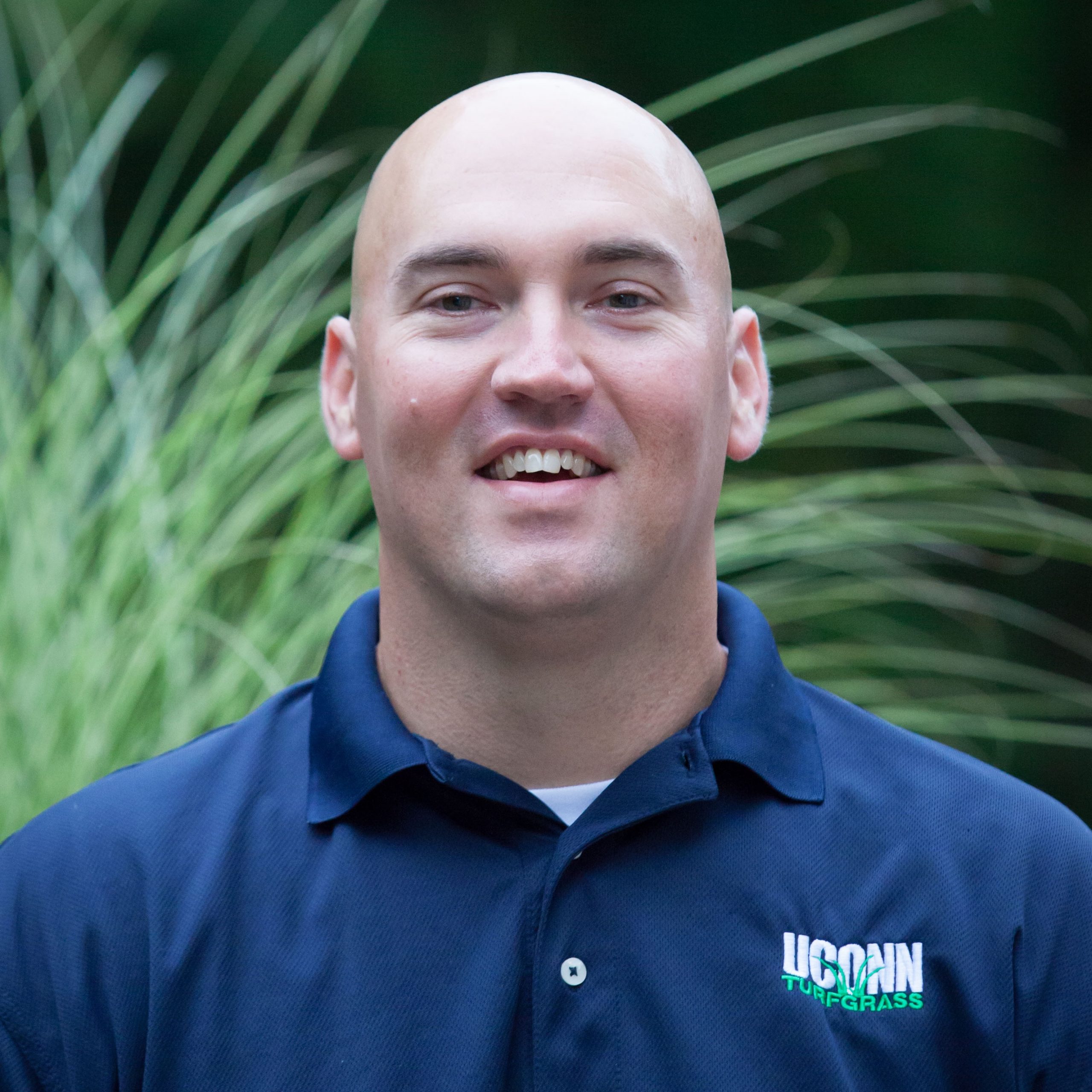
Jason Henderson is a Professor of Soil Science in the Department of Plant Science and Landscape Architecture at the University of Connecticut's College of Agriculture, Health and Natural Resources. His research focuses on developing sustainable turfgrass management practices through innovations in pesticide-free techniques, soil modification, and root zone assessment. Dr. Henderson holds a PhD in Crop and Soil Sciences from Michigan State University. Research Interests: His work encompasses turfgrass establishment optimization, laboratory methods for evaluating root zone constituents, and innovative approaches to enhance turf performance under traffic stress. Current projects investigate organic management systems, soil physical properties, and environmental sustainability in turf settings. Teaching: Dr. Henderson instructs courses including Introduction to Soil Science (SAPL 300), The Great American Lawn (SPSS 1060), and Advanced Turfgrass Management (SPSS 3150).
Brooke Magnus is an Associate Professor in the Department of Psychology and Neuroscience at Boston College. She earned her PhD in Psychology (with a minor in Biostatistics) from the University of North Carolina at Chapel Hill's L.L. Thurstone Psychometric Laboratory. Her research focuses on psychometric model development for clinical and health outcomes, including item response theory (IRT) applications to survey data. She teaches statistics courses and mentors graduate students applying psychometric methods to substantive research areas. Her work emphasizes improving measurement practices in clinical settings, particularly through zero-inflated models for symptom data and IRT-based instrument validation. Key research areas include traumatic brain injury outcomes, neurodivergent youth bullying assessment, and pediatric health measurement. She collaborates across psychology, medicine, and public health disciplines. Recent work highlights advancements in TBI severity characterization, concussion assessment tool comparisons, and autism spectrum disorder psychometric analyses. Her methods bridge quantitative psychology and biostatistics to address gaps in clinical measurement precision.
Florent Krzakala is a Full Professor at École polytechnique fédérale de Lausanne (EPFL) in Switzerland, holding positions across multiple departments including the School of Basic Sciences (SB), School of Engineering (STI), and specifically within the Department of Physics (IPHYS) and Department of Electrical Engineering (IEM). He leads the Information, Learning and Physics Laboratory (IdePHICS) and maintains an office at ELD 239, Station 11, 1015 Lausanne. His research bridges statistical physics and computational disciplines, with significant contributions to understanding the theoretical foundations of machine learning and optimization problems. Dr. Krzakala received his MSc in Physics from Orsay, France in 1999, followed by a PhD in Statistical Physics from Orsay, Paris XI, France in 2002, and completed a postdoctoral position at Roma La Sapienza in 2004. This strong foundation in physics has informed his interdisciplinary approach to computational problems. His research interests span Statistical Physics, Machine Learning, Probability and Statistics, Computer Science, Information Theory, Inference on Graphs, Random Constraint Optimization, and Computational Optics. Krzakala's work focuses on applying methods from statistical physics to problems in theoretical computer science, probability, and machine learning. He investigates how concepts from disordered systems and phase transitions can illuminate computational barriers in optimization and inference tasks. His research has particular relevance for understanding the behavior of neural networks, compressed sensing, and high-dimensional statistical models. Analysis of his recent publications reveals a strong trend toward understanding the fundamental limits of learning in high-dimensional settings, with particular emphasis on phase transitions, statistical-to-computational gaps, and the theoretical properties of deep learning architectures. His work frequently bridges rigorous mathematical analysis with practical machine learning applications, demonstrating how insights from statistical physics can inform algorithm design and theoretical understanding in AI. Krzakala actively mentors the next generation of researchers, supervising numerous PhD students whose work continues to advance these interdisciplinary fields. His laboratory serves as a hub for researchers exploring the intersection of physics and computation, fostering collaborations across traditional disciplinary boundaries. He teaches advanced courses including Fundamentals of Inference and Learning, Statistical Physics, and Statistical Physics for Optimization & Learning, which examine the connections between physical principles and computational methods. His educational materials, including lecture notes on statistical physics methods in optimization and machine learning, have become valuable resources for students and researchers worldwide. As founder and scientific advisor of the startup Lighton, Krzakala has also demonstrated a commitment to translating theoretical insights into practical applications, particularly in the realm of optical computing for machine learning tasks.
Stefano CAMPOSTRINI is a Full Professor in the Department of Economics at Ca' Foscari University of Venice, specializing in Social Statistics (STAT-03/B). He serves as a Member of the technical-scientific Committee of the Ca' Foscari Challenge School and the Department of Economics' Committee. His research activities are supported by affiliations with the Research Institute for Social Innovation and the Research Institute for Innovation Management. Professor CAMPOSTRINI's research spans the intersection of statistical methodology, public health, and social policy. His work demonstrates expertise in advanced statistical techniques including Bayesian modeling, spatial analysis, and complex survey methodology. His primary focus areas include healthcare systems analysis, social innovation, public administration, and the economic aspects of health policy. He frequently addresses issues related to comorbidity patterns, healthcare service accessibility, and the application of artificial intelligence in healthcare settings. His publication record from 2021-2025 reveals significant trends in healthcare innovation, with particular emphasis on virtual hospital systems, AI applications in medicine, sustainable healthcare practices, and the statistical analysis of social services like early childhood education. His methodological contributions include novel approaches to analyzing regional health disparities and developing web-based tools for disease prevalence estimation. His research often employs expert consensus methods like Delphi techniques to address complex healthcare organizational challenges. Professor CAMPOSTRINI maintains active involvement in research initiatives through the Research Institute for Social Innovation and the Research Institute for Innovation Management. His work bridges advanced statistical methodology with practical applications in healthcare policy and social service delivery, making significant contributions to evidence-based decision making in public health and social policy domains across Italy and European contexts.
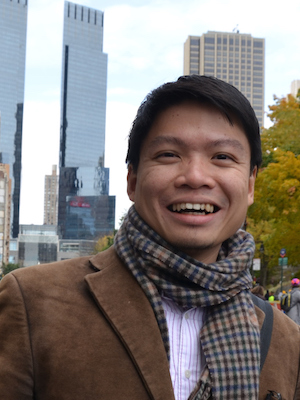
Novi Quadrianto is a Professor of Machine Learning at the School of Engineering and Informatics, University of Sussex, where he joined as a Lecturer in February 2014. He is currently a Principal Investigator on three active EU grants: BayesianGDPR (ERC), TANGO (EU Horizon RIA), and Act.AI (ERC Proof of Concept). He also holds an Adjunct Professor position in Data Science at Monash University, Indonesia, and serves as Strategic Lab co-Leader of the BCAM Severo Ochoa Strategic Lab on Trustworthy Machine Learning in Bilbao, Spain. His educational background includes a PhD in Machine Learning from the Australian National University (2012) and a BEng in Electrical and Electronics Engineering from Nanyang Technological University, Singapore. During his PhD, he conducted research at multiple international institutions including HIIT-Finland, Yahoo! Research-US, University of Alberta-Canada, Fraunhofer IAIS-Germany, and IST Austria. From 2012-2014, he was a Newton International Fellow of the Royal Society at the University of Cambridge. Professor Quadrianto directs the Predictive Analytics Lab (PAL) since 2017, which focuses on "Responsible AI" research developing AI models that embed fairness, accountability, transparency, and trustworthiness. His research spans algorithmic fairness, federated learning, and computer vision, with applications in sustainable development, healthcare, and finance. His work has been funded by prestigious organizations including the European Research Council, EPSRC, and HM Treasury. His publications reveal a strong focus on addressing challenges in AI fairness, robustness, and privacy, particularly in dynamic environments and heterogeneous data settings. Recent work explores performative prediction, diversity-driven learning, and efficient vision transformer inference, demonstrating his leadership in cutting-edge machine learning research. European Research Council ERC Proof of Concept Grant (2023) Guarantor Researcher for BCAM Severo Ochoa Excellence Accreditation (2023) European Lab for Learning and Intelligent Systems (ELLIS) Scholar/Fellow (2020) European Research Council ERC Starting Grant (2019) Newton International Fellowship (2012) Microsoft Research Asia Fellowship (2009) Professor Quadrianto currently supervises six PhD students and five postdoctoral researchers. He has served as Action Editor for Transactions on Machine Learning Research since 2022 and as Associate Editor for IEEE Transactions on Pattern Analysis and Machine Intelligence since 2016. He has also been an Area Chair for major conferences including NeurIPS, ICML, and AAAI. His PAL laboratory hosts a team of 15 members focused on inter-disciplinary AI research with domain experts across various sectors. The PAL Lab operates three innovation strands: AI for Sustainable Development (supporting UN SDGs), AI for Healthcare (transforming health outcomes), and AI for Finance (personalized loan decision-making). The lab also leads initiatives in Diversity & Inclusion in AI and offers Pro-Bono Office Hours to organizations seeking guidance on machine learning aspects.
Tracey-Lea Laba is an Adjunct Associate Professor at the Centre for Health Economics Research and Evaluation (CHERE) within the Faculty of Health at the University of Technology Sydney. As an NHMRC Early Career (Sidney Sax) Fellow and registered pharmacist, she brings extensive clinical experience to her academic work. Her research portfolio spans health economics, pharmacoepidemiology, medication utilization, and health policy with a focus on improving health outcomes for disadvantaged populations through better use of high-value medicines for non-communicable diseases. Dr. Laba received her PhD from The University of Sydney in 2014 and was a University Medallist for her Bachelor of Pharmacy (2004). Prior to joining UTS, she held positions as a senior research fellow at The George Institute for Global Health and the Menzies Centre for Health Policy, and completed an honorary postdoctoral fellowship at The University of British Columbia. Her clinical background includes hospital and community pharmacy practice as well as pharmaceutical industry experience. Her research interests focus on health economics, drug utilization and policy, clinical trial translation, and improving medication access for non-communicable diseases. Dr. Laba has secured significant funding for projects including the Centre of Research Excellence in Medicines Intelligence (2020-2025), the ORIENT study on rural access to reproductive health services (2020-2026), and research on medication utilization patterns in cancer care and cardiovascular disease management. An analysis of her recent publications reveals a consistent focus on practical healthcare implementation challenges, with particular attention to medication access, quality improvement in primary care, and health system strengthening. Her work spans both Australian healthcare contexts and global health applications, particularly in low-resource settings in South Asia. Among her notable professional recognitions, Dr. Laba is the first health economist elected to Asthma Australia's Professional Advisory Council and the first person outside the PBAC chair to serve on both the drug utilization and economics subcommittees of the Pharmaceutical Benefits Advisory Committee. Dr. Laba actively supervises Masters and PhD students and has received funding through the NHMRC Early Career Fellowship program. Her research has been supported by multiple grants from the Medical Research Future Fund and NHMRC totaling millions of dollars across various projects focused on medicines intelligence, rural healthcare access, and global health interventions.
Conan MacDougall, PharmD, MAS, BCPS, BCIDP, FIDSA serves as Professor of Clinical Pharmacy in the Department of Clinical Pharmacy at the University of California, San Francisco (UCSF) School of Pharmacy. He provides clinical service to the Infectious Diseases Consult Service at UCSF Medical Center and is actively involved in teaching pharmacy, medical, and nursing trainees at UCSF. Dr. MacDougall holds leadership positions including Chair of the Specialty Council on Infectious Diseases for the Board of Pharmaceutical Specialties and is a member of the School of Medicine's Academy of Medical Educators. Dr. MacDougall's educational background includes: MAS in Clinical Research from University of California, San Francisco (2008) PharmD from University of California, San Francisco (2002) BS in Chemistry from University of California, Davis (1998) Dr. MacDougall's research focuses on innovative approaches to antimicrobial stewardship, interactive learning methods for appropriate antimicrobial use, and the pharmacoepidemiology of antimicrobial utilization in hospitals. His work bridges clinical practice with educational innovation, particularly in developing effective instructional strategies for infectious diseases education. He has made significant contributions to understanding antibiotic resistance patterns, drug-drug interactions involving rifamycins, and the implementation of antimicrobial stewardship programs across healthcare settings. Analysis of Dr. MacDougall's most recent publications reveals a consistent focus on antimicrobial stewardship, infectious diseases education, and pharmacy practice. His research spans clinical investigations of antibiotic efficacy, educational interventions for healthcare professionals, and systematic reviews of drug interactions. Notably, his 2025 publications include important work on the role of infectious diseases pharmacists in antimicrobial stewardship and explorations of how artificial intelligence can support clinical decision-making in infectious diseases pharmacotherapy. Dr. MacDougall has received numerous prestigious awards recognizing his contributions to pharmacy and medical education: Fellow, Infectious Diseases Society of America (2025) Academic Senate Award for Distinction in Teaching, UCSF (2024) Vincent Pons Award for Clinical Infectious Diseases Education, UCSF School of Medicine (2019) Emerging Teaching Scholar Award, American Association of Colleges of Pharmacy (2018) Albert B. Prescott Pharmacy Leadership Award (2012) Multiple Long Prizes for Excellence in Teaching from UCSF School of Pharmacy (2006-2018) As an educator, Dr. MacDougall has twice received the Academic Senate Campus Award for Distinction in Teaching and has been recognized as an Emerging Teaching Scholar by the American Association of Colleges of Pharmacy. He serves as Antimicrobial Section Editor for Goodman & Gilman's The Pharmacological Basis of Therapeutics and is a chapter author in several major medical references including Principles and Practice of Infectious Diseases. His research has been consistently funded through various grants supporting investigations into antimicrobial utilization, educational interventions, and clinical outcomes related to infectious diseases management. Dr. MacDougall has supervised numerous pharmacy students and residents, contributing significantly to the training of future pharmacists specializing in infectious diseases. Dr. MacDougall is actively involved with the UCSF Infectious Diseases Management Program and collaborates with interdisciplinary teams across UCSF Medical Center. His work with the Infectious Diseases Society of America extends to curriculum development initiatives, including the Core Antimicrobial Stewardship Curriculum for Infectious Diseases Fellows. He also contributes to national efforts through his role on the Specialty Council on Infectious Diseases for the Board of Pharmaceutical Specialties, helping to shape certification standards for infectious diseases pharmacotherapy specialists.
Peter Martin Hansen is an active researcher at the Department of Regional Health Research within the Faculty of Health Sciences at the University of Southern Denmark. His primary focus is on the IRS - Prehospital Area, where he conducts critical research in emergency medicine and disaster response systems. He holds an MD and MSc, indicating his strong clinical and research background in medical sciences. Dr. Hansen's research interests are centered around emergency medicine with specific expertise in prehospital care, disaster management, anaestesiology, and resuscitation techniques. His work frequently addresses critical issues in out-of-hospital cardiac arrest management, vascular access methods, triage systems, and ethical decision-making in emergency settings. His fingerprint analysis shows strong contributions to fields including Triage (100%), Out of Hospital Cardiac Arrest (51%), Resuscitation (42%), Randomized Clinical Trials (34%), Major Incidents (30%), and Vascular Access (27%). His recent publications in 2025 demonstrate a clear trend toward large-scale clinical studies addressing practical challenges in emergency medical services. These include investigations into prehospital intraosseous access complications, mass casualty incident response protocols, ethical frameworks for prehospital resuscitation, oxygen therapy protocols for trauma patients, and comparative studies of vascular access methods during cardiac arrest. His work often appears in high-impact journals including The New England Journal of Medicine, JAMA, and Resuscitation. Dr. Hansen has received recognition for his work, including the Best Presentation 2nd prize at the 37th Conference in Oulu, Finland (June 2024) and the Best Abstract Competition award at the SSAI 32nd Meeting in Turku, Finland (August 2013). Active participant in the Ambulance and Helicopter Response Times in Emergency Medical services (AHRTEMIS) Project (2023-2026) Former visiting researcher at University of California (July-October 2010) Participant in SSAI Master on Advanced Emergency Medicine Course (September 2008) His media engagement demonstrates his commitment to translating research into practical emergency response improvements, with recent contributions to Danish media on topics including concrete silo collapse incidents, radio communication challenges in emergency services, and lessons from the Storebælt train accident.
Professor Walter Timo de Vries is a faculty member at the Technical University of Munich (TUM) , holding the Chair of Land Management and Land Development within the Department of Aerospace and Geodesy, TUM School of Engineering and Design . His research focuses on intelligent and responsible land management , urban and rural development , spatial justice , and the development of a Human Geodesy framework. A graduate of TU Delft (1988) and Rotterdam (PhD), he has led international projects across Asia, Africa, and South America. At TUM, he directs the Master's and PhD Programs in Land Management , serves as Dean of Geodesy , and leads TUM.Africa . Member of the German Geodetic Commission Member of the Bavarian Academy for Rural Development Academic Coordinator of TUM SEED Center Research Interests span responsible land governance , land tenure security , land consolidation , and geospatial methods for sustainable development. His recent work examines the Water-Energy-Food Nexus and digital twins in collaborative planning. He has supervised over 20 PhD and Master’s students on topics like spatial justice , nomic pastoral tenure , and smart land use . Publications address blockchain in land administration , spatial inequalities , and land policy reforms across global contexts.
Lyndia Wu is an Assistant Professor in the Department of Mechanical Engineering at the University of British Columbia's Faculty of Applied Science, where she holds the prestigious Canada Research Chair in Wearable Brain Injury Sensing. She leads the SimPL (Sensing in Biomechanical Processes Lab) and maintains an active research program focused on biomechanics and medical device development. Her educational background includes: B.A.Sc. from the University of Toronto M.S. from Stanford University Ph.D. from Stanford University Postdoctoral Fellowship from Stanford University Dr. Wu's research program centers on developing novel sensing and data analytics technologies to study human biomechanics in health and disease states. Her primary research areas encompass brain injury or concussion biomechanics using advanced sensing, modeling, and machine learning approaches, as well as the development of innovative sensors and algorithms for studying sleep disorders like obstructive sleep apnea. She specializes in wearable sensors for brain health monitoring, traumatic brain injury mechanisms, and AI applications in healthcare settings. Analysis of her recent publications reveals a strong focus on sports-related head impacts (particularly in soccer), EEG monitoring following impacts, and sleep monitoring after concussions. Her work demonstrates interdisciplinary collaboration across biomechanical engineering, neuroscience, and clinical medicine, with publications spanning biomechanics, neurotrauma, biomedical instrumentation, and signal processing domains. Dr. Wu has received significant recognition for her work, including: Scholar Award from the Michael Smith Foundation for Health Research (2019) Junior Faculty Teaching Award from UBC Mechanical Engineering (2022) She actively supervises graduate students in Mechanical Engineering programs (MASc and PhD) and collaborates extensively across disciplines. Dr. Wu is affiliated with multiple research centers including the Institute for Computing, Information and Cognitive Systems (ICICS), Origins of Balance Deficits and Falls, and SmarT Innovations for Technology Connected Health (STITCH), reflecting her interdisciplinary approach to solving complex biomedical challenges. As director of the SimPL lab, she leads a research team developing cutting-edge sensing solutions for biomechanical processes with particular emphasis on brain injury prevention, monitoring, and recovery assessment through innovative engineering approaches.
Amber B. Ray, Ph.D. , is an Associate Professor of Special Education at the University of Illinois Urbana-Champaign , where she develops strategy and self-regulation approaches to literacy instruction for students with disabilities and diverse learning needs. Her work emphasizes professional development for educators in writing and reading instruction. Education : Ph.D. in Learning, Literacies, and Technologies with specialization in Special Education from Arizona State University Research Focus : Dr. Ray’s work centers on Self-Regulated Strategy Development (SRSD) for improving writing outcomes across educational levels (elementary to adult learners). She investigates technology integration, professional development models like Practice-Based Professional Development (PBPD) , and equity in teacher preparation programs, particularly for racially/ethnically diverse candidates. Publication Trends : Recent studies (2023-2025) highlight SRSD applications for argumentative/informative writing in K-12 settings, PBPD for teacher training, and addressing systemic barriers like Praxis Core: Writing exam requirements through evidence-based instruction. Instructional Leadership : Dr. Ray teaches advanced courses SPED 440: Instructional Strategies I and SPED 441: Instructional Strategies II , focusing on inclusive pedagogy, legal compliance, and data-driven instructional design.