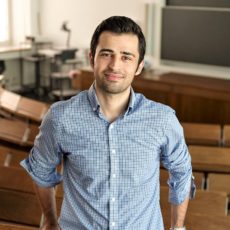
Mohsen Ghaffari is an Associate Professor at MIT's Department of Electrical Engineering and Computer Science (EECS), holding the Steven and Renee Finn Chair. His research focuses on theoretical computer science, particularly distributed and parallel algorithms, graph theory, and network optimization. Formerly, he was a tenured CS faculty member at ETH Zurich until 2022. PhD in Computer Science from MIT (2016) His research interests include distributed algorithms, parallel computing, graph decomposition, and network congestion management. His recent work addresses coreness decomposition, spanner construction, and Euclidean k-center optimization in massive parallel computation frameworks. Notable scientific awards include the ACM Doctoral Dissertation Award (Honorable Mention), ACM-EATCS Doctoral Dissertation Award, and multiple best paper awards at FOCS, PODC, and SODA. He has advised numerous PhD and Master's students, many of whom have transitioned to academic and industry roles. He has taught courses at MIT and ETH Zurich on distributed algorithms, advanced algorithms, and massively parallel computation. His professional activities include serving on program committees for SODA, FOCS, STOC, and organizing workshops like Highlights of Algorithms (HALG) and Workshop on Local Algorithms (WOLA).
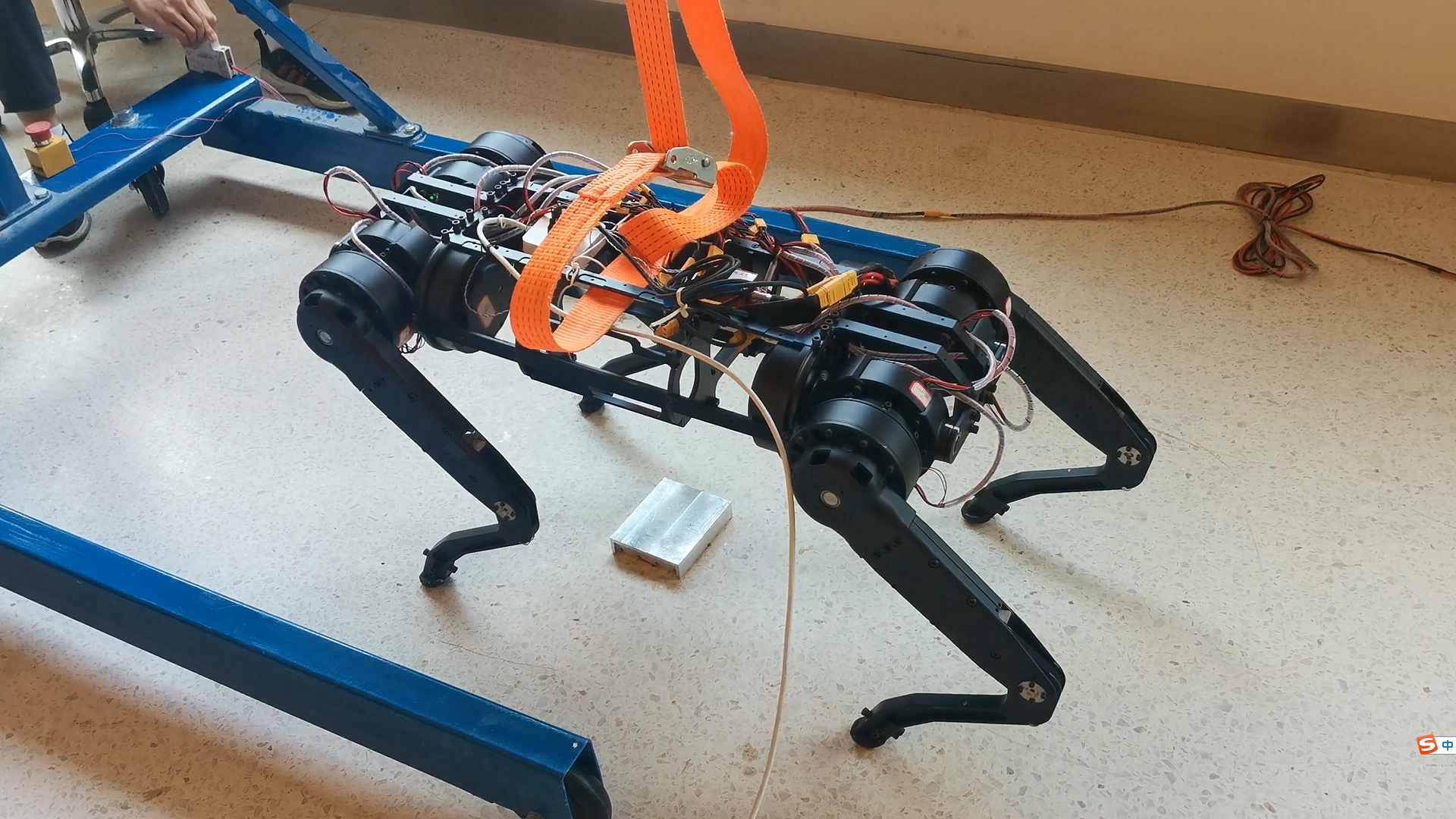
Wei Zhang is a tenured Professor at the Southern University of Science and Technology (SUSTech) , Shenzhen, China, and a Senior Member of IEEE. He serves as Associate Editor for IEEE Transactions on Control System Technology and leads the CLEAR Lab (Control & Learning for Robotics and Autonomy) within the School of Automation and Intelligent Manufacturing (AiM). His career spans institutions including the University of California, Berkeley (postdoc), and The Ohio State University (Assistant/Associate Professor). Education: PhD in Electrical Engineering from Purdue University (2009), MS in Electrical and Computer Engineering from University of Kentucky (2005), BS in Automation from University of Science and Technology of China (2003) Research Interests focus on integrating control theory, optimization, and machine learning to develop intelligent systems. Key areas include: Legged Robots: Dynamic locomotion control, bio-inspired gait design, and push recovery mechanisms Autonomous Systems: Real-time motion planning, obstacle avoidance, and safe navigation in adversarial environments Smart Grids: Distributed control for energy systems and transactive energy optimization Machine Learning: Reinforcement learning for robotics, Q-learning convergence analysis, and hybrid control-learning frameworks Publication Trends highlight interdisciplinary work at the intersection of robotics and control systems. His recent 2024 papers address: Whole-body control for wheeled-quadrupedal robots Geometric object pose refinement in computer vision Task-space Riccati feedback for underactuated systems Teacher-student reinforcement learning architectures Scientific Awards include: 2016 : NSF CAREER Award 2015 : Lumley Research Award (Ohio State University) 2013 : AFOSR Summer Faculty Fellowship 2018 : National Distinguished Expert (Young, China) 2019 : International Underwater Robot Competition 2nd Prize (team advisor) Academic Leadership involves editorial roles at IEEE Transactions on Control System Technology and IEEE Transactions on Power Systems. His lab provides state-of-the-art robotics platforms including quadruped robots, Kuka manipulators, and UAVs for algorithm validation. Research collaborators span The Ohio State University , UC Berkeley , CMU , and The University of Hong Kong .
Chris Harrison is an Associate Professor at Carnegie Mellon University's School of Computer Science, directing the Future Interfaces Group . His research focuses on novel human-computer interaction technologies, including haptics, AR/VR/XR, and ubiquitous computing. Research Interests: Ubiquitous Computing, Human-Centered AI, Physical Interfaces (Sensing, Haptics, Fabrication), AR/VR/XR, Social Computing Advisees: Daehwa Kim, Nathan DeVrio, Vimal Mollyn, Vivian Shen Scientific Recognition: Forbes 30 Under 30 (Science), MIT Technology Review 35 Innovators Under 35, Smithsonian Innovator (2013), Google/Microsoft/Qualcomm Fellows Contact: chris.harrison@cs.cmu.edu His recent publications explore advanced haptic systems (Reel Feel, Fluid Reality), body-centric sensing (SkinTrack), and environment-embedded interfaces (Wall++). Current work integrates UWB/IMU fusion for pose estimation and synthetic jet haptics.
Pamela J. Hinds is the Rodney H. Adams Professor and Fortinet Founders Chair in Stanford University's School of Engineering, holding a joint appointment in the Department of Management Science and Engineering. She co-directs the Center on Work, Technology, and Organization and serves on the Director's Council for the Hasso Plattner Institute of Design. Her research focuses on technology's impact on teams, collaboration, and innovation in global and cross-cultural contexts. She earned her Ph.D. in Organizational Science and Management from Carnegie Mellon University (1997). Research Interests: Dr. Hinds explores cross-boundary work teams, particularly those spanning national borders, examining cultural dynamics, language barriers, and site visits' role in knowledge sharing. She investigates human-robot interaction in workplaces and emerging technologies' effects on work practices, including AI, 3D printing, and open innovation systems. Her work bridges organizational behavior, human-computer interaction, and global work dynamics. Awards & Recognition: Lasting Impact Award (2018) Senior Editor of Organization Science Co-editor of Distributed Work (MIT Press) Advising & Leadership: As department chair, Hinds shapes educational and research agendas. Her grants include NSF-funded studies on digital technologies in agriculture and crowd-based innovation. She advises initiatives at the intersection of technology, work design, and global collaboration. Labs & Teams: Co-leads the Center on Work, Technology, and Organization, fostering interdisciplinary research on modern work environments. Engages in Stanford's Design School (d.school) to integrate human-centered design principles into workplace innovation.
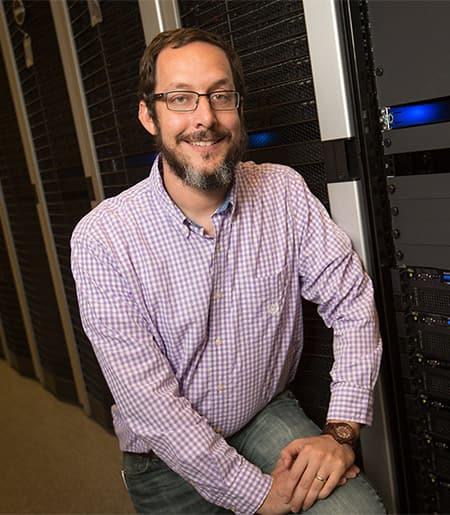
David Bindel is an Associate Professor in the Department of Mathematics at Cornell University, affiliated with the College of Arts and Sciences, College of Engineering, and Cornell Ann S. Bowers College of Computing and Information Science. He earned his Ph.D. in Mathematics from the University of California, Berkeley in 2006. His research focuses on applied numerical linear algebra, eigenvalue problems, and their applications in plasma physics, network analysis, and nonlinear systems. He develops methods for analyzing complex systems, including magnetic confinement in stellarators, stability of MHD systems, and community detection in networks. His work bridges theoretical foundations with practical computational tools, such as formal verification of linear algebra algorithms and scalable Gaussian process models. Bindel’s research explores the interplay between structure and computation, leveraging eigenvalue analysis to address challenges in computer vision, opinion dynamics, and engineering design. He has contributed to advancements in numerical methods for large-scale systems, including iterative solvers, spectral approximation techniques, and stochastic optimization. His interdisciplinary approach spans applied mathematics, computer science, and physics, with applications in fusion energy, machine learning, and network science. Recent work highlights include high-order expansions for magnetic confinement, adaptive filtering for dynamical systems, and Bayesian optimization strategies. His publications emphasize rigorous analysis alongside computational scalability, addressing both theoretical and practical aspects of modern scientific computing. Despite no explicitly listed awards, his contributions reflect significant impact in his fields.
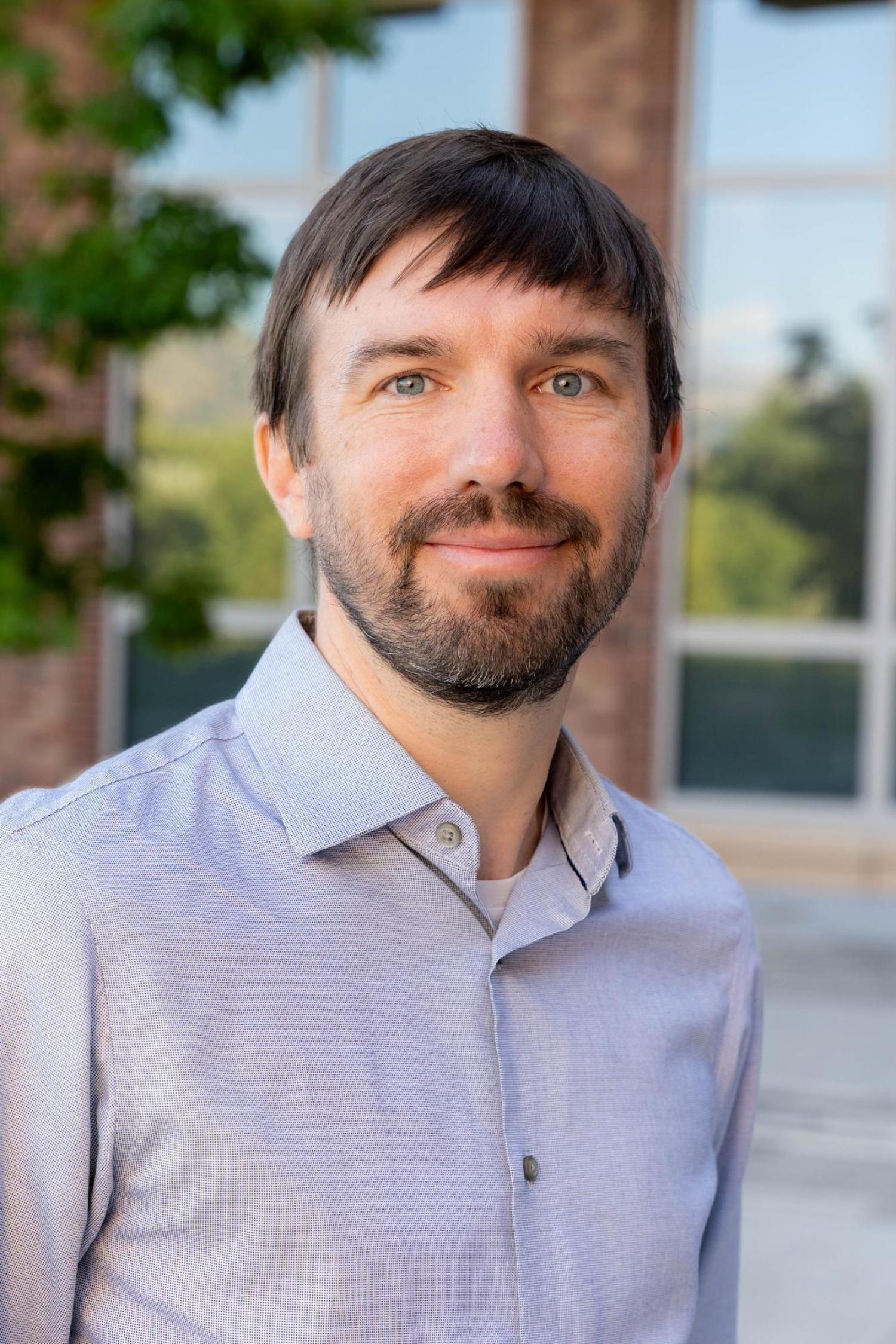
John Evans is an Associate Professor and Jack Rominger Faculty Fellow in the Department of Aerospace Engineering Sciences at the University of Colorado Boulder, affiliated with the Applied Mathematics program. He serves as Associate Chair for Undergraduate Curriculum and is part of the Aerospace Mechanics Research Center (AMREC). His research focuses on computational mechanics, particularly fluid dynamics, fluid-structure interaction, and turbulence modeling using high-order and structure-preserving methods. Evans holds a PhD (2011) and MS (2008) in Computational and Applied Mathematics from the University of Texas at Austin, and dual BS/MS degrees in Mathematics and Applied Mathematics from Rensselaer Polytechnic Institute (2006). Before joining CU Boulder, he was a postdoctoral fellow at the Institute for Computational Engineering and Sciences (ICES). His research interests include isogeometric analysis, immersed methods, and data-driven turbulence modeling. Notable contributions include development of divergence-conforming discretizations for incompressible flows, stabilized collocation methods, and invariant subgrid stress models. He leads the AMREC lab and collaborates on plasma-fueled propulsion systems and geometrically sensitive simulations. Key Awards: 2021: Rocky Mountain AIAA Educator of the Year 2021: Gallagher Young Investigator Medal 2019-2021: Clarivate Highly Cited Researcher Professional Activities: Editor of Engineering Computations, Senior AIAA Member, Simons Visiting Professor (2019) Evans' work bridges advanced numerical methods with real-world engineering challenges. His lab develops open-source tools like XIGA for multi-material problems and focuses on immersive simulation environments. Current projects explore turbulence closure models, plasma propulsion, and topology optimization with B-spline-based approaches.
Emma Brunskill is an Associate Professor of Computer Science at Stanford University, with a courtesy appointment in Education. She holds a PhD in Computer Science from MIT (2009). Her research focuses on reinforcement learning, educational technology, and healthcare applications, aiming to develop AI systems that support human learning and decision-making. Notable projects include AI tutoring systems, policy evaluation methods, and behavior change interventions using large language models. Her work bridges theory and practice, addressing challenges in off-policy evaluation, fairness-aware decision making, and scalable educational tools. Brunskill has contributed to foundational research in reinforcement learning algorithms and their applications in real-world scenarios such as healthcare, education, and human-AI collaboration. She also leads initiatives to improve equity and efficiency in educational technologies through data-driven approaches. Brunskill's research has been supported by grants such as the NSF RI: Small grant for data-efficient reinforcement learning. She actively explores the ethical implications of AI systems, particularly in healthcare and education settings. Her recent work emphasizes leveraging large language models (LLMs) for personalized feedback and simulated training environments, as seen in studies like GPTCoach and LLM-based counselor upskilling.
Joydeep Biswas is an Associate Professor in the Computer Science Department at the University of Texas at Austin, where he serves as the Director of the Autonomous Mobile Robotics Laboratory (AMRL). He is also affiliated with Texas Robotics, the UT Machine Learning Laboratory, and UT Good Systems. Previously, he was an Assistant Professor in the College of Information and Computer Sciences at the University of Massachusetts Amherst. Dr. Biswas earned his PhD in Robotics from Carnegie Mellon University in 2014 and his B.Tech in Engineering Physics from the Indian Institute of Technology Bombay in 2008. His educational background has provided him with a strong foundation in both theoretical and applied aspects of robotics and artificial intelligence. Dr. Biswas's research focuses on enabling long-term autonomy for mobile robots operating in human environments. His work spans robot perception, motion planning, control systems, and AI, with the ultimate goal of creating self-sufficient autonomous mobile robots that can perform tasks accurately and robustly in real-world settings. He is particularly interested in perception, planning, and failure recovery for autonomous mobile robots, which supports his vision of having autonomous service mobile robots deployed at campus-to-city scale, both indoors and outdoors, performing assistive tasks over deployments spanning years. His IJCAI 2019 Early Career Spotlight talk summarizes much of his research to date and ongoing interests. His recent research has shown a strong trend toward social navigation, human-robot interaction, and the application of machine learning techniques to robotics problems. There's a clear progression from fundamental robotics research toward more complex, real-world applications that require robots to understand and navigate human social spaces effectively. His work increasingly integrates large language models and other advanced AI techniques with traditional robotics approaches, as evidenced by his recent publications on topics like preference-conditioned navigation, social navigation benchmarks, and instruction-following navigation systems. Dr. Biswas has received numerous prestigious awards including the NSF CAREER Award (2021), J.P. Morgan Faculty Research Award (2019), Amazon Research Award (2019), and a grant from Northrop Grumman Mission Systems (2018). These awards recognize his innovative contributions to the field of robotics and autonomous systems. As a dedicated educator and mentor, Dr. Biswas actively supervises PhD and master's students, with his PhD student Sadegh Rabiee winning the student poster award at the Northrop Grumman University Symposium 2019. He has secured significant grant funding from the National Science Foundation for projects including 'Introspective Perception and Planning for Long-Term Autonomy' and 'Interactive Synthesis and Repair For Robot Programs,' demonstrating his ability to secure competitive research funding and his commitment to advancing the field. Dr. Biswas leads the Autonomous Mobile Robotics Laboratory (AMRL), which serves as a hub for interdisciplinary research in mobile robotics. The lab has developed notable resources such as the UT Campus Object Dataset (CODA) for 3D perception research and SOCIALGYM, a framework for benchmarking social robot navigation. His team regularly deploys robots on the UT Austin campus and in urban environments to test and refine their approaches in realistic settings, bridging the gap between simulation and real-world application.
Huamin Qu is a Chair Professor in the Department of Computer Science and Engineering at the Hong Kong University of Science and Technology (HKUST). He serves as the Founding Dean of the Academy of Interdisciplinary Studies (AIS), Founding Head of the Division of Emerging Interdisciplinary Areas (EMIA), and was the Founding Acting Head of Computational Media and Arts (CMA) at HKUST(GZ). Qu directs the VisLab and coordinates the Human-Computer Interaction (HCI) group. He obtained his BS in Mathematics from Xi'an Jiaotong University and MS/PhD in Computer Science from Stony Brook University. Qu's research integrates Data Visualization , Human-Computer Interaction , and Human-Centered AI , with applications in urban informatics, social networks, and explainable AI. His work focuses on developing interactive systems for big data analytics, visual storytelling, and AI-driven decision support. Research extends to multimodal communication, fintech, and augmented reality applications. His publications emphasize visual analytics for complex datasets (mobility, social media, financial), interaction techniques for immersive environments, and AI-enhanced visualization tools. Recent works explore explainable AI interfaces and large-scale data communication frameworks. IEEE Visualization Academy (2020) IEEE VGTC Technical Achievement Award AI 2000 Most Influential Scholar (2019, 2023, 2024) 21 Best Paper/Honorable Mention awards IBM Faculty Award (2009) APICTA Merit Award (2015) Yelp Dataset Grand Prize (2018) Qu has advised 48 PhD graduates (21 now faculty at institutions like UC Davis, University of Minnesota, Texas A&M) and 30 MPhil students. He secured major grants including RGC theme-based projects (digital citizenship, air pollution), UGC AoE (slope safety), and China's 973 Program. As VisLab director, he leads 20+ researchers in visualization/HCI projects adopted by Microsoft, IBM, Huawei, and Tencent.
Eva Ascarza is a Professor of Business Administration in the Marketing Unit at Harvard Business School (HBS) . She co-founded the Customer Intelligence Lab at HBS's D 3 Institute, focusing on responsible and effective customer data utilization. Research Interests include: Customer retention and churn analysis Algorithmic bias in marketing AI Field experimentation (A/B testing) for targeting optimization Customer lifetime value (CLV) modeling Dynamic personalization strategies Scientific Awards and Recognitions: 2023 Weitz-Winer-O'Dell Award (winner) 2022 Paul E. Green Award (PNAS publication) 2020 Marketing Science Institute (MSI) Scholar 2019 Erin Anderson Award for Emerging Female Scholar 2018 Paul E. Green Award (JMR publication) 2014 Frank M. Bass Outstanding Dissertation Award Her articles demonstrate cutting-edge applications of statistical modeling , Bayesian methods , and fair AI frameworks in modern marketing challenges.
Chen Li is a Professor in the Department of Computer Science at the University of California, Irvine (UCI), affiliated with the Donald Bren School of Information and Computer Sciences (ICS). He holds a Ph.D. from Stanford University and bachelor's and master's degrees from Tsinghua University. His research focuses on data management, including databases, query optimization, machine learning systems, and open-source tools like AsterixDB and Texera. He has received prestigious awards such as the NSF CAREER Award and IEEE Fellow recognition. Li is also a board member of the VLDB Endowment and the former Faculty Director of UCI's ICS Master of Computer Science Program. Education: Ph.D., Computer Science, Stanford University M.S. and B.S., Computer Science, Tsinghua University Research interests span next-generation databases, approximate query processing, and AI-driven data analytics. Notable contributions include the Texera system for collaborative data science workflows and the Apache AsterixDB project. He has led NIH-funded initiatives in diabetes research and pandemic prediction, emphasizing real-world applications of data science. Professional roles include PC co-chair of VLDB 2015, General Co-chair of SIGMOD 2027, and a visiting research scientist at Google. His awards highlight his impact in both academia and industry. Advising and mentoring are central to his career, with a focus on graduate education. He has pioneered outreach programs like DS4ALL to teach high-school students data science using Texera.
Dhruv Jain is an Assistant Professor in the Computer Science and Engineering Department at the University of Michigan , with affiliations in the School of Information and Michigan Medicine . He leads the Soundability Lab , focusing on transforming hearing into a programmable interface through human-centered AI systems. PhD from University of Washington MS from MIT Media Lab Formerly worked at Microsoft Research, Google, and Apple Research Interests intersect Human-Computer Interaction (HCI) , Audio AI , Accessibility , and Hearing Health . His work develops systems like SoundWatch (smartwatch-based sound awareness) and HomeSound (IoT sound visualization) to expand auditory access for DHH individuals and other domains. Recent Publications (2023–2025) span top venues like CHI , ASSETS , and ICMI , with trends including generative AI for real-time captioning , adaptive soundscapes , and clinical communication tools . SIGCHI Outstanding Dissertation Award (2023) William Chan Memorial Dissertation Award (2023) Best Poster Award at ASSETS 2024 Google Academic Research Award (2024) NIH Grant ($450k, 2023) William Demant Foundation Grant ($740k, 2025) Teaching includes Accessible Computing (undergraduate) and Advanced Accessibility (graduate), alongside global DIY workshops in five countries. The Soundability Lab collaborates with neuroscientists, clinicians, and Deaf scholars to create deployable systems like clinical communication tools now at Michigan Medicine and features integrated into Apple devices.
Takako Fujioka is an Associate Professor of Music at Stanford University, affiliated with the Center for Computer Research in Music and Acoustics (CCRMA). Her research focuses on the neural mechanisms underlying auditory perception, auditory-motor coupling, and music-supported therapy for neurorehabilitation. She holds a Ph.D. in Physiology from the Graduate University for Advanced Studies, Japan, and M.Sc./B.Eng. degrees in Electrical Engineering from Waseda University. Her work combines neurophysiological techniques such as MEG and EEG to study brain plasticity in development, aging, and stroke recovery. Notable contributions include investigating how music influences motor and cognitive recovery in stroke patients, as well as exploring the neural basis of musical perception through rhythmic synchronization and pitch discrimination studies. Supported by awards from the Canadian Institutes of Health Research during her postdoctoral work at the Rotman Research Institute, her research bridges clinical neuroscience and music cognition. Dr. Fujioka’s expertise spans auditory neuroscience, neurorehabilitation, and technology-assisted music therapy. She has pioneered studies on tactile mapping for cochlear implant users and networked music performance systems, emphasizing cross-modal perception and human-technology interaction. Her findings contribute to both theoretical understanding of auditory processing and practical applications in medical and educational settings. Awards: Canadian Institutes of Health Research Awards (postdoctoral phase) Labs/Teams: CCRMA, Stanford Music Perception Laboratory, Rotman Research Institute collaborations Key Themes: Neuroplasticity, Music-Mediated Rehabilitation, Auditory-Motor Integration, Multisensory Processing Her recent work examines aging-related changes in binaural hearing and the role of beta/gamma oscillations in rhythmic processing. She advocates for translational research that connects neural mechanisms with real-world therapeutic interventions.
Kostas Bekris is a Professor in the Department of Computer Science at Rutgers University, specializing in Robotics and Artificial Intelligence. His research focuses on motion planning, autonomous manipulation, and robot control, with notable contributions to tensegrity robotics, perception-driven systems, and large-scale package handling. He leads a team conducting groundbreaking work in robotics, supported by grants from NSF, NASA, and industry collaborators like ExxonMobil. His group emphasizes interdisciplinary approaches, combining machine learning, topological methods, and differentiable physics modeling to advance robot capabilities in complex environments. Education details are not explicitly stated in the provided texts, but his academic career has included significant mentorship of PhD students and postdoctoral researchers. Key projects involve vision-driven manipulation pipelines, obstacle detection systems (PROBE), and resilient robot designs inspired by biological structures. He has been recognized for his work through prestigious awards including the NASA Early Career Grant and multiple NSF grants, as well as team achievements in robotics competitions like the Amazon Picking Challenge. Research interests span robotics subfields such as: Autonomous manipulation in cluttered environments Learning-based control for dynamic systems Topological data analysis for motion reasoning Tensegrity and soft robotics architectures Sim-to-real transfer in robotic tasks His team's work has produced open-source software tools and datasets, advancing benchmarks in manipulation and perception. Recent articles emphasize scalable solutions for industrial automation and robust navigation strategies in unstructured settings. Scientific achievements include: Development of PROBE for proprioceptive obstacle detection Advances in differentiable physics engines for tensegrity systems NSF-funded projects on robotic rearrangement and modular morphologies Advising contributions span over a decade, with current advisees focusing on topics like non-prehensile manipulation and large-scale storage optimization. Collaborations with industry (e.g., ExxonMobil) and academic partners (Yale University) reflect his commitment to applied robotics research. Labs and teams under his leadership include the Rutgers CS Robotics Group, contributing to projects like the ARIAC challenge platform and packing/industrial automation systems. Future work targets improved robot resilience in disaster scenarios and enhanced human-robot collaboration paradigms.
Raquel Fernández is Full Professor of Computational Linguistics and Dialogue Systems at the University of Amsterdam, where she leads the Dialogue Modelling Group at the Institute for Logic, Language & Computation (ILLC). As Vice-Director for Research at ILLC and a Fellow of the ELLIS Society, she bridges computational linguistics, cognitive science, and artificial intelligence through her research on language use in multimodal and conversational contexts. PhD in Computational Linguistics from King's College London Prior research positions at University of Potsdam and Stanford University's CSLI Her work explores how cognitive constraints, social interaction, and perception shape language use, with a focus on: Visually-grounded language processing Multimodal dialogue modeling Model uncertainty and calibration Language grounding in multimodal data Language learning and semantic change Dialogue reference resolution Recent publications analyze multimodal reasoning limitations, cross-lingual knowledge consistency, and uncertainty modeling in dialogue systems. She has received multiple accolades including an ERC Consolidator Grant , NWO VENI/VIDI/Aspasia fellowships , and EMNLP/GenBench awards . Outstanding Paper Award (EMNLP 2023) Best Data Award (GenBench Workshop 2023) ELLIS Society Fellow ERC Consolidator Grant #819455 recipient NWO VENI/VIDI/Aspasia awardee As a leader in academic service, she serves on the SIGDAT Executive Committee and chairs multiple conference committees. Her lab develops models for multimodal dialogue, visual storytelling, and grounded language understanding.