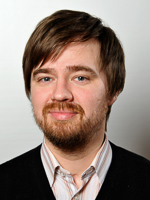
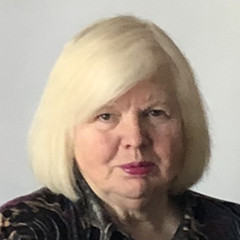
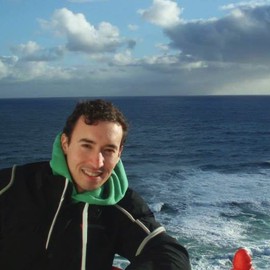
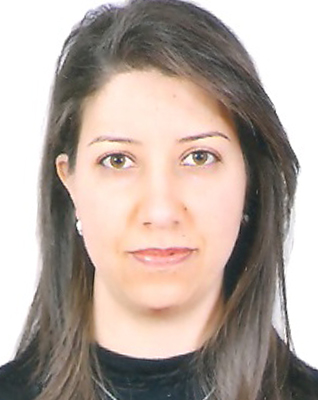
Laura Lützow is a Researcher at the Technical University of Munich (TUM), affiliated with the Faculty of Informatics and the Cyber Physical Systems group. She earned her bachelor's degree in Mechatronics from TU Ilmenau (2020) and a master's degree in Robotics, Cognition, and Intelligence from TUM (2022). Her work focuses on enhancing the safety and reliability of autonomous systems through set-based system identification, uncertainty quantification, and conformance checking. B.Sc. in Mechatronics, TU Ilmenau (2020) M.Sc. in Robotics, Cognition, and Intelligence, TUM (2022) Laura's research emphasizes formal methods for analyzing and improving the safety of autonomous systems. Her work includes developing mathematical frameworks for reachability analysis and uncertainty quantification, particularly in dynamic environments with complex constraints. Laura's publications highlight advancements in reachability analysis, system identification, and uncertainty quantification. Key themes include conformal prediction for autonomous systems, zonotope reduction techniques, and motion planning under dynamic obstacles. Her work bridges theoretical control systems research with practical applications in robotics and AI safety. She has taught courses on verification, controller synthesis, formal methods, and fundamentals of artificial intelligence at TUM. Additionally, she was a visiting researcher at Stanford University's Intelligent Systems Laboratory (January-July 2025).
Professor Keith Thompson serves as Professor of Law at The University of Notre Dame Australia's Sydney Campus School of Law, specializing in Constitutional Law, Evidence Law, Legal History, and Law and Religion with particular expertise in religious freedom and confession privilege. Education: LLB (Hons), University of Auckland M Jur, University of Auckland PhD, Murdoch University Dip Export, IMD (Hons) ACIArb (London) Notary Public qualification Research Focus: His scholarship centers on Religious Confession Privilege , Jury Vetting , and Theosis (deification), examining historical and contemporary intersections of law and religion. Current editorial projects include Current Issues in Constitutional Law and Law and Love , with frequent analysis of Book of Mormon legal narratives and religious freedom frameworks across Australia, the US, and Singapore. Scholarly Trends: Recent publications reveal sustained emphasis on religious freedom in educational contexts, constitutional challenges to religious practices, and historical foundations of legal principles. A distinctive thread connects Latter-day Saint theology with legal analysis, particularly regarding confession privilege and religious identity preservation in institutional settings. Academic Leadership: Professor Thompson has supervised 3 PhD completions, 2 LLM (research) completions, and 38 undergraduate honors/directed research projects. He secured approximately $400,000 in research funding for SEIROS, an economic think tank he founded, demonstrating commitment to both theoretical and applied legal scholarship. Community Integration: Beyond academia, he serves as Managing Director of SEIROS and National Public Communications Director for The Church of Jesus Christ of Latter-day Saints, with decades of church leadership service complementing his legal advocacy in religious freedom submissions to parliamentary committees.
Associate Professor CHUA Chek Beng serves in the Division of Mathematical Sciences within the School of Physical & Mathematical Sciences at Nanyang Technological University (NTU), Singapore. His academic profile centers on theoretical optimization with strong emphasis on mathematical structures underlying convex programming. His educational credentials include: Ph.D. in Operations Research, Cornell University (2003) M.Sc. in Operations Research, Cornell University (2002) B.Sc. First Class Honours in Mathematics, National University of Singapore (1999) Professor Chua's research critically examines primal-dual interior-point methods for convex optimization , the algebraic structure of convex cones , representability of convex cones , and complementarity problems over convex cones . His work bridges abstract algebra and computational optimization, particularly through T-algebra frameworks for symmetric cones. This theoretical foundation enables novel algorithmic approaches to semidefinite programming and variational inequalities, with consistent contributions to top-tier journals like SIAM Journal on Optimization and Mathematical Programming . His publication trajectory reveals deepening specialization in cone-based optimization—from foundational T-algebra theory (2003–2009) to advanced smoothing Newton methods (2013–2015)—with recurring themes in central path analysis, error bounds, and algorithmic convergence. All works demonstrate rigorous mathematical treatment of symmetric cone programming and complementarity problems. His accolades feature: SIAM Student Paper Prize (2003) Olin Fellowship from Cornell University (2001–2002) Cornell Sage Fellowship (1999–2001) Professor Chua actively disseminates findings through major international forums including SIAM Conferences and International Symposia on Mathematical Programming, though no student supervision details or grant activities appear in the source documentation. Similarly, laboratory affiliations or research team structures remain unspecified.
Dr. Joanne O'Flaherty serves as Associate Professor at the School of Education, University of Limerick, and Research Lead for the Ubuntu Network. With a background spanning post-primary teaching and NGO work, she specializes in preparing educators for social and emotional challenges in contemporary classrooms. Her leadership in the Ubuntu Network drives initiatives focused on community and equity in education. Her academic credentials include a BSc in Physical Education and a PhD. While the specific discipline of her doctorate is not detailed, her extensive publication record demonstrates deep expertise in educational theory and practice. O'Flaherty's research centers on Social and Emotional Learning (SEL), examining responsible decision-making, self-awareness, and social awareness. She actively investigates Social Justice Education and Global Citizenship Education (GCE), exploring their integration into teacher preparation programs. Her work on moral decision-making processes aims to cultivate ethical reasoning in educational settings, bridging theory and classroom practice. Recent publications reveal a strong trajectory in embedding GCE within Irish teacher education, analyzing policy frameworks for values and respect, and developing professional learning communities for educators. Her scholarship consistently addresses implementation challenges of SEL and social justice frameworks, with particular attention to the Irish context and sustainable educational transformation. No scientific awards are documented in the provided materials. Dr. O'Flaherty mentors postgraduate students in education research while leading multiple externally funded projects. Key initiatives include: Conceptualisations of Global Citizenship Education in Initial Teacher Education Cultivating Self-Awareness for Critical Global Citizenship Education Systematic review of social justice conceptualisations in teacher education Equity and Diversity in Teacher Educator Professional Development (ED-TED) GCE framework implementation in Irish Alternative Post-Primary settings Pre-service English Teachers' Perceptions of Global Citizenship Education The Ubuntu Network, under her research leadership, functions as a collaborative hub for advancing social justice and global citizenship in education through community-based research and professional partnerships.
Susan Hunter is an Associate Professor in the Edwardson School of Industrial Engineering at Purdue University, West Lafayette, with her office located in GRIS 272. She can be contacted via email at susanhunter@purdue.edu. Her research centers on Operations Research with deep specialization in Stochastic Optimization and Multi-objective Optimization . She develops theoretical frameworks and practical algorithms for simulation-based optimization under uncertainty, focusing on Pareto front approximation, adaptive sampling techniques, and parallel computing implementations. Key contributions include error quantification methods, confidence region constructions, and performance indicator analyses for stochastic multi-objective problems. Analysis of her 2020-2025 publications reveals dominant trends in multi-objective stochastic simulation optimization, particularly addressing computationally expensive functions and integer-variable constraints. Her work bridges theoretical rigor (e.g., Central Limit Theorems for confidence regions) with practical tools like the SCORE algorithm for sampling allocation and bi-PASS for parallel optimization. She also contributes methodological guidance through LaTeX submission templates for academic publishing.
Prof. Dr. Torsten Oliver Salge is a University Professor and Co-Director of the Institute for Technology and Innovation Management (TIM) at RWTH Aachen University's Faculty of Business and Economics. Holding the Chair of Innovation, Strategy and Organization since April 2013, he leads research on organizational behavior, innovation processes, and strategic management within complex organizational settings. Education Background: Master (M.Phil.) and PhD (Ph.D.) from University of Cambridge Business Administration studies across Germany, France, Italy, and England Recipient of multiple prestigious scholarships including Economic and Social Research Council (ESRC), Cambridge European Trust, and German Academic Exchange Service (DAAD) Research Focus: Professor Salge's work centers on understanding how organizations search for innovation, learn from performance feedback, and collaborate across boundaries. His research spans healthcare, public administration, and financial sectors, with particular emphasis on organizational search and problem-solving mechanisms, strategic human resource management, and technology adoption processes. His interdisciplinary approach combines behavioral theory with institutional perspectives to explain complex organizational phenomena. Publication Trends: Analyzing his 15 most recent publications reveals a consistent focus on innovation processes within organizational contexts, particularly in healthcare settings. His work demonstrates an evolution from foundational studies on innovative search behaviors to more complex investigations of collaborative innovation, disruption, and service orchestration. The research increasingly integrates multiple theoretical perspectives while maintaining strong empirical grounding in real-world organizational challenges, with notable contributions to understanding how organizational factors influence healthcare outcomes and technology adoption. Scientific Recognition: Multiple Best Paper awards from Academy of Management divisions (OCIS, TIM, HR) Nomination for European Research Paper of the Year (2016) Shortlisted for Strategic Management Society (SMS) Best Conference Paper Awards Recipient of Charles H. Levine Award for Public and Non-Profit research Best Overall Conference Paper Awards from Oxford and Cambridge Multiple prestigious scholarships throughout academic career Professional Engagement: Professor Salge maintains active international collaborations, with research stays and visiting positions at universities in Auckland, Buenos Aires, Cambridge, Oxford, and Philadelphia. His work with organizations in healthcare, public administration, and finance demonstrates strong practical relevance. As Co-Director of TIM, he leads an interdisciplinary team of approximately 30 doctoral students, 5 postdocs, and over 20 student researchers within the TIME Research Area, which comprises more than 100 senior and junior researchers at RWTH Aachen. Research Infrastructure: As Co-Director of the Institute for Technology and Innovation Management (TIM), Professor Salge oversees a significant research operation within RWTH Aachen's Faculty of Business and Economics. The institute represents a long-term partnership between two chairs focused on Innovation, Strategy & Organization and Technology & Innovation Management. This infrastructure supports research on strategic technology management, open innovation, innovation culture, organizational change, business model development, and customer-oriented value creation.
Jens Marklof serves as the Henry Overton Wills Professor of Mathematics at the University of Bristol's School of Mathematics, specializing in ergodic theory, dynamical systems, and their applications to number theory and mathematical physics. His work bridges pure mathematics with statistical mechanics through investigations of lattice point distributions and homogeneous flows. Marklof's research focuses on the statistical properties of dynamical systems, particularly horocycle flows, Lorentz gases, and lattice problems. He examines connections between number-theoretic structures (like continued fractions and quadratic congruences) and physical phenomena such as quantum transport and kinetic theory. His recent work demonstrates how ergodic methods reveal universal patterns in seemingly random sequences. Analysis of his publications from 2020-2025 shows a sustained emphasis on applying homogeneous dynamics to Diophantine approximation problems. Key trends include the study of extreme value statistics in flows, pair correlation phenomena in affine lattices, and rigorous derivations of kinetic equations from particle systems. His work consistently links abstract mathematical structures with concrete physical models. His major accolades include: Whitehead Prize (2010) from the London Mathematical Society Marie Curie Excellence Award (2003) Philip Leverhulme Prize (2004) Marklof currently supervises doctoral research and leads multiple grant-funded projects including Pseudo-randomness in Diophantine approximation and adelic dynamics (2024-2026) and Spectral statistics for random hyperbolic surfaces (2022-2025). His research program receives support from major funding bodies for investigations into low-density matter transport and homogeneous flow dynamics.
Simen Kvaal is a permanent Researcher at the Department of Chemistry, University of Oslo, specializing in computational quantum chemistry and many-body physics. He holds an ERC Starting Grant and leads collaborative projects at the Centre for Advanced Study. His academic background includes: MSc in Physics, University of Oslo (2004) PhD in Physics, University of Oslo (2009) under Prof. Morten Hjorth-Jensen and Prof. Ragnar Winther Dr. Kvaal's research centers on rigorous mathematical approaches to quantum chemistry methodology, particularly density-functional theory and coupled-cluster methods. He pioneers applications of the bivariational principle for solving time-dependent and stationary Schrödinger equations, bridging theoretical physics with applied mathematics to develop physically realistic computational models. His work emphasizes both single-reference and multireference formulations, with recent focus on time-dependent dynamics. Analysis of his 15 most recent publications reveals dominant trends in Gaussian basis set development for quantum dynamics, Rothe's time-propagation methods, and coupled-cluster theory extensions. Key thematic clusters include time-dependent electronic structure simulations, magnetic field effects in quantum systems, error diagnostics for wave function methods, and optimization-based quantum dynamics formulations – all advancing computational frameworks for many-body quantum problems. His scientific recognition includes: ERC Starting Grant (2014) As a supervisor, Dr. Kvaal mentors computational science projects including: Acceleration of Many-Electron Attosecond Dynamics Simulations Molecular Noninteracting Kinetic Energy by Machine Learning Quantum Computing Algorithms for many-body quantum systems He leads a Centre for Advanced Study project (2021-2022) with Prof. Thomas Bondo Pedersen, supported by his ERC grant and institutional resources. He is embedded within the Centre for Theoretical and Computational Chemistry at UiO, collaborating on interdisciplinary quantum chemistry initiatives that integrate mathematical rigor with computational innovation for molecular and materials science applications.
Doychin Ivanov Tolev is a Professor of Mathematical Analysis at the Department of Mathematical Analysis, Faculty of Mathematics and Informatics, Sofia University St. Kliment Ohridski. His academic career is centered on rigorous research in number theory, with a focus on prime distributions and Diophantine problems. His research interests span Elementary and Analytic Number Theory , specializing in additive prime problems, Goldbach-type conjectures, and Diophantine inequalities. Key areas include the distribution of primes in arithmetic progressions, squarefree numbers, and fractional powers. His work frequently employs advanced techniques like the circle method, exponential sums, and sieve theory to solve classical problems in additive combinatorics. Analysis of his publications reveals a sustained focus on additive prime number theory , particularly variants of the Goldbach conjecture, Lagrange's four-square theorem, and equations involving primes and almost-primes. His research demonstrates consistent collaboration with international mathematicians, including D.R. Heath-Brown and T. Todorova, producing high-impact results in top number theory journals. Professor Tolev has authored two comprehensive volumes titled Lectures on Elementary and Analytic Number Theory (2016) and multiple specialized course notes, establishing foundational educational resources in his field.
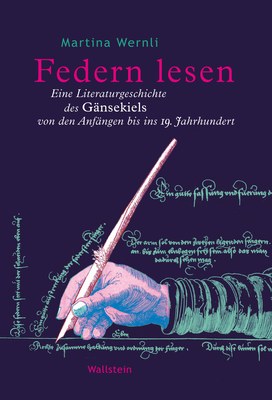
Prof. Dr. Martina Wernli is Professor of Modern German Literature with a focus on media and cultural studies at the Humboldt University of Berlin since March 2025. She is affiliated with the Faculty of Languages and Literature and the Institute of German Literature. Previously, she served as a research assistant at the University of Frankfurt am Main (2018-2025) with substitute professorships at universities in Neuchâtel, Mainz, and Zurich. Her academic journey includes habilitation at Frankfurt in 2020, doctoral studies at ETH Zurich completed in 2012, and education at the University of Zurich and Humboldt University Berlin. Her educational background includes: 2004: Master's degree from University of Zurich 2006: Diploma in Secondary School Teaching at University of Zurich 1997-2004: Studies in German, philosophy and English literature at University of Zurich and Humboldt University Berlin 2012: Doctoral dissertation on "Writing on the Margins: The 'Cantonal Asylum Waldau' and its Narratives (1895–1936)" at ETH Zurich 2020: Habilitation at University of Frankfurt am Main with thesis "Reading Feathers: A Literary History of the Goose Quill from Its Beginnings to the 19th Century" Prof. Wernli's research explores the intersections of material culture and literature, with particular focus on literature, knowledge systems and their media. Her work examines narratives from 1750-1850, female authors around 1800, literature and gender studies, processes of marginalization and canonization, and the relationship between psychiatry and writing. She approaches these topics through interdisciplinary lenses that combine literary analysis with cultural history and material studies. Her recent publications demonstrate a consistent focus on material culture, particularly examining writing tools, fashion, and everyday objects as literary and cultural phenomena. There's a strong emphasis on recovering marginalized voices, especially women writers of the Romantic period, and analyzing how material objects function within literary texts and historical contexts. Her work bridges historical literary analysis with contemporary concerns about representation and canon formation. Her notable scientific achievements include: Barbara and Piergiuseppe Scardigli Prize for the Promotion of the Humanities for the Habilitation (2022) Prof. Wernli is actively involved in academic mentoring and collaborative research projects. She coordinates the #breiterkanon network with approximately 70 international and interdisciplinary participants since 2020, which focuses on canonization processes in academic and school settings. She has also developed reading recommendations on marginalized texts through lueckenliste.de and is involved in organizing significant academic conferences such as the "Continuing to Write Literary History Intersectionally" seminar. She leads a research team at the Institute of German Literature including Dr. Esther Köhring and Dr. Denise Reimann as research associates, along with student assistants Emira Donlagic and Aiman Nasrallah. Her office is located in Room 3.510 at Dorotheenstraße 24, where she holds consultation hours Monday, Wednesday, and Thursday from 9 a.m. to 3 p.m.
Soma Dutta, Ph.D., is a researcher affiliated with the Department of Mathematical Methods in Computer Science at the Faculty of Mathematics and Computer Science, University of Warmia and Mazury in Olsztyn. Her work bridges mathematics and computer science, focusing on logical systems for artificial intelligence and decision-making frameworks. Research Themes: Deductive and inductive reasoning in AI, data reduction in decision-making, and rough/fuzzy/similarity-based reasoning. Supervision: Supervises 1 doctoral student and offers research topics in graded consequence theory and interactive granular computing. Scientific Profile: With 22 Web of Science/Scopus publications and over 300 citations, her work emphasizes meta-logical foundations, paraconsistent logics, and granular computing. She has an h-index of 10 (Google Scholar). Infrastructure: The department provides adequate resources for research, though no dedicated funding exists for her projects.
Mathieu Liedloff is a Professor at the Université d'Orléans, affiliated with the Department of Computer Science (UFR Sciences et Techniques) and the LIFO lab (Laboratoire d'Informatique Fondamentale d'Orléans). He is a member of the GAMoC research team, the Informatique-Centre Val de Loire federation, and the GDR Informatique Fondamentale et ses Mathématiques. His research focuses on algorithmics, particularly exact and exponential-time algorithms for NP-hard problems in graph theory and scheduling. He is also involved in educational initiatives for teaching computer science in secondary schools.
Dr. Weronika Wrona-Wolny, DSc, is a Professor at the University of Physical Education in Kraków, where she serves as head of the Department of Health Promotion within the Institute of Basic Sciences. She has been affiliated with the university since 1984, progressing through academic ranks from assistant to professor. Her professional journey includes significant contributions to health education, health promotion, and the historical study of health resorts in Poland. Professor at University of Physical Education (2020-present) Associate Professor (2011-2019) Head of Department of Health Promotion/Health Education (1993-present, with breaks) Member of Faculty Council of Motor Rehabilitation (2012-2024) Professor Wrona-Wolny's research spans multiple interconnected domains focused on health education across various settings. Her work demonstrates a consistent interest in how health education is implemented in schools, health resorts, and other institutional environments. She has extensively studied historical aspects of Polish health resorts while maintaining a strong focus on contemporary health education practices, particularly in physical education settings. Her research methodology often combines historical analysis with empirical studies of current health behaviors and educational practices. Analysis of her 15 most recent publications reveals a consistent focus on health education within Polish contexts, with particular attention to spa/resort medicine history and school-based health education. Approximately 40% of her recent work examines historical aspects of Polish health resorts, while 60% focuses on contemporary health education practices. Her research shows a clear trajectory from historical studies toward more applied educational research in recent years, with increasing emphasis on teacher preparation for health education and student health behaviors. Bronze Medal 'For Merit to National Defence' (1990) Rector's Award for teaching achievements (1991) Team Award for teaching achievements (2001) Rector's Award for scientific achievements (2008) Gold Medal for Long Service (2023) Professor Wrona-Wolny has supervised 117 master's theses and 6 diploma theses throughout her career. Her teaching responsibilities include coordinating and conducting courses in health care, health education, physioprophylaxis, and health promotion. She has also served on doctoral committees, reviewing 2 doctoral dissertations and 1 habilitation procedure, while promoting 2 doctoral theses and having 1 doctoral thesis in progress under her supervision. Her work extends to editorial roles, including membership on the Scientific/Editorial Committee of the journal 'Health-Health Culture-Education. Social and Humanistic Perspective' (2009-2011). As head of the Department of Health Promotion, Professor Wrona-Wolny leads a team focused on health education research and implementation. Her department collaborates with various non-profit organizations including the Polish Occupational Therapy Association and PTReh (Polish Association for Rehabilitation). She has been instrumental in developing health education curricula and promoting interdisciplinary approaches to health promotion within the academic and professional communities.
Zak Mhammedi is a Postdoctoral Associate at the Massachusetts Institute of Technology working with Sasha Rakhlin on theoretical problems in machine learning. His research spans Reinforcement Learning, Control Theory, and Optimization with strong theoretical foundations. His educational background includes: PhD in Computer Science, 2021, Australian National University MPhil in Computer Science, 2016-2017, The University of Melbourne Mhammedi's research focuses on bridging theoretical guarantees with practical algorithms, particularly in online learning, projection-free optimization, and reinforcement learning. His work often addresses fundamental limitations in statistical learning while developing computationally efficient methods. He has made significant contributions to understanding risk-monotonicity, developing parameter-free online learning algorithms, and creating efficient exploration strategies for reinforcement learning. His publication record shows a consistent trajectory in theoretical machine learning, with numerous papers in top-tier venues including NeurIPS, ICML, and COLT. His work demonstrates expertise across multiple subfields including PAC-Bayesian theory, online convex optimization, and control theory applications to machine learning. His scientific achievements include: Oral Presentation at NeurIPS 2021 (awarded to approximately 1% of submissions) Spotlight Presentation at NeurIPS 2020 Spotlight Presentation at NeurIPS 2018 (awarded to approximately 3% of submissions) Mhammedi actively contributes to the academic community through program committee service for COLT 2021 and 2022, and as a reviewer for major conferences including COLT, NeurIPS, and ICML across multiple years. His technical expertise spans adaptive methods, computational efficiency, constrained optimization, and theoretical aspects of deep learning and reinforcement learning.
Zaineb Chelly Dagdia Garcia is a Professor at University of Lille, France, with office S3.11, ESPRIT, Scientific City. She is a member of the Operational Research, Knowledge And Data (ORKAD) research group at the CRIStAL laboratory and the Institute for Translational Research in Inflammation (Inifinite). Dr. Garcia earned her HDR (qualification for supervising research) from the University of Paris-Saclay, France. This prestigious qualification demonstrates her expertise in leading research projects and mentoring doctoral candidates in computational intelligence. Her research spans Artificial Intelligence , Machine Learning , Evolutionary Algorithms , and Artificial Immune Systems , with particular focus on privacy preservation , scalable machine learning , and granular computation . She applies these techniques to critical domains including medical applications (particularly sepsis treatment optimization) and cybersecurity (especially malware detection and secure data processing). Analysis of her recent publications reveals a strong trajectory toward developing privacy-preserving synthetic data generation techniques, explainable AI for healthcare applications, and novel approaches to mobile security. Her work consistently bridges theoretical advances in computational intelligence with practical implementations addressing real-world challenges in sensitive domains requiring high reliability and ethical considerations. Dr. Garcia's significant scholarly contributions have been recognized through numerous prestigious awards: Marie Skłodowska Curie Individual European Fellowship (MSCA-IF) Young Researcher First Price (IEEE EHB'2013) ACM-W Award Best Reviewer Award (iCDEc 2018) Marie Sklodowska Curie Ambassador Female Scientist Role Model designation Selection for Heidelberg-Laureate-Forum (HLF'2017) Inclusion among 30 MSC talented researchers for Falling Walls Labs 2018 Her research program receives substantial funding from European Union's research and innovation programs, national grants, multi-partner projects, and bilateral research collaboration programs. As an HDR holder, Dr. Garcia supervises PhD students and postdoctoral researchers, contributing significantly to academic training in artificial intelligence and computational intelligence. Her work through the ORKAD research team at CRIStAL laboratory and Inifinite institute demonstrates a strong commitment to interdisciplinary research addressing complex societal challenges through computational approaches.