Gioldasis Nektarios is a Lecturer in the School of Electronic and Computer Engineering at the Technical University of Crete , affiliated with the Distributed Information Systems and Applications Laboratory (TUC/MUSIC) . He has been a permanent member of the laboratory since 2006 and has contributed to numerous Research & Development projects. MSc in Informatics, School of Electronic and Computer Engineering, Technical University of Crete (2002) BSc in Applied Informatics, University of Macedonia (1999) His research interests span critical domains including: Semantic Web technologies and Open Linked Data Software engineering for Service Oriented and Multi-Tier Architectures Data modeling, metadata management, and semantic interoperability Digital libraries and multimedia management systems The article portfolio demonstrates expertise in XML-Semantic Web integration, query mediation, and cultural data systems, with a 2023 publication on location-based game platforms. Key trends include: Interoperability frameworks (2015-2012) Ontology-driven data access (2010-2009) Geospatial and cultural heritage applications (2011-2007)
Tobias Wulfert, Ph.D., serves as a Research Fellow at the University of Duisburg-Essen's Faculty of Computer Science, specifically within the Department of Business Informatics and Integrated Information Systems under Prof. Dr. Reinhard Schütte. His academic journey includes a Master of Science in Business Information Systems from the University of Münster (2015-2017) and a Bachelor of Science from the Baden-Württemberg Cooperative State University in Mannheim (2012-2015), with additional professional experience at Atos in various technical and project management roles. Dr. Wulfert's research focuses on the intersection of digital platforms, enterprise systems, and retail transformation, with particular expertise in e-commerce ecosystems, sustainable business practices, and machine learning applications in retail environments. His work examines how digital platforms transform traditional value chains, particularly in construction, retail, and e-commerce sectors, analyzing boundary resource management, ecosystem standardization, and sustainable development initiatives within platform ecosystems. His publication record demonstrates consistent scholarly output in top-tier journals including Electronic Markets, Information & Management, and HMD Praxis der Wirtschaftsinformatik, with a clear trend toward increasingly sophisticated analysis of platform ecosystems, sustainability integration, and the application of artificial intelligence in retail contexts. Recent work shows a progression from foundational studies on platform architecture to more complex analyses of sustainability impacts and agent-based modeling of ecosystem dynamics. Through his teaching of Retail Enterprise Systems and Impact and Economics of IT Systems, Dr. Wulfert bridges theoretical research with practical applications, emphasizing the economic implications of IT investments and the strategic management of digital transformation. His supervision of numerous bachelor's and master's theses reflects his commitment to developing the next generation of business informatics professionals, with thesis topics spanning blockchain applications, smart services, platform governance, and digital transformation across various industries. Dr. Wulfert's collaborative research approach is evident in his extensive co-authorship network, particularly with colleagues at the University of Duisburg-Essen, demonstrating strong institutional integration while maintaining connections with international research communities through conference presentations at venues including ECIS, PACIS, and HICSS.
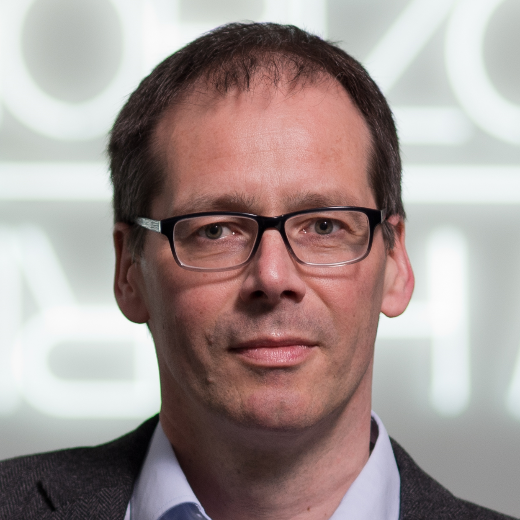
Tobias Brogt is an External Ph.D. Student and Research Assistant at the Chair of Business Information Systems and Software Engineering within the Faculty of Business and Economics at the University of Duisburg-Essen. He combines academic work with practical experience as a Software Engineer at IT-Objects GmbH since 2015. Ph.D. research in Service Systems Engineering and Smart Connected Products Active lecturer in DBIT (Digital Business Innovation and Transformation) and VAWi (Virtual Continuing Education Program) since 2019 and 2016 Published extensively in ECIS , HICSS , and Springer Gabler publications Research Focus includes digital transformation , smart product architectures , and quality management in sociotechnical systems . His work applies service-dominant logic to analyze value creation through resource integration, particularly in IoT-enabled environments. Key Publications Trends reveal expertise in: Smart service system taxonomies Quality factors for self-tracking solutions Hybrid process models combining agile and plan-driven approaches Industry 4.0 transformation strategies Academic Contributions include: Supervision of 54+ Bachelor’s and Master’s theses since 2016 Design of courses like Advanced Programming Concepts and Software Development Paradigms Collaboration on the WIWI-chairT3 web content management solution
Dr. Željko Jovanović is an Assistant Professor at the Department of Computer and Software Engineering , Faculty of Technical Sciences in Čačak , University of Kragujevac , Serbia. He holds a PhD in Electrical Engineering and Computing (2020) from the University of Niš, with a focus on Application of IT in improving the quality of patient transport , and a Diploma Engineer in Computer Science (2008) from the University of Kragujevac. Current roles: Head of Department (2023–present), Coordinator of Undergraduate Studies (2021–present) Teaching areas: Programming basics, Object-oriented programming, Software engineering, Medical informatics (PhD studies) His research focuses on Computer Engineering and Software Engineering , with applications in Medical Informatics , Intelligent Transportation Systems , IoT , and Smart Cities . He has contributed to 15+ publications in journals and conferences, including IEEE Transactions on Intelligent Transportation Systems , Electronics , and Transactions in GIS , emphasizing artificial neural networks , data mining , and comfort assessment in healthcare and transportation contexts. Projects include the national TR32043 initiative on low-power computing systems and the international NeReLa project for remote labs. He has developed technical solutions for thermal comfort monitoring , smart suspension control , and IoT-based systems , and serves on academic committees for software engineering and computer science education.
Dr. Carlos Galera Zarco is an Associate Professor in Project Management and Business Analytics at University College London (UCL), where he leads the MSc Digital Engineering Management programme. He is affiliated with The Bartlett School of Sustainable Construction, a leading institution in sustainable built environment research and education, located at 1-19 Torrington Place, London. His academic credentials include: PhD in "Servitisation and Digitalisation in Project-Based Organisations" MSc in Economics & International Management MEng in Civil Engineering Dr. Galera Zarco's research focuses on navigating the complexities of the digital economy, exploring business model innovation, operational transformations, and the development of new organizational structures to address challenges and opportunities of rapid technological change. His work specifically examines how AI, data analytics, and emerging digital technologies such as Digital Twins can drive innovation and create value for businesses and clients. He investigates data-driven value creation and capture, as well as the implementation of advanced services across multiple sectors including construction, supply chain management, and humanitarian operations. His research aligns with Sustainable Development Goals 9 (Industry, Innovation and Infrastructure) and 12 (Responsible Consumption and Production). Analysis of his recent publications reveals a strong focus on digital transformation across various sectors with increasing emphasis on sustainability and circular economy principles. His work demonstrates a clear progression from theoretical frameworks to empirical studies and practical applications, particularly in the areas of digital twins, AI applications, and sustainable supply chain management. His professional recognition includes: Fellow of the Higher Education Academy (since May 1, 2018) External Examiner at various institutions in the UK and abroad As an educator, Dr. Galera Zarco teaches modules in Big Data and Business Analytics and Agile and Hybrid Project Management for the MSc in Digital Engineering Management program which he leads. Prior to his academic career, he worked with a global construction company on different infrastructure projects, bringing practical industry experience to his teaching and research. He is proficient in Spanish (native) and Italian, supporting his international collaborations and research.
Damian Tamburri is an Associate Professor (Part-time) at Eindhoven University of Technology and the Jheronimus Academy of Data Science (JADS) in s'Hertogenbosch, Netherlands. His work bridges technical, social, and organizational dimensions of DevOps, DataOps, and AI-driven data engineering. Affiliated with JADS' Data Governance group ACM TOSEM Associate Editor Secretary of TOSCA TC, IFIP TC2/TC6/TC8 WG Research Focus: His research explores the intersection of data-intensive systems, service-oriented architectures, and ethical AI. Key areas include: LLMOps and DevOps maturity in industry Federated Learning optimization via SOA principles Decentralized data architecture (data mesh) Dark web illicit content detection using neural networks Publication Trends: Recent work emphasizes operationalizing AI/ML systems in distributed environments, with 80% of 2025 publications addressing services computing challenges. Topics span federated learning (2025), dementia detection (2025), and data mesh governance (2025). Grants & Collaborations: Active in EU-funded research with involvement in Horizon Europe projects (grant 101137301) and Innovative UK partnerships. His studies combine academic rigor with industry insights from major logistics providers. Key Contributions: He has developed novel approaches to: SOA-enhanced federated learning frameworks Hybrid models for dementia early detection Reference architectures for data mesh Label-agnostic neural networks for dark web monitoring
Ksenia Onufrey is a Senior Lecturer at Chalmers University of Technology, affiliated with the Department of Technology Management and Economics and the Division of Innovation and R&D Management. Her work bridges theoretical and applied research in industrial transformation and sustainable systems. Academic Rank: Senior Lecturer Department: Division of Innovation and R&D Management University: Chalmers University of Technology Research Interests focus on: Innovation Management in mature industries Customer involvement in energy service design Strategic alignment of business and technological transitions Sustainable industrial transformation Multi-system linkage dynamics Recent Publications (2019-2026) span topics in: Electric vehicle agenda-setting Activated carbon for CO2 capture Railway brake system thermal analysis DNA-intercalating ruthenium complexes Food material microstructure engineering Biomass-derived adsorbent technology
Kemafor Anyanwu Ogan serves as Associate Professor in the Department of Computer Science at North Carolina State University's College of Engineering, where he directs the Semantic Computing Lab. His research bridges theoretical foundations with practical applications in data-intensive systems, supported by continuous funding from major agencies since 2012. His educational foundation includes: Ph.D. in Big Data and Knowledge Management, Semantic Web, and Internet of Things from the University of Georgia (2007) Dr. Ogan's research program centers on scalable semantic technologies, with evolving focus from foundational Semantic Web and knowledge graph processing (2014-2019) to blockchain-integrated systems (2021-2024). His work develops novel frameworks for RDF query optimization, knowledge graph analytics, and blockchain transaction primitives that address critical challenges in distributed data management. Current efforts emphasize agricultural supply chain transparency and smart manufacturing applications. Publication trends reveal strategic progression from MapReduce-based RDF processing to blockchain-enhanced architectures, reflecting adaptation to emerging computational paradigms while maintaining core expertise in semantic data management. Recent work demonstrates increasing industry relevance through manufacturing and agricultural applications. His scientific recognition includes: Three IBM Faculty Awards (2008, 2009, 2016) Best Paper Award at JIST 2012 Best Student Paper Award Nominee at ISWC 2014 Dr. Ogan has secured $2.3M+ in competitive funding across 10 major grants, with current projects focused on blockchain for agricultural resilience (USDA), declarative blockchain transactions (Cisco), and crop productivity analytics (GRIP4PSI). His Semantic Computing Lab actively collaborates with RENCI, IBM, and agricultural industry partners to translate research into real-world impact, particularly in food supply chain optimization and smart contract reliability. The Semantic Computing Lab drives innovation through NSF-funded projects like SmartChainDB and SERPENT, developing semantically-enhanced blockchain platforms that enable trustless smart marketplaces while addressing critical performance limitations in existing systems.
Claus Pahl is a Full Professor of Software Engineering at the Free University of Bozen-Bolzano , Italy, affiliated with the Faculty of Computer Science . He leads the CECL Cloud and Edge Computing Lab and is a member of the SEAS Software Engineering and Autonomous Systems research group. Ph.D. from the University of Dortmund Academic positions in Germany, Denmark, Ireland, and Italy since 2016 Principal Investigator at Irish Centre for Cloud Computing and Commerce (IC4) and Lero Software Research Centre Over 5 million Euro in research funding 440+ publications with 364,714 reads and 9,736 citations His research focuses on Software Architecture for Cloud and Edge Computing , Autonomous and Adaptive Systems , and Blockchain-based architectures . He explores Model-driven development and AI-driven controllers for self-adaptive systems, emphasizing dependability and quality management . Recent publications highlight trends in blockchain scalability , zero-knowledge proofs , container orchestration , and AI quality engineering for edge environments. He has served as PC Chair for ECOWS 2007 and ICSOC 2018, and General Chair for CLOSER 2017-2018. His work appears in 7 editorial boards, and he leads educational initiatives in software engineering principles.
Michaël van Buuren is a Researcher at Wageningen University & Research within the Applied Spatial Research department. His work focuses on Nature-Based Solutions , Energy Transition , Climate Change , and Land Use . He actively contributes to policy-oriented research and public engagement through seminars, reports, and media appearances. Key Research Areas: Nature-Based Solutions for climate adaptation Energy transition strategies in rural contexts Integrating environmental quality into spatial planning Flood protection and urban landscape design Recent Trends in Publications : His research output centers on long-term environmental visions (e.g., Netherlands 2120), interdisciplinary design practices, and policy frameworks for sustainable land use. Keywords include 'climate resilience,' 'rural transition,' and 'ecosystem services.' Scientific Awards: Grote Maaskant Prijs 2024 NVTL Award 2022 WUR Impact Award 2023 Projects : He leads 'Lokstroom II' (2024-2025) and 'KD-2022-072' (2022), focusing on enhancing environmental quality through policy innovation and stakeholder collaboration.
Rosario Culmone is an Assistant Professor at the University of Camerino, with a strong research focus in Internet of Things (IoT), sensor networks, and related technologies. His academic work spans multiple domains including smart city applications, blockchain implementations, and educational technology. Dr. Culmone's research interests center around IoT interoperability , sensor network optimization , and formal verification methods for intelligent environments. His work demonstrates a consistent focus on practical applications of distributed systems, with significant contributions to energy-efficient routing algorithms, blockchain-based certification systems, and ontology-driven frameworks for ambient assisted living. An analysis of his publication record reveals a clear trajectory from foundational work in wireless sensor networks and ECA rules verification toward more applied research in smart city technologies, food traceability using blockchain, and AI-enhanced educational systems. His most recent publications (2023-2025) show increased focus on practical implementations addressing real-world problems in security, education, and supply chain management. Dr. Culmone has developed several notable frameworks including the Share Pattern for IoT interoperability, NARUN for noise-adaptive routing, and IRON , a domain-specific language for programming IoT devices. His research bridges theoretical computer science with practical implementations across multiple application domains.
Martin Birtic is a Lecturer in Production Engineering at the Department of Engineering, School of Engineering Science, University of Skövde. His research focuses on advancing production system engineering through simulation-based optimization, cyber-physical systems, and resource-efficient methodologies. His work explores trends in flexible manufacturing, including modularization, interface standardization, and knowledge graph applications. Recent projects like REFUSE (Resource-efficient use of reconfigurable machining systems) aim to extend machining system lifespans through digital models (2022-2025). Earlier projects developed cyber-physical frameworks for ultra-flexible production (2021-2024). Martin’s publications highlight his expertise in simulation technologies, virtual commissioning, and discrete-event modeling. His email is martin.birtic@his.se , and he can be reached at +46 500-448573.
Igor Košťál is an Assistant Professor at the Department of Applied Informatics within the Faculty of Economic Informatics at the University of Economics in Bratislava . His research focuses on Distributed Technologies , Parallelization of Applications , and Data Structure Optimization , particularly in the context of .NET frameworks and industrial robotics. University: University of Economics in Bratislava School: Faculty of Economic Informatics Department: Department of Applied Informatics Academic Rank: Assistant Professor Košťál's work emphasizes software performance testing , with publications analyzing execution efficiency in .NET applications using parallel programming , Dijkstra's algorithm , and symbol table implementations . His recent research explores modern UI development in mobile applications and algorithm optimization for industrial robotics. Key trends in his 15 most recent articles (2014-2022) include: Performance analysis of parallel and sequential algorithms in .NET environments Optimization of data structures (arrays, linked lists, skip lists) for search efficiency Integration of asynchronous methods in WCF services and clients Testing precision in KUKA welding robots through structured data extraction
Marten van Sinderen serves as Associate Professor at the University of Twente's Faculty of Electrical Engineering, Mathematics and Computer Science (EEMCS), where he chairs the Services & CyberSecurity (SCS) research group within the Department of Computer Science. His research specializes in semantic interoperability and context-aware service provisioning for networked information systems, with deep expertise in enterprise architecture, ontology modeling, and service-oriented design methodologies. This work bridges theoretical frameworks with practical implementations in distributed systems. He actively participates in European and Dutch research initiatives as project manager and reviewer, while leading instruction for core courses including Architecture of Information Systems (Master), Web Science (Bachelor), and Design Science Methodology . Previous teaching contributions span Business Intelligence and Service Oriented Architecture curricula. Prof. van Sinderen holds significant academic service roles: vice chair of IFIP Working Group 5.8 on Enterprise Interoperability, conference chair for ICE-B, program chair for ICSOFT, and editorial board membership for Enterprise Information Systems , Future Internet , and Journal of Industrial Information Integration .
John Serieux serves as Professor in the Department of Economics within the Faculty of Arts at the University of Manitoba. His academic career spans over 25 years with significant contributions to development economics, teaching courses including Development Economics, Theories of Economic Development, and International Money and Finance at undergraduate and graduate levels. Prior to his current position, he held academic and research roles at the University of Malawi, North-South Institute, and University of North Carolina at Chapel Hill. His educational background includes a PhD in Economics (1997) and MA in Economics (1988) from the University of Toronto, complemented by an MRP in City and Regional Planning from Cornell University (1986) and a BA in Economics from the University of Toronto (1981). Professor Serieux's research centers on three interconnected domains: the socioeconomic implications of financial flows to developing countries, the evolving global influence of BRICS nations, and historical analyses linking Atlantic slave economies to British industrialization. His work consistently bridges theoretical economic frameworks with practical policy applications, particularly regarding debt sustainability, aid effectiveness, and the structural determinants of economic inequality in the Global South. His recent publications reveal a methodological sophistication combining historical analysis with contemporary policy evaluation, spanning development economics, health economics, and economic history. Key thematic clusters include foreign direct investment determinants, regional convergence patterns, refugee mental health, and the historical roots of wealth inequality—demonstrating remarkable intellectual range while maintaining focus on development challenges. No scientific awards were documented in the provided source materials. He actively supervises graduate students as indicated by his acceptance of Master's and PhD candidates, with research sustained through extensive consultancy work for the Commonwealth Secretariat and United Nations agencies. His projects have addressed critical issues including HIV/AIDS program financing during economic crises, debt relief implementation, and resource mobilization strategies in low-income countries—often involving cross-national collaboration and policy-oriented fieldwork. Professor Serieux maintains a robust collaborative network evidenced by co-authorship with researchers across North America, Africa, and Asia. His work frequently engages with governmental and international bodies, translating academic insights into practical development frameworks while maintaining rigorous scholarly standards through publications in leading economics and development journals.