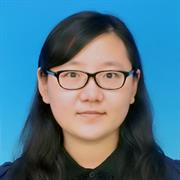
Dr. Jue (Grace) Xie is a Lecturer in the Department of Human Centred Computing at Monash University's Faculty of Information Technology. She is also a Senior Software Engineer and Research Fellow at Action Lab, with over 15 years of experience in applied research spanning software architectures, web systems, consumer health informatics, and conversational AI. Grace holds a PhD from Monash Faculty of Information Technology (2012) and has contributed to diverse interdisciplinary projects, including collaborations with Microsoft Research Asia and Monash research centers. Her teaching roles include Chief Examiner for units like FIT5183 Mobile and Distributed Computing Systems and Lecturer for Programming for Distributed Systems and Service-Oriented Computing . Research Interests Applied Conversational AI Human-Computer Interaction (HCI) Web Systems & Social Networks Knowledge Engineering Recent publications focus on AI-driven healthcare interventions, mental health support via chatbots, and stakeholder-inclusive design in aged care. Her work aligns with UN Sustainable Development Goals 3 (Good Health) and 9 (Innovation). Awards include the Future Women Leaders Conference 2019 . She is a Fellow of the Computer Society (IEEE) and the Association for Information Systems .
Dr. Madhushi Bandara is a Lecturer at the School of Computer Science, University of Technology Sydney (UTS), specializing in knowledge representation, complex system modeling, and data analytics. She leads the data management research stream at the UTS DigiSAS lab and is a core member of the Biomedical Data Science Laboratory within the UTS Australian Artificial Intelligence Institute. Her industry collaborations include Telstra, Cancer Australia, and Capsifi, focusing on AI integration in healthcare and finance. She coordinates the Business Information Systems major in UTS's Master of Information Technology program and convenes the Future Generation Enterprise Architecture Community of Practice. Education PhD in AI Systems Engineering, University of New South Wales (2020) BSc (Hons) in Engineering, University of Moratuwa, Sri Lanka (2015) Research Interests Madhushi's work bridges machine learning, knowledge graphs, and enterprise architecture to address challenges in data governance for SMEs, ESG metric management, and healthcare pathway analysis. Her research emphasizes translating cutting-edge AI into industry solutions through contextual domain knowledge integration. Scientific Awards UNSW-UTS Trustworthy Digital Society Scholarship Teaching & Leadership She teaches enterprise information systems, digital strategy, and AI for enterprises in UTS's online postgraduate programs. Her service roles include co-chairing tracks at the Australasian Conference on Information Systems and reviewing for Expert Systems with Applications.
Dr. Ying Zhou is a Lecturer in the School of Computer Science at The University of Sydney. She holds a BSc and MEng from Nanjing University (1997) and a PhD from the School of Computing at the National University of Singapore (2003). Her research focuses on human-centred data management, including large-scale data storage, user behavior analysis, and improving image query systems. Current projects include mining socially tagged images and accountability mechanisms for multitenant cloud platforms. Teaching responsibilities include courses on Advanced Data Models (COMP5338), e-Commerce Technology (COMP5347), and Cloud Computing (COMP5349). She collaborates with industry partners like Amazon and IBM, and advises four research students. She is a member of the Sydney Southeast Asia Centre. Her publication record spans 20 years, with recent work emphasizing machine learning applications, big data systems, and cloud security. Research trends include optimizing distributed computing frameworks (Hadoop/Spark/Flink), adversarial machine learning, and trustworthy database systems. Earlier work focused on social network analysis, web communities, and blogosphere dynamics. Current research projects address both technical challenges (e.g., efficient image search, cloud platform accountability) and applied solutions for leveraging social media data. Her lab activities involve interdisciplinary collaboration between computer science and information systems domains.
Professor Alistair Barros is Head of School and Academic Program Leader of Service Science at QUT’s School of Information Systems (Faculty of Science). He holds a PhD from the University of Queensland, with extensive ICT experience in academia and industry (e.g., Global Research Leader at SAP AG). His research focuses on enterprise systems design, optimization, and interoperability in cyber-physical environments leveraging cloud, IoT, and blockchain technologies. Key areas include service computing methods (microservices, business process management), model-based systems re-engineering, and distributed service coordination. Education: PhD in Information Systems from the University of Queensland. Research Interests: Enterprise systems modernization, service-oriented architectures, Industry 4.0 applications, and digital transformation in sectors like construction, manufacturing, and supply chains. He has published 180+ peer-reviewed articles (including 6 edited books) and holds 17 US patents. Notable contributions include the BPMN 2.0 standard co-authorship and the 'Workflow Patterns' paper (most cited in BPM). Awards: Test of Time Award (BPM 2015), Wharton Education Award (TeachConnect platform), and impactful industry collaborations (e.g., SAP NetWeaver, Federal Government WPIT project). Grants & Projects: Led ARC, EU FP6, and industry-funded projects. Current focus includes re-engineering legacy systems for microservices, EV charging network design, and adversarial ML in cybersecurity. Labs/Teams: Active in QUT’s Centre for Data Science, focusing on service science and cyber-physical systems integration.
Dilum Bandara is a Principal Research Scientist at CSIRO's Data61 in Australia and an Adjunct Senior Lecturer at the School of Computer Science and Engineering, Faculty of Engineering, University of New South Wales (UNSW). He has previously served as a Senior Lecturer at the University of Moratuwa, Sri Lanka, and has over two decades of experience in research, teaching, and consultancy in distributed systems, security, and software engineering. His academic qualifications include: PhD in Computer Science, Colorado State University, USA (2012) MS in Computer Science, Colorado State University, USA (2008) BSc Eng. (Hons) in Computer Science and Engineering, University of Moratuwa, Sri Lanka (2004) Dilum's research interests are centered on Distributed Systems (Blockchain, Cloud, P2P), Computer Security , Software Architecture , Data Engineering , Performance Engineering , and the Internet of Things (IoT) . He applies these technologies in multidisciplinary domains such as Supply Chains , Digital Finance , Environmental, Social, and Governance (ESG) , Fleet Management , and Weather Monitoring . His work emphasizes real-world impact through trusted data management in multi-party ecosystems. The analysis of his recent publications reveals a strong focus on blockchain for transparency and security, cloud-native performance engineering, IoT integration with edge and cloud, and data-driven solutions for smart cities and sustainability. His work consistently bridges theoretical innovation with practical deployment, particularly in national and international infrastructure projects. His scientific awards include: Best Paper Award at BPM 2024 Multiple CSIRO internal awards (Customer First, Engineering and Technology, Collaboration) from 2021–2023 Student Paper Award (Merit) at IEEE SOLI 2018 Award of Excellence for Outstanding Research at University of Moratuwa (2015–2018) Dilum has led and contributed to several research grants, particularly during his time at the University of Moratuwa, including projects on smart city integration, real-time data forecasting, and cloud platforms for scientific computing. He has also held leadership roles such as Director of the Engineering Research Unit and co-founder of VaticHub. He is actively involved in professional communities as a Senior Member of IEEE and a Chartered Engineer with IESL. At CSIRO, he serves as a Health and Safety Representative, reflecting his commitment to corporate citizenship. He has advised students and early-career researchers, though specific names are not listed in the provided text. His labs and research teams include the Architecture and Analytics Platforms (AAP) team at CSIRO Data61 and collaborations with academic institutions like UNSW and University of Moratuwa.
Moganavatsala Jeevanantham is a Teaching Professor at the Malaysia School of Information Technology, Monash University. She holds a Bachelor of Computer Science (Software Engineering) from Universiti Tenaga Nasional (2009) and a Master of Science in Information Assurance from Universiti Teknologi Malaysia (2016). Her research focuses on cybersecurity within healthcare and education sectors, with a recent publication analyzing student satisfaction in Malaysian higher education during the pandemic. Professional experience includes roles at Hewlett Packard (2010-2012) as a service administrator, SEGi University (2012) as an e-resources support executive, and Manipal International University (2019) as a program coordinator cum lecturer. At Monash, she teaches units like FIT1051 Programming Fundamentals in JAVA and FIT2099 Object Oriented Design and Development. Her expertise bridges educational technology, cybersecurity policy in healthcare, and pandemic-era academic challenges. Collaborations include cross-sectoral research on institutional resilience in crisis environments.
Dr. Lucia McCallum is a Senior Lecturer in Geodetic VLBI at the School of Natural Sciences, Physics, University of Tasmania. She specializes in Very Long Baseline Interferometry (VLBI) for Earth observation, focusing on measuring the Earth's shape, rotation, polar motion, and plate tectonics. Her work connects geodetic techniques (GNSS, SLR, VLBI) via space tie satellites, with leadership in the ARC DECRA-funded project and the AuScope VLBI collaboration with Geoscience Australia. PhD from Technische Universität Vienna Active since 2014 in UTAS radio astronomy group Her research bridges geodesy and astrophysics, advancing the next-generation VLBI Global Observing System (VGOS) for millimeter-level precision. This technology addresses critical geoscientific challenges like sea level rise prediction and terrestrial reference frame stability. Recent publications (2025-2014) span VGOS optimization, GNSS satellite tracking, atmospheric signal corrections, and space tie methodologies. Her work emphasizes international collaboration through the International VLBI Service for Geodesy and Astrometry (IVS) and leadership roles in the Asian Oceania VLBI Group (AOV) and IVS Working Group 7. Scientific Awards Australian Research Council DECRA Fellowship Austrian Science Fund (FWF) Schrödinger Fellowship She supervises doctoral and master's students in geodetic VLBI projects, including topics like space weather effects, dynamic scheduling, and satellite signal calibration. Her full description includes global network operations, technical innovations, and societal impact through precision geodetic infrastructure.
Adil Hammadi is a Lecturer in the School of Management and Marketing at Curtin University, within the Faculty of Business and Law. He contributes to the Office of the Provost, supporting academic governance and strategic initiatives. Based at the Curtin Perth campus in the Curtin Business School Building 1, his work spans multiple disciplines across Curtin’s global footprint, encompassing campuses in Australia, Dubai, Malaysia, Mauritius, and Singapore. His research interests focus on technology-driven solutions for business operations and supply chain management. Key areas include IoT integration in supply chains, sustainable project management methodologies, and ethical considerations in corporate practices. He investigates deception in supply chains and its impact on customer perceptions, alongside trust frameworks for cloud computing and web service reliability. Earlier work emphasized transactional systems and database recovery protocols, showcasing expertise in foundational IT infrastructure challenges. Recent publications highlight IoT’s transformative role in supplier relationships and sustainable project management practices. Earlier works (2019–2022) explore deception’s corrosive effects on corporate culture and supply chain resilience. His 2004–2006 studies established reliable transactional web service models, while later contributions (2012–2014) advanced cloud-based SLA management and business intelligence integration. This trajectory reflects evolving research from technical reliability to strategic, ethical applications of technology. No scientific awards were explicitly mentioned in the provided texts. His teaching spans cross-disciplinary areas, including the Centre for Aboriginal Studies, Business, Law, Health Sciences, Humanities, and Science & Engineering, indicating a commitment to academic diversity. No formal advisees (PhD/Master’s students) or grants were noted, suggesting a focus on teaching and independent research. Advising and grants sections remain unpopulated in the available information. He is not associated with any labs or research teams listed in the provided texts.
Mahdi Fahmideh is an Associate Professor in Cyber Security at the School of Business, University of Southern Queensland (UniSQ), Australia. He holds a PhD in Information Systems from the University of New South Wales (UNSW) and MSc/BSc in Software Engineering from Azad University, Iran. His research focuses on Cyber Security, AI Ethics, Blockchain, and IoT, with a track record of securing ARC grants and international visiting fellowships. He has published in top-tier journals like European Journal of Information Systems (EJIS), IEEE Transactions on Software Engineering (TSE), and ACM Computing Surveys (CSUR). His career includes roles as Senior Lecturer at UniSQ, Lecturer at the University of Wollongong, and Postdoctoral Researcher at UTS. Awards include a Best Paper Award (2018) and multiple research excellence recognitions. He teaches courses in Cyber Security, Data Mining, and Information Assurance. His grants include ARC Linkage projects on Adversarial Machine Learning (AUS $445K) and Blockchain in Visual Arts (AUS $570K). Fahmideh’s recent work explores AI-Human collaboration (e.g., ChatGPT in software development) and trustworthy AI frameworks. He leads course development in Cyber Security and mentors students in HDR programs. His industry experience includes 8 years as an analyst programmer in software systems for publishing, insurance, and government sectors.
Associate Professor David J Paul is a computational scientist at the University of New England's School of Science and Technology within the Faculty of Science, Agriculture, Business and Law. With expertise spanning computer science, distributed systems, and applied technology, he has established himself as a multidisciplinary researcher bridging computer science with agriculture, sports science, and healthcare domains. His work consistently focuses on practical technology applications that address real-world challenges while maintaining data privacy and security. Dr. Paul earned his Bachelor's degrees in Mathematics and Computer Science from the University of Newcastle in 2004, followed by Honours in Computer Science in 2005, and completed his PhD titled "Deliberate Cooperation in Service-Oriented Environments: Dynamic Transactional Workflows for Web Services" in 2012. Prior to joining UNE in 2015, he worked at the Schizophrenia Research Institute from 2005-2015 and collaborated with the Health Behaviour Research Group starting in 2014. His research interests span networks and distributed systems (including Internet and Cloud computing), security and privacy, computer science education, sports science, agriculture, and e-Health. Dr. Paul has demonstrated particular strength in developing systems that integrate multiple disparate datasets while maintaining privacy, as evidenced by his work on the Australian Schizophrenia Research Bank and agricultural applications like ASKBILL and RamSelect. His recent work shows increasing focus on cybersecurity applications for SMEs, women's sports analytics, and precision agriculture technologies. Dr. Paul has secured multiple research grants including University of New England SABL Teaching & Learning Grants (2023), an Australian Council of Deans of ICT grant (2022-2023), SheepCRC projects (2015-2016), and a NeCTAR grant (2012). His extensive publication record demonstrates consistent productivity across both theoretical computer science and applied domains. School of Science and Technology Teaching Award (2017) for Computer Science curriculum redesign School of Science and Technology Development Award for COSC110 introductory programming unit With over 20 research students supervised across PhD, Master's, and Honours programs, Dr. Paul has established himself as a dedicated mentor. His current research portfolio spans cybersecurity for SMEs, precision agriculture technologies, sports analytics (particularly women's rugby league), and advanced cryptographic techniques. His work on QuON, ASKBILL, and RamSelect demonstrates his ability to create practical technological solutions that address specific industry challenges while maintaining rigorous academic standards.
Alan Fekete is a Professor of Enterprise Software Systems in the School of Computer Science at the University of Sydney. He holds a BSc (Hons) from the University of Sydney and a PhD from Harvard University's mathematics department. With over 30 years at the University of Sydney, he has made significant contributions to database systems, distributed computing, and computing education. His research focuses on improving software systems' state-of-practice, particularly in transaction management, replication, and cloud computing. Education background: BSc(Hons) from the University of Sydney, PhD in Mathematics from Harvard University. Research interests include database management (transaction systems, replication), cloud computing, distributed systems, software engineering, and computing education. His teaching spans enterprise software architecture, data models, and systems analysis. He has supervised 13 doctoral students and contributed to curriculum development, notably in Java programming and cloud workforce training. Recent publications explore transactional frameworks, database benchmarking, and concurrency control. He is a Distinguished Scientist of ACM and a member of IEEE and Australian Computer Society. His work on robust rolling-upgrades and cloud storage benchmarking addresses modern system challenges. Fekete's teaching innovations include data-centric curricula and frameworks for self-assessment in programming education.
Dr. Michael Turner is a Senior Lecturer in Accounting at the University of Queensland's School of Business and serves as Program Convenor for the Bachelor of Advanced Business (Honours). He holds a PhD in Accounting, a Bachelor of Business (First Class Honours), and a Graduate Certificate in Research Management. His research focuses on strategic management accounting, corporate disclosure, ethical decision-making, and integrating advanced technologies into accounting education. He has published nearly 30 journal articles, including 23 in top-tier ABDC-ranked journals. Teaching emphasizes innovative methods in strategic management accounting and capital budgeting, with a focus on curriculum development. He is leading a 2024 program review to enhance work-integrated learning and cohort experiences. Michael has secured over $150,000 in research grants from organizations like CAANZ, German Research Foundation, and AASB. He serves on editorial boards for Meditari Accountancy Research , Advances in Accounting Education , and Advances in Management Accounting , and reviews for leading journals. His industry collaborations bridge academia and practice, with thought leadership contributions to accounting-focused platforms.
Dr. George Joukhadar is a Senior Lecturer in the School of Information Systems and Technology Management at the UNSW Business School. He focuses on enhancing learning experiences through innovative pedagogical approaches, including the integration of Generative AI into classrooms. His research spans digital innovation, ESG reporting, public sector sustainability, and IT governance in enterprise systems. Key research interests include leveraging technology to address challenges in e-invoicing, digital transformation strategies, and governance frameworks for SOA (Service-Oriented Architecture). His work emphasizes practical applications and theoretical insights into organizational digitalization, sustainability practices, and public sector modernization. Publications highlight trends in digital innovation for public institutions, ESG compliance systems, and strategic IT governance. No specific awards are listed, but his contributions to educational technology and enterprise systems are notable. Teaching and supervision activities are central to his role, though no student names are provided. Office details: Room 2115, Quadrangle Building (E15), UNSW Sydney.
Associate Professor Mark Gregory is affiliated with the School of Engineering at RMIT University. His academic role involves research in network engineering, telecommunications, software development, project management, cybersecurity, and distributed computing. He has held multiple leadership roles in his field and is actively involved in supervising PhD and MEng students. Reflecting his dedication to teaching, he received the 2015 Outstanding Good Teaching Scale award for EEET1152 Network Services and Internet Applications. His research focuses on next-generation mobile cellular networks, 6G technologies, edge computing security, and network optimization. Gregory has been recognized with numerous accolades, including multiple RMIT Media Star of the Year awards and the Australian Defence Medal. He has led significant research projects funded by organizations like NEC, the Australian Research Council, and auDA, contributing to advancements in software-defined networking (SDN), multi-access edge computing (MEC), and telecommunications infrastructure. His work emphasizes practical applications of technology to enhance security, efficiency, and accessibility in urban and rural networks.
Dr. Shuo Li is a Lecturer in the School of Engineering at RMIT University, Australia. She holds a B.Eng. (2009) and Ph.D. (2014) from City University of Hong Kong. Her research focuses on telecommunications, underwater optical networks, network design, and edge computing. She has held academic roles at RMIT since 2011 and Tianjin University (2014–2017). Education: Ph.D. and B.Eng. in Engineering from City University of Hong Kong. Research Interests: 6G cellular networks, underwater optical communication, network security, and edge computing architectures. Dr. Li leads projects on 6G mobile cellular design, underwater optical networks, and edge computing resource management. She has received awards including the Research Tuition Scholarship (2013) and CityU Mainland Scholarship (2005–2009). Her work emphasizes practical applications, such as developing web-based network design tools and security frameworks for edge computing. Recent Projects: 6G architecture development, underwater optical wireless systems, and zero-trust security in multi-access edge computing. Supervision: Active in guiding PhD/MEng students on topics like optical interconnects for data centers and edge computing security. She collaborates on industry-focused research and is available for consulting in Australia and internationally. Her work bridges theoretical advancements with real-world network challenges.