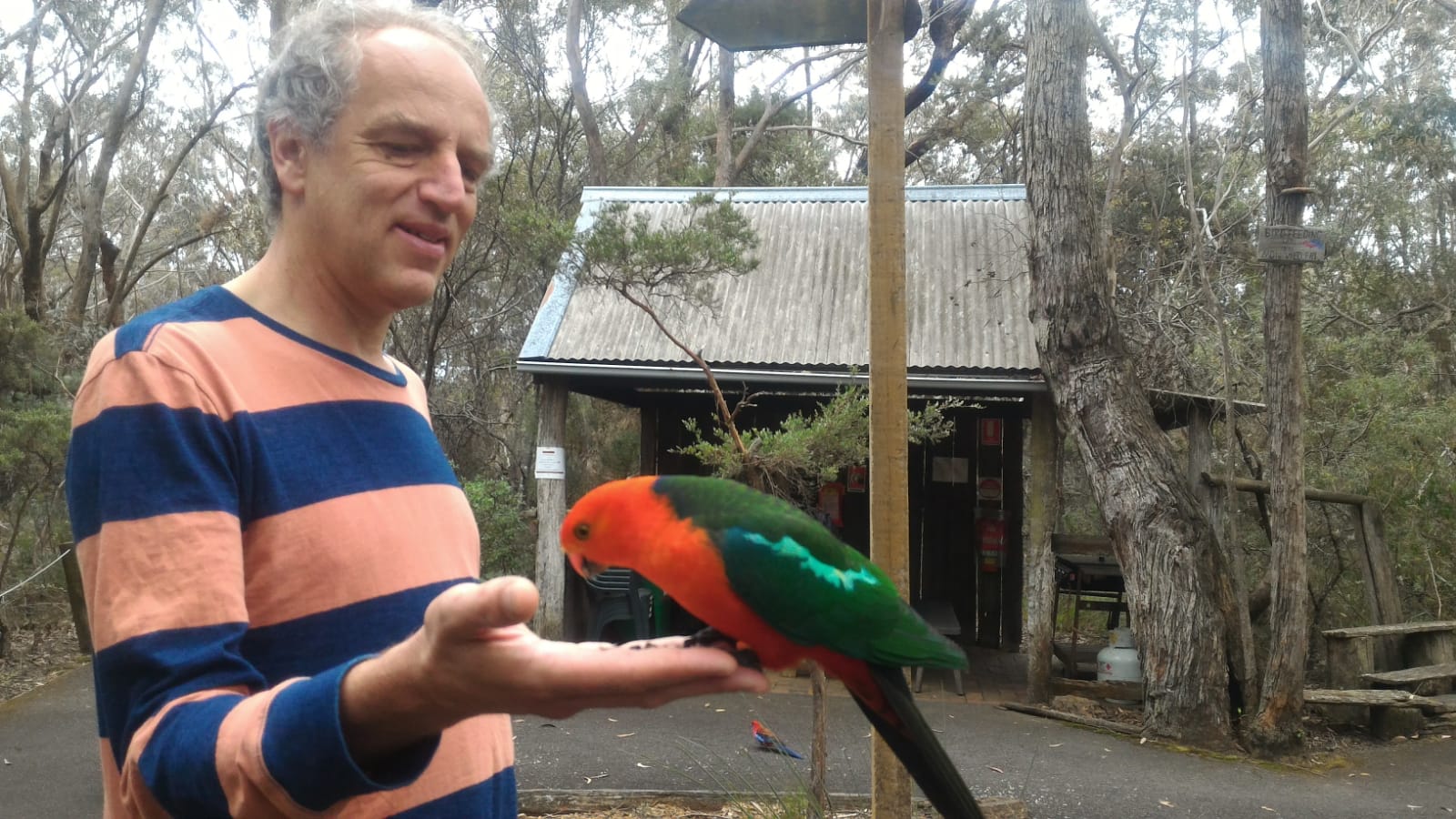
Erik Prytz is a Senior Associate Professor in Cognitive Science at the Department of Computer and Information Science (IDA) at Linköping University. His research focuses on applying human factors principles to improve safety-critical systems, particularly in emergency response domains such as first aid, disaster medicine, and prehospital care. He holds a PhD in Human Factors Psychology and has served in roles including Director of the Forum Securitatis graduate school and Program Chair for the Cognitive Science BSc program. Education: PhD in Human Factors Psychology (Old Dominion University, 2014), MSc in Cognitive Science (LiU, 2010). Research Interests: Simulation-based training, stress and mental workload, emergency responder teamwork, and human-system interaction in crisis scenarios. His work emphasizes interdisciplinary collaboration, combining cognitive science, computer science, and medicine to enhance emergency response systems. Recent projects explore driver behavior toward emergency vehicles, ad-hoc responder group dynamics, and optimal placement of bleeding control kits in public spaces. He contributes to initiatives like the Center for Advanced Research in Emergency Response (CARER) and the Forum Securitatis graduate school. Erik’s teaching includes courses on human factors, distributed cognition, and emergency response systems. He actively participates in curriculum development and quality assurance committees within the Faculty of Arts and Sciences.
Professor Saman Amarasinghe is a full Professor in the Department of Electrical Engineering and Computer Science (EECS) at the Massachusetts Institute of Technology (MIT), and Principal Investigator at MIT's Computer Science and Artificial Intelligence Laboratory (CSAIL). He leads the Commit compiler research group, which focuses on programming languages and compilers that maximize application performance on modern computing platforms. His work spans multiple academic departments and research centers, with strong affiliations to both MIT's School of Engineering and CSAIL. Professor Amarasinghe's research interests center around high-performance domain-specific languages and compiler technology . His work combines language design with sophisticated compilation techniques to deliver unprecedented performance for targeted application domains. His research spans multiple areas including image processing (Halide), sparse tensor algebra (TACO), graph analytics (GraphIt), stream computations (StreamIt), and bioinformatics (Seq). A significant thread throughout his work is the application of machine learning for compiler optimizations, from Meta optimization in 2003 to the OpenTuner autotuner framework. Analysis of Professor Amarasinghe's recent publications reveals a strong focus on sparse computing , compiler vectorization , and domain-specific language implementation . His work consistently bridges theoretical compiler concepts with practical performance gains across diverse application domains. The progression from earlier work on StreamIt and Halide to more recent projects like GraphIt and TACO shows an evolution toward more specialized, high-performance DSLs targeting specific computational patterns. His 2020-2025 publications particularly emphasize sparse tensor operations, GPU acceleration, and machine learning integration with compiler technology. ACM Fellow (2019) Professor Amarasinghe has made significant contributions to academic entrepreneurship and student development. He founded Determina, Inc. (acquired by VMware) based on security research from his MIT lab and co-founded Lanka Internet Services, Ltd., Sri Lanka's first ISP. As faculty director of MIT Global Startup Labs, his programs across 17 countries have helped create over 20 successful startups. His teaching includes the popular Performance Engineering of Software Systems (6.172) course with Professor Charles Leiserson, as well as innovative project-based courses like the Open Source Software Project Lab and Bring Your Own Software Project Lab. His educational approach emphasizes hands-on experience with compiler and language design concepts. Professor Amarasinghe leads the Commit compiler research group at MIT CSAIL, which has produced numerous influential domain-specific languages and compilers including Halide, TACO, Simit, StreamIt, and GraphIt. The lab maintains strong industry connections through projects like OpenTuner and Determina, and collaborates with researchers worldwide on compiler technology. The group's work spans both theoretical compiler research and practical implementation, with a consistent focus on bridging the performance gap between high-level programming abstractions and hardware capabilities.
Igor Francetic is a Research Fellow at the Division of Population Health, Health Services Research & Primary Care at the University of Bristol. He holds a PhD in Public Health from the University of Basel (2019) and has expertise in health economics, applied microeconomics, and econometric analysis. His research focuses on healthcare organization, health behaviors, and policy evaluation, with a particular emphasis on emergency care prioritization, primary care workforce dynamics, and health inequalities. He has contributed to policy-oriented projects in Switzerland and Tanzania, including studies on hospital networks, patient safety, and health systems governance. **Education**: PhD in Public Health (University of Basel, 2019) MSc in Economics (University of Lausanne, 2016) BA in Economics (University of Lugano, 2012) BSc in Business Administration (SUPSI, 2011) **Research Interests**: His work explores cancer screening, spillover effects in healthcare, emergency care disparities, and primary care networks. He employs microeconometric and network analysis tools, leveraging platforms like R and Stata. Recent studies include evaluating skill-mix changes in primary care (England), socioeconomic disparities in emergency care access, and the impact of social accountability monitoring in Tanzania. **Awards & Fellowships**: SSPH+ Fellow, Swiss School of Public Health (2024–) SNSF Ambizione Fellow, SUPSI (2024–) **Teaching**: Co-lecturer for the Health Economics unit (ECON 32202) at the University of Bristol. **Professional Memberships**: Health Economists' Study Group UK (HESG) Royal Economic Society (RES) Swiss Society of Health Economics (sggö) Croatian Health Economics Association (CHEA) – Co-founder and board member
Robert T. Grimm Jr. is a Professor of the Practice and the inaugural Levenson Family Chair in Philanthropy and Nonprofit Leadership at the University of Maryland's School of Public Policy. As Director of the Do Good Institute, he leads a campus-wide initiative empowering students to drive social impact through programs like the Do Good Challenge and the Food Recovery Network. His work has spurred transformative partnerships, resulting in new faculty endowments, facilities like Thurgood Marshall Hall, and initiatives such as the Do Good Accelerator. He holds a PhD from Indiana University, Bloomington, and has served in senior roles at AmeriCorps, including developing the Social Innovation Fund. His research focuses on philanthropy, nonprofit leadership, and civic engagement, with notable contributions to understanding volunteerism trends and charitable behavior in the U.S. Affiliations: Civic Innovation Center, Do Good Institute Leadership, NASPAA Board Key Achievements: Founded the Food Recovery Network, launched the Do Good Challenge, and contributed to national policy through congressional testimony. His awards include the 2021 Regents Award for Public Service Excellence and the 2019 Distinguished Alumni Award from Indiana University. Grimm’s research bridges academic inquiry with practical solutions, shaping nonprofit strategies and student leadership programs. Grants and partnerships have enabled programs addressing food waste, mental health access, and environmental conservation. The Do Good Institute’s ventures include 400 menstrual product dispensers on campus and partnerships saving millions of pounds of food annually. Labs/Teams: Directs the Do Good Institute and collaborates with the Do Good Lab, focusing on actionable research to advance social innovation and nonprofit efficacy.
Dr. Ousmane Seidou is a Full Professor in the Department of Civil Engineering at the University of Ottawa, where he has served since 2007. He leads the Hydraulics Lab and holds affiliations with the Faculty of Engineering's Centre for Indigenous Community Infrastructure. His academic journey includes a PhD from École Polytechnique de Montréal (2002) and postdoctoral research at the Institut National de la Recherche Scientifique, Quebec. Dr. Seidou specializes in climate change impacts on water resources, hydrological modeling, and transboundary water management. Education: Ph.D. in Civil Engineering (Hydraulics), École Polytechnique de Montréal (2002) M.Sc. in Water Resources Engineering, École Polytechnique de Montréal (2002) Postgraduate Diploma in Hydroinformatics, École Inter-États des Ingénieurs de l'Équipement Rural (1998) Undergraduate Degree in Civil Engineering, École Mohammadia d'Ingénieurs (1996) Research Focus: Dr. Seidou’s work integrates hydrological modeling with climate adaptation strategies, emphasizing Africa’s water security. Key areas include: Climate change impacts on river basins (e.g., Niger, Congo) Development of flood early warning systems in West Africa Water-Energy-Food-Environment (WEFE) nexus frameworks Environmental flow estimation in wetland ecosystems He leads international projects involving multi-country collaborations and agencies like the United Nations Development Programme and the World Bank. Recent Projects: Principal Investigator for the Niger Basin Authority’s WEFE Nexus initiative Technical leadership in the Dutch-funded BAM-GIRE project (Mali/Guinea wetlands) Development of flood early warning systems for Niamey and Gaya (Niger) Teaching: Courses include Climate Change Impacts on Water Resources, Advanced Hydrological Modeling, and Water Resources Management. He mentors PhD students in hydrology and climate adaptation. Grants & Funding: Secured multi-million-dollar projects with organizations like Wetlands International and the UAE-BELEM Programme. Recent funding includes $135,000 for hydrological modeling tools in the Niger Basin. Labs/Teams: Director of the Hydraulics Lab at the University of Ottawa. Active in global initiatives like the Global Goal on Adaptation (GGA) indicator development under the Paris Agreement.
Vanessa Bowden is a Senior Lecturer in the School of Psychological Science at The University of Western Australia. She serves as Graduate Research Coordinator for the School, Deputy Director of the Master of Industrial and Organisational Psychology program, and Co-Director of the Human Factors and Applied Cognition Laboratory. Her academic credentials include a PhD from The University of Western Australia and a Graduate Diploma in Human Factors and Safety Management Systems from the University of South Australia. Dr. Bowden's research expertise spans multiple domains within human factors and cognitive psychology. Her primary research interests include: Human interaction with technological systems Automation design and human-automation interaction Driver distraction and transportation safety Cognitive processes in complex work settings Situation awareness and workload management Prospective memory in applied contexts Her recent research has focused on understanding how humans interact with automated systems across various domains, from driving to air traffic control. Dr. Bowden has developed computational models of human decision-making with automated advice and has investigated the impact of automation transparency on operator performance. Her work has important implications for designing safer technological systems that optimize human performance. Dr. Bowden has received significant research funding, including an Australian Research Council Discovery grant (2024) for $924,198 for "A Unified Computational Model of How Humans Use Automated Advice" and multiple Department of Defence grants. Her research has been published extensively in top-tier journals in human factors and cognitive psychology. She has supervised numerous research students and currently accepts PhD and other Higher Degree by Research students. Dr. Bowden teaches several courses including Psychology of Training (PSYC5573), Industrial and Organisational Psychology (PSYC3309), and Perception and Sensory Neuropsychology (PSYC3318).
Supriyo Ghosh is a Senior Researcher at Microsoft Research, India. Prior to this role, he held positions at IBM Research AI Lab (2019–2021) and the Institute of Infocomm Research (I2R), A*STAR. He completed his PhD in Information Systems at Singapore Management University (2017) under Prof. Pradeep Varakantham and conducted postdoctoral research at MIT's SMART and LIDS centers (2016–2017). His research focuses on data-driven decision analytics, including algorithmic optimization, reinforcement learning, urban logistics, and network resilience in cyber-physical systems. His work has addressed cloud incident management, proactive decision-making under uncertainty, and applications of large language models (LLMs) in system reliability. Notable contributions include developing automated root-cause analysis frameworks and improving incident response strategies in large-scale cloud environments. He has also explored reinforcement learning applications in healthcare treatment optimization and air traffic control systems. Award-winning research includes the Best Paper Award at ACM SoCC'22 for an empirical study on high-severity cloud service incidents. He actively serves as a PC member for top conferences like AAAI, NeurIPS, and ICML, demonstrating his leadership in advancing AI and optimization fields. His academic background includes a graduate exchange at Carnegie Mellon University (CMU) and collaborations with MIT faculty like Prof. Patrick Jaillet. His work bridges theoretical foundations with real-world applications in transportation, cybersecurity, and enterprise systems.
Elaine Gregersen is an Associate Professor in the Law Department at Northumbria University, where she has served since 2011. She holds an LLB (Hons) from Hull University and previously worked as a commercial & intellectual property solicitor. Recognized for her teaching excellence, she received the National Teaching Fellowship and was named Law Teacher of the Year. Her research focuses on contemporary research methods like autoethnography and experimental narrative approaches, with emphasis on clinical legal education, business law clinics, and mental health in academia. She actively contributes to editorial boards and supervises PhD students in the Professional Doctorate in Law program. Elaine’s academic journey includes a doctoral thesis titled "The lived experience of a university law clinic supervisor: an autoethnographic inquiry" , supervised by Hall, Corlett, and Arthur. Her work explores the intersection of legal education, clinical practices, and qualitative methodologies, addressing topics such as academic well-being, disability support, and the ethical dimensions of autoethnography. She has authored over 36 publications, including articles in Law Teacher , Journal of Organizational Ethnography , and International Journal of Clinical Legal Education . Her awards include the Emerald Literati Awards - Highly Commended (2019). Elaine has also served as an external examiner across law and education disciplines, furthering her commitment to academic rigor and interdisciplinary collaboration.
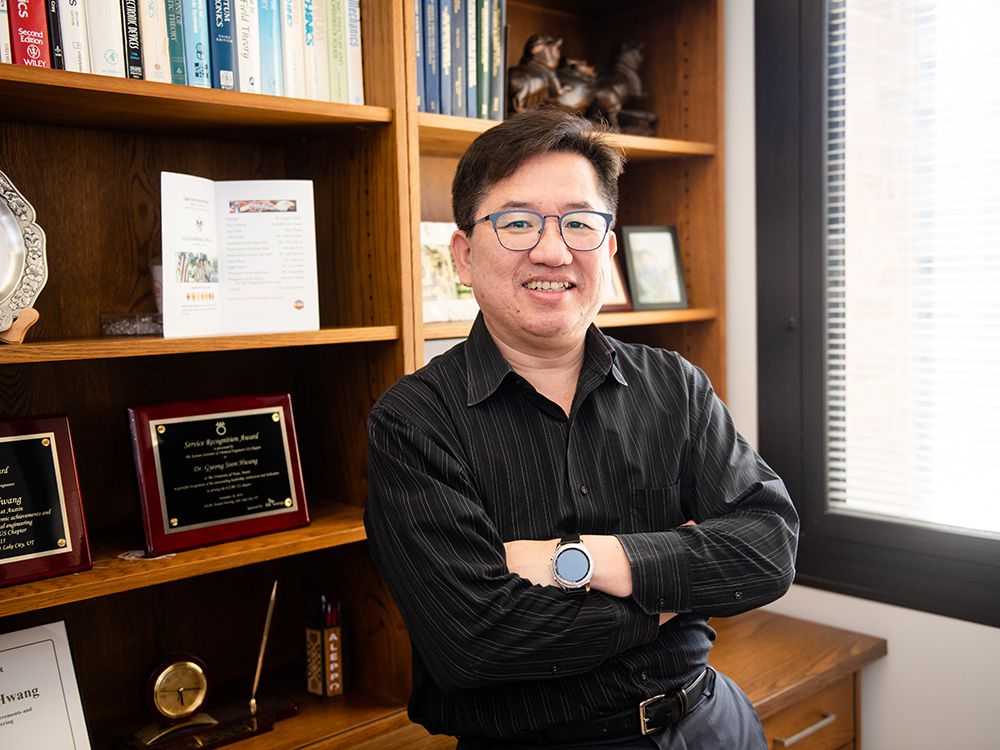
Gyeong Hwang is a Matthew Van Winkle Regents Professor of Chemical Engineering at The University of Texas at Austin. He leads the Hwang Research Group focused on computational materials discovery and design for energy and electronic applications. His work emphasizes multiscale modeling of nanostructured materials, with applications in energy storage/conversion, carbon capture, and semiconductor processing. Educational Qualifications: Ph.D., Chemical Engineering, California Institute of Technology (1999) M.S., Applied Physics, California Institute of Technology (1998) M.S., Chemical Engineering, Seoul National University (1993) B.S., Chemical Engineering, Seoul National University (1991) Research Interests: Hwang's research integrates first-principles modeling with experimental validation to address challenges in: - Surface chemistry and interfacial reactions - Nanostructured materials synthesis - Electrochemical device fabrication - CO₂ capture mechanisms His group develops computational tools for predicting material behaviors at atomic and continuum scales. Recent Publications Trends: Publications (2023-2025) focus on: - Solid-state battery interfaces - Plasma-enhanced material deposition - Ionic liquid interactions - Thermal/spatial transport phenomena - Electrochemical reaction mechanisms Awards: NSF CAREER Award (2005) Electrochemical Society's F.M. Becket Memorial Award (1999) Korean Chemical Engineering Service Award (2010) Advising & Grants: Leads interdisciplinary research funded by NSF, industry partnerships, and regents' endowments. Active in graduate student training through courses like ChE 379 (Molecular Simulation) and ChE 348 (Numerical Methods). Labs/Teams: The Hwang Research Group operates state-of-the-art computational facilities for quantum mechanics simulations and multiscale modeling. Collaborates with experimental groups globally on materials prototyping.
Emily Witt is an Associate Professor in the Department of Mathematics at the University of Kansas (KU), affiliated with the Institute for Information Sciences. She holds a Ph.D. in Mathematics from the University of Michigan (2011) and a B.S. in Mathematics with Honors and Computer Science specialization from the University of Chicago (2005). Her research focuses on commutative algebra and its intersections with algebraic geometry, representation theory, and singularity theory. Professional Appointments: Associate Professor at KU (2020–present), Michler Scholar at Cornell University (2022–23), Keeler Intra-University Professor (2021–22). Grants: NSF CAREER Award (2020–25), Simons Foundation Collaboration Grant (2018–21). Her research interests include local cohomology, Frobenius endomorphism, D-module theory, and computational algebra. She has developed software packages for Macaulay2, such as FrobeniusThresholds and TestIdeals. Awards include the Ruth I. Michler Memorial Prize (2022–23), Morrison Teaching Award (2019), and multiple grants supporting her work in commutative algebra. She advises Ph.D. students and mentors postdocs while maintaining active roles in professional service, including editorial work and organizing conferences like the Women in Commutative Algebra Workshop. Her teaching spans courses in algebra, cryptography, and analysis.
Dr. Jose M. Cruz serves as Associate Professor of Operations and Information Management and Associate Dean for Graduate Programs at the University of Connecticut School of Business, where he integrates interdisciplinary approaches spanning management, engineering, and applied mathematics to advance sustainable business practices and complex decision-making systems. His academic credentials include: Ph.D. from University of Massachusetts, Amherst M.B.A. from University of Massachusetts, Amherst M.S. from University of Massachusetts, Amherst B.S. from University of Massachusetts, Amherst Dr. Cruz specializes in networked system dynamics within supply chains, with pioneering work in corporate social responsibility integration , sustainable risk mitigation , and multi-criteria optimization . His methodological expertise in variational inequalities and game theory enables novel solutions for global supply chain resilience, as evidenced by his #94 global ranking in Supply Chain Management (ScholarGPS 2025). His distinguished honors include: UConn-AAUP Excellence Award for Service Excellence School of Business Ackerman Scholarship Award (twice) Multiple graduate and undergraduate teaching awards As Associate Dean for Graduate Programs, Dr. Cruz drives curriculum innovation in business analytics while mentoring emerging scholars, though specific grant funding details and lab affiliations remain unreported in available documentation.
Alexandru G. Bardas is an Associate Professor at the University of Kansas in the Department of Electrical Engineering & Computer Science (EECS) and the Institute for Information Sciences (I2S) . He received his PhD from Kansas State University under advisors Xinming (Simon) Ou and Scott A. DeLoach. His research focuses on cybersecurity from a systems perspective , including moving target defenses, security operations center (SOC) metrics, DevOps security, power grid cybersecurity, and defensive technologies for political activists. He explores UDP-based DDoS detection, DNS traffic analysis, and the intersection of AI with cybersecurity, emphasizing foundational knowledge over tool-specific training. Key research areas: Cybersecurity, Systems Security, Moving Target Defenses, SOC Metrics, DevOps Security Recent publications in ACSAC 2024 , USENIX Security 2024/2023 , and IEEE Security & Privacy 2022 Dr. Bardas has received significant recognition including: NSF CAREER Award (2022) for SOC automation Bellows Scholar (2021) at KU NSA SoS Honorable Mention (2023) He actively advises students across disciplines, with graduates now at Sandia National Laboratories , Blue Cross Blue Shield , and Pacific Northwest National Laboratory . Dr. Bardas participates in NSF grant reviews , serves on program committees for SOUPS and MILCOM , and leads outreach initiatives like the GenCyber Summer Camp .
Anthony Quas is a Professor in the Department of Mathematics and Statistics at the University of Victoria, Canada. He holds a PhD from the University of Warwick and has held academic positions at institutions including the University of Memphis and King's College, Cambridge. His research focuses on ergodic theory and dynamical systems, with contributions to multiplicative ergodic theory, Lyapunov exponents, and symbolic dynamics. Education: B.A. in Mathematics (First Class), Cambridge University (1986–1989) Certificate of Advanced Study in Mathematics (Distinction), Cambridge University (1989–1990) PhD in Mathematics, University of Warwick (1990–1994) Research Interests: Ergodic theory and its connections to stochastic processes Lyapunov exponents and operator cocycles Symbolic dynamics and shift spaces Applications to percolation theory and information theory Publications and Grants: Over 70 peer-reviewed articles, including work on multiplicative ergodic theorems and metastable systems Recipient of NSERC and NSF grants, and former Canada Research Chair (2005–2014) Editor for Dynamical Systems: An International Journal Awards and Recognition: Tyson Medal (1990) Cambridge Smith Prize (1992) Organizer of international workshops and conferences (e.g., Banff International Research Station) Teaching and Service: Supervised multiple PhD and Master’s students Contributed to outreach initiatives like Pi in the Sky magazine Served on NSERC Grant Selection Committees and editorial boards
Miguel F. Anjos is Professor and Chair of Operational Research at the School of Mathematics, University of Edinburgh , and holds the NSERC-Hydro-Québec-Schneider Electric Industrial Research Chair on Optimization for Smart Grids at Polytechnique Montréal. He received his B.Sc. (1992), M.S. (1994), and Ph.D. (2001) from McGill, Stanford, and Waterloo respectively. Research Theme Head of Data and Decisions at Edinburgh Founding Director of Trottier Institute for Energy Editor-in-Chief of Optimization and Engineering Research Interests: His work bridges mathematical optimization with smart grid applications , focusing on conic optimization, optimal power flow, demand response, and facility layout. He applies these techniques to energy storage, electric transportation, and industrial systems. Scientific Awards: Méritas Teaching Award (2012) Humboldt Research Fellowship (2009) Queen Elizabeth II Diamond Jubilee Medal (2013) Elected Fellow of EUROPT and Canadian Academy of Engineering Academic Service: Served on Mathematical Optimization Society Council, SIAM Activity Group on Optimization, INFORMS Optimization Society Vice-Chair, and Mitacs Research Review Committee. Hosts benchmark datasets: QAPLIB, FLPLIB, Jones Benchmark.
Kathleen H. Sienko is the Arthur F. Thurnau Professor in the Department of Mechanical Engineering at the University of Michigan's College of Engineering. She directs the Sienko Research Group, a multidisciplinary lab focused on developing technological solutions at the intersection of healthcare and engineering. Her work spans medical device design, design science, and engineering education with a strong emphasis on global health contexts. Dr. Sienko earned her Ph.D. in Medical Engineering and Bioastronautics from the Harvard-MIT Division of Health Sciences and Technology (HST) program in 2007, an S.M. in Aeronautics & Astronautics from MIT in 2000, and a B.S. in Materials Engineering from the University of Kentucky in 1998. Ph.D., Medical Engineering and Bioastronautics, Harvard-MIT Division of Health Sciences and Technology, 2007 S.M., Aeronautics and Astronautics, Massachusetts Institute of Technology, 2000 B.S., Materials Engineering, University of Kentucky, 1998 Her research focuses on sensory augmentation, rehabilitation engineering, biomechanics, and medical device design with emphasis on global health contexts and task-shifting devices. She has pioneered efforts to incorporate global health technology constraints within engineering design education at undergraduate and graduate levels, establishing field sites in sub-Saharan Africa and Asia where numerous devices have been conceptualized and refined with local stakeholders. Her work in design science examines how and when designers use prototypes in development cycles and how prototypes assist during stakeholder interactions and user requirements identification. Her recent publications reveal a strong trend toward human-centered approaches in global health design, with increasing focus on stakeholder engagement, contextual factors in engineering design, and equity considerations in health technology development. Her work bridges biomechanics, rehabilitation engineering, and design methodology with applications in balance assessment, medical device development for low-resource settings, and engineering education. Dr. Sienko has received numerous prestigious awards including the NSF CAREER Award, University Undergraduate Teaching Award, Provost's Teaching Innovation Prize, and the Miller Faculty Scholar Endowed Award. Her recognition spans teaching excellence, research innovation, and outreach contributions. NSF CAREER Award, 2009 Provost's Teaching Innovation Prize, 2012 Miller Faculty Scholar Endowed Award, 2013 University Undergraduate Teaching Award, 2012 Raymond J. and Monica E. Schultz Outreach and Diversity Award, 2011 She has advised numerous graduate students including Nick Moses (who defended his dissertation in December 2023), Lucy Spicher, Marty Kilbane, and Ibrahim Mohedas. Her research has been supported by significant grants from the National Science Foundation, including the CAREER program, Research Initiation Grants in Engineering Education, and the Graduate Research Fellowship program, as well as funding from the University of Michigan's Rackham Merit Fellows program and Center for Research on Learning and Teaching. The Sienko Research Group operates as a talented multidisciplinary lab developing novel methodologies to create technological solutions addressing pressing societal needs at the healthcare-engineering intersection. Current research thrusts include Design Science, Autonomous Vehicles, Balance, Sensory Augmentation, and Wearable Devices, with particular emphasis on how design ethnography can inform medical device development and how engineering students develop ethnographic skills for global health contexts.