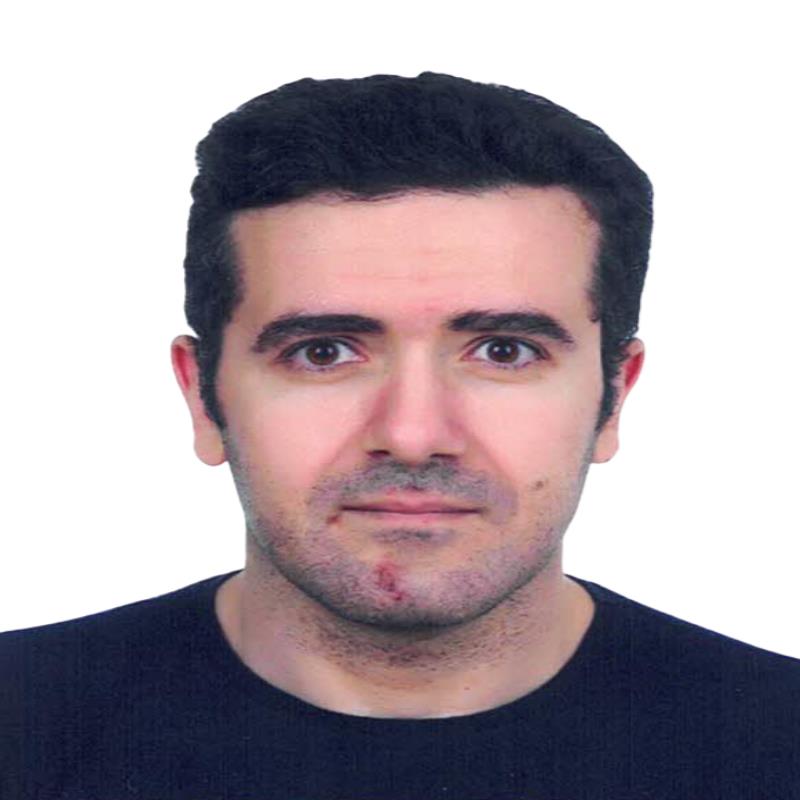
Sarah Braden serves as Associate Professor in the Emma Eccles Jones College of Education and Human Services at Utah State University, specifically affiliated with the School of Teacher Education & Leadership. Her office is located in EDUC 339, Logan, UT 84322, reflecting her active campus presence within the College of Education structure. Dr. Braden's research interrogates critical intersections of identity, language, and equity in science education. She examines how science teachers develop field geology expertise through observational practices, investigates STEM identity formation among refugee youth in physics contexts, and analyzes translanguaging as a social justice practice in multilingual science classrooms. Her work consistently centers asset-based approaches for Latinx students, teachers of color, and refugee populations, challenging deficit narratives through studies on physics nerd tropes, magnetism reasoning, and ecosystem modeling. Her publication trajectory reveals evolving methodological sophistication from classroom discourse analysis to out-of-school-time program design, with recent work emphasizing community action plans and linguistic expertise. The 2021-2025 corpus shows sustained engagement with physics education (32% of output), identity studies (28%), and equity-centered pedagogy (24%), frequently employing qualitative and multimodal analysis of student-teacher interactions in diverse settings.
Mehmet Sarica serves as a Lecturer and current Department Head at the Department of Machinery and Metal Technologies within Kaman Vocational School, Kırşehir Ahi Evran University, Turkey. His affiliation spans since 2012 with continuous service through administrative leadership roles. His academic credentials include: PhD in Industrial Engineering from Kırıkkale University (2022) Master's degree in Advanced Technologies (Thesis) from Kırşehir Ahi Evran University (2018-2021) Associate Degree in Wholesale and Retail Sales from Atatürk University (2017-2019) Bachelor of Science in Industrial Engineering from Selçuk University (2002-2008) Research focuses on industrial engineering applications of fuzzy logic and multi-criteria decision systems, particularly for mineral resource site selection. His work integrates computational intelligence with operational planning to address uncertainty in industrial environments, emphasizing practical implementations in resource management and sustainable operations. His sole publication demonstrates expertise in applying fuzzy AHP methodology to calcite mine location problems, reflecting his specialization in bridging theoretical decision frameworks with tangible industrial engineering challenges in mineral processing sectors. No scientific awards or recognitions are documented in available records. Professional activities show no formal thesis supervisions or research grants. Current responsibilities center on departmental leadership and vocational education within machinery technologies. Research infrastructure involvement or laboratory affiliations are not indicated in the provided documentation.
Marc Salomon is a Professor at the Faculty of Economics and Business, University of Amsterdam, where he is affiliated with the Amsterdam Business School. His office is located at Plantage Muidergracht 12, room M4.27, in Amsterdam. He can be reached via email at M.Salomon@uva.nl or by phone at +31 (0)20 525 4221. Professor Salomon's research spans several key areas in operations research and supply chain management. His primary interests include reverse logistics, remanufacturing, inventory control, production planning, and scheduling. He has made significant contributions to the understanding of closed-loop supply chains, particularly in the context of remanufacturing and disposal. His work also extends to transportation and railway operations, where he has developed decision support systems for network design and rolling stock allocation. His publication record over the past three decades demonstrates a consistent focus on optimization problems in logistics and operations. Early work centered on lotsizing and scheduling, while later research expanded into reverse logistics and remanufacturing. A notable trend is the application of operations research techniques to real-world problems, as evidenced by his award-winning paper in the EURO best applied paper competition in 1997. His recent work includes studies on resistance to change in professional contexts and joint route planning under market fluctuations. His scientific achievements have been recognized with the following award: EURO best applied paper competition 1997 Information about Professor Salomon's advising activities and research grants is not available in the provided text. Details about specific research labs or teams led by Professor Salomon were not provided in the available information.
Dr. Nazmi Sener serves as a Lecturer in the Department of Industrial Engineering at Rafet Kayış Faculty of Engineering, Alanya Alaaddin Keykubat University, Turkey. His academic career spans multiple Turkish institutions with a focus on advanced optimization methodologies and their applications in complex systems. His educational trajectory demonstrates progressive specialization: Post-Doctoral Research, Universita della Calabria (2024) Ph.D. in Industrial Engineering, Galatasaray University (2014-2020) M.S. in Industrial Engineering, Galatasaray University (2011-2014) B.S. in Industrial Engineering, Dokuz Eylul University (2006-2010) Dr. Sener's research program centers on stochastic optimization frameworks for logistics and network design, with particular emphasis on hub location theory under uncertainty. His methodological innovations integrate fuzzy logic systems with classical optimization to address green logistics challenges and healthcare scheduling complexities. The evolution of his work reveals increasing sophistication in handling multi-dimensional uncertainty through spherical fuzzy sets and risk-averse stochastic programming. Analysis of his publication record (13 articles 2012-2024) shows a clear research trajectory: early work focused on telecommunication network optimization (2012-2013), transitioning to stochastic hub location problems (2017-2018), and culminating in integrated green logistics frameworks with fuzzy extensions (2021-2024). The 2022-2024 publications demonstrate significant methodological maturation through spherical fuzzy set applications and sustainability integration. His funded research portfolio includes: Large-scale optimization for sustainable and resilient energy systems (European Union, International), July 1, 2024 - June 30, 2025 Main Distribution Base Problems in Logistics Networks (National), April 3, 2017 - April 3, 2019 Analyses of the Profit Maximization Problem of Telecommunication Intermediary Companies (National), March 12, 2013 - March 3, 2015 Dr. Sener maintains active professional engagement as a member of the Operations Research Association (since 2021) and the EURO Working Group of Stochastic Optimization (since 2012), contributing to the advancement of optimization theory and practice.
BONNEU FLORENT is a faculty member at the University of Avignon and Pays de Vaucluse , affiliated with the Institute of Agrosciences, Environment and Health and the CER Mathematics Department . His research focuses on spatial statistics, spatial econometrics, and location-allocation problems. Specializes in spatio-temporal point processes and spatial structure analysis Develops kriging-based forecasting methods for conditional intensity modeling Investigates biodiversity patterns and economic concentration metrics Recent work includes spatial modeling of wildfire occurrences, grapevine disease patterns, and herbicide impact studies. He contributes to educational planning through simulation approaches and applies mass transportation theory in spatial optimization problems. Bonneu collaborates with the Mathematics Laboratory (UPR 2151 LMA) , focusing on statistical tools for spatial data analysis. His methodological contributions span stochastic modeling, optimization algorithms, and geospatial applications across environmental science, agricultural economics, and emergency management.
Prof. Mag. Dr. Ewald Jarz is a Professor of Computer Science at the University of Applied Sciences Rosenheim, Germany. His work bridges business administration and information technology, focusing on software engineering, e-learning, and IT solutions for SMEs. He has held leadership roles such as Chairman of the Examination Board for Business Informatics and contributed to IT service management and business process engineering. Academic Affiliation: University of Applied Sciences Rosenheim Department: Computer Science Leadership Roles: Chairman of the Examination Board for Business Informatics Jarz's research spans multimedia learning systems , business process engineering , and IT solutions for SMEs . His work emphasizes practical applications in education and industry, including case studies and ITIL process documentation. His publications (1995–2008) focus on information technology , educational multimedia , and business informatics , with recurring themes in IT service management and SMEs. Notable trends include the integration of multimedia in education and the evolution of IT governance frameworks. Scientific Awards: Dr. Otto Seibert Prize (1996) Marquis WHO's WHO inclusions (1996–1999) City of Innsbruck Research Prize (1997)
Indraneel Chakraborty is a Professor and Department Chair of Finance at the University of Miami's Miami Herbert Business School. He also serves as Associate Dean for Graduate Business Programs and holds a cross-appointment in the College of Arts and Sciences. His research focuses on banking, financial intermediation, corporate finance, and applied economics. Ph.D. in Finance, The Wharton School, University of Pennsylvania (2010) M.S. in Electrical Engineering and Computer Science, MIT (2003) B.Tech. in Computer Science Engineering, IIT Guwahati (2001) - President of India Gold Medalist His work examines financial market regulation, monetary policy transmission, tax policy implications, and energy economics. Key publications explore topics like credit default swaps, financial statement complexity, housing market effects, venture capital signaling, and cross-country labor supply dynamics. Recent articles analyze fund liquidity requirements, skilled labor in bank lending, renewable energy contracts, and financial integration through production networks. These works span finance, economics, and energy policy with specific subfields in systemic risk, credit allocation, and market design. Notable awards include the University of Miami Provost's Research Award (2024), multiple Excellence in Teaching Awards (2018-2024), Douglas D. Evanoff Best Paper Award (2016), and Marshall Blume Award (2013). He received the President of India Gold Medal (2001) and National Talent Scholar (1995). He has industry experience in financial instruments at Citigroup (2005) and Citadel Investment Group (2003-2005). His technical background includes patents in wireless power management and network protocols from earlier career stages.
Tuğrul TAŞCI serves as an Assistant Professor in the Department of Information Systems Engineering at Sakarya University's Faculty of Computer and Information Sciences, where he has maintained continuous academic service since 2001. His career progression includes Research Assistant positions across multiple university units before advancing to his current faculty role in 2016. His academic credentials include: Doctorate in Computer and Information Engineering (2014) from Sakarya University Institute of Science, thesis: Real-Time Motion Tracking with Particle Filtering Based on Data Fusing Master's degree in Computer and Information Engineering (2004) with thesis: Design of an Integrated Web-Based Distance Education System Bachelor's degree in Computer Engineering (2001) with thesis: Course Scheduling with Genetic Algorithms Dr. TAŞCI's research centers on Artificial Intelligence applications, particularly Natural Language Processing for Arabic text and Computer Vision . His work integrates particle filtering , data fusion , and optimization algorithms (e.g., Artificial Bee Colony, Firefly) to solve problems in text summarization, motion tracking, and image processing. Recent publications demonstrate expansion into deep learning for industrial defect detection and time series analysis. Analysis of his 2019-2024 publications reveals three dominant research trajectories: (1) Arabic NLP with focus on extractive summarization using PageRank and word embeddings, (2) Computer vision systems for motion tracking and text detection leveraging particle filters and curvature features, and (3) Hybrid optimization techniques applied to diverse domains from emergency management to customer churn prediction. Current academic advising activities and research grant details are not publicly documented in available sources. Similarly, no institutional laboratories or research teams are explicitly associated with his profile in the provided materials.
Sonya Javadi is an Assistant Professor in the Department of Industrial Engineering at Işık University 's Faculty of Engineering and Natural Sciences. Her academic work focuses on stochastic processes, quality control, and supply chain management. Fields of Study: Industrial Engineering, Stochastic Processes, Quality Management Teaching: Courses in Stochastic Models, Supply Chain Management, Game Theory, and Network Theory Her research spans stochastic modeling , supply chain logistics , and quality control systems . Recent work includes analyzing pandemic impacts on urban supply chains and developing optimal stopping strategies for inventory management. She has advised students on predictive maintenance simulations and contributes to advancing industrial engineering methodology through control chart innovations.
Dr Yun Shen is a Postdoctoral Research Fellow at the Centre for Climate Risk and Resilience within the Business School at the University of Technology Sydney (UTS). She joined UTS in April 2023 after completing a Post-Doctoral Research Fellowship at Macquarie University (2020-2023). Dr Shen holds a PhD from the University of South Australia, which she completed in 2020. Her educational background includes: PhD in Business from University of South Australia, Adelaide (2020) Certified Python Programmer (Python Institute, March 2023 - present) Dr Shen's research focuses on the intersection of corporate finance, governance, and climate risk. Her work examines CEO characteristics and their impact on firm behavior, ESG disclosure practices, corporate resilience, and climate-related financial disclosures. She employs both qualitative and quantitative methods in her research, with a particular emphasis on systematic literature reviews and empirical analysis of large datasets. Her interdisciplinary approach bridges finance, accounting, and sustainability studies, addressing critical issues in corporate governance and risk management. Her recent publications demonstrate a clear trend toward examining the relationship between corporate leadership, financial practices, and sustainability. Dr Shen has made significant contributions to understanding how CEO characteristics influence firm innovation, how financial inclusion impacts welfare, and how shareholder activism affects sustainability practices. Her work on climate risk and corporate resilience is particularly relevant in the current global context, addressing how organizations can adapt to increasing environmental challenges. Dr Shen has received recognition for her work, including: Best Research Paper Award in Corporate Finance (June 2025) As an emerging academic, Dr Shen is actively involved in research supervision and teaching. She serves as a joint supervisor for master's and PhD students working on topics related to green finance and market efficiency. Her teaching portfolio includes advanced corporate valuation, capital markets, computer modeling in finance, and personal wealth management. Dr Shen is also an editor for the Journal of Finance and Accounting (2024-2027), demonstrating her growing influence in the academic community. Dr Shen is a key contributor to the Centre for Climate Risk and Resilience at UTS, where she collaborates with a multidisciplinary team to develop evidence-based tools for corporate climate risk assessment and management. Her current project "Achieving net-zero goals for corporations" aims to create decision-making frameworks that help organizations navigate the complex landscape of climate-related financial disclosures and regulatory requirements.
Prof. Dr. Dilek Tüzün Aksu is a faculty member at Yeditepe University's Faculty of Engineering, Department of Industrial Engineering. She has held various academic positions including Professor (2021-present), Associate Professor (2015-2021), and Assistant Professor (2006-2015). Her career spans institutions like Sabancı University and Lehigh University, with administrative roles as Department Head and Institute Deputy Director. Current role: Professor at Yeditepe University Research focus: Operations Research, Logistics, Optimization Industry collaborations: United Airlines, Obase Bilgisayar Education B.Sc. in Industrial Engineering, Boğaziçi University (1988-1992) Integrated Ph.D., Lehigh University (1993-1998) Research Interests center around Operations Research and Optimization , particularly in disaster response and logistics. Her work includes metaheuristics for post-disaster road clearance , dynamic programming for manufacturing optimization , and network modeling for transportation logistics . She combines mathematical programming with real-time decision systems in applications ranging from glass cutting to airline crew pairing . Scientific Contributions include 12+ peer-reviewed publications across disciplines like disaster management, urban planning, and production systems. Her 2017 Journal of Industrial Management Optimization paper introduced heterogeneous flow routing in constrained networks, while the 2022 IISE Transactions article developed stochastic models for debris clearance. Advising has involved 13+ theses across Yeditepe University and Sabancı University, including Elifcan Yasa's 2022 Ph.D. on earthquake road clearance and Bahadir Durak's 2018 dissertation on glass cutting optimization. Industry Engagement includes technical consulting for TÜBİTAK projects worth over 1.7M+ Turkish Lira between 2011-2023. She served as Principal Investigator for real-time glass cutting optimization and as Consultant for retail demand forecasting systems, container shipping scheduling, and workforce optimization platforms.
Hadi Mahmoudzadeh serves as a Lecturer in the Department of Industrial Engineering at Yeditepe University's Faculty of Engineering since 2023, following prior research assistant positions at Koç University (2018) and Urmia University (2013). His academic credentials include: PhD in Industrial Engineering, Koç University (2018-2022), thesis: "Strategic customer behavior in service systems: Externalities, risk sensitivity and heterogeneity" Master's Degree in Industrial Engineering, Urmia University (2013-2015) Bachelor's Degree in Industrial Engineering, Iran University of Arts and Sciences (2009-2013) His research specializes in queueing theory with applications in strategic customer behavior analysis, particularly examining risk sensitivity and heterogeneity in service systems. This work extends to healthcare optimization including facility location modeling, hospital performance improvement, and healthcare network design, frequently incorporating stochastic processes and machine learning methodologies. Publication analysis reveals consistent focus on equilibrium behavior of risk-averse customers in queueing environments, with emerging trends in heterogeneous customer modeling (2023-2024) and healthcare system applications. His work bridges theoretical operations research with practical implementations in service pricing, healthcare infrastructure, and supply chain management. Research funding includes two TÜBİTAK 1001 projects: "Strategic Customer Behavior in Service Systems" (2018-2022) as Scholarship Holder "Data-Driven Production Systems Optimization" (2022-present) as Researcher He teaches Engineering Economics, Decision Analysis, and Mathematical Modeling while serving as Yeditepe University's Erasmus Coordinator since 2024.
Dr. LaVerne McQuiller Williams serves as Associate Provost for Faculty Affairs at Rochester Institute of Technology (RIT), holding a professorship within the College of Liberal Arts. Previously, she held significant leadership roles including Interim Dean of the College of Liberal Arts, Senior Associate Dean, department chair, and graduate director, demonstrating deep institutional commitment. Her educational foundation includes: BS from Rochester Institute of Technology JD from Albany Law School of Union University MA from Buffalo State College PhD from University at Buffalo Dr. Williams' research centers on intimate partner violence , restorative justice , therapeutic justice , and sex trafficking , with distinctive focus on marginalized populations. Her work critically examines intersections of auditory status (deaf/hard of hearing), race/ethnicity , and sexual orientation in violence victimization and perpetration among college students. This interdisciplinary approach bridges psychology, criminology, and sociology to address systemic gaps in justice and support systems. Analysis of her 15 most recent publications reveals consistent emphasis on victimization patterns in deaf communities , intersectional risk factors , and campus-based prevention . Her scholarship uniquely documents how auditory status compounds vulnerability to intimate partner violence and sexual assault, while evaluating interventions like bystander awareness programs and trauma-informed legal processes. Recognition includes: Eisenhart Award for Outstanding Teaching at RIT Dr. Williams demonstrates exceptional commitment to student development through sustained faculty advisement. She served as advisor for RIT Prelaw Association and Phi Alpha Delta Law Fraternity International (1996-2016), and currently guides students in the 3+3 BS/JD program with Syracuse Law School. Her campus leadership extends to developing civility initiatives and sexual violence prevention workshops, reflecting dedication to inclusive educational environments. Her administrative expertise as Associate Provost directly informs campus-wide strategies for faculty development and equitable academic practices, particularly regarding support systems for marginalized student populations.
Nachiketa Tiwari is a Professor in the Department of Mechanical Engineering at the Indian Institute of Technology Kanpur (IIT Kanpur), specializing in Acoustics, Product Design, Composite Structures, and Dynamics. Dr. Tiwari received his academic qualifications from prestigious institutions: PhD from Virginia Tech (1999) MBA from Babson College (2003) M.Tech from IIT Kanpur (1990) BE from NIT, Jaipur (1988) His primary research interests span across multiple domains of mechanical engineering with a focus on Acoustics and Noise Control, Solid Mechanics, Composite Structures, Vibrations, Product Design, Automotive Systems, and MEMS. Dr. Tiwari's work bridges theoretical understanding with practical applications, particularly in areas related to sound and vibration control, structural analysis, and innovative product development. His research demonstrates expertise in both fundamental mechanical principles and their application to specialized fields including biomedical devices and defense systems. Dr. Tiwari's publication record demonstrates a consistent research trajectory from fundamental mechanical systems analysis to more specialized applications. His work shows progression from traditional mechanical engineering problems like shaker modeling and artillery dynamics to more specialized applications in data transmission through pipes and medical device development. This evolution reflects both the expanding scope of mechanical engineering and Dr. Tiwari's ability to apply core mechanical principles to diverse technological challenges. Among his notable recognitions is the CCMS fellowship at Virginia Tech, which he received for three continuous years, highlighting his academic excellence during his doctoral studies. As a faculty member at IIT Kanpur, Dr. Tiwari contributes to the academic community through teaching, research supervision, and departmental service. His office is located in room NL-201A in the Department of Mechanical Engineering building at IIT Kanpur, with contact information including phone number 0512-259-6526 and email ntiwari@iitk.ac.in.
Professor Hyung Seok Kim is a distinguished academic at Sejong University, currently serving as Professor in the Department of AI and Robotics. He also holds significant administrative positions including Dean of the College of Software Convergence at Sejong University. Professor Kim leads the MINES LAB (Mobile Intelligent Embedded Systems Lab), located in Room 211, Chungmu Hall at Sejong University, where he directs research in cutting-edge AI and embedded systems technologies. Professor Kim's educational background includes: Bachelor of Engineering: Department of Electrical Engineering, Seoul National University Master of Engineering: Department of Electrical and Computer Engineering, Seoul National University Doctor of Engineering (Ph.D.): Department of Electrical and Computer Engineering, Seoul National University Professor Kim's research spans multiple domains at the intersection of artificial intelligence and embedded systems. His work focuses on AI robots, wearable AI devices, Large Language Models (LLMs), and on-device AI technologies . His research group develops innovative solutions for emotion recognition, medical imaging analysis, and IoT applications. The MINES LAB specifically targets the integration of AI with embedded systems to create efficient, low-latency solutions for real-world problems ranging from healthcare monitoring to industrial applications. Analysis of Professor Kim's recent publications reveals a strong focus on medical AI applications, federated learning for IoT networks, and multimodal emotion recognition . His work demonstrates consistent innovation in applying deep learning techniques to medical imaging (particularly ophthalmology and cardiology), developing efficient edge-AI solutions for wearable devices, and creating novel network optimization approaches for industrial IoT. The publications show a clear trajectory toward more integrated, privacy-preserving AI systems that can operate effectively on resource-constrained devices. While specific awards to Professor Kim aren't detailed in the provided information, his research group has achieved notable recognition: Dr. Song Seung-hwan, a Ph.D. candidate at the lab, received the Presidential Industrial Service Medal Professor Kim has mentored an extensive number of students throughout his career, with alumni pursuing diverse career paths at leading organizations worldwide. His former students have secured positions at major technology companies including Samsung Electronics, LG Electronics, Kakao, and Amazon, as well as academic positions at universities globally. The MINES LAB currently supports multiple graduate students, post-doctoral researchers, and research assistants working on various AI and embedded systems projects. Professor Kim's research appears to be well-funded, with connections to industry partners including Hyundai Motor Company and Samsung Electronics, though specific grant details aren't provided in the text. The MINES LAB serves as the central hub for Professor Kim's research activities, focusing on AI robots, wearable AI devices, and LLM applications. The lab maintains active collaborations with industry partners and has produced numerous commercial applications through its alumni network. Current research directions include developing low-latency emotion recognition systems, medical imaging analysis tools, and efficient network protocols for IoT applications. The lab environment appears highly collaborative, with both full-time and part-time researchers contributing to various projects across the AI and embedded systems spectrum.