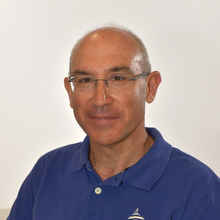
Salvatore Orlando is a Full Professor and Director of the Department of Environmental Sciences, Computer Science and Statistics at Ca' Foscari University of Venice. He holds academic roles including membership in the University Scientific Instrumentation Service Center (CSA) Management Committee and the Academic Senate. His research focuses on machine learning, information retrieval, and data mining, with notable contributions to learning-to-rank algorithms, decision tree ensembles, and adversarial machine learning. Key areas include efficient algorithms for large-scale systems, model interpretability, and fairness in AI. Orlando’s work bridges theoretical advancements with practical applications in database technology and cybersecurity. His recent publications emphasize optimizing ranking models, enhancing algorithm resilience, and addressing ethical considerations in AI systems. He is actively involved in organizing international conferences and serves on program committees, further contributing to the academic community.
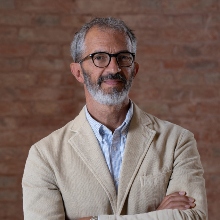
Carlo GIUPPONI is a Full Professor of Applied Economics at the Department of Economics, Ca' Foscari University of Venice. He serves as the University Board of Sustainability and Department Delegate for Sustainability. His research focuses on environmental economics, climate change adaptation, and socio-ecological systems modeling. He has led projects funded by the EU, international organizations, and national agencies, including initiatives on Blue Carbon, Alpine ecosystems, and water management. GIUPPONI's expertise includes integrated valuation methods, decision support systems, and spatial data analysis. He collaborates with global networks like the Research Institute for Complexity and has contributed to frameworks for climate adaptation and disaster risk reduction. His work bridges academic research with policy, emphasizing sustainability strategies for businesses and territorial planning. He supervises theses in environmental economics, climate adaptation, and non-market goods valuation. Key funding includes the AlpES (EU Interreg Alpine Space), CLIMADAPT (EU Tempus), and WaterLANDS (H2020 Green Deal) projects. He has published extensively on climate resilience, coastal systems, and socio-ecological modeling, with a focus on Mediterranean and global challenges. His research tools include Bayesian networks, agent-based models, and spatial econometrics.
Flavio SARTORETTO is an Associate Professor in Scientific Computing at Ca' Foscari University of Venice. He holds a Mathematics degree from the University of Padua and has held academic positions at University of Padua (1982-1992) and Sapienza University of Rome (1992-1993) before joining Ca' Foscari in 1993. His research focuses on numerical analysis, computational methods, and interdisciplinary applications including environmental modeling, cognitive processes, and assistive technologies. Key research areas include numerical solutions of PDEs, meshless methods, EEG signal analysis, and e-learning tools for impaired individuals. He has participated in major research projects such as EC Network (1992-1995), PRIN initiatives (1997-2010), and contributed to software development for geomechanical models and air quality systems. His work spans computational fluid dynamics, robotics applications, and cognitive studies. Recent publications highlight advancements in mesh refinement strategies, robotic assistive devices, and spatial cognition research. He has reviewed for prestigious journals and served in academic committees for state examinations and international conferences. He maintains active involvement in academic service, including roles in evaluation committees and contributions to professional societies like SIAM and CICAP.
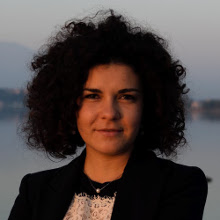
Francesca LAROSA is an academic researcher affiliated with the Department of Economics at Ca' Foscari University of Venice and the Research Institute for Complexity. She holds a Marie Skłodowska-Curie Fellowship at the Royal Institute of Technology (KTH) in Stockholm, focusing on artificial intelligence applications in climate and sustainability policy. Her LIBRA project quantifies environmental costs and sustainability benefits of AI investments. She also serves as an Honorary Researcher at University College London (UCL). Her research explores dual ecological-digital transitions and policy alignment for climate action. Key areas include climate finance inequalities, innovative business models for climate services, and disaster risk management. She collaborates with the Euro-Mediterranean Center on Climate Change (CMCC) on climate service development and policy outreach. Recent work emphasizes AI-driven solutions for sustainable development goals, socio-economic impacts of climate policies, and equitable access to green finance. Her publications span climate adaptation strategies, hydropower investment disparities, and social media dynamics around climate issues. Affiliations: Ca' Foscari University, KTH Royal Institute of Technology, CMCC, UCL Key Projects: LIBRA (Marie Curie), Climate Services Verification Framework Research Themes: Climate finance, AI for sustainability, disaster resilience, socio-economic policy design
Stefano Mauro is a Full Professor at the Polytechnic University of Turin's Department of Mechanical and Aerospace Engineering (DIMEAS). He leads the Power Electronics Innovation Center (PEIC) and serves as Scientific Advisor for the Ferrero Partnership Agreement. Research interests include collaborative robotics, digital twin systems, hydrogen-powered technologies, space robotics, and pipeline engineering Current projects: IDRA (Inflatable Robotic Arm), GRAVITAS (Satellite Testing), MUSAPOEM (Multisatellite Operations) Recent research trends focus on inflatable robotics for orbital applications , hydrogen infrastructure modeling , and advanced control systems for space and industrial use . His work spans both theoretical and applied domains across aerospace, automotive, and energy sectors. Scientific contributions : 12+ patents in mechatronics and space systems Member of SIRI - Italian Robotics Association (1998-2004) Lead investigator for 20+ funded research projects Advising & Commercial Collaborations Supervises 13 PhD students in mechanical engineering disciplines. Collaborates with 15+ commercial entities including: Ferrero Technical Services (2022-2027) Stogit S.p.A. (gas pipeline analysis) ESA (European Space Agency) partnerships
Paolo Squillari is an External Lecturer and Head of Technical Services Office at the Department of Energy (D.ENERG) within Politecnico di Torino. He collaborates with the Department of Electronics and Telecommunications (DET). His teaching responsibilities include courses like 'Introduction to LabVIEW and Data Acquisition' for Energy Engineering programs and 'Electrical Measurements' for Electrical Engineering students since at least 2019/20. He actively participates in academic years up to 2025/26. Professionally, Squillari has led commercial consulting projects such as software development for PEM generators (2007). His recent research focuses on IoT infrastructure for multi-energy systems and magnetic gear prototyping. He contributes to international conferences like IEEE EEEIC and COMPUMAG. No scientific awards or grants are explicitly listed, though his involvement in commercial contracts suggests applied research activities. He leads technical services operations within D.ENERG, indicating managerial responsibilities alongside teaching and research.
Farbod Khosro Anjom is a fixed-term Assistant Professor and researcher in the Department of Environmental, Land, and Infrastructure Engineering (DIATI) at Politecnico di Torino, Italy. He is affiliated with the College of Environmental and Land Engineering and specializes in Applied Geophysics (GEOS-04/B). He actively contributes to research, teaching, and academic service, including serving as an Associate Editor for the journal Geophysical Prospecting since 2024. His research focuses on applied geophysics with applications in environmental and mining engineering. Key areas include seismic monitoring of landslides and periglacial bodies, machine learning for event classification in passive seismic data, and geophysical characterization of deep and near-surface mines. He employs techniques such as ambient noise tomography, surface wave analysis, and well logging to study geological discontinuities and subsurface structures. His recent publications (2024–2025) highlight a strong trend in integrating machine learning with geophysical data for hazard detection and resource exploration. The works span journal articles and conference proceedings, emphasizing practical applications in mining, landslide early warning, and glacier monitoring. These reflect a multidisciplinary approach combining geophysics, environmental engineering, and data science. He is actively involved in teaching at both PhD and Master’s levels. He is the main teacher for the PhD course Deep Learning Applications in Environmental Engineering and Geoscience (2024/25 and 2025/26) and a course collaborator for Geophysical Exploration and Monitoring and Well Logging and Well Testing in the Master’s program in Georesources and Geoenergy Engineering. Scientific Editorial Role: Associate Editor, Geophysical Prospecting (2024–present) Farbod Khosro Anjom supervises PhD students, notably Valeria Strallo in the Civil and Environmental Engineering PhD program (39th cycle, 2023–ongoing). While specific grants are not mentioned in the text, his active research output and editorial role suggest ongoing research funding and academic leadership. He is part of a research team within DIATI focused on Applied Geophysics, collaborating closely with researchers such as Chiara Colombero, M. Manzi, and V. Socco.
Carlo Vincenzo Camporeale is a Full Professor at the Department of Environmental, Land and Infrastructure Engineering (DIATI) of the Polytechnic University of Turin, Italy. He serves as contact person for the Civil Engineering Degree Course and teaches River Engineering & Restoration, Fluid Mechanics, and specialized courses on river morphodynamics and hydrodynamic instability. His research spans hydrodynamic stability, eco-morphodynamics, pattern formation in geosciences, and the carbon cycle in rivers/coastal environments. Current research trends focus on carbon pumping in tropical rivers , stochastic processes in coastal dunes , LiDAR-based vegetation modeling , meandering river dynamics under unsteady flows , and hydroclimatic significance of karst deposits . His work integrates mathematical modeling, field analysis, and remote sensing. Scientific Awards: Torricelli Award (2008) from the Italian Hydraulics Group Research Leadership: He oversees 9 PhD students in Civil and Environmental Engineering and holds editorial roles in journals like Advances in Water Resources and Frontiers in Environmental Science . Notable projects include CONCERTO (2025-2028) for carbon cycle modeling and e-CAPTURE (2023-2025) for eco-geomorphic carbon sequestration.
Giuseppe Lacidogna is Associate Professor in Structural Mechanics at the Department of Structural, Building and Geotechnical Engineering (DISEG), Politecnico di Torino, Italy. He leads the Fracture Mechanics Laboratory and is a key researcher in structural health monitoring and damage diagnosis. He holds a PhD in Structural Engineering from Politecnico di Torino (1994) and graduated cum laude in Architecture (1985). He achieved National Academic Qualification as Full Professor in 2018 and is Fellow of the European Academy of Sciences. He serves on the Academic Board of the Doctorate in Civil and Environmental Engineering and previously directed the Structural Engineering Doctorate (2016–2018). Research Interests: Acoustic emission for damage identification in concrete, masonry, and rocks Cracking evolution in masonry arch bridges Creep and long-term behavior of concrete Fracture mechanics and modeling (FEM, DEM) Seismic precursors and critical phenomena Mechanics of macromolecular and protein structures Static and dynamic analysis of high-rise buildings His recent research, reflected in publications from 2022 to 2025, emphasizes acoustic emission monitoring of historical and modern structures (e.g., Garisenda Tower), fracture in 3D-printed geopolymers, self-healing materials, and multiscale modeling of seismic events. His work bridges civil engineering, materials science, and computational mechanics. Scientific Awards and Recognitions: Fellow, European Academy of Sciences (2018) Certificate Merit Award, European Society for Experimental Mechanics (EuraSEM, 2018) Best Paper Award, Conference on Structural Faults + Repair (2008) Top Italian Scientist, Engineering-Mechanics Area (2021) He actively supervises PhD students and has secured competitive and commercial research funding, including the GREENER project (PNRR) and long-term monitoring of the Garisenda Tower. He serves on editorial boards of journals such as SCI , Construction and Building Materials , and Applied Sciences , and is a member of professional societies including AIMETA, RILEM, SEM, and CTBUH. His research integrates experimental and numerical methods to address challenges in infrastructure safety and sustainability. Laboratories and Research Teams: Fracture Mechanics Laboratory (DISEG), Politecnico di Torino Principal Investigator in multiple national and international research collaborations Leader of the SISCON Interdepartmental Center component on Safety of Infrastructures and Constructions
Roberto Amadini is an Associate Professor in the Department of Computer Science and Engineering at the University of Bologna. His work focuses on constraint programming, algorithm selection, and string constraint solving, with applications in cloud-edge computing and IoT systems. He leads research in deploying microservices over hybrid infrastructures and optimizing solver portfolios for constraint satisfaction problems. Research interests include advanced constraint solving techniques, formal methods for software analysis, and energy-efficient resource allocation. Amadini’s contributions span the design of frameworks like FREEDA and SUNNY-as2, which enhance deployment resilience and algorithm selection efficiency. His work bridges theoretical foundations with practical implementations in programming languages and verification tools. Recent publications explore sustainable cloud-edge applications, failure-resilient systems, and dynamic symbolic execution. He actively contributes to open-source projects like JSetL and participates in international solver challenges. No awards are explicitly listed in the provided materials. Amadini’s research group addresses cutting-edge challenges in distributed computing and constraint-based methodologies. Ongoing projects focus on optimizing solver portfolios for real-world computational tasks and advancing string analysis techniques in programming paradigms.
Mario Rapaccini is an Associate Professor at the Department of Industrial Engineering, University of Florence. His research focuses on digital transformation (Industry 4.0) and servitization of manufacturing enterprises. He holds academic affiliations with multiple universities, including Politecnico di Milano and Scuola Sant'Anna di Pisa. Rapaccini has extensive experience in service management, having led projects like the ASAP Forum and coordinated initiatives such as the PRIN 2015 and Erasmus+ IMPACT programs. His work bridges theory and practice, collaborating with global companies like Ricoh, Canon, and Enel Green Power. Education: PhD in Mechanical Engineering. His research interests include service innovation, digital servitization, and Industry 4.0 technologies. Over 100 publications in journals, conferences, and books, with a focus on servitization strategies, service system design, and data-driven services. Recent research trends emphasize servitization maturity models, digital twin applications, and Industry 4.0 integration in manufacturing ecosystems. His work highlights challenges SMEs face in adopting digital servitization and proposes frameworks for service 4.0 implementation. Grants/Projects: PRIN 2015 (Cost & Performance Management for Servitization), Erasmus+ IMPACT (2020), MITIP 2007, PROSSALIC (EU IRSES 2011). Labs/Initiatives: Founded IBIS Lab (Industry Business Innovation Systems), national coordinator of ASAP Forum.
Roberto Sennen Brusa is a Full Professor and Deputy Director in the Department of Physics at the University of Trento, Italy. He has been a member of the department since May 1986 and was promoted to Associate Professor in August 2000, later achieving the rank of Full Professor. His work is centered on experimental and applied physics, particularly in the domain of positron-based techniques and instrumentation. Research Interests: His primary research areas include positron solid-state physics, atomic and molecular physics, electron and positron scattering, and the modeling of related data. He specializes in the design and application of positron beam apparatus, electron optics for slow positron beams, and techniques such as Doppler broadening, lifetime measurements, and positron reemission. His work enables detailed defect profiling in semiconductors, thin films, and polymers, contributing to materials science and condensed matter physics. His research has significant implications for the characterization of open volume defects, point defects, and positron states in various materials. He has been actively involved in advanced instrumentation projects, including the BRITE Euram initiative aimed at constructing the first Positron Microscope. Academic Background: Graduate Diploma in Nuclear Engineering, Polytechnic of Milan (1983) "Esame di Stato" (Professional Qualification), 1984 One-year fellowship (1985–1986) at the Atomic Physics Laboratory, University of Trento, in collaboration with Prof. Raith (University of Bielefeld, Germany), focused on designing a brightness-enhanced positron beam Scientific Affiliation and Service: Member, Department of Physics, University of Trento (since 1986) Scientific-disciplinary sector: PHYS-03/A – Specialized Physics of Matter and Applications Deputy Director, Department of Physics Advising and Grants: While specific students and grants are not listed, his long-standing research activity and leadership in major collaborative projects (e.g., BRITE Euram) suggest sustained involvement in mentoring and externally funded research. His work bridges fundamental physics and technological innovation in materials characterization. Laboratories and Teams: He has been associated with the Atomic Physics Laboratory at the University of Trento and has collaborated internationally, including with the group of Prof. Raith at the University of Bielefeld. His work is integral to the development of advanced positron beam facilities and their application in materials science.
Amleto Di Salle is an Assistant Professor at the Gran Sasso Science Institute in Italy, specializing in Software Engineering , with a focus on Software Architecture , Model-Based Engineering , and Technical Debt . He previously served as a Research Fellow at the European University of Rome and earned a Ph.D. in Computer Science from the University of L’Aquila in 2015. Research Interests : Software Architecture Model-Driven Software Engineering Distributed Systems Composition Technical Debt and Code Smells Self-Adaptive Systems Digital Twins Recent Publications show a trend toward Deep Learning for Code Analysis , Model-Driven Architecture , and Distributed System Compliance . He has collaborated extensively on projects like CHOReVOLUTION and MATISSE . Teaching spans courses on Software Engineering , Model-Driven Development , and Java/J2EE Programming at institutions including the University of L’Aquila and European University of Rome.
Maurizio Rebaudengo is a Full Professor at the Department of Control and Computer Science (DAUIN) of the Polytechnic University of Turin. He is a member of the PIC4SeR Interdepartmental Center for Service Robotics and holds expertise in embedded systems, fault tolerance, and sensor network applications. Research Interests: Embedded systems, fault tolerance, precision agriculture, RFID technology, wireless sensor networks, and system dependability Scientific Awards: Ramamoorthy Best Paper Award (1997) Leadership Roles: Program Chair for the 4th International EURASIP Workshop on RFID, Committee Member for Public Administration Agreements (2020-2024) Projects: Scientific Director for HONEY (Hybrid ONline tEchnologY for particle therapy), FDM (Food Digital Monitoring), IDEM (Internet of Data for Environmental Monitoring), and OPLON (Healthy Longevity Opportunities). Teaching: Course lecturer for Electronic Calculators, Computer Science, Systems Programming, and Cybersecurity at both undergraduate and postgraduate levels. His work spans IoT applications in agriculture and healthcare, focusing on low-cost sensor networks , RFID-based traceability , and cyber-physical system resilience . Recent publications emphasize particulate matter monitoring and secure communication protocols in wireless environments.
Walter Didimo is a Full Professor of Computer Engineering at the University of Perugia, with a career spanning over two decades. His expertise lies in Graph Drawing, Network Visualization, and Algorithm Engineering, contributing to advancements in Computational Geometry and Big Data. Researcher in Graph Algorithms (1996-2000) Assistant Professor (2001-2004), Associate Professor (2005-2024), Full Professor (2024-) Director of Research Unit CINI (2019-2022) His research focuses on hybrid graph visualization models (e.g., ChordLink), distributed graph processing (e.g., GiViP), and practical applications in cultural heritage (e.g., CHIP) and web analytics (e.g., COWA). Recent work includes scalable algorithms for heterogeneous networked data and visual analytics for genomics (GGB Consortium). Scientific Awards: Best Paper Award - Track 2, Graph Drawing 2021 He has been instrumental in technology transfer, co-founding Vis4 Srl (2009) and contributing to the GGB Consortium. His editorial roles include Associate Editor of IEEE Access and guest editorships for CGTA and JGAA.