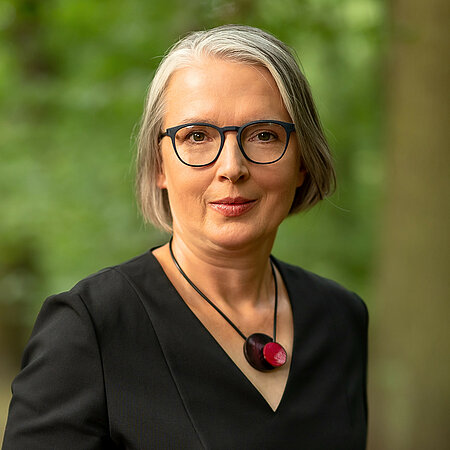
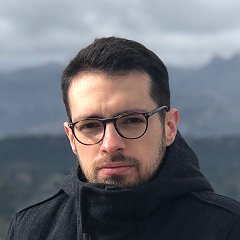
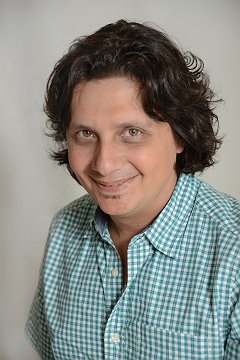
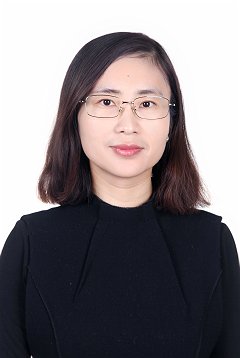
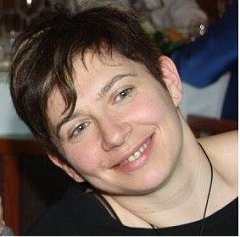
Prof. Dr. Ina Schiering is a Professor of Computer Science at the Institute of Information Engineering, Ostfalia University of Applied Sciences, where she has served since 2008. She holds leadership roles as project leader for "Cultural Participation in the Museum I & II" and Deputy Spokesperson of the Leibniz ScienceCampus, while also leading the Smart Forestry sub-project in the BMDV-funded 5G Smart Country real laboratory and the BMBF project KI4All on AI data protection. Educational background: Diploma in Computer Science, Christian-Albrechts Universität zu Kiel Ph.D. in Computer Science, Christian-Albrechts Universität zu Kiel Her research spans critical technology domains with emphasis on: IT Security and privacy frameworks Data protection impact assessments Interdisciplinary applications in mHealth and IoT Smart device governance Digital inclusion initiatives AI-related data protection challenges Prior industry experience includes 10 years as project manager and consultant at Sun Microsystems (1998-2008) specializing in IT service management, security, and virtualization. Current research initiatives include: Smart Forestry data governance in BMDV's 5G Smart Country real laboratory KI4All project addressing AI data protection (BMBF-funded) "Cultural Participation in the Museum" series as primary investigator
Chuanyi Li is an Assistant Professor at the Software Institute, Nanjing University, affiliated with the State Key Laboratory for Novel Software and Technology. His office is located in Room 917, Fei Yimin Building, 22 Hankou Road, Gulou District, Nanjing, China. Education: Ph.D. in Computer Science, Nanjing University (2012-2017), supervised by Professor Bin Luo Visiting Scholar at Southern Methodist University, Dallas, Texas (2016-2017), collaborating with Associate Professor Liguo Huang B.Sc. from Nanjing University (2008-2012) Research Focus: Dr. Li's work bridges Software Engineering, Natural Language Processing, and Business Process Management. He specializes in applying NLP and machine learning techniques to software engineering challenges including code summarization, program repair, code completion, and software maintenance. His research emphasizes empirical validation and practical tool development for real-world software systems. Publication Trends: Recent work (2021-2025) demonstrates strong focus on large language model applications in software engineering, including code generation, program repair, and benchmarking. Publications frequently involve empirical comparisons, dataset creation, and efficiency optimization techniques for code-related tasks. Professional Service: Active contributor to top software engineering venues (ASE, ICSE, ESEC/FSE) as author and committee member. Recent roles include Program Committee membership for ICSE 2025 Research Track and SANER 2025 Research Papers track.
Teja Kattenborn serves as Professor for Sensor-based Geoinformatics (geosense) at the University of Freiburg, Germany. With 118 publications, over 95,000 reads, and 7,103 citations, he has established himself as a leading researcher in remote sensing applications for ecological monitoring and environmental assessment. His work bridges advanced technological approaches with fundamental ecological questions, making significant contributions to understanding vegetation dynamics and forest health through innovative remote sensing methodologies. Professor Kattenborn's research focuses on integrating cutting-edge remote sensing technologies with ecological science to monitor plant species distributions, forest health, and ecosystem dynamics. His expertise spans UAV/drone imagery analysis, satellite data interpretation, and deep learning applications for vegetation mapping. He has pioneered methods to extract plant functional traits from spectral data, enabling new approaches to understanding biodiversity patterns and ecosystem responses to climate change. His work demonstrates how advanced computational techniques can transform raw remote sensing data into meaningful ecological insights about plant functioning and community composition. His recent publications reveal a strong emphasis on advancing remote sensing methodologies for ecological applications, particularly using deep learning for fine-grained plant species mapping, monitoring forest dieback and tree mortality at unprecedented scales, and retrieving plant functional traits from diverse remote sensing platforms. His research spans from centimeter-scale UAV applications to global analyses using satellite data, demonstrating both technical innovation and ecological relevance. Notably, his work increasingly addresses climate change impacts on forest ecosystems, particularly drought-induced forest dieback and its cascading effects on ecosystem services. Scientific recognition includes: Best oral presentation at the IAVS Annual Symposium 2019 Best oral presentation at the EARSel SIG Imaging Spectroscopy Workshop 2019 ARCADIS price for Geo- and environmental research Fellowship for UAV-Based beach-profile monitoring system Karl-Steinbuch-fellowship 2013 As principal investigator of the Sensor-based Geoinformatics (geosense) research group, Professor Kattenborn leads multiple collaborative projects, including participation in the ECOSENSE Collaborative Research Centre funded by the German Research Foundation (DFG). His extensive publication record with numerous co-authors across institutions indicates active mentorship of graduate students and postdoctoral researchers, though specific advisees aren't listed in the provided information. His research program appears well-funded through various national and international grants supporting innovative environmental monitoring approaches. The geosense research group develops and applies novel remote sensing techniques for environmental monitoring, with particular strengths in UAV-based systems, deep learning applications, and multi-sensor data fusion. Professor Kattenborn maintains extensive collaborations across Germany and internationally, as evidenced by his diverse publication record spanning European institutions and global research initiatives focused on forest ecology, biodiversity monitoring, and climate change impacts.
Aurélie Modde serves as a Researcher in the Department of Clinical Child and Adolescent Psychology and Psychotherapy at Free University of Berlin, actively contributing to the third-party funded STARK project (Spielerische Therapieunterstützung mit adaptivem Realitätsgrad für Kinder) since 2025. Concurrently, she is pursuing dual clinical qualifications: additional training as a child and adolescent psychotherapist at Zentrum für seelische Gesundheit der Freien Universität Berlin (since 2023) and psychological psychotherapy certification in behavioral therapy at Humboldt University Berlin (since 2022). Her academic foundation includes: Master of Science in Clinical Psychology from Julius-Maximilians-Universität Würzburg (2019-2021), thesis: "Von der Nützlichkeit eines interaktiven Forums für Brain Computer Interface Nutzende – Eine qualitative Interviewstudie" Bachelor of Science in Psychology from Julius-Maximilians-Universität Würzburg (2015-2019), thesis: "Ein Vergleich verschiedener Erfassungsmöglichkeiten von Rechtschreibkompetenz im Grundschulalter" Undergraduate exchange at University of New Mexico, USA (2017-2018) Modde's research centers on gender identity development and dysphoria in youth, with significant contributions to trans and non-binary adolescent mental health through projects like DEXTRA (Daily Experiences of Trans Adolescents), TRANS*PARENT, and GenderJourney Youth Compass. Her work uniquely bridges clinical psychology with neurotechnology, particularly in Brain-Computer Interface applications and interprofessional education frameworks. Publication analysis reveals an interdisciplinary trajectory: her 2025 BCI forum study demonstrates user-centered neurotechnology design principles, while the 2021 interprofessional education review establishes foundational models for collaborative psychology training. Both works exemplify her methodological versatility across qualitative, systematic review, and clinical intervention paradigms. No scientific awards are documented in available records. Modde currently contributes to the STARK project's development of adaptive reality therapy tools for children, though no student supervision roles are indicated. Her practical experience spans clinical placements at Fliedner Klinik Berlin (DBT unit) and PINEL Netzwerk, alongside research roles at Charité Universitätsmedizin Berlin and University of Adelaide. She operates within the Youth Advisory Board team at the University Outpatient Clinic, collaborating on gender identity research while participating in clinic partnerships focused on trans youth mental health services and parental support frameworks.
Stefanie Weidtkamp-Peters serves as an Associate Professor at the Center for Advanced imaging (CAi), Heinrich Heine University Düsseldorf, where she leads critical bioimaging research initiatives. Her work bridges plant biology, advanced microscopy, and computational data analysis, with significant contributions to the CEPLAS Cluster of Excellence on Plant Sciences. Her research focuses on: Developing and applying cutting-edge microscopy techniques including super-resolution imaging, fluorescence lifetime imaging (FLIM), and electron microscopy Quantitative analysis of protein-protein interactions in plant development and metabolism Integrating machine learning and AI for image data management and high-content screening Advancing FAIR data principles through tools like MDEmic for bioimaging metadata annotation Analysis of her publication record (2008-2024) reveals an evolving research trajectory from fundamental molecular dynamics in nuclear bodies toward increasingly sophisticated plant imaging applications. Recent work emphasizes data infrastructure development, demonstrating her leadership in establishing standardized workflows for bioimaging core facilities. Her interdisciplinary approach consistently connects plant metabolism, developmental biology, and computational image analysis. As a core faculty member of CAi, she directs a facility providing comprehensive imaging services including scanning/transmission electron microscopy, super-resolution techniques, and AI-powered image analysis. The center supports diverse plant research projects through its specialized expertise in plant tissue imaging and data science applications, particularly within CEPLAS research areas like plant-microbiota interactions and theoretical plant biology.
Prof. Dr. Sieglinde Lemke is a Senior Professor of North American Studies at the English Department of the University of Freiburg, Germany. She serves as Director of the Black Forest Writing Seminars and has held leadership roles including Executive Director of the English Department and Deputy Equal Opportunity Commissioner of the Philological Faculty. Her academic credentials include: Habilitation (2003) - "The Enigma of the Vernacular" at Free University Berlin Dissertation (1995) - "Reconsidering Modernism: Cultural Hybridity and American Art in the Early 20th Century" MA in History and English (1990) from University of Konstanz Lemke's research critically examines inequality, precarity, and representation in American culture, exploring intersections of race, class, and gender through Cultural and Literary Theory, Poverty Studies, Modernism, African-American Studies, Visual Culture, and Gender and Queer Studies. Her work investigates vernacular traditions and transnational perspectives in American literature and visual culture, with increasing attention to sustainability and digital media implications. Her publication trajectory reveals consistent focus on poverty and inequality, evolving toward transdisciplinary approaches connecting cultural studies with sustainability, digital media, and post-human concerns. Recent works demonstrate sophisticated engagement with visual representation of social issues and ethical dimensions of representing marginalized experiences across American cultural production. Her notable recognitions include: First prize for "Prekäre Räume – Straßenkampf" at Berlin State Library Hackathon (2020) Distinguished Teaching Award from Free University Berlin (2005) Boundary 2 Award by Council of Editors of Learned Journals, USA (2000) Honorary Permanent Non-Resident Fellow at Du Bois Institute, Harvard University (1995-2000) Lemke has supervised PhD candidates researching closet narratives, trauma studies, civil religion, and African American crime fiction. Her grant portfolio includes significant German Research Foundation funding for "Representations of Poverty in Contemporary America" (2011-2014), Freiburg Institute for Advanced Studies Fellowship (2010-2011), and international research opportunities at Harvard, Georgetown, and institutions worldwide. She directs the innovative Black Forest Writing Seminars summer academy and has organized numerous international conferences including "Connectivity and its Other" (2022), "From Racial Polarization to Black Liberation" (2021), and "Precarious Representations" (2018), establishing herself as a leading figure in interdisciplinary American cultural studies with global scholarly networks.
Philipp Eichhammer serves as an Assistant Professor for Security in Information Systems at the University of Passau's Faculty of Computer Science and Mathematics, where he leads research in the Chair of IT Security under Prof. Dr. Joachim Posegga. His work bridges theoretical security frameworks with practical IoT implementations, focusing on real-world system resilience. His research expertise spans Dependable Distributed Systems , Byzantine Fault Tolerance , and Fault Tolerance in IoT , with recent breakthroughs in autonomous community formation for intrusion detection across heterogeneous networks. Current projects address critical gaps in Cloud-to-Thing infrastructure monitoring and self-organizing middleware design for secure IoT service execution. Analysis of his 2019-2023 publications reveals consistent focus on IoT resilience engineering, with 40% dedicated to intrusion detection methodologies and 30% to foundational IoT security frameworks. His work demonstrates increasing industry relevance, particularly in applying distributed systems theory to edge-computing security challenges. Teaching responsibilities include Advanced IT-Security , Real Life Security (B.Sc./M.Sc.), and Security Insider Lab II , emphasizing hands-on system and application security training. Collaborative work with researchers like H.P. Reiser and J. Domaschka spans 8 major publications across venues including IEEE PRDC and ACM Computing Surveys.
Ajay Jha is an Assistant Professor in the Department of Computer Science at North Dakota State University (NDSU), where he leads the Software Testing and Maintenance (STAM) Lab. His academic journey began with industry experience, followed by graduate studies and postdoctoral research that shaped his current focus on software engineering research. His educational background includes: Ph.D. in Computer Science from Kyungpook National University (2017) Master's degree from Kyungpook National University (2013) Over five years of industry experience before graduate studies, including co-founding two startups Postdoctoral research at University of Alberta (over two years) and Kyungpook National University (three years) Dr. Jha's research focuses on software engineering, particularly in the areas of software testing, maintenance, and evolution. His work centers on mining large-scale software repositories to uncover real-world issues in software quality, reliability, and maintainability. He develops innovative tools and techniques to address challenges in regression testing, library migration, and mobile application development. His research has significant practical implications for improving software development processes and enhancing the reliability of modern software systems, particularly in mobile and Python environments. His publication record shows a clear progression from Android-focused research to broader software engineering challenges, with recent work emphasizing Python library migration and large language models for software engineering tasks. His research methodology typically involves empirical studies of real-world software repositories combined with tool development to address identified challenges. Dr. Jha is actively involved in academic service, serving on program committees for major software engineering conferences including MSR, ICSME, SANER, ASE, and ICSE. He also reviews for prestigious journals such as IEEE Transactions on Software Engineering and ACM Transactions on Software Engineering and Methodology. At NDSU, he teaches a range of courses from undergraduate to graduate level, including Mobile Software Engineering, Software Development Processes, and Software Project Planning and Estimation. He also leads graduate seminars on specialized topics like 'LLMs for Software Testing and Maintenance' and 'Code Smell and Refactoring.' He leads the Software Testing and Maintenance (STAM) Lab at NDSU, which focuses on mining software repositories to identify quality issues and developing practical tools to address software maintenance challenges. The lab's research has produced several benchmarks (PyMigBench, JTestMigBench) and tools (TRec) that have been shared with the research community.
Alberto Martin-Lopez is a postdoctoral fellow in the SEART research group at the Software Institute of Università della Svizzera Italiana (USI) in Lugano, Switzerland. His academic journey includes a PhD from the SCORE Unit of Excellence at the University of Seville (Spain), where he also earned a Bachelor's degree in Telecommunications Engineering and a Master's degree in Software Engineering and Technology. He has held positions as a Fulbright fellow at the University of California, Berkeley and as an external lecturer at Kristiania University College in Oslo, Norway. His research focuses on software testing, service-oriented computing, and neuro-symbolic AI applications to software engineering problems. Martin-Lopez has made significant contributions to automated testing of web services, particularly RESTful APIs, developing tools and techniques for test oracle generation, test input generation, and metamorphic testing. His work bridges traditional software engineering methods with modern AI techniques to address longstanding challenges in software verification. His publications in top-tier venues like ESEC/FSE, ISSTA, and TSE demonstrate consistent impact in the software engineering community. Analysis of his recent work shows a clear trajectory toward integrating neuro-symbolic AI approaches with traditional testing methodologies, particularly for solving the oracle problem in API testing and enhancing code generation systems. His scientific achievements have been recognized with prestigious awards: First Prize of the ACM Student Research Competition at ICSE'20 ACM SIGSOFT Distinguished Paper Award at ESEC/FSE'22 2023 Early Career Researcher Award by the Spanish Society of Computer Science and Fundación BBVA Martin-Lopez actively contributes to the software engineering community through service on program committees for major conferences including ASE, ESEC/FSE, ICSE, and ISSTA. His collaborative work spans institutions across Spain, Switzerland, the United States, and Norway, reflecting a strong international research network. At USI, he works within the SEART research group, focusing on advancing the state of the art in automated software testing through innovative combinations of traditional software engineering techniques and artificial intelligence.
Dr. Jasper Michels serves as Group Leader and Researcher in the Department of Molecular Electronics at the Max Planck Institute for Polymer Research, a position he assumed in September 2014 after roles at TNO Science and Industry and Holst Center. His career bridges fundamental supramolecular chemistry and applied thin-film electronics development. His academic foundation includes: Chemistry degree specializing in Organic Chemistry from the University of Amsterdam (1995) PhD in Supramolecular Chemistry from the University of Twente (2001) with thesis: "Cyclodextrin Assemblies based on Multiple Non-Covalent Interactions" Michels' research centers on soft matter dynamics within functional systems , particularly thin-film organic electronics . His group investigates polymeric semiconductors for devices like LEDs and solar cells, focusing on phase transitions during solution processing and their impact on film morphology. Recent work extends these methodologies to cellular phase separation phenomena in life science, demonstrating interdisciplinary innovation. Analysis of his 2021-2022 publications reveals consistent emphasis on meniscus-guided coating techniques , phase behavior modeling , and structure-property relationships in organic semiconductors. These works span polymer science, materials engineering, and biophysics, reflecting convergence of fundamental dynamics with device optimization. Key recognition includes: Marie Curie Fellowship (EU) His funding history demonstrates competitive success, notably EPSRC support during Oxford post-doctoral work and sustained institutional backing at Max Planck. Professional service includes advisory board membership (2006-2016) for IOP Self Healing Materials in the Netherlands. Current research leverages advanced processing techniques to control crystallization and morphology in next-generation electronic materials. As Group Leader, Michels directs a multidisciplinary team utilizing experimental and theoretical approaches to solve challenges in out-of-equilibrium phase behavior, with facilities for materials synthesis, device fabrication, and nanoscale characterization.
Diego Garbervetsky is an Associate Professor at the Computer Science Department, School of Sciences, University of Buenos Aires, and a Researcher at ICC/CONICET. He also serves as Director of the Institute of Research in Computer Sciences (ICC). His academic career spans multiple roles in software engineering research and education. His educational background is not explicitly stated in the provided texts, but his current position reflects extensive academic achievement. Garbervetsky's research focuses on static analysis techniques for Java-like programs and Smart Contracts, automated program verification , program understanding , and validation . His specific interests include program understanding, testing and verification of programs featuring rich protocols, static analysis for program verification, and automatic symbolic resource analysis (gas consumption, dynamic memory, energy, etc.). His research has significant implications for blockchain technology, particularly in smart contract verification. Analysis of his recent publications reveals a strong trend toward smart contract security and verification , with multiple papers on modal abstractions, predicate abstractions, and tools like VeriSol for Solidity smart contracts. His work bridges formal methods with practical software engineering challenges, particularly in the blockchain domain. His scientific contributions include the development of multiple research tools: Contractor: Automated tool for behavior validation Contractor.NET: Visual Studio extension for .NET validation JConsume2: Compositional analysis for Java heap memory Consume.Net: Compositional analysis for .NET heap memory BudaPest: Automated software verifier VInTime: Verification suite for Real Time systems Garbervetsky has supervised numerous PhD students including Daniel Wappner, Javier Godoy, and Alexis Soifer, with former students now working at companies like Microsoft, Veritran, and Dialpad. He has served on program committees for major conferences including ICSE, FSE, ASE, and ISSTA, demonstrating his standing in the software engineering research community. His service includes chairing workshops and serving on artifact evaluation committees, showing his commitment to research quality and reproducibility. He currently teaches Software Engineering 2 at the University of Buenos Aires, having previously taught courses in algorithms, automatic software validation, program analysis, programming paradigms, and computer organization.
Dr. Ying Zou is a Professor in the Department of Electrical and Computer Engineering at Queen's University's Smith Engineering faculty in Kingston, Ontario, Canada. With an extensive publication record spanning from 2018 through 2025, Dr. Zou has established herself as a leading researcher in empirical software engineering with a growing focus on AI integration. Dr. Zou's research focuses on Software Engineering , Artificial Intelligence for Software Engineering (AI4SE) , Software Evolution , Software Analytics , and Empirical Software Engineering . Her work bridges theoretical approaches with practical applications, examining developer behavior, code quality improvement, and AI techniques for software engineering tasks. Recent publications demonstrate a clear progression from traditional empirical studies toward more AI-centric approaches, particularly in code refactoring, type inference, and performance analysis. Analysis of Dr. Zou's publication trends reveals a strategic evolution in her research focus. Early work centered on empirical studies of Stack Overflow and GitHub, while recent publications increasingly integrate large language models and AI techniques for software engineering tasks. Her research spans multiple dimensions including code quality, developer productivity, open source community dynamics, and performance optimization, with consistent methodological rigor in empirical validation. Dr. Zou has served in numerous leadership roles across major software engineering conferences including ASE, ICSE, and ESEC/FSE. She has been a Program Committee member for multiple tracks and conferences, and notably served as New Faculty Mentoring Co-Chair for ESEC/FSE 2026. Her service to the community extends to organizing conference tracks, chairing sessions, and mentoring new researchers in the field.
Professor Dan Hao is a distinguished faculty member at the Institute of Software, School of Computer Science, Peking University, where he has established himself as a leading researcher in software engineering. His extensive service to the academic community includes membership on the Steering Committee for The International Conference on Automated Software Engineering (ASE) since 2021, The ACM SIGSOFT International Symposium on Software Testing and Analysis since 2025, and The International Systems and Software Product Line Conference (SPLC) from 2018-2022. He has served as Program Co-Chair for multiple major conferences including ISSTA 2027, ICSME 2025, ICST 2023, SANER 2022, and ASE 2021. Professor Hao received his Bachelor's degree from Harbin Institute of Technology in 2002 and completed his Ph.D. at Peking University in 2008, followed by post-doctoral research at the same institution until 2009. His academic journey reflects a deep commitment to advancing software engineering research and education in China. Professor Hao's research primarily focuses on software testing and debugging, program comprehension, and software maintenance. His work has significantly contributed to compiler testing, fault localization, regression testing, and automated program repair. He has pioneered approaches in compiler auto-tuning, test-case prioritization, and history-guided testing techniques. His research bridges theoretical foundations with practical applications, addressing real-world challenges in large-scale software systems, particularly in online service environments. His publication record demonstrates a consistent trajectory of high-impact research in top-tier software engineering venues. Professor Hao's work shows increasing integration of machine learning techniques with traditional software engineering problems, particularly evident in his recent publications on LLM applications for code generation, neural theorem proving, and contrastive learning for vulnerability detection. His research maintains strong connections between theoretical rigor and practical applicability in industrial settings. ACM SIGSOFT Distinguished Paper Award for PDCAT: Preference-Driven Compiler Auto-Tuning at FSE 2025 Distinguished Paper Award for Formalizing, Mechanizing, and Verifying Class-Based Refinement Types at ECOOP 2024 ACM SIGSOFT Distinguished Paper Award for History-Guided Configuration Diversification for Compiler Test-Program Generation at ASE 2019 ACM SIGSOFT Distinguished Paper Award for History-driven Build Failure Fixing: How Far Are We? at ISSTA 2019 As an advisor, Professor Hao has mentored numerous graduate students, currently supervising 9 Ph.D. students and 7 Master's students. His former students have gone on to prestigious positions at institutions including King's College London, Tianjin University, Fudan University, and major technology companies like Huawei and China Construction Bank. His academic leadership extends through editorial roles as Deputy Editor-in-Chief of Software Testing, Verification and Reliability (STVR) and membership on the editorial boards of several premier journals including ACM Transactions on Software Engineering and Methodology, ACM Computing Surveys, and Empirical Software Engineering. Professor Hao leads a vibrant research group at Peking University's Institute of Software, focusing on cutting-edge problems at the intersection of traditional software engineering and artificial intelligence. His team actively collaborates with both academic institutions and industry partners to address practical challenges in software development and maintenance processes.
Antinisca Di Marco is an Associate Professor in the Department of Applied Clinical Science and Biotechnology at the University of L'Aquila, Italy. She has held this position since October 2017, having previously served as an Assistant Professor in the Department of Computer Science from 2008 to September 2017. Her research spans Software Engineering with specific focus on extra-functional properties and adaptation mechanisms. Key research areas include: Software modeling and performance analysis Performance antipatterns and model-based reconfiguration Context-aware systems and non-functional analysis Bio-inspired paradigms for self-adaptive systems Bioinformatics (since 2013) Dr. Di Marco's recent publications demonstrate a strong interdisciplinary approach, bridging software engineering with healthcare applications, particularly in mobile health systems for cancer treatment monitoring and symptom management. Her work also addresses fundamental challenges in context-aware mobile systems, performance optimization, and wireless sensor networks. She has received significant recognition including: Best Paper Award at FASE 2010 for performance modeling of context-aware mobile systems Best Poster Award at ECSA 2010 for bio-inspired self-adaptive paradigms Dr. Di Marco has advised multiple PhD students and has been actively involved in numerous research projects including iCARE (ERC Proof of Concept), VISION ERC, and CONNECT FET. She serves as Director of the University of L'Aquila Node of the InfoLife CINI Laboratory, focusing on Bioinformatics and Systems Biology research.
Yulei Sui is an Associate Professor at the School of Computer Science and Engineering, University of New South Wales (UNSW), where he conducts research at the intersection of programming languages, software engineering, and machine learning. His work focuses on developing open-source frameworks for static analysis and verification to enhance software reliability and quality. He currently serves as Program Chair for LCTES 2024, SAS 2025, and ISSRE 2025, and is a program committee member for numerous top-tier conferences including PLDI, OOPSLA, and ICSE. His educational background includes a PhD from UNSW, where he has been a faculty member since completing his studies. His research interests span program analysis, software verification, machine learning applications in software engineering, and the intersection of programming languages with natural language processing and code LLMs. He leads the development of SVF (Static Value-Flow), an open-source framework for code analysis and verification, which has gained significant traction in both academic and industrial settings. His recent publications demonstrate a strong focus on improving the precision and efficiency of static analysis techniques, particularly in areas like context-free language reachability, pointer analysis, typestate analysis, and vulnerability detection. His work often bridges theoretical advances with practical applications, resulting in tools that address real-world software reliability and security challenges. Several of his papers have received distinguished paper awards at top conferences including ICSE and FSE. ICSE Distinguished Paper Award (2025) FSE Distinguished Paper Award (2024) OOPSLA 2022 Distinguished Artifact Award Australian Research Council Future Fellowship Fellow of Engineers Australia (FIEAust) Professor Sui actively mentors PhD students and undergraduate thesis candidates, with numerous students having completed their research under his supervision. He has secured significant research funding including ARC Discovery Projects and an ARC Future Fellowship. His community service includes editorial roles for IEEE Transactions on Software Engineering and IEEE Transactions on Reliability, demonstrating his standing as a leader in the software engineering research community.