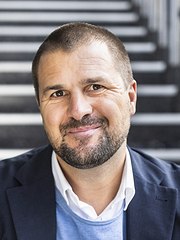
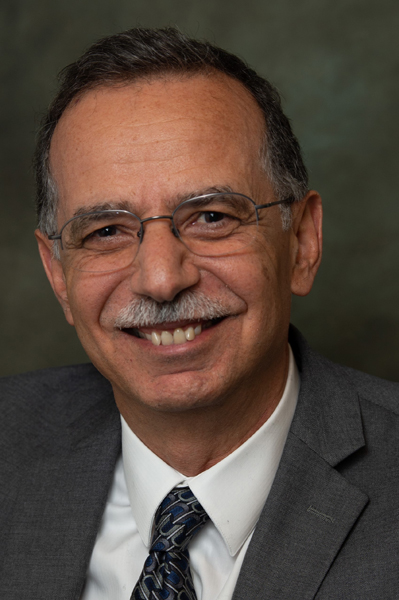
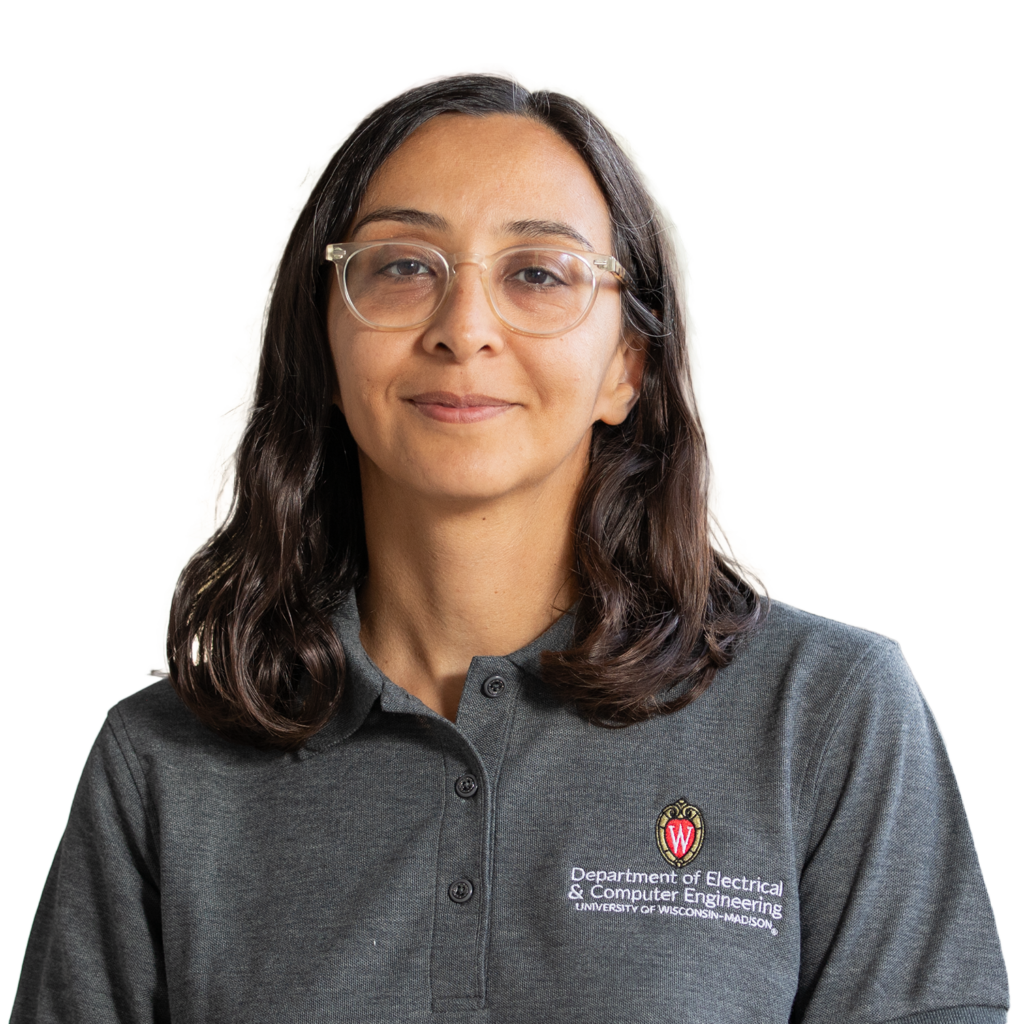
Jane Barlow is a Professor of Evidence-Based Intervention and Policy Evaluation at the Department of Social Policy and Intervention, University of Oxford, and Deputy Head of Department (on sabbatical 2025–26). She leads the national evaluation of the A Better Start program and collaborates with organizations like the NSPCC. Her role includes supervision of DPhil students at St Hilda's College and contributions to the Centre for Evidence-Based Intervention. Academic Affiliation: University of Oxford, Department of Social Policy and Intervention Research Groups: Child and family mental health and well-being, Social inequality and poverty, Violence prevention Barlow's research focuses on early parenting's role in child mental health, preventive interventions for child abuse, and pandemic impacts on maternal and infant services. Her work spans global health (e.g., rural Gambia adaptations), domestic abuse policies, and health visiting practice evaluations. Her recent publications address safer sleep practices, video feedback interventions, health visiting models, and pandemic-related anxiety. These studies employ systematic reviews, cross-cultural validations, and administrative data analyses, emphasizing policy implications. Scientific Honors : Fellow of the Faculty of Public Health (Honorary) President of AIMH UK Affiliate Council Representative, WAIMH Executive Board Associate Editor, Infant Mental Health Journal Jane Barlow supervises DPhil students in areas including parental mental health, child protection, and pandemic service adaptations. She leads the Supporting Early Minds Research Network and has developed training courses like Babies in Mind with the NSPCC.
Ahmed Saeed is an Assistant Professor in the School of Computer Science at Georgia Institute of Technology, specializing in scalable computer networks and systems. His research spans congestion control, operating systems, LEO satellite networks, and formal methods, with a strong record of publications and active mentorship. Education: PhD in Computer Science, Georgia Institute of Technology (2019) Bachelor's in Computer and Systems Engineering, Alexandria University (2010) Postdoctoral Associate, MIT (with Prof. Mohammad Alizadeh) Research Interests: Ahmed's work focuses on the theory, design, and implementation of scalable networked systems. Key themes include: Congestion control algorithms for datacenter and WAN traffic Overload control mechanisms for microsecond-scale RPCs Performance debugging tools for datacenter applications LEO satellite network modeling and policy analysis Formal verification of network protocols and resource schedulers Recent Publications Trend: His 2024-2025 papers emphasize LEO satellite resilience and datacenter performance , with contributions to emergency failover modeling, latency debugging tools, and congestion control protocols. These works combine empirical measurement, formal modeling, and policy recommendations. Awards & Funding: NSF CAREER Award (2024) – LEO satellite variability ($600k) NSF CNS Core Awards (2022) – Edge server stacks & formal verification (total $2.38M) Google Research Award (2022) – Scalable edge systems ($80k) DARPA Risers Top 5 Poster (2022) Spec Tech Award (2023) – Nanomodular electronics routing ($40k) Teaching & Service: He regularly teaches Computer Networking I (CS 3251) and Datacenter Networks & Systems (CS 8803) . Service includes PC roles for SIGCOMM, NSDI, CoNEXT, and Networking area co-chair for JSys. Lab & Students: Ahmed leads an active research group with PhD students Peidi Song, Bhaskar Pardeshi, Sherif Abdelrazek; MS students Dhyey Thummar, Pratyush Sahu, Sammy Kapoor; and undergraduate Demi Lei. Alumni have joined industry leaders like Juniper, Microsoft, and Snowflake.
Hiroshi Toyoizumi is a Professor at Waseda University's Faculty of Commerce and Graduate School of Accountancy, with a Ph.D. in Mathematical Physics from Waseda University. His work bridges Applied Probability , Operations Research , and Computational Biology , focusing on stochastic modeling across biological and network systems. Research Interests Stochastic Models in Biology : Analyzing social queues in hover wasps and meiotic DSB regulation using quasi-birth-death processes and survival analysis. Network Security : Modeling computer virus spread on scale-free networks and proposing active defense strategies. Queueing Theory : Developing analytical frameworks for on-demand streaming, quantum merging, and blockchain-based systems. Article Trends Recent work (2020-2024) explores nonlocal diffusion , quantum queueing , and swarm behavior in financial markets . Mid-2010s studies focus on cooperative breeding and DNA recombination dynamics . Early papers (pre-2010) examine computer virus ecology , secure group communication , and deterministic queue analysis . Scientific Awards Biotechno 2013 Best Paper Award IEICE Switching Workshop SSE Research Award (1999) IEICE Young Research Engineer Award (1997) Teaching Activities Graduate-level courses in Operations Research and Financial Engineering . Undergraduate and graduate seminars in Applied Mathematics and Probabilistic Models .
Fabiana Pirola is an Associate Professor at the University of Bergamo, holding positions in both the Department of Engineering and Applied Sciences and the Department of Management, Information, and Production Engineering. Her academic career spans over 17 years since completing her PhD at the University of Bergamo, progressing through research fellow positions to her current associate professorship in the ING-IND/17 – MECHANICAL INDUSTRIAL SYSTEMS scientific sector. Her research interests focus on supply chain management , risk management , service engineering , and industrial maintenance , with recent emphasis on Industry 4.0 and 5.0 technologies. She investigates how digital innovations connect with the design and management of production and service delivery systems, bridging theoretical research with industrial applications through collaborations with organizations like AFIL (Lombardy smart factory technology cluster), Confindustria Bergamo, and Consorzio Intellimech. Analysis of her recent publications reveals a strong focus on Product-Service Systems (PSS), digital transformation in manufacturing, and workforce development for Industry 4.0/5.0. Her work spans sustainability assessment of PSS, AI education through learning factories, servitization business models, and human factors in technology adoption. A significant portion of her research addresses practical implementation challenges in industrial settings, particularly through data-driven approaches to maintenance, service delivery, and decision-making. Dr. Pirola leads multiple significant research projects including Co-Creative Decision-Makers for 5.0 Organizations (Erasmus+, 2023), Green and Resilient European Excellence Network for Smart MED SMEs (2024), Methods and Tools Supporting Digital Product Service System Passport (Horizon Europe, 2024), and TechFact - Design and adoption of Teaching Factories (PRIN Projects, 2023). She teaches various courses related to production management, operations modeling and simulation, and service engineering across multiple engineering programs at the University of Bergamo.
Sverre A. C. Kittelsen is a Senior Research Fellow at the Frisch Centre and holds a Professor II position at the Department of Health Management and Health Economics (HELED) within the Institute of Health and Society at the University of Oslo. His academic career spans over three decades with a Doctor Politicae (Dr.Polit.) in Economics from the University of Oslo (1998) and a Cand.Polit. in Economics from the University of Bergen (1985). His primary research interests include Production theory, Efficiency measurement, Regulation, Health Economics, and Energy Economics. Kittelsen has established himself as a leading researcher in Nordic healthcare efficiency analysis, particularly focusing on hospital productivity, quality assessment, and the economic implications of healthcare reforms across Scandinavian countries. He has also made significant contributions to energy economics, especially regarding European energy markets and climate policy. His recent publication record demonstrates remarkable productivity with 15+ publications since 2017, showing consistent scholarly output across health economics and energy economics. The research trends indicate a strong focus on empirical analysis of healthcare systems using advanced econometric methods, particularly data envelopment analysis (DEA) and productivity measurement techniques. His work frequently involves cross-national comparative studies within the Nordic region, examining how different healthcare organizational structures affect efficiency and quality outcomes. Kittelsen has been involved in numerous research projects related to public sector efficiency, including hospital productivity studies, tax office efficiency analysis, and energy market modeling. His work often bridges theoretical economic concepts with practical policy implications for healthcare and energy sectors. His institutional affiliations with both the Frisch Centre (a prominent Norwegian economic research institute) and the University of Oslo position him at the nexus of academic research and policy-relevant analysis. This dual affiliation enables him to contribute both to theoretical economic literature and to practical policy discussions in Norway and the broader Nordic region.
Professor Yann Disser is a faculty member in the Department of Mathematics at TU Darmstadt since 2021. He previously held an Assistant Professor (tenure-track) position at TU Darmstadt (2016-2021), a PostDoc position at TU Berlin (2012-2016), and a Visiting Professor role at Augsburg University (2015). His research spans Combinatorial Optimization , Online Algorithms , Graph Exploration , Computational Complexity , and Robust Optimization . Current position: Professor (W2), TU Darmstadt Previous: Assistant Professor (2016-2021), TU Darmstadt PostDoc & Habilitation: TU Berlin (2012-2016) His research focuses on algorithmic approaches to optimization problems, including: Combinatorial Optimization for problems like Steiner trees and knapsack variants Online Algorithms with applications to scheduling and transportation Graph Exploration by mobile agents and complexity bounds Computational Complexity of linear programming pivot rules Network Flows and geometric reconstruction Recent publications analyze incremental maximization with greedy methods, lower bounds for active-set methods , and universal circuit designs . His work appears in top venues like IPCO , ESA , and SODA . He advises a team of researchers including David Weckbecker, Farehe Soheil, and Alexander Birx. Current and past advisees often focus on algorithmic theory, with placements at institutions like HPI Potsdam and Merck.
Kelly Bass serves as Associate Professor and Faculty Chair in the Department of Social Work at the University of South Dakota, directing the Child & Adult Advocacy Studies (CAASt) program. His clinical expertise spans forensic evaluations, crisis intervention, and therapeutic treatment for vulnerable populations across criminal justice, mental health, and welfare systems. His educational background includes: Doctorate in Social Work (DSW), Clinical Social Work, University of Tennessee - Knoxville, 2015 MS, Advanced Generalist Social Work, University of Nebraska at Omaha, 2001 BS, Generalist Social Work, University of Sioux Falls, 1998 Bass focuses on clinical supervision frameworks, interprofessional education, and trauma-informed interventions for at-risk youth and families. His research examines service delivery integration at healthcare-discipline intersections and outcomes improvement for mentally ill populations within institutional systems. Recent publications reveal a strong emphasis on culturally relevant case studies, advocacy curriculum development, and ACEs mitigation through neuroscience-informed practice. His scientific recognition includes the 2023 IPEC Excellence Award Honorable Mention and multiple Belbas-Larson Teaching Award nominations. Current grants like HRSA's COMPASS initiative ($1.2M) address South Dakota's behavioral health workforce shortages through innovative training pipelines, while the NCWWI case-based learning project enhances child maltreatment practitioner competencies. Bass leads the CAASt certificate program and serves as an ASWB Path to Licensure Scholar, developing national curricular guides for licensing regulation. His clinical supervision research informs the COMPASS grant's mentorship framework, creating sustainable pipelines for rural mental health professionals through university-community partnerships.
Jan Christof Recker is Nucleus Professor and holder of the chair for Information Systems and Digital Innovation at the University of Hamburg Business School, funded through the Excellence Strategy of the Federal and State Governments. He also holds adjunct professor positions at the University of Agder (Kristiansand, Norway) since 2022 and at the QUT Business School (Brisbane, Australia) since 2018, and has previously served as Professor for Information Systems and Systems Development at the University of Cologne (2018-2021) and Full Professor for Digital Innovation at QUT Business School. Dr. Recker holds bachelor's and master's degrees in information systems from the University of Münster and a PhD in Information Systems from the Queensland University of Technology. His educational background forms the foundation for his expertise in bridging technical and organizational aspects of digital transformation. His research focuses on how organizations deal with digital innovation, digital transformation, and digital entrepreneurship. As a field researcher, he has collaborated with large organizations including Woolworths, SAP, Hilti, Commonwealth Bank, Federal Police, Lufthansa, and Ubisoft, as well as various startups. Dr. Recker employs quantitative, qualitative, and mixed field methods in his research and is also competent in design research. His current research interests include technology analysis and design in the digital age, digital entrepreneurship and new venture creation, digital innovation and transformation in large organizations, digitalization of products, services, and processes, and digital solutions for sustainable development. His work aligns with multiple UN Sustainable Development Goals including Industry, Innovation and Infrastructure (SDG 9), Responsible Consumption and Production (SDG 12), and Reduced Inequalities (SDG 10). Dr. Recker's recent publications demonstrate a sophisticated exploration of the intersection between physical and digital experiences, generative AI development methodologies, societal impacts of crises on business growth patterns, and responsible digital innovation frameworks. His work spans multiple high-impact journals across information systems, management science, and entrepreneurship disciplines, consistently addressing practical organizational challenges with theoretically grounded approaches. His notable awards and honors include: AIS Fellow Award (2018) Outstanding Associate Editor Award by MIS Quarterly (2019) SIGGreen Best Paper Award (2021) Best Paper Award by the Journal of Information Technology Theory and Application (2014) Vice Chancellor's Award for Excellence (2014) Dr. Recker has secured significant research funding for projects related to digital innovation and transformation, including the HIVESOUND start-up scholarship (2024-2025) and research on how digital products are created through hardware-software interactions (2022-2024). As Editor-in-Chief for Communications of the Association for Information Systems (2015-2020) and current Senior Editor for the MIS Quarterly, he has shaped scholarly discourse in the field. His supervision of doctoral students has been recognized with multiple awards, reflecting his commitment to developing the next generation of information systems scholars. His Management Transfer Lab at the University of Hamburg serves as a nexus for academic-industry collaboration, focusing on translating theoretical insights into practical solutions for digital transformation challenges. The lab maintains strong partnerships with major corporations and startups alike, ensuring research relevance while providing students with real-world experience in digital innovation contexts.
Andrea Appolloni is an Associate Professor at the Department of Management and Law, University of Rome Tor Vergata. His academic career focuses on Management with emphasis on Sustainable Supply Chain Management , Digital Transformation , and Circular Economy . His research explores the intersection of technological innovation and sustainability, particularly through topics like AI in Logistics , Green Procurement , and Policy Optimization . Publications span both theoretical frameworks and empirical studies in China, Italy, and Malaysia, with a strong focus on environmental impact and organizational performance. Recent work includes digital twin applications for human-AI collaboration, blockchain integration in sustainable supply chains, and analyzing barriers to circular economy adoption. His 15 most recent articles (2025-2022) demonstrate a trend toward combining Artificial Intelligence , Operations Management , and Environmental Governance .
David Nipperess is an Honorary Lecturer in the School of Natural Sciences at Macquarie University, where he contributes to research and academic initiatives in biodiversity and ecology. His work spans conservation biology, phylogenetics, and urban ecology, with a strong focus on practical applications for environmental management and policy. His research interests center on biodiversity assessment, phylogenetic and functional diversity, and the impacts of climate change and urbanization on ecological systems. He investigates topics such as species inventory completeness, conservation prioritization, and the ecological integrity of natural and constructed habitats, particularly in urban and riparian environments. The trends in his recent publications reflect a deep engagement with global and regional conservation challenges, integrating decision science, ecosystem services, and biodiversity monitoring. His work frequently addresses the interplay between human activity and ecological resilience, especially in urban forests and wetlands. David Nipperess has been recognized through extensive media coverage, with his research picked up by over 190 news outlets and referenced in policy sources and Wikipedia. His work has also been widely shared on social media and academic platforms like Mendeley. He has been involved in significant research projects such as the Green Cities Fund initiative on urban green space and biodiversity investigations in aquifers. His collaborations span multiple institutions and disciplines, reflecting a networked, interdisciplinary approach to environmental science. David Nipperess is affiliated with Macquarie University’s research ecosystem and contributes to high-impact scientific discourse through publications in journals like Nature Climate Change and Nature Communications . His research outputs include peer-reviewed articles, commissioned reports, and policy-relevant assessments, particularly for the New South Wales government.
Mostafa Ammar is a Regents' Professor and Interim Chair of the School of Computer Science at the Georgia Institute of Technology. He has held leadership roles including Associate Chair (2006–2012) and has been a faculty member since 1985. His research focuses on network architectures, protocols, and services, with contributions to mobile cloud computing, network virtualization, and disruption-tolerant networks. He has advised 39 Ph.D. students and secured funding from agencies like NSF, DARPA, and industry partners such as Cisco and IBM. Education : S.B. and S.M. from MIT, Ph.D. from the University of Waterloo. Research Interests : Network architectures, mobile cloud computing, overlay networks, video streaming, and network simulation. His work bridges theoretical advancements with practical implementations, emphasizing scalable and efficient network solutions. Publications : Over 214 publications with a focus on network virtualization, mobile edge computing, and distributed systems. Recent work explores encrypted traffic analysis and femto-cloud resource sharing. Awards : ACM/IEEE Fellowships (2002–2003), Best Paper Awards (2012, 2018), and multiple teaching excellence recognitions. Service : Editor-in-Chief of IEEE/ACM Transactions on Networking (1999–2003), conference co-chair roles, and steering committee memberships. Advising & Grants : Mentored 39 Ph.D. students and secured multi-million-dollar grants. His research has influenced industry standards and academic curricula. Labs/Teams : Active in Georgia Tech’s networking research groups, contributing to open-source network simulators and collaborative projects with global institutions.
Professor Barbara Singer is a Professor of Neurological Rehabilitation at Edith Cowan University’s School of Medical and Health Sciences. With over 30 years of clinical and academic experience, she previously led a postgraduate program in neurological rehabilitation at the University of Western Australia (2004–2016). She currently teaches in the NRB5112 Translational Science course. Her education includes a Doctor of Philosophy from the University of Western Australia (2003) and a Postgraduate Diploma in Health Sciences from Curtin University (1988). As a Neurological Physiotherapist, she is an Honoured member of the Australian Physiotherapy Association and a Fellow of the Australian College of Physiotherapists. Barbara’s research focuses on spasticity management, stroke rehabilitation, functional neurological disorders, and self-management strategies for neurological conditions. Notable contributions include clinical practice guidelines for lateropulsion management and studies on constraint-induced movement therapy implementation. Her awards include the 2010 WA Branch President’s Award (Australian Physiotherapy Association) and the 2023 Honoured Membership (Australian Physiotherapy Association). She has supervised numerous PhD and master’s students, focusing on topics like lateropulsion in stroke recovery and functional neurological disorders.
Prof. Constantinos Antoniou is a Full Professor in the Chair of Transportation Systems Engineering at the Technical University of Munich (TUM), part of the TUM School of Engineering and Design. He holds a Diploma in Civil Engineering from the National Technical University of Athens (1995), an MS in Transportation (1997), and a PhD in Transportation Systems (2004) from MIT. His research focuses on transportation systems engineering, including modeling/simulation, intelligent transport systems (ITS), behavioral economics in transport, road safety, and sustainable transport systems. He has authored over 500 scientific publications, including over 210 peer-reviewed journal papers, and serves as Co-Editor-in-Chief of Transportation Research Part A . Awards include the Francquis Chair (2023), IEEE ITS Outstanding Application Award (2011), and Marie Curie Fellowship (2006–2008). He has secured over €4M in third-party funding, leading projects such as SCUDO, CulturalRoad, and PHOEBE. Currently supervising 17 PhD students, he has mentored seven graduates who now hold academic positions at institutions like UCL and UPC. Research interests span autonomous vehicles, traffic resilience, and policy-driven transport solutions. Key projects include analyzing urban air mobility, MaaS potential, and pandemic impact on transport networks. His work contributes to UN Sustainable Development Goals, emphasizing sustainable cities and communities.
Azadeh Davoodi is a Vilas Distinguished Achievement Professor and Associate Chair of Undergraduate Studies in the Department of Electrical and Computer Engineering at the University of Wisconsin-Madison. Her research focuses on Electronic Design Automation (EDA), integrated circuit debug, and machine learning applications in VLSI design. She holds editorial roles in journals like IEEE TCAD and ACM TRETS, and has chaired major conferences such as ISPD 2015 and served on technical program committees for DAC, ICCAD, and others. Education: PhD in Electrical Engineering, University of Maryland-College Park (2006) Research Interests: Machine learning for VLSI chip design VLSI design automation for machine learning IC-CAD for emerging nanotechnologies Hardware security Recent Research Trends: Her work bridges machine learning and hardware design, with publications on neural network optimization, distributed inference, and explainable AI for circuit design. She emphasizes energy-efficient CNNs, latency reduction in edge computing, and security in split manufacturing. Awards: 2025 DATE Best Paper Candidate 2024 Vilas Distinguished Achievement Professor 2015 ACM Best Paper Award 2011 NSF CAREER Award Service and Grants: Leads NSF-funded projects on explainable ML for CAD and holds grants for distributed neural network synthesis. Her service includes roles as IEEE HKN member and editorial board positions. Labs/Teams: Engages in interdisciplinary research teams at UW-Madison, focusing on EDA innovation and hardware-software co-design.
Julienne Senyard is an Associate Professor at Griffith University's Department of Management, affiliated with the Griffith Business School and the Centre for Work, Organisation and Wellbeing. She holds roles such as Program Outcomes Director for Griffith Business School and has over two decades of academic and entrepreneurial experience. She earned a PhD in Entrepreneurship from Queensland University of Technology (2015), with earlier degrees in Business Communication/Marketing and Arts from QUT and Griffith. Her research focuses on entrepreneurship, innovation, resourcefulness, and social impact, including refugee entrepreneurship and circular economy initiatives. Recent projects include evaluating waste management in First Nations communities and exploring AI's role in entrepreneurship education. Dr. Senyard has secured over $1.5M in research funding, including grants from the Queensland Government and Australian Research Council. Notable awards include the 2024 Vice Chancellor’s Innovation Engagement Award and Senior Fellow status from the Higher Education Academy. Teaching responsibilities include undergraduate courses like Innovation, Creativity, and Entrepreneurship (2043IBA) and postgraduate leadership modules. She supervises doctoral research on topics like social ventures, humanitarian integration, and agri-food systems. Her work emphasizes culturally grounded policy pathways and community-led solutions in circular economy frameworks.