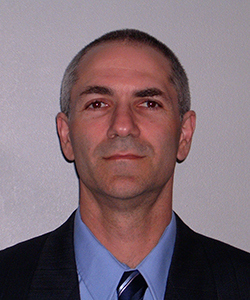
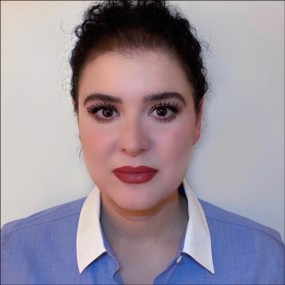
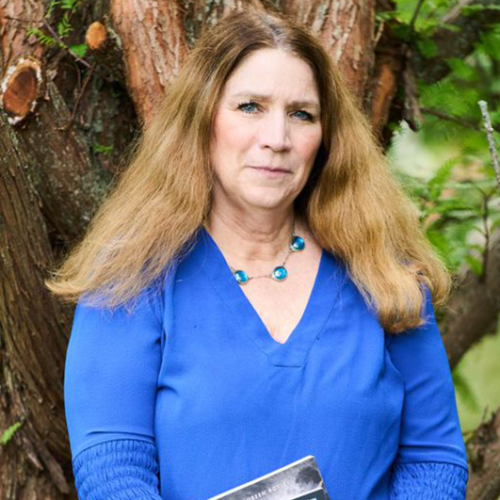
Maria Rita D’Orsogna is a Professor of Mathematics at California State University, Northridge (CSUN) and holds an Adjunct Associate Professor appointment in the Department of Computational Medicine at UCLA. She earned her PhD in Theoretical Physics from UCLA in 2003 and has since bridged mathematical modeling with interdisciplinary research in biology, social dynamics, and criminology. Her work utilizes statistical mechanics and applied mathematics to study collective behavior, viral dynamics, and societal challenges. Her research spans Biological swarming and self-organization Crime pattern modeling and policy analysis Drug addiction relapse dynamics Environmental activism against offshore oil drilling Recent publications focus on Medical decision-making optimization Age-specific overdose mortality forecasting Radicalization and social network dynamics Criminal career empirical studies Hematopoiesis modeling . She has secured funding from the NSF and Army Research Office. Teaching experience includes differential equations, multivariable calculus, and mathematical biology at CSUN and UCLA. She has mentored students through RIPS, IPAM, and PUMP programs. As Associate Director of UCLA’s Institute for Pure and Applied Mathematics (2018–2021), she promoted interdisciplinary research. Her environmental advocacy in Italy led to national policy changes banning coastal oil drilling, earning her recognition as the "Erin Brockovich of Italy".
Professor Katherine D. Watson is a leading historian of criminal justice and forensic medicine at Oxford Brookes University, where she has been teaching since 2004. She holds the academic rank of Professor of Criminal Justice History within the School of Education, Humanities and Languages and is affiliated with the Department of History. Her research is highly interdisciplinary, bridging law, medicine, and social history, with a focus on crime in Britain from the 17th century onward. Professor of Criminal Justice History, Oxford Brookes University School of Education, Humanities and Languages Department of History Email: kwatson@brookes.ac.uk Watson earned her DPhil in modern history from the University of Oxford, following earlier studies at the Universities of Western Ontario and Leeds. Her academic journey has been supported by prestigious grants and fellowships from the Wellcome Trust, British Academy, and Society of Antiquaries of Scotland, reflecting the significance and impact of her research. DPhil, University of Oxford University of Leeds University of Western Ontario Her research centers on the history of crime, forensic medicine, and medico-legal practice in Britain, particularly from 1700 to the mid-20th century. Key areas include criminal poisoning, homicide, assault (including acid throwing), and the role of medical expertise in legal proceedings. She has published a major monograph on medico-legal practice (2020) and is currently writing a book on poisoning crimes in the West. Her work often explores gender, social class, and regional variations in crime and justice. Watson’s 15 most recent publications reveal a consistent focus on the intersection of medicine and law in historical criminal cases. Themes include forensic toxicology, expert testimony, Jack the Ripper, infanticide, and the development of forensic medicine as a discipline. Her recent co-edited volume, The Routledge Handbook of Jack the Ripper Studies (2025), demonstrates her leadership in interdisciplinary crime scholarship. Her scientific recognition includes support from the Wellcome Trust, British Academy, and Society of Antiquaries of Scotland. These awards underscore her contributions to the history of medicine and crime. Wellcome Trust Fellowship British Academy Grant Society of Antiquaries of Scotland Fellowship Watson has supervised multiple PhD and MA students, including Fraser Joyce (on identifying the unknown dead), Mary Gifford (on medical themes in 18th-century novels), and current candidates researching homicide in Lancashire, police detectives, and the academic development of forensic medicine. She welcomes new students interested in the history of forensic medicine and crime since the 17th century. Her research has been funded by major grants, and she has organized key academic events such as international conferences on violence and forensic chemistry. She is actively involved in research groups including Medicine, Health and Society and the History of Crime. She co-organizes the blog Legal History Miscellany and contributes to public understanding through media appearances, including documentaries like Murder, Mystery and My Family and the podcast Moments In Medicine #9 .
Mark Winton, Ph.D., is a Senior Lecturer in the Department of Criminal Justice at the University of Central Florida, part of the College of Community Innovation and Education. He joined the department in 2001 and holds certifications as a Florida Licensed Mental Health Counselor, Certified Forensic Counselor, and National Certified Counselor. Ph.D. in Sociology, University of Connecticut M.A. in Applied Sociology, University of Central Florida M.A. in Counseling, Rollins College B.A. in Psychology, University of Central Florida Dr. Winton's research focuses on the intersection of criminal justice, sociology, and mental health, particularly examining topics such as genocide , serial murder , sex crimes , and mental disorders in criminal behavior . His teaching portfolio includes courses on Criminal Profiling, Terrorism, and Hate Crimes. His publications span journals like Homicide Studies , Aggression and Violent Behavior , and Child Abuse and Neglect , emphasizing interdisciplinary approaches to understanding violent crimes and their societal impacts. Notably, he co-authored two books and contributed to the documentary Why They Kill: The Creation of Dangerous Violent Criminals .
Dr. Wayne Petherick is an Associate Professor at Bond University's Faculty of Society & Design. He is a criminologist specializing in criminal profiling, statement analysis, and victimology, with a focus on decision-making in applied crime analysis and neurological correlates of offending. His work contributes to the UN Sustainable Development Goals related to education and academic qualification. PhD in Law and Criminal Profiling Masters in Criminology Research Interests: Expands on statement analysis, examining satisficing hypotheses, victim precipitation, self-esteem in crime, and neurological factors. Develops applied crime analysis frameworks to address investigative and legal questions systematically. Recent Publications: Explore serial murder definitions, case linkage in rape, criminal profiling methodologies, Australian homicide trends, and female-perpetrated stalking. Keywords span criminology, forensic science, victimology, and behavioral analysis. Scientific Contributions: Supervised doctoral research on homicide solvability, staged crime scenes, and victim factors. Actively mentors HDR students in statement analysis, criminal profiling, and stalking.
Penny Geyer is a Doctoral Lecturer at John Jay College of Criminal Justice (CUNY), specializing in Law, Police Science, and Criminal Justice Administration. She holds a Ph.D. from the University of New Haven (2022), with a focus on surveillance technology’s deterrent effects. Her academic career includes adjunct roles at the University of Hartford and the University of New Haven, where she taught forensic science, criminal behavior, and criminal justice courses. Education: Ph.D., Criminal Justice, University of New Haven (2022) M.S., Forensic Science Investigative Services, University of New Haven (2008) M.S., Computer Forensic Investigation, University of New Haven (2008) B.S., Criminal Justice, University of New Haven (2001) Research Interests: Geyer focuses on policing strategies, crime prevention, forensic science applications, and crime theory. Her work bridges academic research and practical policing, including surveillance technology evaluation and reducing officer-involved shootings. She is a board-certified medicolegal death investigator with over a decade at Connecticut’s Medical Examiner’s Office. Awards & Recognition: Top 5 Presentation Winner at University of New Haven Graduate Showcase (2020) Lee College PhD Student Excellence Award (2022) Two Excellence in Teaching Award nominations for part-time faculty (2021, 2022) Teaching & Mentorship: Courses include Research Methods in Criminal Justice and Criminal Justice Theory. She developed specialized curricula on criminal behavior and forensic science. Her mentorship spans first responder trainings and academic advising. Professional Affiliations: American Society of Criminology Academy of Criminal Justice Sciences American Board of Medicolegal Death Investigators (Fellow)
Tom Pakkanen is a Researcher at Åbo Akademi University's Faculty of Arts, Psychology and Theology, affiliated with the Psychology Solutions for Health department. His work contributes to UN Sustainable Development Goals focused on justice and safety. His research explores forensic psychology, criminal behavior analysis, and child interviews in legal contexts. Education: Doctor of Philosophy (PhD) in Criminology, Åbo Akademi University, 2021 Research Interests: Serial homicide analysis, recidivism rates, juvenile sex offenders, and evidence-based forensic methodologies. He emphasizes ecologically valid approaches to criminal investigations and legal processes. Collaborations: Active in international projects like the European Association of Psychology and Law's White Paper on forensic child interviewing. His work bridges academia and legal practice, aiming to improve investigative techniques and courtroom procedures. Grants/Advising: No formal advisees listed, but leads collaborative research projects on crime linking and child interview protocols.
Associate Professor Amber McKinley is a Clinical and Forensic Victimologist at Charles Sturt University's Australian Graduate School of Policing and Security. She lectures in courses including Theoretical, Applied and Forensic Victimology , Human Trafficking: A Global Perspective , and Professionalism and Resilience in Public Safety . As Higher Degree Research Coordinator , she bridges academia with practical policing and security applications. Bachelor of Liberal Studies (University of Western Sydney) Master of Criminal Justice (Monash University) PhD in Criminology (Bond University) Her research focuses on homicide trends , femicide patterns , human trafficking , and police-involved shootings , with projects tracing gender dynamics in serial homicide and vicarious trauma in military personnel . Her 2025 article Reframing harm explores pornography's role in intimate partner violence. Scientific awards include the Charles Sturt University Vice-Chancellor's Award for Research Excellence (2022) and a Certificate of Appreciation from the Australian Federal Police (2024) . She advises on UN Sustainable Development Goals for education and security, and her 25+ publications span victimology, serial homicide analysis, and transnational crime prevention.
Dr. Katherine M. Brown serves as a Professional Associate Professor of Criminal Justice in the School of Criminology, Criminal Justice, and Public Administration at Tarleton State University, teaching both graduate and undergraduate courses. She additionally holds a Faculty Affiliate position with Tarleton's Institute on Violence Against Women and Human Trafficking. Her educational credentials include: Bachelor of Arts in Government (minor in Sociology) from the University of Texas at Austin Master of Arts in Criminal Justice and Criminology from Sam Houston State University Doctor of Philosophy in Criminal Justice from Sam Houston State University Dr. Brown's research spans critical forensic and criminal justice domains including crimes against women/children, non-fatal strangulation in domestic violence, child abduction murder investigations, serial and sex-related homicides, technology-facilitated child exploitation, and forensic evidence analysis. Her work emphasizes practical solvability factors in complex murder investigations while bridging academic research with real-world forensic application. Her professional recognition includes: Fellow of the American Academy of Forensic Sciences (AAFS) AAFS General Section Paul W. Kehres Meritorious Service Award (2022) John R. Hunt Award (2023) Dr. Brown actively contributes to national forensic standards as a Forensic Science Foundation Trustee (2024-25 Secretary) and member of the AAFS Standards Board Crime Scene Investigation Consensus Body. She provides expert consultation to Child Abduction Response Teams (CARTs) nationwide, directly applying her research to critical missing children cases.
Brendan Chapman is a Senior Lecturer and Chair of the School of Medical, Molecular and Forensic Sciences at Murdoch University’s College of Environmental and Life Sciences. He specializes in forensic genetics, DNA analysis, and cold case reviews, with over a decade of experience in WA government forensic laboratories and law enforcement. Notably, he co-founded the Cold Case Review @ Murdoch initiative with A/Prof David Keatley. His work integrates forensic science with criminal investigation methodologies, focusing on sexual assault, clandestine grave recovery, and microbiome analysis. Chapman’s research spans forensic intelligence, environmental DNA (eDNA), and novel techniques for evidence collection, such as photogrammetry for crime scene reconstruction. He has pioneered studies on microbial transfer in sexual intercourse and the application of genetic genealogy in forensic investigations. His expertise also includes forensic archaeology, wearable technology monitoring for crime scene investigators, and cryptocurrency forensics. His grants and collaborations emphasize practical applications, such as optimizing DNA recovery from crime scenes and developing training programs for disaster victim identification. He leads a multidisciplinary team addressing unresolved cases through advanced analytical and technological approaches, bridging gaps between academia, law enforcement, and forensic science.
Samantha Jones is a Lecturer in Policing Studies and Terrorism and Intelligence at Charles Sturt University's Australian Graduate School of Policing and Security, serving as Discipline Lead for the Bachelor of Policing and Bachelor of Policing-Investigations programs. Her expertise spans terrorism analysis, intelligence operations, and criminology with emphasis on counter-terrorism strategy development. Her research focuses on evolutionary profiling of terrorist cells through transhistorical, cross-cultural, and transnational frameworks. She actively investigates right-wing extremism, biological terrorism, state-sanctioned terrorism, femicide patterns, and Australian serial homicides. This interdisciplinary approach integrates criminology, political science, and forensic methodologies to address contemporary security challenges. Recent publications demonstrate concentrated exploration of femicide profiling techniques across cultural contexts, far-right extremism in American politics, counter-terrorism legislation, and police training innovations. Her work bridges academic research with practical applications in law enforcement education and policy development. Dr. Jones teaches postgraduate intelligence disciplines and undergraduate Terrorism Awareness courses while providing specialist instruction on serial homicide investigations. She maintains active professional engagement through government consulting, industry advisement, and media commentary on security matters.
Itena Dhrami is an Adjunct Lecturer at John Jay College of Criminal Justice, City University of New York (CUNY), where she has been teaching since 2017. She holds advanced academic qualifications in forensic psychology, international crime and justice, global security studies, and intelligence. Her institutional affiliation is with the College of Criminal Justice at John Jay, a leading institution in criminology and criminal justice education. Harvard University – Certificate in International Relations (2021) Johns Hopkins University – M.A. in Global Security Studies and Intelligence (2020) John Jay College of Criminal Justice (CUNY) – M.A. in International Crime and Justice and Advanced Studies in Terrorism (2016) John Jay College of Criminal Justice (CUNY) – M.A. in Forensic Psychology with a focus in Empirical Profiling (2015) Columbia University – B.A. in Psychology (2010) Her research and subject matter expertise lie at the intersection of global security, transnational organized crime, counterterrorism, and human rights. She specializes in Transnational Organized Crime in East Asia, including regions such as Japan, the Korean Peninsula, Mainland China, Singapore, Hong Kong, and Taiwan. Her areas of expertise are frequently sought by media and international organizations. She teaches a range of courses including ICJ101 - International Crime and Justice, SOC351 - Crime and Delinquency in Asia, SOC341 - International Criminology, SOC327 - Advanced Sociological Methodology, SOC301 - Penology, and SOC203 - Criminology. Her academic and professional work reflects a strong commitment to empirical and policy-relevant research in criminology and security studies. Itena Dhrami is also an active Intelligence Analyst at the Waterfront Commission of New York Harbor, a bi-state law enforcement agency focused on combating organized crime in the port district. She previously served as an Intelligence Analyst at the New York City Business Integrity Commission and as a Research Analyst with the Research Foundation of the City of New York, focusing on transnational crime, terrorism, human trafficking, and smuggling. Her earlier research roles include work with the FBI’s Behavioral Science Unit through a collaboration with John Jay College’s Investigative Psychology Research Unit, where she analyzed serial homicide cases to develop empirical profiling models. Intelligence Analyst, Waterfront Commission of New York Harbor Intelligence Analyst, Business Integrity Commission (BIC) Research Analyst, Research Foundation of the City of New York Research Assistant, John Jay College Investigative Psychology Research Unit (FBI BSU collaboration) Research Assistant, Columbia University She is a network expert at the Global Initiative Against Transnational Organized Crime (GI-TOC), contributing to the development of the Global Organized Crime Index, particularly in assessing East Asian countries. Her humanitarian background includes service with UNHCR, UNICEF, and CARE International during the Serbia-Kosovo conflict, where she collected testimonies for the International Criminal Court and supported refugees and victims of abuse. Born in Albania, her early career involved community facilitation on mine awareness and emergency livelihood assessments under guidance from NATO and international NGOs. Professional Memberships: Global Initiative Against Transnational Organized Crime (GI-TOC) Network Expert
Dr. Denise Bissler is a full Professor in the Department of Criminology/Sociology at Randolph-Macon College. She holds a PhD in Sociology from North Carolina State University (2003), with specialties in Criminology and Gender/Race/Class Inequality, alongside MA and BA degrees in Sociology from the University of Akron (1997, 1994). Research Expertise: Sexual Assault Corporate Deviance and White-Collar Crime Media and Crime Opioid Crisis Incarcerated Juveniles Recent Publications: Focus on corporate crime pedagogy, slasher film analysis, and rape myth acceptance, reflecting her interdisciplinary approach combining criminological theory with cultural studies. Awards & Leadership: Excellence in Academic Advising (2022) Most Valuable Professor November 2020 (2021) United Methodist Church Exemplary Teaching Award (2019) Director of Criminology Major Vice-President of Southern Sociological Society President of Sociologists for Women in Society-South
Maureen Boyle serves as Associate Professor of Communication & Media Studies and Journalism Program Director at Stonehill College, leveraging 25+ years of crime reporting experience from New England newspapers like The Enterprise and The Standard-Times. Her industry background in covering presidential campaigns, serial killers, and court systems directly informs her academic leadership and curriculum development. She earned a B.A. in Journalism with an English minor from the University of Bridgeport and an M.A. in Criminal Justice from Anna Maria College, blending practical media training with academic rigor in law enforcement studies. Boyle's research centers on journalism ethics, criminal justice reporting, and true crime narratives, examining how media coverage intersects with unsolved investigations and public perception. Her work bridges investigative journalism with scholarly analysis of cold cases, emphasizing narrative techniques and ethical considerations in crime reporting. Her publications reveal a focused trajectory on unresolved criminal cases spanning decades, consistently exploring the intersection of law enforcement procedures, community trauma, and media responsibility in high-profile investigations. Professional recognition includes: Journalist of the Year (awarded three times) Multiple regional and national reporting awards As Journalism Program Director, Boyle mentors students through courses in newswriting, media law, and reporting practicums, integrating her book research into classroom case studies on investigative techniques and ethical dilemmas.
Emma E. Fridel is an Assistant Professor in the College of Criminology & Criminal Justice at Florida State University. Her research focuses on lethal violence, particularly homicide, homicide-suicide, and mass/serial murder, with emphasis on contextual analysis. She holds a Ph.D. in Criminology and Justice Policy from Northeastern University alongside dual undergraduate degrees in Biology and Asian/Middle Eastern Studies from Duke University. Education: Ph.D., Criminology and Justice Policy, Northeastern University (2020) M.A., Criminology and Criminal Justice, Northeastern University (2018) B.S./B.A., Biology & Asian/Middle Eastern Studies, Duke University (2014) Her research interests include: Analyzing macro-level factors influencing lethal violence Examining gender dynamics in homicide and suicide Studying school shootings and mass murder correlates Developing quantitative methods for crime analysis Recent work explores gun policy impacts on violence, racial disparities in homicide victimization, and contextual effects on homicide types. Her 2025 article in the Journal of Research in Crime and Delinquency highlights differential contextual influences across homicide subtypes. Dr. Fridel advises students in criminological research and contributes to policy discussions through her work on firearm regulation and violence prevention strategies. She collaborates with interdisciplinary teams to advance evidence-based approaches to criminal justice challenges.
Dr. Marina Sorochinski is a tenure-track Assistant Professor at St. John’s University’s Lesley H. and William L. Collins College of Professional Studies , within the Division of Criminal Justice, Legal Studies, and Homeland Security . Her expertise lies in applying psychological principles to improve police investigations, particularly in analyzing behavioral patterns in violent crimes and wrongful convictions. She holds a PhD in Psychology (specializing in Psychology & Law) from CUNY Graduate Center and an MA in Forensic Psychology from John Jay College of Criminal Justice. Dr. Sorochinski’s research focuses on investigative psychology, including evidence-based profiling for violent offenses, cyber-sexual abuse dynamics, and the systemic issues contributing to wrongful convictions. She has collaborated with agencies like the FBI and South African Police Service. Her work has been recognized through a prestigious National Institute of Justice fellowship. Education: PhD in Psychology (Psychology & Law), CUNY Graduate Center MA in Forensic Psychology, John Jay College of Criminal Justice Her teaching spans courses such as Forensic Psychology , Wrongful Convictions , and Psychological Processes of Radicalization . She emphasizes empowering students beyond academics, advocating for transformative educational experiences. Dr. Sorochinski actively publishes and presents globally, contributing to both academic and policy-oriented discussions on criminal justice reform and victim advocacy. Awards: National Institute of Justice Research Fellowship Her research bridges theory and practice, addressing real-world challenges in criminal investigations and the profound societal impacts of wrongful convictions. She is committed to fostering interdisciplinary collaborations to advance justice systems internationally.