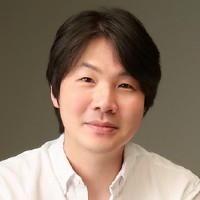
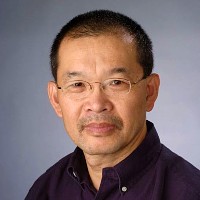
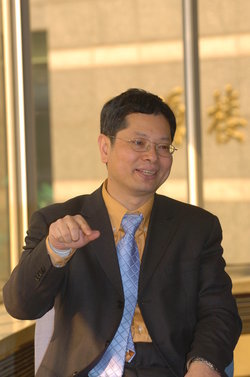
Harold D. Chiang is an Assistant Professor in the Department of Economics at the University of Wisconsin-Madison. His research focuses on econometric theory and methods, particularly robust inference techniques for clustered and network data, machine learning applications, and causal inference frameworks like regression discontinuity/kink designs. He employs computational statistics and asymptotic theory to address methodological challenges in high-dimensional and complex datasets.
David Whitney is a Professor of Psychology at the University of California, Berkeley , with affiliations in Cognitive Science and Neuroscience . His research focuses on visual perception, particularly how humans process information in cluttered environments through mechanisms like ensemble perception , serial dependence , and perceptual crowding . He employs techniques such as psychophysics, fMRI, and TMS to study these phenomena. Whitney's recent work examines serial dependence in schizophrenia, emotion perception in crowds , and medical image analysis for dermatology and radiology. His studies reveal how the brain uses dynamic predictive templates and motion cues to stabilize perception despite neural processing delays. Publications span Current Biology , Nature Reviews Psychology , and PLoS ONE , with a strong emphasis on interdisciplinary applications of perceptual science. Scientific contributions include foundational studies on visuomotor control , blind spot filling-in , and holistic face processing . His lab investigates perceptual stability across eye movements, spatial localization, and cross-modal interactions. Whitney has received grants such as NIH EY018216 to support his research on motion-dependent visual coding. Detailed information about his work is available on the Whitney Lab website .
Prof. Helen Blank is a Professor leading the Multisensory Perception Group and the Prediction in Communication Lab at the Institute for Systems Neuroscience, University Medical Center Hamburg-Eppendorf. Her work focuses on understanding how sensory information is integrated and predicted in contexts like speech perception and face recognition. She holds a Marie Curie Fellowship for her research on prior information's role in human communication. Fluent in German, English, and French, she contributes to experimental medicine and systems neuroscience. Her research spans predictive coding, neuroimaging, and clinical applications in Parkinson’s and developmental disorders. Education: Not explicitly stated in text, inferred as advanced degrees in neuroscience or related fields. Her research interests emphasize multisensory integration, predictive processing in speech and vision, and the neural bases of perception. Recent articles explore topics such as pupil responses to auditory surprise, face expectation hierarchies, and audio-visual speech processing. Awards include the Marie Curie Fellowship supporting her predictive communication work. She leads interdisciplinary teams within the Center for Experimental Medicine, advancing knowledge on perceptual mechanisms and their clinical implications.
Rob van Beers is an Assistant Professor at the Faculty of Behavioural and Movement Sciences at Vrije Universiteit Amsterdam, with affiliations to Neurocontrol, IBBA, and AMS - Sports. His research focuses on human motor control, spatial perception, and computational modeling using Bayesian approaches to understand sensory-motor integration under uncertainty. He holds ancillary roles as a Researcher at Radboud University (Nijmegen) since 2015 and serves on the Editorial Board of the Journal of Neurophysiology since 2015. His work contributes to UN Sustainable Development Goals related to health and well-being. Key research interests include motor learning dynamics, sensorimotor adaptation, and the neural basis of spatial orientation. Recent studies explore Alzheimer’s impacts on motor adaptation and Bayesian inference in vestibular path integration. Teaching responsibilities include courses on linear systems dynamics, physical measurement techniques, and motor systems regulation. His work spans 42 peer-reviewed articles, with datasets published on platforms like Dryad and Zenodo.
David Huber is a Professor in Psychology and Neuroscience at the University of Colorado. He holds a PhD from Indiana University (2000). His research focuses on human perception, memory, and decision-making from a computational perspective, integrating behavioral studies with neuroimaging techniques (fMRI, ERP) and computational models (Bayesian, neural networks). Key areas include visual cognition, spatial navigation models, memory retrieval dynamics, and priming effects. Education: PhD in Psychology from Indiana University (2000). Research emphasizes mechanisms underlying memory processes, perceptual adaptation, and the neural basis of cognitive functions. Recent work challenges traditional roles of hippocampal place/grid cells, proposing memory-centric models. He explores how perceptual fluency influences decision-making and juror cognition, with studies on serial dependence and gestalt principles in binocular rivalry. His neurocomputational methods include fMRI-based tuning function analysis and virtual electrophysiology modeling. Publications span over two decades, focusing on memory models (SAM-RI), neural habituation, and Bayesian modeling of brain activity. His work advocates for rigorous model-driven approaches in cognitive neuroscience.
Jungbin Hwang is an Associate Professor in the Department of Economics at the University of Connecticut. He specializes in econometrics theory, with a focus on improving the accuracy and robustness of Generalized Method of Moments (GMM) methods in handling time series and panel data with dependence and heterogeneity. His research also extends to financial econometrics, Bayesian methods, and cointegration analysis. Education: Ph.D., Economics, University of California, San Diego (2016) M.A., Economics, Seoul National University (2010) B.A., Economics, Seoul National University (2008) Research Interests: Efficiency and approximation in GMM estimation Cluster-robust inference and bootstrap methods Cointegration in non-stationary systems Applications to financial markets and policy analysis Teaching: Courses include Empirical Methods in Economics, Econometrics I, and advanced topics in panel data analysis. Key Contributions: His work addresses challenges in GMM inference for time series and panel data, including finite-sample corrections and robust variance estimation. Recent studies explore low-frequency cointegration and quantile regression in dynamic settings. Grants & Collaborations: Collaborations with scholars like Yixiao Sun and Gonzalo Valdés have produced influential methods for accurate econometric testing and inference. Contact: Located in 333 Herbst Hall, Storrs, CT. Office hours: Wednesdays 3:00-4:00 PM or by appointment.
Chihwa Kao is a Professor in the Department of Economics at the University of Connecticut, affiliated with the College of Liberal Arts and Sciences. His research focuses on panel data econometrics, structural change analysis, cointegration, high-dimensional models, and time series econometrics. He has extensively contributed to methodologies addressing cross-sectional dependence, factor models, and non-stationary panel data. Key research interests include developing robust statistical techniques for panel data, testing for structural breaks in economic relationships, and analyzing economic growth factors. His work bridges theoretical econometrics with practical applications in finance and policy analysis. His articles emphasize advancements in panel data methodologies, such as bias-correction in dynamic models, clustering techniques for fixed effects, and handling serial correlation. Recent trends show a focus on high-dimensional data challenges, factor models, and structural stability assessments in large datasets. Awards and honors are not explicitly listed in the provided materials. He advises no students listed here, but his courses include Econ5315/3315 and Econ5323/4323. His CV and additional materials are available via provided links.
Anders Skrondal is a Professor II at the University of Oslo's Faculty of Educational Sciences, affiliated with the Centre for Educational Measurement (CEMO). He also serves as a Senior Scientist at CEFH (Research Council of Norway Centre of Excellence) at the Norwegian Institute of Public Health and Co-Principal Investigator at CREATE, another Norwegian Centre of Excellence. His academic journey includes roles as Head of the Biostatistics Group at the Norwegian Institute of Public Health and Professor of Statistics at the London School of Economics (LSE), where he directed the Methodology Institute. Skrondal's research focuses on psychometrics, statistics, biostatistics, and econometrics, with a major contribution being the development of the GLLAMM framework. He has authored 14 books and over 200 peer-reviewed papers, achieving an h-index of 63 and 30,000+ citations. His awards include the 1997 Psychometric Society Dissertation Prize and leadership roles in prestigious organizations like the Psychometric Society and Royal Statistical Society. Research Interests: Skrondal specializes in statistical methodologies including latent variable modeling, multilevel modeling, and missing data analysis. His work bridges theoretical advancements and practical applications in medicine, psychology, and social sciences. He is renowned for integrating latent variable and mixed model frameworks to address complex data structures. Recent trends in his publications emphasize methodological solutions for missing data, non-ignorable mechanisms, and psychometric model validation. His articles span statistical theory, medical applications, and educational measurement. Awards: President, Psychometric Society (2016–2017) Elected Member, International Statistical Institute Outstanding Academic Title for 'The Cambridge Dictionary of Statistics' (2011) Fulbright Professor at UC Berkeley (2013–2014) Advising & Grants: Skrondal has led major research initiatives such as CEFH and CREATE, funded by the Research Council of Norway. While no specific advisee list is provided, his collaborations span international institutions. His work on GLLAMM software is used in over 750 journals, reflecting widespread academic impact. Labs/Teams: Active in CEMO and CEFH, he contributes to interdisciplinary teams advancing educational measurement and public health research. His involvement in CREATE focuses on equality in education through statistical innovations.
Li Li is a Professor of Neural Science and Psychology at NYU Shanghai and a Global Network Professor at NYU. Her research focuses on visual perception, visuomotor control, eye-hand coordination, and virtual reality applications. Dr. Li earned her educational degrees from prestigious institutions: 1999 Ph.D. in Cognitive Science from Brown University 1995 M.A. in Cognitive Psychology from Stony Brook University 1992 B.S. in Psychology from Peking University Dr. Li's research program investigates fundamental processes of visual perception and motor control. Her lab employs interdisciplinary approaches that integrate psychophysics, neuroscience, computer science, and engineering to examine how humans perceive visual information, control self-motion, and integrate perception with motor actions. A significant portion of her work explores how visual information guides navigation and goal-directed movements, with applications to understanding visuomotor control in both healthy individuals and those with neuromotor disorders. Her research demonstrates consistent innovation in experimental paradigms for studying heading perception, optic flow processing, and the integration of motion and form cues for self-motion perception. Dr. Li's publication record shows a clear trajectory of research advancing our understanding of visual-motor integration across multiple contexts including natural navigation, virtual environments, and sports performance. Her work bridges basic science with practical applications in rehabilitation, human-computer interaction, and virtual reality technologies. Dr. Li actively collaborates with researchers across multiple disciplines as evidenced by her co-authorship patterns. Her laboratory at NYU Shanghai provides a dynamic environment for investigating the neural and cognitive mechanisms underlying visual perception and motor control, with recent work extending into 2025.
Professor Ioannis Kyriakou is a leading academic in actuarial finance and quantitative methods at Bayes Business School, City St George's, University of London, where he serves as Professor of Actuarial Finance and Director of the MSc in Actuarial Science and MSc in Actuarial Management. He holds a visiting professorship at the University of Eastern Piedmont and has previously served as affiliate faculty at the Cyprus International Institute of Management. His research spans actuarial science, derivatives pricing, risk management, computational finance, and machine learning applications in finance and insurance. His research interests focus on quantitative finance , stochastic modeling , numerical methods , and machine learning , particularly in the context of derivative pricing , pension product design , energy and commodity markets , and investor sentiment . He has developed advanced computational techniques such as moment-based approximations and transform methods for financial modeling. His work integrates simulation, optimization, and data-driven approaches to solve complex financial and actuarial problems. The recent publications reflect a strong trend toward interdisciplinary research, combining machine learning with financial economics , energy efficiency forecasting , mutual fund performance , and climate risk . His work frequently appears in top journals like Operations Research , Journal of Financial and Quantitative Analysis , and European Journal of Operational Research , showcasing expertise in both theoretical and applied finance. European Journal of Operational Research (2020) Editors' Award for Excellence in Reviewing Cass Business School (2014) Prize for Excellence in Teaching and Learning Dimitris N. Chorafas Foundation (2009) Prize for outstanding PhD research work EPSRC Doctoral Training Award (2008) He supervises several PhD students in areas such as derivatives pricing, machine learning in actuarial science, and pension optimization. He has received research support through editorial leadership, consultancy (e.g., with Lloyd’s Treasury), and academic collaboration. He is actively involved in organizing conferences and workshops, including the Finance and Business Analytics Conference. He is affiliated with research groups focusing on financial modeling , actuarial computation , and machine learning in insurance , contributing to both academic and industry-facing initiatives. His co-authored book Machine Learning in Insurance (MDPI, 2020) highlights his leadership in bridging data science with actuarial applications.
Dr. Robert Schwebach serves as an Associate Professor of Finance within the Department of Finance and Real Estate at Colorado State University's College of Business, where he has held a faculty position since 1996. His academic career includes prior appointments at the University of Wyoming and industry experience as an actuarial consultant with Towers Perrin and Hewitt Associates. His educational background includes: Ph.D. in Finance, University of Nebraska–Lincoln (1992) M.A., University of South Dakota B.S., University of South Dakota Dr. Schwebach's research centers on corporate social responsibility , portfolio risk dynamics influenced by investment time horizons, supply chain effects of private equity acquisitions , and strategic flexibility in revolving credit facilities . His scholarly work, published in journals like the Journal of Risk and Insurance and Strategic Management Journal , bridges theoretical finance with practical market applications through rigorous event study methodologies. Analysis of his publication record reveals sustained focus on syndicated loan markets during financial crises, corporate social responsibility disclosures, and international investment strategies. His research consistently examines market reactions to financial announcements across banking, corporate finance, and fixed income domains with particular attention to crisis-period dynamics. No scientific awards or fellowships were documented in the available materials. In teaching, Dr. Schwebach instructs corporate finance and investments across undergraduate, MBA, Executive MBA, and Financial Risk Management master's programs. He has developed online courses through Continuing Education and taught internationally at Foreign Trade University in Hanoi. While his teaching portfolio is extensive, the documentation does not specify formal student advising relationships or research grant funding.
Chad Dubé is an Associate Professor in the Department of Psychology at the University of South Florida, where he has been a faculty member since 2013, advancing from Assistant to Associate Professor in 2019. His research is centered on cognitive psychology, particularly in memory, perception, and decision-making. He completed his Ph.D. and M.S. in Cognitive Psychology at the University of Massachusetts, Amherst, under Caren Rotello, and earned his B.S. in Psychology from Eastern Michigan University. Ph.D., Cognitive Psychology, University of Massachusetts, Amherst (2011) M.S., Cognitive Psychology, University of Massachusetts, Amherst (2009) B.S., Psychology, Eastern Michigan University (2006) His research interests include recognition memory, signal detection theory, ROC analysis, visual short-term memory, alpha oscillations in attention and memory, and deductive reasoning. He employs quantitative and computational modeling approaches to investigate cognitive mechanisms underlying memory and perception. The recent publications reflect a strong focus on theoretical and empirical investigations in memory and perception, particularly using signal detection and computational modeling frameworks. Key themes include central tendency effects, serial dependency, ensemble coding, and the statistical structure of memory representations. His work bridges experimental psychology with formal modeling and information theory. Although no formal awards are listed in the provided text, his publication record in high-impact journals such as Quarterly Journal of Experimental Psychology and Journal of Memory and Language indicates scholarly recognition. Chad Dubé advises graduate and undergraduate students, as indicated by annotations (GA, UA) on his publications. He has collaborated with students such as K. Tong, J. Zepp, and M. Lowry. There is no mention of specific grants or funding sources in the provided text. He previously held a postdoctoral fellowship at Brandeis University’s Volen Center and an adjunct position at Babson College. He is affiliated with the Department of Psychology, which is part of the College of Arts and Sciences at the University of South Florida. His work contributes to the Cognitive and Neural Systems (CNS) specialty area within the department.
David Black-Schaffer is a Professor at Uppsala University's Department of Information Technology, specializing in computer systems research. As of 2023, he serves as Dean of Research for the Faculty of Science and Technology. His work bridges software and hardware innovations to enhance data movement efficiency in computer systems, with applications commercialized through a startup and integrated into industry standards like OpenCL. Black-Schaffer earned his PhD in Electrical Engineering from Stanford University in 2008, focusing on many-core processor programming. His career spans roles at Apple Inc. (contributing to OpenCL standards), postdoctoral research at Uppsala University, and academic progression from assistant to full professor (2010–2017). He has held leadership roles including Head of the Division of Computer Systems (2022) and department representative on the faculty Advisory Committee for Research (2021). His research spans computer architecture, memory systems, parallel programming, and simulation techniques. Recent publications (2024–2020) explore garbage collection, cache optimization, memory contention, NUMA systems, and instruction scheduling. Key trends include software-hardware co-design for power efficiency, reuse-aware data placement, and machine learning for performance modeling. Knut & Alice Wallenberg Foundation: Wallenberg Academy Fellowship Prolongation (2020–2025), Wallenberg Academy Fellow (2016–2021) Swedish Research Council (VR): Project Grant (2019–2024), Young Researcher Grant (2015–2018), Framework Grant (2012–2017) European Research Council: ERC Starting Grant (2017–2022) Teaching Awards: Uppsala Engineering and Science Student Union Pedagogical Prize (2012), Uppsala University Pedagogical Prize (2016), Uppsala Technical Physics Students' Teaching Award (2019) Other Grants: ScalableLearning flipped classroom project (2012–2020), Arm Ltd. collaborations on memory system designs He pioneered flipped-classroom teaching through the ScalableLearning project, impacting over 80,000 students. His research is conducted in collaboration with institutions like Arm Ltd., with past contributions to Apple's OpenCL implementation and UPMARC research center.
Yongmiao Hong serves as the Ernest S. Liu Professor of Economics and International Studies in the Department of Economics at Cornell University. He holds dual appointments as Professor of Statistics and field member in both the Department of Statistical Sciences and Center for Applied Mathematics. Professor Hong's research spans model specification testing, nonlinear time series analysis, financial econometrics, and empirical studies of Chinese economic systems. His methodological innovations include generalized spectral analysis for capturing nonlinear dependencies, semiparametric specification tests using orthogonal series/kernel methods, and autoregressive conditional interval (ACI) models for interval-valued time series data. His work demonstrates how interval data (e.g., daily stock price ranges) provides superior econometric estimation compared to point-valued observations. His publication record reveals consistent contributions to top-tier journals including Econometrica , Annals of Statistics , and Review of Financial Studies . Key trends show evolutionary progression from foundational specification testing (1990s) to sophisticated nonlinear time series tools (2000s), with recent focus on interval-valued modeling and multivariate conditional distribution validation. His research consistently bridges theoretical econometrics with financial market applications. Professor Hong advises doctoral students in economics and statistics, though specific advisee names aren't publicly listed. His research has been supported by grants enabling extensive empirical work on Chinese financial markets and continuous-time model validation. He previously served as President of the Chinese Economists Society in North America (2009-2010). His laboratory work centers on time series methodology development, particularly spectral analysis extensions and interval data modeling. Current projects involve refining ACI models for crude oil price forecasting and developing wavelet-based covariance matrix estimators robust to heteroskedasticity.
Amrita Puri is Associate Professor of Biology at University of Central Arkansas, teaching Principles of Biology, Neuroscience, and Sensation & Perception. Holds PhD in Neuroscience (UC Davis) and dual BS degrees in Biology/Chemistry (UNO). Research examines visual cognition and sensory integration. Key research areas: Crossmodal transfer between echolocation, vision and haptics Attentional mechanisms in numerical/physical size processing Anxiety effects on facial emotion perception Neural correlates of visual attention allocation Publications demonstrate strong methodological diversity, employing psychophysics, eye-tracking, fMRI, and auditory perception paradigms. Recent work explores sensory substitution mechanisms and perceptual resolution in echolocation.