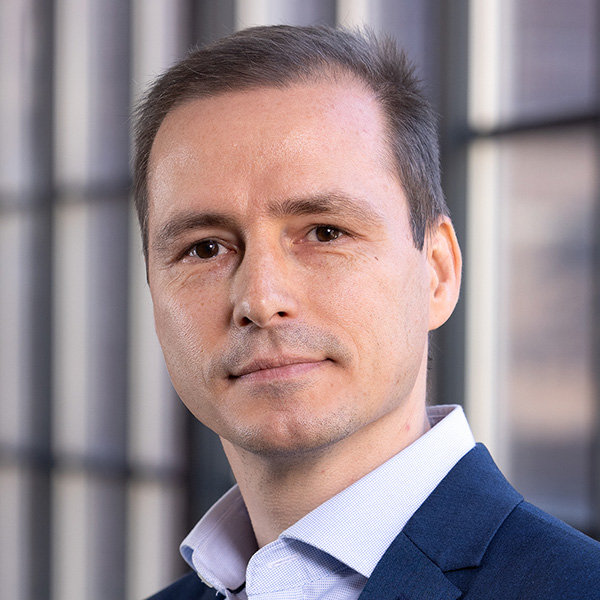
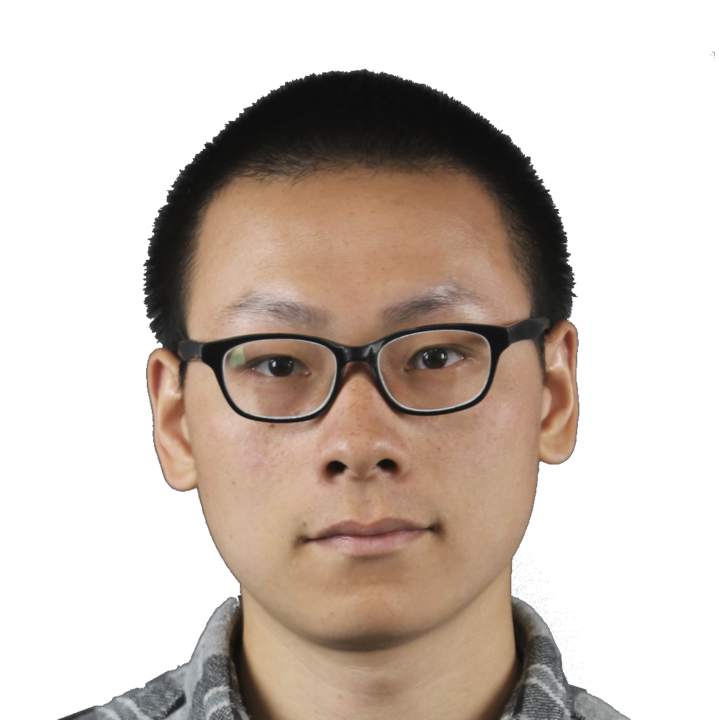
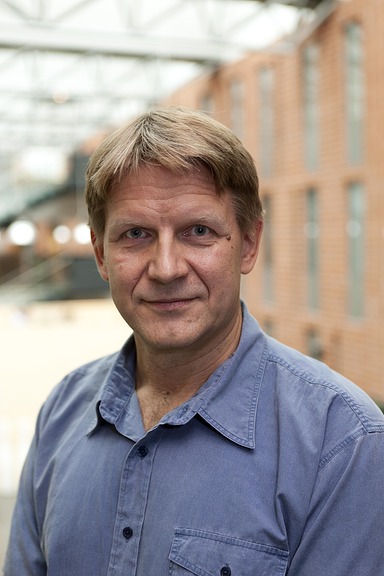
Xi Yu is a Researcher at the Computational Science Initiative of Brookhaven National Laboratory, with expertise in Machine Learning, Artificial Intelligence, and Computational Science. Previously, they served as a Postdoctoral Research Associate (2022–2025) and Research Intern at Mitsubishi Electric Research Laboratories (2021). Ph.D. in Electrical Engineering, University of Florida (2022) M.S. in Electrical Engineering, University of Florida (2019) Their research spans domain generalization, adversarial robustness, information theory, and coral image segmentation, with a focus on applying neural networks and entropy functional methods to diverse challenges in AI and environmental science. Recent publications highlight work on AI training energy efficiency, CLIP-based image-text alignment, and information bottleneck theory. Notable awards include the NYU Tandon Faculty First Look Fellowship (2024) and recognition at ICDM (2021).
Rui Pires da Silva Castro is an Associate Professor in the Department of Mathematics and Computer Science at Eindhoven University of Technology (TU/e), with research spanning signal processing, learning theory, and statistics. He is affiliated with EAISI (Eindhoven Artificial Intelligence Systems Institute) and focuses on non-parametric and high-dimensional statistics, statistical signal/image processing, network inference, and pattern recognition.
Steffen Ventz is an Associate Professor and Medtronic Faculty Fellow in the Division of Biostatistics and Health Data Science at the School of Public Health, University of Minnesota. He is also affiliated with the Masonic Cancer Center. Prior to joining the University of Minnesota, he was a Research Scientist at Harvard University (2018-2022) and an Assistant Professor at the University of Rhode Island (2015-2018). He completed his PostDoctoral training at Harvard T.H. Chan School of Public Health (2013-2015). His educational background includes: PhD in Mathematical Statistics, Bocconi University, Italy, 2013 MPhil in Mathematical Statistics, Bocconi University, Italy, 2010 MA in Mathematical Demography, University of Rostock, Germany, 2007 BS in Mathematical Demography, University of Rostock, Germany, 2005 Dr. Ventz's research focuses on methodological and applied statistics. His methodological interests include Bayesian statistics, statistical decision theory, adaptive sequential statistical methods, and data integration. His applied research spans oncology and infectious diseases, where he develops and applies novel statistical methods to address complex healthcare challenges. His work has significant implications for clinical trial design, particularly in developing more efficient and informative trial methodologies that can accelerate the development of new treatments. His recent publications demonstrate a strong focus on Bayesian methods for clinical trial design, particularly in oncology. He has pioneered approaches for data integration across studies, external control arms, and adaptive trial designs that optimize resource allocation and decision-making. His work often bridges theoretical statistical innovation with practical clinical applications, making significant contributions to both statistical methodology and medical research. Dr. Ventz has received recognition as a Medtronic Faculty Fellow, highlighting his contributions to biomedical research. His work has been published in leading journals across statistics, oncology, and medical research. As an educator, Dr. Ventz has taught courses in survival analysis, linear models, Bayesian statistics, and other biostatistical methods at the University of Minnesota, University of Rhode Island, and Bocconi University. He has also conducted workshops internationally on Bayesian adaptive methods for clinical trials. Dr. Ventz leads a research group at the University of Minnesota that includes several graduate students working on topics such as imaging genetics, transfer learning, causal inference, and clinical trial design. His group is actively recruiting post-doctoral fellows and graduate students interested in biostatistical methodology and applications.
Edgar Dobriban is an Associate Professor of Statistics and Data Science at the University of Pennsylvania's Wharton School, with a secondary appointment in Computer and Information Science. He leads a research group focused on problems at the interface of statistics, machine learning, and AI. Education PhD in Statistics, Stanford University (2017) BA in Mathematics, Princeton University (2012, Summa cum Laude/with Highest Honors) Research Focus His work spans uncertainty quantification, AI safety, robustness, high-dimensional asymptotic statistics, distributed learning, fairness, and COVID-19 testing methodologies. Current projects include developing conformal prediction methods, jailbreaking robustness benchmarks (JailbreakBench), and safety alignment techniques for large language models. Publication Trends Recent papers predominantly address AI safety and reliability, featuring novel methods for uncertainty quantification in language models (calibration, conformal prediction), adversarial robustness (jailbreaking defenses), and distribution shift adaptation. Theoretical foundations blend with practical applications in high-dimensional statistics. Awards and Honors Peter Gavin Hall IMS Early Career Prize (2024) Sloan Research Fellowship (2023) ICSA Outstanding Young Researcher Award (2023) NSF CAREER Award (2021) AFOSR/Army Research Office YIP Awards (2024, 2023) COPSS Emerging Leader Award (2023) Research Leadership He leads the Wharton Statistics and Data Science research group, recruiting PhD students through Statistics & Data Science, CIS, and AMCS programs. Current projects involve collaborations with Penn Medicine and the NSF-Simons Mathematical and Scientific Foundations of Deep Learning initiative. He co-founded the ASA StatsUpAI Special Interest Group and co-organized the Shenzhen Conference on Random Matrix Theory (2023).
Stefan Lüdtke is an Assistant Professor (Juniorprofessor) for Marine Data Science at the University of Rostock (since July 2023) and concurrently serves as a junior research group leader at ScaDS.AI Leipzig . Previously, he was a postdoctoral researcher at the Institute for Enterprise Systems, University of Mannheim (2021-2023) and completed his PhD at the University of Rostock (2016-2021). Education & Career Timeline: 2023 – present: Juniorprofessor (Assistant Professor) for Marine Data Science, University of Rostock 2023 – present: Junior research group leader, ScaDS.AI Leipzig 2021 – 2023: Postdoc, Institute for Enterprise Systems, University of Mannheim 2016 – 2021: PhD studies, University of Rostock Research Interests: Dr. Lüdtke’s research integrates neuro-symbolic machine learning with practical applications spanning heterogeneous tabular data , marine ecology , and underwater technology . His work bridges symbolic reasoning and modern gradient-based learning to tackle complex real-world problems such as hyperspectral imaging for environmental monitoring, knowledge-graph completion, and robust human-activity recognition. Key focus areas include: Design of memory-augmented decision-tree ensembles and gradient-based tree learning. Data-centric evaluation and quality assessment of machine-learning models on tabular and sensor data. Domain adaptation and self-training techniques for activity recognition in changing environments. Application of AI to marine robotics and glacier-dynamics mapping. Publication Trends: Across 40+ peer-reviewed works (2017-2025), Lüdtke demonstrates a steady shift from foundational probabilistic-filtering and lifted-inference methods toward cutting-edge neural-symbolic hybrids and tabular-data-centric learning. Recent high-impact venues show contributions in machine-learning theory , computer vision , and environmental informatics , with a notable uptick in interdisciplinary projects combining AI and marine science. Scientific Awards & Honors: No specific awards are listed in the provided material. Advising & Funding: No named students or explicit grant details are disclosed in the text. Laboratories & Teams: He leads the Marine Data Science junior research group at the University of Rostock and the ScaDS.AI Leipzig junior research group, fostering cross-institutional collaboration in AI and data science.
Dr Tiejun Ma is an Associate Professor at the University of Southampton , specializing in risk analysis and decision-making. His research integrates quantitative modelling with real-time big data analytics to address financial market forecasting challenges. He has secured over £4 million in research grants across 30 projects funded by EPSRC, ESRC, Innovate UK, and industry partners like Huawei. Member of the Centre for Risk Research Member of CORMSIS (Centre for Operational Research, Management Science and Information Systems) Member of the Centre for Digital Finance Dr Ma's research spans cryptocurrencies, behavioral economics, data anonymization, and financial risk management. His work combines applied data science, mathematical modelling, and behavioral analysis to tackle complex uncertain environments. Key projects include: Huawei-funded Failure Detection Algorithm for SDN/NFV EPSRC-funded Modelling the Wisdom of the Crowd Modelling Complex Uncertain Environments with E.V. Analytics Ltd His publications appear in leading journals like the European Journal of Operational Research , Quantitative Finance , and Journal of Computer Science and Technology . He supervises PhD students in Business Studies & Management.
Dr. Guy Hawkins is an Associate Professor in the School of Psychological Sciences at the University of Newcastle, Australia. His research focuses on developing and testing computational and mathematical models of cognitive processes, with a primary interest in decision-making. His work spans from low-level speeded perceptual decisions through to high-level cognition, including statistical reasoning and consumer preferences. Dr. Hawkins earned his PhD in 2013 and his Bachelor of Psychology (Honours 1) in 2008, both at the University of Newcastle. Prior to his current position, he held postdoctoral research positions at the University of Amsterdam's Brain and Cognition Center (2014-2016) and UNSW Sydney (2013-2014). In 2017, he was awarded an Australian Research Council Discovery Early Career Researcher Award (DECRA). His research examines the decision mechanisms and strategies that people use to select consumer products and service options. A key finding is that people make fewer reasoning errors when information is presented as counts ('8 out of 10') rather than probabilities ('80%'). This has practical applications in healthcare, where physicians could describe prognoses using counts to help patients make better-informed treatment choices. His work also investigates how people update their decision caution relative to time constraints and option quality. Dr. Hawkins' recent publications reveal a strong focus on evidence accumulation models, decision-making under time pressure, and the relationship between cognitive processes and neural activity. His research often employs computational modeling approaches to understand the psychological processes underlying decision behavior. 2024 John Keats Early Career Award, Society for Mathematical Psychology 2020 William K. Estes Early Career Award, Society for Mathematical Psychology 2018 Fellow of the Psychonomic Society 2017 Australian Research Council Discovery Early Career Researcher Award 2017 Vice-Chancellor's Award for Early Career Research and Innovation Excellence, University of Newcastle 2013 Clifford T. Morgan Best Article Award, Psychonomic Society Dr. Hawkins collaborates extensively with researchers across the globe, including at universities in Australia, USA, Canada, UK, The Netherlands, and Norway. He is part of the Newcastle Cognition Laboratory and the Functional Neuroimaging Laboratory. His current research projects include investigating cognitive neuroscience frameworks for attentional control, evaluating human-machine interfaces in vehicles, and studying perceptual inference anomalies in schizophrenia.
Aarya Patil is an LSST Discovery Alliance Catalyst Fellow at the Max Planck Institute for Astronomy in Heidelberg, Germany. She specializes in large-scale data-driven studies of the Milky Way's formation and evolution, leveraging computational methods and open-source software development. PhD in Astronomy & Astrophysics (University of Toronto) Key contributor to Astropy project (finance committee member) Active in science education through Astropy Training School and Pan-African School for Emerging Astronomers Research Focus Aarya's work combines galactic astrophysics with statistical computing , particularly through: Functional Principal Component Analysis (FPCA) of stellar spectra Chemical tagging validation via spectral structure analysis Development of open-source tools like fpca.py and delfiSpec Application of Sequential Neural Likelihood (SNL) for stellar parameter inference Scientific Contributions specdims repository implements methods to extract intrinsic spectral features while accounting for systematics, enabling studies of chemical homogeneity in galactic structures like the M67 open cluster. Awards & Recognition Data Sciences Institute Doctoral Student Fellowship (University of Toronto) Google Summer of Code participant (2017) and mentor (2021) Community Engagement Active in open science initiatives, Aarya serves on the Astropy project's finance committee and organizes educational programs bridging data science and astronomy.
Florian Scholze serves as a Researcher at the Faculty of Social and Economic Sciences, Otto-Friedrich University of Bamberg since October 2023, following a similar role at RWTH Aachen University from December 2021. His academic foundation includes a Master of Science in Survey Statistics from Bamberg (2021) and a Bachelor of Arts in Educational, Learning and Training Psychology from the University of Erfurt (2018). Educational background: Master of Science in Survey Statistics (2021), Otto-Friedrich University Bamberg Bachelor of Arts in Educational, Learning and Training Psychology with minor in Educational Science (2018), University of Erfurt His research centers on theoretical challenges in nonstationary time series analysis, specifically investigating weak convergence properties of function-indexed sequential empirical processes and developing bootstrap methodologies for dependent data structures. This work addresses fundamental gaps in statistical theory where traditional stationary assumptions fail, with significant implications for econometric modeling and financial time series analysis. Recent publication trends reveal a concentrated focus on foundational statistical theory, exemplified by his 2024 preprint establishing convergence results under nonstationarity. This research trajectory demonstrates progression toward more complex frameworks like bootstrap uniform functional central limit theorems, indicating deepening specialization in asymptotic methods for nonstandard data processes. Scientific recognition: No awards or fellowships documented Regarding supervision and funding, the available text provides no details about current students, grant acquisitions, or teaching responsibilities. His position within the Chair of Mathematics in Economic Sciences suggests involvement in departmental research activities, though specific resource allocations remain unspecified. Prospective collaborators would engage primarily through theoretical statistics projects within the faculty's research ecosystem. Lab and team context: Scholze is embedded in the Chair of Mathematics in Economic Sciences under Prof. Dr. Anne Leucht, but no dedicated research laboratory or named research group is associated with his work. His collaborative network appears centered around conference participation and co-authorship with established statisticians like A. Steland.
Zhenzhang Ye is a researcher affiliated with the Computer Vision Group at the Technical University of Munich (TUM) , part of the TUM School of Computation, Information and Technology. His work focuses on Photometry-Based Reconstruction , Optimization , and Geometry Processing , with additional interests in Visual SLAM , Deep Learning , and Biomedicine . Research Interests : Optimization techniques, Photometry-Based Reconstruction, and geometric processing for computer vision tasks. Publications : Active contributor to conferences like CVPR, AISTATS, AAAI, and ICCV, with recent works on 3D human motion prediction, hypergradient estimation, and photometric stereo. Contact: yez@in.tum.de
Jinbin Zhang is a Doctoral Researcher at the Department of Computer Science, Aalto University. Their work intersects machine learning and computational linguistics, focusing on extreme multi-label classification and text analysis. Research Interests : Large Language Models and Zero-shot Learning Extreme Multi-label Classification Historical Text Analysis and Genre Detection Publications : 2025: LLM-based zero-shot tagging 2024: Calibration in extreme multi-label classification 2022: Sequential genre change detection in historical texts
Rohit Babbar serves as an Assistant Professor in the Department of Computer Science at Aalto University, Finland, leading a research group dedicated to advancing large-scale machine learning methodologies. His team specializes in tackling computational challenges inherent in extreme classification problems with massive output spaces while ensuring model robustness. His primary research domains encompass large-scale learning systems, extreme multi-label classification architectures, deep learning integration, sequential data processing, and robustness engineering. This work directly addresses industry pain points like computational inefficiency in massive label spaces and model vulnerability to distribution shifts, with applications spanning natural language processing, information retrieval, and recommendation systems. Publication trends reveal a strategic focus on algorithmic innovation for extreme classification, featuring breakthroughs in dynamic sparsity techniques, large language model integration for zero-shot scenarios, and calibration of extreme classifiers. Recent work demonstrates consistent emphasis on computational efficiency through optimized negative sampling, lightweight frameworks like InceptionXML, and specialized metrics for long-tail performance evaluation. Scientific recognition includes: Outstanding Reviewer Award at ACL 2021 Conference (July 2021) for exceptional contributions to computer science peer review As research group leader, Babbar directs collaborative efforts on next-generation classification systems while mentoring emerging scholars in machine learning. His team maintains active partnerships with industry leaders in search and recommendation technologies. The research group operates at the intersection of theoretical machine learning and practical deployment, developing frameworks that balance computational feasibility with predictive accuracy in extreme-scale environments. Current initiatives focus on integrating foundation models with specialized classification architectures while addressing real-world challenges like data sparsity and concept drift.
Martha Shumway is a Professor in the Department of Psychiatry at the University of California, San Francisco (UCSF) School of Medicine . Her research focuses on substance use disorders , trauma-informed care , and health disparities in marginalized populations , particularly women with HIV, justice-involved youth, and unstably housed individuals. She has led multiple NIH-funded studies including R01MD007669 on disparities in acute psychiatric care and R34MH074504 on cognition in patient-reported outcomes. Key Research Areas : Public Health, Substance Abuse, Trauma & Violence, Women's Health, HIV/AIDS, Social Sciences Her recent publications emphasize digital health innovations (e.g., telehepatology, eHealth peer navigation), intervention strategies for at-risk populations , and epidemiological analysis of trauma-related outcomes . She collaborates extensively with UCSF colleagues including Christina Mangurian, Elise Riley, and Marina Tolou-Shams. Grants : NIH R01MD007669, NIH R34MH074504, NIH K01MH064073
Jouko Lampinen serves as the Dean of the School of Science (SCI) at Aalto University, Finland, overseeing academic and research operations across the institution. His professional contact includes the dean-sci@aalto.fi email address and phone number +358505604827. Lampinen maintains an active research profile in computational information technology while fulfilling his administrative leadership role, with expertise grounded in advanced algorithmic and statistical methodologies. His research spans machine learning, Bayesian statistics, neural networks, and their applications in brain imaging (fMRI/MEG) and computer vision. Key interests include probabilistic modeling for emotion recognition, object detection in autonomous systems, and medical diagnostics. His work addresses critical challenges in reproducibility, scalability, and interpretation of complex models, bridging theoretical machine learning with practical neuroscience and robotics applications. This interdisciplinary focus demonstrates consistent innovation from the late 1990s through 2018. Analysis of his recent publications reveals a dominant trend in applying Bayesian methods and neural networks to neuroimaging data, with significant contributions to emotion processing algorithms, brain-computer interfaces, and point cloud analysis for autonomous vehicles. His scholarly output shows increasing emphasis on real-world validation of computational models, particularly in medical diagnostics and human-computer interaction contexts, while maintaining foundational work in statistical learning theory. No scientific awards or honors were documented in the provided information. Details regarding student mentorship, grant funding, or specific research teams/labs are absent from the source material, though his deanship implies strategic oversight of research infrastructure within Aalto University's School of Science.
Mattias Ohlsson is a Visiting Professor at the School of Information Technology , Halmstad University . His research focuses on machine learning and deep learning for analyzing diverse health data, particularly patient trajectory modeling with multimodal approaches. Primary affiliation: IT - Computer Department Collaboration areas: Healthcare sector and industry His work emphasizes explainable AI in clinical contexts, including survival analysis, cardiac event prediction, and cross-domain applications in satellite poverty mapping. Recent projects explore temporal healthcare data analysis using transformer architectures and self-supervised learning . Key article trends include: 2025: AI integration with medical expertise for emergency diagnostics 2024: Survival model evaluation, temporal data challenges, and graft failure prediction 2023: Multi-robot routing optimization and fatty liver disease etiology modeling 2022: Heart failure mortality algorithms and anomaly detection systems Current affiliations include the CAISR Health research group, with technical expertise spanning CNNs, transformers, and robust imputation methods.