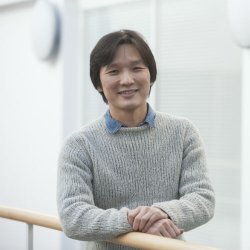
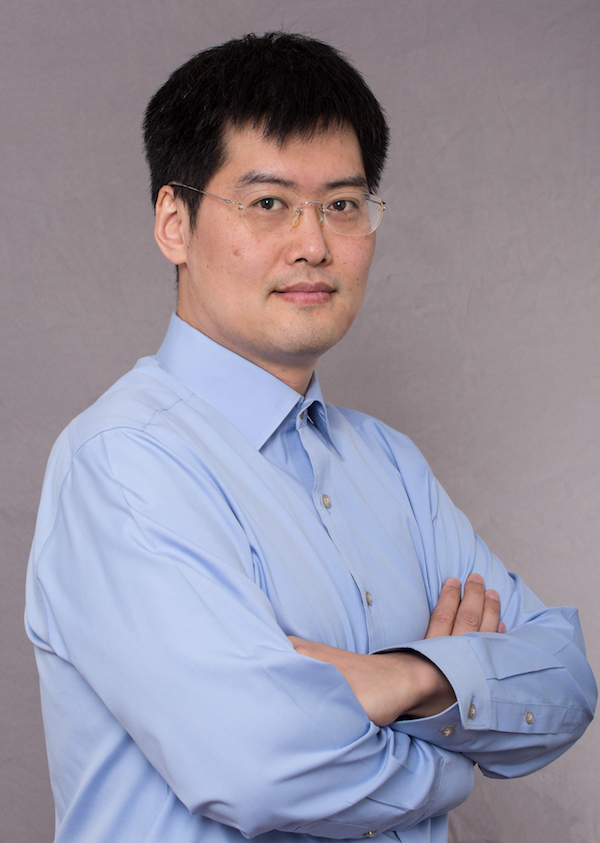
Edith Hemaspaandra is a Professor in the Department of Computer Science at the Rochester Institute of Technology (RIT), located in the Golisano College of Computing and Information Sciences. She holds a BS, MS, and Ph.D. in Computer Science from the University of Amsterdam (the Netherlands). Her research focuses on computational social choice, computational complexity theory, logic complexity, and formal methods. She teaches courses such as CSCI-262/263 (Introduction to Computer Science Theory) and CSCI-664 (Computational Complexity). Her work explores the algorithmic aspects of voting systems, including election manipulation, control, and bribery, with a focus on their computational complexity. She has also contributed to formal methods for automata theory, educational tools like JFLAP extensions, and the study of complexity classes such as LWPP and WPP. Her research bridges theoretical computer science with practical applications in social choice theory and algorithm design. Her grants include an NSF-funded project on computationally protecting elections from manipulation (2011). She actively publishes in top venues like STACS and ISAAC, addressing topics ranging from graph reconstruction to hybrid election models. Though no awards are explicitly listed, her extensive publication record highlights her contributions to theoretical computer science. Her advising and grant activities include collaborative research projects and educational tool development. She is affiliated with RIT’s Department of Computer Science and maintains a personal website and ORCID profile.
Svetlana Lazebnik is a Full Professor and Willett Faculty Scholar in the Department of Computer Science at the University of Illinois at Urbana-Champaign (UIUC), part of the Grainger College of Engineering. She holds a Ph.D. from UIUC (2006) and previously served as an Assistant Professor at the University of North Carolina at Chapel Hill (2007–2011). Her research focuses on computer vision, including generative models for virtual try-on, image stylization, scene understanding, and joint modeling of images and language. She has advised numerous Ph.D. students and postdocs, many of whom now hold prominent academic and industry roles. Education: Ph.D. in Computer Science, UIUC (2006); supervised by Jean Ponce. Research Interests: Her work spans generative adversarial networks (GANs), diffusion models, virtual try-on systems (e.g., Dressing-in-Order, Street Try-On), exemplar-based stylization, and large-scale photo analysis. She has pioneered spatial pyramid matching and contributed to binary code learning for image retrieval. Key Awards: NSF CAREER Award (2008), Microsoft Research Faculty Fellow (2009), Sloan Research Fellow (2013), IEEE Fellow (2021), and the Longuet-Higgins Prize (2016) for her CVPR 2006 paper. Teaching: Recent courses include CS 444 (Deep Learning for Computer Vision), CS 543 (Computer Vision), and a Ph.D. Job Search Seminar. She has also taught at UNC Chapel Hill. Grants & Funding: Supported by NSF, Amazon, AWS, Microsoft, Sloan Foundation, Google, ARO, and Adobe. Notable grants include CCF 2348624 and IIS 1718221. Labs/Groups: Leader in the Illinois CS Vision Group, contributing to collaborative projects on embodied AI, multi-agent systems, and visual-semantic reasoning.
Brad Hayes is an Associate Professor of Computer Science at the University of Colorado Boulder within the College of Engineering and Applied Science, where he directs the Collaborative AI and Robotics (CAIRO) Laboratory. He also serves as Chief Technology Officer at Circadence, leading efforts in developing AI-enabled products for cybersecurity training and assessment. Undergraduate degree from Boston College PhD in Computer Science from Yale University Postdoctoral Associate at MIT Professor Hayes' research focuses on developing techniques that enable autonomous agents and robots to learn from and collaborate with humans safely, reliably, and productively. His work occurs at the intersection of pervasive and personalized artificial intelligence, human-robot teaming, and decision support. He has made significant contributions to collaborative robotics, dependable explainable AI, and imitation learning, with applications spanning manufacturing, healthcare, disaster response, autonomous vehicles, and space exploration. His recent publications reveal a strong emphasis on human-robot interaction, with particular focus on improving predictability in collaborative tasks, developing explainable AI systems that build trust, leveraging augmented and virtual reality for enhanced collaboration, and creating more efficient learning algorithms from human demonstrations. His work increasingly integrates large language models and advanced neural network architectures while maintaining a strong human-centered design approach. Sustainability Recognition (2025) for computational efficiency in motion planning Best Student Paper Runner-up at AAMAS 2022 Nominated for Best Technical Paper at HRI 2024 Best Technical Paper Runner-up at HRI 2019 Hayes has successfully mentored numerous graduate students through the CAIRO Lab, including multiple PhD graduates in 2024 alone. His lab receives funding from various organizations supporting research in human-robot interaction and collaborative AI. He frequently collaborates with industry partners and has established connections with major technology companies through his research and speaking engagements. The CAIRO Lab, under Hayes' direction, is a vibrant research environment focused on turning theoretical concepts into practical applications through hands-on work with real robots and human participants. The lab's research spans multiple domains including manufacturing, disaster response, autonomous vehicles, and space exploration, with a consistent emphasis on safe and effective human-machine teaming.
Prof. Dr. Urs Fischbacher is a full-time Professor at the Department of Economics at the University of Konstanz, holding the Chair of Behavioral Economics. He is also affiliated with the Thurgau Institute of Economics in Switzerland. Research Focus: Behavioral Economics, Experimental Economics, Game Theory, Social Preferences, Public Goods, Trust and Cooperation, Decision-Making under Stress, and Neuroeconomics. Key Projects: Evaluation of educational interventions in Colombia, analysis of leadership selection in inequality perception, and studies on social pension targeting in Bangladesh. Academic Contributions: His recent articles focus on super-additive cooperation mechanisms, responsibility attribution in decision chains, stress-induced prosociality, and diversity policy impacts. Work spans interdisciplinary collaborations with psychologists and neuroscientists. Contact: Based at the University of Konstanz (Room F315) and Thurgau Institute of Economics. Office hours require appointment via email.
Lane A. Hemaspaandra (formerly Hemachandra) is a Professor at the Department of Computer Science, University of Rochester, New York. His academic career spans over three decades, with research focusing on computational complexity theory (especially structural complexity) and computational social choice theory . He holds a Ph.D. in Computer Science from Cornell University (1987) and has been recognized with prestigious awards such as the Friedrich Wilhelm Bessel Research Award from the Alexander von Humboldt Foundation and NSF Presidential Young Investigator (1989–1995). Education: B.S. in Computer Science and Mathematics & Physics, Yale University (1981) M.S. in Computer Science, Stanford University (1982) M.S. in Computer Science, Cornell University (1984) Ph.D. in Computer Science, Cornell University (1987) Hemaspaandra's research bridges theoretical computer science with political science and economics , particularly analyzing the computational complexity of election systems. His work includes foundational studies on Carroll/Dodgson voting , control complexity , and manipulative attacks in single-peaked societies. He has pioneered the use of complexity as a shield against election manipulation and control. The 15 most recent articles (2021–2024) span topics like backbone opacity , electoral control dichotomies , iterative constant-setting for complexity , and online bribery in sequential elections . These works often intersect with parameterized complexity , multi-agent systems , and game-theoretic models . Scientific Awards: AAAI Senior Member (2020–...) ACM Distinguished Scientist (2007–...) Alexander von Humboldt Foundation Renewed Research Stay (2018–2019) SIGACT Distinguished Service Prize (2013) Edward Peck Curtis Award for Undergraduate Teaching (2012) Hertz Foundation Fellowship (1982–1987) He has advised 15 Ph.D. students and postdocs, including prominent researchers like Prof. Piotr Faliszewski (AGH University) and Dr. Curtis Menton (Google). His NSF-funded projects explore complexity-theoretic approaches to election systems, and he has collaborated with institutions in Germany, Japan, and Poland.
Laura Alvarez is a Junior Chair (Tenure Track) at the University of Bordeaux since 2022, conducting research at the Paul Pascal Research Center (CRPP), a joint CNRS-University of Bordeaux unit. Her office is located at B-224, 115 Avenue du Dr Albert Schweitzer, 33600 Pessac, France, with contact via (+33) 05 56 84 30 27 or laura.alvarez-frances@u-bordeaux.fr. She leads the BIO 2.0 team's research on active matter and colloidal systems. Her educational trajectory includes: PhD at University of Bordeaux and KU Leuven (2013-2016) under Prof. MP Lettinga and Dr. Eric Grelet Postdoctoral research at ETH Zurich (2017-2021) with Prof. Lucio Isa SNSF Spark postdoctoral fellowship (2020-2021) Her research centers on Active Matter , Chemical Communication , and Bio-inspired microsystems , investigating active liposome design, colloidal-lipid membrane interactions, and collective colloidal behavior. Key methodologies include optical tweezers and microfluidics for studying enzymatic particle navigation and colloidal lattice assembly. Her publication record (2017-2023) reveals a strong focus on programmable active colloids and microfluidic applications , with significant contributions to artificial microswimmers and reconfigurable systems appearing in Nature Communications, PNAS, and Physical Review Letters. Emerging trends show increasing emphasis on biomedical applications of active matter. Key recognitions include: Spark postdoctoral grant (SNSF, 2020) IdEx PhD fellowship (2013) She secured major grants including ANR JCJ Project MYMESYS (2023) and France-Berkeley Fund (2023), while her mentoring role involves graduate student supervision through University of Bordeaux's tenure-track framework. As BIO 2.0 team lead at CRPP, she directs experimental work on active colloidal particles using microfluidic platforms and optical manipulation, maintaining active collaborations with ETH Zurich, University of Bordeaux, and international partners across Europe.
Dr Lin Yue is a Lecturer at the University of Adelaide , affiliated with the Faculty of Sciences, Engineering and Technology and the School of Computer and Mathematical Sciences . She earned her PhD from Jilin University, with part of her doctoral studies completed as a joint PhD candidate at the University of Queensland. Past affiliations: Northeast Normal University, University of Queensland, University of Newcastle Her research focuses on Sequential Data Analysis and its applications in Medical Data Analytics, EEG Data Analysis, Brain-Computer Interfaces, Social Media Data Analytics, and Sentiment Analysis . She collaborates with academia, government, and professional organizations, supported by internal and external research grants. Dr Yue is eligible to supervise Masters and PhD students as a Co-Supervisor and contributes to advancing data mining and machine learning techniques in healthcare and time series analysis.
Dr. Kevin G. Jamieson is a faculty member at the University of Washington , School of Computer Science , with prior affiliations at the University of California, Berkeley (Department of Electrical Engineering and Computer Sciences) and the University of Wisconsin-Madison (Department of Electrical and Computer Engineering). His work spans machine learning, reinforcement learning, bandit algorithms, and robotics. Current university: University of Washington Academic rank: Professor His research focuses on: Bandit algorithms and sequential decision-making Optimization in non-stationary environments Reinforcement learning with real-world applications Multi-agent systems and game theory Efficient data selection for multimodal learning Human-in-the-loop AI systems Recent publications highlight his expertise in pure exploration strategies, robotic manipulation, and bridging simulation-to-reality gaps in RL. He has mentored numerous collaborators, though formal student advising details are not explicitly listed here. No scientific awards are mentioned in the provided data.
Peng Zhou is an Assistant Professor at the School of Advanced Engineering, The Great Bay University , and the Principal Investigator of the Embodied Manipulation Intelligence (EMAIL) Robotics Lab . His research integrates robotics, machine learning, and computer vision, with a strong focus on deformable object manipulation, robot perception, and task-motion planning. Education: Ph.D. in Robotics, The Hong Kong Polytechnic University (Supervised by Dr. David Navarro-Alarcon) Postdoctoral Research Fellow, The University of Hong Kong (Advised by Dr. Pan Jia) Exchange Ph.D. Student, KTH Royal Institute of Technology (Supervised by Prof. Danica Kragic) Research Interests: Dr. Zhou's work spans robotics , machine learning , and computer vision , with specialized expertise in deformable object manipulation , robot perception and learning , and task and motion planning . His lab, EMAIL, pioneers solutions for robotic manipulation of soft and deformable materials. Scientific Awards & Honors: 2024 : Track 3 Champion, Zhuhai International Dexterous Manipulation Challenge 2023 : IEEE R10 Outstanding Volunteer Award 2022 : Outstanding Young Researcher Award, National Engineering Research Center 2022 : Best AI Implementation Award, Hong Kong AI Open Competition 2022 : IEEE MGA Young Professional Achievement Award Editorial & Leadership Roles: Dr. Zhou serves as an Associate Editor for IEEE Robotics and Automation Letters and has organized key workshops like the IROS 2025 Workshop on Contact and Impact-aware Manipulation . He is also a Guest Editor for special issues in Electronics and Frontiers in Robotics and AI .
Alexander P. Frankel is the Isidore Brown and Gladys J. Brown Professor of Economics at the University of Chicago Booth School of Business. His research focuses on mechanism design, game theory, and contracting, with applications across various economic domains. Previously, he worked at Yahoo! Research and has published in top economics journals including the American Economic Review and Journal of Political Economy. Education: BS in Mathematics from the University of Chicago BA in Economics from the University of Chicago PhD in Economic Analysis and Policy from Stanford Graduate School of Business Frankel specializes in information economics, mechanism design, and contract theory. His work explores how information structures affect economic outcomes, with applications to delegation, signaling, and strategic communication. He has made significant contributions to understanding how information is designed and used in strategic settings, particularly in areas such as R&D investment, admissions policy, and central banking. Frankel's publication record demonstrates a consistent focus on information design and its applications across diverse contexts. His work spans theoretical developments in signal structures and information hierarchies to practical applications in education policy, corporate decision-making, and monetary policy. The research shows increasing sophistication in modeling information environments and their economic consequences, with recent work addressing contemporary issues like test-optional admissions while maintaining strong theoretical foundations. As a faculty member at Chicago Booth, Frankel teaches Microeconomics (33001) and The Economics of Contracts (33931). His research has received attention in major media outlets including the New York Times, Chicago Tribune, and Freakonomics blog, indicating the broader relevance of his theoretical work to practical economic issues.
Ozgur S. Oguz is an Assistant Professor at Bilkent University , Faculty of Computer Engineering, and the lead of the Learning for Intelligent Robotic Agents (LiRA) Lab . His research focuses on enhancing autonomous agents' capabilities in learning, reasoning, and planning, particularly for robotics applications. Education : PhD in Computer Science from TU Munich , studies at University of British Columbia (UBC) and Koç University , postdoctoral work at University of Stuttgart and Max Planck Institute for Intelligent Systems . His research explores algorithms for autonomous decision-making, with emphasis on deep learning , reinforcement learning , and robotics . Recent work includes diffusion-based reinforcement learning , hindsight experience prioritization , and hybrid manipulation planning , often addressing challenges in sequential task execution and tactile-based control. Key trends in his publications revolve around robotic manipulation , motion planning , and human-robot interaction . He has contributed to conferences like NeurIPS , ICRA , IROS , and journals such as IEEE TRO and Scientific Reports .
Dr. Shulin (Stanley) Chen is a Lecturer at the University of Technology Sydney (UTS), specializing in antennas and applied electromagnetics. He holds a PhD from UTS (2019) and has held postdoctoral and visiting scholar positions at UTS and City University of Hong Kong. His research focuses on metasurfaces, reconfigurable antennas, and machine learning-driven design, supported by prestigious awards like the DECRA (2025) and IEEE AP-S Fellowship (2022). He serves as an Associate Editor for IEEE Transactions on Circuits and Systems II and has authored over 75 publications. His work spans advanced beam-forming antennas for 6G, frequency-controlled polarization systems, and intelligent metasurface design. Education: B.S. in Electrical Engineering, Fuzhou University (2012) M.S. in Electromagnetic Field & Microwave Technology, Xiamen University (2015) PhD in Electrical Engineering, UTS (2019) Research Interests: Metasurfaces for electromagnetic wave manipulation Reconfigurable antennas for 6G networks Machine learning in antenna design Joint communication and sensing systems Awards & Grants: DECRA (2025), TICRA-EurAAP Travel Grant (2022) Lead projects on intelligent redirecting surfaces and flood sensing (funded by Telstra, NSW Department of Planning, etc.) Labs & Teams: Active in UTS's Global Big Data Technologies Centre and collaborates with industry partners like XPOWER AI and TPG Telecom.
Naratip Santitissadeekorn is a Senior Lecturer in Data Assimilation at the School of Mathematics and Physics, University of Surrey, where he is affiliated with the Mathematics at the Interface Group. His work bridges mathematics, data science, and real-world applications in urban planning, crime analysis, and geophysical fluid dynamics. Dr. Santitissadeekorn received his PhD from Clarkson University in 2008, with a dissertation titled "Transport Analysis and Motion Estimation of Dynamical Systems of Time-Series data." His doctoral research was supervised by Professor Erik Bollt. Following his PhD, he completed two significant postdoctoral positions: from 2008-2011 at the University of New South Wales, Sydney, Australia, working with Professor Gary Froyland on numerical techniques for finite-time Lagrangian coherent set identification, with applications to delimiting the polar vortex and Agulhas rings; and from 2011-2014 at the University of North Carolina-Chapel Hill, working with Professor Chris Jones on data assimilation projects. Dr. Santitissadeekorn's research focuses on inverse problems and data assimilation in geophysical fluid dynamics, the applications of Lagrangian Coherent Structures (LCS), and computational ergodic theory. His work combines theoretical mathematics with practical applications, particularly in urban growth modeling and crime analysis. He has developed innovative methods for identifying coherent structures in fluid flows, estimating transition probabilities from spatiotemporal data, and creating data-driven frameworks for urban expansion scenarios. His research demonstrates how mathematical techniques can be applied to solve real-world problems in environmental science, urban planning, and public safety. An analysis of Dr. Santitissadeekorn's recent publications (2020-2023) reveals a strong focus on urban expansion modeling and network analysis. His work on urban growth has evolved from basic cellular automata models to sophisticated frameworks that manage uncertainty through parameter clustering and growth mode identification. His research on Hawkes processes has advanced ensemble-based filtering techniques for analyzing count data in large networks. These publications demonstrate a consistent pattern of applying mathematical rigor to complex spatiotemporal phenomena, with increasing emphasis on data-driven approaches and practical applications. Dr. Santitissadeekorn has made significant contributions to data assimilation methods, particularly through the development of the extended Poisson-Kalman filter (ExPKF) for urban crime modeling. His teaching includes courses in Algebra and Bayesian Statistics, reflecting his expertise in both theoretical and applied mathematics. While specific awards are not mentioned in the available information, his extensive publication record in high-impact journals demonstrates recognition within his field. Dr. Santitissadeekorn's research has practical implications for urban planning and law enforcement. His work on urban expansion models helps planners understand different growth trajectories, while his crime modeling research contributes to improved police patrolling strategies. His interdisciplinary approach, combining mathematics, computer science, and domain-specific knowledge, positions him at the forefront of applying data science to societal challenges.
Xuming He is an Associate Professor at the School of Information Science and Technology (SIST), ShanghaiTech University, where he leads the PLUS Lab. His research spans computer vision and machine learning with a focus on developing algorithms that operate effectively under limited supervision and evolving data conditions. His core research interests include weakly-supervised and few-shot learning for scenarios with sparse annotations, continual learning frameworks for knowledge retention during sequential task acquisition, semantic segmentation techniques for scene understanding, and multimodal vision-language representations. He emphasizes interpretable machine learning to build transparent AI systems capable of human-understandable reasoning, addressing critical challenges in model trustworthiness and deployment reliability. Recent publications reveal strong trends toward novel class discovery in long-tailed recognition scenarios, physics-informed generative modeling for scientific applications, and robust segmentation under distribution shifts. His work increasingly integrates large language models for multimodal reasoning while maintaining focus on efficiency in resource-constrained environments like robotic grasping and medical imaging analysis. He actively mentors students, having supervised Qian He to PhD completion and Chuanyang Hu to Master's degree in 2023. He welcomes prospective graduate students through ShanghaiTech's Computer Science & Technology program and offers undergraduate research projects requiring minimum six-month commitments. The PLUS Lab under his direction drives innovation in learning under supervision constraints, with recent work spanning medical tumor analysis, cross-view geolocation, photonic computing, and semiconductor design verification. The lab's research bridges theoretical advances with practical applications across healthcare, robotics, and scientific discovery domains.
Prof. Hans Peters is Professor Emeritus of Mathematical Economics at Maastricht University's School of Business and Economics, and Honorar Professor at Rheinisch-Westfälische Technische Hochschule (RWTH) Aachen. His primary research focuses on game theory and social choice theory, with notable contributions to mechanism design, cooperative game theory, and axiomatic analysis. He served as President of the Society for Social Choice and Welfare (SSCW) from 2018-2020, and holds fellowships from the Society for the Advancement of Economic Theory (SAET) and the Game Theory Society (GTS). He is an advisory editor for Social Choice and Welfare , Games and Economic Behavior , and Mathematical Social Sciences , and leads the Springer Theory and Decision Library Series C . His recent work explores division problems with single-dipped preferences, core games, and strategic-proof rules in multidimensional domains. Key contributions include foundational studies on nucleolus computation, network power indices, and sequential claim mechanisms. His research bridges theoretical economics with practical applications in operations research and social choice, emphasizing axiomatic rigor and real-world relevance.