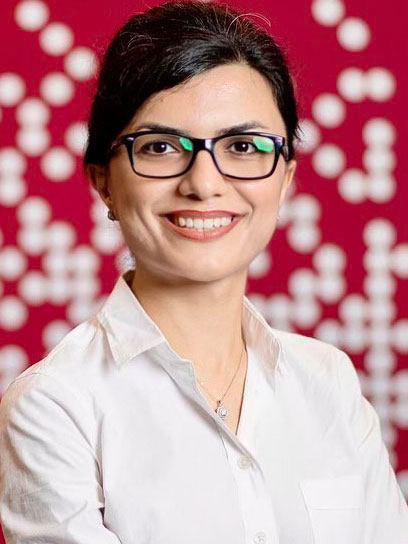
Sheila A. McIlraithView profile
Professor
Sheila A. McIlraith is a Professor in the Department of Computer Science at the University of Toronto, where she leads research at the intersection of artificial intelligence, knowledge representation, and formal methods. With an extensive publication record spanning over three decades, she has made significant contributions to planning, reinforcement learning, and epistemic reasoning in AI systems. Her research interests focus on developing formal frameworks for AI planning and decision-making, with particular emphasis on interpretable AI, reward specification in reinforcement learning, and multi-agent systems. She has pioneered work in reward machines for reinforcement learning, epistemic planning, and the application of formal methods to ensure safety and fairness in AI systems. Her recent work bridges symbolic AI with deep learning approaches to create more transparent and controllable intelligent agents. Analysis of her recent publications reveals a strong trend toward integrating formal specification languages with machine learning, particularly in reinforcement learning where she develops methods for specifying complex tasks using linear temporal logic and related formalisms. Her work increasingly addresses ethical considerations in AI, including fairness in sequential decision making and the impact of ethics education in computer science curricula. McIlraith has mentored numerous PhD students who have become prominent researchers in AI, including Rodrigo Toro Icarte, Toryn Q. Klassen, and Andrew C. Li. Her collaborative network spans major AI research institutions worldwide, with frequent collaborations with researchers at institutions including the Vector Institute and international universities. Her research group explores the theoretical foundations of AI planning while developing practical applications in areas including robotic assistance, ethics-aware AI, and interpretable decision systems. Current projects focus on language-guided reinforcement learning, multi-agent verification, and the development of tools for responsible AI development and deployment.