Ruben Snellings is a Professor at the KU Leuven , affiliated with the Institute for Sustainable Metals and Minerals and the Division of Geology . His research focuses on sustainable cementitious materials, mineral carbonation, and valorization of industrial by-products in construction. He actively contributes to RILEM technical committees, including TC 309-MCP and TC 267-TRM, establishing terminology and testing protocols for carbonation-based construction products. Research Highlights Advancing low-carbon binders through co-calcination of waste materials Investigating hydration kinetics and reactivity of supplementary cementitious materials (SCMs) Developing CO2 mineralization techniques for sustainable construction Technical Contributions Co-developing standardized R3 reactivity tests for SCMs Leading interlaboratory validation studies for binder performance Environmental Focus Reducing environmental leaching via carbonation of metallurgical slags Optimizing circular economy approaches for concrete recycling
Prof. Tom Van Gerven is a chemical engineering specialist at KU Leuven's Process Engineering for Sustainable Systems (ProcESS) group. His research focuses on process intensification using alternative energy forms (ultrasound, microwaves, light) for sustainable metallurgy, mineral carbonation, and solvent extraction applications. He leads innovations in low-grade ore processing and carbon capture technologies. Key Research Areas: Process intensification, green metallurgy, CO₂ utilization, and advanced crystallization techniques Recent Work: 2025 publications highlight reactor optimization, mineral carbonation of industrial residues, and acoustic/microwave-assisted separations Technical Expertise: CFD modeling, sonochemical reactors, ionic liquid extraction, and environmental impact analysis
Igor Di Marco is a Researcher at Uppsala University's Department of Physics and Astronomy, specializing in Materials Theory. He has maintained continuous research activity at Uppsala since 2009, initially as a postdoctoral fellow and subsequently as a researcher, with a temporary leave in 2017 to lead a group at the Asia-Pacific Center for Theoretical Physics in South Korea. Dr. Di Marco earned his PhD in condensed matter theory from Radboud University of Nijmegen in 2009. His academic trajectory has focused on computational approaches to understanding complex quantum materials, particularly those exhibiting strong electron correlations. His research centers on computational physics and condensed matter theory , with emphasis on developing methods to determine electronic and magnetic properties of strongly correlated materials . Dr. Di Marco is one of the principal developers of the all-electron DFT code RSPt (a Sweden-USA-France collaboration), which utilizes the full-potential linearized muffin-tin orbitals method. His expertise spans density-functional theory (DFT) , dynamical mean-field theory (DMFT) , and their integration (DFT+DMFT). Current research extends to X-ray absorption spectroscopy (XAS) and resonant inelastic X-ray scattering (RIXS) . Analysis of his recent publications reveals a consistent focus on electronic correlations in quantum materials, particularly in kagome metals, van der Waals magnets, and complex alloys. His work bridges theoretical method development with practical materials applications, frequently examining magnetic properties and electronic structure calculations across diverse material systems. Dr. Di Marco has made significant contributions to computational methodologies for strongly correlated electron systems, including the development of the DFT+DMFT framework within RSPt featuring full self-consistency over electron density and self-energy. His research projects have addressed magnetic properties of transition metals, excitation spectra of metal oxides, theoretical frameworks for lanthanides, and prediction of novel 2D materials.
Dr. Ng Wen Cai is a Postdoctoral Research Fellow in the School of Engineering at Monash University Malaysia. She holds a PhD in Chemical Engineering from Monash University, conferred in 2022, following a Bachelor of Engineering (Hons) in the same field in 2017. Her research is centered on advancing sustainable energy technologies, particularly solar-driven green hydrogen production. Her research interests focus on renewable energy systems, with an emphasis on solar hydrogen and nanotechnology. Specifically, she investigates the rational design of nanostructured semiconductor-based photoelectrodes for efficient photoelectrochemical water splitting. Her work aims to develop high-performance materials and device architectures that enhance solar-to-hydrogen conversion efficiency, contributing to a low-carbon economy. The recent publications highlight a strong trend in engineering advanced photoelectrode materials—such as perovskite-MOF hybrids, organic-inorganic heterostructures, and plasmonic semiconductor composites—for solar fuel generation. The research spans materials synthesis, interfacial charge dynamics, and scalable device integration, reflecting a multidisciplinary approach bridging chemical engineering, materials science, and sustainable energy technology. Scientific Awards: Young Scientists Network–Academy of Sciences Malaysia Chrysalis Award (2022) Dr. Ng is the primary chief investigator on an active research project titled Advancing Malaysia’s Green Hydrogen: Data-Driven Strategies for Circular Economy Integration and Sustainable Implementation , indicating her leadership in emerging energy research. She has no listed advisees or students. Her work contributes to UN Sustainable Development Goals related to affordable and clean energy. She is actively involved in cutting-edge research within the School of Engineering at Monash University Malaysia, focusing on photoelectrochemical systems and working closely with collaborators such as Prof. Chong Meng Nan. Her lab efforts are directed toward constructing scalable and efficient solar-driven hydrogen production devices.
Caglar Oskay is an Associate Professor in the Department of Civil and Environmental Engineering at Vanderbilt University, where he has held academic positions since 2006. He specializes in multiscale computational mechanics, materials modeling, and failure analysis of heterogeneous materials. His research integrates advanced numerical methods such as the Extended Finite Element Method (XFEM), reduced-order homogenization, and variational multiscale enrichment to study composite materials, viscoelastic systems, and polycrystalline structures under extreme conditions. Dr. Oskay has been recognized with awards including the Chancellor Faculty Fellow (2016–2018) and ASCE ExCEEd Fellow (2011). Education: PhD (Civil Engineering, Rensselaer Polytechnic Institute, 2003), M.S. (Civil Engineering, Rensselaer Polytechnic Institute, 2000), M.S. (Applied Mathematics, Rensselaer Polytechnic Institute, 2000), B.S. (Civil Engineering, Middle East Technical University, 1998). Research focuses on predictive computational models for material behavior under mechanical, thermal, and chemical loading. Key areas include fatigue life prediction, damage accumulation in composites, and coupled transport-deformation phenomena. Recent work addresses multiscale modeling of nickel-based superalloys, polyurea-coated composites, and energetic materials under dynamic loading. His contributions span 100+ peer-reviewed publications, including seminal studies in International Journal for Multiscale Computational Engineering and Acta Materialia . His articles emphasize multiscale frameworks for heterogeneous materials, with trends in reduced-order methods, uncertainty quantification, and interdisciplinary applications (e.g., biology, energy systems). Awards highlight his educational and technical leadership. Advising and grants include collaborative projects on composite durability and energetic material simulation. Dr. Oskay leads the Multiscale Computational Mechanics Lab (MCML), advancing computational tools for engineering materials research.
Lt Col Darrell S. Crowe, PhD, is an Assistant Professor of Aerospace Engineering in the Department of Aeronautics and Astronautics at the Air Force Institute of Technology (AFIT), part of the Graduate School of Engineering and Management at Air University. He is an active military officer and educator contributing to advanced aerospace research and graduate education within the U.S. Air Force. Education: PhD in Aeronautical Engineering, Air Force Institute of Technology, 2014 MS in Aeronautical Engineering, Air Force Institute of Technology, 2008 BS in Aerospace Engineering, Texas A&M University, 2003 Dr. Crowe's research focuses on propulsion aerodynamics, computational fluid dynamics (CFD), supersonic and hypersonic flows, jet interaction effects, and store separation dynamics. His work involves high-fidelity simulations of exhaust nozzles, thermal distortion modeling, and active flow control, often in collaboration with military and aerospace applications. He investigates complex phenomena such as hot streaks in serpentine nozzles, film cooling, and cavity acoustics, contributing to improved aircraft and propulsion system design. His recent publications demonstrate a strong trend in advancing CFD methodologies for defense-related aerospace problems, particularly in propulsion-airframe integration, weapon bay aerodynamics, and supersonic/hypersonic flow control. The articles span both experimental validation and numerical modeling, emphasizing accuracy, turbulence modeling, and multi-physics coupling in extreme environments. Scientific Awards and Honors: AFIT Dean's Distinguished Teaching Professor, 2023 AIAA Associate Fellow, 2020 Air Force Meritorious Service Medal (2018, 2021) Joint Service Commendation Medal, 2017 Southwestern Ohio Council for Higher Education Faculty Excellence Award, 2015 Field Grade Officer of the Quarter, Air University, 2015 Air Force Commendation Medal, 2011 Company Grade Officer of the Quarter (2005, 2009) Air Force Achievement Medal, 2006 Dr. Crowe advises MS thesis students in aerospace engineering and teaches graduate-level courses in his domain. He has been involved in flight testing and simulation projects, often funded through U.S. Air Force research programs. His work supports critical defense capabilities in aircraft performance, propulsion efficiency, and weapon system integration. He is actively involved in professional organizations such as the American Institute of Aeronautics and Astronautics (AIAA) and contributes to major conferences and workshops, including the Propulsion Aerodynamics Workshops. His research is conducted within AFIT’s advanced simulation and modeling environment, leveraging tools like Kestrel and BCFD for high-fidelity analysis.
Prof. Dr.-Ing. David E. Rival is a full Professor at the Institute of Fluid Mechanics within the Faculty of Mechanical Engineering at Technische Universität Braunschweig. His research spans interdisciplinary domains at the intersection of experimental fluid dynamics, data assimilation, network science, and bio-inspiration, with applications in renewable energy systems and bio-mimetic engineering. Former Associate Professor at Queen’s University, Canada Doctoral work on dragonfly flight aerodynamics at TU Darmstadt Alexander von Humboldt research fellowship recipient (2020) Postdoctoral associate at MIT studying shape morphing in nature Research chair at University of Calgary on atmospheric sensing His work focuses on unsteady flow phenomena, bio-inspired design, and advanced measurement techniques. Key projects include: Co-chairing NATO AVT task group on flow separation International collaborations with AFOSR, NATO, and ONR Development of cost-effective flow-tracking sensors for natural environments Investigations into shear-thinning suspension dynamics and vortex ring behavior Recent publications demonstrate a strong emphasis on: Large-scale particle tracking with natural light and UAVs Machine learning for sparse data reconstruction in fluid flows Soft coastal protection methods and ecohydraulics Advanced sensing techniques for atmospheric and industrial applications Scientific Awards: 2020: Alexander von Humboldt Research Fellowship Notable research achievements include textbook authorship on Biological and Bio-Inspired Fluid Dynamics (Springer) and media features in The Nature of Things (David Suzuki) and Discovery Channel’s Daily Planet .
Bruno Debaenst is a Senior Lecturer in Legal History and Associate Professor at the Department of Law, Faculty of Law, Uppsala University, where he has been based since 2018. A Belgian (Flemish) scholar, he brings a comparative perspective to his work, focusing on both Belgian and Swedish legal history. His academic training spans history (1999), law (2003), and criminology (2006), and he practiced as a lawyer in Ghent from 2003 to 2008. His research is centered on the history of social law, with a particular emphasis on the juridification of workplace accidents in 19th-century Belgium, the development of modern welfare states, and the role of international organizations as catalysts for legal change. He also explores broader themes such as Belgian legal culture, language in nation-building, and the digital revolution from a legal historical viewpoint. The most recent publications highlight a diverse range of interests, from the artistic representation of industrial disputes and the history of environmental law in Stockholm, to the epistemic communities that preceded the ILO and the 1974 Swedish Constitution. His work often bridges comparative and transnational perspectives, analyzing legal developments across Europe and beyond. Bruno Debaenst is deeply committed to teaching, offering courses in legal history, comparative legal history, and legal futurology, and supervising numerous student theses. He has also led a popular doctoral course on legal history for PhD students in law. His international collaborations include work with the Centre d'histoire judiciaire in Lille, France.
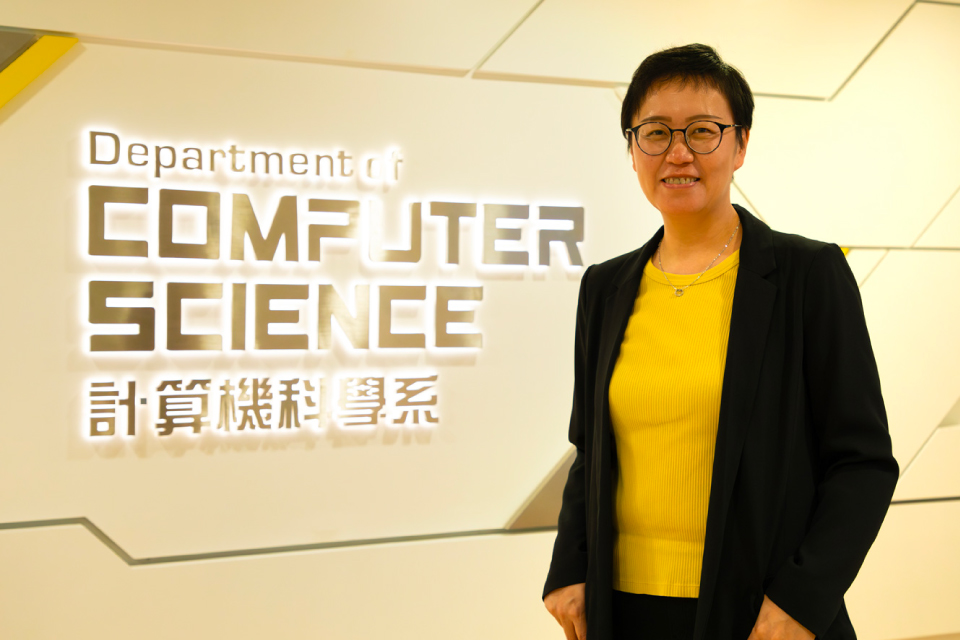
Professor Li Chen is a full Professor and Associate Head (Research) in the Department of Computer Science at Hong Kong Baptist University (HKBU), with an affiliate appointment at the Academy of Wellness and Human Development. She leads the Positive Intelligence Lab , focusing on intelligent technologies for human well-being. Her research spans conversational AI, explainable AI, recommender systems, and human-computer interaction. Education: PhD in Computer Science, Swiss Federal Institute of Technology in Lausanne (EPFL), Switzerland (Nominee for Best PhD Thesis Award) Master in Computer Software and Theory, Peking University, China Bachelor in Computer Science, Peking University, China Her research interests revolve around personalized conversational and explainable AI, with applications in entertainment, education, e-commerce, and mental well-being. She has published over 150 papers in top venues including ACM TOIS, IJHCS, CHI, SIGIR, AAAI, RecSys, and UMAP . Her work has been recognized with awards such as the RecSys Best Student Paper Award (2024), CHI Honourable Mention (2022), and multiple best paper awards at UMAP and UMUAI. The most recent publications reflect a strong trend toward fair, explainable, and user-centric recommender systems , with increasing integration of large language models , mental health applications , and conversational agents . Her research emphasizes user feedback, negative sampling techniques, and evaluation frameworks grounded in real user behavior. Scientific Awards & Recognition: President’s Award for Outstanding Performance in Teaching (Individual), HKBU (2024/25) President’s Award for Outstanding Performance in Research Supervision (2022/23) World’s Top 2% Most-Cited Scientists, Stanford University (2021–2024) ACM Senior Member (2015) RecSys’24 Best Student Paper Award CHI’22 Honourable Mention Award UMAP’20 Best Student Paper Award UMUAI 2018 Best Paper Award THE Awards Asia 2021 Excellence and Innovation in the Arts (Co-I) Professor Chen is actively involved in mentoring PhD and Master’s students such as Wanling Cai and Yuhan Zhao, who have co-authored award-winning papers. She has secured research funding through grants like the HKBU IRCMS Project. Her editorial leadership includes serving as Co-Editor-in-Chief of ACM Transactions on Recommender Systems (TORS) , Associate Editor for ACM TiiS , and Editorial Board Member for UMUAI . She has chaired major conferences including ACM RecSys’23 (General Co-Chair), RecSys’20 (Program Co-Chair), and UMAP’18 (Program Co-Chair). She leads the Positive Intelligence Lab , which conducts interdisciplinary research on AI for well-being. The lab has developed datasets like the Intent Annotation of Recommendation Dialogue (IARD) and focuses on user-centric AI design, mental health chatbots, and personalized recommendation interfaces.
Dr. Tim Lynar serves as a Senior Lecturer at the University of New South Wales Canberra within the School of Systems & Computing. With a strong background in both academic research and industry practice, he has established himself as a leading figure in cyber security and computer science. His work bridges theoretical research with practical applications, focusing on innovative solutions for complex computing challenges across multiple domains including IoT security, machine learning applications in cyber defense, and high-performance distributed systems. Dr. Lynar's research interests span a wide spectrum of cyber security applications, with particular emphasis on the application of machine learning techniques to security challenges and the innovative use of epidemiological approaches to understand and combat cyber threats. His work in modeling & simulation, statistical & data analysis, network & systems administration, and high-performance distributed computing demonstrates his commitment to developing comprehensive security frameworks that address evolving threats in digital environments. The interdisciplinary nature of his research connects computer science with biological modeling approaches, creating novel methodologies for understanding security vulnerabilities. Analysis of Dr. Lynar's recent publications reveals a strong trend toward applying advanced machine learning techniques to cyber security challenges, particularly in IoT environments. His work increasingly integrates epidemiological models with security frameworks, creating a unique approach to threat detection and mitigation. The research spans practical applications in network security, drone systems, and AI security, demonstrating both theoretical depth and real-world applicability. A notable pattern is the consistent application of cutting-edge deep learning architectures like Vision Transformers and Variational Autoencoders to solve specific security problems across diverse domains. IBM Master Inventor (2016) Multiple IBM Innovation Awards (2011-2018) Client Value Outstanding Technical Achievement Awards (2015-2016) High Value Patent Awards (2014-2016) Best Article Award – International Journal of Information Systems & Social Change (2010) Multiple research scholarships from 2007-2010 Dr. Lynar's extensive patent portfolio demonstrates significant industry impact, with numerous issued US patents spanning diverse applications from energy efficient supercomputing to vehicle collision avoidance and drone-based microbial analysis. His research has attracted substantial industry collaboration, particularly with IBM, where he received multiple prestigious awards including the IBM Master Inventor designation. The practical applications of his work are evident in the wide range of patented technologies addressing real-world security and optimization challenges across multiple industries. Dr. Lynar's work spans multiple research domains simultaneously, with active projects in cyber security, drone systems, AI safety, and maritime traffic analysis. His research methodology consistently combines theoretical modeling with practical implementation, often leveraging simulation environments to test and validate approaches before real-world deployment. The interdisciplinary nature of his work creates connections between traditionally separate fields, enabling innovative solutions to complex problems.
Sami Pihlström is a Professor of Philosophy of Religion at the Faculty of Theology, University of Helsinki, since 2014. He serves as the Supervisor for the Doctoral Programme in Theology and Religious Studies and holds a Docent title in Theoretical Philosophy at the University of Helsinki. Doctorate (FT/PhD) in Theoretical Philosophy, University of Helsinki (1996) Philosophy Licentiate (FL/Phil.Lic.), University of Helsinki (1994) Master’s (FK/MA) in Theoretical Philosophy, University of Helsinki (1993) Additional Docent titles in Philosophy (University of Turku, 1998; Axiology and Philosophical Anthropology, University of Eastern Finland, 2000) Pihlström’s research spans philosophy of religion, pragmatism, transcendental arguments, and ethical finitude. His work critiques theodicies through a pragmatist lens, explores naturalism’s limitations, and addresses mortality’s philosophical implications. He integrates American Pragmatism with European traditions, focusing on realism, humanism, and antitheodicy. His recent projects include the Secular Theodicies – A Pragmatist Critique (2024–2028, funded by the Research Council of Finland) and collaborative research on mortality and religious recognition. He has led international research networks and hosted sabbatical grants from the Finnish Foundations’ Professorial Pool and the Alfred Kordelin Foundation. Young scholar’s essay prizes (1998) Textbook prize (2001) University of Kentucky philosophy essay prize (2004) Vuoden Märsky alumnus of the year (2018) University of Helsinki Faculty of Theology teacher of the year (2019) Lifetime memberships: Academia Europaea (2015-), Institut International de Philosophie (2016-), Finnish Academy of Science and Letters (2017-), Finnish Society of Sciences and Letters (2020-) As Director of the Helsinki Collegium for Advanced Studies (2009–2015) and the Doctoral Programme in Theology and Religious Studies (2018–2021), Pihlström has mentored 20 doctoral graduates and numerous MA/BA students. His grants include Academy of Finland Postdoctoral Fellowship (1999–2002) and Argumenta Project (2011–2013). He contributes to academic governance as Chair of the Research Council for Culture and Society (Academy of Finland, 2019–2021) and editorial leadership for journals like Ajatus and Sats .
Glenn H. Fredrickson is the Mitsubishi Chemical Professor of Functional Materials in the Department of Chemical Engineering at the University of California, Santa Barbara, with additional appointments in the Materials Department. He directs the Mitsubishi Chemical Center for Advanced Materials (MC-CAM) and the Complex Fluids Design Consortium (CFDC), and previously chaired the Chemical Engineering department (1998-2001). He is an elected member of both the National Academy of Engineering and the National Academy of Sciences. Education Ph.D. Chemical Engineering, Stanford University (1984) M.S. Chemical Engineering, Stanford University (1981) B.S. Chemical Engineering, University of Florida (1980) Research Interests Fredrickson leads an internationally recognized program in theoretical and computational polymer science , focusing on self-assembly of block copolymers , complex fluids , and field-theoretic simulation methods . His group pioneered field-theoretic simulations (FTS) —numerical techniques to solve statistical field theories of polymers—enabling predictive design of advanced materials including high-performance plastics, ion-conducting electrolytes, and nanostructured membranes. Current themes include quantum-fluid analogs, machine-learning-accelerated discovery, and sustainable polymer formulations. Recent Publication Trends Between 2022 and 2025, Fredrickson’s group published extensively on block copolymer morphology control , polymer electrolytes for energy storage , phase-separation kinetics , and quantum many-body analogs in soft matter . Notable advances include machine-learning-enhanced self-consistent field theory, molecularly informed models for surfactant and polyelectrolyte systems, and the application of polymer field theory to spin-orbit-coupled Bose-Einstein condensates. Scientific Awards & Honors Election to National Academy of Sciences (2021) Materials Theory Award, Materials Research Society (2017) William H. Walker Award, AIChE (2016) Polymer Physics Prize, American Physical Society (2007) Election to National Academy of Engineering (2003) Alfred P. Sloan Fellow (1992) Camille and Henry Dreyfus Teacher-Scholar Award (1991) Presidential Young Investigator Award, NSF (1991) Research Group & Funding The Fredrickson Research Group comprises ~15 graduate students and several post-doctoral researchers. The group is supported by multi-agency grants including NSF, DOE, and industry partnerships through the Mitsubishi Chemical Center for Advanced Materials and the Complex Fluids Design Consortium. Laboratory & Collaborative Networks State-of-the-art computational facilities are housed in the Materials Research Laboratory (MRL) at UCSB. Collaborative projects extend to leading experimental groups worldwide, integrating theory with synthesis, characterization, and device testing to accelerate materials innovation.
Joseph T. Hupp is the Charles E. and Emma H. Morrison Professor of Chemistry at Northwestern University. He earned his B.S. from Houghton College in 1979 and his Ph.D. from Michigan State University in 1983. His research focuses on molecular materials and supramolecular assemblies for applications in energy conversion, sensing, catalysis, and separations. Research Interests: Prof. Hupp's work spans fundamental studies of molecular recognition, light harvesting, and electron transfer, alongside applied research in solar energy conversion, chemical fuel storage, and catalytic systems. Key areas include: Design of metal-organic frameworks (MOFs) for gas separation and catalysis Development of porous organic polymers (POPs) for environmental and energy applications Enhancement of solar cell efficiency through novel photoelectrode materials Biomimetic approaches for electrocatalytic CO₂ reduction His recent publications (2011) demonstrate consistent focus on MOFs, porous materials, and energy conversion, with innovations in catalytic materials, gas separations, and solar cell technologies. Awards and Honors: Prof. Hupp has received over 30 major scientific awards, including: The Electrochemical Society Allen J. Bard Award (2023) Fellow of the American Academy of Arts and Sciences (2021) ACS Award in Electrochemistry (2012) Fellowships from MRS, ACS, RSC, and AAAS Lectureships at 15+ institutions worldwide Academic Leadership: He leads the active Hupp Group, advising doctoral students and postdoctoral researchers. Recent milestones include 10+ Ph.D. defenses (2020-2023) and NSF fellowship recipients. His work is supported by sustained funding, including Morrison Professorship (2000-present) and prior NSF/Dreyfus awards.
Kyle Rozema is a Professor of Law at Northwestern University's Pritzker School of Law in Chicago, Illinois. His scholarly work spans multiple areas of legal scholarship with a particular focus on judicial behavior, political ideology in the legal profession, occupational licensing, and diversity in legal education. Rozema's research interests include: Political ideology in the legal academy and judiciary Affirmative action and diversity in law schools Occupational licensing requirements in the legal profession Police misconduct and accountability systems Supreme Court dynamics and reform proposals Tax law and incidence His scholarly output demonstrates consistent engagement with empirical legal studies, often employing quantitative methods to examine questions of legal theory and practice. Rozema frequently collaborates with scholars from other institutions including the University of Chicago, Harvard, and Yale, reflecting the interdisciplinary nature of his work. His research shows clear trends toward examining institutional structures within the legal system and their real-world impacts, with increasing focus on diversity issues and professional regulation in recent years. Professor Rozema has received significant attention for his research, with his papers accumulating over 22,575 downloads and 79 total citations according to SSRN metrics. His work appears in prominent law reviews and interdisciplinary journals. Rozema has made notable contributions to understanding: The ideological composition of the legal academy How law clerk hiring reflects and influences judicial ideology The effectiveness of occupational licensing requirements Patterns of police misconduct and disciplinary responses Historical trends in gender representation in legal education
Randy Bartels is a Professor in the Department of Biomedical Engineering at the University of Wisconsin-Madison. His laboratory specializes in developing advanced biomedical imaging techniques to study complex biological phenomena and translate these methods into applications that enhance fundamental understanding of biology and disease treatments. Education: PhD, University of Michigan (2002) MS, University of Michigan (1999) BS, Oklahoma State University (1997) Research Interests: Bartels focuses on creating novel coherent nonlinear optical imaging modalities, such as spatial frequency modulation imaging (SPIFI), impulsive stimulated Raman scattering (ISRS), and synthetic aperture holography. His work emphasizes label-free imaging, optical scattering robustness, and computational enhancements for resolution and sensitivity. Scientific Awards: 2021 Institut Fresnel Visiting Professor 2013 American Physical Society Fellow 2011 Optical Society of America Fellow 2006 Presidential Early Career Award in Science and Engineering (PECASE) 2005 Sloan Research Fellow (Physics) 2004 NSF CAREER Award Recent Article Trends: Bartels' publications highlight innovations in label-free imaging, nonlinear microscopy, and computational techniques. Key themes include hyperspectral coherent Raman imaging, quantum-classical fusion for super-resolution, and robustness to optical scattering in biological and industrial applications. His work spans fundamental physics, engineering, and biomedical translation. Laboratory: Bartels leads a research group dedicated to advancing imaging technologies, with a focus on overcoming limitations in resolution, depth, and sensitivity through optical and computational methods.