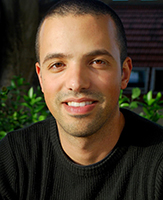
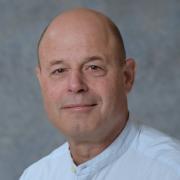
Prof. Harel Itamar is a Professor of Genetics at the Hebrew University of Jerusalem's Silberman Institute of Life Sciences. He leads the Harel Lab, focusing on experimental biology of vertebrate aging and age-related diseases using the African turquoise killifish as a genetic model. His work explores lifespan diversity, molecular mechanisms of aging, and disease modeling. Itamar holds a BSc from Ben-Gurion University, a PhD from the Weizmann Institute, and completed postdoctoral research at Stanford University. Research focuses include genetic engineering, live imaging of aging processes, and CRISPR/Cas9-based approaches. Key achievements include developing a comprehensive genetic platform for the killifish and discovering the germline's role in longevity. Awards include the 2024 Krill Prize and ERC Starting Grant. Teaching roles include courses on aging biology and developmental genetics. The lab is located at Givat Ram campus, with contact via itamarh@mail.huji.ac.il. Education: BSc (Ben-Gurion), PhD (Weizmann), Postdoc (Stanford) Lab Affiliations: Department of Genetics, Hebrew University Key Collaborations: Valenzano Lab, Stanford University
Prof. Eran Rabani is a distinguished researcher and professor holding dual appointments at Tel Aviv University's School of Chemistry and the University of California, Berkeley's Department of Chemistry. At UC Berkeley, he holds the prestigious Glenn T. Seaborg Chair in Physical Chemistry and serves as a Faculty Scientist at Lawrence Berkeley National Laboratory. His research bridges theoretical chemistry, computational physics, and nanomaterials science, with significant contributions to understanding quantum phenomena at the nanoscale. Prof. Rabani earned his Ph.D. in Theoretical Chemistry from The Hebrew University in 1996, followed by postdoctoral research at Columbia University. His academic career progressed from Senior Lecturer to full Professor at Tel Aviv University, where he has maintained a continuous appointment since 1993. His educational background includes a summa cum laude B.Sc. from the Special Program "Amirim" at The Hebrew University. Rabani's research program centers on three interconnected pillars: Optoelectronic Properties of Nanomaterials , where his group develops computational models to describe exciton fine structure and phonon interactions in nanocrystals; Quasiparticle Dynamics , investigating electron transfer processes in nanoscale systems; and Stochastic Electronic Structure Methods , pioneering computational approaches that dramatically reduce the complexity of quantum simulations. His work combines theoretical innovation with practical applications in renewable energy, sensing technologies, and quantum information processing. Analysis of Rabani's recent publications reveals a strong emphasis on quantum confinement effects, exciton dynamics, and the development of stochastic computational methods that enable simulations of previously intractable systems. His research demonstrates increasing interdisciplinary collaboration, particularly with experimental groups working on quantum dots, perovskites, and other nanomaterials, with a clear trajectory toward solving real-world problems in energy conversion and quantum technologies. Prof. Rabani's contributions have been recognized with numerous prestigious awards: International Association of Advanced Materials Fellow (2023) Humboldt Research Award (2022) Vebleo Fellow for Prominence and Leadership in Science (2021) Glenn T. Seaborg Chair in Physical Chemistry (2017) Baker Symposium Speaker at Cornell University (2016) Kavli Frontiers of Science Alumni (2015) Marko & Lucie Chaoul Chair for Theoretical and Computational Nanoscience (2013) His research program is supported by substantial funding from major agencies including the National Science Foundation, Department of Energy, and Israel Science Foundation. Current grants (2021-2025) total over $2.5 million, focusing on semiconductor nanowires, computational materials science, and optoelectronic materials. As Director of The Sackler Center for Computational Molecular and Materials Science at Tel Aviv University, he leads a vibrant research group that bridges theoretical innovation with experimental validation. Prof. Rabani directs The Sackler Center for Computational Molecular and Materials Science at Tel Aviv University and has served in various administrative roles including Vice President for Research and Development. His research group maintains strong collaborations with experimentalists worldwide, creating an intellectual community focused on advancing fundamental understanding of nanoscale phenomena while exploring practical applications in energy, sensing, and quantum technologies.
Professor Amos Ullmann is a faculty member at the School of Mechanical Engineering at Tel Aviv University, where he conducts research in environmental engineering and thermal-fluid systems. His office is located in the Wolfson Engineering Building (room 210) and he can be reached at ullmann@tauex.tau.ac.il or +972-3-6407829. Research Focus Prof. Ullmann's research program addresses critical challenges in environmental and mechanical engineering through both theoretical and experimental approaches. His primary expertise lies in Environmental Engineering , with significant contributions to: Mass transfer separation processes and innovative extraction/absorption methods Remediation of contaminated soil, sediments, and sludge Liquid-liquid two-phase flow phenomena Heat transfer during phase separation and free convection Air pollution control devices and pollutant source characterization Thermal management of electronic equipment Compressed air energy storage systems Academic Service He serves on multiple appointment committees within Tel Aviv University's Faculty of Engineering, including those for the School of Electrical Engineering and School of Mechanical Engineering, reflecting his leadership role in academic governance. Research Facilities Prof. Ullmann is associated with the Environmental Engineering Laboratory at Tel Aviv University, where experimental work on separation processes and pollution control technologies is conducted. His research bridges fundamental fluid mechanics with practical environmental applications across energy, industrial, and ecological domains.